Source: Nearly 4 000 small-scale farmers trained in digital agric – herald
Theseus Mauruki Shambare in MHONDORO-NGEZI
Nearly 4 000 small-scale farmers across Zimbabwe have been trained in digital farming under a Food and Agriculture Organisation project aimed at modernising agriculture and closing the digital gap between rural and urban areas
The training programme, being implemented under the Digital Villages Initiative (DVI), has so far reached 3 879 rural producers through digital agriculture literacy trainings in Mashonaland West and Masvingo provinces.
The initiative is being rolled out in Mhondoro-Ngezi District and Bikita District, where digital hubs have been established to provide free internet access, digital literacy training and technology-based agricultural advisory services.
The programme is part of a broader regional project covering Zimbabwe, Malawi and Rwanda titled Fostering Digital Villages Through Innovative Advisory and Profitable Market Services in Africa (FDiVi).
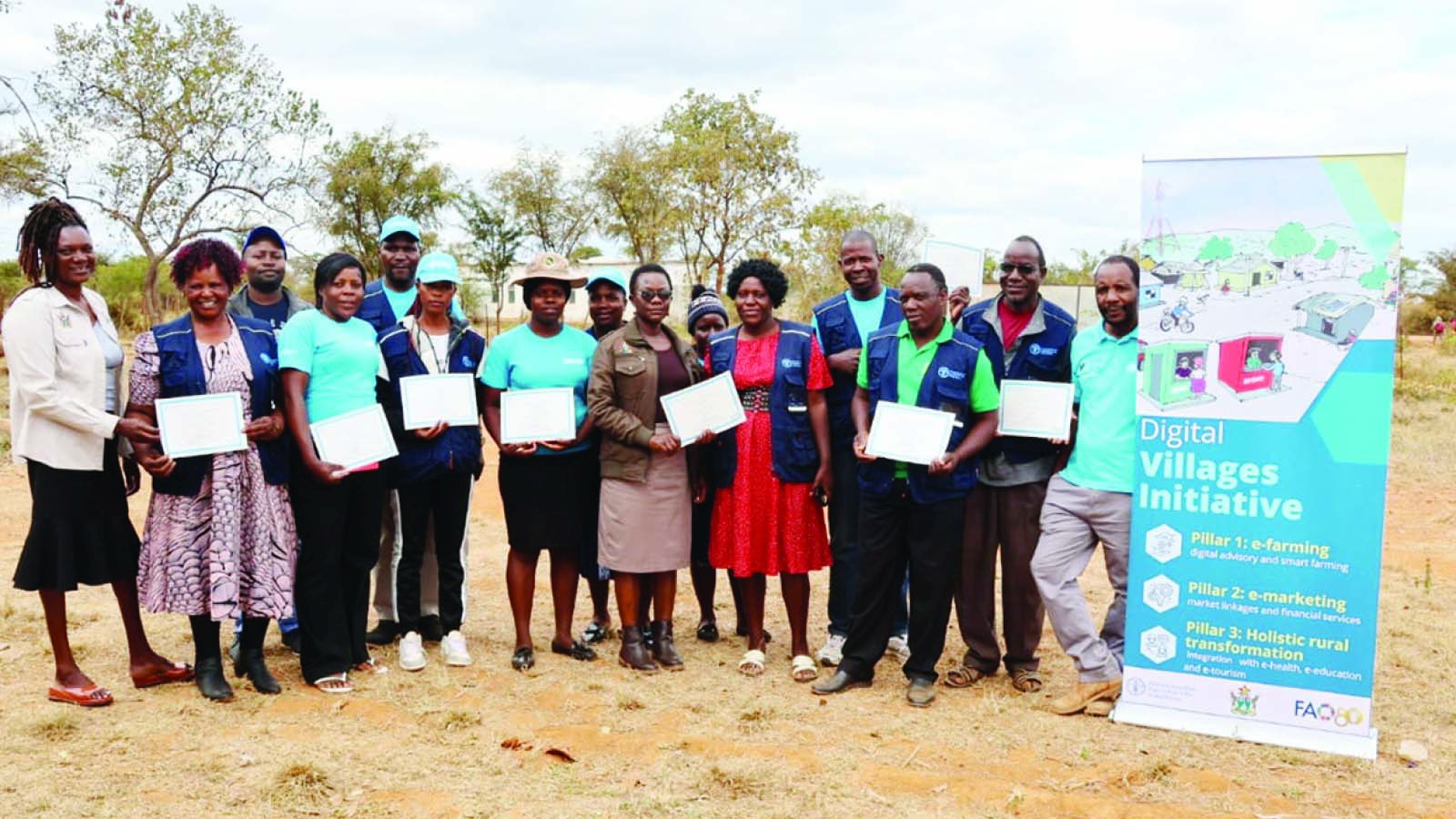
During a digital agriculture programme tour and the certificate handover ceremony in Mhondoro-Ngezi, recently, stakeholders revealed that the initiative sought to improve productivity, market access and information flow among rural farmers through technology-driven solutions.
Authorities said the project was targeting key challenges affecting rural communities, including weak adoption of digital agriculture technologies, limited internet access, youth unemployment and growing gender gaps in digital inclusion.
Addressing farmers during the tour, Fostering Digital Villages Through Innovative Advisory and Profitable Market Services in Africa (FDiVi) food security monitoring and digital agriculture specialist, Mr Dowsen Sango said the project was helping rural farmers integrate Artificial Intelligence (AI) and digital tools into everyday farming activities.
He said farmers were now using AI-powered platforms to identify crop diseases, detect livestock health problems and make informed production decisions by simply taking pictures using smartphones.
“We are moving agriculture from traditional guesswork to informed decision-making powered by technology. Farmers are now able to take pictures of diseased crops or sick animals using their phones and receive instant feedback and recommendations through AI-supported platforms,” said Mr Sango.
He said the initiative was also enabling farmers to use social media and digital marketplaces to source affordable agricultural inputs, compare prices and secure buyers before production.
“Digital agriculture is not only about production, but also profitability. Farmers are now linking directly with input suppliers, transporters and buyers through online platforms and social media groups. This allows them to compare prices, identify reliable suppliers and produce for ready markets,” he said.
Mhondoro-Ngezi District Agricultural Business Advisory Officer (ABAO) Ms Nola Marumbwa said the initiative was strengthening extension services by allowing farmers to access quicker, data-driven agricultural support while improving linkages between producers, suppliers and markets.
“We are seeing farmers becoming more confident in making farming decisions because information is now easily accessible through digital platforms. Instead of waiting for physical visits, farmers can quickly identify crop diseases, seek livestock health advice and interact with extension officers using smartphones and AI-supported applications,” said Ms Marumbwa.
She said digital platforms were also helping farmers become more market-oriented and business-focused.
“Many farmers are now using WhatsApp groups and online platforms to compare input prices, identify genuine suppliers and connect with buyers before production. This is helping communities reduce losses, improve planning and increase profitability,” she said.
Mr Sango said the programme was helping reduce exploitation by middlemen while improving access to agricultural knowledge in remote communities.
“We want rural farmers to participate competitively in modern value chains. Access to information is becoming as important as access to land and water. Through digitalisation, farmers are improving productivity, reducing losses and increasing incomes,” he said.
Under the programme, farmers are being introduced to mobile-based agricultural services, online market systems and Artificial Intelligence-enabled advisory platforms.
The initiative has also piloted AI-powered agricultural advisory services and trained agricultural extension specialists from 25 districts on the use of generative artificial intelligence tools in farming systems.
Government departments, local universities, private sector players and mobile network operators are working together under the initiative to strengthen digital transformation within rural agrifood systems.
Digital hubs established under the programme are operating through existing infrastructure, including ZimPost District Information Centres and AGRITEX Ward Information Centres.
Officials said the hubs were improving rural access to internet services, digital tools and agricultural information.
The programme has also introduced a “Digital Champions” model in which selected early adopters are trained and later assist communities in adopting digital farming technologies.
One of the farmers trained under the AI-supported agriculture programme, Ms Gladys Vakira, said the technology was changing how farmers handled crop and livestock management.
“Before this programme, if crops developed strange diseases or animals became sick, we had to wait for extension officers or rely on guesswork. Now we can take pictures using our phones and receive guidance through AI tools and digital platforms,” she said.
Ms Vakira said farmers were also benefiting from online business networks created through WhatsApp and other social media platforms.
“We are now connected to suppliers and buyers through digital groups. Farmers are sharing information on seed prices, chemicals, feeds and available markets every day. This helps us buy cheaper products and plan production based on available markets,” she said.
Another beneficiary, Mr Tauya Nyangwaira, said the training had exposed farmers to modern agricultural business practices.
“We have learnt that farming today is no longer just about producing crops, but understanding markets and using information correctly. Through social media and digital platforms, we are now able to look for customers before harvesting,” he said.
Mr Nyangwaira said younger farmers were showing growing interest in agriculture because of the integration of technology and innovation.
“When young people see farmers using smartphones, internet platforms and AI tools in agriculture, they begin to appreciate farming as a modern business with opportunities for growth and income generation,” he said.
The programme has further established digital fairs bringing together rural farmers, agri-entrepreneurs and technology service providers to facilitate interaction and adoption of digital services.
The post Nearly 4 000 small-scale farmers trained in digital agric appeared first on Zimbabwe Situation.