Source: Zim eyes US$600m export windfall – herald
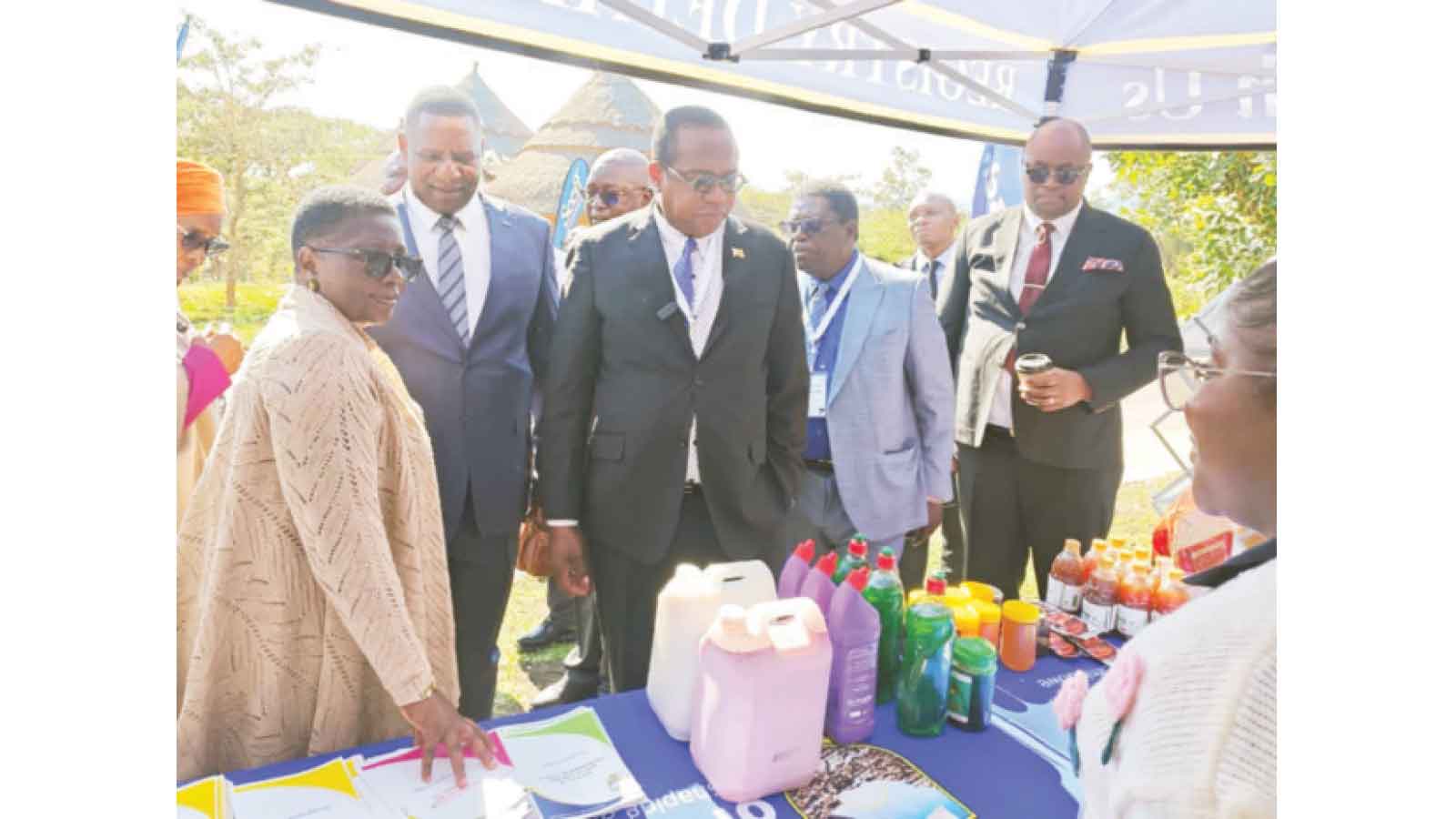 Finance, Economic Development and Investment Promotion Minister Professor Mthuli Ncube (centre), War Veterans of the Liberation Struggle Affairs Minister Monica Mavhunga (left), Mashonaland Central Minister of State for Provincial Affairs and Devolution Christopher Magomo (second from left), National Economic Consultative Forum (NECF) Steering Committee co-chair Dr Mike Bimha (fourth from left) and Secretary for Provincial Affairs and Devolution in the Office of the President and Cabinet Engineer Tafadzwa Muguti (second right) tour stands at the Mashonaland Central Investment Dialogue in Mazowe last Friday.
Oliver Kazunga-Senior Reporter
ZIMBABWE could unlock nearly US$600 million in export revenues from a proposed agro-industrial Special Economic Zone expected to accelerate industrialisation and economic transformation.
The Hunyani Agro-Industrial Special Economic Zone (HAISEZ), planned for a 2 600-hectare estate in Darwendale, about 60 kilometres west of Harare, has emerged as one of the largest integrated agricultural investment proposals in the latest Zimbabwe Investment and Development Agency (ZIDA) Projects Prospectus.
The project is being positioned as a flagship model for export-led growth, combining high-value crop production, livestock systems, agro-processing infrastructure and renewable energy generation within a single industrial ecosystem.
According to the prospectus, projected 11-year revenues are US$594,82 million while the profits anticipated in the same period are US$465,16 million.
The development places the proposed SEZ among the country’s biggest export-oriented agricultural developments.
The initiative reflects Government’s broader strategy to transition Zimbabwe from primary commodity exports towards higher-value, industrialised agricultural production capable of generating sustained foreign currency inflows.
At the core of the project is an integrated production model that includes 1 985 hectares of horticulture covering avocados, citrus and macadamia nuts, alongside large-scale livestock operations such as cattle production, poultry systems, hatcheries and advanced breeding technologies. The development also incorporates agro-processing infrastructure, including pack houses, cold storage facilities, abattoirs and fertiliser production units, aimed at retaining more value within the domestic economy before export.
A key feature of the SEZ is its strong export orientation, with about 80 percent of output targeted for international markets, positioning it as a potential major contributor to Zimbabwe’s foreign currency earnings. In addition, the prospectus states that the investment will include “a 100MW solar plant supplying both estate operations and mining-sector off-takers,” adding a diversified revenue stream beyond agriculture.
Government has increasingly prioritised Special Economic Zones as instruments to attract large-scale investment, promote technology transfer and enhance export competitiveness through tax incentives, infrastructure support and streamlined regulatory frameworks.
Against this background, Finance, Economic Development and Investment Promotion Minister Professor Mthuli Ncube recently launched the country’s first provincial Special Economic Zone in Mashonaland Central Province.
ZIDA noted that the Hunyani SEZ is backed by existing infrastructure valued at about US$15 million, including irrigation systems covering 700 hectares, established electricity connections, and strategic access to road, rail and air transport corridors linking Harare to regional and international markets.
Secure water rights from Lake Manyame further strengthen the project’s long-term viability, particularly amid climate variability and rising demand for irrigation-dependent agriculture.
Development partners behind the project include DrumCorp Holdings (Private) Limited, working with technical and advisory partners specialising in climate-smart agriculture, investment mobilisation and export market integration.
Economic commentator Ms Wendy Mpofu said the project could generate significant multiplier effects across the economy through employment creation, supply chain development, skills transfer and increased demand for local services and inputs.
“Projects such as HAISEZ represent the future of Zimbabwe’s economy.
“They bring together agriculture, energy, technology, finance and exports in a way that creates sustainable growth rather than isolated economic activity,” she said.
The integrated nature of the development is expected to support Zimbabwe’s broader industrialisation agenda by linking primary production with processing and export logistics, thereby enhancing competitiveness in global value chains.
The post Zim eyes US$600m export windfall appeared first on Zimbabwe Situation.