(When the kingmaker and his beneficiary both believe they created each other)
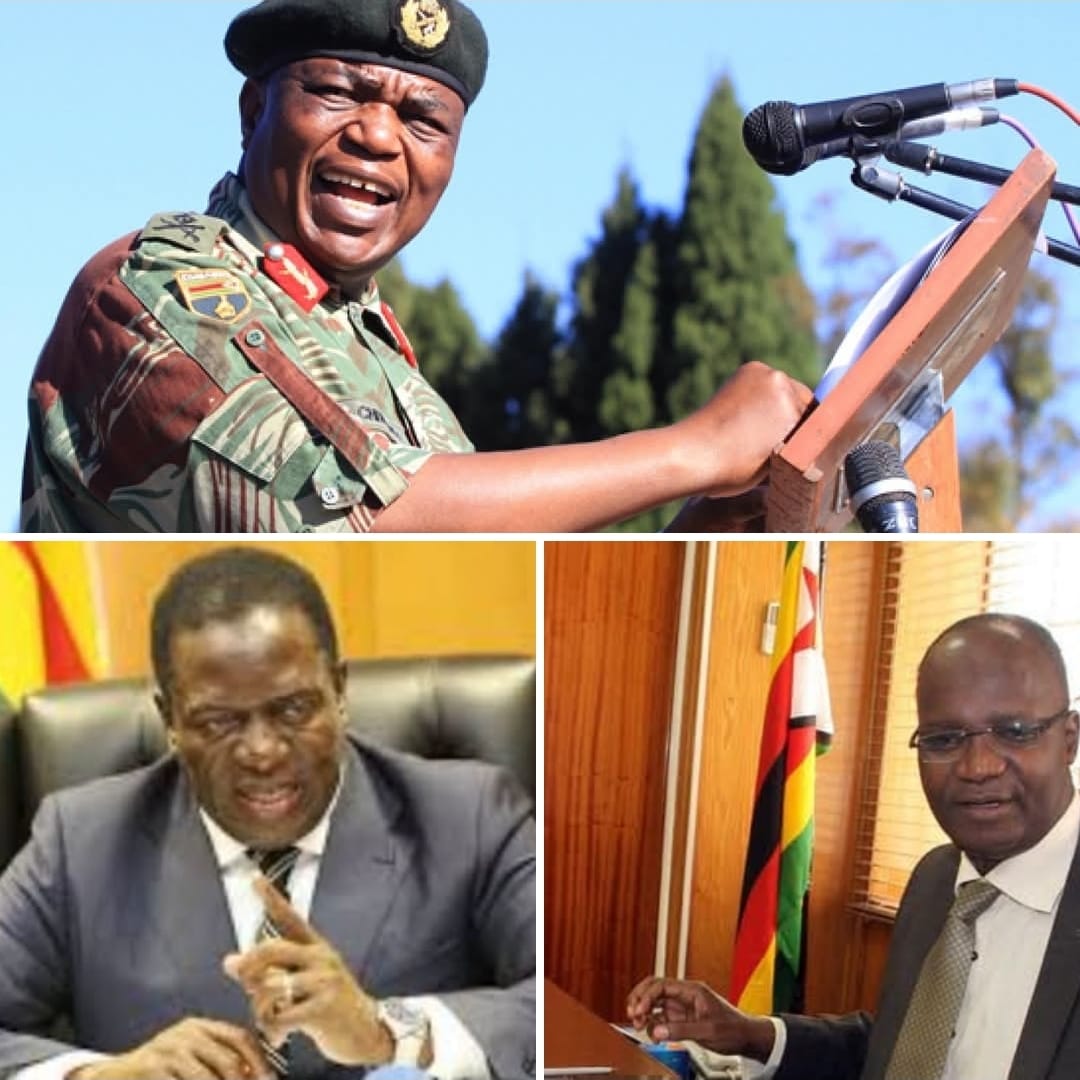
Zimbabwe is presently governed by two men who each believe the other exists politically because of his personal generosity. Vice-President Constantino Chiwenga apparently looks at President Emmerson Mnangagwa and sees a beneficiary: the civilian face placed upon a military operation that Chiwenga commanded. Mnangagwa reportedly looks at Chiwenga and sees a retired general whom he benevolently promoted into civilian politics, dressed in a scarf and seated in the Vice-President’s chair. One says: “I made you President.” The other replies: “I made you Vice-President.” Both arguments contain enough truth to sustain a national crisis.
THE WEEK EVERYONE REMEMBERS DIFFERENTLY:
The formal chronology is not seriously disputed. On 13 November 2017, General Chiwenga publicly warned against the purging of liberation veterans. The military intervened two days later. Mugabe resigned on 21 November. Mnangagwa returned from exile on 22 November and was inaugurated President on 24 November. Chiwenga became Vice-President in December. But political memory does not always respect the official programme. The march was emotionally about Chiwenga. His photographs appeared on placards. Admirers called him “General Bae.” Zimbabweans celebrated the military commander who had apparently delivered them from Mugabe’s closing years. Mnangagwa received the prize. He returned to a country whose streets had already been cleared politically and emotionally by an operation he did not publicly command. He proclaimed that the voice of the people was the voice of God and was sworn in as President. The people supplied the voice. The military supplied the logistics. God was listed as the constitutional consultant. Mnangagwa collected the keys. This is why Chiwenga’s claim to kingmaker status is not an eccentric private fantasy. Whatever one calls November 2017—a coup, military-assisted transition, popular-military convergence or Operation Please-Do-Not-Call-It-A-Coup—Mnangagwa would almost certainly not have entered State House in the manner he did without Chiwenga and the military command. But Mnangagwa has his own account. He had struggled inside ZANU-PF for decades. He had survived purges, humiliation, demotion and succession ambushes. He had cultivated military relationships and persuaded the generals that their survival was tied to his. In his interpretation, Chiwenga did not invent the Mnangagwa project. He provided military transport for a political journey already mapped over many years. Therefore, the President sees no debt. He sees a subordinate whom he rewarded. That is the cold war at the centre of the Second Republic: one man believes a promise is due; the other believes gratitude has already been overpaid.
THE GENTLEMEN’S AGREEMENT WITH NO GENTLEMEN LEFT:
There have long been claims that understandings were reached between 15 and 21 November 2017. The most persistent version says Mnangagwa would complete Mugabe’s term, serve one elected term ending in 2023, and then hand over to Chiwenga. The general would retire from the military, become Vice-President and acquire civilian political grooming before succeeding his principal. People said to have witnessed these understandings reportedly remain alive. But no publicly authenticated agreement has been produced. Until that happens, the alleged pact remains politically important but legally weightless. A gentleman’s agreement is secure only for as long as both gentlemen remain gentle. The first structural warning arrived through Constitutional Amendment No. 2. The 2013 Constitution’s running-mate arrangement was removed before taking effect, restoring a system in which Vice-Presidents are appointed by—and politically dependent upon—the President. The amendment did not prove that a succession pact existed. It simply removed the constitutional ladder through which any Vice-President might have developed an independent electoral mandate. Chiwenga remained Vice-President, but he became a passenger whose seatbelt was controlled by the driver. There was reportedly another understanding about 2028. Then arrived Kudakwashe Tagwirei’s political rise, the 2030 programme, Constitutional Amendment Bill No. 3 and eventually Constitutional Amendment No. 3. At that point, postponement ceased being suspicion and became political architecture. If Mnangagwa remains beyond 2028, Chiwenga’s alleged succession arrangement does not merely suffer another delay. It risks burial without a state funeral.
THE COURTROOM BETWEEN TWO BULLS:
The CAA3 challenges have consequently become more than technical constitutional disputes. For the applicants, they concern sovereignty, public consultation, presidential tenure, Parliament’s powers and whether constitutional protections can be defeated by vocabulary—whether an extension becomes lawful if renamed a “lengthening,” and whether a constitutional amendment stops being an amendment when preceded by “notwithstanding.” For Chiwenga’s political constituency, the cases also represent one of the last institutional barriers against the permanent postponement of succession. No public evidence establishes that Chiwenga directs or funds the applications. But nobody requires a military intelligence course to understand where his political interests lie. If CAA3 falls, 2028 returns. If it survives, the succession calendar may be rewritten around Mnangagwa and Parliament. Several judgments remain reserved. Reserved means exactly that: the judges have heard argument but have not announced their decisions. Some proceedings concern direct access rather than the ultimate constitutionality of CAA3, while others have placed substantive questions before the bench. Nobody should manufacture judgments before the judges do. But a government that expected a quick procedural burial now faces prolonged constitutional suspense. The coffin keeps returning from the cemetery asking for further submissions. The President cannot be entirely certain how the bench will decide. The Vice-President’s side appears confident that the textual and procedural defects are too visible to be judicially ironed away. That confidence may prove justified or misplaced. Judges occasionally surprise governments. They also occasionally surprise constitutions.
ENTER PROFESSOR JONATHAN MOYO—AGAIN:
It is within this atmosphere that President Mnangagwa reportedly met Professor Jonathan Moyo at Nairobi’s Villa Rosa Kempinski on 26 November. Mnangagwa’s presence in Nairobi is confirmed: he travelled there for the inaugural Kenya-Zimbabwe Bi-National Commission. Reports and photographs place Moyo at the hotel with senior Zimbabwean officials. Media accounts say the two men held a group meeting, a private engagement and dinner, although neither State House nor Moyo had publicly disclosed the substance of their discussions by the following morning. The meeting therefore appears more credible than mere social-media imagination. However, the more sensational claims require caution. Jealousy Mawarire alleges that Moyo helped design the constitutional project, that millions were offered and that specific officials participated in efforts surrounding CAA3. He also alleges attempts to pressure judges. These are grave allegations, not established findings. Photographs of political actors sharing hotel space do not prove every associated claim. Evidence would be required, especially where judicial interference and financial inducement are alleged. But the political symbolism needs no affidavit. Jonathan Moyo was once presented as the intellectual commander of the “criminals surrounding” Robert Mugabe. He belonged to the G40 constellation containing Saviour Kasukuwere, Walter Mzembi, Patrick Zhuwao, Phelekezela Mphoko and Grace Mugabe. In November 2017, some fled under dangerous circumstances. Moyo eventually established himself in exile and became one of Mnangagwa’s most relentless critics. Now the alleged chief criminal surrounding the previous President may be applying for employment surrounding the present one. Zimbabwean politics is a washing machine with no permanent stains.
TSHOLOTSHO NEVER DIES; IT MERELY CHANGES HOTELS:
Mnangagwa and Moyo are not strangers to succession engineering. In 2004, they were associated with the Tsholotsho succession manoeuvres intended to reorder ZANU-PF’s presidium and strengthen Mnangagwa’s route towards succeeding Mugabe. Contemporary accounts identify Moyo as a central organiser and Mnangagwa as the principal political beneficiary. The project failed. Joice Mujuru became Vice-President. Moyo was expelled. Mnangagwa survived—as he usually does. They later became enemies. Then allies of circumstance. Then enemies again. Their reported Nairobi reunion should therefore not be mistaken for reconciliation. In ZANU-PF, reconciliation ordinarily means discovering that an old enemy possesses a skill urgently needed against a new enemy. Moyo’s skill is agenda-setting. He was central to the propaganda machinery of the land-reform era and the political messaging surrounding Hondo Yeminda. As Information Minister, he became closely associated with the coercive media architecture represented by AIPPA and the Broadcasting Services Act. He understands how to turn a political problem into a national soundtrack. When the Constitution is asking difficult questions, Moyo can arrange for the country to debate the colour of the questioner’s socks.
CAN THE PROFESSOR DROWN THE COURTS?
That may be the most important analytical possibility arising from Nairobi. A reserved judgment cannot be legally cancelled by political theatre. But it can be politically surrounded. A sufficiently dramatic controversy can dominate headlines, fragment public attention and redefine the court challenges as merely one episode within a larger campaign. The objective need not be to win the legal argument. It may be to make the legal argument feel exhausted before judgment arrives. The present communications machinery appears unequal to that assignment. The Information Ministry can issue statements. Nick Mangwana can explain government. But explanation is not the same as controlling the national imagination. Jonathan Moyo does not merely answer an allegation. He manufactures a rival universe in which the allegation must apply for accreditation. Mnangagwa may therefore need him less as a constitutional lawyer than as a political pyrotechnician. The professor knows where narratives are buried because he helped dig several of the graves. But Moyo also has reason for caution. What happens if the other bull wins? A Mnangagwa guarantee is only as durable as Mnangagwa’s power. Chiwenga remembers 2017, the G40 campaign and the efforts to destroy both him and Mnangagwa. The professor himself learned in 2017 that controlling the state media, party rhetoric and presidential household does not guarantee victory when the military arrives with an alternative constitutional interpretation. That may explain why any return requires more than a handshake and dinner. The man would need political insurance against both possible futures.
THE OPPOSITION MNANGAGWA CREATED INSIDE HIS OFFICE:
Mnangagwa was remarkably successful in weakening the formal opposition. Recalls, internal fragmentation and the Tshabangu project helped turn parliamentary opposition into an administrative rumour. The opposition became something that mobilised before elections, disputed the result and then spent the remaining years discussing betrayal. But in neutralising the external opposition, Mnangagwa strengthened the importance of the internal one. The most dangerous challenge now sits inside the Presidency, attends Cabinet, receives intelligence briefings, commands liberation-war loyalty and possesses historical relationships within the security establishment. The President removed the opposition from Parliament and discovered it seated beside him at the high table. That is why Chiwenga cannot easily be treated like an ordinary dissident. He cannot simply be recalled by a provincial committee, denounced by hired delegates and sent to join the diplomatic service in a country with good hospitals. Removing him may release forces that neither side can confidently control. Likewise, Chiwenga cannot simply overthrow his principal politically without confronting the constitutional, regional and institutional consequences of repeating 2017. The bulls therefore circle each other. Their proxies charge. Their commentators bark. Their business allies fund applause. Their legal teams define “extension.” Their political theologians search Scripture for a verse supporting seven-year terms. THE KRAAL IS NOW TOO SMALL: The original win-win arrangement was straightforward: Mnangagwa governs, Chiwenga succeeds him, and both preserve the political order they created together. If an opposition candidate defeated them, they would at least lose together. CAA3 destroys that equilibrium. Now, one man’s continuity may require the other man’s political extinction. Mnangagwa appears to believe Chiwenga must accept that being made Vice-President was full payment for November 2017. Chiwenga appears to believe the Presidency remains an outstanding debt accruing interest since the coup-that-was-not-a-coup. Jonathan Moyo’s reported re-entry does not resolve the confrontation. It confirms its seriousness. The professor may help Mnangagwa change the conversation. He may provide strategy, rhetoric and constitutional choreography. He may even help manufacture another national political thunderstorm. But thunder cannot amend history. The central dispute remains brutally simple: Did Chiwenga make Mnangagwa President, or did Mnangagwa make Chiwenga Vice-President? The honest answer is that each made the other—and now each fears being unmade by his own creation. Zimbabwe is trapped in the kraal while the two bulls debate ownership.
Source: The two bulls and the professor from Nairobi
The post The two bulls and the professor from Nairobi appeared first on Zimbabwe Situation.