South Africa to close border posts as Coronavirus wreaks havoc, President Ramaphosa speaks out

South Africa will close 32 of its 72 ports of entry to minimise the continued spread of Covid-19 and is banning travellers from countries with high infection rates. The country shares land borders with Botswana, Mozambique, Namibia, Eswatini and Zimbab…

South Africa will close 32 of its 72 ports of entry to minimise the continued spread of Covid-19 and is banning travellers from countries with high infection rates. The country shares land borders with Botswana, Mozambique, Namibia, Eswatini and Zimbabwe, and totally surrounds Lesotho. In his State of the Nation Address last night, South Africa’s […]

Tight ED security raises eyebrows

Source: Tight ED security raises eyebrows – The Standard By Brenna Matendere President Emmerson Mnangagwa’s security details went into overdrive during an event at the Zanu PF leader’s Kwekwe farm, going to the extent of using a drone in scouring for potential threats. Guests that sat with Mnangagwa at the VVIP tent during a field […]

The post Tight ED security raises eyebrows appeared first on Zimbabwe Situation.

Source: Tight ED security raises eyebrows – The Standard

By Brenna Matendere

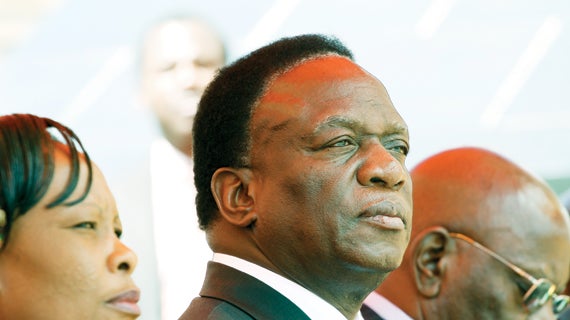
President Emmerson Mnangagwa’s security details went into overdrive during an event at the Zanu PF leader’s Kwekwe farm, going to the extent of using a drone in scouring for potential threats.

Guests that sat with Mnangagwa at the VVIP tent during a field day held at his farm last Thursday revealed that close circuit television cameras had been set up to monitor proceedings at the high table.

The VVIP tent accommodated Mnangagwa, his wife Auxillia, cabinet ministers, Zanu PF politburo members, ZCC founder Nehemiah Mutendi and top executives from agro-based companies led by Seedco.

A drone, which was being operated by military personnel took aerial shots to monitor the event.

Villagers from the Sherwood area said some soldiers had frisked them while they were carrying out their normal chores far from Pricabe Farm where the field day was being held.

“My friend was setting up his traps for mice and was rounded up by the soldiers who perhaps thought he could have been doing something sinister. He was later freed after being quizzed,” said a villager.

Mnangagwa used a helicopter to travel to the farm.

On the 3km strip road from the Harare highway to the farm, there were four security checkpoints with the ZRP manning the middle one while soldiers were at the other two checkpoints.

Nick Mangwana, the government spokesperson, said there was nothing unusual about Mnangagwa’s security arrangements.

“Any security arrangements are always dynamic to remove any predictability and details of such are not a subject of public discourse,” he said.

But political analyst Eldred Masunungure said the increased security around Mnangagwa was understandable given the volatile situation in the country.

“Currently the situation is volatile and anything can happen,” he said.

“The centre cannot hold and it is a matter of how long it can stay like that.”

Another political analyst, Rashweat Mukundu, said Mnangagwa should be a worried man due to the current deepening economic crisis.

“Generally one coup begets another because coups are antithesis of democracy and inspired by selfishness yet what we want is orderly, peaceful and constitutional transitions,” he said,
“While this is possible it is not something we should wish for as citizens, but rather that the right of citizens to elect leaders remains sacrosanct as per the constitution.”

Mnangagwa rose to power in 2017 after long time rule Robert Mugabe was toppled in a military coup.

The post Tight ED security raises eyebrows appeared first on Zimbabwe Situation.

Zimbabwe gets back iconic bird statues stolen during colonialism

Africa’s former colonial powers have recently come under pressure to send looted artefacts back to their home countries. Source: Zimbabwe gets back iconic bird statues stolen during colonialism | Zimbabwe News | Al Jazeera Africa’s former colonial powers have recently come under pressure to send looted artefacts back to their home countries. They figure on Zimbabwe‘s […]

The post Zimbabwe gets back iconic bird statues stolen during colonialism appeared first on Zimbabwe Situation.

Africa’s former colonial powers have recently come under pressure to send looted artefacts back to their home countries.

Source: Zimbabwe gets back iconic bird statues stolen during colonialism | Zimbabwe News | Al Jazeera

One of the iconic Zimbabwe bird statues pictured at the National Sports Stadium in the capital, Harare [File: Jekesai Njikizana/AFP]

Africa’s former colonial powers have recently come under pressure to send looted artefacts back to their home countries.

They figure on Zimbabwe‘s national flag, banknotes and official documents: stone statues representing birds taken away by the European colonialists more than a century ago.

The eight original sculptures hold great spiritual value for people of the southern African nation, and have been made into national emblems.

Six of the large carvings were stolen from the ruins of Great Zimbabwe, an imposing stone complex built between the 11th and 13th centuries and attributed to pre-colonial King Munhumutapa.

The palatial enclosures are now a United Nations Educational, Scientific and Cultural Organization (UNESCO) World Heritage Site situated in the southeast of Zimbabwe, 25 kilometres (16 miles) from the present-day city of Masvingo.

‘Connect present with past’

Almost all of the prized green-grey soapstone birds that were looted have now been returned to the country.

Only one remains in South Africa, where it is kept in the house of 19th-century British mining magnate and imperialist, Cecil Rhodes.

In a rare move last month, four of the statues were temporarily set on the original plinths from where they were stolen at the Great Zimbabwe monument.

The heavy figurines, some standing at about 1.5 metres (4.9 feet), were moved from an on-site museum and placed outdoors on pedestals for a photoshoot.

Their pictures were taken for a book on ancient African art – Zimbabwe: Art, Symbols and Meaning – to be published in September. The country marks the 40th anniversary of independence from Britain next month.

The book will be co-authored by a Zimbabwe-born duo and mother and son – Gillian Atherstone and Duncan Wylie – who now respectively live in Britain and France.

“The birds are among the most symbolic cultural objects of our time,” the head of Zimbabwe’s national museums, Godfrey Mahachi, told AFP news agency.

“They connect the present with our past.”

‘Troubled existence’

Great Zimbabwe ruins curator Munyaradzi Sagiya said the statues are kept inside the museum for security reasons.

“Not everyone who visits a museum is there to admire the displays,” he said.

Africa’s former colonial powers have recently come under pressure to send looted artefacts back to their home countries.

Germany returned the chopped-off pedestal of one of the birds in 2003.

Zimbabwe’s late ex-president Robert Mugabe said at the time that the piece had “a very eventful if not troubled existence during its almost 100 years in exile”.

South Africa returned five other birds in 1981, one year after Zimbabwe’s independence.

Retrieving that statue could be complicated as Rhodes left his estate to the South African government after his death, Sagiya said.

The post Zimbabwe gets back iconic bird statues stolen during colonialism appeared first on Zimbabwe Situation.
Zimbabwe waits for the red stain of Coronavirus 

Dear Family and Friends, Source: Zimbabwe waits for the red stain of Coronavirus – The Zimbabwean In the bright light of the moon a pair of owls call to each other across the neighbourhood: Hoo hoo, Whoo hoo. It’s not quite 4.00am but already their dominance of the darkness is being disturbed as Zimbabwe wakes […]

The post Zimbabwe waits for the red stain of Coronavirus  appeared first on Zimbabwe Situation.

Dear Family and Friends,

Source: Zimbabwe waits for the red stain of Coronavirus – The Zimbabwean

In the bright light of the moon a pair of owls call to each other across the neighbourhood: Hoo hoo, Whoo hoo. It’s not quite 4.00am but already their dominance of the darkness is being disturbed as Zimbabwe wakes to try and get a head start on the next sixteen hour power cut. Outside the sky is clear, the stars bright and for a moment you linger, eyes closed, letting the balmy pre dawn air of our beautiful but broken Zimbabwe wash over you. Within quarter of an hour the electricity has gone and within an hour the buckets are being readied for the daily water collecting.

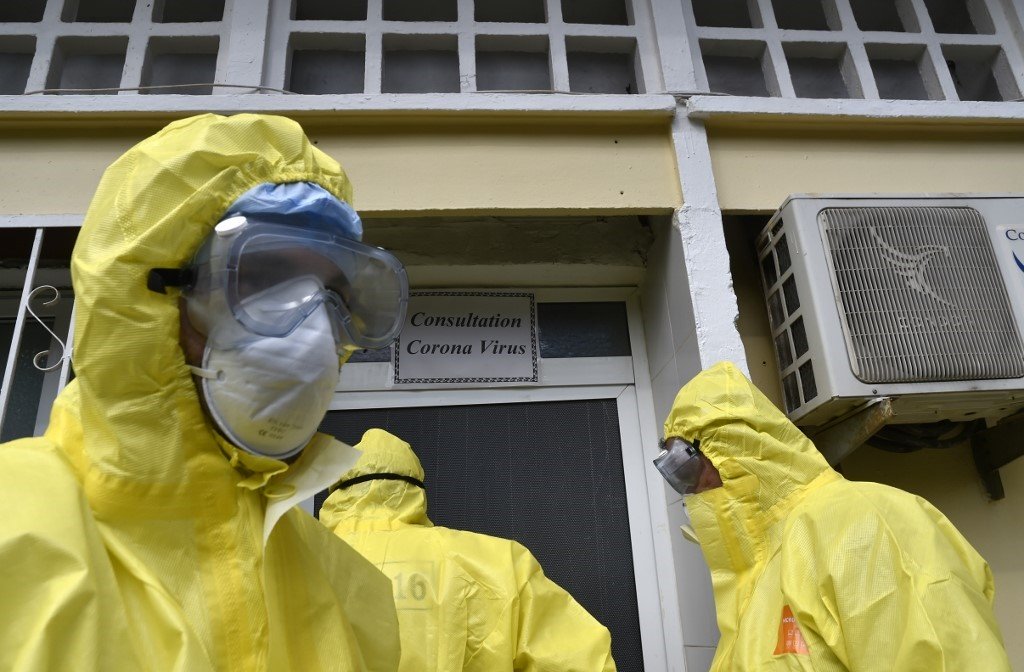
Every day we look at the spreading red stain on world maps of the Covid 19 Coronavirus and we see nothing marking Zimbabwe. Every day we wonder what is more frightening: not seeing any cases being recorded or wondering why we aren’t seeing any cases. Even more frightening is how we will cope when Coronavirus gets to Zimbabwe.

So far only one message from the Ministry of Health and Child Care has circulated on mobile phone networks which is the main source of information and communication for 90% of Zimbabweans with no electricity for radio and TV and unaffordable newspapers. The message came on the 3rd of March and read: “Cover your mouth and nose when coughing or sneezing preferably with a tissue. Dispose it right away and wash your hands to prevent the spread of the virus.” (sic) The message from the Ministry of Health didn’t even name the Coronavirus; didn’t specify signs and symptoms, didn’t tell you what to do if you think you’ve got the virus; didn’t tell you how or where or even if you could get tested.

Neither the Ministry of Health nor the government of Zimbabwe have addressed the huge crisis we are facing already in just something as simple as washing our hands. We have no water in our taps five days a week; some places have no water in their taps ever. Around wells and boreholes with hand pumps, every day in every town scores of people come with buckets; hundreds throughout the course of a day. Everyone’s hands are touching the same pump handle to get water from the wells and boreholes. How then, government of Zimbabwe, do we stop the spread of Coronavirus?

The next crisis is soap. In the past week the rate of exchange between the US dollar and Zimbabwe dollar has increased from 25 to 40 and it is still rising. Today you need Z$40 to buy US$1. As a result the price of everything (imported and paid for in US$) has increased by 50%. Last week a 200ml bottle of liquid Dettol soap was Z$54; today it is Z$95. A 375g bar of Dettol soap is $30. A 9 pack of toilet rolls is anything from Z$80 to Z$200. An average monthly income for most people is around Z$300 a month; enough for one pack of toilet rolls and two bottles of Dettol soap but no food, rent, transport or anything else. How then, government of Zimbabwe do we wash our hands or sneeze into tissues?

In government buildings and public toilets there is usually no water and there is always no soap. At roadside vendors’ stalls where fruit and vegetables are sold individually there is no water for vendors or customers to wash hands. In buses, minibuses and pirate taxis people are crammed in and there is no way to prevent being contaminated and no other means of travelling. Our hospitals are in a shocking state, without basic equipment or medication and countless numbers of medical staff incapacitated and unable to afford to go to work.  How then government of Zimbabwe do we treat people who contract Coronavirus?

A few suspected cases of the virus in Zimbabwe have made it into the press and each has been shrouded in mammoth bungling: premature release of a woman from isolation and then her re-admittance a few days later, a man running away from isolation, going into the community and then headlines saying there was a ‘manhunt’ to find him, a woman dying on the way to hospital, medical staff running away because they had no protective gear. We are told that all of these cases have been negative for Coronavirus but alarm bells are banging.

At election time our government leaders plaster our towns with pictures of themselves but now, when the country needs them most, there are no signs and posters, no flyers under our doors, no clean running water in our taps and soap and toilet paper that we can’t afford to buy.  Perhaps we’ll see our government leaders in Zimbabwe’s hospitals for this first time in forty years because like us, if they get Coronavirus they won’t be able to fly off to China or India or South Arica for treatment. Like us they will have to pray that the hospitals have staff, gloves, medicines, respirators, oxygen, water and electricity to run the life saving machines.

Until next time, thanks for reading this Letter From Zimbabwe, now in its 20th year, and my books about life in Zimbabwe, a country in waiting, love cathy 13 March 2020. Copyright © Cathy Buckle.  http://cathybuckle.co.zw/
For information on my books about Zimbabwe go to www.lulu.com/spotlight/CathyBuckle2018 . For archives of Letters From Zimbabwe, to subscribe/unsubscribe or to contact me please visit my website http://cathybuckle.co.zw/

The post Zimbabwe waits for the red stain of Coronavirus  appeared first on Zimbabwe Situation.

Zimbabwe’s tobacco farmers to get half their earnings in US$

Source: Zimbabwe’s tobacco farmers to get half their earnings in US$ Tobacco is one of Zimbabwe’s top export earner and here were fears farmers would withhold their crop if they did not receive payments in US dollars A Zimbabwean harvests tobacco leaves. Picture: REUTERS Harare — The Reserve Bank of Zimbabwe (RBZ) has said it […]

The post Zimbabwe’s tobacco farmers to get half their earnings in US$ appeared first on Zimbabwe Situation.

Source: Zimbabwe’s tobacco farmers to get half their earnings in US$

A Zimbabwean harvests tobacco leaves. Picture: REUTERS

A Zimbabwean harvests tobacco leaves. Picture: REUTERS

Harare — The Reserve Bank of Zimbabwe (RBZ) has said it will pay tobacco farmers half their earnings in US dollars after producers demanded forex payments due to a lack of confidence in the local currency.

Tobacco is one of Zimbabwe’s top export earners and last year brought in more than US$500m in earnings last year. There were fears farmers would withhold their crop if they did not receive payments in US$ ahead of the tobacco-selling season set to start this month.

Zimbabwe is the largest grower of tobacco in Africa and has some of the best climatic conditions to grow the crop in the world, despite the persistent climate change-induced droughts Southern Africa is facing.

Last year, the Tobacco and Industry Marketing Board (TIMB) sold 256-million tonnes of tobacco, which was the highest output since the chaotic land reform programme 20 years ago.

Despite the record output, experts say the new tobacco growers — mostly communal farmers who are shunning the staple maize crop and other grains — have been bringing to market poor-grade tobacco that sells at a low price or is sometimes rejected.

The future of the tobacco industry also hangs in the balance due to the World Health Organisation (WHO) Framework Convention on Tobacco Control that restricts smoking and use of tobacco.

Furthermore, the coronavirus pandemic poses a new threat to the tobacco industry as China is the largest importer of tobacco from Zimbabwe.  Though the crop is exported in US dollars, the cash-strapped Zimbabwe government retains part of the forex in it’s coffers and pays the farmers in its almost worthless local currency.

A similar promise to pay half the earnings in hard currency was made last season but the government failed to deliver as forex shortages continued. The failure prompted calls to hold this year’s crop by the growers.

This year, the RBZ says farmers are free to keep money in their foreign currency accounts as well as conduct foreign transfers without limits. The RBZ is battling to keep its local currency relevant as most businesses prefer to use foreign currency due to the unpredictability of the local unit.

In June last year, the central bank re-introduced the local currency after 10 years of a multi-currency system dominated by the US dollar and the rand. It also accepted sterling, the yen and Botswana’s pula.

“The 50% foreign currency portion shall be paid directly into the growers’ foreign currency bank accounts, and the 50% local currency portion directly into the growers’ local currency bank accounts or e-wallets on the day of the sale,” a joint statement from the RBZ and the TIMB said.

Tobacco farmers have been permitted to conduct inter-foreign currency accounts payments without any restrictions and the account balances will not be subject to any liquidation requirements. Farmers who took loans in foreign currency will also repay them in US dollars.

“We are happy for now but we wait to see if the banks will readily release the forex,” the Tobacco Association of Zimbabwe (TAZ) president George Seremwe told state media on Friday. The TAZ represents all commercial growers.

Other producers said they have reluctantly agreed to the 50% forex payment but they would have preferred 100% payment in US dollars.

The post Zimbabwe’s tobacco farmers to get half their earnings in US$ appeared first on Zimbabwe Situation.