Putting the cart before the horse: Why vendor stalls demolitions are ill-advised

Source: Putting the cart before the horse: Why vendor stalls demolitions are ill-advised – NewsDay Zimbabwe This past week, Harare City Council municipal police went about demolishing illegal market stalls, vending sites and workspaces used by vendors and informal traders in the high-density suburbs such as Mbare, Highfields, Hopely and Glen Norah. By Francis Mukora It is […]

The post Putting the cart before the horse: Why vendor stalls demolitions are ill-advised appeared first on Zimbabwe Situation.

Source: Putting the cart before the horse: Why vendor stalls demolitions are ill-advised – NewsDay Zimbabwe
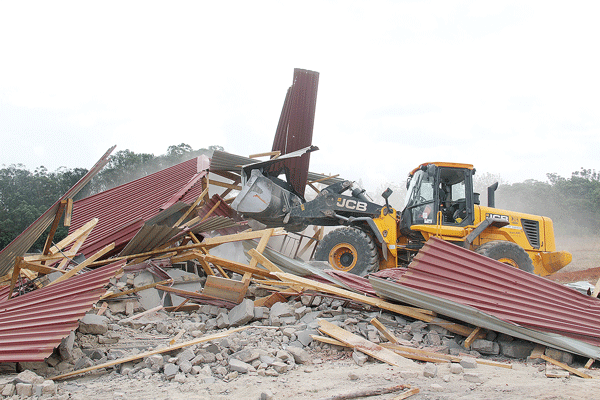
This past week, Harare City Council municipal police went about demolishing illegal market stalls, vending sites and workspaces used by vendors and informal traders in the high-density suburbs such as Mbare, Highfields, Hopely and Glen Norah.

By Francis Mukora

It is not clear whether the demolitions are an enforcement of Section 8(1)(l) of Statutory Instrument 77 of 2020, gazetted on March 23, empowering government to “authorise the evacuation, closing, alteration or demolition of any premises whose occupation or use is deemed likely to aid the spread or render more difficult the eradication of Covid-19”.

Nor has it been clarified if this is compliance with the Ministry of Local Government and National Housing’s April 8, directive to local authorities to implement a Cabinet resolution “to clean up and renovate work spaces used by SMEs and informal traders during the lockdown period”.

Whatever the motivation, the all-important question pertains to whether it is essential or desirable to demolish vendors’ stalls in the midst of an unprecedented crisis already hitting the poor the most.

The impact of the COVID-19 inspired five-week lockdown on the livelihoods of the vendors and informal traders is dire and the demolitions of their workspaces will worsen it.

They lost property and stock while the demolitions themselves were characterised by corruption and human rights violations such as extortion, bribes harassment and assaults.

In an op-ed published in the NewsDay of April 6, two weeks after gazetting of S.I 77/2020, I warned about the possibility of the COVID-19 pandemic being abused as a pretext for demolitions.

I also cautioned that this would harm the socio-economic welfare of the already impoverished informal settlement dwellers surviving from vending.

The demolitions mean that after the lockdown, most informal traders will struggle to restart their businesses, having exhausted capital on lockdown subsistence, and having lost both their wares and work spaces.

It is important for me to emphasise that the organisation that I work for, Community Alliance for Human Settlements in Zimbabwe (CAHSZ), does not encourage illegal occupation of state land for whatever purpose.

CAHSZ strives for proper, orderly and lawful human settlements.

One of our formative goals is to contribute to Zimbabwe’s efforts to achieve sustainable cities and communities aspired under Sustainable Development Goal (SDG) 11.

However, the pursuit of this noble aspiration should not be at the expense of sanctified rights to livelihoods and shelter.

That is why, as CAHSZ, we advocate for relocation as a more humane alternative to forced evictions.

That is also why we advocate for human rights-based approaches that place citizens at the centre of all policies, whether aimed at governing human settlements, achieving sustainable communities or combating the COVID-19 pandemic.

On April 22, 2020, four days after Harare demolitions had begun, UN Secretary General Antonio Guterres gave an update on the COVID-19 global situation.

He called on all responses to ensure protection of livelihoods and to cushion the most vulnerable population sections such as informal traders, slum dwellers and internally displaced persons (IDPs).

The demolitions currently underway in Zimbabwe are a direct opposite of these recommendations.

In fact, they show that we learnt nothing and forgot nothing from Operation Murambatsvina of 2005.

Firstly, Operation Murambatsvina led to loss of livelihoods and shelter by at least 570 000 people.

Likewise, the current demolitions will disrupt jobs and livelihood sources of several thousand informal traders residing in the same urban and peri-urban informal settlements demolished during Operation Murambatsvina fifteen years ago.

Secondly, in 2005, the authorities started by demolishing illegal housing structures before implementing Operation Garikai/Hlalani Kuhle to build houses for those it had rendered homeless.

The victims had to stay in the open while houses were under construction.

This month, the City of Harare demolished vending sites first and then set out to finish construction of designated vending sites for relocation of the affected.

They put the cart before the horse, as affected vendors will be without operating spaces until construction has been finished.

Thirdly, the timing is insensitive.

Operation Murambatsvina was implemented in the midst of winter exposing women, children, the elderly and persons with disabilities to harsh weather conditions.

Current demolitions are being undertaken in the midst of the COVID-19 pandemic when informal traders who live on a dollar-per-day, hand-to-mouth basis have not been working for a month now due to the lockdown.

The big questions are; after the COVID-19 pandemic has been arrested, how do communities recover to become more sustainable and resilient?

How do we ensure that even the most vulnerable citizens are not left behind but are in better positions than before the pandemic?

These are three suggestions that can help make this possible.

Firstly, current COVID-19 mitigatory measures should guarantee, protect and promote access to social safety nets, especially for the most vulnerable populations such as informal settlement dwellers and traders who have limited access to social safety nets.

This should include immediate disbursement of social support grants promised by the government to cushion vulnerable citizens. This also includes improving availability of basic goods such as mealie meal at affordable prices.

Secondly, post-pandemic interventions should be responsive, inclusive and equitable enough to stimulate sustainable recovery of vulnerable groups such as youths and women informal traders being excluded by current government interventions.

An example is the ZWL$17 million COVID-19 Youth Relief Fund “meant to provide relief support to youth enterprises affected by the coronavirus pandemic and the measures taken to contain it”.

The fund’s eligibility requirements announced by Youth minister Kirsty Coventry on April 24 are stringent and discriminatory against youth informal traders.

Applicants are required to provide proof of residence and operation in Zimbabwe, such as bank statements of up to six months prior to the lockdown, and also proof of place of operation such as a valid lease agreement or utility bills.

Only the formalised businesses not affected by the demolitions meet these requirements.

Youth and female informal traders whose workspaces were demolished do not and so they will not access this stimulus package.

The government should revise these requirements to ensure that vulnerable groups such as youth and women informal traders equitably access the fund and any other resources and opportunities that will enable recovery and resilience.

Lastly, current COVID-19 preventive measures and recovery efforts should be consultative, open and transparent to include the input of those to be affected.

It is a fact that we currently live in desperate times that may justify desperate measures.

However, arbitrary measures such as the ongoing demolitions will only generate ill will and resistance thereby crippling all efforts to arrest the spread of COVID-19.

In a crisis such as this, citizens need agency and a voice in order for them to cooperate.

Broad-based participation guarantees this and the government should adopt it to ensure buy-in, trust, compliance and cooperation by citizens.

Francis Mukora is a certified public policy analyst, human rights campaigner and social justice activist. He writes in his capacity as the Research and Advocacy Coordinator for Community Alliance for Human Settlements in Zimbabwe (CAHSZ) an organisation advocating for safe and secure settlements and access to socio-economic rights for all Zimbabweans.

The post Putting the cart before the horse: Why vendor stalls demolitions are ill-advised appeared first on Zimbabwe Situation.

Teachers want COVID-19 risk allowance

Source: Teachers want COVID-19 risk allowance – NewsDay Zimbabwe TEACHERS have demanded to be paid a COVID-19 risk allowance when schools eventually open, according to submissions to the Education ministry by the Progressive Teachers Union of Zimbabwe (PTUZ). BY NQOBANI NDLOVU The Education ministry has invited submissions from teacher unions and other stakeholders on the […]

The post Teachers want COVID-19 risk allowance appeared first on Zimbabwe Situation.

Source: Teachers want COVID-19 risk allowance – NewsDay Zimbabwe

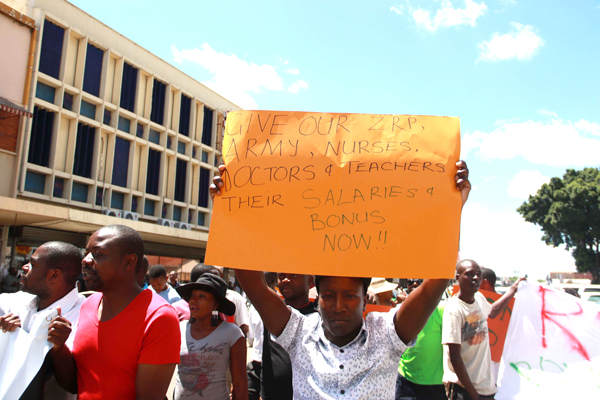
TEACHERS have demanded to be paid a COVID-19 risk allowance when schools eventually open, according to submissions to the Education ministry by the Progressive Teachers Union of Zimbabwe (PTUZ).

BY NQOBANI NDLOVU

The Education ministry has invited submissions from teacher unions and other stakeholders on the issue of learning in the face of COVID-19 and measures to take when schools open for the second term.

In its submissions dated April 26, PTUZ said a risk allowance for teachers was non-negotiable as the educators were at high risk through interactions with tens of students from different backgrounds daily.

“The government should pay a meaningful risk allowance to teachers since they are frontline workers in the fight against the disease since it is a non-contestable fact that teachers interact with thousands of children from a diversity of backgrounds per day,” PTUZ secretary-general Raymond Majongwe wrote.

“We want to state without any equivocation that our members are not prepared to take the risk of teaching classes with more than 20 learners for nothing as the consequences are dire. As a union, it would be an abdication of responsibility if we sacrifice the lives of our members at the altar of national expediency.”

Indications are that schools opening will be pushed back by more weeks or months, with the PTUZ suggesting a mid-July review of the prevailing situation before a final decision could be made.
There have been suggestions of virtual learning, but the digital divide among learners in the rural and urban set-up makes it impossible, educators have argued.

The Zimbabwe Schools Examination Council has revealed that it has been forced to push back the June examinations by a month in the face of the COVID-19 scare.

“It would be grossly irresponsible for the government to re-open schools at a time when it is not clear whether we are moving forward, backward or stationary in terms of managing the novel disease,” Majongwe added as the PTUZ warned against “exhibiting Dutch courage” towards a disease that has knocked economies and health systems globally.

The post Teachers want COVID-19 risk allowance appeared first on Zimbabwe Situation.

Latest on MDC official who got into trouble after he described President Mnangagwa as a fool

Chipinge Town councillor, Chrispen Rambu (39) of Usanga, Medium Density who allegedly described President Emmerson Mnangagwa as a fool has appeared at the local Magistrates Court where he was granted $500 bail today. Rambu who calls himself ‘Brave Hear…

Chipinge Town councillor, Chrispen Rambu (39) of Usanga, Medium Density who allegedly described President Emmerson Mnangagwa as a fool has appeared at the local Magistrates Court where he was granted $500 bail today. Rambu who calls himself 'Brave Heart' on his Econet line allegedly sent a message on a WhatsApp group in which he said […]

Coronavirus has negative impact on SDGs

Source: Coronavirus has negative impact on SDGs | Newsday (News) WHEN the 193 United Nations member States pledged to support the 17 Sustainable Development Goals (SDGs) in September 2015, alongside 169 targets, the world came up with clear benchmarks building on the now-defunct Millennium Development Goals (MDGs). Developing countries were to realise tangible benefits in […]

The post Coronavirus has negative impact on SDGs appeared first on Zimbabwe Situation.

Source: Coronavirus has negative impact on SDGs | Newsday (News)

WHEN the 193 United Nations member States pledged to support the 17 Sustainable Development Goals (SDGs) in September 2015, alongside 169 targets, the world came up with clear benchmarks building on the now-defunct Millennium Development Goals (MDGs). Developing countries were to realise tangible benefits in the areas of poverty eradication and zero hunger (quite ambitious though), including guaranteeing prosperity and protecting the planet, among others. Developing countries, in particular, have most of these SDGs directly impacting on them more than developed countries but now gains realised so far risk being eroded by the emergence of COVID-19.

Building global partnerships for sustainable development, based on a spirit of global solidarity, focusing on the needs of the poorest and the most vulnerable, in which all countries would participate, no one was going to be left behind and this became the motto. In this regard, the member countries agreed to review the set bench marks periodically. First, the set targets focused on 2015 to 2030, which became to be known as Agenda 2030 but witnessing the acceleration of time towards 2030, member States are now talking of Agenda 2050 to 2060. These are complexities associated with realising dreams, especially loud dreams, although people will never stop dreaming though.

Although all the 17 goals cannot be treated individually and in isolation, independent from one another, they are very integrative and have very strong working relationships. If one goal is affected, this would affect the outcome of other goals. This is the case with SDG3 (Good health and well-being) where COVID-19 is the main agent but its emergence has since turned everything upside down. The fundamental issue of health is in the public domain, our health is central to our livelihoods. SDG3 makes sure that everyone has health coverage, access to safe and effective medicines and vaccines, especially these times of COVID-19. This also means that the available means to make good health more than just a wish have been affected. In this regard, all the progress and targets that were beginning to bear fruit are severely threatened with erosion or they are at a standstill. For this reason, soon after the coronavirus easing and allowing people to move out, a major review might be in the offing although it’s not clear which agenda they are going to come up with.

The main problem with the COVID-19 pandemic is that it started hitting hard where the necessary assistance and funding should normally come from. It is from the western nations where major donors and other multilateral lending institutions are. This is due to their strong economies and resource bases, complemented by a long history of donating and lending. Right now these western countries are preoccupied with what COVID-19 has done to their livelihoods. This means that the conveyor belt is currently stationary except for emergence cases that the World Health Organisation (WHO) has to deal directly with. In this regard, climate change under SDG 13 (Climate action) may be the biggest loser. The idea of taking urgent action to combat climate change has been significantly slowed down or it’s rather at a standstill.

This is because most of the green-funded programmes for developing countries’ national adaptation plans (NAP), bank rolled by donor funding, aimed at building these countries resilience to climate change and guided by their national response strategies have been affected with regard to their timelines. These initiatives would strengthen the developing countries’ adaptive capacities to climate change and Zimbabwe was doing well in this regard. Many developing countries’ adaptive plans had embarked on massive recovery programmes which have since been put on hold until at an appropriate time to do so.

In this regard, the COVID-19 issue became a new learning curve with regard to human preparedness, in relation to climate action strategies which affect all aspects of human survival. Every country in the world is witnessing drastic effects of climate change, through tropical cyclones, flooding, activities that increase greenhouse gas emissions, famine and hunger, just to mention a few.

Although developing countries welcome and appreciate green funding from international donors, COVID-19 has come as a wake-up call for developing countries to fund the national adaptation programmes from within. Then the donors would come to support what is already on the ground not on paper. As it sands right now, developing countries would now rely on the availability of funds for their adaptation programmes to continue or even new ones to kick-start. Promised funding may still come or can be reduced or even suspended and this would spell doom for the already incapacitated developing countries that rely on food hand-outs in times of crises most of the times.

In this regard, developing countries need to work hard on the land and promote sustainable paths to self-reliance in order to manage hunger and food insecurity. According to the paper titled, For Lack of Will, Child Hunger in Africa, over 50% of children in Africa continue to die of hunger-related ailments while about 257 million Africans are facing starvation. In this view, COVID-19 has accelerated issues of starvation due to lockdown activities in already vulnerable African countries. In this regard, COVID-19 is not the cause of starvation in African countries but it has compounded an already bad situation in these countries. Even if most of the citizens of African countries were to be released into the streets today, they will still be vulnerable to hunger and starvation because they have mastered the unsustainable art of surviving from hand to mouth.

Climate change impacts affect SDGs 1(No Poverty), 2 (Zero Hunger), 3 (Good Health and Well-being), 4 (Quality Education), 5 (Gender Equality), 7 (Affordable Clean Energy), 8 (Decent Work and Economic Growth), just to mention a few. All these listed goals and others that have not been mentioned, have been affected by COVID-19. In this regard, human beings find themselves in a very difficult position, where there are supposed to fight both climate change and COVID-19 at the same time. As a result of these two scourges, an ecological Armageddon is in the making and a humanitarian disaster is already in underway.

SDG 4 (Quality Education) has also been severely affected by COVID-19 more than anything else.

For the first time in the whole world, meaningful learning has since been stopped. This is due to the critical component of observing social distance. With many classes, with the teacher-pupil ratio of one teacher to 60 or 70 pupils, not mentioning universities mass-lectures of between 100 to 200 students if not more, which would appear as if they are rallies, surely the sooner this was stopped the better. Unfortunately, it is in the education sector where lies and misinformation have been sharpened, overnight across the globe. While many educational institutions have shifted focus to both online distance learning and online distance e-learning it is the quality of the delivery system which has been severely compromised.

 Peter Makwanya is a climate change communicator. He writes in his personal capacity and can be contacted on: petrovmoyt@gmail.com

The post Coronavirus has negative impact on SDGs appeared first on NewsDay Zimbabwe.

The post Coronavirus has negative impact on SDGs appeared first on Zimbabwe Situation.

Putting the cart before the horse: Why vendor stalls demolitions are ill-advised

Source: Putting the cart before the horse: Why vendor stalls demolitions are ill-advised | Newsday (News) This past week, Harare City Council municipal police went about demolishing illegal market stalls, vending sites and workspaces used by vendors and informal traders in the high-density suburbs such as Mbare, Highfields, Hopely and Glen Norah. By Francis Mukora […]

The post Putting the cart before the horse: Why vendor stalls demolitions are ill-advised appeared first on Zimbabwe Situation.

Source: Putting the cart before the horse: Why vendor stalls demolitions are ill-advised | Newsday (News)

This past week, Harare City Council municipal police went about demolishing illegal market stalls, vending sites and workspaces used by vendors and informal traders in the high-density suburbs such as Mbare, Highfields, Hopely and Glen Norah.

By Francis Mukora

It is not clear whether the demolitions are an enforcement of Section 8(1)(l) of Statutory Instrument 77 of 2020, gazetted on March 23, empowering government to “authorise the evacuation, closing, alteration or demolition of any premises whose occupation or use is deemed likely to aid the spread or render more difficult the eradication of Covid-19”.

Nor has it been clarified if this is compliance with the Ministry of Local Government and National Housing’s April 8, directive to local authorities to implement a Cabinet resolution “to clean up and renovate work spaces used by SMEs and informal traders during the lockdown period”.

Whatever the motivation, the all-important question pertains to whether it is essential or desirable to demolish vendors’ stalls in the midst of an unprecedented crisis already hitting the poor the most.

The impact of the COVID-19 inspired five-week lockdown on the livelihoods of the vendors and informal traders is dire and the demolitions of their workspaces will worsen it.

They lost property and stock while the demolitions themselves were characterised by corruption and human rights violations such as extortion, bribes harassment and assaults.

In an op-ed published in the NewsDay of April 6, two weeks after gazetting of S.I 77/2020, I warned about the possibility of the COVID-19 pandemic being abused as a pretext for demolitions.

I also cautioned that this would harm the socio-economic welfare of the already impoverished informal settlement dwellers surviving from vending.

The demolitions mean that after the lockdown, most informal traders will struggle to restart their businesses, having exhausted capital on lockdown subsistence, and having lost both their wares and work spaces.

It is important for me to emphasise that the organisation that I work for, Community Alliance for Human Settlements in Zimbabwe (CAHSZ), does not encourage illegal occupation of state land for whatever purpose.

CAHSZ strives for proper, orderly and lawful human settlements.

One of our formative goals is to contribute to Zimbabwe’s efforts to achieve sustainable cities and communities aspired under Sustainable Development Goal (SDG) 11.

However, the pursuit of this noble aspiration should not be at the expense of sanctified rights to livelihoods and shelter.

That is why, as CAHSZ, we advocate for relocation as a more humane alternative to forced evictions.

That is also why we advocate for human rights-based approaches that place citizens at the centre of all policies, whether aimed at governing human settlements, achieving sustainable communities or combating the COVID-19 pandemic.

On April 22, 2020, four days after Harare demolitions had begun, UN Secretary General Antonio Guterres gave an update on the COVID-19 global situation.

He called on all responses to ensure protection of livelihoods and to cushion the most vulnerable population sections such as informal traders, slum dwellers and internally displaced persons (IDPs).

The demolitions currently underway in Zimbabwe are a direct opposite of these recommendations.

In fact, they show that we learnt nothing and forgot nothing from Operation Murambatsvina of 2005.

Firstly, Operation Murambatsvina led to loss of livelihoods and shelter by at least 570 000 people.

Likewise, the current demolitions will disrupt jobs and livelihood sources of several thousand informal traders residing in the same urban and peri-urban informal settlements demolished during Operation Murambatsvina fifteen years ago.

Secondly, in 2005, the authorities started by demolishing illegal housing structures before implementing Operation Garikai/Hlalani Kuhle to build houses for those it had rendered homeless.

The victims had to stay in the open while houses were under construction.

This month, the City of Harare demolished vending sites first and then set out to finish construction of designated vending sites for relocation of the affected.

They put the cart before the horse, as affected vendors will be without operating spaces until construction has been finished.

Thirdly, the timing is insensitive.

Operation Murambatsvina was implemented in the midst of winter exposing women, children, the elderly and persons with disabilities to harsh weather conditions.

Current demolitions are being undertaken in the midst of the COVID-19 pandemic when informal traders who live on a dollar-per-day, hand-to-mouth basis have not been working for a month now due to the lockdown.

The big questions are; after the COVID-19 pandemic has been arrested, how do communities recover to become more sustainable and resilient?

How do we ensure that even the most vulnerable citizens are not left behind but are in better positions than before the pandemic?

These are three suggestions that can help make this possible.

Firstly, current COVID-19 mitigatory measures should guarantee, protect and promote access to social safety nets, especially for the most vulnerable populations such as informal settlement dwellers and traders who have limited access to social safety nets.

This should include immediate disbursement of social support grants promised by the government to cushion vulnerable citizens. This also includes improving availability of basic goods such as mealie meal at affordable prices.

Secondly, post-pandemic interventions should be responsive, inclusive and equitable enough to stimulate sustainable recovery of vulnerable groups such as youths and women informal traders being excluded by current government interventions.

An example is the ZWL$17 million COVID-19 Youth Relief Fund “meant to provide relief support to youth enterprises affected by the coronavirus pandemic and the measures taken to contain it”.

The fund’s eligibility requirements announced by Youth minister Kirsty Coventry on April 24 are stringent and discriminatory against youth informal traders.

Applicants are required to provide proof of residence and operation in Zimbabwe, such as bank statements of up to six months prior to the lockdown, and also proof of place of operation such as a valid lease agreement or utility bills.

Only the formalised businesses not affected by the demolitions meet these requirements.

Youth and female informal traders whose workspaces were demolished do not and so they will not access this stimulus package.

The government should revise these requirements to ensure that vulnerable groups such as youth and women informal traders equitably access the fund and any other resources and opportunities that will enable recovery and resilience.

Lastly, current COVID-19 preventive measures and recovery efforts should be consultative, open and transparent to include the input of those to be affected.

It is a fact that we currently live in desperate times that may justify desperate measures.

However, arbitrary measures such as the ongoing demolitions will only generate ill will and resistance thereby crippling all efforts to arrest the spread of COVID-19.

In a crisis such as this, citizens need agency and a voice in order for them to cooperate.

Broad-based participation guarantees this and the government should adopt it to ensure buy-in, trust, compliance and cooperation by citizens.

Francis Mukora is a certified public policy analyst, human rights campaigner and social justice activist. He writes in his capacity as the Research and Advocacy Coordinator for Community Alliance for Human Settlements in Zimbabwe (CAHSZ) an organisation advocating for safe and secure settlements and access to socio-economic rights for all Zimbabweans.

The post Putting the cart before the horse: Why vendor stalls demolitions are ill-advised appeared first on NewsDay Zimbabwe.

The post Putting the cart before the horse: Why vendor stalls demolitions are ill-advised appeared first on Zimbabwe Situation.