GOVERNMENT and business have reached a deal to revert the prices of basic commodities to what shops were charging on March 25 and placed a moratorium on the cost of the goods, as recent price hikes were based on speculative behaviour and unjustified. T…
GOVERNMENT and business have reached a deal to revert the prices of basic commodities to what shops were charging on March 25 and placed a moratorium on the cost of the goods, as recent price hikes were based on speculative behaviour and unjustified. The Government engaged key stakeholders that include Grain Millers Association of Zimbabwe, […]
Fans of popular socialite, Pokello Nare were yesterday shocked to learn that their idol is not on Facebook, meaning that the person they have been following thinking is her, is actually a stalker. Taking to her Twitter page earlier this morning, Pokell…
Fans of popular socialite, Pokello Nare were yesterday shocked to learn that their idol is not on Facebook, meaning that the person they have been following thinking is her, is actually a stalker. Taking to her Twitter page earlier this morning, Pokello who rose to fame after featuring in the Big Brother Africa reality show […]
On April 18, as Zimbabweans look back on 40 years of independence from British colonial rule, it is a fitting time to reflect on the country’s human rights record. Source: Reversing Zimbabwe’s Dismal Rights Record Since 1980 | Human Rights Watch EXPAND Zimbabwe’s President Emmerson Mnangagwa attends the World Economic Forum (WEF) annual meeting in […]
On April 18, as Zimbabweans look back on 40 years of independence from British colonial rule, it is a fitting time to reflect on the country’s human rights record.
On April 18, as Zimbabweans look back on 40 years of independence from British colonial rule, it is a fitting time to reflect on the country’s human rights record. Born a few months before independence, I have no personal experience of the liberation struggle. But my father often regaled me with colorful accounts of the fight for justice, equality and non-discrimination. From those accounts and my experience as a lawyer and human rights advocate, it seems that Zimbabwe has fared poorly in its duty to respect and ensure basic rights and freedoms.
For the first 37 years of independence, until November 2017, Zimbabwe was under the iron-fist rule of one man, the late President Robert Gabriel Mugabe. For some, Mugabe remains a hero, for championing the liberation struggle against colonial rule, empowerment of the landless poor, and his investment in education in the early years of his rule.
But others remember Mugabe’s rule for widespread human rights violations, near-total impunity for those responsible, and destruction of the country’s economy. Even as Mugabe’s government promoted universal access to education and health, and ensured the country’s food security in the early 1980s, it used manipulation and repression to hold on to power. From the time the country became independent, the ruling ZANU-PF party has used its supporters, as well as the army and the police, to commit acts of violence against opponents and use state institutions for political ends.
The first post-independence overt military involvement in serious abuses in Zimbabwe was between 1982 and 1987, when the Mugabe government deployed a section of the army, the Fifth Brigade ostensibly to quell dissident disturbances in the Midlands and Matabeleland provinces. This unit, trained by North Korean instructors, was code named “Gukurahundi,”– the rain that washes away the chaff.
It appears ZANU-PF used the pretext of the disturbances to unleash violence on the supporters of the Zimbabwe African People’s Union (ZAPU) to ensure the dominance of ZANU-PF and to render ZAPU irrelevant. According to the Catholic Commission on Justice and Peace, the Fifth Brigade carried out widespread atrocities such as torture and extrajudicial executions of more than 3,000 people. The ZAPU leader, Joshua Nkomo, and human rights groups put the figure at 20,000.
Mugabe in 1983 set up the Chihambakwe Commission of Inquiry into the Gukurahundi atrocities. Its damning findings were leaked but never officially made public and its recommendations on the security sector were never carried out. In 1988 the ZANU-PF government issued Clemency Order Number 1, granting amnesty to all those involved in human rights violations between 1982 and 1987, benefiting mainly the army and the state security agency, the Central Intelligence Organization (CIO), which at the time of the atrocities was overseen by the current president, Emmerson Mnangagwa.
Successive election periods were characterized by impunity for widespread political violence mainly by ZANU-PF, its allies, and government agencies, including sections of the army and the CIO. In 1993, Mugabe granted amnesty to two state agents convicted of attempted murder of Patrick Kombayi an opposition candidate for the 1990 elections. In 1995 Mugabe again issued an amnesty for all politically motivated crimes and human rights abuses, including beatings, arson, kidnapping and torture. On October 6, 2000, following widespread political violence during parliamentary elections, Mugabe pardoned those responsible for politically motivated crimes committed during the January-July 2000 campaign period.
In the lead-up to the June 2008 presidential runoff elections, elements in the security forces and ZANU-PF supporters orchestrated widespread political violence throughout the country against the opposition Movement for Democratic Change (MDC) led by the late Morgan Tsvangirai. This violence resulted in the killings of hundreds of perceived MDC activists and supporters and the beating, torture, and forced displacement of thousands more.
In 2000, with support from the government, ZANU-PF and its allies carried out violent invasions of white-owned farms in which several farmers and farm workers were killed. In 2005 the government carried out an unprecedented campaign of forced evictions in urban areas, “Operation Murambatsvina” — which means “clear the filth” in Shona, causing a massive internal displacement crisis in which an estimated 700,000 people lost their shelter, livelihood or both. In 2007 incidents of police violence and intimidation increased significantly, culminating in the arrest and beating of more than 50 opposition activists in police custody. As with previous state-sponsored political violence, the authorities failed to hold accountable those responsible, entrenching impunity within the security forces.
In addition to the close political alliance between the leadership of ZANU-PF and the security forces, another driving force for political interference and human rights abuses by security forces appears to have been the need to protect ill-gotten wealth and other vested economic interests. This has included control of revenue from Marange diamond fields, where sections of the army directly owned and operated mining companies.
Since taking over after Mugabe was forced out of power in November 2017, President Mnangagwa has repeatedly voiced his commitments to human rights reforms. But his administration remains highly intolerant of basic rights, peaceful dissent, and free expression. The security forces have continued to commit serious and intensified violations, including violent attacks, abductions, torture, and other abuses against the opposition and civil society activists.
The Motlanthe Commission of Inquiry, set up by President Mnangagwa following the post-election violence of August 1, 2018, found that 6 people died and 35 others were injured as a result of actions by the state security forces. Some commission recommendations, which have yet to be carried out, include ensuring that those responsible for the violence are held accountable and that a special committee is established to compensate families of those who were killed and who lost property.
Human Rights Watch investigations found that state security forces used excessive and lethal force to crush nationwide protests in January 2019. During and after the protests, the forces fired live ammunition that killed 17 people, and at least 17 women were raped. No security force personnel have been arrested or prosecuted for these abuses.
Even outside of politics, Zimbabweans have not fared much better in terms of their rights. For decades, Zimbabwe has grappled with a shortage of skilled professionals and healthcare staff and an eroded infrastructure with ill-equipped hospitals and a lack of essential medicines and commodities. Violations of the right to food, through acute food shortages, persist. According to the United Nations, 7.7 million people (60 percent of the population) are food insecure. Around 5.5 million of these people live in rural areas and 2.2 million in urban areas.
Last September, the Harare City Council shut down its main water treatment plant, known as Morton Jaffray, due to shortages of imported water treatment chemicals and low water levels at Lake Chivero, southwest of the city. This exposed millions of Harare residents to the risk of water-borne diseases like cholera, which have ravaged the city in the past. In 2008, a cholera outbreak in Harare claimed more than 4,200 lives. The conditions that contributed to the spread of cholera during the latest outbreak in September 2018, and another outbreak a decade earlier, still exist.
The Zimbabwe Human Rights Commission, chaired by Dr. Elasto Mugwadi, seems to be a silver lining in the dark cloud of rights abuses in the country. The commission, with constitutional responsibilities to ensure the promotion and protection of human rights in Zimbabwe, has boldly carried out extensive human rights investigations and has frequently spoken out against abuses by state agents. The commission investigated the 2019 public protests against the economic collapse and their aftermath and concluded in a report published in September that armed and uniformed members of the Zimbabwe National Army and the Zimbabwe Republic Police systematically tortured suspected protesters.
Zimbabwe needs more state institutions that deliver justice. The judiciary and the prosecution authority need to be independent, professional, and non-partisan to ensure that human rights are protected and promoted.
Zimbabwe authorities need to reform the security forces, completely end their involvement in partisan politics, and ensure that they act professionally, and in a rights-respecting manner. For the serious human rights abuses since independence – including arbitrary arrests, torture, murder, and rape — the government should order prompt investigations. It should carry out recommendations stemming from these investigations and by commissions established to protect rights.
This includes prosecuting implicated members of security forces in accordance with national law and international standards. Given the scale of human rights abuses in which security forces are implicated, the establishment of an independent complaint system under the 2013 constitution, to receive and investigate complaints from members of the public, is long overdue.
Reform should include human rights training and education, with international assistance, for members of the security forces and other state agencies. All training should be consistent with international human rights standards, such as the United Nations Code of Conduct for Law Enforcement Officials and the Basic Principles on the Use of Force and Firearms by Law Enforcement Officials.
With the necessary political will, it is possible for the Zimbabwe government to build on its existing constitutional human rights framework, to enable millions of Zimbabweans to realize one of the main objectives of the struggle for independence, the enjoyment of fundamental human rights and freedoms.
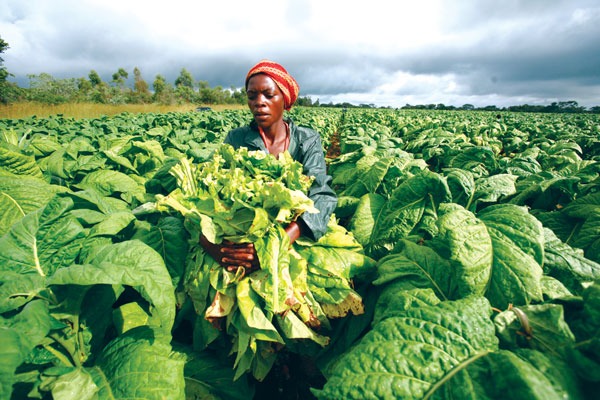
Source: Farmers decry tobacco season deferment – NewsDay Zimbabwe THE tobacco marketing season which was set to commence today has been deferred to a later date as authorities struggle to timely put in place preventive measures against the spreading of the coronavirus pandemic during the selling process prompting embattled growers to raise concern over lack […]
THE tobacco marketing season which was set to commence today has been deferred to a later date as authorities struggle to timely put in place preventive measures against the spreading of the coronavirus pandemic during the selling process prompting embattled growers to raise concern over lack of storage facilities.
BY FIDELITY MHLANGA
Last year, the golden leaf marketing season commenced on March 21. Malawi’s marketing season started on Monday in Lilongwe.
Tobacco is one of the country’s top foreign currency earners and is key in providing liquidity for the importation of key essentials that include fuel, grain and raw materials.
Tobacco Industry and Marketing Board chairperson Patrick Devenish told NewsDay yesterday that after a meeting held on Monday it was agreed that the issue of the date be discussed in Cabinet.
“The tobacco season is not starting tomorrow. We had a big meeting yesterday (Monday) with two agriculture deputy ministers. The agreement was that they have to take the issue to the COVID-19 taskforce and then to Cabinet. So as it stands we don’t have another date but it will be soon. The industry has to be prepared amid this coronavirus,” Devenish said.
Zimbabwe Commercial Farmers Union president Shadreck Makombe said farmers are caught between a rock and hard place as postponement brings risks to the tobacco crop.
We cannot run away from the fact that the postponement has brought about inconvenience given that it came at the 11th hour. Farmers were ready to start selling their crop. But now we have to juxtapose that with the risk of contracting COVID-19. As much as farmers may likely incur losses but life is more precious,” Makombe said
“Now that the date is not definite, farmers are scared of incurring storage losses, as we know tobacco has been lost previously through fire outbreaks. So we are advising them to take insurance.”
Tobacco marketing season not only attracts thousands of growers from different parts of the country to the selling floors but also draws informal traders and small and medium enterprise traders who normally make quick bucks by selling various products and services.
According to a tobacco stakeholders guidance paper presented recently to government, informal traders shall be prohibited from carrying out any business activities at the floors in order to enforce social distancing.
Unlike the previous seasons, stakeholders proposed that farmers be prohibited to sleep over at the selling points with auction floors directed not to offer over-night accommodation to farmers.
Moreso, TIMB is expected to enforce the deliver today and sale tomorrow policy with each batch set to have a maximum of 20 farmers to be allowed to complete its sale before the next one.
Further, the contractors operating decentralised selling points (outside Harare) were advised to encourage their farmers to make use of these facilities. President Emmerson Mnangagwa hinted on this during his address on Sunday, notwithstanding the fact that very few tobacco buyers operate floors outside Harare.
“Decentralisation is not a one-day event. It is a process. As it stands there are few companies that have decentralised their operations,” Makombe said.
Former ZCFU president Wonder Chabikwa said it was high time e-marketing system is adopted to avoid massive tobacco leaf losses due to decaying of ripened tobacco in the fields as a result of shortage of curing space.
“There must be a way to market our crop so that farmers do not keep holding it. We can sell our crop without crowding our people. We need an improved system. We need to embrace the electronic system. It was once embraced in 2017 but was later abandoned. Farmers do not have the capacity to keep holding onto their crop,”Chabikwa said.
The e-marketing system which sought to eliminate illicit activities was marred with glitches amid revelations that it was sabotaged by unscrupulous elements who benefited from the manual system.
In the past season, the golden leaf’s average price was $2 per kg, down from $2,92 registered in the previous season. The 2019 total output grew to 259 million kg from 253 million kg in 2018.
TIMB said as of December 20, 2020, hectarage under tobacco marginally grew by 2,8% to 81 977 hectares against 79 708 hectares planted last year.
Source: Malaria cases increase by 40% – NewsDay Zimbabwe The national director for the malaria programme Joseph Mberi has said the increase in malaria cases and deaths coincided with the peak period of malaria transmission and the symptoms mimic other diseases, including COVID-19. BY PHYLLIS MBANJE Since the beginning of the year, over 170 000 […]
The national director for the malaria programme Joseph Mberi has said the increase in malaria cases and deaths coincided with the peak period of malaria transmission and the symptoms mimic other diseases, including COVID-19.
BY PHYLLIS MBANJE
Since the beginning of the year, over 170 000 malaria cases have been recorded with 152 deaths.
Concerns have been raised on the increased number of cases which surpassed those from precious years.
“In comparison with figures for the same period, we have seen a 40% increase on cases and 20% on deaths due to malaria,” Mberi said.
He said while the increase was worrisome, it was expected.
“Our malaria transmission pattern peaks during March and June. We have the highest because the rains would have already fallen and brought fertile breeding grounds for malaria,” he said.
Mberi added that because many people were harvesting during this period they would mostly be outdoors and were exposed with many unable to afford repellents.
“This year we have been unfortunate because the symptoms of malaria are similar to those of COVID-19. This calls for us to be more vigilant and do the right thing in identifying whether it is malaria or not,” he said.
Some of the signs and symptoms of malaria include fever, headache, joint pains, backache, shortness of breath, vomiting and even diarrhoea.
Mberi said they had instituted investigations on the affected provinces.
“Manicaland leads with 61% of the cases. This is largely due to the effects of Cyclone Idai. Many people still do not have homes and are exposed,” he said.
For Matabeleland South, he said preliminary findings indicated that the communities were very nomadic, constantly moving looking for grazing land.
“To date, 27 districts have received mosquito nets, while 31 have received residual spray,”
Meanwhile, Mberi said there was need for the health personnel, including village health workers to be provided with personal protective equipment (PPE).
“We are not blind to COVID-19. Government has put in place measures and we are working with officials,” he said, adding that health workers moved in the community and were in direct contact with many people. This, he said, would expose them and so there was need for them to be given PPE like gloves and masks.
Zimbabwe has made significant progress in the reduction of the malaria burden. According to the Health ministry data, malaria incidence declined by 84,5% from 136/1 000 people in 2000 to 21/1 000 in 2016.
However, the 2017 incidence increased due to a rise in outbreaks. The country received a lot of rain during the 2016/2017 malaria season which increased mosquito-breeding places resulting in the increased mosquito population density. This led to an increase in malaria outbreaks experienced in the provinces.
Floods also displaced some populations which increased their vulnerability to malaria. By mid-third quarter of 2017, the number of cases had surpassed those recorded in 2015 and 2016 for the same period.