Our candles are burning on both ends

Source: Our candles are burning on both ends – NewsDay Zimbabwe A NATIONAL lockdown appears to be a logical step to stop the spread of COVID-19. For young people, women, and girls though, the effects of the lockdown have made survival both precarious and unbearable! Precarious because so much fear abounds and unbearable our livelihoods […]

The post Our candles are burning on both ends appeared first on Zimbabwe Situation.

Source: Our candles are burning on both ends – NewsDay Zimbabwe

A NATIONAL lockdown appears to be a logical step to stop the spread of COVID-19. For young people, women, and girls though, the effects of the lockdown have made survival both precarious and unbearable!

Precarious because so much fear abounds and unbearable our livelihoods have been disrupted. The streets from which we eke a living are out-of-bounds just like our customers who are in their homes.

As such, we cannot vend our wares or foods and have no immediate feasible alternatives. With little or no savings, the consequent commodity price hikes which were triggered by the lockdown have condemned us to a bleak future.

For those whose businesses rely on the internet to advertise, communicate with suppliers and customers, the soaring cost of internet bundles means we cannot thrive.

Given the fact that most of us young people are the breadwinners for our families, we are at our wits end.
Moreover, in patriarchal settings like abounds in our society, the responsibility to shoulder care work in the home only becomes heavier during crises like this one.

Each stomach in our care must still be fed even though there is lesser food available because of artificial shortages and the dry spell.

The threat of violence targeted at women and girls, in all its forms, is higher and indeed a number of incidents have been reported in the media over the past month.

Water shortages in Harare and beyond only serve to expose women and girls to sexual violence as they venture out to fetch water for domestic use.

The futility of the recommended social distancing measures is made evident by the cramped nature of our dwellings, the high population densities of our neighbourhoods and the queues we must endure to get the few necessities we can buy from local shops and malls.

Beyond statutory instruments and Press statements, it would be a welcome relief if government provided financial relief and policy packages (for example tax cuts and restructuring of loans) to address the plight of especially small and medium size enterprises (SMEs).

If there is anything we should learn from the current crisis, let it be the urgency of providing gender-responsive public services.

The burden of unpaid care work does not impact women and girls alone; it has a negative effect on overall economic productivity of the population because women lose time taking care of responsibilities that a functional social service system would address.

Zimbabwe has an opportunity to turn her fortunes around by investing in her young people through the provision of public services.

The future is young and the required attention must be paid to these issues.

 Future Karichi is a young entrepreneur, fashion designer, gender equality advocate, human rights activist and a member of Activista Zimbabwe youth movement. She writes in her own capacity.

The post Our candles are burning on both ends appeared first on Zimbabwe Situation.

The dilemma of the white community in Zimbabwe

Source: The dilemma of the white community in Zimbabwe – NewsDay Zimbabwe WITH the advent of the Second Republic, the Zimbabwean white community has once again reached crossroads as it did in 1965 (UDI), in 1980 (Black independence), 2000 (farm invasions) and 2018 going forward (Second Republic). The choice to be made has remained constant, […]

The post The dilemma of the white community in Zimbabwe appeared first on Zimbabwe Situation.

Source: The dilemma of the white community in Zimbabwe – NewsDay Zimbabwe

WITH the advent of the Second Republic, the Zimbabwean white community has once again reached crossroads as it did in 1965 (UDI), in 1980 (Black independence), 2000 (farm invasions) and 2018 going forward (Second Republic). The choice to be made has remained constant, whether to stay or to leave the country, to give your allegiance or not to, to be part of the new political order or not to.

For 20 years into independence, the late founding President Robert Mugabe and whites were strange bedfellows, underpinned by entrenched suspicions carried over from a bloody war of independence which left both sides with utmost distrust of each other.

Mugabe’s 1980 Independence Day speech allayed all fears “Let us deepen our sense of belonging and engender a common interest that knows no race, colour or creed. Let us truly become Zimbabweans with a single loyalty”. They dusted themselves, shook hands, toasted to a new era and conveniently forged a quid pro quo relationship which looked so well scripted, what could ever go wrong?

In the first decade, Mugabe blossomed in their culture and language and shone under the international limelight derived from the post-war success in racial integration, showered by the colonial master Britain, the ancestral home of the white community and they in turn reaped from his benevolence and protection against the strong socialist elements and blood-thirsty guerrillas within his Zanu PF party who wanted retributive justice.

From 1990 to 2000, no one really paid attention to what the white community was up to politically as they kept their end of the bargain, keeping the economic juggernaut at full throttle.

Their only white party, The Conservative Alliance of Zimbabwe (CAZ) had by 1990 all but ceased to exist, but they didn’t care at all. More comforting for them was the realisation that they could actually live and thrive under Mugabe, and it’s this economic hold they had over him which misled led them to make the fatal move in 2000 when they backed the emerging MDC party, a huge gamble whose scars they still nurse to this day.

In the free world they were only exercising their democratic rights like their black counterparts but to Mugabe it was the ultimate betrayal the whites owed him. He violently drove them off their farms, losing their century-old heritage and livelihoods passed on three generations before and also paid with their lives.

Stripped of their rights to political participation and association, some their citizenship, they waged futile legal battles in regional and international courts. The British government stood by as the events unfolded, to the local white community that aloofness and inaction was a deja vu moment, it typified the Great Betrayal referenced by Ian Smith.

They were, on their own, hung out to dry and it was decision time again, 1980 revisited, a typical gambler’s life, the second time in Zimbabwe’s history.

The farm invasions seemed to be the proverbial last straw which broke the camel’s back, thousands left the country but as happened in 1980 thousands chose to give Zimbabwe one last chance. The chance did come, their old nemesis Mugabe dramatically fell from power in 2017 in events which saw thousands of whites crawl out of the woodwork to join hands with fellow black Zimbabweans in celebration.

For once in Zimbabwe’s history we saw its full rainbow colours, the common thread being freedom. They had more reasons to celebrate than their black counterparts. Mugabe’s oppressive and dictatorial rule affected all Zimbabweans, but he took to his grave a grudge and bitterness against the white man which could not be appeased.

The dust has now settled and the Second Republic is in full swing. The white community is once again weighing its chances, placing its last bets on Mugabe’s successor, Emmerson Mnangagwa and also waiting for the spoils of victory to come their way because when the party ended (Mugabe’s ouster) like unwanted wedding guests, they hurriedly retreated back to their cocoons.

The temptation to step out into mainstream society is overwhelming but the overtures from those in power have been tentative and less reassuring. It’s been two years since the Borrowdale Racecourse tea party (July 2018) an event which seemed to signal ‘peace in our time’ and a fresh start for all parties.

The white community held a ‘one-on-one’ clear the air meeting with Mnangagwa. It was a one-off chance meeting and it’s not exactly clear who took who for a ride, there has not been a follow-up meeting.

The November 2017 euphoria and spirit of oneness quickly evaporated, the exchange of kisses and hugs, walking hand in hand along the streets of Harare was just for the moment and too good to be true.

Business and commerce is at the heartbeat of the new Zimbabwe and it’s the very space they are hoping to be invited to take up their seat at the high table.

However, the majority are born farmers and know no other life, but their re-entry is hindered by historical, political and financial intricacies which will take great political resolve to undo the knots. When the opportunity comes, it will undoubtedly carry a heavy patronage price tag, linked to loyalty, support and allegiance and the offer periodically reviewed if these are deemed to be below par.

The sprinkles of white representatives in Cabinet, business and advisory platforms is tokenism, what matters most for them goes beyond the policies, legal statutes and laws that protect their interests and investments (these have been violated before) but in the trust in the leadership and confidence that the country is on the right trajectory.

The trust deficit in leadership is the vacuum which every citizen is yearning for fulfilment. Trust is easily destroyed but difficult to restore and the lack of it has taken us back to where it all began in 1980. Forty wasted years of playing cat and mouse, with no winner. A tragedy.

Their numbers have whittled down from 200 000 at independence to less than 50 000 but they remain a very powerful and well networked constituency with tentacles reaching the very core of White Hall and Capitol Hill. But it’s at home where they want their numbers to count the most.

How far do they step out or voice out on civic and national governance matters without inviting a backlash and labelling. Dabbling in opposition politics is now for the die-hards and not worth it, and unlike their black counterparts there is only one party left for them to support.

They feel trapped, cornered and voiceless, and have now been thrown into the harsh and deprived world of Zimbabwe’s minority politics where political, social and economic rights come at a premium. Having sat on top of the food chain for decades, this has had a humbling effect.

But one would think the whites who have remained behind and survived this tumultuous journey are here for the long haul, have no other home than this country, and need not pay for the sins of their departed kith and kin for whatever grief they have may have caused.

One banner at the Borrowdale Racecourse tea party aptly summed it up “The past is gone, the future is ahead” but everyone has to be on the same page in words and in deeds, if not, it might perhaps be the time to roll the dice one final time.

 Andrew K Tsiga is a political economy analyst and researcher, consultant on governance, programming and project management

The post The dilemma of the white community in Zimbabwe appeared first on Zimbabwe Situation.
Is there anything unusual about Zimbabwe’s latest malaria infection rates

Source: Is there anything unusual about Zimbabwe’s latest malaria infection rates – NewsDay Zimbabwe A post by the Ministry of Health and Child Care that 131 people had died from malaria so far this year stoked social media speculation, with some users saying these figures are unusual and could be COVID-19 cases. By Zimfact The […]

The post Is there anything unusual about Zimbabwe’s latest malaria infection rates appeared first on Zimbabwe Situation.
Source: Is there anything unusual about Zimbabwe’s latest malaria infection rates – NewsDay Zimbabwe

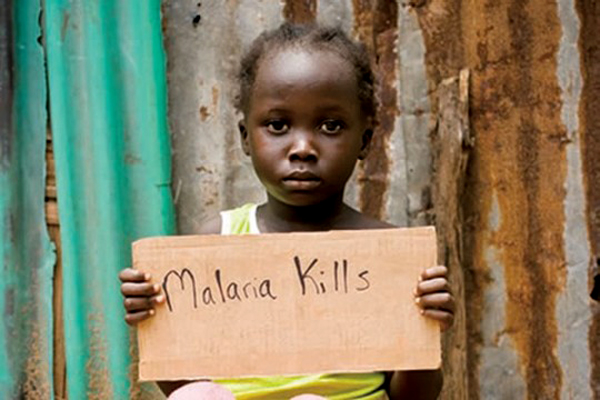
A post by the Ministry of Health and Child Care that 131 people had died from malaria so far this year stoked social media speculation, with some users saying these figures are unusual and could be COVID-19 cases.

By Zimfact

The Ministry tweeted: “Malaria claims 131 deaths. The cumulative figures for malaria are 135 585 and 131 deaths. A total 201 malaria outbreaks have been reported throughout the country mostly from malarious provinces such as Manicaland, Masvingo and Mash East.”

But are these numbers unusual? No. They are consistent with recent trends in malaria infections and deaths.

Zimbabwe is currently in malaria peak season, which according to the Ministry of Health, is between February and May.

This means that reported cases of malaria traditionally increase during this time of the year.

An update released by the Ministry of Health on May 3, 2019 showed that 118 people had died from malaria since the beginning of last year. A total of 118 473 cases had been reported

According to data from the Ministry, there were a total of 264,278 malaria cases and 192 deaths in the whole of 2018. In 2017, cumulative figures for malaria were 391 634 cases and 518 deaths.

The number of deaths in recent years are 654 in 2014; 462 in 2015 and 231 in 2016.

Zimbabwe has, on average, slowed down the incidence of malaria since 2000, when 1069 people died, according to WHO data.

Malaria incidence in Zimbabwe was 136 per 1000 people in 2000. In 2003, there were 155 malaria cases per 1000 people. By 2012, the incidence had been cut to 22 per 1000 populations. The figure rose in 2013 to 29/1000, to 39/1000 in 2014, 29/1000 in 2015 and 21/1000 in 2016.

Data by the WHO on malaria in Zimbabwe

Malaria and COVID-19
In the WHO’s Global Malaria Programme’s latest report, Tailoring malaria interventions in the Covid-19 response, released in April, the WHO warns governments in malaria-prone countries such as Zimbabwe that there is a risk of paying less attention to diseases such as malaria, as they focus on COVID-19
“While taking these measures (against COVID-19), it is essential that other killer diseases, such as malaria, are not ignored.

We know from the recent Ebola outbreak in west Africa that a sudden increased demand on fragile health services can lead to substantial increases in morbidity and mortality from other diseases, including malaria.

The COVID-19 pandemic could be devastating on its own – but this devastation will be substantially amplified if the response undermines the provision of life-saving services for other diseases,” the report says.

Unlike COVID-19 currently, malaria is tested at local health facility level using rapid diagnostic tests, according to national policy.

How prevalent is malaria in Zimbabwe?
Malaria, alongside AIDS and TB, is one of the worst killer diseases in Zimbabwe.

According to the Government of Zimbabwe’s National Health Strategy for 2016 to 2020, “malaria still remains an important communicable condition in Zimbabwe. Of the 63 districts, 47 are high burdened, with the eastern and northern border districts being the worst affected”.

In Zimbabwe, half the country lives in malaria prone areas, according to the Ministry of Health.

Malaria accounts for between 30 to 50 percent of outpatient attendances in the moderate to high transmission districts during the peak transmission period.

Conclusion
Recently announced malaria statistics are in line with trends in recent years for Zimbabwe, which has high rates of malaria infections.

This article was published by ZimFact and is reproduced on a Commons Licence

The post Is there anything unusual about Zimbabwe’s latest malaria infection rates appeared first on Zimbabwe Situation.

UMP malaria cases spike to 3 000

Source: UMP malaria cases spike to 3 000 | Newsday (National) CLOSE to 2 500 villagers in Uzumba, Maramba and Pfungwe have tested positive to malaria in a single week, with cases now totalling 3 000 following an outbreak that has left the health delivery system paralysed. BY JAIROS SAUNYAMA The spike in the cases […]

The post UMP malaria cases spike to 3 000 appeared first on Zimbabwe Situation.

Source: UMP malaria cases spike to 3 000 | Newsday (National)

CLOSE to 2 500 villagers in Uzumba, Maramba and Pfungwe have tested positive to malaria in a single week, with cases now totalling 3 000 following an outbreak that has left the health delivery system paralysed.

BY JAIROS SAUNYAMA

The spike in the cases rose from 584 two weeks ago, with no death yet recorded.

Provincial medical director Simukai Zizhou said malaria hotspots were along the Mazowe and Nyadire rivers.

Maramba legislator Tichaona Karimazondo told First Lady Auxillia Mnangagwa during a visit at the weekend that new cases were recorded as the outbreak wreaks havoc in the ruling Zanu PF party stronghold.

“There is a malaria outbreak here and, as I speak, we have recorded a total of 3 000 people who are sick,” he said.

Karimazondo yesterday said government had since dispatched medication in the area.

“The good thing is that medication is available and the health workers are on the ground to save lives. However, the problem we are facing is of PPEs [personal protective equipment]. We need the COVID-19 PPEs for the safety of health personnel since the Malaria symptoms are similar to COVID-19,” he
said.

Between January and March this year, eight people died in Mudzi District, out of the over 18 000 villagers who contracted the disease.

According to the Health ministry, the malaria outbreak has claimed 131 lives to date.

About 18 690 malaria cases and 17 deaths were recorded last week.

The post UMP malaria cases spike to 3 000 appeared first on NewsDay Zimbabwe.

The post UMP malaria cases spike to 3 000 appeared first on Zimbabwe Situation.

AMHVoices: Zim has been under lockdown since 1980

Source: AMHVoices: Zim has been under lockdown since 1980 | Newsday (National) ON Saturday, Zimbabwe “celebrated” 40 years of freedom from colonial rule, but four decades down the line the question still remains: Are we really free or we are just in a different state of lockdown? By Boniface Manjeya, Our Reader Do we really […]

The post AMHVoices: Zim has been under lockdown since 1980 appeared first on Zimbabwe Situation.

Source: AMHVoices: Zim has been under lockdown since 1980 | Newsday (National)

ON Saturday, Zimbabwe “celebrated” 40 years of freedom from colonial rule, but four decades down the line the question still remains: Are we really free or we are just in a different state of lockdown?

By Boniface Manjeya, Our Reader

Do we really have the freedom to speak and express ourselves? Freedom to associate? Freedom to make our own political choices? Freedom to be who we want to be without fear of persecution?

The situation that we find ourselves in 40 years into the so-called democracy and independence leaves a lot to be desired. We are more into the dependence side than independent. No jobs, ailing economy, dilapidated infrastructure, collapsed health system, captured organs of the State, the list is endless.

We are independent, but millions of sons and daughters of Zimbabwe are scattered all over the world enduring a lot of stress and suffering. It feels like we are a cursed generation with no hope of a better tomorrow. All the efforts and hardships endured to build a better tomorrow were thwarted by those who claim to have liberated us.

One wonders how long this pain and suffering will take. Is there any hope of a better tomorrow for us? We do appreciate the struggles that our leaders went through to liberate us but for how long are they going to hold this against us?

Zimbabwe’s ambassador to South Africa David Hamadziripi pointed out that we are celebrating the restoration of dignity to our people. Are we really?

Dignity is a product of freedom indeed. Freedom to opportunities, freedom from social injustices, freedom from discrimination and freedom to move at your own pace.

Unfortunately, this is not the case in our beloved Zimbabwe. The future looks bleak with each passing day. All hope seems to be disappearing. At times the only way to show that you care is by letting go, especially, if your claws are hurting that which you are clinging onto. It really feels like there is nothing to celebrate.

We love you so much our beloved leaders. We appreciate the pain and suffering you went through in fighting against our oppressors. Unfortunately, you have overstayed your welcome and this has tainted all the good work that you did. We do not need to shed more blood to have another crop of leaders.

Zimbabwe has a lot of potential because it has got both the natural and human resources needed. Only if you our elders learn to let go of your egos and understand that one does not need to be a war liberator to lead, otherwise we will need to have another Chimurenga in order to breed a new crop of leaders.

It is entirely up to you to create the freedom that you preach and fought for. Let Zimbabwe be for all and not a selected few. Unlock the doors for your fellow citizens to explore, express and exercise because this is the only way to take it forward and restore the dignity of your sons and daughters because as it stands there is no freedom.

The struggle still continues and this time the war is even worse because we are silently killing one another.

The post AMHVoices: Zim has been under lockdown since 1980 appeared first on NewsDay Zimbabwe.

The post AMHVoices: Zim has been under lockdown since 1980 appeared first on Zimbabwe Situation.