Update on 65 returnees from UK who refused compulsory quarantine at Belvedere Teacher’s College

Sixty-five Zimbabweans returning from the United Kingdom yesterday refused compulsory quarantine at Belvedere Technical Teacher’s College citing “poor conditions”, and preferred to be checked into a hotel instead but they were kept there overnight whil…

Sixty-five Zimbabweans returning from the United Kingdom yesterday refused compulsory quarantine at Belvedere Technical Teacher's College citing "poor conditions", and preferred to be checked into a hotel instead but they were kept there overnight while there is possible transfer to the University of Zimbabwe today. According to Government officials dealing with the returnees, they knew […]

Latest on man who published a fake statement claiming that President Mnangagwa had extended lockdown

A Chitungwiza man who allegedly authored and circulated a fake statement bearing President Mnangagwa’s signature announcing the extension of the lockdown period was arrested on Saturday. The fake statement was circulated on social media platforms nearl…

A Chitungwiza man who allegedly authored and circulated a fake statement bearing President Mnangagwa's signature announcing the extension of the lockdown period was arrested on Saturday. The fake statement was circulated on social media platforms nearly two weeks ago when the country was still in the initial 21-day lockdown period. Lovemore Zvokusekwa (36) of House […]

Municipal cops in bribery storm

Source: Municipal cops in bribery storm | Herald (Africa) Herald Correspondent Some Harare municipal police officers have been fingered in corruption, including demanding kickbacks from people defying lockdown regulations. They allegedly demand hard cash or goods, mostly food, to set offenders free. The municipal police officers, who were recently granted temporary arresting powers by the […]

The post Municipal cops in bribery storm appeared first on Zimbabwe Situation.

Source: Municipal cops in bribery storm | Herald (Africa)

Herald Correspondent

Some Harare municipal police officers have been fingered in corruption, including demanding kickbacks from people defying lockdown regulations.

They allegedly demand hard cash or goods, mostly food, to set offenders free.

The municipal police officers, who were recently granted temporary arresting powers by the Government during the lockdown period, are also reportedly confiscating goods being sold by fresh produce vendors despite these being classified as essential service providers.

Council has since instituted investigations into the cases of abuse of power by its officers.

In a statement, Harare City Council said it would institute disciplinary action against those caught offside.

It further encouraged stakeholders to provide them with visual and audio evidence of council police officers abusing their authority.

The council is urging residents to report any such abuses.

Reports can include pictures and videos, location and voice notes.

“Council does not condone abuse to citizens and will therefore take disciplinary action against officers found on the wrong side of the law,” reads the statement.

Reports can be forwarded to acting Chamber Secretary Mr Charles Kandemiri.

A Mbare Musika vendor, who preferred to be identified as Dread Kuda, told The Herald that they had a torrid time from the council police.

“The officers are taking advantage of the lockdown to milk us,” he said. “They are demanding tomatoes and onions. If we fail to comply, we are tormented for no apparent reason.

“The situation is somehow getting better compared to the first days. Responsible authorities should continue constantly doing checks and balances on council police operations.”

The post Municipal cops in bribery storm appeared first on Zimbabwe Situation.

Surge in GBV cases an eye opener 

Source: Surge in GBV cases an eye opener – NewsDay Zimbabwe RECENT reports by Musasa Project that in just 13 days into the 21-day COVID 19 lockdown in Zimbabwe, they had recorded 782 cases of gender-based violence (GBV) should serve as an eye opener to authorities to treat the scourge as an emergency. NewsDay Comment […]

The post Surge in GBV cases an eye opener  appeared first on Zimbabwe Situation.

Source: Surge in GBV cases an eye opener – NewsDay Zimbabwe
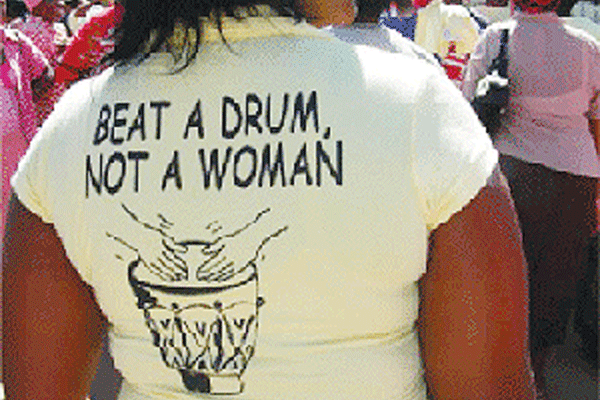
RECENT reports by Musasa Project that in just 13 days into the 21-day COVID 19 lockdown in Zimbabwe, they had recorded 782 cases of gender-based violence (GBV) should serve as an eye opener to authorities to treat the scourge as an emergency.

NewsDay Comment

One wonders how many cases would be recorded after the lockdown was extended yesterday by 14 more days — and mind you — these are only statistics of cases reported to Musasa Project, which means that the GBV victims might even be more.

What this means is that several incidents of GBV have not been reported because the women – or maybe also men who are victims of GBV probably have no information on how to report the cases during the lockdown, and even where to go for help.

Spending several hours together at home in a country with an ailing economy like Zimbabwe might pose a big challenge for most families whose breadwinner is not formally employed and needs to hustle daily in order to make a living.

Effectively, it means that there is no way to get money because there is no one in the streets to do business with.

It means that during the lockdown period most families whose breadwinners are in the informal business are struggling to put food on the table. The result is obviously squabbling and fights at home for the little food that is available. Children also become victims in the process.

Women are responsible for feeding the family as they prepare meals, and they could be experiencing a lot of abuse in the homes as they fail to provide food for the family during the lockdown period.

Even without the COVID-19 lockdown, GBV in Zimbabwe has always been a problem with statistics from the United Nations showing that one in three women aged 15 to 49 have experienced physical violence, and that about one in four women have experienced sexual violence since the age of 15.

There is a big possibility that some girls might be sexually abused by their male relatives during this lockdown period too. They also might not know where to go to report the cases.

It is therefore important that different rights organisations must increase their awareness programmes beyond making statements online. One suggestion would be that tollfree hotlines to report GBV cases should be created and sent to everyone in the country through telephone SMS messages.
This would reach out to millions of Zimbabweans with access to mobile phones, and will also send messages to the abusers that they may face prosecution for their GBV crimes.

Female MPs in Parliament are also encouraged to step up their fight against GBV by working with organisations such as Musasa Project to document the statistics on GBV victims during the lockdown period so that they can also use that information as a basis for their arguments during debate in Parliament on the motion on GBV.

If Parliament speaks out and loud enough against GBV, it would send a clear message to the abusers and speed up crafting of deterrent policies.

The dangers of GBV during the COVID-19 lockdown are that children that are exposed to violence will also be left psychologically traumatised.

That is why it is important for government to take measures now to come up with gender-specific needs whenever they come up with policies to assist vulnerable groups during such emergencies.

The post Surge in GBV cases an eye opener  appeared first on Zimbabwe Situation.

WHY HRE COUNCIL DEMOLISHED STRUCTURES

Cabinet has directed all local authorities to take
advantage of the national lockdown to clean-up and renovate workspaces occupied
by informal traders to improve their state ahead of the resumption of business.

Once players in SMEs and informal se…

Cabinet has directed all local authorities to take advantage of the national lockdown to clean-up and renovate workspaces occupied by informal traders to improve their state ahead of the resumption of business. Once players in SMEs and informal sector get protective clothing and equipment, they will be categorised as “essential”. This is contained in a circular dated April 8, 2020,