Health worker who was accused of moving around after testing positive for Covid-19 speaks out

A Bulawayo-based health care worker who State-owned media reported as gallivanting the city while spreading the COVID-19 has explained her circumstances. In a long letter, which we publish below in full, the patient says she is a victim of poor journal…

A Bulawayo-based health care worker who State-owned media reported as gallivanting the city while spreading the COVID-19 has explained her circumstances. In a long letter, which we publish below in full, the patient says she is a victim of poor journalism ethics by the Chronicle, as well as unethical behaviour by the Rapid Response Team […]

Air Zimbabwe Flies Boeing 777 To Maintenance After 3 Months On The Ground

Source: Air Zimbabwe Flies Boeing 777 To Maintenance After 3 Months On The Ground – Simple Flying Air Zimbabwe’s Boeing 777 has finally taken its first flight for the airline. Received in January, the Boeing widebody had sat on the ground in Harare since then. However, yesterday’s flight was not the beginning of a new […]

The post Air Zimbabwe Flies Boeing 777 To Maintenance After 3 Months On The Ground appeared first on Zimbabwe Situation.

Source: Air Zimbabwe Flies Boeing 777 To Maintenance After 3 Months On The Ground – Simple Flying

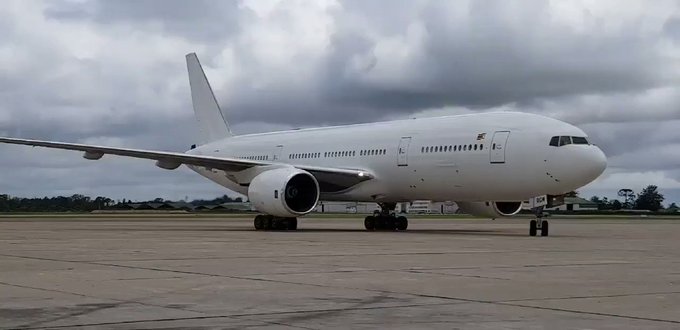
Air Zimbabwe’s Boeing 777 has finally taken its first flight for the airline. Received in January, the Boeing widebody had sat on the ground in Harare since then. However, yesterday’s flight was not the beginning of a new long haul future for Air Zimbabwe. Instead, the 777 has flown to Addis Ababa for maintenance, possibly in preparation for an impending lease.

Boeing 777 Getty Air France
Air Zimbabwe has flown its Boeing 777 (not pictured) for the first time! Photo: Getty Images
 

Air Zimbabwe’s unused 777

It was back in January when Air Zimbabwe celebrated the arrival of its Boeing 777 at the Robert Gabriel Mugabe International Airport in Harare. Coming from Malaysia Airlines, the 777-200 was not a particularly new or particularly unique aircraft, but for Air Zimbabwe, it held great significance.

ZimLive@zimlive

Air Zimbabwe has taken delivery of a Boeing 777-200 bought for US$16.5m from Malaysia Airlines in 2016. The now 15-year-old plane, initially acquired by the ill-fated Zimbabwe Airways, will see the flag carrier revive its London and Beijing routes

Embedded video

This delivery, the first of two aircraft destined for the carrier, was a signal that the government was freshly committed to the future of the state-owned airline. Acting President Constantino Chiwenga even said at the time,

“Receipt of this Boeing 777 aircraft is clear testimony that we are taking concrete steps to capacitate our national airline so that it plays a role in promoting economic growth, creating jobs and facilitating international trade and tourism.”

Concrete steps maybe, but the plane itself may as well have been made out of concrete for all the activity its seen. Since January, it has flown precisely zero times. That was, until yesterday.

Flying off to Addis

Yesterday, Z-RGM, the 15-year-old pride, and joy of Air Zimbabwe took off from Harare at around 11:38 local time. It flew for just under four hours before touching down in Ethiopia at Addis Ababa.

The flight took just under four hours. Image: FlightRadar24
 

The aircraft was piloted not by a Zimbabwean aviator, but by a German chap by the name of Werner Heumann. He had arrived into Harare on Monday on board an Ethiopian Airlines repatriation flight. That in itself was somewhat controversial, not because he wasn’t a local, but because the locals on the trips, returning from the US and UK mostly, had to enter a 14-day quarantine on arrival. Heumann and a Swiss national on the flight did not.

Regardless of the strange piloting situation, where was the 777 going, and would it be coming back? Air Zimbabwe released a press statement regarding the movement on Twitter.

Air Zimbabwe@FlyAirZimbabwe

***Update on B777-200ER (Z-RGM)***

View image on Twitter

The airline’s explanation suggests that the 777 is undergoing maintenance. Ethiopian Airlines has a substantial MRO base in Addis, so that’s a plausible explanation. However, the likelihood of it ever returning to Zimbabwean soil is rather remote.

Never to return?

Air Zimbabwe has been mulling leasing this aircraft out for some time. Despite the government making the right noises about the airline back in January, it appears their commitment to a robust national airline remains shaky. In its statement, Air Zimbabwe said,

“The maintenance tasks are key in ensuring that the aircraft remains serviceable in line with the ongoing process of dry leasing the aircraft. Discussions and negotiations are at an advanced stage with potential short-listed lessees, and a final position will be officially communicated once an agreement has been signed.”

It added that it hopes to be able to make an announcement in the coming months regarding details of the lease.

Nine airlines have shown interest in leasing Air ’s two long-haul Boeing 777-200ERs acquired from in a deal expected to generate up to US$400 000 a month. Airlines is understood to be leading the pack in lease negotiations.

View image on Twitter

Previously, a representative of the administrator, Mr. Tonderai Mukubvu of Grant Thornton, had indicated there were several airlines in the running to lease the long-haul plane. He told Bulawayo24,

“Government has not made any decision on the final lessee, but we have nine suitors that have shown interest. We are at advanced stages of discussions with all suitors and they all seem capable to lease the planes from a financial capacity perspective.”

It will be interesting to see whether this Boeing 777 ever goes back to Zimbabwe or straight to a lessor from Addis. Perhaps it could even stay in Addis and begin working for the incumbent Ethiopian Airlines. Either way, with it, slated to make a cool $400,000 a month for Air Zim, it could fix up a healthier future for the floundering airline.

The post Air Zimbabwe Flies Boeing 777 To Maintenance After 3 Months On The Ground appeared first on Zimbabwe Situation.

The Human Cost of Migration 

Last year something close to 150 million people without documents or money tried to migrate from their home countries to other countries where they thought they might find shelter and a means of earning a living. We see the pictures on our television screens and sometimes the image of the body of a small boy […]

The post The Human Cost of Migration  appeared first on Zimbabwe Situation.

Last year something close to 150 million people without documents or money tried to migrate from their home countries to other countries where they thought they might find shelter and a means of earning a living. We see the pictures on our television screens and sometimes the image of the body of a small boy on a beach in sneakers brings it home just what horrors people who undertake such journeys, face.

Source: The Human Cost of Migration – The Zimbabwean


Eddie Cross

We live in a very unequal world where the gap between the haves and the have nots grows wider every year. I remember so clearly my first visit to Europe and my impression that there were no poor people. I was wrong of course, there were poor people everywhere but in a country where the Poverty Datum Line is US$15 000 per annum, everything is relative. Where I come from poor people subsist on a tiny fraction of that sum and often go to bed hungry.

I am an African and it was a shock for even me to visit India for a Bankers Conference, to see the absolute poverty. To visit major Cities and see the streets closed off at night to allow hundreds of thousands of people sleep on the road. The streets covered in what looked like bundles of rags. Where the Municipality had a truck on standby in the morning to haul away those bundles that did not move when the sun came up. Africans place a high regard for dignity in death and for my colleagues this was an unforgettable experience.

So when your own country goes through tough times – like so often have been experienced in Zimbabwe in the past 40 years, families and individuals take hard decisions on what to do. One of my business ventures was a small supermarket and bakery at the border town of Beitbridge. Because of its location we had first-hand experience of the terrors that face migrants. My standing instruction to the staff was that no hungry person was to be turned away, they were taken to a stock room at the back and fed a meal and given something to drink.

A young man heard he could get something to eat there and he presented himself one morning and I was there at the time. I was puzzled – he was very young, about 18 I thought, came from the Binga District near the Zambezi. I sat him down and asked what his story was and he told me that he had been sent by his family to find a job in South Africa and then send money home to help his parents and siblings. He had travelled to the border by bus and then joined a group who waded through the Limpopo River about 20 kilometres downstream from the Border Post.

They all knew what they were doing was illegal and dangerous – gangs of thieves in South Africa preyed on the migrants and often they were joined by the Police and even army units deployed to stop the flow of migrants – that year I estimated 500 000 people had fled the country for greener pastures in South Africa and Botswana. He survived, walked 60 kilometres to the main road and got a lift into Johannesburg with a long distance driver. He had no money, no friends, could not speak any local language and very quickly he was picked up and taken to a refugee centre outside the City where hundreds of others were located. After a week they were herded onto a train, the doors locked and they were taken back to Zimbabwe – the train discharging its passengers onto the station at Beitbridge under the watchful eyes of the Zimbabwean Police and Army. He had not eaten for two days.

I gave him money to get back to Binga, his home district and wished him well. I have no doubt he would walk back down the River and try his luck once more. Had he got a job – any sort of job, he would have had to find a place to live in the sprawling shanty towns of Johannesburg and then send home to his family at least half of everything he earned. If he could not get a job he probably would have joined a gang and would be involved in crime. He would not see anything wrong with that – he was feeding his family, paying school fees and medical expenses – even food.

I asked a local friend to take me down the River to see where people were crossing. We drove along a road that ran close to the River and after a few kilometres came across a path down to the River through thick bush. It was not a path as such – more like a road, created by thousands of feet walking. On the other bank we could clearly see the South African fence – but it had been cut and wide spaces created for people trying to emigrate.

Sometime later, during the wet season I was told of an incident where 60 people were trying to cross the River and formed a line holding on to each other as they waded through the water. In the middle of the line was a young woman with a baby, trying to get to South Africa to visit her husband. The River was running strongly and she missed her step and fell, throwing her baby to the man in front of her. She was swept away. On the bank they gathered to consider what to do. No one was prepared to take on a small baby in such circumstances and I am told they threw the baby into the water to follow its mother.

Anyone who knows Zimbabweans will appreciate the agony of that decision for those people, but they felt they had no choice. I visited a squatter camp outside Johannesburg at the height of the flood of refugees to South Africa. It was a squalid place, tiny tin shacks packed with people and mainly single men. We could hear Shona being spoken. We talked with local activists and they described the often terrible conditions in such camps.

But it is not only the poor that flee from poorly governed countries, often it is the very best – American Universities come out to Zimbabwe every year to identify top students and offer them opportunities. My Granddaughter won a prestigious science prize against 30 000 students in southern Africa and was promptly offered opportunities abroad. Young people from well to do families get their passports and immediately make plans to go abroad. My son addressed a class of A level students at a local High School – out of 120 kids only 2 said they intended to stay.

So Africa loses its best to the West. Migration is also qualitative and we are the poorer because of this.

But perhaps the greatest damage will be the collapse of the African family. We have a saying that it takes a Village to raise a child. Where would we be as a continent without the extended families of Africa? In December this past year a couple returned from Australia for Christmas – then went back to Australia where they were now citizens. They left their three children with a Grandmother in their up market home in Harare. Students studying abroad talk of hunger and terrible living conditions, constant problems with the authorities and racial prejudice. Those who make it, prefer to stay and just send home a few dollars each month as a sop to their consciences. Eventually they are lost permanently to their foreign places of work. Even someone like me, feels like a stranger in those countries, goodness knows how deeply others feel the same thing.

A colleague was in London once and on Oxford Street when he saw a lone man who looked like a Zimbabwean on the opposite side of the street. He took a chance and shouted “Iwe” (hey you!). He stopped, looked around for where that had come from and they spent a marvellous day together, both lonely, lost Africans in a strange place, He was a student, he was there for a conference on agriculture, he was black, my colleague was white. It made no difference they were Zimbabweans.

Our job, if we are going to find solutions to these problems, is to get our countries working again. It is a choice and never easy. I choose to stay at home and work for a better future for all Zimbabweans. There can be no higher calling.

The post The Human Cost of Migration  appeared first on Zimbabwe Situation.

Helping children cope with the lockdown

Source: Helping children cope with the lockdown – NewsDay Zimbabwe The coronavirus pandemic and the lockdown have brought a lot of anxiety on people. Besides fear of contracting the virus, the disruptions in routines, work arrangements and social life may all lead to psychological instability. These COVID-19-induced disruptions have the same effect or even worse […]

The post Helping children cope with the lockdown appeared first on Zimbabwe Situation.

Source: Helping children cope with the lockdown – NewsDay Zimbabwe

The coronavirus pandemic and the lockdown have brought a lot of anxiety on people. Besides fear of contracting the virus, the disruptions in routines, work arrangements and social life may all lead to psychological instability.

These COVID-19-induced disruptions have the same effect or even worse on children. Schools were abruptly closed a week before the lockdown, the rules of the lockdown entail that playing with friends is interrupted, social life and holiday visits are disrupted. All this means that the COVID-19 lockdown is probably taking a toll on our children’s mental health even if we may not notice it.

Fortunately, for most parents, the lockdown means that they get to be with their children almost the whole day. However, in order for us to help children to cope with the lockdown, we need something more than just parental presence; there is need for parental involvement. Parents need to understand and get involved in their children’s routines, also understand that your child is affected by this lockdown just as you are, understand that the child needs support and they look up to the parent for guidance and support.

So, how can we help our children cope during the COVID-19 lockdown? Explain the safety measures — do not take it for granted that the child understands your orders. Clearly explain to them why it is necessary to wash their hands regularly and with soap.

Explain to them the necessity of the lockdown, the social distancing and all the regulations put in place to contain the spread of the virus. This obviously means that you as a parent would need to understand the preventive measures put in place to contain the spread of the virus, so that you can explain them easily to the children. Take time to ensure they understand. For younger children, you may need to use illustrations from what they already know to make them understand.

Set routines — It is important to make daily schedules and teach your children to follow the routine. Without a daily schedule, life can be very chaotic especially when we do not know for how long exactly our lives will return to their “normal” state. Children and young people’s lives are punctuated with school time, family time, meal times, play time and bed time. Some of these routines are usually controlled by the school and sometimes by maids. This lockdown means that you now have to take charge and ensure that you not only see that the routine is followed, but you get time to understand your child. This period presents an opportunity for parents to get to understand their children. Make an effort to be involved in all their activities from play, schoolwork up to bed time. At bed time, tell them stories that help to build resilience, patience and good character.

Comfort and reassure. For some adults, it may be difficult to understand what is going on, one can imagine how difficult it should be for children to understand. The good parent acts as their child’s source of comfort and reassurance. Be positive in your explanations to them about what is going on. Remember they watch the news and listen to adult conversations, they hear about people falling ill and dying. Assure them that all will be well as long as they observe the given regulations.

Maximise physical contact where possible — Children just like adults are often soothed by touch. Touch calms the heart rate, and allows children to feel safe, so we can expect them to be more clingy and in need of affection at such unsettling times. It is therefore important to maximise physical contact as much as is possible; give your children hugs, cuddle them, show them that you are there for them.

Continue with schoolwork – while schools have closed, school-going children can continue to learn at home either through online means or through reading their textbooks.

As a parent you need to help your child continue with their education so that when schools reopen they will be fresh and even ahead of the syllabus. Some schools have instituted online methods of learning. Some teachers make use of WhatsApp groups to assist their learners; all these should be utilised to ensure that children continue with their schoolwork.

Where possible, assist your child by giving them tasks and helping them. For secondary school learners, they probably know what is required of them and while you may not be competent to assist them in their subjects, you can still motivate them. Motivate them to keep studying and shift their focus from COVID-19 to their studies. Build their resilience by telling them how they have overcome previous challenges or how other people have gone past challenges, tell them about successful people who have worked hard in difficult times to succeed.

Let them play — Children express themselves through play, they interact and relieve stress through play. Play is a very integral part in the development of children. For those who are fortunate to have space in their yards, let the children go out and play. Even if they cannot play with their friends, they can still enjoy playtime. If you do not have a compound where the children can play outside, allow them to play indoors and once they are done, take an opportunity to teach them how to clean themselves. For older children, their gratification may come from interacting with their friends; this again is not possible in this lockdown. You may need to facilitate that they keep connected with their peers through the phone. Partake in games with your children. Those games that you can engage in as a family will help in bonding the children with their parents.

Answer their questions – Younger children have questions and in times of uncertainty, they have multiple questions actually. Be patient to answer all of them even if you have answered some of them before. Be careful also on the way you answer and make sure you give them the correct information. Younger children tend not to forget what they have been told or answers they have been given for their questions. This is their way of understanding the world around them so you need to be patient with them.

Teach them some skills — The lockdown presents a wonderful opportunity for parents to get to teach their children new skills. Make this period valuable by shifting the attention from COVID-19 to teaching your child something that they will always use in their life. Teach them some simple skills like cooking, some new recipes, something in the garden, in the garage etc.

Keep them occupied and make this period valuable to them and to you.

Finally, in all the uncertainty and gloom that this COVID-19 pandemic has brought, remember you are your child’s source of hope. Be positive, remain optimistic, explain things to them and reassure them that this will come to pass and life will be back to normal.

Herbert Zirima is a registered educational psychologist, a full member of the Zimbabwe psychological association, a senior lecturer and chairperson in the department of psychology at Great Zimbabwe University. He can be contacted at hzirima@gzu.ac.zw

The post Helping children cope with the lockdown appeared first on Zimbabwe Situation.

‘Maximise on Covid-19, create resilient economies’

Source: ‘Maximise on Covid-19, create resilient economies’ | Herald (Business) Martin Kadzere AFRICA should turn the current Covid-19 into an opportunity to create economies that are resilient to external shocks, according to a latest report by the African Union (AU) on the impact of the pandemic on the continent. While African countries are relatively less […]

The post ‘Maximise on Covid-19, create resilient economies’ appeared first on Zimbabwe Situation.

Source: ‘Maximise on Covid-19, create resilient economies’ | Herald (Business)

Martin Kadzere
AFRICA should turn the current Covid-19 into an opportunity to create economies that are resilient to external shocks, according to a latest report by the African Union (AU) on the impact of the pandemic on the continent.

While African countries are relatively less affected compared to other regions for now, the spill over effects from global developments or broken down supply chains may lead to faltering economic activity in the continent.

The AU has projected that Africa’s growth will drastically fall to a negative rate of 4,49 percent this year due to Covid-19 ,which has negatively impacted on tourism, travel and exports.

The African Development Bank had projected Africa’s GDP will grow by 3,4 percent. With falling commodity prices, declining governments’ resources to finance public investment, it would be impossible to achieve this optimistic forecast of growth rates in 2020.

The highly dependency of African economies vis-à-+vis foreign economies predicts a negative economic spin-off for Africa, evaluated at an average loss of 1,5 points on economic growth 2020. Besides, it is practically impossible for the continent to take an economic advantage of the Covid-19 in other parts of the world due to its inability to transform its raw materials to respond to the potential high demand of goods and services.

Declared a pandemic by the World Health Organisation (WHO) on March 11, 2020, the highly contagious disease has become a global emergency, given its devastating effect on the entire global population and the economy. The crisis caused by the coronavirus pandemic is plunging the world economy to depths unknown since the Second World War, adding to the woes of an economy that was already struggling to recover from the pre-2008 crisis.

Beyond its impact on human health (materialised by morbidity and mortality), coronavirus, is disrupting an interconnected world economy through global value chains, which account for nearly half of global trade.

The pandemic has also resulted in abrupt falls in commodity prices, fiscal revenues, foreign exchange receipts, foreign financial flows, travel restrictions, declining of tourism and hotels, frozen labour market among others.

The spread of the virus has reached 50 African Union member states: about 10 500 cases, 1 074 recoveries and 519 deaths; and is showing no signs of slowing down.

Africa, because of its openness to international trade and migration is not immune to the harmful effects of coronavirus.

According to the AU report, nearly 20 million jobs in Africa are threatened if the situation is not contained.

“African countries are extremely exposed to external shocks,” said the AU report published this week.

“A paradigm shift is needed in order to change the trade patterns of African countries within themselves and with the rest of world particularly with China, Europe, USA and other emerging countries.

“Africa should turn the current Covid-19 pandemic into an opportunity to translate the policy recommendations on productive transformation . . . to create economies that are resilient to external shocks and achieve sustainable development.

“Therefore, African countries are advised to diversify and transform their economies by strengthening the productive capacity of African private sector to transform raw materials locally. This will also improve domestic resources mobilisation and reduce the continent dependence on external financial flows, which stands at 11,6 percent of Africa’s gross domestic product compared to 6,6 percent of developing economies.”

The World Bank, in its Africa Pulse April 2020 report also weighed in and said Africa’s policy response to the Covid-19 policy response needs to sow the seeds of future resilience.

“Policy makers and development partners need to think ahead and be mindful of economic policies that build greater resilience and would allow African economies to recover faster and thrive after Covid-19.”

It said only a resilient policy response will help avoid “another lost decade in African development”.

It noted that Africa’s commodity — exporting countries are facing difficult times ahead, as the Covid-19 pandemic looks set to depress prices for years to come.

“Actions taken in the coming months by the governments to ease the economic crisis and make investments for Africa’s economic future will shape the nature of the long-term economic trajectory of these countries,” reads part of the report.— ebusinessweekly.co.zw

The post ‘Maximise on Covid-19, create resilient economies’ appeared first on Zimbabwe Situation.