Govt raises preparedness to fight pandemic 

Source: Govt raises preparedness to fight pandemic | The Herald Information, Publicity and Broadcasting Services Minister Monica Mutsvangwa (centre) addresses the media during a post-Cabinet briefing in Harare yesterday. She is flanked (from the right) by Chief Secretary to the President and Cabinet Dr Misheck Sibanda, Higher and Tertiary Education, Innovation, Science and Technology Development […]

The post Govt raises preparedness to fight pandemic  appeared first on Zimbabwe Situation.

Source: Govt raises preparedness to fight pandemic | The Herald

Govt raises preparedness to fight pandemic
Information, Publicity and Broadcasting Services Minister Monica Mutsvangwa (centre) addresses the media during a post-Cabinet briefing in Harare yesterday. She is flanked (from the right) by Chief Secretary to the President and Cabinet Dr Misheck Sibanda, Higher and Tertiary Education, Innovation, Science and Technology Development Minister Professor Amon Murwira and Public Service, Labour and Social Welfare Minister Professor Paul Mavima. — Picture: John Manzongo

ELEVENTH MEETING DECISIONS MATRIX: APRIL 15, 2020

  1. Zimbabwe Response to the Coronavirus (COVID-19) Outbreak

Cabinet noted with satisfaction and approved a progress report on the country’s preparedness and response to the coronavirus outbreak (COVID-19), which was presented by Honourable Vice President Mohadi, Chairman of the Inter-Ministerial Task Force on COVID-19 Outbreak.

Cabinet lauded the level of preparedness in different provinces countrywide, which was reported to be at an advanced stage despite the general economic challenges experienced in the country.

Of particular note in the report are the following matters:

  1. i) the mapping of the screening and testing centres, as well as the establishment of isolation centres for severe to critical COVID-19 cases in Zimbabwe;
  2. ii) the setting of a strategy to roll out an extensive testing programme for the COVID-19 throughout the country;

iii) the intensification of personal protective equipment and materials production, as well as recruitment and training of staff;

  1. iv) the reproduction of Information Education and Communication (IEC) materials into 16 indigenous languages, including sign language and Braille;
  2. v) the provision of food and water to both urban and rural populace, including instituting measures to ensure that returning residents are properly catered for.

Cabinet expressed utmost gratitude to citizens, the corporate sector and cooperating partners for the support rendered both in cash and kind towards the fight against COVID-19.

A total of $21 390 733,04; US$47 million and R356 100,00 has been received to date, while pledges totalling $1 242 160,00 were made. On its part, Government has disbursed $591 million to date towards the same cause.

In view of the aforestated, Cabinet agreed as follows:

  1. a) that two Statutory Instruments be promulgated to regulate and control the import of COVID-19 related materials, and all subsidised basic goods;
  2. b) that a wing of Parirenyatwa Hospital be renovated to house COVID-19 cases;
  3. c) that the reproduction and distribution of IEC materials in the 16 indigenous languages, inclusive of sign language and Braille be commenced;
  4. d) that each province targets to test a specific number of people for COVID-19 per month, with a view to increasing the coverage of these tests;
  5. e) that a team of experts be constituted to research on issues pertaining to COVID-19 and other health-related matters, and proffer home-grown solutions and advice to Government; and that the Task Force sub-committees ensure the implementation of the resolutions thereof.

The post Govt raises preparedness to fight pandemic  appeared first on Zimbabwe Situation.

Airzim plane to bring 30t equipment

Source: Airzim plane to bring 30t equipment | Herald (Top Stories) Herald Reporter An estimated 30 tonnes of personal protective equipment, Covid-19 test kits, gloves, ventilators and other equipment needed to treat Covid-19 patients will be collected from China this week by a chartered flight despatched by Air Zimbabwe tomorrow. It is understood the consignment […]

The post Airzim plane to bring 30t equipment appeared first on Zimbabwe Situation.

Source: Airzim plane to bring 30t equipment | Herald (Top Stories)

Herald Reporter
An estimated 30 tonnes of personal protective equipment, Covid-19 test kits, gloves, ventilators and other equipment needed to treat Covid-19 patients will be collected from China this week by a chartered flight despatched by Air Zimbabwe tomorrow.

It is understood the consignment was bought by Government to ensure treatment centres and laboratories were equipped.

China went into full production of Covid-19-related equipment and supplies and factories are now supplying many countries, including the United States.

Airzim spokesperson Ms Firstme Vitori confirmed yesterday that the airline was concluding clearance logistics for the charter plane to leave.

“Air Zimbabwe is finalising a cargo charter flight to China scheduled to depart early Friday morning,” she said.

“Once all clearances are granted the charter flight shall position in Beijing to collect cargo towards Covid-19 in Zimbabwe.”

Government has upped its Covid-19 preparedness following the upgrade of Wilkins and Beatrice Infectious diseases hospitals in Harare to cater for coronavirus patients, with work now in progress on more provincial centres and on a large section of Parirenyatwa Hospital.

Five laboratories have been upgraded countrywide for comprehensive testing.

Government has expanded the criteria for those who qualify for Covid-19 testing to include all patients with fever in hospitals, while all people working during the 21-day national lockdown would also be subjected to mandatory testing.

Zimbabwe has benefited from the Covid-19 materials donated by Chinese billionaire, Jack Ma.

The post Airzim plane to bring 30t equipment appeared first on Zimbabwe Situation.

Residents call for door-to-door mealie-meal delivery

Source: Residents call for door-to-door mealie-meal delivery | Newsday (News) Bulawayo residents have called on council to do door-to-door mealie-meal deliveries to ensure adherance with the lockdown regulations to combat the spread of coronavirus in the city. BY PRAISEMORE SITHOLE /NIZBERT MOYO Zimbabwe has 18 confirmed coronavirus cases and three deaths. Bulawayo has recorded five […]

The post Residents call for door-to-door mealie-meal delivery appeared first on Zimbabwe Situation.

Source: Residents call for door-to-door mealie-meal delivery | Newsday (News)

Bulawayo residents have called on council to do door-to-door mealie-meal deliveries to ensure adherance with the lockdown regulations to combat the spread of coronavirus in the city.

BY PRAISEMORE SITHOLE /NIZBERT MOYO

Zimbabwe has 18 confirmed coronavirus cases and three deaths. Bulawayo has recorded five cases and one death.

Bulawayo United Residents Association (Bura) secretary for research and development Shephard Maphosa said it was crucial for mealie-meal to be distributed door-to-door so that residents adhere to social distancing.

“One of the key issues at the discussion has been social distancing. The general public feeling is that, while it is a noble preventative measure, there are some notable constraints to it. Observation around the city is that people are in defiance as seen in mealie-meal queues, supermarket queues and even at some Zupco pick-up points,” Maphosa said.

“One resident suggested that if the city council can pick up waste from residential areas door-to-door, perhaps this same model could be adopted in the distribution of mealie-meal. The recent death of a 79-year-old man has also set tongues wagging in the city with questions as to how many undetected cases could be spreading the deadly virus around.”

Maphosa said residents wanted more tests to be conducted and positive cases isolated. Bulawayo Progressive Residents Association (BPRA) chairperson Ambrose Sibindi said the recent death of Ian Hyslop was an eye-opener for residents.

“The recorded case of one death was an eye-opener that residents of Bulawayo need to be extra cautious in adhering to laid-down procedures,” he said, adding that essential service providers should have personal protective equipment.

Yesterday the Grain Millers Association of Zimbabwe in conjunction with the police started distributing mealie-meal to Bulawayo high-density suburbs and vowed to ensure residents maintained social distancing while queuing for the staple. Meanwhile, residents in ward 2 Cabatsha, Bulawayo told Southern Eye on Friday last week that they could not access basic commodities including mealie-meal as their only local shop had shut its doors.

Cabatsha Residents Association chairperson Nhlabathi Khumalo said residents faced challenges passing through police roadblocks as they did not have clearance letters to get into the city to buy basic commodities.

“Our local shop was closed following the country’s lockdown and there is no other business facility that we can turn to. Our movements are restricted. When we try to get into town we are forced off vehicles at the roadblock,’’ Khumalo said.

Bulawayo metropolitan proportional representation legislator Jasmine Toffa said she was working with the police to map the way forward.

“I received a call from residents asking me to come to their rescue. I have engaged the shopkeeper and I am now working with the police from Sourcetown to find a solution to the matter. I went there and the residents organised themselves and gave me their money to purchase mealie-meal and I bought 85x10kg bags,’’ Toffa said.

Bulawayo Metropolitan Affairs minister Judith Ncube said she would follow up on the matter.

The post Residents call for door-to-door mealie-meal delivery appeared first on NewsDay Zimbabwe.

The post Residents call for door-to-door mealie-meal delivery appeared first on Zimbabwe Situation.

EDITORIAL COMMENT: Insincerity writ large

Source: EDITORIAL COMMENT: Insincerity writ large | The Herald On Monday, the executive board of the International Monetary Fund (IMF) announced a US$500 million package in grant-based debt service relief to 25 countries. The relief is under the IMF’s revamped Catastrophe Containment and Relief Trust (CCRT) as part of the fund’s response to help address […]

The post EDITORIAL COMMENT: Insincerity writ large appeared first on Zimbabwe Situation.

Source: EDITORIAL COMMENT: Insincerity writ large | The Herald
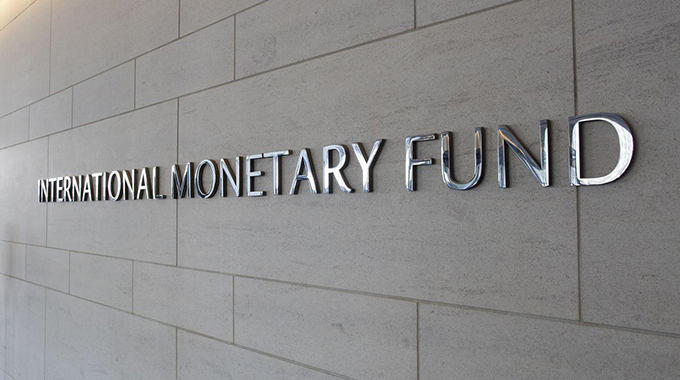
On Monday, the executive board of the International Monetary Fund (IMF) announced a US$500 million package in grant-based debt service relief to 25 countries.

The relief is under the IMF’s revamped Catastrophe Containment and Relief Trust (CCRT) as part of the fund’s response to help address the impact of the Covid-19 pandemic.

In announcing the debt service relief, the fund said: “This provides grants to our poorest and most vulnerable members to cover their IMF debt obligations for an initial phase over the next six months and will help them channel more of their scarce financial resources towards vital emergency medical and other relief efforts.”

Countries granted debt relief are Afghanistan, Benin, Burkina Faso, Central African Republic, Chad, Comoros, Democratic Republic of Congo (DRC), The Gambia, Guinea (Conakry), Guinea (Bissau), Haiti, Liberia, Madagascar, Malawi, Mali, Mozambique, Nepal, Niger, Rwanda, Sao Tome and Principe, Sierra Leone, Solomon Islands, Tajikistan, Togo and Yemen.

A noticeable absentee from the list of beneficiaries of the debt service relief countries is Zimbabwe.

What is evident is that Zimbabwe does not have the resources to mount an effective campaign in the face of the virus.

It is precisely this realisation that led it, two weeks ago, to appeal to the United Nations (UN) and the international community for US$2,2 billion.

The three-pronged formal US$2,2 billion appeal for humanitarian aid for the next 12 months specifically targets drought relief food, agriculture, and for fighting Covid-19.

Cognisant of Zimbabwe’s requirements, the UN, led by United Nations Development Programme (UNDP) Resident Coordinator Ms Maria Ribeiro committed to fundraising US$770 million for an interim humanitarian appeal, including a special US$70 million for Covid-19.

The UN’s assistance targets 5,3 million people, a third of the country’s entire population and is for health, food security, water and sanitation, education and protection.

In respect of the US$70 million, instructively, the UNDP Resident Coordinator added that, “ . . . it is indicative of the kind of resources that are needed in Zimbabwe for the UN to support the Government in its coronavirus response.”

The Government’s own appeal cites 7,7 million people — an estimated half of the country’s population — in both rural and urban areas as requiring “urgent food assistance”. 

Part of the Government’s predicament is that it is still grappling with a response to the 1 300 citizens who lost lives, had entire homes destroyed and were displaced by Cyclone Idai in March last year in Zimbabwe, Malawi and Mozambique.

Over 220 families are still displaced and require resettling as a result of Cyclone Idai.

But the 2019-20 agricultural season has proved disastrous, necessitating grain imports to ensure no one starves.

The scale of the challenge is best demonstrated by and understood in the private sector response to the call to help the Government.

The sector is coming on board because it clearly understands that this is a challenge bigger than the Government’s capacity to respond to, fulfil and address on its own. When Covid-19 is factored, the challenge for the Government becomes more daunting.

In February this year, after its Article IV Consultation with Zimbabwe, the IMF noted: “While highly uncertain at this stage, it is clear that Covid will adversely impact the economic outlook for Zimbabwe and require additional health-related spending and international support.”

It also noted that Zimbabwe remains in debt distress with large external arrears to official creditors.

Since the entry of the new Dispensation in 2017, Zimbabwe has cleared its arrears to the IMF.

However, the fund says its rules preclude lending to a country that is still in or under arrears to other international financial institutions.

Until that particular situation is resolved, it will not be moving forward with financial support for Zimbabwe.

How does one acknowledge a humanitarian crisis and debt distress but proceed to preclude Zimbabwe from the being a beneficiary of the grant-based debt service relief?

This appears a case of hypocrisy/insincerity writ large.

In contrast, the African Development Bank (AfDB) continues to support Zimbabwe even though the country is in arrears.

In January the AfDB board approved a US$685 000 grant to strengthen Zimbabwe’s capacity to manage disaster risks, including droughts, floods and tropical cyclones through the bank’s Africa Disaster Risk Financing Programme.

The bank’s country manager for Zimbabwe, Damoni Kitabire, in explaining the rationale for the support, said extreme weather events such as prolonged dry spells, droughts, floods and tropical cyclones had affected agricultural production, disrupting livelihoods in rural Zimbabwe.

The project is among many that demonstrate the Bank’s continued support to the country as the Government works to reform the economy.

Last month (March) the bank announced bold measures to support African countries in addressing challenges resulting from the Coronavirus-19, through the issuance of a US$3 billion bond designed to provide significant rapid support for African countries.

AfDB said it was deploying its full weight of emergency response support to assist Africa at this critical time, adding: “These are extraordinary times, and we must take bold and decisive actions to save and protect millions of lives in Africa. We are in a race to save lives. No country will be left behind.”

The global pandemic has revealed how developed countries — even with the best of resources — are failing or struggling to cope with the crisis.

It is disingenuous for the IMF to acknowledge the predicament that Zimbabwe is in and yet reason that Harare cannot benefit from the Catastrophe Containment and Relief Trust.

So what Zimbabwe gets are exhortations for the difficult choices it is making to clear its arrears to the international financial institutions, but when it comes to where lives are at risk, the IMF turns around and does not reward the bitter choices Harare has made. The hypocrisy is staggering.


The post EDITORIAL COMMENT: Insincerity writ large appeared first on Zimbabwe Situation.

Economy to contract by 7,4% : IMF 

Source: Economy to contract by 7,4% : IMF – NewsDay Zimbabwe THE International Monetary Fund (IMF) has projected Zimbabwe’s economy to contract for a second straight year by 7,4% for 2020, largely because of the COVID-19 pandemic. BY TATIRA ZWINOIRA Last year, IMF recorded the economy contracting by 8,3% as the country endured its biggest […]

The post Economy to contract by 7,4% : IMF  appeared first on Zimbabwe Situation.

Source: Economy to contract by 7,4% : IMF – NewsDay Zimbabwe

THE International Monetary Fund (IMF) has projected Zimbabwe’s economy to contract for a second straight year by 7,4% for 2020, largely because of the COVID-19 pandemic.

BY TATIRA ZWINOIRA

Last year, IMF recorded the economy contracting by 8,3% as the country endured its biggest crisis in a decade, with shortages of cash, medicines and rolling power cuts.

According to the IMF’s recent 2019 Staff-Monitored Programme Article IV Consultations, the COVID-19 pandemic has adversely impacted the economic outlook for Zimbabwe which requires additional health-related support.

“The sharp downward revision largely reflects the fallout from the spread of COVID-19 and lower-than-expected commodity prices,” said IMF in its new April 2020 Sub-Saharan Africa Regional Outlook released during the ongoing IMF spring meetings.

“In addition, idiosyncratic factors, such as continued structural constraints (South Africa), policy adjustment (Ethiopia), and climate and other natural shocks (such as the locust invasion in eastern Africa) have also contributed to the downward revisions.”

IMF said as of April 9, more than 6 200 cases of COVID-19 had been confirmed across 43 countries in the region, with South Africa, Cameroon, and Burkina Faso being the most affected.

South Africa is Zimbabwe’s largest trading partner, tourist source market and is a major investor in the neighbouring country.

In 2019, South Africa accounted for 36% of raw materials imported and 15% for Zimbabwe’s exports, according to the Confederation of Zimbabwe Industries (CZI).

Following a recent survey, CZI found that the COVID-19 pandemic is affecting 88% of local companies as they are failing to access both source and export markets.

Recently, the investment promotion organisation, ZimTrade, found intervention measures put in place by South Africa in combating the spread of coronavirus will be felt much by Zimbabwean exporters since it takes about 49% of Zimbabwe’s total exports.

“This situation in Africa is almost the same across the world where Zimbabwean exports will likely be affected by restricted movements, ban of air travel or grounding of ships, which transport the bulk of the country’s exports,” ZimTrade said.

IMF found that the region would also suffer several external shocks — including trade and tighter global financial conditions — with sub-Saharan African countries exposed to different degrees.

“On trade, a sharp growth slowdown among key trading partners reduces external demand, while disruptions of supply chains lower the availability of imported goods, potentially adding inflation pressure,” IMF said.

“In addition, the sharp tightening of global financial conditions reduces investment flows to the region and hampers its ability to finance spending needs to deal with the health crisis and support growth,” IMF said.

It added: “This may result in either a cut in government spending, a build-up in arrears, or an increase in government borrowing in local markets, with attendant consequences on domestic credit and growth.”

China’s fight against COVID-19 is also poised to hurt Zimbabwe as it is the southern African nation’s second biggest trading partner, having accounted for US$974 million and US$368 million of exports and imports last year respectively.

The major products that Zimbabwe imports from China include machinery, mechanical appliances, boilers, electrical machinery, equipment, vehicles, chemical products, rubber, and plastics.

Apart from COVID-19 pressuring the Zimbabwe economy, the country is already dealing with a number of macroeconomic shocks as a result of worsening climate change, low foreign investment, corruption, debt, a weak Zimbabwe dollar and rising inflation, which rose to a post-dollarisation high of 676% in March.

The devaluing Zimdollar has led to hyperinflation.

The post Economy to contract by 7,4% : IMF  appeared first on Zimbabwe Situation.