Headache for Zim, SA parlours

Source: Headache for Zim, SA parlours | The Herald Thupeyo Muleya Beitbridge Bureau FUNERAL parlours in South Africa are engaging authorities to facilitate the repatriation of deceased Zimbabweans through Beitbridge Border Post for burial home. The parlours are concerned with the manner in which the process is being handled with rules and regulations changing frequently […]

The post Headache for Zim, SA parlours appeared first on Zimbabwe Situation.

Source: Headache for Zim, SA parlours | The Herald

Headache for Zim, SA parlours

Thupeyo Muleya Beitbridge Bureau
FUNERAL parlours in South Africa are engaging authorities to facilitate the repatriation of deceased Zimbabweans through Beitbridge Border Post for burial home.

The parlours are concerned with the manner in which the process is being handled with rules and regulations changing frequently on either sides of the border.

Under normal circumstances, at least 60 bodies are brought into the country through Beitbridge Border Post weekly.

As a result of the state of affairs, six bodies were returned to Johannesburg last Wednesday after the parlours reportedly failed to meet some of the regulations being rolled out under lockdown guidelines in both Zimbabwe and South Africa.

The Herald understands that initially one relative and the hearse drivers were allowed passage into the country, but now that has changed.

Under new changes, only the South Africa parlours’ driver is expected to leave the bodies with Zimbabwean parlours at Beitbridge Border Post for onward transportation.

However, this has been met with logistical challenges with parlours from the two countries yet to agree on sharing transportation fees.

On average it costs R15 000 to repatriate the remains of a Zimbabwean from South Africa.

Chairman of the Inner-City Funeral Directors Association-South Africa (IFDA-SA), Mr Nkosi Kwanike Nare yesterday said the state of affairs has resulted in bodies piling up in Johannesburg mortuaries.

He said one of their members was recently fined R18 000 for overloading their morgue with three bodies.

“As an association, we support all attempts by Sadc governments to curb the spread of Covid-19 in South Africa, Zimbabwe and in the region,” he said.

“As dedicated stakeholders, we have adopted the worse scenario stance, whereby all natural deaths cases are treated as Covid-19 cases. This is done to enhance precautionary measures to ensure that our staff and clients are all safe”.

Mr Nare said they had since tabled a number of proposed safe repatriation measures to Zimbabwean and South African authorities for consideration.

These, he said included the sharing of drivers by its members, especially those who have a sound geographic knowledge of Zimbabwe and were also prepared to repatriate human remains without any family member on board.

The official said they were also proposing that their funeral assistants/drivers meet at the nearest agreed point with the bereaved family in Zimbabwe.

“As a safety precautionary measure, our drivers will be accompanied by a fully completed RG1 Form for port health human remains declaration to facilitate information accuracy,” said Mr Nare.

The post Headache for Zim, SA parlours appeared first on Zimbabwe Situation.
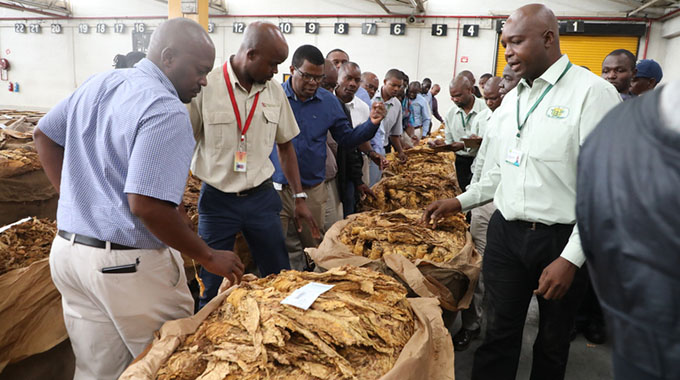
Editorial Comment: Tobacco sales must proceed in a safe way 

Source: Editorial Comment: Tobacco sales must proceed in a safe way | The Herald (file pic) Buyers bid for the golden leaf at the official opening of the tobacco selling season at Tobacco Sales Floor (TSF) in Harare. — Picture by Justin Mutenda Tobacco is one of Zimbabwe’s biggest foreign currency earners and a major […]

The post Editorial Comment: Tobacco sales must proceed in a safe way  appeared first on Zimbabwe Situation.

Source: Editorial Comment: Tobacco sales must proceed in a safe way | The Herald

Editorial Comment: Tobacco sales must proceed in a safe way
(file pic) Buyers bid for the golden leaf at the official opening of the tobacco selling season at Tobacco Sales Floor (TSF) in Harare. — Picture by Justin Mutenda

Tobacco is one of Zimbabwe’s biggest foreign currency earners and a major source of income for thousands of farmers and processing workers.

It is important that we figure out how farmers can deliver the cash crop and how merchants can buy it without compromising public safety.

Unlike the proceeds of minerals, which are finite — tobacco — as long as good agronomic practices are adhered to and sustainable sources of energy for curing are used, the crop is as good as a renewable resource that can continue to support the country’s industrialisation agenda.

That is why tobacco auction sales and deliveries to contract floors should be carried out under specific public health conditions, regardless of whether or not the lockdown is extended, for even if it does end this weekend, stringent health measures must remain.

Measures have to be put in place to ensure sales proceed under the watchful eye of the Ministry of Health and Child Care and under conditions approved by public health experts and enforced by the entire industry.

We believe the tobacco stakeholders meeting today can yield detailed measures since the Tobacco Industry and Marketing Board (TIMB) has been thinking long and hard and has come up with a system that basically ensures safety, although today’s meeting can refine it and extend it.

Among what TIMB is proposing we also want to see the following: Anyone without business at the auction floors should not be allowed access; traders should not be allowed to interfere with selling; all auction floors to have body temperature thermometers and sanitisers; social distance to be enforced; farmers should book in advance before bringing their tobacco; sales should be cleared within 24 hours and farmers should leave the floors immediately; reduce unnecessary bales rejection that results in people spending more time at floors; Ministry of Health officials should supervise all sales and with powers to recommend closure of facilities not adhering to regulations

Not only will this ensure that Zimbabwe earns the required foreign currency, it will also ensure that tobacco farmers and contractors who have invested lots of time and inputs into the crop will benefit from their investment.

The structure of the local tobacco industry is such that the majority of primary producers are indigenous Zimbabweans.

Prior to land reform, about 1 500 large-scale tobacco farmers produced 97 percent of tobacco in 2000, but the number of indigenous smallholder farmers had risen to over 110 000, producing around 65 percent of the crop by 2013 and those figures are much higher today.

Last year, Zimbabwe’s tobaco producers — mostly smallholder farmers — produced 258 million kilogrammes, a record crop bringing farmers the equivalent of US$500 million and significant extra being earned by the value-added processing, packaging and other local inputs.

Postponing deliveries and sales is not much of an option.

Most small-scale farmers who produce most of the crop, do not have the facilities on their farms to store tobacco and the crop will deteriorate, be damaged and be largely destroyed if not delivered.

The most critical measures will be to ensure that farmers do not congregate, do not linger in Harare and preferably do not even come into town at all.

So we can go further. Many contractors already have a collection service and this can be extended.

We have been waffling about decentralisation for years, but it seems obvious that proper collection centres can be opened in the hub towns of the major tobacco areas: Centenary, Karoi, Chinhoyi, Bindura, Marondera, Rusape and Mutare could be the first.

Over the years, a strong relationship of mutual trust has been built up among farmers and contractors.

It might not be perfect, but it is strong.

Contractors who cheat their farmers find themselves with no crop the next year; farmers who cheat contractors find themselves without inputs.

So it should be possible to ensure that most farmers do not have to bring their crop to Harare.

Those that do, and those that deliver to provincial centres must book.

Even crops destined for auction floors can be delivered to a centre near the farm at a booked time and day, and transport arranged at cost to bring it to the floors.

The TIMB can police this system of decentralisation and handle complaints.

Even at decentralised depots and the main floors, simple measures such as keeping adequate social distancing and hand sanitisation procedures are adhered to.

China is Zimbabwe’s biggest tobacco buyer, purchasing — on average almost half of Zimbabwe’s tobacco each season, which is approximately US$500 million.

Early last month secretary-general of the Chinese Chamber of Enterprise in Zimbabwe, Jay Li, told our sister paper Business Weekly that the Covid-19 pandemic will not stop China from buying Zimbabwe’s world-renowned Virginia flue-cured tobacco this year.

The post Editorial Comment: Tobacco sales must proceed in a safe way  appeared first on Zimbabwe Situation.

MDC-T offers bribes for fake 2014 structures

Source: MDC-T offers bribes for fake 2014 structures – NewsDay Zimbabwe The MDC-T led by Thokozani Khupe has been accused of offering bribes to members of the Nelson Chamisa-led MDC Alliance members in the Midlands and several other parts of the country to manufacture fake 2014 structures ahead of an expected extra-ordinary congress as recently […]

The post MDC-T offers bribes for fake 2014 structures appeared first on Zimbabwe Situation.

Source: MDC-T offers bribes for fake 2014 structures – NewsDay Zimbabwe

The MDC-T led by Thokozani Khupe has been accused of offering bribes to members of the Nelson Chamisa-led MDC Alliance members in the Midlands and several other parts of the country to manufacture fake 2014 structures ahead of an expected extra-ordinary congress as recently ordered by the Supreme Court.

By Brenna Matendere

Khupe was given reigns to be interim president of the MDC by the Supreme Court in a judgment delivered by Justice Bharat Patel.

Her backers, led by former chairperson Morgen Komichi as well as Douglas Mwonzora, have maintained that the ruling meant she had taken over leadership of the Chamisa-led MDC Alliance.

But MDC Alliance vice-president Tendai Biti has denied such interpretation, saying the
MDC-T was a different party altogether with nothing to do with the Chamisa-led formation.

The Supreme Court judgment also ordered Khupe to convene “an extra-ordinary congress in three months to elect a substantive leadership of the MDC”.

In a bid to solidify support for Khupe at the intended extra-ordinary congress, sources told our sister paper The Standard that some MDC-T officials had been dangling US$100 bribes to MDC Alliance activists in the Midlands to produce fake 2014 structures list with real names of MDC people, but who may not have been position holders during that period.

Takavafira Zhou, the MDC Alliance’s Midlands provincial spokesperson, confirmed the development.

“It has come to the provincial leadership’s attention that the rebels are running mad and offering US$100 to anyone who can assist in the production of even fake 2014 MDC-T structures. We are aware of the current hardships, but want to encourage our genuine MDC Alliance members never to salivate at a poisoned carrot,” he said.

“Co-operating in supplying fake 2014 structures is just like kissing a rabid dog.”

Zhou said the party leadership learnt that the Khupe team was in Kwekwe on Sunday pursuing that mission.

“Some of our officials have informed us that rebel agents were in Kwekwe (on Sunday) and tried to hoodwink MDC Alliance members to provide fake 2014 structures without success. Let our CCC (constituency co-ordinating committee) be appraised that as a party, we have the 2014 structures,” Zhou said.

“We want to remind our lower structures that only the provincial organising department or other provincial members assigned by the organising department can request for the structures from our constituency co-ordinating committees (formerly districts). To be forewarned is to be forearmed. It is, however, prudent to report any attempt (and at whatever level) by rebels to extend feelers to MDC Alliance supporters.

“Vigilance demands that we must always be resilient every time and be ready to define, defend and nurture the democratic agenda under the leadership of the people’s president, Nelson Chamisa.”

Zhou also said that the MDC Midlands province had thrown its weight behind Chamisa.

“The three provincial wings in Midlands (men, women and youth) and 28 constituencies are solely behind the people’s president, Nelson Chamisa.

“Lest some people may forget, leadership in any political party is determined politically and not through the courts. President Nelson Chamisa is the undisputed leader of MDC Alliance and there are no two ways about this historical reality,” he said.

“Two political parties, MDC Alliance and MDC-T, went to elections as independent entities, making the court decisions not only warped, but also void.

“We wish Khupe her best in her machination, which is futile, as we will remain resolute resilient behind president Chamisa. The courts cannot strengthen the weak by weakening the strong; neither can they weaken the strong to strengthen the weak.”

Mwonzora yesterday denied sending teams to bribe people to get doctored 2014 structures.

“That is totally false. The list of 2014 structures is there already in our records. After lockdown, we will be verifying the actual existence of these people,” he said.

“No team was ever sent out as alleged. We are on lockdown, remember.”

The post MDC-T offers bribes for fake 2014 structures appeared first on Zimbabwe Situation.