Hard-pressed Gweru tenants flee US$ apartments

Source: Hard-pressed Gweru tenants flee US$ apartments | Newsday (News) FINANCIALLY-SQUEZZED Gweru residents have begun migrating from the northern parts of the city to densely-populated suburbs, where rentals are cheaper, while others are relocating to rural areas as most landlords have pegged rentals in hard currency following the recent reintroduction of the multi-currency system. By […]

The post Hard-pressed Gweru tenants flee US$ apartments appeared first on Zimbabwe Situation.

Source: Hard-pressed Gweru tenants flee US$ apartments | Newsday (News)

FINANCIALLY-SQUEZZED Gweru residents have begun migrating from the northern parts of the city to densely-populated suburbs, where rentals are cheaper, while others are relocating to rural areas as most landlords have pegged rentals in hard currency following the recent reintroduction of the multi-currency system.

By Brenna Matendere

The 21-day lockdown to prevent the spread of coronavirus has also dealt a heavy blow to residents’ income as most survived from hand to mouth in the informal sector.

Gweru Urban MP Brian Dube yesterday confirmed the development.

“The economic crisis is hard hitting people in Gweru. I have received numerous calls for intervention but it is difficult, as it generally falls outside my primary mandate to deal with landlords and tenants. I have in some instances just mediated. The main challenge is that landlords are now charging tenants in US$ for rentals. The people are earning local currency and the incomes have been stagnant since last year,” Dube said.

“Landlords insist that if tenants are to pay in local currency, it will be at the prevailing black market rate. On average, our people are earning between $800 and $2 000, which translates to between US$20 and US$50 at the black market rate.”

“Landlords in medium to low-density areas, such as Northlea, Nashville, Ivene, Lundi Park, South Downs, South View, Athlone, Riverside, Harben Park, Daylesford, Ridgemont are demanding rentals ranging from US$60 to US$250. This is completely out of reach for the majority of the working and middle-class earners.

“This has forced the middle-class and upper working class to downgrade and opt to go to Ascot, Mtapa, Mambo, Clifton Park, Woodlands and Mkoba. This movement is not without serious consequences as it is also pushing out the low-income earners. Landlords in high-density areas are now also charging rentals in US$ ranging from US$20-US$100. This is beyond the reach of the low and middle-income earners,” said Dube.

He revealed that some residents were settling in places with squalid conditions to cut on living expenses while others were relocating to rural areas to settle there permanently.

“A majority of low-income earners are now moving out of their current rented houses and renting incomplete houses without running water or electricity, mainly in parts of Woodlands, Hertfordshire and Mutausi Park. Some of our people have also given up on urban life and left town and gone to rural areas as they can’t break even. Life is becoming more unbearable day by day. This has caused serious disruption in life patterns as children are shifted from one place to another and those schoolgoing have to make abrupt transfers or have to bear with traveling long distances to school,” Dube said.

Cornelia Selipiwe, the Gweru Residents and Ratepayers’ Association director blamed government for the dire situation.

“As residents we are in a fix, we have nowhere to go, our greatest challenge has been inconsistent policies on the part of our government. Redollarising is good, but people are still earning bond. There is mismatch in terms of what people are earning and what they have to spend, disposable income is scarce,” he said.

“With council bills and basic food prices skyrocketing, the buck stops with the resident. Paying rentals in US dollars is a serious burden to residents since they have to buy the US dollars at the black market where the dollar is very expensive”.

”Gweru city is one of the unfortunate cities because we don’t have real economic activities besides vending, something has to be done,” he said.

However, Midlands Provincial Affairs minister Larry Mavima, the said the unscrupulous landlords must be stopped.

“Yes, I have received information to the effect that landlords are charging exorbitant rentals in US$ and that is unfortunate, especially during this period of time when we are under lockdown and people’s incomes in most cases are depressed and or have been wiped out especially for those that are self-employed,” Mavima said.

“I would like to appeal to all landlords to have a kind and good heart and to maintain their rentals at what they were at prior to lockdown and payable in local currency. Nothing has happened that warrants an increase in rentals and further conversion of the same to be now payable in US$.”

Mavima added: “I can only appeal to the various landlords and not to take advantage of the present situation to make unreasonable profits. I realize that payments for services and goods can now be made using free funds, but that is not a license to gouge citizens out of their hard-earned money especially under a lockdown environment.”

The post Hard-pressed Gweru tenants flee US$ apartments appeared first on NewsDay Zimbabwe.

The post Hard-pressed Gweru tenants flee US$ apartments appeared first on Zimbabwe Situation.
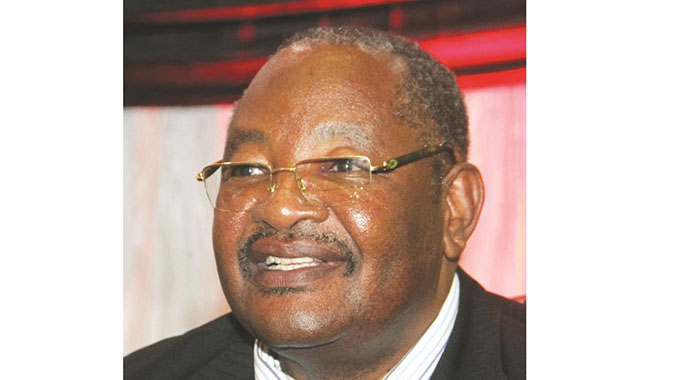
Nkomo betrayed Zipra: Mpofu

Source: Nkomo betrayed Zipra: Mpofu | Newsday (News) THE late former Vice-President Joshua Nkomo’s participation in the 1979 Lancaster House talks was frowned upon by the military element in his PF-Zapu, Zipra, which felt the negotiations were a “self-created” onslaught for the former liberation movement, Zanu PF secretary for administration Obert Mpofu has claimed. BY […]

The post Nkomo betrayed Zipra: Mpofu appeared first on Zimbabwe Situation.

Source: Nkomo betrayed Zipra: Mpofu | Newsday (News)

THE late former Vice-President Joshua Nkomo’s participation in the 1979 Lancaster House talks was frowned upon by the military element in his PF-Zapu, Zipra, which felt the negotiations were a “self-created” onslaught for the former liberation movement, Zanu PF secretary for administration Obert Mpofu has claimed.

BY NQOBANI NDLOVU

Mpofu opined last week that the major achievement of the Lancaster House Conference ‘in preserving the interests of Britain and America was the outwitting of Nkomo’ at the talks.

Mpofu, in an opinion piece titled ‘Zimbabwe@40: Joshua Nkomo and the Liberation Footpath (Part 2)’ published in the State-owned media last week, said Nkomo went into the talks against advice from Zipra commanders, among them Lookout Masuku.

Masuku, who led the Zipra forces in the guerrilla war against Rhodesia, died in 1986.

At independence in 1980, Masuku became deputy commander of the Zimbabwe National Army before his arrest in 1982 together with Nkomo’s military intelligence chief, Dumiso Dabengwa, on charges of plotting a coup against Prime Minister Robert Mugabe’s government. They were acquitted in 1983, but were immediately detained again under emergency powers until release owing to ill-health, culminating in his death.

“In a way, the military remained radically defiant to negotiation…Some in the military ranks especially the Late Lookout Masuku felt betrayed when Dr Nkomo decided to take part in the Lancaster Conference which was perceived as a self-created onslaught for Zapu,” Mpofu argued.

“Dr Nkomo’s decision also served as a swipe to Zipra commanders’ instruction to him not to participate in the Lancaster talks. The friction between the military and Dr Nkomo’s political decision precipitated more internal contradictions between the combatant forces and those at the height of political decision-making.”

This is because, according to Mpofu, Nkomo’s participation was ‘largely driven by misleading advice he received from the whites,’ with the late Father Zimbabwe accused of disregarding counsel from the Zipra military element that had “wide resentments about participation in the Lancaster.”

“Moreover, the exclusion of Russia as an interested stakeholder in the transitional roadmap set at the Lancaster Conference was indicative of Britain and America’s monopolistic determination to shape Zimbabwe’s independence politics. Key African countries which had assisted both Zanla and ZPRA in the execution of the armed struggle were (also) excluded in the Lancaster arrangement,” Mpofu wrote.

But Zapu yesterday accused Mpofu of deliberately skirting the truth about how the liberation movements were frog-marched to the Lancaster House Conference by the Frontline States.

Zapu spokesperson Iphithule Maphosa said the Zanu PF and PF-Zapu leaders were given one condition; either participate in the talks or stop using the host countries in waging their guerilla war.

“He chooses to side-step the fact that the Frontline States, who supported the Rhodesia Liberation movements, Zapu and Zanu PF, literally marched them into Lancaster, totally unprepared for such. They were given one condition, either participate in the talks or stop using the host countries in waging their guerilla war. This was after a decision was made towards or in 1979 that the Rhodesian question only had to be decided by negotiations and not the inevitable victory of Zipra against the Rhodesian army,” Maphosa said.

“Despite resentment of talks right across the rank and file in Zapu and Zipra, there was no other choice for they would have been left baseless and at the mercy of Rhodesians. It is folly to insinuate that President Nkomo took advice from whites as Mpofu says.

It is nothing, but perpetuation of ethnic propaganda that Zanu PF has been peddling since 1963 to date, which Mpofu could have convinced himself with while in India as his betrayal of Zapu and Nkomo would become clear in the 1980s when he joined Zanu PF right at the height of Gukurahundi genocide.”

Maphosa said Nkomo never took advice from imperialists and that there was no friction between him and the military element.

He said “the imperialist forces in Britain and America had already picked their preferred candidate for the post-Ian Smith era Robert Mugabe, who later went to Lancaster as leader of Zanu PF after assuming that position in the most illicit of ways”.

Maphosa added: “Instead of representing his organisation and the people of Rhodesia, Mugabe was assisted by the British Conservatives to pitch himself as the most suitable candidate by imperialist standards. Both liberation movements were arm-twisted into these talks and both, together with the people lost to Mugabe and his unbridled and insatiable love for power. He presented himself as the only one who could preserve and protect Western interests in Rhodesia post-independence, all that at the expense of the people and the revolution.”

Maphosa said this explains the mysterious death of then Zanla commander General Josiah Tongogara soon afterwards.

The post Nkomo betrayed Zipra: Mpofu appeared first on NewsDay Zimbabwe.

The post Nkomo betrayed Zipra: Mpofu appeared first on Zimbabwe Situation.

CSO commends police enforcement of lockdown

Source: CSO commends police enforcement of lockdown | Newsday (News) THE Christian-based civic organisation, Habakkuk Trust, yesterday commended police for enforcing the lockdown order to prevent citizens from the possible spread of the deadly COVID-19. BY SILAS NKALA The lobby group, however, though blamed government for failure to provide people with basic items to ensure […]

The post CSO commends police enforcement of lockdown appeared first on Zimbabwe Situation.

Source: CSO commends police enforcement of lockdown | Newsday (News)

THE Christian-based civic organisation, Habakkuk Trust, yesterday commended police for enforcing the lockdown order to prevent citizens from the possible spread of the deadly COVID-19.

BY SILAS NKALA

The lobby group, however, though blamed government for failure to provide people with basic items to ensure they stay at home during the lockdown announced by President Emmerson Mnangagwa last week.

Police has been clamping down on citizens defying the lockdown and going out of their homes in search of foodstuffs such as mealie-meal which is in short supply.

Habakkuk said citizens desperately needed food aid and the government had a responsibility to provide them with the food and also protect them from the deadly virus.

“There were roadblocks along major roads manned by security forces that were thoroughly probing every citizen’s intention to get into town. Those who failed to give satisfactory answers were promptly turned back and those whose itinerary fell within the essential parameters were allowed to proceed,” the trust stated.

“Some residents wandered in search of subsidised mealie-meal while others joined long queues outside supermarkets to buy basic commodities. Long queues were also witnessed at ZESA offices and Mukuru outlets as residents were trying to buy electricity and access cash sent from the diaspora.”

A total of 485 people were arrested countrywide on Thursday as the police cracked down on those defying the lockdown order.
“More people have reportedly been arrested due to non-compliance. In light of the ailing informal economy, some residents have been failing to comply with measures imposed by the government to control the spread of the coronavirus.

“The highly informal nature of the economy which makes people live from hand to mouth and ignorance of an impending crisis in the event of an outbreak are some of the reasons why some residents fail to comply,” the trust said.

Habakkuk added: “The move by the Zimbabwe Republic Police to ensure adherence to the critical measures imposed by the government is important in combating the spread of COVID-19. Military action was mentioned among some of the raft of measures to deal with non-compliance,” the trust said.

“Habakkuk Trust is urging all residents to stay at home and move when necessary. The organisation calls on the government to ensure that food and basic services are available at all times. The security forces should be human rights friendly in enforcing the lockdown order.”

National Police spokesperson Assistant Commissioner Paul Nyathi expressed disappointment that some people were seen roaming the streets and public places aimlessly, defying the lockdown order.

“We are saying people should comply, there is no need for people to play with their lives and health. There is no need to disregard measures put in place by the government so that the nation is able to contain COVID-19,” Nyathi said on Thursday.

The post CSO commends police enforcement of lockdown appeared first on NewsDay Zimbabwe.

The post CSO commends police enforcement of lockdown appeared first on Zimbabwe Situation.

DIASPORA REMITTANCES COLLAPSE

The Zimbabwe Coalition on Debt and Development (ZIMCOD) has
said it forecast a drop in remittances by Zimbabweans working outside the
country due to a global economic downturn as a result of the coronavirus.

In 2019, Zimbabwe received US$635 milli…

The Zimbabwe Coalition on Debt and Development (ZIMCOD) has said it forecast a drop in remittances by Zimbabweans working outside the country due to a global economic downturn as a result of the coronavirus. In 2019, Zimbabwe received US$635 million in remittances, representing a 2.6 percent increase from US$619.25 million in 2018. With a diaspora population of over three million, as

MANY REFUSE CORONAVIRUS TESTS IN SA

Many people don’t want to be tested for Covid-19 because of
a “fake news” video saying that the swabs used to test for the illness are
contaminated.

According to the Gauteng health department, this has
hampered the country’s efforts to curb the sp…

Many people don't want to be tested for Covid-19 because of a “fake news” video saying that the swabs used to test for the illness are contaminated. According to the Gauteng health department, this has hampered the country's efforts to curb the spread of the fatal respiratory illness. The department said on Monday that it had come across difficulties in its community-testing initiative,