The Old Testament Shadow vs The New Testament Reality

The Bible is one unfolding story of God’s redemptive purpose, and at the centre of that story stands Jesus Christ. From Genesis to Revelation, Scripture ultimately directs our attention to Him. By Tatenda Hwari The Old Testament does not merely record the history of Israel; it lays the foundation for the revelation of God’s eternal […]

The post The Old Testament Shadow vs The New Testament Reality appeared first on Zimbabwe Situation.

The Bible is one unfolding story of God’s redemptive purpose, and at the centre of that story stands Jesus Christ. From Genesis to Revelation, Scripture ultimately directs our attention to Him.

By Tatenda Hwari

The Old Testament does not merely record the history of Israel; it lays the foundation for the revelation of God’s eternal plan in Christ. What was concealed in types, shadows, promises, prophecies and symbols in the Old Testament is unveiled in the New Testament through the person and finished work of Jesus Christ. Hebrews 10:1 declares, “For the law, having a shadow of good things to come, and not the very image of the things…” A shadow is real in the sense that it points to something, but it is not the substance itself. In the same way, the Old Testament contained pictures and patterns pointing towards a greater reality. That reality is found in Jesus Christ.

When we understand this, we begin to read the Old Testament differently. We do not approach it merely as a collection of ancient stories, laws and historical events. We begin to recognise the fingerprints of God’s redemptive plan throughout its pages. Christ is not an addition to the biblical story; He is at the heart of it. Consider the Passover in Exodus. Israel was instructed to take a lamb without blemish and apply its blood to the doorposts of their houses. The blood became a sign of deliverance, and judgment passed over those who were covered by it. Centuries later, the New Testament reveals Christ as the ultimate fulfilment of this picture. Paul declares, “For even Christ our passover is sacrificed for us” (1 Corinthians 5:7). The Passover lamb was a shadow; Christ is the reality. The tabernacle also points us towards Christ. God instructed Moses to build a sanctuary where His presence would dwell among His people. The priests ministered there, sacrifices were offered, and the Holy of Holies represented the sacred presence of God. Yet these things pointed towards something greater.

Through Christ, we have access to God. Jesus is the true meeting place between God and humanity, and through Him we can approach the Father with confidence. The Old Testament priesthood provides another powerful picture. The priests stood between God and the people, offering sacrifices on behalf of the nation. However, their ministry was limited and their sacrifices had to be repeated. The New Testament reveals Jesus as our perfect and eternal High Priest. Hebrews teaches that He entered once for all, offering Himself as the perfect sacrifice for sin. The shadow pointed towards Him; the reality is found in Christ. The sacrificial system itself points to the cross. Bulls, goats and lambs were offered under the Old Covenant, but their blood could not ultimately remove sin. They pointed towards the sacrifice that would accomplish what animal sacrifices could never accomplish permanently. Jesus offered Himself once for all, dealing decisively with sin and bringing redemption to humanity.

The Day of Atonement in Leviticus is another profound example. Once a year, the high priest entered the Holy of Holies with blood on behalf of the people. This pointed towards the greater work of Christ, who entered the heavenly sanctuary on our behalf and obtained eternal redemption. The bronze serpent raised by Moses in the wilderness also points towards Christ. When the Israelites were bitten by poisonous snakes, God instructed Moses to lift up a bronze serpent, and those who looked at it lived. Jesus later applied this event to Himself, saying, “And as Moses lifted up the serpent in the wilderness, even so must the Son of man be lifted up” (John 3:14). The event in Numbers was historical, but it also carried a prophetic picture of salvation through Christ. The Passover, the tabernacle, the priesthood, the sacrifices and the bronze serpent are not isolated religious practices. Together, they form part of a larger biblical pattern that directs us towards God’s ultimate answer to the problem of sin: Jesus Christ. Even the lives of individuals in the Old Testament can help us understand God’s redemptive plan. Joseph’s suffering, rejection and eventual exaltation provide a remarkable pattern of God’s ability to bring purpose out of suffering.

David’s kingship points towards the greater King who would come from his lineage. Abraham’s faith points towards justification by faith. The Exodus points towards deliverance. The promised land points towards God’s rest. These realities find their ultimate fulfilment and meaning in Christ. The prophets continued this revelation. Isaiah spoke of the virgin-born Immanuel and the suffering Servant who would bear the sins of many. Micah identified Bethlehem as the birthplace of the coming ruler. Zechariah spoke of the King coming to Jerusalem. The Psalms contain remarkable prophetic references concerning the Messiah’s suffering, death, resurrection and kingship. Jesus did not appear unexpectedly in the New Testament as though God had changed His plan. Rather, He was the fulfilment of a plan that had been unfolding throughout Scripture. Luke 24:27 says that beginning with Moses and all the prophets, Jesus explained to the disciples the things concerning Himself throughout the Scriptures. After His resurrection, He showed them that the Law of Moses, the Prophets and the Psalms all spoke concerning Him. This is why Jesus said in John 5:39–40, “Search the scriptures; for in them ye think ye have eternal life: and they are they which testify of me.” Scripture is designed to lead us to Christ. Bible study should therefore not end with information; it should lead us into a deeper revelation of the person and work of Jesus. Luke 16:16 says, “The law and the prophets were until John: since that time the kingdom of God is preached, and every man presseth into it.” John the Baptist marked a significant transition in God’s redemptive programme. The long-awaited Messiah had arrived. The One whom the Law and the Prophets anticipated had come. Even Genesis, the book of beginnings, points towards Christ.

The creation account reveals God’s sovereign purpose. The fall of humanity introduces the problem of sin and separation from God, while God’s promise concerning the seed of the woman points forward to the ultimate defeat of the serpent. As the biblical story progresses, the promise becomes clearer until it finds its fulfilment in Jesus Christ. Romans 15:4 (MSG) reminds us that what was written in Scripture long ago was written for our learning. The Old Testament therefore remains valuable to the Church. We do not discard the Old Testament because Christ has come. Rather, we read it in the light of Christ and understand its fulfilment through Him. The relationship between the Old and New Testaments is therefore not one of contradiction, but fulfilment. The Old Testament establishes the promise; the New Testament reveals its fulfilment. The Old Testament gives us the shadow; Christ gives us the substance. The Old Testament points forward; the New Testament announces that the promised One has come. This understanding should also transform the way we approach our Christian faith. Christ must remain at the centre of our preaching, teaching, Bible study and personal devotion. We must not become so occupied with the shadows that we fail to recognise the One to whom they point. Beloved, we must see Him.

We must see Christ in the Scriptures. We must see Him in the promises. We must see Him in the prophetic writings. We must see Him as the fulfilment of God’s redemptive plan. Above all, we must recognise that the same Christ revealed throughout Scripture now lives in us through the Holy Spirit. The Christian life is therefore not merely an attempt to reproduce the practices of the Old Covenant. We live in the reality of what Christ has accomplished. His finished work gives us access to God, forgiveness of sins, righteousness, hope, victory and new life. The shadow was pointing somewhere. The ceremonies were pointing somewhere. The sacrifices were pointing somewhere.

The prophets were pointing somewhere. The entire redemptive story was moving towards Someone. That Someone is Jesus Christ. Let us therefore search the Scriptures with spiritual understanding. Let us move beyond merely knowing biblical stories and discover the Christ revealed through them. Let us move beyond the shadow and embrace the reality. For in Christ, God’s promises find their fulfilment, God’s redemptive purpose is revealed, and humanity is invited into the life of God. Christ is not simply part of the story. He is at the centre of the story.

By Tatenda Hwari

Christian Teacher | Author | Columnist | Faith-Based Leadership Voice Email: tatehwari@gmail.com

Source: The Old Testament Shadow vs The New Testament Reality

The post The Old Testament Shadow vs The New Testament Reality appeared first on Zimbabwe Situation.
Desperate plea as 200 Zimbabwean migrants languish in South African cells

The South African Police Service rejects allegations of indiscriminate arrest. The Nkqubela informal settlement in Robertson, where foreigners and locals live alongside each other. But it has been tense in recent months due to anti-immigrant protests. Raids across Robertson, Montagu, Ashton, Bonnievale and McGregor since June 2026 have led to the arrest of an estimated […]

The post Desperate plea as 200 Zimbabwean migrants languish in South African cells appeared first on Zimbabwe Situation.

The South African Police Service rejects allegations of indiscriminate arrest.

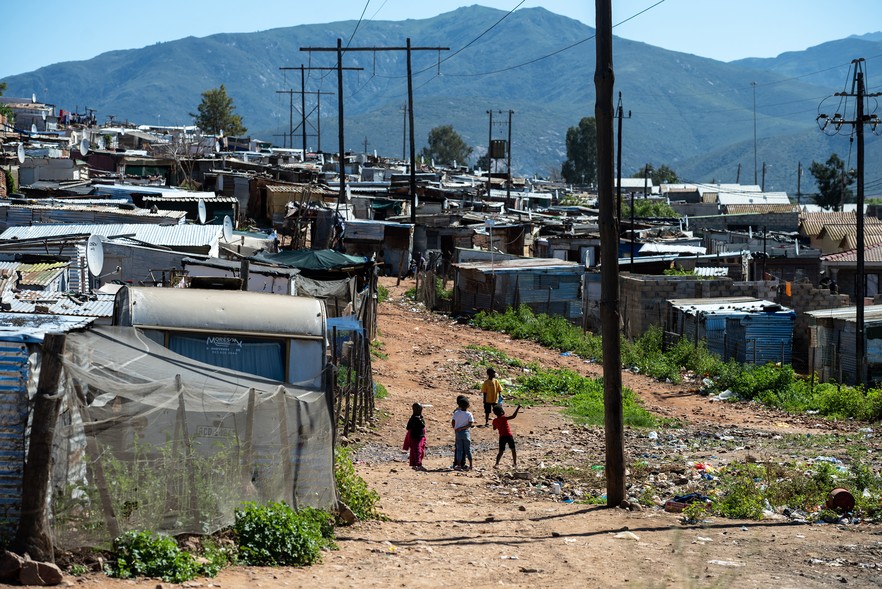
The Nkqubela informal settlement in Robertson, where foreigners and locals live alongside each other. But it has been tense in recent months due to anti-immigrant protests. Raids across Robertson, Montagu, Ashton, Bonnievale and McGregor since June 2026 have led to the arrest of an estimated 200 people, mostly nationals of Zimbabwe, Mozambique, Malawi and Lesotho, with at least 100 still held in police cells across five Western Cape towns on charges related to overstaying visas.

The Western Cape Coalition Against Xenophobia states that people were arrested on the streets and in their homes and that some who produced valid documents were detained anyway; the South African Police Service rejects allegations of indiscriminate arrest. Michael Chanyamwaka, arrested on 1 June, paid his R1,800 fine on 27 June but was released only on 19 August; community leader Lovemore Maporisa was arrested on 27 August while delivering toiletries and status documents to detainees, and remains at Robertson Correctional Centre with his matter postponed to 10 September.

The Zimbabwean Civic Movement has called on South African authorities to process and either release or repatriate detainees, and reports deportees losing phones and cash despite signed property affidavits. Among those held is a couple whose three-year-old daughter is in a relative’s care; many detainees were household breadwinners, and the consequences include interrupted remittances, separated families and undocumented returns.

Source: Desperate plea as 200 Zimbabwean migrants languish in South African cells

The post Desperate plea as 200 Zimbabwean migrants languish in South African cells appeared first on Zimbabwe Situation.

Chivayo needs to understand that showy gifting of cash leads to misuse: the case of Highlanders FC

There is an irony to this story that is simply too rich to ignore. Wicknell Chivayo’s latest public outburst over his million-dollar sponsorship of Highlanders Football Club reads like a familiar script.   To directly receive my articles please join my WhatsApp Channel on: https://whatsapp.com/channel/0029VaqprWCIyPtRnKpkHe08   It is a predictable cycle where showy cash-slinging and […]

The post Chivayo needs to understand that showy gifting of cash leads to misuse: the case of Highlanders FC appeared first on Zimbabwe Situation.

There is an irony to this story that is simply too rich to ignore.

Wicknell Chivayo’s latest public outburst over his million-dollar sponsorship of Highlanders Football Club reads like a familiar script.  

To directly receive my articles please join my WhatsApp Channel on: https://whatsapp.com/channel/0029VaqprWCIyPtRnKpkHe08  

It is a predictable cycle where showy cash-slinging and vanity patronage inevitably devolve into messy public recriminations.    The controversial tenderpreneur has promised to hand over another $250,000 to the Bulawayo giants, but not without unleashing a volley of accusations.    He claims money meant for perimeter walls was misused through cronyism, questions why coach Benjani Mwaruwari hasn’t received his salary despite Chivayo paying a year’s advance, and threatens to pull the plug entirely unless he receives clear accounting.    It is doubtful he even sees the screaming irony of these accusations, given the persistent questions surrounding how he himself acquired his own wealth through controversial public contracts.  

Nevertheless, Chivayo needs to understand that showy gifting of cash naturally leads to misuse: proper sponsorship isn’t done this way.   The fundamental flaw in his corporate social responsibility playbook is that it is built on grandstanding rather than institutional governance.    Proper corporate sponsorship is a structured, contract-bound partnership designed to build sustainable capacity while protecting both the benefactor and the beneficiary.    It operates through clear milestones, auditable financial channels, transparent procurement processes, and independent oversight.   

These are concepts Chivayo himself clearly fails to understand, and it is highly unlikely he has ever exercised them in his own dealings.   Instead, Chivayo’s brand of patronage relies on headline-grabbing announcements, political intercessions, and the theatrical delivery of large sums of money.   

When a sponsorship model behaves less like a strategic investment and more like a monarch bestowing personal favors, chaos and financial irregularity are not unfortunate accidents—they are the predictable result.   By treating a storied, century-old institution like Highlanders as a personal charity project, Chivayo invites the very inefficiency he now loudly decries.    Throwing massive lump sums at problems or paying individuals directly disrupts an organization’s existing financial controls and creates dangerous parallel power structures.    Reports suggesting that the funds reside in a trust account controlled not by the club’s finance department, but by Chivayo’s own representatives and lawyers, expose the absurdity of his complaints.    If the money is locked in a vault managed by his own proxies, demanding accountability from Highlanders executives in the press is a bizarre exercise in shifting blame.   

You cannot bypass standard corporate channels to retain personal control over funds and then express shock when administrative confusion and payment delays follow.   When money is disbursed through informal, showy channels, it inevitably attracts opportunists and breeds misuse.    It creates an environment where line items become murky, contracts are awarded based on proximity to the purse strings rather than merit, and accountability vanishes into a fog of informal agreements.    A club cannot run its day-to-day operations, pay its players on time, or execute long-term infrastructure projects when its financial lifeblood depends on the whims, mood swings, or political arm-twisting of a single benefactor.   

The recurring player strikes at Highlanders highlight the human cost of this chaotic setup.    Players and staff cannot feed their families on promised grand gestures; they require predictable, professional administrative structures.   If Chivayo truly wishes to see Highlanders thrive and protect his capital, he must abandon the circus of public ultimatums and adopt the cold, unglamorous mechanics of genuine corporate sponsorship.    That means stepping back from the spotlight and letting professional sports administrators, independent auditors, and structured board governance do their jobs.    It means drafting transparent contracts with clear deliverables and paying funds directly into audited club accounts, rather than holding them hostage in private trusts or relying on senior politicians to broker temporary truces.  

Highlanders Football Club is an institution deeply woven into the cultural and social fabric of Zimbabwe, far bigger than any single sponsor’s ego.    While investment in local sports is desperately needed, toxic patronage disguised as goodwill ultimately does more harm than good.    Until Chivayo realizes that true philanthropy requires discipline, structure, and humility rather than public showmanship, his financial interventions will continue to end in bitter accusations, abandoned projects, and unpaid workers.    Real sponsorship builds institutions; showy cash distribution merely destroys them from within.  

Tendai Ruben Mbofana is a social justice advocate and writer. Please feel free to contact him on +263715667700 or mbofana.tendairuben73@gmail.com

Source: Chivayo needs to understand that showy gifting of cash leads to misuse: the case of Highlanders FC

The post Chivayo needs to understand that showy gifting of cash leads to misuse: the case of Highlanders FC appeared first on Zimbabwe Situation.

A Mbare Mystery

Over the years, Billboards around Mbare have promised renovation of the structures of the suburb. Often these have shown pictures of a “renovation” that would not leave much room for the present residents; luxury blocks of flats, each with its own swimming pool, or a “people’s market” that gives most of its space to car […]

The post A Mbare Mystery appeared first on Zimbabwe Situation.

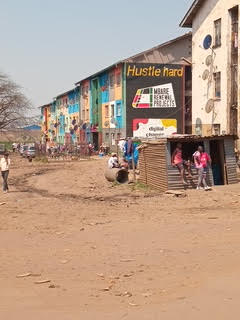
Over the years, Billboards around Mbare have promised renovation of the structures of the suburb. Often these have shown pictures of a “renovation” that would not leave much room for the present residents; luxury blocks of flats, each with its own swimming pool, or a “people’s market” that gives most of its space to car parking.

If we see or hears something like that once, we don’t take much notice. We have grown used to broken or forgotten promises, but when they are repeated and big names are mentioned in connection with the idea, we have good reason to suspect there may be some germ of a plan behind it all. In the past month we have seen signs of action. There may be a plan after all, but this regime has produced many plans that did not change into structures of bricks and mortar, so we must not jump too quickly to conclusions. First, one single block of Matapi Flats was plastered and painted on the outside and “work in progress” fences and ropes surrounded it to discourage passers-by from enquiring more closely. Apparently all the residents are still there, but nobody talks about what is going on inside.

That is strange, because those flats were badly in need of new plumbing and you can’t do that while people still depend on the old plumbing to wash themselves and their clothes and to use the lavatories. It is worth remembering that these are not what urban planners or anyone else outside ZANU-PF circles would call flats. These were built in colonial times as “hostels for single men”; the hundred or so rooms in each block were meant as sleeping places for men whose families were left behind in the rural areas, or maybe even in Malaŵi. The ablutions and lavatory facilities were communal, occupying one designated space on each floor. The whole structure was designed to tell residents that they were only there temporarily, for as long as their labour was needed in town. There was nothing homely about those hostels. At independence, the government decreed that residents in the hostels, from then on to be called flats, were allowed to bring their families to live in Harare. That meant in the newly-named flats, because few of the workers who stayed there could afford any better accommodation. 

Instead of each block housing about 400 compulsorily single men, it now contained a large number, which might have been 384 families, four per room. In fact, the number was never quite that high, but three families per room were and still are common. Having decreed that these blocks were now family flats, the authorities congratulated themselves and walked away. They had ended the scandal of men being separated from their families, but they did not follow through the way any other landlord changing the use of such buildings would have done, hence the rivers of sewage running down the stairs and gushing out over the outside wallsand a new scandal of three families force to share one room. A few years ago, a fire in one of these blocks offered an opportunity, which the Highest in the Land claimed they would take, to install adequate plumbing to meet the needs of all the residents. The Highest Himself was even photographed holding a paintbrush, to show he was serious. Did anybody dare to tell him that the time to use a paint brush was after, not before, installing new plumbing? Hazvinei, he packed up his paintbrush and went back to his mansion as if a job had been done.

The mystery in the blocks that are now being plastered and painted outside, with even a few slogans from the same paintbrush as the pro-CAB3 propaganda adorning so many of our kombis; fine sounding but empty phrases. There may be more action inside, but without moving the tenants it can’t be much more than painting and plastering the corridors. An engineer, apparently with a famous father, is supposed to be in charge of operations on four blocks, so we can expect a sharp rise in rentals, which the present residents cannot afford. What then? On past form, the residents might all remain, unchallenged and forgotten.

But they might be evicted. Meaning more families living on the streets, unless the chefs just forget them; in that case, expect them back in a few months. After all, where else can they go? Or, if there really is a sinister plan to install a higher class of tenants, that would mean a police operation to keep the evicted at bay while while the barrack-like rooms are converted into flats each with its own bathroom, kitchen and lavatory – and the road that leads past the blocks is rebuilt more thoroughly than we have seen yet anywhere, which would probably require overhauling the leaky sewers which created the monster potholes we see today. They are insensitive enough to choose this option, but they have never shown the staying power required to finish the job. In short this worst option makes the present residents losers, while noone else gains except the engineer contracted to do the job.

Source: A Mbare Mystery

The post A Mbare Mystery appeared first on Zimbabwe Situation.

In appeasing insecure Africans with a ‘larger’ Africa, we created a map of new distortions

Decisions driven by the wrong motives inevitably create bigger problems. The United Nations General Assembly recently voted by an overwhelming margin to adopt a non-binding resolution promoting a new world map.   To directly receive my articles please join my WhatsApp Channel on: https://whatsapp.com/channel/0029VaqprWCIyPtRnKpkHe08   Spearheaded by African nations, the initiative seeks to formally replace […]

The post In appeasing insecure Africans with a ‘larger’ Africa, we created a map of new distortions appeared first on Zimbabwe Situation.

Decisions driven by the wrong motives inevitably create bigger problems. The United Nations General Assembly recently voted by an overwhelming margin to adopt a non-binding resolution promoting a new world map.  

To directly receive my articles please join my WhatsApp Channel on: https://whatsapp.com/channel/0029VaqprWCIyPtRnKpkHe08  

Spearheaded by African nations, the initiative seeks to formally replace the venerable Mercator projection with the Equal Earth projection across classrooms, textbooks, and international bodies.    It is framed as an act of geopolitical justice—a triumph over centuries of cartographic imperialism that allegedly shrank Africa to the size of Greenland.    Yet, beneath the political grandstanding lies a sobering truth.   In rushing to soothe a psychological complex about geographic stature, we have traded one mathematical distortion for another, while mistaking map size for actual global power.  

For decades, African politicians and cultural commentators have nursed a deep grievance against the classic Mercator map.    The primary objection was visual: the projection drastically shrinks landmasses near the equator while expanding those near the poles.    On standard wall charts, giant Europe appears dominant, snowy Greenland looks roughly equal in scale to the African continent, and North America looms massive.    To critics, this was not merely bad geometry; it was a psychological weapon designed to diminish Africa’s perceived economic weight, population scale, and geopolitical standing, instilling a subtle sense of inferiority in generation after generation.   This narrative of intentional cartographic erasure is largely a historical myth.    Flemish cartographer Gerardus Mercator did not design his grid in 1569 to serve European hubris.   

He designed it to solve a crucial nautical problem: plotting a straight compass course across a spherical planet onto a flat sheet of paper.    To preserve local angles and true rhumb lines—the very lines sailors needed to navigate without crashing into coastlines—mathematics demanded that the grid stretch disproportionately as it moved toward the poles.    It was never a conspiracy targeted exclusively at Africa.    Equatorial regions like South America, India, and Indonesia suffered the exact same visual compression, while northern landmasses were inflated purely as a consequence of geometry.   The UN’s newly endorsed Equal Earth model attempts to fix this by prioritizing equal land area.   

To pull off this mathematical trick, cartographers flattened the spherical Earth while maintaining proportional land sizes.    The result is visually dramatic: Africa appears in its correct proportional relationship to the world’s other landmasses, at roughly 30 million square kilometres.   However, achieving equal area on a two-dimensional sheet requires a brutal trade-off.    Because a sphere cannot be unrolled flat without tearing or stretching, preserving true land size means sacrificing true shape, angles, and distances.    The new projection achieves its goals by warping continent shapes, bending meridians, and distorting distance relationships near the edges.   

In doing so, it completely destroys directional integrity: a straight line drawn between any two points no longer represents a true compass bearing.   This renders the grid entirely useless for real-world aviation, maritime navigation, or spatial plotting.    Simultaneously, the uniform scale of the map collapses, meaning a single centimeter measured across the equator represents an entirely different physical distance than a centimeter measured at higher latitudes.    The price of preserving area is increased distortion of shape and direction, particularly away from the central parts of the projection.  

Africa was not granted this visual promotion through some breakthrough in geographic truth, but through a destructive compromise that sacrificed functional navigation, distance accuracy, and geometric precision solely to present a flattering poster for political optics.   By prioritizing area above all else, the new design introduces severe spatial and directional distortions of its own.   This entire diplomatic episode exposes a troubling insecurity.    Seeking validation through grid projections suggests a misplaced focus, as if painting a continent larger on a wall chart magically builds infrastructure, clears sovereign debt, or cures governance failures.   

The geographic reality of Africa’s massive size was never in doubt to anyone with a globe or a basic grasp of geography.   What we have ultimately inherited from this UN resolution is not cartographic truth, but a new set of compromises wrapped in political posturing.    In trying to soothe an insecurity with a visually larger continent, we have replaced a map optimized for navigation with one optimized for political optics.    True global stature is earned through industrial capacity, scientific innovation, and strong institutions—not by persuading international committees to stretch the dimensions of a poster.    Real power cannot be projected through a map; it must be built on the ground.  

Tendai Ruben Mbofana is a social justice advocate and writer. Please feel free to contact him on +263715667700 or mbofana.tendairuben73@gmail.com

Source: In appeasing insecure Africans with a ‘larger’ Africa, we created a map of new distortions

The post In appeasing insecure Africans with a ‘larger’ Africa, we created a map of new distortions appeared first on Zimbabwe Situation.