Human Rights Groups call for action on enforced disappearances

Source: Human Rights Groups call for action on enforced disappearances — CITEZW The Zimbabwe Human Rights NGO Forum (the Forum) and the Zimbabwe Lawyers for Human Rights (ZLHR) have called on the government to take concrete steps to resolve outstanding cases of enforced disappearances, ensure accountability and support victims, survivors and affected families. The organisations […]

The post Human Rights Groups call for action on enforced disappearances appeared first on Zimbabwe Situation.
Source: Human Rights Groups call for action on enforced disappearances — CITEZW

The Zimbabwe Human Rights NGO Forum (the Forum) and the Zimbabwe Lawyers for Human Rights (ZLHR) have called on the government to take concrete steps to resolve outstanding cases of enforced disappearances, ensure accountability and support victims, survivors and affected families.

The organisations made the call in a press statement issued on Sunday to mark the United Nations International Day of the Victims of Enforced Disappearances.

They called for victims and affected families to have access to truth, justice and effective reparation.

“Ensure victims and affected families have access to truth, justice and effective reparation, including psychosocial and material support, while addressing administrative obstacles arising from unresolved disappearances,” ZLHR said.

The organisations also called for enforced disappearances to be publicly condemned and for measures to be taken to prevent their recurrence.

“Publicly condemn enforced disappearances and take concrete measures to prevent its recurrence, working in cooperation with affected families and civil society organisations,” ZLHR said.

They further called for all outstanding cases to be investigated promptly, thoroughly, independently and impartially.

“Conduct prompt, thorough, independent and impartial investigations into all outstanding cases of alleged enforced disappearance, including by fully complying with existing court orders requiring investigations, ensuring accountability and keeping affected families informed of progress and outcomes,” ZLHR said.

The organisations said Zimbabwe’s upcoming fourth-cycle Universal Periodic Review (UPR) in January 2027 should be used to address enforced disappearances and support recommendations on the issue.

“Utilise Zimbabwe’s fourth-cycle Universal Periodic Review (UPR) to prioritise the prevention of enforced disappearances and support recommendations calling for the ratification and domestication of the ICPPED and CAT,” ZLHR said.

The Forum and ZLHR said this year’s commemoration was particularly significant as it coincided with the 20th anniversary of the adoption of the International Convention for the Protection of All Persons from Enforced Disappearance (ICPPED).

The theme for this year’s commemoration is “Victims First. Action Now.”

They said an enforced disappearance occurs when a person is deprived of their liberty by state agents or people acting with state authority, followed by a refusal to acknowledge the deprivation of liberty or the concealment of the person’s fate or whereabouts.

The organisations also highlighted the case of journalist and pro-democracy activist Itai Dzamara, who disappeared on 9 March 2015 after he was taken from a barbershop in Glen View, Harare.

They said that more than 11 years later, despite a court order requiring state authorities to investigate his disappearance, his fate and whereabouts remained unknown.

The organisations said Dzamara’s case, together with other unresolved cases of enforced disappearance, gave particular resonance to this year’s theme, “Victims First. Action Now.”

The Forum and ZLHR said the Constitution expressly protected rights affected by enforced disappearance, including the right to life, personal liberty and freedom from torture or cruel, inhuman or degrading treatment.

“The constitution expressly protects the rights implicated by enforced disappearance including the right to life in section 48, personal identity in section 49 human dignity in section 51 personal security section 52 and freedom from torture or cruel inhuman or degrading in section 53,” ZLHR said.

They said the Constitution also protected the rights of arrested and detained persons and guaranteed access to the courts to enforce those rights.

“Section 50 further safeguards the rights of arrested and detained persons, while section 85 guarantees access to the courts for the enforcement of these rights. An enforced disappearance therefore constitutes a serious violation of these fundamental constitutional rights and safeguards,” ZLHR said.

The post Human Rights Groups call for action on enforced disappearances appeared first on Zimbabwe Situation.

Whistleblower Bill seeks to protect those who expose corruption

Source: Whistleblower Bill seeks to protect those who expose corruption — CITEZW The proposed Whistleblowers and Witness Protection Bill, 2026, seeks to create a legal framework to protect people who report corruption amid concerns that fear of retaliation has discouraged citizens from coming forward. Parliament has concluded nationwide public consultations on the Bill, which seeks […]

The post Whistleblower Bill seeks to protect those who expose corruption appeared first on Zimbabwe Situation.

Source: Whistleblower Bill seeks to protect those who expose corruption — CITEZW

The proposed Whistleblowers and Witness Protection Bill, 2026, seeks to create a legal framework to protect people who report corruption amid concerns that fear of retaliation has discouraged citizens from coming forward.

Parliament has concluded nationwide public consultations on the Bill, which seeks to promote integrity and accountability in the public and private sectors while protecting whistleblowers and witnesses.

Speaking during This Morning on Asakhe, a daily current affairs programme hosted by CITEZW on X, Transparency International Zimbabwe head of programmes Nqobani Tshabangu said fear and a lack of confidence had made it difficult for people to report wrongdoing.

Tshabangu said the problem affected people who witnessed wrongdoing in their workplaces and daily lives, as well as those who encountered cases of grand corruption.

“I think one of the challenges that we have been having in dealing with corruption broadly has been that, firstly, people are not confident enough or people fear reporting any wrongdoing that they see, either in their workspace or in their day-to-day lives, and also where there are issues of grand corruption,” Tshabangu said.

He said the Bill sought to provide legal protection to people who report corruption and prevent them from facing retaliation.

“So this bill tries to create a legal framework that enables, that protects people that whistleblow against corruption. And apart from that, it also ensures that those that report, they do not face any harm, any retribution. And I think it actually spells out what kind of protection the state can give in the event that you whistleblow,” Tshabangu said.

Tshabangu said the Bill had two major objectives, one of which was to promote integrity and accountability in the public and private sectors.

“The bill has got two major objectives. The first one is to promote integrity and accountability in both the public and private sector,” Tshabangu said.

He said the Bill’s focus on the private sector was a positive development because discussions around corruption had largely centred on the public sector.

“So the aspect of the private sector is actually clearly space-dated in the bill, which is a very positive aspect, because in most cases, if you realise , we have been so much concerned with corruption in the public sector, but there hasn’t been any concerted effort to speak about or to deal with corruption in the private sector,” Tshabangu said.

Tshabangu said the Bill also sought to protect whistleblowers and witnesses from suffering harm because of their participation in reporting or testifying against corruption.

“The bill also says it seeks to protect whistleblowers and witnesses from being subjected to any form of detriment on account of their participation as a whistleblower or a witness,” Tshabangu said.

He said some people were reluctant to testify against corruption they had witnessed.

“So I indicated earlier that the first part is, most people have not been confident or comfortable in whistleblowing cases of corruption. And also, secondly, some people have also not been willing to testify against any corrupt acts that they actually see,” Tshabangu said.

He said witnesses could also be compensated if they suffered losses because of their involvement in corruption cases.

“You can be compensated in the event that you lose something just because you are a witness against corruption. So I think for the past 10 or so years, this has been one of the issues that we have seen in the anti-corruption discourse, that people have been seeing corruption, but they have not been reporting it,” Tshabangu said.

Tshabangu said some cases taken up by anti-corruption institutions had failed because of insufficient evidence.

He said the lack of evidence had contributed to concerns about corruption cases failing to progress.

“Secondly, some of the cases that maybe ZACC takes up, they also fell through because of lack of sufficient evidence. Yes, people have been talking about the catch and release. You have an exciting case, an interesting case, but there’s no sufficient evidence,” Tshabangu said.

He said some corruption cases had also failed because witnesses withdrew or became unwilling to continue testifying.

“The third issue is that we have seen that most of the corruption cases have not gone through the courts because witnesses, in some instances, withdraw or they just are no longer interested in testifying because of the taintless process,” Tshabangu said.

Tshabangu said witnesses could face costs when testifying against particular crimes, which could affect the progress of cases.

“In some instances, the witnesses pay a cost when they are trying to testify against a particular crime. I think this has been one of the issues where you will see some of the cases just being thrown out and the witnesses no longer available and so forth,” Tshabangu said.

He said whistleblowers played an important role in exposing fraud in the private sector because people with knowledge of corrupt dealings often did not know how to come forward.

Tshabangu said this made it difficult to obtain sufficient evidence in some cases.

“If you realise most of the corruption that occurs, let’s say in the private sector, we rarely hear or see any reports of fraud, but the evidence is not sufficient because people that know the dealings of certain issues or dealings within the metrics of corruption, they don’t even know how to come forward,” Tshabangu said.

He referred to research which he said showed the importance of whistleblowers in exposing fraud.

“I think the latest statistics or research indicates that 43% of cases of fraud in the private sector emerge because of whistleblowers, some people feel they have a duty to actually talk about any fraud that is occurring,” Tshabangu said.

He said the inclusion of employers meant whistleblowing mechanisms would also be embedded in the private sector.

“So I want to speak about the last part about the employer. It moves from just us reporting in the public sector, but it embeds the whistleblowing mechanisms within the private sector. So meaning employers should be mandated to create a whistleblower protection mechanism,” Tshabangu said.

He said employees who reported corruption within companies should be protected.

“If one whistleblower reported an act of corruption within a company, they should be protected. And it actually goes further in terms of bringing that confidence to those that whistleblow,” Tshabangu said.

However, Kurish Ngwato said the effectiveness of the Bill would depend on the institutions responsible for implementing it.

“Bills alone don’t protect anyone. Institutions that support democracy and are tasked with execution of those bills. A bill policy needs an institution that will protect its intentions,” Ngwato said.

A participant, Senyoro, questioned whether there would be enough resources to implement the proposed witness protection measures.

“Borrowing from what I heard from the last presentation, it’s like it’s always difficult to enforce the laws in Zimbabwe. But that is now a broken record. My question is on resources,” Senyoro said.

Senyoro asked whether the country was adequately resourced to protect witnesses under the proposed law.

“Are we resourced enough to protect witnesses? And what is there in the bill, in the projected act, when it’s an act of parliament, how is it going to work in terms of resources,” Senyoro said.

He also questioned whether Zimbabwe was ready to enforce the law and protect citizens who sought to help curb crime.

“Are we ready to enforce it in terms of protecting the citizens in their endeavours to curb crime in Zimbabwe,” said Senyoro.

The post Whistleblower Bill seeks to protect those who expose corruption appeared first on Zimbabwe Situation.

RIDA official charged over Mbuya Nehanda ferry disaster granted US$500 bail

Source: RIDA official charged over Mbuya Nehanda ferry disaster granted US$500 bail ⋆ Pindula News The acting Kariba district head of the Rural Infrastructure Development Agency (RIDA), Ignatius Chiome, who is facing culpable homicide charges over the Mbuya Nehanda ferry disaster, has been granted US$500 bail. Kariba resident magistrate Edward Verengai granted the bail on […]

The post RIDA official charged over Mbuya Nehanda ferry disaster granted US$500 bail appeared first on Zimbabwe Situation.

Source: RIDA official charged over Mbuya Nehanda ferry disaster granted US$500 bail ⋆ Pindula News

The acting Kariba district head of the Rural Infrastructure Development Agency (RIDA), Ignatius Chiome, who is facing culpable homicide charges over the Mbuya Nehanda ferry disaster, has been granted US$500 bail.

Kariba resident magistrate Edward Verengai granted the bail on Friday.

Chiome is accused in connection with the 11 August Lake Kariba ferry disaster, in which 97 people died, and 77 survived.

His bail application was briefly heard on Thursday before being postponed after the court ruled it was not properly before it.

As part of his bail conditions, Chiome was ordered to appear at the Karoi Regional Court on 4 September, to continue residing at his registered address in Kariba, not to interfere with witnesses and to report to the Criminal Investigations Department every Friday.

He was also ordered to surrender his travel documents to the Kariba Magistrates Court, but a check at the Kariba Registry Office established that his passport expired in 2023 and he does not currently hold a valid one.

His lawyer, Samuel Muyemeki, welcomed the decision to grant bail but said the matter was far from concluded.

He said the legal position could change as investigations continue, including the possibility of the charge being withdrawn or the investigation being extended to other individuals and institutions.

The post RIDA official charged over Mbuya Nehanda ferry disaster granted US$500 bail appeared first on Zimbabwe Situation.

ZRP acquires machines to detect fake documents and IDs ⋆ Pindula News

Source: ZRP acquires machines to detect fake documents and IDs ⋆ Pindula News The Zimbabwe Republic Police (ZRP) has acquired new equipment to detect counterfeit documents and fraud involving false signatures and other criminal activities. The machines can also detect fake identity cards and passports. National police spokesperson Commissioner Paul Nyathi said the equipment was […]

The post ZRP acquires machines to detect fake documents and IDs ⋆ Pindula News appeared first on Zimbabwe Situation.

Source: ZRP acquires machines to detect fake documents and IDs ⋆ Pindula News

ZRP acquires machines to detect fake documents and IDs

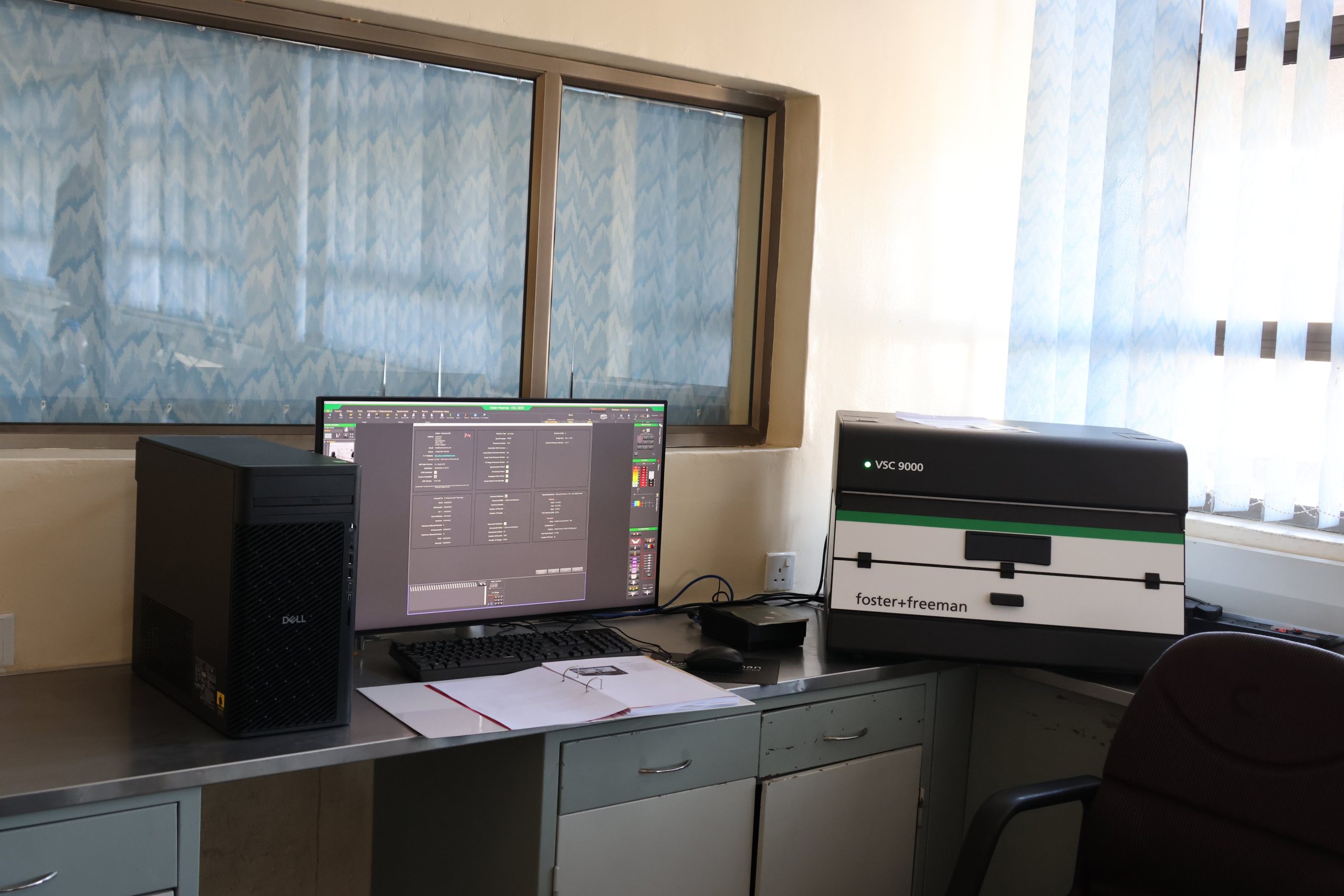
The Zimbabwe Republic Police (ZRP) has acquired new equipment to detect counterfeit documents and fraud involving false signatures and other criminal activities. The machines can also detect fake identity cards and passports.

National police spokesperson Commissioner Paul Nyathi said the equipment was commissioned by Commissioner-General Stephen Mutamba at the Criminal Investigations Department headquarters in Harare last week.

“The ZRP has acquired the latest technologically advanced VSC machines (QDE) to assist the Police’s Forensic Science Directorate and Criminal Investigation Department (CID) to detect fake Identity Cards (IDs), Passports, counterfeit documents, fraudulent activities through the use of false signatures and other criminal activities,” he said.

Speaking at the end of a week-long rebranding and refresher course for 55 senior officers at Ntabazinduna Training Depot, Deputy Commissioner-General Learn Ncube said police have acquired new surveillance equipment, and some officers are already being trained to use it.

Ncube did not reveal what type of equipment has been acquired, saying the public would be informed in due course.

“Government has pledged to assist us by provision of the latest technologies; let me share with the house that we have since received some latest surveillance gadgets, and we have some officers who are undergoing training in terms of the usage of that equipment and indeed our performance will be improved,” he said.

The post ZRP acquires machines to detect fake documents and IDs ⋆ Pindula News appeared first on Zimbabwe Situation.

BEAM arrears soar past US$292 million but government orders schools not to send learners home

Source: BEAM arrears soar past US$292 million but government orders schools not to send learners home ⋆ Pindula News The government has acknowledged that arrears owed under the Basic Education Assistance Module (BEAM) have risen to more than US$292 million. However, the Ministry of Primary and Secondary Education has warned schools that learners must not […]

The post BEAM arrears soar past US$292 million but government orders schools not to send learners home appeared first on Zimbabwe Situation.

Source: BEAM arrears soar past US$292 million but government orders schools not to send learners home ⋆ Pindula News

The government has acknowledged that arrears owed under the Basic Education Assistance Module (BEAM) have risen to more than US$292 million.

However, the Ministry of Primary and Secondary Education has warned schools that learners must not be sent home for failing to pay fees.

Deputy Minister of Public Service, Labour and Social Welfare Mercy Dinha told Parliament recently that BEAM arrears had accumulated since 2023 due to limited fiscal space.

In 2023, BEAM supported 1,856,996 beneficiaries, with US$62,583,089 remaining outstanding after fees were only partially paid.

In 2024, the programme assisted 1,261,140 beneficiaries, resulting in a further US$117,766,325.08 in arrears.

In 2025, 950,192 beneficiaries were supported, leaving US$112,142,942 outstanding in fees, levies and examination fees.

This brought the cumulative arrears to US$292,492,316.46.

Dinha said Treasury had released ZiG84,876,800 in 2026, which was used to partially clear arrears owed to some mainstream and special schools. A further ZiG10 million was allocated towards examination fee arrears with the Zimbabwe School Examinations Council (ZIMSEC).

She said Treasury had committed to releasing additional funds to clear the outstanding balance.

The issue came under further scrutiny after MPs raised concerns about the impact of unpaid BEAM funds on learners.

ZANU PF Chief Whip and Gutu South MP Pupurai Togarepi told Parliament that some schools in his constituency were sending home between 70 and 80 per cent of learners receiving BEAM support.

He questioned why learners should bear the consequences of the government’s failure to pay schools, particularly when the schools were government institutions.

The matter was referred to Primary and Secondary Education Minister Torerayi Moyo.

Moyo said government policy did not allow schools to exclude learners because of unpaid fees, adding that sending learners home violated their fundamental right to education.

He acknowledged that some schools had been turning learners away and said the government had taken action against those responsible.

Moyo said he intended to issue another statement before the start of the third term to reinforce the directive that learners must not be sent home over unpaid fees.

The parliamentary debate also highlighted a distinction between mainstream schools and special schools for learners with disabilities.

MP Angeline Gata told Parliament that special schools had been fully paid for 2023, 2024 and 2025, while arrears dating back to 2023 remained outstanding for mainstream schools.

She added that the number of learners benefiting from BEAM had grown to around five million, placing additional pressure on the programme.

The government says it expects Treasury funding to become available to clear the outstanding arrears before the end of the year.

The post BEAM arrears soar past US$292 million but government orders schools not to send learners home appeared first on Zimbabwe Situation.