Zimbabwean academic Blessing-Miles Tendi promoted to Professor of Politics at Oxford

LONDON — Zimbabwean academic and political historian Blessing-Miles Tendi has been promoted to the rank of Professor of Politics at the University of Oxford, recognising his sustained contribution to political scholarship and teaching at one of the world’s leading universities. Tendi, a Governing Body Fellow at St Antony’s College, received the promotion through the University […]

The post Zimbabwean academic Blessing-Miles Tendi promoted to Professor of Politics at Oxford appeared first on The Zimbabwe Mail.
LONDON — Zimbabwean academic and political historian Blessing-Miles Tendi has been promoted to the rank of Professor of Politics at the University of Oxford, recognising his sustained contribution to political scholarship and teaching at one of the world’s leading universities.

Tendi, a Governing Body Fellow at St Antony’s College, received the promotion through the University of Oxford Social Sciences Division’s annual Recognition of Distinction exercise.

The recognition confers the title of professor on academics who have made a significant and sustained contribution to the University’s academic work.

St Antony’s College announced the appointment, congratulating Tendi on receiving the distinction and his elevation to professorial rank.

“Congratulations to St Antony’s College Governing Body Fellow Miles Tendi who has received the Recognition of Distinction from the University of Oxford Social Sciences Division and has been promoted to professorial rank with the title Professor of Politics,” the college said.

“The Recognition of Distinction is an annual exercise that confers the title of professor to those who make a significant and sustained academic contribution to the University’s work.”

Influential scholar of African politics

Tendi is a prominent scholar of African politics, with much of his research focusing on Zimbabwe, political elites, civil-military relations, authoritarianism, political violence and the historical development of African states.

He teaches in Oxford’s Department of Politics and International Relations and is also affiliated with the African Studies Centre, giving him a platform at the intersection of comparative politics, international relations and African political studies.

His academic work has contributed to international scholarship on Zimbabwe’s political institutions and elite networks, particularly the relationship between political authority, the military and the state.

His research has also examined the historical and political forces that shape leadership succession, state power and political contestation in Africa.

Zimbabwean scholarship on the global stage

Tendi’s promotion represents a significant achievement for Zimbabwean scholarship internationally, particularly at a time when African politics has become an increasingly important field of research amid debates over democratic governance, military influence, political transitions and the changing relationship between African states and global powers.

Oxford’s recognition places Tendi among the university’s professorial ranks and formally acknowledges the depth and continuity of his academic contribution.

An academic familiar with African political studies told The Zimbabwe Mail that the promotion was significant beyond the prestige attached to the Oxford title.

“Professorship at Oxford is not simply an academic designation. It reflects sustained intellectual contribution, peer recognition and the ability to shape scholarship in a field over a considerable period. For a Zimbabwean scholar working extensively on African politics, it is also a notable contribution to the international visibility of Zimbabwean intellectual work,” the academic said.

A career centred on African political analysis

Tendi’s work has frequently brought Zimbabwean political experiences into wider comparative debates about power, institutions and governance.

His scholarship has examined how formal political institutions interact with informal networks of influence, making his work relevant to broader debates about the resilience of political elites and the changing nature of state power across Africa.

His promotion comes as universities and research institutions globally continue to expand scholarship examining Africa’s political and economic transformation, including questions surrounding democratic resilience, military interventions, resource politics and relations between African states and external powers.

For Zimbabwe, the achievement adds to a growing body of internationally recognised scholarship produced by academics examining the country’s complex political history and contemporary governance.

The University of Oxford’s Recognition of Distinction therefore marks more than a change in academic title for Tendi. It represents formal institutional recognition of a sustained body of scholarship and teaching focused on politics, particularly the political dynamics of Africa and Zimbabwe.

The post Zimbabwean academic Blessing-Miles Tendi promoted to Professor of Politics at Oxford appeared first on The Zimbabwe Mail.

Zambian opposition flee to UN agency for refuge

LUSAKA — Opposition figures Brian Mundubile and Makebi Zulu have reportedly sought refuge at a United Nations facility in Lusaka, amid fears that they could be arrested over alleged links to a militia group associated with their political movement. Mundubile, leader of the New Republican Party United Progressives Party (NRPUP), and his running mate Zulu […]

The post Zambian opposition flee to UN agency for refuge appeared first on The Zimbabwe Mail.

LUSAKA — Opposition figures Brian Mundubile and Makebi Zulu have reportedly sought refuge at a United Nations facility in Lusaka, amid fears that they could be arrested over alleged links to a militia group associated with their political movement.

Mundubile, leader of the New Republican Party United Progressives Party (NRPUP), and his running mate Zulu reportedly went to the UN premises on Monday, according to sources cited by News Diggers. The development comes against the backdrop of heightened political tensions and security concerns following a reported confrontation involving police and individuals allegedly linked to the opposition movement.

The report, which attributes the information to sources within the Cabinet Office, says the two opposition figures are seeking protection because they fear possible arrest by Zambian authorities.

The claims have not, however, been independently verified, and the reported presence of the two politicians at a UN facility does not by itself establish that they have been granted asylum or formal refugee status.

Shootout puts opposition figures under scrutiny

The reported move follows a statement from Secretary to the Cabinet Patrick Kangwa concerning a police operation on August 13, during which officers reportedly engaged members of an alleged militia group.

According to News Diggers, Kangwa said Mundubile had been found at the scene of the shootout between police and individuals allegedly connected to the militia during the operation.

The development has subsequently placed the NRPUP leadership under increased scrutiny, particularly over questions surrounding the alleged organisation and activities of the group.

Mundubile has previously rejected allegations concerning militia weapons on his property, adding another layer to the dispute over the extent of the opposition leadership’s alleged links to the group.

The allegations remain politically and legally sensitive, and any eventual investigation would need to distinguish between political association, presence at a location and evidence of participation in criminal activity.

UN presence raises political stakes

The reported decision to seek protection at a UN facility represents an extraordinary escalation because it shifts what began as a domestic political and security dispute into an issue with an international dimension.

A political analyst in Lusaka said the development should be treated cautiously until the Zambian authorities, the UN and the politicians themselves provide formal statements.

“Seeking sanctuary at an international organisation’s premises is a dramatic political signal, but it should not be interpreted as proof of guilt or innocence. The central issue now is whether the authorities can demonstrate through due process that there is a substantive criminal case, rather than allowing allegations to become a substitute for evidence,” the analyst said.

The analyst said the authorities would also need to ensure that any investigation was conducted transparently.

“If arrests follow, the credibility of the process will depend on whether the state can clearly identify the alleged offences, present evidence and allow the accused access to legal representation and the courts,” the analyst said.

Election politics adds further sensitivity

The controversy comes at a particularly sensitive moment for Zambia’s political landscape, with the opposition already operating in a highly contested environment.

Mundubile is a prominent opposition figure, while Zulu is a senior lawyer and politician who has been involved in several major constitutional and political disputes. The two have therefore occupied positions that give the allegations wider political significance.

The reported development could also have consequences for the NRPUP’s leadership and campaign organisation if its two senior figures remain unavailable for an extended period.

However, analysts cautioned against assuming that the allegations automatically translate into a criminal case.

“The state has a legitimate responsibility to investigate allegations involving armed groups or political violence, but that responsibility must operate within the rule of law. Equally, opposition leaders cannot use political status as immunity from legitimate criminal investigation,” another analyst said.

A test for Zambia’s institutions

The episode is likely to become a test of Zambia’s political and judicial institutions, particularly their ability to separate national security concerns from partisan political competition.

For the government, the challenge is to demonstrate that any action against the opposition figures is based on evidence and established law. For Mundubile and Zulu, the immediate challenge is to clarify precisely why they believe their arrest is imminent and what protection they are seeking from the UN.

The reported asylum request also raises an important legal distinction: seeking protection or remaining at a UN facility is not necessarily equivalent to being formally recognised as a refugee or being granted asylum.

For now, the central facts remain contested. News Diggers reports that the two politicians are at a UN agency in Lusaka and that government officials have been informed of their presence.

What happens next will depend largely on whether the Zambian authorities proceed with formal investigations or charges, and whether the UN becomes directly involved in resolving the dispute.

The episode nevertheless marks a significant development in Zambia’s political contest, bringing together allegations of militia activity, opposition politics, police operations and international protection in a case that could test the country’s commitment to both national security and due process.

The post Zambian opposition flee to UN agency for refuge appeared first on The Zimbabwe Mail.

When a leader doesn’t sympathize with his own people’s tragedy, no one else in the region does

Source: When a leader doesn’t sympathize with his own people’s tragedy, no one else in the region does If you don’t love your own, no one else will. ​There is a profound, aching betrayal in watching regional diplomacy play out while a nation bleeds. To directly receive my articles please join my WhatsApp Channel on: https://whatsapp.com/channel/0029VaqprWCIyPtRnKpkHe08Yesterday in […]

The post When a leader doesn’t sympathize with his own people’s tragedy, no one else in the region does appeared first on Zimbabwe Situation.

Source: When a leader doesn’t sympathize with his own people’s tragedy, no one else in the region does

If you don’t love your own, no one else will.

​There is a profound, aching betrayal in watching regional diplomacy play out while a nation bleeds. 
To directly receive my articles please join my WhatsApp Channel on: https://whatsapp.com/channel/0029VaqprWCIyPtRnKpkHe08
Yesterday in Durban, as the SADC Heads of State and Government Summit convened, the silence surrounding the Lake Kariba ferry disaster was deafening. 

A tragedy of catastrophic proportions—which has so far claimed 93 lives—was met with an astonishing lack of formal acknowledgment from the region’s highest gathering. 
A disaster of this magnitude naturally should have stopped proceedings in their tracks. 
It should have compelled gathered leaders to observe at least a minute of silence to honor those innocent lives lost. 
As the people of Zimbabwe, we expected the incoming SADC chairman, South African President Cyril Ramaphosa, to utter words of comfort during his opening address. 
Instead, he chose to congratulate Zimbabwe on its election to a non-permanent seat on the UN Security Council.
​This total detachment exposes a painful reality about regional governance. 
Those in power remain obsessed with the trappings of political prestige—applauding diplomatic seats and summit handovers—while turning a blind eye to the horrific deaths of poor, rural citizens drowning in the waters of Kariba. 
But we cannot simply place the blame on neighboring heads of state. 
Charity, after all, begins at home.
What did our own leader say about this national catastrophe when given the regional platform in Durban? 
Handing over the SADC chairmanship, he offered nothing. 
Nowhere in his speech was there a single mention of the disaster unfolding in his own country. 
While Zimbabwe was plunged into deep mourning, our head of state opted to stick to well-worn scripts on regional economic development, mineral value-addition, and raw export transitions—lofty concepts that rarely bring tangible comfort to everyday citizens struggling to survive.
Even back home, the response spoke volumes. 
Immediately following the accident, our leader did not travel to the shores of Kariba to console the grieving families or assess the rescue and recovery efforts firsthand—as is the custom the world over.
Instead, he prioritized attending a Johane Masowe Chishanu apostolic gathering at the Gwanzura Shrine in Harare, before flying off to Durban for the SADC Summit.
When a leader demonstrates such apparent indifference toward a tragedy striking his own household, it is hardly surprising that foreign leaders follow suit. 
If, during my mother’s passing last October, I had chosen to attend business meetings and go partying instead, I could hardly expect anyone else to treat my loss with the gravity it deserved.
​When a leader doesn’t sympathize with his own people’s tragedy, no one else in the region does. 
The silence in Durban was not just an omission; it was a mirror reflecting our own government’s priorities. 
When statecraft completely detached from human suffering becomes the norm, the ordinary citizen is left entirely alone. 
Pain belongs to the vulnerable.
Tendai Ruben Mbofana is a social justice advocate and writer. Please feel free to contact him on +263715667700 or mbofana.tendairuben73@gmail.com

The post When a leader doesn’t sympathize with his own people’s tragedy, no one else in the region does appeared first on Zimbabwe Situation.

Zambia President reelected for a second term in a vote marred by rigging and violence

LUSAKA, Zambia — Zambian President Hakainde Hichilema has been reelected for a second five-year term, the Electoral Commission of Zambia announced early Tuesday. He was declared the outright winner of last Thursday’s presidential election without the need for a run-off, having secured 61.4% of the 5 million votes cast. According to the commission, Hichilema won […]

The post Zambia President reelected for a second term in a vote marred by rigging and violence appeared first on The Zimbabwe Mail.

LUSAKA, Zambia — Zambian President Hakainde Hichilema has been reelected for a second five-year term, the Electoral Commission of Zambia announced early Tuesday.

He was declared the outright winner of last Thursday’s presidential election without the need for a run-off, having secured 61.4% of the 5 million votes cast.

According to the commission, Hichilema won with 2,965,326 votes and his closest competitor was opposition leader Brian Mundubile, who won 1,856,217 votes.

“I therefore declare, Hichilema Hakainde S, to be president-elect of the Republic of Zambia this 18th day of August, 2026,” commission chairperson Mwangala Zaloumis said.

Hichilema’s victory follows a closely watched election which saw the vote counting suspended last Friday and then restarted hours later under heightened security after the commission said there had been attacks against some polling station officials and some ballot papers had been stolen.

The government also confirmed that several leading opposition figures were arrested on the night of the elections, with the police accusing them of posing a threat to state security.

Mundubile said his home was raided by the police in what he called an attack on his life.

Thursday’s election was seen as a test of Hichilema’s economic recovery plan after the copper-rich nation was plunged into a debt crisis in 2020. Hichilema was elected in 2021 and oversaw the restructuring of Zambia’s sovereign debt while reining in inflation and stabilizing the currency.

International observers, including the European Union, said the election was largely peaceful, but said the “broader electoral process took place in an environment that limited fundamental freedoms.”

“Late legal changes, legal uncertainty, and unequal campaign conditions distorted the playing field,” said Michael McNamara, chief of the EU observation mission.

In a pastoral statement, the Zambia Conference of Catholic Bishops expressed concern over the deployment of the army during the vote counting

“The maintenance of order during elections is constitutionally and statutorily the responsibility of the Zambia Police Service,” the bishops said.

The post Zambia President reelected for a second term in a vote marred by rigging and violence appeared first on The Zimbabwe Mail.

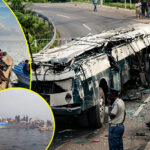
US$10 per passenger, then 92 people died: Kariba ferry accident overtakes Nyanga bus disaster which killed 89 people

The death toll from the Rida Mbuya Nehanda ferry disaster has risen to 92, making it Zimbabwe’s deadliest transport tragedy and placing the country’s most painful memories of mass death alongside a fresh lake disaster that has devastated families acros…

The death toll from the Rida Mbuya Nehanda ferry disaster has risen to 92, making it Zimbabwe’s deadliest transport tragedy and placing the country’s most painful memories of mass death alongside a fresh lake disaster that has devastated families across Nyaminyami. Eight more bodies were recovered yesterday as divers and rescue teams widened the search […]

The post US$10 per passenger, then 92 people died: Kariba ferry accident overtakes Nyanga bus disaster which killed 89 people first appeared on My Zimbabwe News.