Invictus starts gas drilling in November

Source: Invictus starts gas drilling in November – herald Oliver Kazunga Senior reporter ZIMBABWE’S potentially game-changing Cabora Bassa gas exploration campaign has moved into execution, with Invictus Energy confirming November this year as the start of drilling on the high-impact Musuma-1 well. The development marks a major step forward in the Australia-headquartered company’s exploration programme, […]

The post Invictus starts gas drilling in November appeared first on Zimbabwe Situation.

Source: Invictus starts gas drilling in November – herald

Oliver Kazunga

Senior reporter

ZIMBABWE’S potentially game-changing Cabora Bassa gas exploration campaign has moved into execution, with Invictus Energy confirming November this year as the start of drilling on the high-impact Musuma-1 well.

The development marks a major step forward in the Australia-headquartered company’s exploration programme, with drilling preparations now advancing towards the mobilisation of the rig, construction of the wellpad and deployment of specialist well services.

The planned drilling campaign follows Invictus’ landmark Mukuyu gas-condensate discovery that significantly raised Zimbabwe’s profile on the global energy exploration map — and is now being used as the technical and geological foundation for further exploration in the basin.

In a statement, Invictus, which is listed on the Victoria Falls Stock Exchange, said it had executed a Deed of Variation to its drilling contract with Exalo Drilling S.A. for the provision of Exalo Rig 202, which will drill the Musuma-1 exploration well at the Cabora Bassa Project.

The company’s managing director, Mr Scott Macmillan, was quoted as saying the revised rig contract, together with preparations for the drilling campaign, had allowed his organisation to confirm the November drilling date.

“Following execution of the Deed of Variation with Exalo and commencement of the rig maintenance and readiness campaign, we are pleased to confirm a November spud date for the Musuma-1 well,” he said.

The company said Exalo would now undertake a comprehensive maintenance and operational readiness campaign on Rig 202 ahead of its move to the Cabora Bassa Project, rig-up and commencement of drilling operations.

The development puts the Musuma-1 well firmly into the execution phase, with Invictus also advancing procurement of the remaining well services required for the campaign.

The company said procurement was well advanced, with contracts being prepared for award, after which equipment preparation and staged mobilisation to the Musuma-1 location would begin.

Mr Macmillan said the company was also moving ahead with preparations at the drilling site.

“Wellpad construction is scheduled to begin next week (this week), evaluation of well services provision is complete, and we’re targeting award of these remaining scopes in coming weeks.”

The wellpad construction and associated civil works will commence following completion of customary cultural ceremonies with traditional leaders and local communities.

The development is significant for Zimbabwe’s energy exploration ambitions because Musuma-1 is being positioned as a high-impact exploration well with the potential to expand the resource base of the Cabora Bassa Project.

Invictus said the well could complement the company’s Mukuyu gas-condensate discovery, adding to the emerging resource potential of the wider project.

Mr Macmillan described Musuma-1 as a potentially important addition to the company’s exploration programme.

“Musuma-1 is a high-impact exploration well with the potential to materially expand the resource base of the Cabora Bassa Project and complement the Mukuyu gas-condensate discovery.

“The company looks forward to providing further updates as we move into the execution phase of the drilling campaign,” he said.

The November drilling programme comes as Zimbabwe continues to pursue greater exploitation of domestic energy resources, particularly gas, as part of efforts to strengthen the country’s energy security and reduce dependence on imported energy.

However, Musuma-1 remains an exploration well, meaning its commercial potential will only become clearer after drilling, evaluation and testing of the results.

In 2023, Invictus confirmed a significant natural gas and oil discovery in within the Mukuyu structure, one of its prospective areas.

The Mukuyu discovery, from the Lower and Upper Angwa formations, was ranked the second-largest oil and gas find in Sub-Saharan Africa in 2023, with an estimated 230 million barrels of oil equivalent (mmboe) or 1,3 trillion cubic feet (Tcf) of gas from just two wells drilled in a 200-square-kilometre structure.

The immediate focus was now on getting the drilling infrastructure and services into position ahead of the November spud at Musuma 1 well.

Exalo’s rig maintenance and operational readiness campaign will be undertaken before the rig is moved to the drilling location, while the remaining well-service contracts will be awarded and equipment progressively mobilised.

The wellpad and associated civil works will provide the physical base for the drilling operation once the customary consultations and ceremonies with traditional leaders and local communities have been completed.

Invictus said the latest developments represented the transition of Musuma-1 from planning into execution.

The post Invictus starts gas drilling in November appeared first on Zimbabwe Situation.
The Warning Ignored: How A 2025 Social Media Plea Foretold the Mbuya Nehanda Ferry Tragedy

Source: The Warning Ignored: How A 2025 Social Media Plea Foretold the Mbuya Nehanda Ferry Tragedy ⋆ Pindula News On a quiet Saturday in February 2025, Nick Mangwana, the Permanent Secretary for Information, Publicity and Broadcasting Services, took to social media to announce good news. He lauded the Rural Infrastructure Development Agency (RIDA) for significantly […]

The post The Warning Ignored: How A 2025 Social Media Plea Foretold the Mbuya Nehanda Ferry Tragedy appeared first on Zimbabwe Situation.

Source: The Warning Ignored: How A 2025 Social Media Plea Foretold the Mbuya Nehanda Ferry Tragedy ⋆ Pindula News

On a quiet Saturday in February 2025, Nick Mangwana, the Permanent Secretary for Information, Publicity and Broadcasting Services, took to social media to announce good news. He lauded the Rural Infrastructure Development Agency (RIDA) for significantly reducing passenger fares on the Mbuya Nehanda (KF 551), a government-operated ferry plying the Zambezi waters.

“This has brought financial relief to travellers who use the boat to access remote areas in Nyaminyami District,” Mangwana wrote, presenting the move as a victory for rural communities.

Yet, buried in the replies to his post was a chilling prophecy. One user, Mbali, responded with a direct plea to the Ministry of Information: “Imika itai mushe @InfoMinZW vanhu vanofira mumvura apa” — roughly translated, “Do your job properly, people are going to die in the water here.”

It was a warning from a citizen who could see what the government could not—or would not. Eighteen months later, that warning has become a devastating reality.

The Tragedy on Lake Kariba

On August 11, 2026, the very vessel celebrated for its affordability capsized near Long Island on Lake Kariba under heavy waves. The state-owned ferry, now operated by RIDA, was carrying far more souls than it was ever designed to hold.

According to official reports, ticketed adult passengers numbered 152, with five crew members, yet the vessel’s stated capacity is just 90 people. Adding to the horror, an unknown number of children, exempt from ticketing requirements, were also on board.

At the time of writing, the confirmed death toll stands at 44, with others still missing and feared dead. Rescue operations continue for those lost in the vast, choppy waters of Kariba, while the nation grapples with the scale of the catastrophe.

Government officials have confirmed the ferry was overloaded and have recommended that the incident be declared a State of Disaster. However, for many, the question isn’t just what happened, but why it was allowed to happen.

“Vanhu Vanofira Mumvura”: A Warning Unheeded

The foresight of the public, demonstrated in the 2025 reply, exposes a profound failure of governance. The citizen who warned Mangwana wasn’t a prophet; they were likely a resident of the very communities the ferry served. They knew the vessel was old, unsafe, and operated with a reckless disregard for human life.

Their comment was not anonymous; it was a direct, public plea to the government’s own spokesperson. It now stands as damning evidence that the dangers were known to the people long before the state chose to act—or rather, failed to act.

Another user on Mangwana’s 2025 post also highlighted the vessel’s antiquity, noting, “Murikunyadzisa president this boat ndakaikwira 1979 ndichienda Gatshe Gatshe fishing… alas noone bothers to refurbish it” (You are embarrassing the president; I boarded this boat in 1979 going to Gatshe Gatshe fishing… no one bothers to refurbish it). This sentiment is echoed in the aftermath of the tragedy.

Former Cabinet Minister Walter Mzembi has questioned why a visibly old and ill-equipped vessel was ever licensed for public transport, stating it “should not have been licensed to operate on Kariba waters in the first place”.

A Question of Accountability

The Mbuya Nehanda ferry was not a private venture; it is a state asset, owned and operated by the Rural Infrastructure Development Agency (RIDA), an entity under the Office of the President and Cabinet. This places the tragedy squarely at the feet of the government.

Calls for accountability are mounting. The public sentiment that a government should ensure the safety of its citizens on its own infrastructure is now a roaring demand. As one online commentator put it, “If the world wants to know the true state of Zimbabwe, it should not look at the glitz and glamour at state functions… but it should look at what is happening in our public spaces, where ordinary people live, travel, work and die”.

Former Cabinet Minister Mzembi has added to this chorus, calling for an “all-encompassing investigation/enquiry to prevent future accidents” and questioning the exemptions often accorded to state assets. “Laws and regulations,” he argues, “should be stricter, starting with Government itself”.

The Kariba ferry disaster is more than a tragic accident; it is the tragic culmination of a culture of neglect. The warning was there. It was public, it was specific, and it was ignored.

The government had 18 months to inspect, refurbish, or replace the ageing vessel. Instead, they announced a fare reduction and touted it as a success, while the vessel sailed toward its fate, and dozens of Zimbabweans toward theirs.

As the nation mourns, the answer to “what happened?” is painfully clear. A boat was allowed to sail, overloaded and unseaworthy, because those in power refused to listen.

The post The Warning Ignored: How A 2025 Social Media Plea Foretold the Mbuya Nehanda Ferry Tragedy appeared first on Zimbabwe Situation.

Harare Mayor Says InDrive Operators Must Share Revenue With Council

Source: Harare Mayor Says InDrive Operators Must Share Revenue With Council ⋆ Pindula News Harare Mayor Jacob Mafume has said the City of Harare is drafting a policy that will allow the council to collect revenue from e-hailing drivers. This follows reports that the Council has intensified its crackdown on e-hailing services such as InDrive and […]

The post Harare Mayor Says InDrive Operators Must Share Revenue With Council appeared first on Zimbabwe Situation.

Source: Harare Mayor Says InDrive Operators Must Share Revenue With Council ⋆ Pindula News

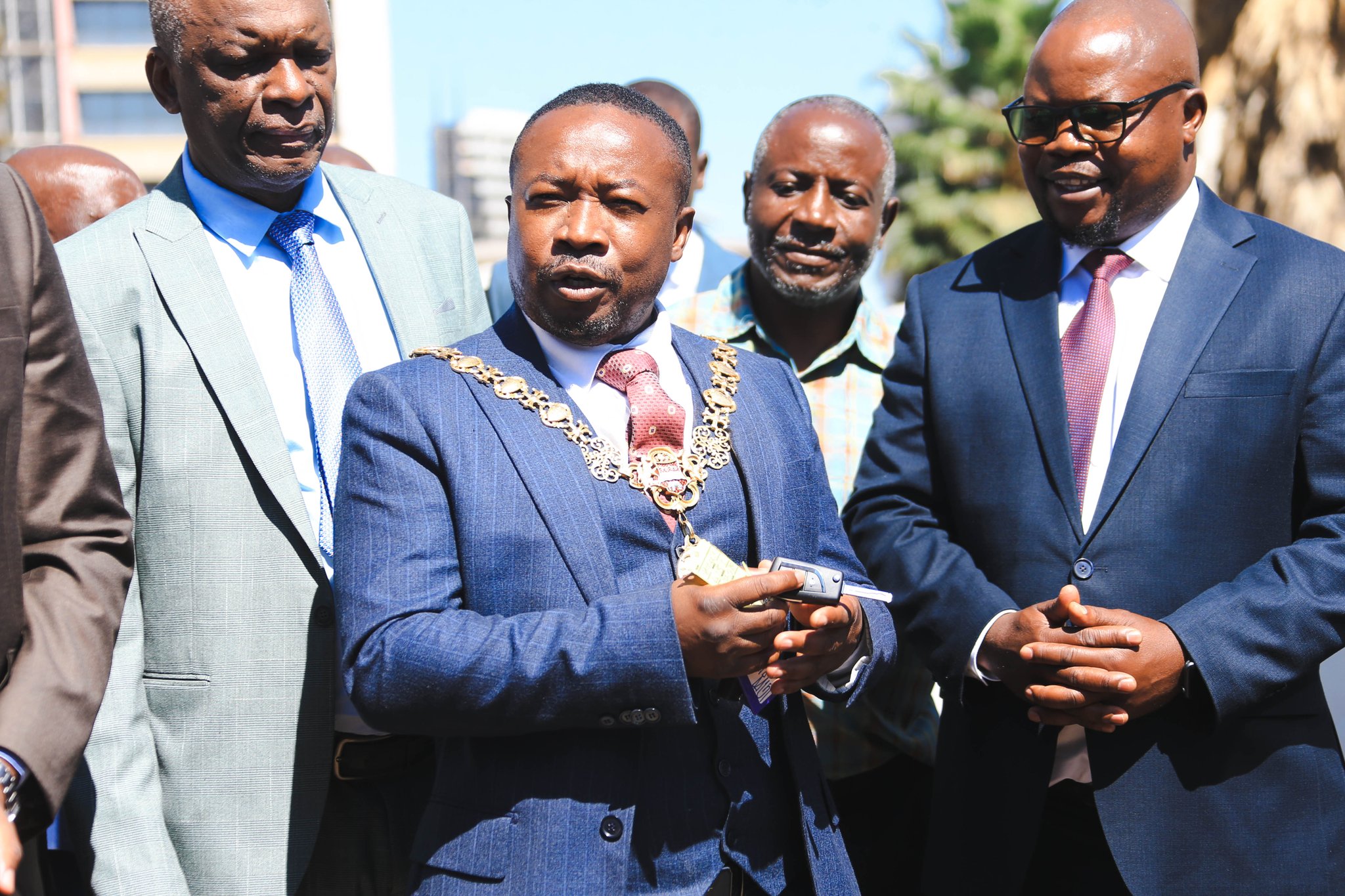
Harare Mayor Says InDrive Operators Must Share Revenue With Council

Harare Mayor Jacob Mafume has said the City of Harare is drafting a policy that will allow the council to collect revenue from e-hailing drivers.

This follows reports that the Council has intensified its crackdown on e-hailing services such as InDrive and Bolt.

Speaking to journalists, Mafume acknowledged that there has been a legal lacuna in how e-hailing services are handled in Harare and across Zimbabwe, with the law yet to catch up with the innovation.

“What is clear is that there has been a legal lacuna in terms of how e-hailing services are handled in Harare, and in Zimbabwe. Our law has not caught up with the innovation that comes with the e-hailing services,” said Mafume.

“And therefore, we have laws that are supposed to be a must for passenger-carrying vehicles. And basically, InDrive is a passenger-carrying vehicle and passenger operator. And other traditional taxis, traditional buses, and traditional kombis have been complying. And they have pointed out the inconsistency in terms of application of the law, as they relate to passengers and operating such businesses.”

Mafume said council recognises the role the sector is playing in the economy.

“We do understand that it is an innovation that is bringing relief to families, that is putting food on the table, that is increasing employment, in terms of those that are being employed in the city, and in the country,” he said.

He said the city will work with Government to regularise the sector, taking into account best international practices.

“It is up to us, together with consultations with Government, on how we regularise e-hailing services, taking into account best international practices, what our neighbours have done in South Africa, and other countries, who have recently come up with a policy framework and regulatory framework on how e-hailing services operate,” he said.

In the interim, Mafume said council is engaging its parent ministry on how to treat those currently operating, including whether to give them a window period while a regulatory framework is being developed.

“We have tasked our transport department to come up quickly with a policy that will consult with the relevant stakeholders, and make sure that there is compliance with the law, and that this service not only contributes to employment, but also contributes to the maintenance of the infrastructure that they have to use, and the maintenance of revenues to the city,” he said.

“I’m sure InDrive operators have no issues sharing their revenue with the city and the citizens of the city, so that the infrastructure can be put in place.”

Mafume said council will make an announcement shortly once consultations are concluded, including what will be done in the interim.

He defended the current enforcement, saying municipal police had been applying the law as it stands.

“What has been happening and what is being applied has been the law as it currently stands, vis-a-vis the innovation that has come with e-hailing services,” he said.

The post Harare Mayor Says InDrive Operators Must Share Revenue With Council appeared first on Zimbabwe Situation.

Zimbabwe: run by, owned by, the ZANU elite. And who still calls them a “liberation movement”?

The post Zimbabwe: run by, owned by, the ZANU elite. And who still calls them a “liberation movement”? appeared first on Zimbabwe Situation.

Source: Zimbabwe: run by, owned by, the ZANU elite. And who still calls them a “liberation movement”? – Martin Plaut

A $20 Million Wedding Shows Zimbabwe Who’s Really Running the Country

By Antony Sguazzin Bloomberg

Updated on 

  • Zimbabwe’s wealthy elite gathered at a polo club to celebrate a wedding, showcasing the country’s new parade of wealth and influence under President Emmerson Mnangagwa.
  • The government has abolished the presidential vote and amended the law to extend Mnangagwa’s term by two years, a move that has been criticized as the beginning of a one-party state and an authoritarian party state.
  • The changes have been driven by a handful of entrepreneurs who have become wealthy through government procurement programs and access to the country’s most profitable mines, and who have started to alter the ruling party by bankrolling politicians and securing powerful positions.

In late May, Zimbabwe’s one percent gathered at a polo club on the outskirts of Harare to celebrate the marriage of one of their own.

The country had never before seen a wedding like this. From the groom’s father, a presidential advisor and US-sanctioned tycoon, the couple received $17.5 million in cash and land. From government ministers, politically connected businessmen and the sons of President Emmerson Mnangagwa, Kudakwashe Tagwirei and Poneso Tinomuda Janda were showered with luxury carsrare cattle and hundreds of thousands of dollars. The president delivered a speech, and the American R&B band Boyz II Men gave a surprise performance at the reception.

This parade of wealth and influence, documented on state and social media, was a clear illustration of who now holds power in the southern African country.

While Zimbabwe struggled with years of misrule and economic ruin under former leader Robert Mugabe, a Marxist who largely shunned business and abhorred ostentatious displays of wealth, that has changed dramatically under Mnangagwa. During his tenure, a handful of entrepreneurs have become enormously wealthy through government procurement programs, access to some of the country’s most profitable mines and generous state tenders. That’s happened as the prices of gold and platinum, two of Zimbabwe’s key resources, have surged, and the country has become a main lithium supplier to China.

After a months-long campaign, some of those entrepreneurs accomplished one of their main political objectives several weeks ago when the government abolished the presidential vote and amended the law to extend 83-year-old Mnangagwa’s term by two years, until 2030. That’s a major change to the system — even under Mugabe, elections were always held on the dates stipulated in the constitution.

“It’s the beginning of a one-party state,” warned Stephen Chan, a professor of world politics at the School of Oriental and African Studies in London, during a talk last month. “Not just a one-party state, but an authoritarian party state and an oligarchic party state.’’

By bankrolling politicians and securing powerful positions within the governing Zimbabwe African National Union-Patriotic Front (Zanu-PF), the businessmen have also started to alter the party, which has ruled the country since it achieved independence in 1980. Historically led by aging struggle veterans, some now rely on what Chan calls the “new class of oligarchs” for financial support. “The party needs money,” he said in an interview, “and they have bought their way in.’’

The major players were in attendance at the wedding. Kudakwashe Tagwirei, a tycoon under US and UK sanctions for alleged corruption, formally joined Zanu-PF’s leadership last year by being appointed to its top decision-making body. According to local media reports, he gifted 300 luxury vehicles to senior party leaders during this process. Wicknell Chivayo, a businessman whose ventures include solar power and logistics, also gave expensive vehicles to opposition lawmakers who agreed to get behind scrapping presidential elections. And Scott Sakupwanya, a metals trader who was featured in an Al Jazeera investigation into gold smuggling, is a member of parliament for Zanu-PF.

With these moves, “they are making sure they have access” to the president, said Trevor Ncube, a Zimbabwean owner of independent newspapers that are critical of the government. “Should anything happen, they will be part of the next administration or can influence it.”

Tagwirei, Sakupwanya and Chivayo did not answer multiple phone calls or reply to text messages seeking comment. The men have all publicly rejected allegations of corruption, describing them as politically motivated.

With the blessing of the senate and 280-member parliament, Mnangagwa signed the amendment to extend his term and empower parliament to select the next president on July 7, telling the state-run press it had been a “collective” decision. Just two years ago, the president forced one of Ncube’s newspapers to publicly apologize for suggesting he might try to remain in power.

Wilf Mbanga, the founder of the Zimbabwean, a newspaper distributed in the UK and South Africa, describes the changes as a way for the new business elite to entrench control and circumvent a vote. “They know they can’t appeal to all Zimbabweans to be elected,” he said. “That’s why they have been pushing for the amendments.”

In response to queries, Zanu-PF’s information secretary Chris Mutsvangwa said that the term extension will stabilize the business environment and usher in “a period of political and governance certainty.” He also dismissed suggestions that it was motivated by external factors. “The finger pointing at a few business figures is neither here nor there,” he said.

Before the amendments were passed, they were met with deep public resistance. Court cases and requests for a referendum were brushed aside, and human rights groups say that protestors were assaulted and prevented from speaking at public hearings.

The campaign has also fractured the ruling party. A prominent retired air marshal wrote to parliament in March demanding a referendum on the measures, saying the failure to hold one would be “a betrayal not of us but of every Zimbabwean who hoped for a better country.” Constantino Chiwenga, Mnangagwa’s vice president, criticized Tagwirei for “buying” his way into the party and warned of “bloodshed” if the term extension went through. In an address last year at a graveyard where many of Zimbabwe’s liberation heroes are buried, he referred to the clique of businessmen as “Zvigananda” a word whose origins come from a Shona term for blood-engorged ticks. The vice president accused the men of betraying the country’s revolutionary values.

“There is tension in the country,” said Ncube, the newspaper owner. Referring to Chiwenga, he added, he “has got a loyal group of military people, retired commanders, who are saying this is not what we fought for.”

In a June report, the International Crisis Group warned that a coup could be one possible outcome: “The risk is that Chiwenga will come to see such a gambit as the only route to reach a position he feels he is owed.” Chiwenga led the 2017 coup.

Still, he will struggle to secure power without the party’s financial backers, said Chipo Dendere, assistant professor of Africana at Wellesley College in Massachusetts. “The vice president has openly spoken against corruption” and oligarchs, she said, “but since these types hold the party purse I don’t see how he can have a political career without their support.”

The situation echoes the waning years of Mugabe’s rule, when old allies were jettisoned after a group of businessmen won favor with the aging leader and his increasingly influential wife Grace. Mugabe removed Mnangagwa from his post as vice president in November 2017, and a coup followed a week later.

The post Zimbabwe: run by, owned by, the ZANU elite. And who still calls them a “liberation movement”? appeared first on Zimbabwe Situation.

Stallion Cruise Demands Ban On Touts

Source: Stallion Cruise Demands Ban On Touts ⋆ Pindula News Passengers and bus operators say harassment, intimidation and coercion by touts at Bulawayo’s Fourth Avenue Bus Terminus have turned the city’s main long-distance rank into a no-go zone, prompting Government to call for a coordinated crackdown. The Ministry of Transport and Infrastructural Development has said […]

The post Stallion Cruise Demands Ban On Touts appeared first on Zimbabwe Situation.

Source: Stallion Cruise Demands Ban On Touts ⋆ Pindula News

Passengers and bus operators say harassment, intimidation and coercion by touts at Bulawayo’s Fourth Avenue Bus Terminus have turned the city’s main long-distance rank into a no-go zone, prompting Government to call for a coordinated crackdown.

The Ministry of Transport and Infrastructural Development has said it is treating the complaints with “serious concern”, warning that passenger safety and security now require a Whole-of-Government response.

In a letter to Commissioner-General of Police Stephen Mutamba, the Ministry called for the “immediate removal” of rank touts from Fourth Avenue following a complaint by Stallion Cruise bus company. The correspondence was copied to senior provincial and city officials.

“The Ministry notes with serious concern the passenger safety and security issues raised in your correspondence,” the ministry said.

It added that the matter would be escalated to the Ministers of Home Affairs and Cultural Heritage and Local Government and Public Works.

“It is the Ministry’s considered view that an integrated Whole-of-Government approach is required to decisively address the challenges posed by rank touts,” it said.

At the centre of the complaints are allegations that touts are assaulting passengers, extorting money and dictating which buses travellers must board.

Stallion Cruise, which raised the complaint, said the situation can no longer be tolerated.

“We can no longer fold our arms while our passengers are abused daily,” the company said in a letter to the Resident Minister of State and Devolution Affairs for Bulawayo Province.

“Touts assault passengers, extort money, and block entry points. They have turned the rank into their personal territory.”

The operator is demanding a ban on touting, the deployment of police and the introduction of licensed marshals at the terminus within 14 days.

The alleged conduct could also breach consumer protection laws. Section 35(2) of the Consumer Protection Act [Chapter 14:44] prohibits the use of physical force, threats or other unfair practices against consumers.

Tensions between rival operators have worsened the disorder. Inter Africa bus management had to issue an apology after its touts damaged a Stallion Cruise bus in Bulawayo, an incident that has deepened bad blood between the two companies.

The problem extends beyond Bulawayo. Touts have been blamed for repeated confrontations at ranks across the country, with stakeholders calling for a permanent solution.

Earlier this year, a tout died in Chiredzi during skirmishes involving rival touts from Inter Africa and Stallion Cruise, forcing authorities to allocate the two companies different loading ranks to stop the clashes.

In Harare, passengers have also complained of harassment around Fourth Street Roadport, where a tout identified as Tafadzwa was reportedly arrested before being released.

The post Stallion Cruise Demands Ban On Touts appeared first on Zimbabwe Situation.