FULL DETAILS: Highlanders Football Club chairman, his deputy, treasurer and 1 woman die in deadly highway accident

Tragedy Strikes Zimbabwean Football: Highlanders FC Leadership Perishes in Horrific Road Crash BULAWAYO – Zimbabwean football has been plunged into profound mourning following a devastating road traffic accident that claimed the lives of three senior e…

Tragedy Strikes Zimbabwean Football: Highlanders FC Leadership Perishes in Horrific Road Crash BULAWAYO – Zimbabwean football has been plunged into profound mourning following a devastating road traffic accident that claimed the lives of three senior executives of Highlanders Football Club and a female passenger. The horrific incident occurred on Thursday evening, 23 July 2026, along […]

The post FULL DETAILS: Highlanders Football Club chairman, his deputy, treasurer and 1 woman die in deadly highway accident first appeared on My Zimbabwe News.

Hope returns to Maphisa . . . nursing school reopens after 20 years 

Source: Hope returns to Maphisa . . . nursing school reopens after 20 years – herald Liberty Mutamba libertymutamba17@gmail.com For nearly 20 years, the classrooms at Maphisa District Hospital’s nursing training school stood empty. Desks gathered dust, notice boards faded, while outside, young people from Matabeleland South who dreamed of wearing a nurse’s uniform had to […]

The post Hope returns to Maphisa . . . nursing school reopens after 20 years  appeared first on Zimbabwe Situation.

Source: Hope returns to Maphisa . . . nursing school reopens after 20 years – herald

Liberty Mutamba libertymutamba17@gmail.com

For nearly 20 years, the classrooms at Maphisa District Hospital’s nursing training school stood empty. Desks gathered dust, notice boards faded, while outside, young people from Matabeleland South who dreamed of wearing a nurse’s uniform had to leave home, travel long distances, and compete for places in Bulawayo, Harare or beyond.

Today the silence is gone. The Maphisa District Hospital Nursing School has re-opened its doors, bringing with it renewed hope for rural youth, relief for families, and a tangible sign of the Second Republic’s push to decentralise services under President Mnangagwa’s Independence Legacy Projects.

The institution was officially spruced up and handed back to the province as part of the Government’s programme to revive and equip high-impact legacy facilities that were mothballed after independence.
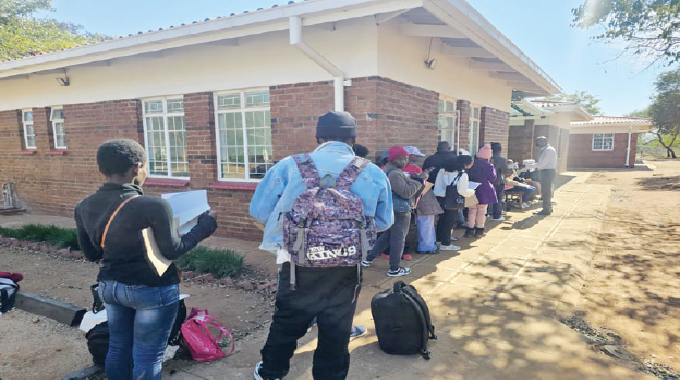
It now joins Gwanda Multi-Disciplinary Provincial Hospital, Brunapeg and Tshelanyemba as fully functional health training institutions in Matabeleland South, with Plumtree District Hospital also in the pipeline.

Government officials and community members say the re-opening is more than the restoration of a building.

They say it is about correcting a historical imbalance, about ensuring that opportunities in education and health are not confined to big cities, but are distributed evenly to every district regardless of location.

“Devolution means taking services to the people,” said Matabeleland South Provincial Medical Director (PMD) Dr Andrew Muza in an interview.

“We are happy that Maphisa District Hospital will re-open its doors to a new crop of nurses, after 20 years of hiatus.

We are going through the paperwork of prospective candidates, and soon new nurses will be using the renovated facility.

“Now we have four fully functional training institutions in our province, with Plumtree District Hospital almost there. This transition will ensure that more people can benefit from these services instead of having to travel long distances.”

For applicants, the significance is personal; Miss Claudetter Ndlovu, 22, from Maphisa, has applied for nursing training three times. Each time she had to submit an online application and wait, uncertain if it had reached the right office.

“I have a passion for health care. This is my third year applying for this post. For the past years, I used to do online applications because we did not have any training institutions in our vicinity. Now the re-opening of this training institution has surely revived my hope. Physically handing in my application and having a face-to-face interaction rekindles my hope of being shortlisted,” she said.

Another applicant, Mr Nqobizitha Ndlovu, said the proximity of the school means young people can now train and return to serve their own communities.

“We are happy that the school is opening in our vicinity and our hopes are very high that we are going to be among the successful candidates because we will be serving our own people,” he said.

“In the past, we used to send applications online without knowing whether they had reached the final destination.”

For parents, the cost saving is immediate. Previously, fees, transport, accommodation and upkeep in distant cities had made nursing training out of reach for many households in Bulilima, Mangwe, Matobo and Gwanda districts.

Training at Maphisa means students can live at home, reducing the financial burden and increasing the chances that graduates will remain and work in Matabeleland South after qualifying.

The re-opening of Maphisa is part of a broader trajectory being pursued by the Second Republic. Since 2018, President Mnangagwa’s administration has emphasised “leaving no one and no place behind,” with Independence Legacy Projects targeted at reviving infrastructure that was built in the early years after 1980 but later fell into disuse due to funding constraints and migration of services to urban centres.

Across Matabeleland South, that agenda is visible where roads are being upgraded under the Emergency Road Rehabilitation Programme, clinics are being equipped, irrigation schemes are being revived, and now, health training institutions are being decentralised.

The logic is simple: if every province can train its own nurses, doctors, teachers and technicians, then service delivery improves, unemployment drops, and communities retain their skilled young people.

At Maphisa, the renovations included refurbishment of classrooms, hostels, ablution facilities, a skills laboratory, and the installation of modern teaching equipment.

In addition, the hospital itself will serve as the practical training site, giving students immediate exposure to patients and to the disease burden of a rural district that sits along the busy North-South Corridor.

Matabeleland South is a vast province with scattered settlements, long distances between facilities, and a history of outward-migration of health workers. For years, the province relied on three main training sites. That meant fewer training slots, and many local applicants were left out.

With Maphisa back online, the province now has four operational schools, with Plumtree expected to follow. That expansion directly increases the number of nurses that can be produced each year locally.

Beyond numbers, there is a quality argument. Nurses trained in the communities they will serve tend to understand local languages, cultural practices, and health challenges better. They are more likely to stay, reducing the constant churn that rural clinics experience.

“This will strengthen healthcare delivery in Matabeleland South by training professionals who understand the needs of the communities they will serve,” said Dr Muza.

The impact is already being felt in anticipation, with district hospitals in the province now preparing to absorb students for clinical rotations.

Dr Muza noted that the paperwork is underway, and soon the first new cohort will begin classes in the renovated facility.

In addition, local businesses around Maphisa are expecting increased activity as students and lecturers return. And young people who had shelved their dreams are dusting off their certificates.

When Zimbabwe attained independence in 1980, one of the priorities was to expand access to health and education.

Rural hospitals, schools and training colleges were built across the country. Over time, however, many of those facilities were under-resourced.

The Independence Legacy Projects under President Mnangagwa are designed to return to that original vision, but with modern standards. The approach is not to build entirely new infrastructure from scratch in every district, but to rehabilitate what already exists, equip it, and staff it.

In Matabeleland South, that has meant a deliberate focus on equity. The province shares a border with South Africa and Botswana, and sees heavy cross-border movement. Health needs are therefore high, from maternal care to trauma management along major highways. Having more locally trained nurses helps the province respond faster.

Government has also reaffirmed its commitment to universal health coverage, with stronger collaboration between public and private sectors. The idea is that no Zimbabwean should be denied quality, safe and affordable healthcare because of where they live.

“Under the Independence Legacy Projects, the training institutions breathe life after several renovations, and it was spruced up to ensure that the new crop of trainees finds a viable home,” said a senior health official in the province.

For the students now queuing at Maphisa with their application forms, the re-opening represents a door that had been closed for two decades.

It is a chance to pursue a career without leaving home. It is a chance to become part of the next generation of healthcare workers transforming rural Zimbabwe.

The school’s return also sends a political message. That development is not only measured in highways and dams, but in classrooms that open, in young people who get a chance, and in services that come closer to the people.

In a province where distance has long dictated opportunity, Maphisa’s re-opening is a reminder that under the Second Republic, the map of development is being redrawn — one district hospital, one nursing school, one student at a time.

The message from Maphisa is clear. Independence was about freedom. The legacy projects are about making that freedom meaningful in everyday life, by bringing education, health and opportunity within reach of every Zimbabwean, no matter how rural, no matter how far from the capital.

The post Hope returns to Maphisa . . . nursing school reopens after 20 years  appeared first on Zimbabwe Situation.

Solar power lights up lives in Mat South

Source: Solar power lights up lives in Mat South – herald Chronicle Correspondent For years, families in Matabeleland South ended their day when the sun went down. Cooking was done with firewood, studying was done by candlelight, and security at night depended on paraffin lamps. That is now changing. The Presidential Rural Solarisation Programme (PRSP) […]

The post Solar power lights up lives in Mat South appeared first on Zimbabwe Situation.

Source: Solar power lights up lives in Mat South – herald

Chronicle Correspondent
For years, families in Matabeleland South ended their day when the sun went down. Cooking was done with firewood, studying was done by candlelight, and security at night depended on paraffin lamps. That is now changing.

The Presidential Rural Solarisation Programme (PRSP) has started delivering solar home system kits to the province, and the impact is already being felt in villages across the seven districts.

The national programme targets 1,2 million households in Zimbabwe. In Matabeleland South, 150 000 households are expected to benefit under the initiative that is being coordinated by the Rural Infrastructure Development Agency (RIDA), working under the Office of the President and Cabinet.

The first phase has allocated 1 400 kits to the province. As of Monday, 13 July, 616 kits had been delivered to RIDA’s Provincial Offices in Gwanda. Forty of those were earlier sent to Bulilima District. Distribution to the rest of the districts will begin once logistics are finalised.

The delivery marks the shift from planning to real action. For thousands of vulnerable rural families, it means the first reliable source of electricity they have ever had.

Bulilima became the first district to receive and install systems with 40 solar home systems being set up in the Ntunungwe area, Ward 17 where 17 of the beneficiaries were women-headed households.

The rest came from other vulnerable groups identified through community meetings.

RIDA’s District Coordinator for Bulilima, Mr Donnie Godonga told stakeholders during a Provincial Review Meeting held at the Gwanda Provincial Services Boardroom recently that the rural district council helped by providing fuel, transport and welding materials to build panel stands for homes with thatched roofs.

“The rural district council provided fuel, transport and welding materials to facilitate the erection of solar panel stands for households with thatched roofs,” said Mr Godonga.

For those families, the change was immediate. Children can now study at night without straining their eyes over a candle. Women no longer spend hours collecting firewood. Homes are safer because there is light outside after dark.

All seven districts have finished identifying beneficiaries. Matobo picked 200 households from Maqhina Village in Ward 1. Umzingwane selected 200 from Malilangwe Village in Ward 20. In Gwanda, beneficiaries come from Gwanda North, South and Chitaudze. Beitbridge verified families in Malala Village, Ward 6. Insiza and Mangwe also completed their lists after working with local leaders.

Gwanda District Coordinator Mrs Celestina Godzi said the process was led by communities.
“Priority was given to women-headed households, child-headed families, youths, war veterans, persons with disabilities and other vulnerable people,” she said.

According to the provincial review report, in line with Government policy on inclusive development, all traditional chiefs in the province were also included on the lists.

It said each district submitted 200 names to ensure both vulnerable households and traditional leaders are covered in phase one.

The goal of the PRSP is simple: give vulnerable households access to clean, affordable energy so they can live better and earn more.

The reports say the benefits are already clear where systems have been installed. Children are studying longer in the evenings because solar lights are bright and safe. Teachers in Bulilima report that homework is now being completed on time.

“Household security has improved. With outdoor lights, families feel safer at night and cases of theft have dropped in areas with installed systems. Small businesses are also growing. Some beneficiaries are charging phones for neighbours. Others are using solar power to run radios and small fridges for cold drinks. This creates extra income without the cost of fuel or grid electricity,” says the report.

It is understood that the programme also cuts dependence on firewood and candles and this protects forests around villages and reduces indoor smoke that affects women and children’s health.

With more than 44 percent of the first-phase allocation now in the province, RIDA and local authorities are preparing for wider distribution and installation.

“Stakeholders at the Provincial Review Meeting in Gwanda on 9 June stressed the need for transparent beneficiary lists, strong accountability, and teamwork between Government departments, councils and community leaders,” noted the report.

Once fully rolled out, the Presidential Rural Solarisation Programme is expected to transform Matabeleland South. More homes will have light. More children will pass in school. More families will start small projects. And the province will move closer to sustainable energy.

For communities that once went dark at sunset, solar power is not just electricity. It is safety, education, income, and dignity, and in Matabeleland South, that change has already begun.

The post Solar power lights up lives in Mat South appeared first on Zimbabwe Situation.

Gwanda South MP engages returnees on land allocation and employment creation

Source: Gwanda South MP engages returnees on land allocation and employment creation – herald Mthabisi Tshuma, mthabisimthire@gmail.com Gwanda South Member of Parliament Dr Omphile Marupi has called on communities to embrace Zimbabweans returning from South Africa and give them space to rebuild their lives, in line with President Mnangagwa’s directive that no returnee should be left […]

The post Gwanda South MP engages returnees on land allocation and employment creation appeared first on Zimbabwe Situation.

Source: Gwanda South MP engages returnees on land allocation and employment creation – herald

Mthabisi Tshuma, mthabisimthire@gmail.com
Gwanda South Member of Parliament Dr Omphile Marupi has called on communities to embrace Zimbabweans returning from South Africa and give them space to rebuild their lives, in line with President Mnangagwa’s directive that no returnee should be left behind.

In the past month, a Government-led repatriation and reintegration programme has assisted nearly 100 000 Zimbabweans returning home amid anti-migrant unrest and growing hostility towards foreigners in parts of South Africa.

Speaking during a community engagement, Dr Marupi who is also the Deputy Minister of Information, Publicity and Broadcasting Services said local structures have a key role in ensuring a smooth return.

“Following the anti-migrant unrest, I am appealing to every returnee from Gwanda South to register their names with local and traditional leadership — chiefs, councillors, village heads and kraal heads — so that they can be assisted to access communal land for homesteads and farming,” he said.

“This is important because we know some homesteads were abandoned and those who remained may have used the space. Registering will help us avoid conflicts in communities and ensure everyone is accounted for.”

Dr Marupi said Government is rolling out some social protection and economic development safety nets from ward level to support returnees. The packages are being coordinated through councillors and traditional leaders working with line ministries.

“Once you register, you will be captured into the ward database. From there, you can be linked to food assistance, health services, agricultural inputs and other support programmes.

“The goal is to help returnees find their feet quickly,” he said.

He added that President Mnangagwa has directed that communities must welcome returnees and treat them with dignity.

“These are our brothers and sisters. They left to seek opportunities and are coming back under difficult circumstances. As a community we must open our doors and walk with them as they restart,” said Dr Marupi.

The MP also urged returnees with technical skills to take part in the Government’s skills audit and registration exercise underway at the Beitbridge Reception and Support Centre. The exercise is being coordinated by the Ministry of Skills Audit and Development.

“Those with hands-on professions — builders, carpenters, plumbers, electricians, mechanics, welders, fitters and turners — please keep your ear to the ground,” said Dr Marupi.

“We are working with stakeholders to ensure those eligible get trade testing opportunities. Your skills are needed for national development.”

He said data from the audit will help the Government match returnees to employment, vocational training and empowerment programmes, including the Women Development Fund and Community Development Fund.

At the Beitbridge Reception Centre, the Ministry of Women Affairs continues to provide psychosocial support, referrals and protection services, with a focus on women and children.

Over 2 200 returnees have so far received counselling, while hundreds have been referred to health and social welfare departments.

Government, working with UN agencies and partners, says the priority now is to move from emergency response to sustainable reintegration — with land, skills and livelihood support delivered through local leadership.
“Let us receive our people, register them, and give them opportunities to work and contribute,” said Dr Marupi.
“That is how we turn a difficult moment into a chance to rebuild families, wards and the nation.”

The post Gwanda South MP engages returnees on land allocation and employment creation appeared first on Zimbabwe Situation.

Bulilima Junior MP pushes for IDs, digital access in rural schools

Source: Bulilima Junior MP pushes for IDs, digital access in rural schools – herald Mthabisi Tshuma, mthabisimthire@gmail.com Grassroots leadership is driving change in Bulilima District, with Junior Member of Parliament leading a campaign to ensure rural learners get identity documents early and access digital learning tools. The 17-year-old Lower Sixth student at Madlambudzi High School also […]

The post Bulilima Junior MP pushes for IDs, digital access in rural schools appeared first on Zimbabwe Situation.

Source: Bulilima Junior MP pushes for IDs, digital access in rural schools – herald

Mthabisi Tshuma, mthabisimthire@gmail.com
Grassroots leadership is driving change in Bulilima District, with Junior Member of Parliament leading a campaign to ensure rural learners get identity documents early and access digital learning tools.
The 17-year-old Lower Sixth student at Madlambudzi High School also serves as Matabeleland South Junior Minister of Home Affairs and Cultural Heritage.
She says her mandate is to take the voices of village children to decision-makers.
Sibanda, who hails from Nswazi Village, is no stranger to leadership. She was Junior Councillor in the 32nd session while at Malalume Secondary School.
She now works alongside other Bulilima junior leaders, including Tokwana High School Form 3 pupil Vikani Mtsamayi, the Junior Chief, and Dombodema High School Form 4 learner Natasha Moyo, the Junior Senator.
Sibanda said her priorities were identified through conversations with learners in her community.
“A lot of young people from our villages have no identity documentation until they reach secondary level, and that is when they are supposed to participate in sporting or other activities. Leadership is not about age but being responsible,” she said.
“By then, many have already missed opportunities. This should be a thing of the past. I want to push that every school should have at least one dedicated day where the Department of Registrar General comes to issue birth certificates and IDs.”
She noted that lack of documents locks learners out of exams, competitions, and social protection programmes.
By raising the issue at junior parliament and district forums, Sibanda hopes to create a system where schools and local leadership work together to ensure no child is left behind.
The Junior MP is also advocating for technology in rural classrooms.
“It is said that we are in a digital world, yet most Bulilima schools do not have technology machines like interactive boards and computers,” she said.
“My target is that by the time I leave office, all Bulilima schools will have interactive boards. Digital literacy must start in rural areas so that our learners compete equally with others.”
Sibanda, who aspires to be a journalist, said she will use her positions to amplify issues affecting young people. She has been engaging headmasters, councillors and traditional leaders in Nswazi and surrounding villages to map learners without documents and schools without ICT equipment.
“If I can help one learner get an ID on time, or one school get a computer, then my being here will have meaning. We are the future, and we must start building it now from our villages,” emphasised Sibanda.
Bulilima District Visual and Performing Arts, Physical Education, Sports and Mass Display Schools Inspector Mr Thabani Masina said the district is confident in the junior leaders.
“On behalf of Bulilima district, I want to wish them well in their mandate of being a voice for other learners in advocating for effective education, health, youth empowerment and community development,” said Mr Masina.
“Their calibre shows they have the capability to measure up to their mandate. When young people lead from the grassroots, they understand the problems first and propose solutions that work for their peers.”
Analysts say junior parliamentarians like Sibanda show how leadership from the grassroots can influence policy. By identifying gaps at village level — missing IDs, no computers, limited exposure — and taking them to provincial and national platforms, they bridge the gap between communities and Government.
For learners in Bulilima, having one of their own speak for them means issues are no longer abstract. A dedicated ID day at school or an interactive board in class directly changes a child’s daily experience.

The post Bulilima Junior MP pushes for IDs, digital access in rural schools appeared first on Zimbabwe Situation.