SA court orders ‘Nyokayemabhunu’ extradition despite persecution fears

Court says only the justice minister can halt extradition Source: SA court orders ‘Nyokayemabhunu’ extradition despite persecution fears – Zimbabwe News Now Wellington Masiwa JOHANNESBURG, South Africa – A South African court has cleared the way for the extradition of Zimbabwean political activist Wellington Masiwa, widely known as Nyokayemabhunu, rejecting his arguments that he risks […]

The post SA court orders ‘Nyokayemabhunu’ extradition despite persecution fears appeared first on Zimbabwe Situation.

Court says only the justice minister can halt extradition

Source: SA court orders ‘Nyokayemabhunu’ extradition despite persecution fears – Zimbabwe News Now

Wellington Masiwa

JOHANNESBURG, South Africa – A South African court has cleared the way for the extradition of Zimbabwean political activist Wellington Masiwa, widely known as Nyokayemabhunu, rejecting his arguments that he risks persecution if returned home.

The ruling marks a major legal setback for Masiwa, one of Zimbabwe’s most prominent anti-government online activists whose broadcasts attracted more than 200,000 followers during political tensions sparked by the late outspoken war veteran Blessed Geza’s campaign urging President Emmerson Mnangagwa to resign.

The Randburg Magistrate’s Court ruled that Masiwa can be surrendered to Zimbabwe to answer a sentence arising from a fraud conviction, saying the offence qualifies for extradition under both South African and Zimbabwean law.

“The Respondent is liable to be surrendered to Zimbabwe,” the court ruled.

Masiwa argued that the extradition request was politically motivated, telling the court he fled Zimbabwe after the 2017 military takeover because of his political views.

He said he became a target because of his criticism of the ruling Zanu PF party and feared he would be killed if returned.

Court papers show he relied on newspaper reports alleging he had been declared “an enemy of the Zimbabwean state”, that senior ruling party figures celebrated his arrest in South Africa, and that he faced possible terrorism-related charges.

Masiwa also claimed he was on a “hit list”, that colleagues in South Africa were being followed, and that he feared being “poisoned and killed” if extradited.

He further told the court he was so fearful that he did not return to Zimbabwe after his first wife died following what he alleged was an assault intended to warn him.

However, the magistrate ruled that those allegations could not be determined during extradition proceedings.

“It is clear… that this court cannot make a finding on the respondent’s evidence regarding his persecution in his home country or if he will have a fair trial,” the judgment said.

Instead, the court said those issues must be considered later by South Africa’s Minister of Justice when deciding whether to authorise his surrender.

Zimbabwe’s extradition request stems from a fraud conviction in which Masiwa pleaded guilty before leaving the country. He received a wholly suspended 24-month prison sentence on condition that he did not commit another dishonesty offence and paid US$3,660 in restitution.

Zimbabwean authorities allege he breached those conditions and requested his extradition through diplomatic channels under the SADC Extradition Protocol.

The magistrate found that fraud is recognised as a criminal offence in both countries and ruled that all legal requirements for extradition had been met.

“There is sufficient evidence against the Respondent which warrants his prosecution in Zimbabwe,” the court said.

The court ordered Masiwa to remain in custody pending the justice minister’s decision. He has 15 days to appeal the ruling in South Africa’s High Court.

The post SA court orders ‘Nyokayemabhunu’ extradition despite persecution fears appeared first on Zimbabwe Situation.
Opposition parties condemn arrest of Beitbridge activist Bhekimpilo Mbedzi 

Source: Opposition parties condemn arrest of Beitbridge activist Bhekimpilo Mbedzi — CITEZW Opposition political parties have condemned the arrest of Beitbridge-based activist Bhekimpilo Mbedzi, describing it as an attack on constitutional rights and calling on authorities to either release him immediately or ensure his legal rights are protected. Mbedzi, the Matabeleland South chairperson of the […]

The post Opposition parties condemn arrest of Beitbridge activist Bhekimpilo Mbedzi  appeared first on Zimbabwe Situation.

Source: Opposition parties condemn arrest of Beitbridge activist Bhekimpilo Mbedzi — CITEZW

Opposition political parties have condemned the arrest of Beitbridge-based activist Bhekimpilo Mbedzi, describing it as an attack on constitutional rights and calling on authorities to either release him immediately or ensure his legal rights are protected.

Mbedzi, the Matabeleland South chairperson of the National Democratic Working Group (NDWG), was arrested at his home in Beitbridge on Wednesday morning and taken in for questioning, according to his organisation.

The NDWG is led by its chairperson and chief facilitator, Job Sikhala.

Mbedzi is expected to appear in court on Thursday after prosecutors charged him with inciting public violence, the NDWG said.

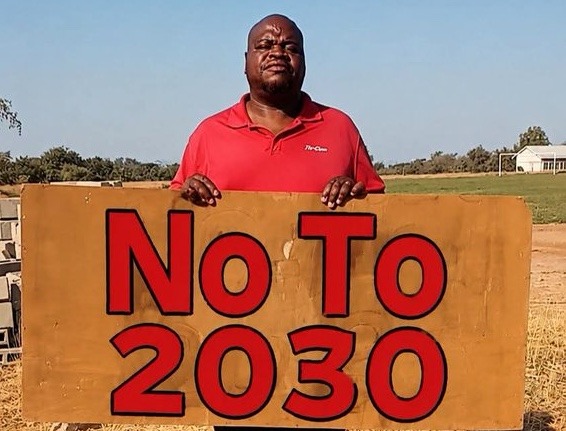
His arrest comes weeks after he publicly urged Zimbabweans to reject the recently enacted Constitution Amendment Act No. 3 (CAA3), legislation that has sparked criticism from opposition parties, civil society organisations and some constitutional experts.

The NDWG said state security operatives surrounded Mbedzi’s home before taking him away.

NDWG deputy spokesperson Silenkosi Moyo said Mbedzi had initially been questioned before the charge was laid.

“Bhekimpilo Mbedzi is set to appear in court (Thursday) after he was picked up by the CIO (Wednesday) morning at his residence in Beitbridge. He was taken for questioning but a charge for inciting public violence was opened by the state,” Moyo said in a statement posted online.

Mbedzi is known in Beitbridge for his social justice activism and advocacy on governance issues.

His detention prompted criticism from opposition parties, which argued that peaceful political expression should not be criminalised.

The Mthwakazi Republic Party (MRP) faction, led by Mfulongatshi Mpofu, said it was monitoring developments with “deep concern” and expressed hope that Mbedzi was safe.

“As a democratic political party, MRP firmly believes that the rights and fundamental freedoms of all citizens must be respected and protected at all times,” the party said.

“No individual should be subjected to arbitrary arrest, enforced disappearance, intimidation, or any form of unlawful treatment because of their political views or peaceful civic activities.”

The party said Zimbabwe’s Constitution guarantees freedom of expression, freedom of association and the right to demonstrate and petition peacefully.

“These constitutional rights must be upheld by all state institutions without fear or favour,” it said.

The MRP urged authorities to act “with professionalism, transparency and restraint”, saying the protection of human life and the rule of law should take precedence over intimidation or excessive use of force.

It also called on security agents to allow citizens to exercise their constitutional rights peacefully.

“Should Mr Bhekimpilo Mbedzi be in the custody of State security agents, we call for his immediate and unconditional release and for him to be returned safely and peacefully to his family. If he is lawfully detained, the authorities must promptly disclose his whereabouts and make sure his constitutional and legal rights are fully respected,” the party said.

The MRP said its thoughts were with Mbedzi, his family and supporters, adding that “a democratic society is built on respect for human rights, justice and the rule of law”.

The Patriotic Alliance, a coalition of political parties in Matabeleland, also criticised the arrest.

Its secretary-general, Bernard Dube, said the coalition was concerned that Mbedzi’s whereabouts were initially unknown after he was taken from his home.

“We are deeply concerned by reports that he was taken from his home in Beitbridge by state security agents and that his whereabouts were initially unknown,” Dube said.

He said that if the reports were accurate, authorities should ensure Mbedzi’s legal rights were respected and that his family and lawyers were informed of his whereabouts.

Dube also called for Mbedzi to have immediate access to legal representation and any medical care he might require.

“Mr Mbedzi has been known for expressing his political views and advocating for what he believes are the rights and interests of the people of Matabeleland, the Midlands and Zimbabwe as a whole. Peaceful political participation and freedom of expression are important principles in any democratic society,” he said.

The coalition also expressed concern over reports that Mbedzi had received threats before his arrest.

“Any allegations of intimidation or politically motivated harassment should be investigated impartially and transparently,” Dube added.

The Patriotic Alliance said it stood in solidarity with Mbedzi, his family and colleagues, while urging all stakeholders to remain peaceful and act within the law.

Mbedzi’s arrest comes amid heightened political tensions following the enactment of Constitution Amendment Act No. 3. Critics of the legislation argue that some of its provisions weaken constitutional democracy, while the government has defended the changes.

Mbedzi was among grassroots activists campaigning against the constitutional amendments and had urged Zimbabweans to oppose the legislation through peaceful civic action.

The post Opposition parties condemn arrest of Beitbridge activist Bhekimpilo Mbedzi  appeared first on Zimbabwe Situation.

Zimbabweans must distinguish between a business deal and endorsing corruption

Source: Zimbabweans must distinguish between a business deal and endorsing corruption Greed has a way of making us excuse the inexcusable. As to be expected, the recent acceptance of a $1 million offer by Chimurenga music legend Thomas Mapfumo from controversial tenderpreneur Wicknell Chivayo has stirred much debate. If you value my social justice advocacy […]

The post Zimbabweans must distinguish between a business deal and endorsing corruption appeared first on Zimbabwe Situation.

Source: Zimbabweans must distinguish between a business deal and endorsing corruption

Greed has a way of making us excuse the inexcusable.

As to be expected, the recent acceptance of a $1 million offer by Chimurenga music legend Thomas Mapfumo from controversial tenderpreneur Wicknell Chivayo has stirred much debate.

If you value my social justice advocacy and writing, please consider a financial contribution to keep it going. Contact me on WhatsApp: +263 715 667 700 or Email: mbofana.tendairuben73@gmail.com

The massive sum—split into two equal payments of $500,000—is a performance fee for Mapfumo to play at Chivayo’s birthday celebration in November and at musician Jah Prayzah’s upcoming wedding.

There are obviously those who are against this supposed deal, seeing it as an extension and endorsement of the questionable accumulation of wealth in Zimbabwe.

Of course, there are also those who see absolutely nothing wrong—obviously including Mapfumo himself—who interprets this as nothing more than a business deal.

In fact, the music guru even packaged this in a recent video clip as “ndezve basa izvi” (this is strictly about work).

However, we need to be honest and clear.

There is a desperate need for Zimbabweans to make a sharp, uncompromising distinction between a legitimate business deal and actively supporting systemic corruption.

Let us look at this through a clear hypothetical lens.

Let’s say Wicknell Chivayo approaches me to write a book on his life—either to write his biography or ghost-write his autobiography—and offers me $1 million.

Surely, can I simply shut my eyes, look at the money, and justify it in terms of “ndezve basa chete”?

Or must I, as a Zimbabwean who lives the daily realities of our struggling economy, consider how Chivayo acquired all that wealth and the subsequent impact on the livelihoods of ordinary citizens?

This is not even about Chivayo’s political leanings.

In the course of Zimbabwe’s history, we have encountered numerous instances of the ruling elite seeking legal assistance from renowned lawyers who are also prominent opposition figures.

I have similarly been approached by top government officials, including the late vice president Phelekezela Mphoko, a former Cabinet minister who was part of those aligned to the late ousted president Robert Mugabe, and also a former minister who recently wanted to tell his liberation struggle history, who were eager to engage me to write their life stories in books.

There would have been absolutely nothing wrong with proceeding with those projects because writing a historical account or offering legal counsel is strictly business.

Nonetheless, for various reasons, including my own personal convictions, we never proceeded with those projects.

Significantly, these people in the ruling elite may not all be clean, but at least they are involved in known, above-board activities that earn them significant wealth.

It is fundamentally different when it comes to Wicknell Chivayo in particular.

What does he actually do?

Where does his money come from?

We have all heard the endless, jaw-dropping scandals.

From the infamous $5 million advance payment for the ill-fated Gwanda Solar Power Plant to the staggering R800 million suspiciously deposited into his business accounts by South African company Ren-Form CC.

That company itself was handed a highly inflated R1.1 billion by Zimbabwe’s Treasury ostensibly for election materials—charging as much as R23 million for a server that ordinarily costs R90,000.

This places Chivayo in a class of his own.

Wealth attained through these questionable, highly suspect means becomes deeply problematic.

These amounts are staggering, and these are only the deals that brave journalists and investigators have exposed to the public domain.

I cannot begin to imagine what we are not aware of.

In fact, how can someone spend millions of dollars just buying fleets of luxury cars and giving away massive amounts of cash to various individuals, be it musicians, religious leaders, or political players?

Where is all that money coming from, especially for someone with no real, known, legitimate, and productive business enterprises?

Is this not money that could have been used to equip our dilapidated public hospitals, where thousands of poor Zimbabweans needlessly lose their lives each year due to the unavailability of critical care, basic medication, or functional machinery?

Is this not money that could have significantly improved basic service delivery across the country, thereby uplifting the standards of living for our struggling people?

How then can anyone with a conscience accept any of that money under the pretext of “ndezve basa izvi”?

As such, what we saw with Thomas Mapfumo can never simply be characterized as a harmless “business deal.”

Accepting money from a deeply tainted individual with no known legitimate source of income—money that is likely the proceeds of questionable deals and state plunder—makes the recipient morally complicit.

There can never be any justification.

How will Mapfumo explain this to the woman currently battling for her life at a underfunded hospital in Hurungwe without essential medication or lifesaving equipment?

There are those with the audacity to claim that Mapfumo rejecting this offer would not have changed anything anyway.

That is a shocking, highly irresponsible, and defeatist statement to make.

Should we all now allow, promote, or endorse corruption simply because fighting it appears to be a futile battle?

Let us not justify our own lust and greed, as some in our society clearly desire a similar windfall to befall them.

Let us remember that the people fighting corruption, injustice, and poverty do not all necessarily think they will win this war in their lifetimes.

But that can never mean giving up, or worse, joining in the repressive system of plunder.

We stick to our principles in the hope that after playing our small part today, we can pass on the clean, untainted baton to the next generation to finally reach the finish line.

We cannot afford to drop the baton stick.

  • Advertise your business, products, or services on my WhatsApp Channel with over 10k followers. For bookings, contact me on WhatsApp: +263 715 667 700 or Email: mbofana.tendairuben73@gmail.com

The post Zimbabweans must distinguish between a business deal and endorsing corruption appeared first on Zimbabwe Situation.

What is the purpose of African peer review institutions if the welfare of ordinary citizens is secondary?

Source: What is the purpose of African peer review institutions if the welfare of ordinary citizens is secondary? Nothing screams hypocrisy quite like pretending to care for the people.   There is a recurring theater in African diplomacy that would be comical if its consequences were not so deadly. If you value my social justice […]

The post What is the purpose of African peer review institutions if the welfare of ordinary citizens is secondary? appeared first on Zimbabwe Situation.

Source: What is the purpose of African peer review institutions if the welfare of ordinary citizens is secondary?

Nothing screams hypocrisy quite like pretending to care for the people.


There is a recurring theater in African diplomacy that would be comical if its consequences were not so deadly.

If you value my social justice advocacy and writing, please consider a financial contribution to keep it going. Contact me on WhatsApp: +263 715 667 700 or Email: mbofana.tendairuben73@gmail.com

It is the spectacle of high-ranking continental emissaries descending upon African capitals, checking into five-star hotels, and delivering soaring speeches about resource sovereignty.

All the while, they ignore the devastating poverty unfolding just outside their air-conditioned windows.

A stark and painful example of this disconnect occurred today at the New Parliament Building in Mt Hampden.

This was during the launch of the African Peer Review Mechanism National Programme of Action.

Ms Claudine Sigam, representing the African Minerals Development Centre and the African Union, stood before the architecture of Zimbabwe’s ruling elite to shower praise on President Emmerson Mnangagwa.

She lauded the government’s ban on raw lithium exports, enthusiastically repeating the ruling party’s signature mantra, “nyika inovakwa nevene vayo” (the nation is built by its own people), and proudly declaring that “African minerals belong to African people.”

On paper, the policy of domestic value addition is commendable.

No one disputes that Africa must stop exporting raw materials only to buy back finished products at a premium.

But when these high-sounding clichés are uttered by continental institutions in a vacuum, completely divorced from the grim reality of systemic plunder, they cease to be progressive policy.

Instead, they become a moral shield for misgovernance.

To claim that “African minerals belong to African people” in contemporary Zimbabwe is a cruel joke.

The ordinary Zimbabwean does not own these minerals; they merely live on top of them, often facing forced displacement to make way for elite-connected mining syndicates.

The real beneficiaries of this underground wealth are a predatory ruling class and their international enablers.

One does not need to look far for the evidence.

The explosive Al Jazeera Gold Mafia investigative documentary laid bare what citizens have long known: a highly sophisticated, state-facilitated smuggling and money-laundering syndicate operating at the absolute highest echelons of power.

Zimbabwe is estimated to lose between US$3 billion and US$4 billion every single year to the illegal leakage and misappropriation of its gold, diamonds, and lithium.

To put that staggering figure into perspective, consider what US$3 billion could do for a nation in agony.

This is not just abstract capital; it is the difference between life and death for millions.

This stolen wealth could comfortably equip every single public hospital in Zimbabwe with functioning radiotherapy machines, basic medicines, and decent salaries for striking doctors and nurses, saving thousands of lives every year.

It is money that could fully fund the modernization of neglected rural schools, replacing crumbling mud-and-thatch classrooms with digital-ready learning centers, finally giving the rural child a fair shot at life.

It is money that could lay the pipes to ensure clean, running water flows into the home of every single citizen, permanently banishing the specter of cholera.

Yet, to the African Peer Review Mechanism and its sister organs, these human tragedies seem entirely irrelevant.

These institutions appear to operate on a unspoken pact of mutual preservation: hear no evil, see no evil, and speak only in the safe, sanitized language of technical progress.

What, then, is the actual purpose of these peer review bodies?

If they lack the courage to call out the blatant looting of a nation’s inheritance, they are not instruments of accountability; they are public relations firms for autocrats.

They exist to massage the egos of sitting presidents, providing them with international legitimacy in exchange for choreographed tours of showcase projects.

They allow leaders to wrap themselves in the sacred shroud of Pan-Africanism while they pick the pockets of the African people.

Pan-Africanism was never meant to be a suicide pact among elites.

It was conceived as a radical movement of solidarity for the liberation and dignity of the African citizen.

When modern institutions weaponize Pan-African rhetoric to ignore the complicity of a government stealing from its own populace, they betray the very founders of the liberation struggle.

The ordinary citizenry has seen through the charade.

We understand that as long as peer reviewers can enjoy the hospitality of state banquets, the actual welfare of the people will remain secondary.

These continental institutions must find the backbone to look past the superficial brilliance of a raw lithium ban and confront the dark underbelly of mineral smuggling.

Until they do, they will remain utterly useless, expensive, and deeply irrelevant to the survival of the African people.

  • Advertise your business, products, or services on my WhatsApp Channel with over 10k followers. For bookings, contact me on WhatsApp: +263 715 667 700 or Email: mbofana.tendairuben73@gmail.com

The post What is the purpose of African peer review institutions if the welfare of ordinary citizens is secondary? appeared first on Zimbabwe Situation.

Geo Pomona joins humanitarian response for returnees 

Source: Geo Pomona joins humanitarian response for returnees – herald Diana Nherera Herald Reporter GEO POMONA Waste Management (Pvt) Ltd has deployed emergency waste management support to the Beitbridge Reception Centre to assist Government’s ongoing repatriation programme for Zimbabwean nationals who are returning from South Africa. In a media brief, Geo Pomona Waste Management (Pvt) […]

The post Geo Pomona joins humanitarian response for returnees  appeared first on Zimbabwe Situation.

Source: Geo Pomona joins humanitarian response for returnees – herald

Diana Nherera

Herald Reporter

GEO POMONA Waste Management (Pvt) Ltd has deployed emergency waste management support to the Beitbridge Reception Centre to assist Government’s ongoing repatriation programme for Zimbabwean nationals who are returning from South Africa.

In a media brief, Geo Pomona Waste Management (Pvt) Ltd said the intervention follows an increased influx of returnees through Beitbridge Border Post, the country’s busiest port of entry, following the establishment of a Reception Centre to support the repatriation process.

Geo Pomona has provided 10 wheelie bins, deployed refuse collection services and assigned one compactor truck to collect waste continuously at the facility.

The support is being made in coordination with the Department of Civil Protection and Beitbridge Municipality as part of broader Government-led humanitarian efforts.

Geo Pomona chief executive officer and executive chairman, Dr Dilesh Nguwaya said the company views its involvement as a national responsibility.

“We believe it is our duty to support Government and communities during times of need,” he said.

“Proper waste management plays a critical role in protecting public health, preserving the environment and maintaining dignity in humanitarian settings.”

Officials note that effective waste management is essential in high-occupancy environments, helping to reduce health risks and prevent environmental contamination.

“This intervention also complements Geo Pomona’s ongoing efforts to strengthen its Corporate Social Responsibility initiatives, ensuring the company contributes meaningfully to the welfare, dignity and reintegration of returning citizens,” he said.

“Geo Pomona’s support reflects its continued commitment to national development, environmental sustainability and emergency response initiatives.”

The post Geo Pomona joins humanitarian response for returnees  appeared first on Zimbabwe Situation.