TriplePundit • As Human-Wildlife Conflict Rises, Zimbabwean Communities Find New Ways to Coexist

As Human-Wildlife Conflict Rises, Zimbabwean Communities Find New Ways to Coexist Source: TriplePundit • As Human-Wildlife Conflict Rises, Zimbabwean Communities Find New Ways to Coexist Rebounding populations of lions and elephants are venturing out of protected parklands and closer to nearby communities. With human-wildlife conflict on the rise, a grassroots organization is empowering communities with […]

The post TriplePundit • As Human-Wildlife Conflict Rises, Zimbabwean Communities Find New Ways to Coexist appeared first on Zimbabwe Situation.

As Human-Wildlife Conflict Rises, Zimbabwean Communities Find New Ways to Coexist

Source: TriplePundit • As Human-Wildlife Conflict Rises, Zimbabwean Communities Find New Ways to Coexist
Rebounding populations of lions and elephants are venturing out of protected parklands and closer to nearby communities. With human-wildlife conflict on the rise, a grassroots organization is empowering communities with non-lethal solutions.

January Nebiri emerged from his house as the frost-covered dawn cut through the darkness with sharp morning light. Mist drifted gently across the landscape and birds chirped cheerfully. Before heading out to tend to his farm in northern Zimbabwe, Nebiri checked on the livestock he cares for at home.

He could not believe his eyes. Most of his cows were lying lifeless or injured and scattered outside of the enclosure. Scanning the area for tracks, Nebiri realized lions had attacked them during the night. He stood in silence, shocked.

“I felt devastated,” he told TriplePundit. “I swore to my ancestors not to keep cows ever again.”

Only one of Nebiri’s four cows survived. He has lost dozens of his livestock to lions, leopards and hyenas over the past three decades.

Human-wildlife conflict is on the rise across Zimbabwe. As climate change increases the frequency and severity of droughts, it reduces the availability of water and natural forage for people and animals. So, they must compete for inadequate available resources.

At the same time, rebounding populations of protected animals like lions, leopards, hyenas and elephants are outgrowing the capacity of the national parks they typically reside in, thanks to successful conservation and anti-poaching efforts.

Now, they’re spending more time outside of these protected parklands looking for freshwater and food, but much of the land once reserved for wildlife was rapidly developed over recent years to make room for a growing population of humans. Though reestablishing populations of protected species beyond the parks is conservationists’ goal, their crossover with local communities leads to conflict.

“Droughts, population growth and habitat encroachment push wildlife and communities into closer and often lethal contact,” said Arthur Musakwa, Zimbabwe Parks and Wildlife Management Authority director of operations.

The southern African nation recorded 12,374 human-wildlife conflict incidents between 2016 and 2025, according to the Zimbabwe Parks and Wildlife Management Authority. This left 486 people dead and 554 injured. Over 4,000 livestock animals were also lost.

It is worse for people living in protected areas near national parks, like Nebiri, whose village sits on the edge of Matusadona National Park in the Kariba district. Some villagers there have retaliated against wildlife, causing deaths or serious injuries to the animals.

After the loss of his cows in 2024, Nebiri met workers from Wildlife Conservation Action (WCA), a grassroots organization working to protect African animals and prevent human-wildlife conflict by empowering local communities with non-lethal solutions.

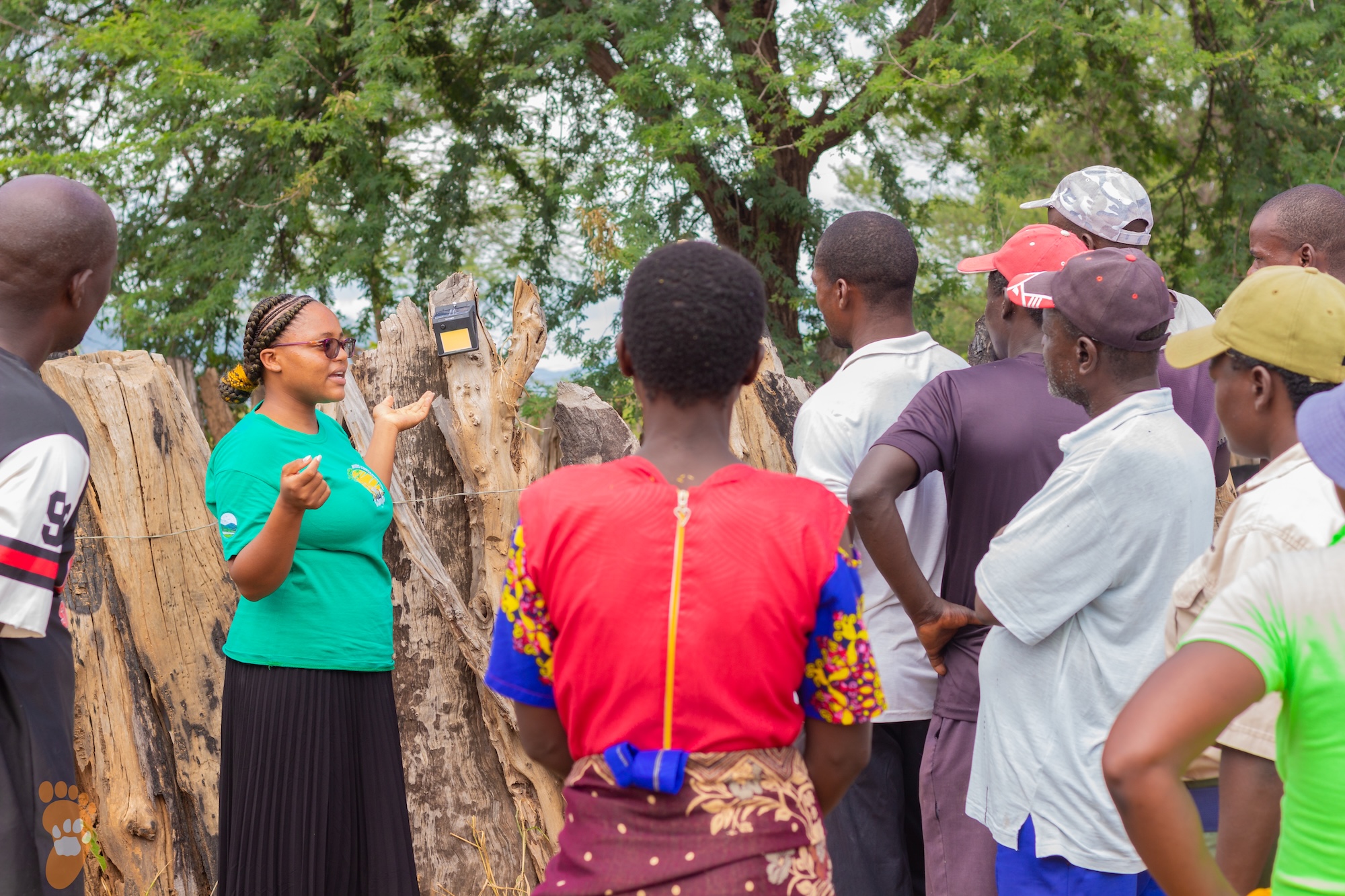
The workers gave him a sturdy gray cloth material to cover the kraal where he keeps his livestock. Called boma, the gray cloth keeps predators like lions from seeing the animals inside. Lions do not attack cows they cannot see.

“The day after the boma was installed, I woke in the middle of the night after hearing noises outside and noticed a pride of lions roaming around the kraal,” Nebiri said. “They were there for hours but could not get through the kraal. They left without attacking a single cow.”

WCA distributes predator-proof cattle bomas and automated LED lights, called lion lights, to keep livestock safe from attacks. Workers encourage community members to build raised kraals to mitigate human-wildlife conflict.

After following this advice, Nebiri now has six cows, and community members without bomas bring their cows to his house for security during the night.
His next project is building a raised kraal for his goats. Built on wooden poles about 2 meters off the ground, the kraal provides effective predator protection for small livestock.

WCA has installed 300 lion lights, which mimic the movement of a person patrolling with a flashlight to trick lions into believing someone is watching them, and 150 mobile bomas, which are portable enclosures that allow farmers to move their livestock to different grazing areas, protecting at least 1,000 cows in Kariba.

“We also educate communities on livestock management through the 18 community guardians we have in the area,” said Kudakwashe Chuma, a district programs coordinator at WCA. Community guardians live within communities frequently in the path of animals like lions and elephants. They provide rapid responses to human-wildlife conflict, monitor wildlife movements, support early warning systems for approaching predators, and build trust between communities and conservation partners.

To villagers like Nebiri, raising livestock is not only about food security. It offers economic stability. They sell their animals to settle school fees and medical bills. One cow can fetch as high as US$300, while a goat fetches US$30.

“I make a living from farming and rearing cattle,” Nebiri said. “I sell the goats or cows to look after my family. With recurring droughts, farming is no longer viable, so I use proceeds from selling goats and cows to buy food for my six children.”

Out of this necessity, the Kariba community embraced the bomas and is at the forefront of constructing raised kraals, said Chuma of WCA. And it’s paying off.

“We have recorded zero incidents inside the boma,” Chuma said.

In Zimbabwe, wildlife conservation is widely dominated by international organizations and trusts founded by white people. WCA is the only wildlife conservation organization founded by a Black woman. Born in Zimbabwe, conservation biologist Moreangels Mbizah grew up in Chiredzi, a small town in the southeast. She founded WCA after an American trophy hunter killed a famous lion she spent years studying and tracking in Hwange National Park.

Established in 2019, the organization places communities at the center of conservation, rather than treating them as beneficiaries of externally designed solutions as mainstream conservation organizations have historically done when addressing human-wildlife conflict.

“We prioritize prevention rather than response,” Mbizah said. “Instead of waiting until crops are destroyed or livestock are killed, we invest in community preparedness, predator-proof livestock bomas, crop protection methods and awareness programs.”

The organization combines local knowledge with science to build solutions that stick.

“Our work integrates community observations with technologies such as GPS tracking, camera traps and EarthRanger to improve decision-making,” Mbizah said. These early warning systems alert villagers when animals like lions encroach their communities.

In this way, WCA recognizes coexistence as both a conservation and development issue. “Alongside conflict mitigation, we promote land restoration, sustainable livelihoods, and environmental education to strengthen community resilience,” she said.

WCA helps villagers diversify their sources of income to become less dependent on livestock, for example. The organization supports them in learning beekeeping and building community gardens. The money they earn from selling honey and vegetables improves their livelihoods, complementing proceeds from selling goats and cows.

In northern Zimbabwe, villagers encounter a variety of wildlife in their everyday routines. Here, human-wildlife conflict isn’t limited to predators.

Wilson Charumbira lives in Kafurira, another village in Kariba district, and his ready-to-harvest maize crop was once wiped out by a herd of elephants in the night. He attempted to use a light to scare them away, but it did not help. He looked on miserably as the elephants feasted on his maize crop, a staple food for many in Zimbabwe.

“We had to survive on gifts from other villagers that year,” Charumbira said. “It was terrible.”

African elephants from the nearby Matusadona National Park roam the fertile valley-floor at night, seeking water and lush greenery.

Zimbabwe is home to Africa’s second largest elephant population due to ongoing conservation and anti-poaching efforts. Their numbers exceed 80,000 against a carrying capacity of about 45,000 in all protected areas, and competition for land between elephants and humans is intensifying.

Though the growing elephant population is part of the discussion around conflict prevention, it is not the major driver of human-wildlife conflicts, WCA’s Mbizah said.

“In many landscapes, the challenge is less about total numbers and more about the concentration of elephants around limited water sources during the dry season, combined with shrinking habitat outside protected areas,” she said. “In Zimbabwe’s Zambezi Valley, these pressures create predictable hotspots where conflict occurs year after year.”

Charumbira, whose farm sits in one of these hotspots, now works with WCA to co-exist with the elephants. He built a fireguard and a fence with wooden poles on the perimeters of his farm, and he hangs a cloth soaked in a potent mixture of chili oil along the fence to deter elephants from ravaging his crops. Elephants have a powerful sense of smell and sensitive trunks, making them strongly averse to the pungent, burning sensation of chili.

“This is helping us,” said Charumbira, who also lives on the edges of Matusadona National Park. He harvested nearly 1 tonne of maize this season, which is enough to feed his family throughout the year.

WCA has expanded into the Mbire and Binga districts of Zimbabwe, and 24 community guardians live throughout the communities. So far, over 10,000 households across the three districts have adopted non-lethal conflict mitigation measures, including predator-proof livestock bomas and elephant deterrent fences, as a result of the organization’s work. Incidents of human-wildlife conflict have fallen by as much as 98 percent in Mbire, according to WCA.

Though predator-proof livestock bomas have proven effective across the districts, they are not without challenges, WCA founder Mbizah said. The bomas’ lifespans are short, as high temperatures wear on them, and they need replacement from time to time. But with good management, even under severe weather conditions, they often last beyond five years.

Still, initial construction costs remain high for many households, and bomas only protect livestock at night, as predators can still attack them when grazing in the daytime.

“Good herding practices remain essential during the day,” Mbizah said.

While chili barriers and bomas are working to reduce-human wildlife conflict, more early warning systems are needed to alert communities of approaching animals by day, said Musakwa of the Zimbabwe Parks and Wildlife Management Authority.

In the meantime, after finally quelling the steady loss of cows to predators over the years, Nebiri said he is happy to share the lessons he learned with fellow villagers on the edge of Matusadona National Park.

“I was almost giving up on cattle rearing,” he said. “But now there is hope.”

The post TriplePundit • As Human-Wildlife Conflict Rises, Zimbabwean Communities Find New Ways to Coexist appeared first on Zimbabwe Situation.
Bulawayo man appeals for help to trace family after fleeing South Africa unrest 

Source: Bulawayo man appeals for help to trace family after fleeing South Africa unrest — CITEZW A 64-year-old Zimbabwean who returned from South Africa after anti-immigrant unrest is appealing for help to find relatives in Bulawayo whom he has not seen in nearly 30 years. Marisha Mlilo is staying at the United Congregational Church of […]

The post Bulawayo man appeals for help to trace family after fleeing South Africa unrest  appeared first on Zimbabwe Situation.

Source: Bulawayo man appeals for help to trace family after fleeing South Africa unrest — CITEZW

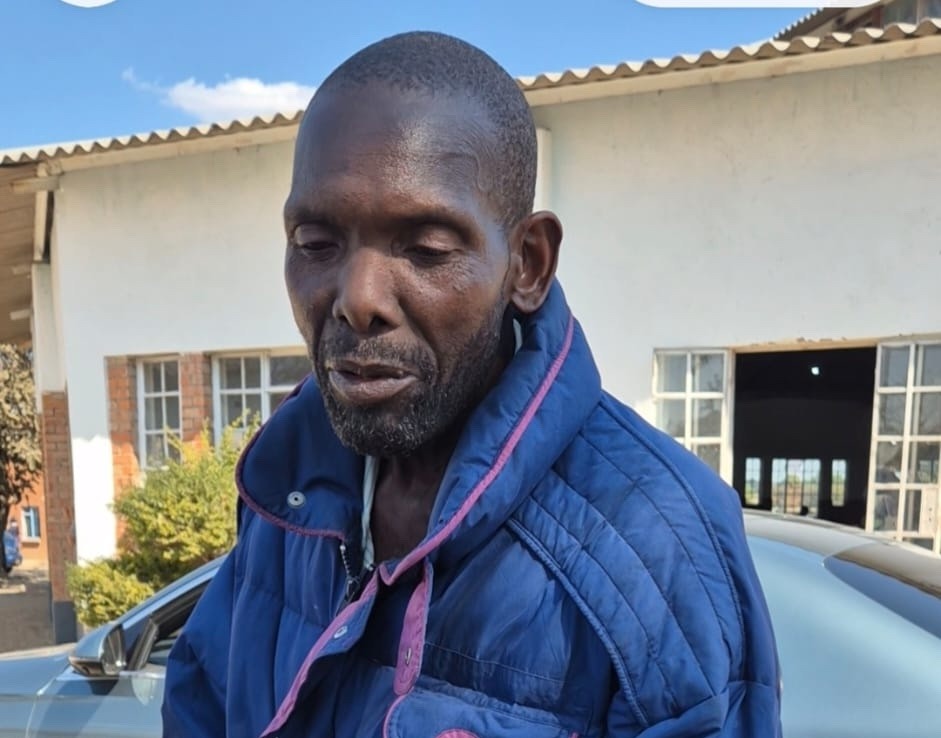
A 64-year-old Zimbabwean who returned from South Africa after anti-immigrant unrest is appealing for help to find relatives in Bulawayo whom he has not seen in nearly 30 years.

Marisha Mlilo is staying at the United Congregational Church of Southern Africa (UCCSA) transit centre in Njube after arriving in the city with no phone, no money and no way of contacting family members he believes live in Makokoba.

He appealed for assistance on Wednesday when the Minister of State for Bulawayo Provincial Affairs and Devolution, Judith Ncube, visited the transit centre.

Mlilo said he left Zimbabwe for South Africa in 1996 after the deaths of most of his close relatives and had been living in Tshipise, Limpopo Province, until anti-immigrant protests forced him to leave.

“Everything was fine until the day of ukududulwa on 30 June. If it wasn’t for that day, I was sure I was going to die there,” he said.

“Because of the protests, I am now back home looking for relatives who can receive me.”

He said his mobile phone was lost during the unrest, leaving him unable to contact three relatives whom he believes still live in Makokoba: Dennis Sibanda, Similo Sibanda and Jikamani Sibanda.

“The suburb has grown and I no longer know exactly where they stay,” Mlilo said.

He recalled being told that the family bought meat from a butchery owned or operated by people with the surname Moyo near a popular bar in the suburb, but said he could not remember the exact location.

Mlilo also said his relationship with a woman he had lived with for seven years ended after the unrest.

“On June 30 she turned against me and told me to leave because she no longer loved me. She took my property,” he alleged.

The UCCSA transit centre is among several facilities providing temporary accommodation, food and other support to Zimbabweans returning from South Africa following the recent unrest.

Anyone with information about the whereabouts of Dennis Sibanda, Similo Sibanda or Jikamani Sibanda, or who may be able to assist Mlilo in reconnecting with his family, is encouraged to contact the UCCSA transit centre or the relevant local authorities.

A64-year-old Zimbabwean who returned from South Africa after anti-immigrant unrest is appealing for help to find relatives in Bulawayo whom he has not seen in nearly 30 years.

Marisha Mlilo is staying at the United Congregational Church of Southern Africa (UCCSA) transit centre in Njube after arriving in the city with no phone, no money and no way of contacting family members he believes live in Makokoba.

He appealed for assistance on Wednesday when the Minister of State for Bulawayo Provincial Affairs and Devolution, Judith Ncube, visited the transit centre.

Mlilo said he left Zimbabwe for South Africa in 1996 after the deaths of most of his close relatives and had been living in Tshipise, Limpopo Province, until anti-immigrant protests forced him to leave.

“Everything was fine until the day of ukududulwa on 30 June. If it wasn’t for that day, I was sure I was going to die there,” he said.

“Because of the protests, I am now back home looking for relatives who can receive me.”

He said his mobile phone was lost during the unrest, leaving him unable to contact three relatives whom he believes still live in Makokoba: Dennis Sibanda, Similo Sibanda and Jikamani Sibanda.

“The suburb has grown and I no longer know exactly where they stay,” Mlilo said.

He recalled being told that the family bought meat from a butchery owned or operated by people with the surname Moyo near a popular bar in the suburb, but said he could not remember the exact location.

Mlilo also said his relationship with a woman he had lived with for seven years ended after the unrest.

“On June 30 she turned against me and told me to leave because she no longer loved me. She took my property,” he alleged.

The UCCSA transit centre is among several facilities providing temporary accommodation, food and other support to Zimbabweans returning from South Africa following the recent unrest.

Anyone with information about the whereabouts of Dennis Sibanda, Similo Sibanda or Jikamani Sibanda, or who may be able to assist Mlilo in reconnecting with his family, is encouraged to contact the UCCSA transit centre or the relevant local authorities.

The post Bulawayo man appeals for help to trace family after fleeing South Africa unrest  appeared first on Zimbabwe Situation.

Police warn of rise in Honda Fit thefts in Bulawayo 

Source: Police warn of rise in Honda Fit thefts in Bulawayo — CITEZW Police in Bulawayo have warned motorists to take extra precautions after a sharp rise in the theft of old-shape Honda Fit vehicles, with 14 reported stolen in June alone. Bulawayo police spokesperson Inspector Nomalanga Msebele said the model had become a preferred […]

The post Police warn of rise in Honda Fit thefts in Bulawayo  appeared first on Zimbabwe Situation.

Source: Police warn of rise in Honda Fit thefts in Bulawayo — CITEZW

Police in Bulawayo have warned motorists to take extra precautions after a sharp rise in the theft of old-shape Honda Fit vehicles, with 14 reported stolen in June alone.

Bulawayo police spokesperson Inspector Nomalanga Msebele said the model had become a preferred target for thieves because of weaknesses in its locking and ignition system.

“We have a challenge in Bulawayo of vehicle theft of Honda Fit old shape. I don’t know how this vehicle was manufactured, but it uses the same key for all cars; even with a spoon, screwdriver, you can easily start the car,” she said.

Inspector Msebele said recovered vehicles were often extensively damaged, stripped of parts and sometimes used to commit other crimes.

“In instances where police recover the vehicle, it would be badly damaged, without battery and people use the vehicle to commit crime,” she said.

She urged owners to replace the ignition and door locking systems with more secure alternatives.

“We are urging owners of this vehicle to change the whole ignition set, even the door. There are engineers in the city who are now fixing that so that you save your car,” she said.

Police also advised motorists to park in secure, guarded car parks or leave someone watching the vehicle while they are away.

“Another thing, when you go inside a supermarket, ensure that you leave someone guarding it or park closer to an airtime vendor or TTI marshal because this car is on target,” Inspector Msebele said.

The warning comes after two Honda Fits were stolen on 11 July.

In the first incident, a 35-year-old Harrisvale man parked his white old-shape Honda Fit at the corner of Third Avenue and J.M. Nkomo Street at about 1pm before entering a supermarket.

Inspector Msebele said he left the vehicle with the doors and windows closed but unlocked. When he returned about five minutes later, it was gone.

Items stolen with the vehicle included a Samsung A05S mobile phone, a power bank, a Bluetooth speaker, a spare tyre, three jackets, a pair of jeans and US$35 in cash.

“The stolen value is US$5,000 and nothing was recovered,” she said.

In a separate case later that day, at about 7:20pm, a 25-year-old man from Bellevue parked his Honda Fit outside a supermarket before going inside.

“He left the vehicle, got inside the supermarket and came out after about 10 minutes where he discovered his motor vehicle was stolen,” Inspector Msebele said.

Police urged motorists to lock their vehicles, avoid leaving valuables inside and install tracking devices or additional anti-theft security systems.

“Vehicle owners are strongly advised to always lock all doors and close all windows before leaving their vehicles, never leave valuable property inside parked vehicles and consider vehicle tracking devices and anti-theft security systems,” Inspector Msebele said.

The post Police warn of rise in Honda Fit thefts in Bulawayo  appeared first on Zimbabwe Situation.

Zimbabwe Says 1.4 Million Nationals Set To Return From SA

Source: Zimbabwe Says 1.4 Million Nationals Set To Return From SA ⋆ Pindula News Zimbabwe has more than two million citizens living in South Africa, but fewer than 100,000 have so far returned home under the government’s repatriation programme, prompted by rising anti-immigrant tensions. This was said by the Minister of Local Government and Public […]

The post Zimbabwe Says 1.4 Million Nationals Set To Return From SA appeared first on Zimbabwe Situation.

Source: Zimbabwe Says 1.4 Million Nationals Set To Return From SA ⋆ Pindula News

Zimbabwe has more than two million citizens living in South Africa, but fewer than 100,000 have so far returned home under the government’s repatriation programme, prompted by rising anti-immigrant tensions.

This was said by the Minister of Local Government and Public Works, Daniel Garwe, while briefing journalists after a Cabinet meeting in Harare on Tuesday, 14 July.

Garwe said the pace of returns had risen since the exercise began in May, but the government was only scratching the surface of the numbers it expected to receive.

“Zimbabwe has raised the bar in terms of repatriating people. Initially, we were dealing with numbers around 700-1,500 people per day,” said Garwe.

“We expect these numbers to increase, but we will not tire because these are Zimbabweans who are coming home.

“We have got in excess of about 2 million Zimbabweans in South Africa, and we are hoping 70 per cent of that 2 million is coming home and we are ready to receive them.”

Information, Publicity and Broadcasting Services Minister Zhemu Soda told the same briefing that 99,418 citizens had been repatriated between 28 May and 10 July “through collaborative efforts between the inter-ministerial committee and development partners.”

“More than 70 per cent of the returnees are women and children,” Soda said, adding that the number of Zimbabwean nationals requiring repatriation and reintegration assistance had continued to increase, and measures had been put in place to meet the growing demand.

The repatriation exercise was launched on 28 May after anti-immigrant groups in South Africa set an unofficial deadline of 30 June for undocumented foreign nationals to leave, sparking marches that at times turned violent.

The government says it has introduced a dedicated green lane at the Beitbridge border post to speed up the clearance of Zimbabweans returning home.

Officials say the green lane is expected to improve efficiency while reducing inconvenience for returnees.

The repatriation effort has drawn support from the private sector and United Nations agencies, with a 24-hour inter-ministerial command centre established at the Beitbridge Reception Centre to coordinate the reception, registration and transportation of returnees.

The post Zimbabwe Says 1.4 Million Nationals Set To Return From SA appeared first on Zimbabwe Situation.

Opposition MPs assaulted by suspected intelligence operatives in Mutare

MPs attacked after meeting with provincial minister Source: Opposition MPs assaulted by suspected intelligence operatives in Mutare – Zimbabwe News Now MUTARE — Two opposition Members of Parliament were on Wednesday assaulted by suspected Central Intelligence Organisation (CIO) operatives following a dispute over a parking bay at a government complex in Mutare. Highfield MP Donald […]

The post Opposition MPs assaulted by suspected intelligence operatives in Mutare appeared first on Zimbabwe Situation.

MPs attacked after meeting with provincial minister

Source: Opposition MPs assaulted by suspected intelligence operatives in Mutare – Zimbabwe News Now

MUTARE — Two opposition Members of Parliament were on Wednesday assaulted by suspected Central Intelligence Organisation (CIO) operatives following a dispute over a parking bay at a government complex in Mutare.

Highfield MP Donald Mabvudzi and Zengeza East MP Goodrich Chimbaira (both CCC) were assaulted shortly after concluding a meeting with the Minister of State for Manicaland Provincial Affairs and Devolution, Misheck Mugadza, the legislators said.

According to the MPs, they found suspected intelligence operatives deflating the tyres of their vehicle as they left the meeting. A confrontation over the parking space followed, during which they were assaulted.

The two legislators were in Mutare on parliamentary business at the time of the incident.

They were treated for their injuries at Victoria Chitepo Provincial Hospital, and a police report has since been filed at Mutare Central Police Station under reference number RRB 6744208.

Mabvudzi and Chimbaira were outspoken critics of Constitution of Zimbabwe Amendment Bill (No.3), now an Act, which extends the president and parliament’s term to seven years while crapping direct presidential elections.

There was no immediate comment from the Zimbabwe Republic Police or the CIO regarding the allegations.

The post Opposition MPs assaulted by suspected intelligence operatives in Mutare appeared first on Zimbabwe Situation.