Zimbabwe’s slither towards increased authoritarianism

Source: Zimbabwe’s slither towards increased authoritarianism – Daily Maverick Mnangagwa has systematically curbed the independence of the judiciary, magistracy, prosecution and the country’s various commissions. By Derek Matyszak The assessment of Zimbabwe’s “Second Republic” under President Emmerson Mnangagwa has been overshadowed by the violence of 1 August 2018 and mid-January 2019. On both occasions, Zimbabwe’s military intervened to suppress […]

The post Zimbabwe’s slither towards increased authoritarianism appeared first on Zimbabwe Situation.

Source: Zimbabwe’s slither towards increased authoritarianism – Daily Maverick
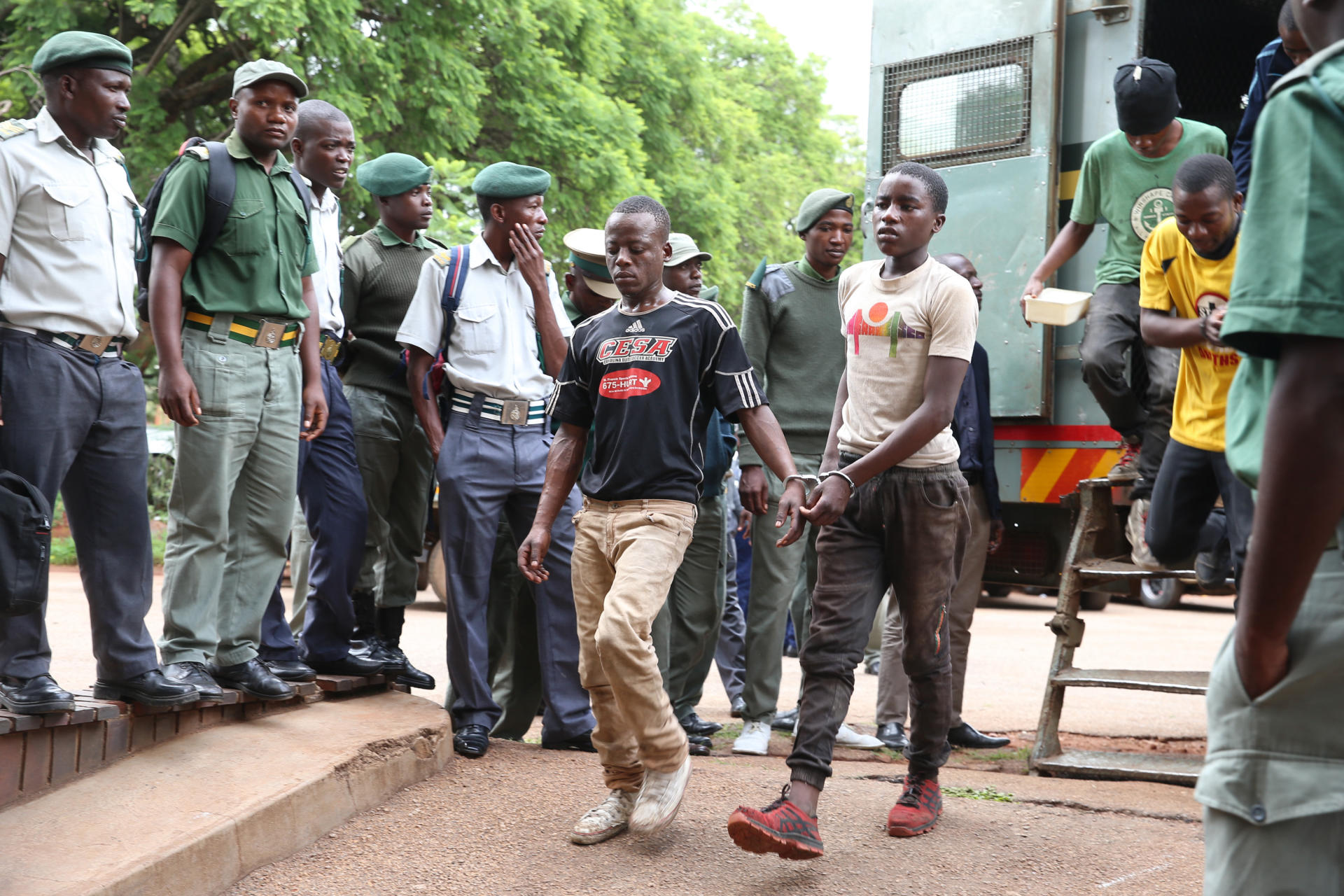
Mnangagwa has systematically curbed the independence of the judiciary, magistracy, prosecution and the country’s various commissions. By Derek Matyszak

The assessment of Zimbabwe’s “Second Republic” under President Emmerson Mnangagwa has been overshadowed by the violence of 1 August 2018 and mid-January 2019. On both occasions, Zimbabwe’s military intervened to suppress violent protests, using live ammunition and gunning down six fleeing civilians during the first demonstrations and a reported 17 in the second.

The brutal response of the military, under Mnangagwa’s ultimate command, has obscured other alarming marks of his authoritarian style of governance. This doesn’t come as a surprise. In his last few months in Robert Mugabe’s government, Mnangagwa was the driving force behind two anti-democratic changes to Zimbabwean law.

One was an amendment to the constitution that sharply curtailed the independence of the judiciary. It reduced the involvement of the Judicial Service Commission in the appointments of the chief justice and judge president of the high court to one of consultation only, essentially placing the power solely in the hands of the president.

The power to appoint the judge president was of equal importance to that of the chief justice. The judge president wields enormous influence through his discretion to allocate cases to puisne judges, giving politically sensitive cases to “right”-thinking judges.

The second change spearheaded by Mnangagwa was a legislative one that severely undermined the prosecutor-general’s independence. This was done by removing the right to mount private prosecutions, which had worked as a barrier to political interference in the prosecutor-general’s decision to prosecute.

Both changes to the law are in accordance with the general modus operandi of Zimbabwe African National Union-Patriotic Front-run (Zanu-PF) administrations, where government thinks only in terms of institutions that are part of or controlled by government. It is extremely uncomfortable with any institution that claims independence.

The Mnangagwa administration has shown itself to be as bad, if not worse, than that of Mugabe in this regard. The functioning of the ‘independent’ commissions, established under Zimbabwe’s 2013 constitution, is a clear example.

Members of Mnangagwa’s cabinet are responsible for “administering” the “enabling act” of each commission. In this way commissions’ finances, and thus operations, are controlled. The chairperson of the National Peace and Reconciliation Commission recently made a frank admission that “you find independence cannot be total per se” and that he is “answerable” to Vice-President Kembo Mohadi.

Government also exercises undue control over the secretariat of the commissions. The Zimbabwe Electoral Commission (ZEC) is run by a secretariat comprising many ZANU-PF loyalists, many of whom have military backgrounds. As the 2018 polls made abundantly clear, the commissioners function largely as the public relations department, doing damage control for displays of partisanship in managing polls.

The commission heads are appointed by the president. Justice Rita Makarau, whose family was known to be close to that of Mugabe – and who as ZEC chairperson thought it appropriate to sink to her knees when addressing Mugabe “as a sign of respect” – headed the commission until Mugabe’s ousting. That she then apparently found her position untenable and resigned, speaks volumes about the position’s lack of independence.

The Zimbabwe Anti-Corruption Commission has not fared much better. Mnangagwa found it expedient to move the administration of the enabling act from the minister of home affairs to the Office of the President and Cabinet.

If the commission were operating independently, it should have been irrelevant who administered the act. When this move didn’t have the desired effect, Mnangagwa publicly accused all the commissioners of being corrupt. Under the constitution, commissioners can only be removed by a tribunal established for the purpose. This proved entirely unnecessary. The commissioners all obediently and immediately resigned.

The conduct of Zimbabwe’s lower courts after the January protests showed the magistracy equally compromised and intimidated. It allowed the judicial process to be used for repression. People were hauled arbitrarily before the courts by the police, routinely denied bail and subjected to fast-tracked mass trials that allowed little time to prepare a defence.

In one of these cases, the prosecutor – when the magistrate asked the obligatory question as to why he was opposing bail – thought it sufficed to say he had been instructed to do so by Zimbabwe’s military commander.

Sixty percent of the National Prosecuting Authority’s staff have been seconded from the military. Reacting to criticism of arbitrary and brutal conduct of the military during the January protests, acting prosecutor-general Kumbirai Hodzi tried to airbrush the issue, stating that no “law-abiding citizen” had been killed.

This was not enough to gain Mnangagwa’s complete trust, however. On swearing in Hodzi to the substantive post, the president warned him against thinking he could operate independently: “I want you to know the difference between the aspirational and what is termed realpolitik. Independence is an aspiration, it’s not a reality… Anyway, let me clarify things for you, my dear.

“We have three pillars of the state, namely the judiciary, the legislature and the executive. I am the face of the executive and don’t get influenced by me as the head of the executive or by the chief justice as the head of the judiciary or by the speaker of the national assembly as the head of the legislature.

“But then, do you also know that I am the head of state and that when I operate at that level, all these three pillars are below me? So if you see yourself disregarding that saying you are independent and not come to seek advice from me as the head of state, then there is a problem.”

With the advent of Mnangagwa, some predicted that Zimbabwe would become a developmental authoritarian state – a la Rwanda. So far, they have the authoritarian part right. DM

The post Zimbabwe’s slither towards increased authoritarianism appeared first on Zimbabwe Situation.
Minister addresses industry captains 

Source: Minister addresses industry captains | The Herald March 7, 2019 Minister Ndlovu Patrick Chitumba Midlands Bureau Chief The Zimbabwean manufacturing sector has recorded some positives after exhibiting sluggish growth over the past three years, a Cabinet minister said on Friday. Addressing captains of industry from the Midlands province after touring retail shops and manufacturing […]

The post Minister addresses industry captains  appeared first on Zimbabwe Situation.

Source: Minister addresses industry captains | The Herald March 7, 2019

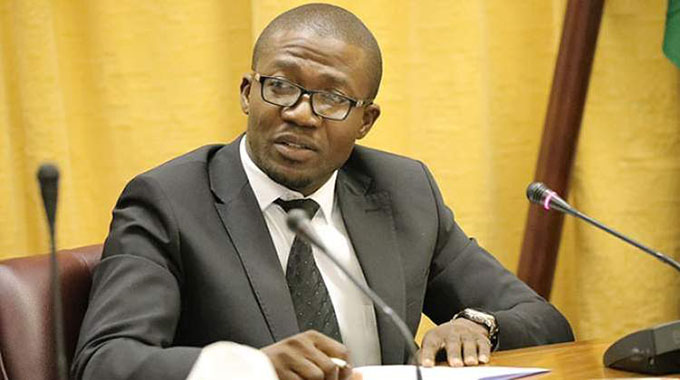
Minister addresses industry captainsMinister Ndlovu

Patrick Chitumba Midlands Bureau Chief
The Zimbabwean manufacturing sector has recorded some positives after exhibiting sluggish growth over the past three years, a Cabinet minister said on Friday.

Addressing captains of industry from the Midlands province after touring retail shops and manufacturing companies in Gweru, Minister of Industry and Commerce Mangaliso Ndlovu said the growth was promising.

“The Zimbabwean manufacturing sector has exhibited sluggish growth over the past three years. When assessed in context, the growth performance is promising as there have been many factors militating against local industry such as sanctions and use of the US dollar which has made it difficult for local industries to compete regionally,” he said.

Minister Ndlovu said a substantial part of the growth can be attributed to the Government providing various forms of support to local industry which include the Import Management Programme (SI 64 of 2016 later consolidated into SI 122 of 2017), facilitation of rebates on imports of capital equipment and raw materials and the RBZ export incentives which were introduced in 2016 to promote exports across all sectors.

“The use of the USD has been detrimental to local industry, making it less competitive relative to regional and international peers. This has resulted in the country’s trade deficit increasing. I, however, believe the recently promulgated currency reforms will go some way in ameliorating this problem

“ I want to implore you also to consider that foreign currency inflows received by Zimbabwe exceed those received by many of our peers on the continent such as Rwanda. Our manufacturing sector thus needs to complement our foreign currency generation capacity through greater utilisation of local raw materials and a more aggressive approach towards exports,” he said.

The Government, Minister Ndlovu said, is currently implementing the Transitional Stabilisation Programme (TSP), which crystallises the reform agenda of the Second Republic.

“TSP prioritises fiscal consolidation, economic stabilisation, stimulation of growth and creation of employment. The country aspires to realise Vision 2030 and attain the UN Sustainable Development Goals.

In addition, our policies and aspirations are framed within the context of the SADC Industrialisation Strategy and Roadmap (2015-2063) and AU Agenda 2063. The Midlands province is central to the industrial development of our nation and achievement of all of the above,” he said.

Minister Ndlovu said in the Second Republic, it was necessary to deal decisively with economic structural bottlenecks adding that the 2019 budget reveals this commitment by Government.

The post Minister addresses industry captains  appeared first on Zimbabwe Situation.

Zim, Moza call for tighter security

Source: Zim, Moza call for tighter security | The Herald March 7, 2019 Mr Martin Rushwaya Fidelis Munyoro and Victor Maphosa Zimbabwe and Mozambique have underscored the need for timeous implementation of agreed interventions to arrest cross-border crimes, other emerging threats to security and peace in the two countries. Secretary for Defence Mr Martin Rushwaya […]

The post Zim, Moza call for tighter security appeared first on Zimbabwe Situation.

Source: Zim, Moza call for tighter security | The Herald March 7, 2019

Zim, Moza call for tighter securityMr Martin Rushwaya

Fidelis Munyoro and Victor Maphosa
Zimbabwe and Mozambique have underscored the need for timeous implementation of agreed interventions to arrest cross-border crimes, other emerging threats to security and peace in the two countries.

Secretary for Defence Mr Martin Rushwaya said the 11th Session of the Zimbabwe-Mozambique Joint Permanent Commission on Defence and Security underway in Harare was a clear demonstration of the longstanding fraternal relations between the two countries.

Mr Rushwaya said this in his closing remarks following two-day marathon committee meetings to deliberate on various issues involving cross-border crimes, peace, security and defence.

“I note with satisfaction that our deliberations covered all the pertinent offence and security issues that are not only of mutual interests to our two countries, but to the Southern African Development Community (SADC) and the African continent in general,” said Mr  Rushwaya.

“The onus is now on us to ensure the timely implementation of the resolutions we set for ourselves. That will enable us to realise positive outcomes for reportage during the 12th Session of our Joint Permanent Commission on Defence and Security. ”

Mozambican police’s senior assistant commissioner Paulo Chachine reminded the participants drawn from various sectors of defence and security that the deliberations underway have a deep impact on the security and free movement of goods and people of the two countries and the region as well.

The post Zim, Moza call for tighter security appeared first on Zimbabwe Situation.

MDC MP Hwende remanded in custody

Source: MDC MP Hwende remanded in custody | Newsday (News) BY DESMOND CHINGARANDE KUWADZANA East Member of Parliament Chalton Hwende (MDC Alliance), who is facing charges of trying to subvert a constitutional government by inciting people to protest, was yesterday remanded in custody to March 30 by a Harare magistrate. Hwende was arrested on Tuesday […]

The post MDC MP Hwende remanded in custody appeared first on Zimbabwe Situation.

Source: MDC MP Hwende remanded in custody | Newsday (News)

BY DESMOND CHINGARANDE

KUWADZANA East Member of Parliament Chalton Hwende (MDC Alliance), who is facing charges of trying to subvert a constitutional government by inciting people to protest, was yesterday remanded in custody to March 30 by a Harare magistrate.

Hwende was arrested on Tuesday at the Robert Gabriel Mugabe International Airport while coming from Namibia.

The MP, who was represented by Harrison Nkomo appeared before magistrate Rumbidzai Mugwagwa, who remanded him in custody, pending indictment at the High Court.

Nkomo complained that his client was arrested mid-air while aboard Air Namibia by police officers who were tracking him, saying it breached international laws since the accused was not in the jurisdiction of this country.

The lawyer also claimed that the police officers took his passport before he stamped and declared his passport, saying he wants to put it on record in case they want to charge him with violating immigration protocols.

Allegations are that sometime in December last year, Hwende posted Twitter messages that had the effect of inciting people to revolt against the government in his personal capacity as an opposition MP.

It is alleged that Hwende’s posts incited the public to engage in mass protests characterised by violence and hooliganism, ostensibly to overthrow a constitutionally elected government.

The State alleges that the messages incited members of the public by announcing that 2019 should be the year of a “final push” to a new Zimbabwe. It is alleged Hwende said: “We cannot continue on this trajectory of failure and kwashiorkor of leadership. Enough is enough. In January citizens must organise themselves for a complete shutdown of the country. Stay at home no one will shoot you.”

Hwende allegedly further indicated that 2019 is the year of rolling mass action against the illegal regime of President Emmerson Mnangagwa, saying people voted for MDC leader Nelson Chamisa and people must be prepared to die defending their right to choose the president of choice.

The State also alleges that during the period between January 14 and 16, in response to Hwende’s Twitter messages and other members of the opposition, various trade unions and pressure groups committed acts of violence and hooliganism countrywide.

As a result of the accused person’s utterances nationwide public violence was committed by protesters that left members of the police and public injured, some losing their lives, the State alleges.

Charles Muchemwa appeared for the State.

The post MDC MP Hwende remanded in custody appeared first on NewsDay Zimbabwe.

The post MDC MP Hwende remanded in custody appeared first on Zimbabwe Situation.

ED dissolves Harare, Byo Zanu PF structures

Source: ED dissolves Harare, Byo Zanu PF structures | Newsday (News) BY Everson Mushava President Emmerson Mnangagwa yesterday dissolved the Zanu PF Harare and Bulawayo provincial structures and unleashed the party’s security department to hunt party youths who passed a vote of no confidence (VONCs) on their leadership. Addressing journalists after a Zanu PF politburo […]

The post ED dissolves Harare, Byo Zanu PF structures appeared first on Zimbabwe Situation.

Source: ED dissolves Harare, Byo Zanu PF structures | Newsday (News)

BY Everson Mushava

President Emmerson Mnangagwa yesterday dissolved the Zanu PF Harare and Bulawayo provincial structures and unleashed the party’s security department to hunt party youths who passed a vote of no confidence (VONCs) on their leadership.

Addressing journalists after a Zanu PF politburo meeting, party spokesperson Simon Khaya Moyo said Mnangagwa had with immediate effect dissolved the provincial structures in the two provinces, but refused to disclose the reasons.

“His Excellency President Emmerson Mnangagwa has dissolved the Bulawayo and Harare provincial councils that include the main wing, women and youths leagues,” Khaya Moyo said.

“The reason and details of what will be announced in due course.”

Divisions have been rocking the Harare provincial structures led by Godwills Masimirembwa and last week, the provincial executive issued a provisional order against its secretary for information, Terrence Mukupe for insulting and soiling Masimirembwa’s image.

Mukupe, a member of the dissolved provincial executive, attacked Masimirembwa during an inter-district meeting, accusing him of working with the opposition to undermine Mnangagwa in last month’s protests against the 150% hike in fuel prices.

Khaya Moyo said the politburo endorsed a report by party secretary for legal affairs Munyaradzi Paul Mangwana, which ruled that the VONC on secretary for youth affairs, Pupurai Togarepi and his deputy, Lewis Matutu and other youth executive members was null and void.

“The report recommended that the vote of no confidence on Cde Togarepi and other be declared null and void. The politburo endorsed the report after it emerged that the petitions were not done following the party procedures,” Khaya Moyo said.

“The politburo resolved that the national secretary for security, Lovemore Matuke must proceed and investigate the origins of the said petitions (votes-of-no- confidence) and the signatories and report to the next politburo meeting.”

The youths in January month booted out Togarepi and four of his executive members, accusing them of being weak and being lackadaisical in protecting Mnangagwa.
The party’s national disciplinary committee, however, reversed the suspensions, a decision endorsed by the politburo yesterday.

The post ED dissolves Harare, Byo Zanu PF structures appeared first on NewsDay Zimbabwe.

The post ED dissolves Harare, Byo Zanu PF structures appeared first on Zimbabwe Situation.