Zimbabwe in 2019: the state we’re in and the roadmap forward 

Source: Zimbabwe in 2019: the state we’re in and the roadmap forward – Equal Times The economic outlook of post-independence Zimbabwe resembles a fading cloth: with each wash it has lost its lustre, and as time goes on it threatens to disintegrate into a rag. After inheriting a sound economy – albeit one with deep […]

The post Zimbabwe in 2019: the state we’re in and the roadmap forward  appeared first on Zimbabwe Situation.

Source: Zimbabwe in 2019: the state we’re in and the roadmap forward – Equal Times
Zimbabwe in 2019: the state we're in and the roadmap forward

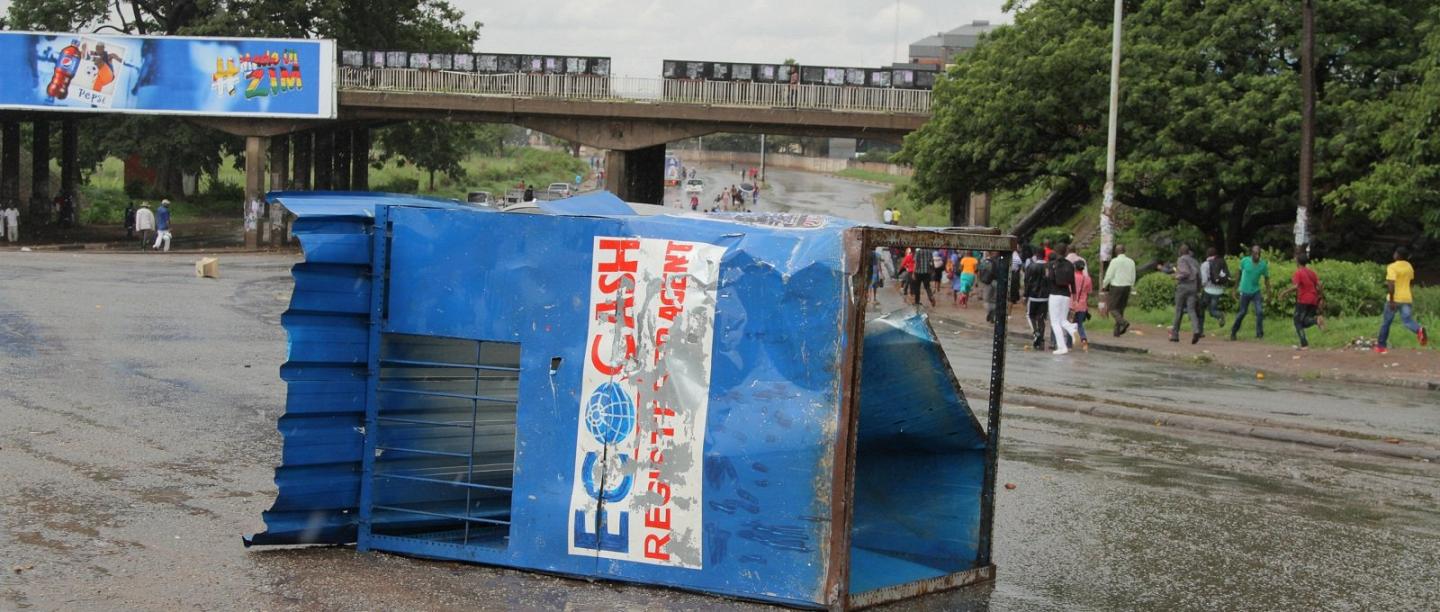
A road is barricaded by protesters in Harare, Zimbabwe on 14 January 2019. (Shaun Jusa/Xinhua/Alamy Live News)

The economic outlook of post-independence Zimbabwe resembles a fading cloth: with each wash it has lost its lustre, and as time goes on it threatens to disintegrate into a rag. After inheriting a sound economy – albeit one with deep socio-economic disparities – on gaining independence in 1980, the government of Zimbabwe has instituted decades of economic decline and ever widening inequality by prioritising political and economic capital over everything else.

In the 1980s there was confidence amongst ordinary citizens who generally did not understand the underlying economic structural functionalities. But this changed in the 1990s with the introduction of the Economic Structural Adjustment Programme (ESAP), supported by the World Bank, which introduced harsh austerity measures and economic liberalisation, thereby exposing workers to the harsh realities of neo-liberalism. The trend worsened as Zimbabwe trudged into late 1990s when large-scale retrenchments bit workers and destroyed the social fabric of the country.

The chaotic land redistribution programme, which started in 2000, forced Zimbabwe’s agrarian economy to its knees. Between 2000 and 2009, we witnessed a slump in agricultural production caused by the flight of experienced farmers and successive droughts. This in turn weighed heavily on the manufacturing sector which relies on agricultural produce for raw materials.

The economy briefly recovered from 2009 to 2014 following the introduction of a multi-currency system with the United States dollar as the base currency following the formation of a coalition government after the disputed 2008 election. But since 2015 the economy has been in recession.

All key socio-economic indicators have declined, with inflation, cash liquidity, the budget deficit and public debt all taking a turn for the worse.

Persistent shortages of foreign currency have spawned shortages of basic commodities and has driven the cost of everyday goods to record levels. The official year-on-year inflation rose from 2.97 per cent in November 2017 to 3.56 per cent in January 2018. By November 2018 it officially reached an all-time high of 31 per cent, the highest since inception of the multi-currency regime, although noted economists have put that figure at a staggering 186 per cent, making Zimbabwe’s rate of inflation second only to Venezuela’s 1.4 million per cent.

Rising inflation has had a devastating impact on ordinary citizens; incomes for those luckily enough to be in work or to have a pension have been massively eroded. Their predicament is worsened by the fact that most people do not have access to foreign exchange while service providers are demanding payment in hard currency. There are also tens of thousands of workers who are victims of wage theft. All of this leaves most people unable to pay for their basic needs, be it food, housing, education, healthcare or transport.

As if things couldn’t get any worse, in January 2019 the government increased the price of fuel by 158 per cent sending the economy into a tailspin that is likely to result in hyperinflation. Workers called for a stay-away and citizens joined in.

Workers face a wall of silence and an iron fist

Prospects of an economic recovery this year remain remote, as the country is unlikely to meet neither its economic growth projections nor its inflation targets. Current circumstances have forced Finance Minister Mthuli Ncube to revise the projected economic growth rate for 2019 from 9.0 per cent to about 3.1 per cent, and even this is unlikely to be achieved thanks to ever-declining confidence from the international community and the high cost of living. Unless the government and its social partners – namely business and labour – quickly and sincerely revive the social contract, labour unrest is likely to be a recurring feature of the months ahead.

Faced with an economic implosion and an agitated populace, instead of addressing economic fundamentals and engaging in dialogue, the government has sought to silence all of its critics. For years Zimbabweans have been calling for economic stability, electoral reforms, rule of law, institutional reforms and decent jobs, but they have met a wall of silence and an iron fist.

Damaging economic measures forced the Zimbabwe Congress of Trade Unions (ZCTU) to call for demonstrations in October 2018 which were quashed by the police. In January 2019, the ZCTU called for a stay-away and the state responded with brutal force unleashing the military which left about 17 people dead with reports of beatings, rape and other atrocities.

The ZCTU leadership has been in the firing line with ZCTU President Peter Mutasa and me not only facing trial for public order offenses following the October protests, but more recently we have been charged with the grave offense of trying to subvert the government. If convicted, we face 20 years in prison.

Over the past 12 months, teachers have also been under fire for going on strike to demand payment in US dollars as the value of all other forms of money (bond notes, electronic money) has plummeted. Members of the Amalgamated Rural Teachers Union of Zimbabwe have been hauled before the courts, while doctors and nurses have been arbitrarily dismissed for calling for better pay and working conditions.

The government is trying to intimidate organised labour so that it can pursue its austerity agenda undisturbed. As a result, the situation for trade unions is more precarious now than it was during the Mugabe era: the government is unilaterally imposing its decisions on civil service collective bargaining processes; trade union leaders are being targeted for arrest and detention; the courts appear to be captured and no longer sensitive to labour. Collective power, despite the state’s attempts to break it, is the only hope left for Zimbabwe’s workers.

11 ways Zimbabwe can move forward

Despite the seemingly hopeless nature of the situation facing labour in Zimbabwe, there are a number of ways that we can move forward.

Cutting government expenditure – the people have lost confidence in the government owing to fiscal indiscipline. The reality of government spending stands in stark contrast to its rhetoric. Senior officials must cut their expenditure and the foreign trips that have consumed millions of the country’s scarcely available forex.

Informal sector – Zimbabwe has the second largest informal economy in the world after Bolivia. These workers need access to capital and to be supported towards formality, rather than criminalised and attacked. Additionally, the government urgently needs to open credit lines for small and medium enterprises to recapitalise the economy.

End corruption – there is hardly a sector in Zimbabwe that hasn’t been blighted by corruption. The guilty need to be held accountable and the business community needs to be assured of the safety of its investments.

Encourage responsible foreign direct investment – printing more money will not solve Zimbabwe’s current economic crisis. Responsible foreign direct investment is the key to economic growth, and the government needs to create a conducive and sustainable environment for such investments.

Policy consistency – this remains a major challenge. Zimbabwe has various excellent blueprints for the positive transformation of the country, but these policies are never implemented. Government ministers must also refrain from issuing conflicting policy statements, as this tarnishes Zimbabwe’s already battered image.

Create decent jobs – Zimbabwe has an abundance of natural resources, from agriculture to minerals, and a huge skilled labour force. What is now needed is the political will and the right economic policies to create decent work for all.

Drop the dollar – although the introduction of the US dollar was necessary after the demonetisation of the Zimbabwe dollar in 2009, in the long-term Zimbabwe needs to reintroduce its own currency.

Rejuvenate production – production must be recapitalised starting with the agricultural, manufacturing and mining sectors. The land reform programme which started in 2000 destroyed an agricultural sector that was once described as ‘the bread basket of Africa’. With regards to manufacturing, there are cheap and affordable products that should be produced locally (matches, candles and mineral water, for example), but currently they are all being imported. Meanwhile, the mining sector lacks product value addition. How can Zimbabwe be the second largest platinum producer in the world but the majority of its people live in absolute poverty?

Curb illicit financial flows – serious levels of illicit financial flows have been recorded in the mining sector, while our unfortunate economic circumstances have led the government to mortgage our mineral wealth to bogus ‘investors’ hellbent on looting our minerals. The government must come up with strict laws to curb these losses. Zimbabwe’s diamonds are said to be worth US$60 billion but who benefits from the proceeds? Certainly not ordinary Zimbabweans. Instead US$15 billion from the nation’s diamond sales are unaccounted for and have likely been siphoned out of the country. This needs to stop.

Real reforms – the country’s image is severely dented owing to its poor human rights record, the absence of the rule of law and the recent military clampdown on civilians protesting against widespread hardships. Zimbabwe’s government needs to engage in practical and meaningful reforms on every level. Despite the crushing national debt, no credit lines will be open to Zimbabwe until this takes place.

Social dialogue – an all-stakeholders dialogue platform needs to be put in place urgently. The inclusion of opposition parties, trade unions, religious institutions, academia, students and other parts of civil society is crucial. The ‘command’ style of governance favoured by the current administration has proved to be incredibly ineffective. Key government policies are repeatedly announced without effective stakeholder engagement and the result has been resistance. Respecting the social contract will build the trust, transparency and accountability Zimbabwe needs to prosper.

The post Zimbabwe in 2019: the state we’re in and the roadmap forward  appeared first on Zimbabwe Situation.
Zimbabwe’s Ailing Economy Tarnishes Gold’s Glitter

Source: Zimbabwe’s Ailing Economy Tarnishes Gold’s Glitter – VOA HARARE, ZIMBABWE — Zimbabwe might have surpassed its 2018 gold production target, but some say there is little to show for it as the country’s economy remains in crisis. Kudzanayi Zvomuya is a small-scale gold panner in Bindura, about 100 kilometers north of Harare, waiting while his […]

The post Zimbabwe’s Ailing Economy Tarnishes Gold’s Glitter appeared first on Zimbabwe Situation.
Source: Zimbabwe’s Ailing Economy Tarnishes Gold’s Glitter – VOA

Zimbabwe might have surpassed its 2018 gold production target, but some say there is little to show for it as the country’s economy remains in crisis.
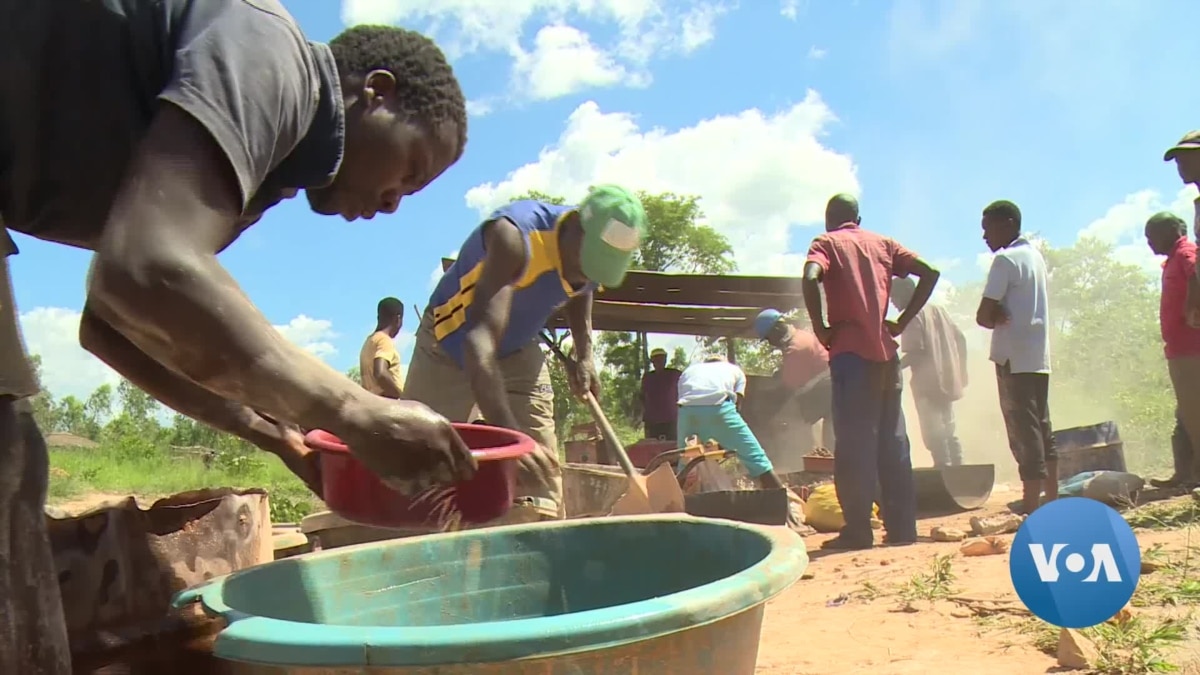
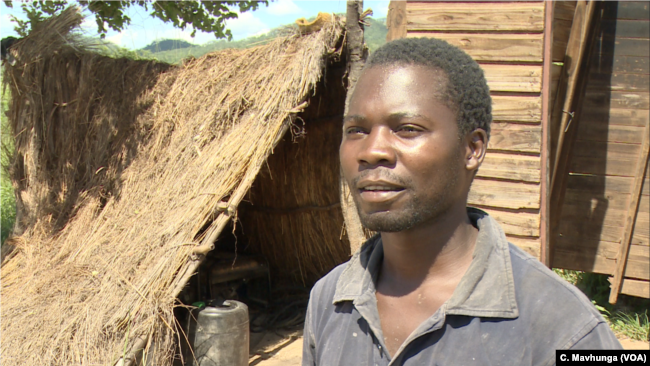
Kudzanayi Zvomuya is a small-scale gold panner in Bindura, about 100 kilometers north of Harare, waiting while his 20-plus kilograms of stones are processed to see how much gold they contain.

This 31-year-old man is among many people in this mineral-rich area who have abandoned farming for gold mining. However, Zvomuya says not much has changed for him financially since he gave up farming six years ago.

Kudzanayi Zvomuya, a small-scale gold panner in Bindura, about 100 kilometers north of Harare, says gold is a good source of income but some risks are involved.

Remaining hopeful

Gold is a good source of income, he said, but some risks are involved, such as becoming trapped underground. At least 24 miners died in mid-February after heavy rains flooded two mines near Kadoma, a city roughly 145 kilometers or 90 miles southwest of Harare. But there is nothing anyone can do, given the harsh economic environment, Zvomuya said. Others have managed to buy cattle or built nice houses through gold, so, “I am hopeful,” he said.

Zvomuya later crawls into a dilapidated office made of poles and grass, where a waiting buyer pays him for the gold, but neither reveals how much.

He has an appeal to President Emmerson Mnangagwa’s government, which resembles that of another small-scale miner, 27-year-old Norman Jomupi.

“They should equip us with electric pumps to drain water underground or if we are working in or near rivers,” Jomupi said. “Plus as youths, they should give us our land to mine. Here we are just mining but we do not own it.”

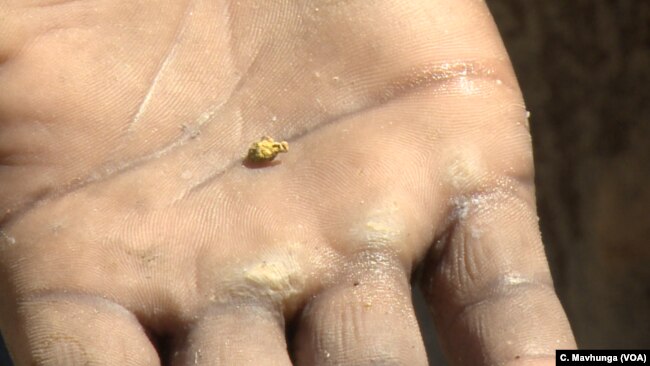
The precious metal after being processed from more than 20 kilograms of stones in Bindura, about 100 km north of Harare, in February 2019.

Small miners need support

Small miners accounted for 50 percent of Zimbabwe’s 2018 gold production of 33 tons. Despite the figures, analysts point to corruption, mismanagement and a lack of proper policies as reasons for Zimbabwe’s failure to benefit much from the country’s mineral wealth.

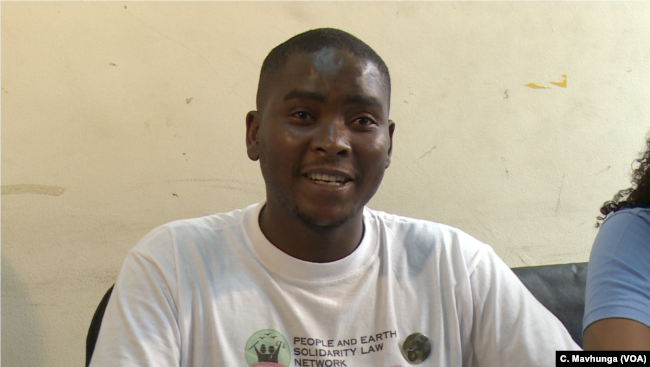
Tinashe Chisaira, a lawyer from People and Earth Solidarity Law Network in Harare, says the issue of property rights has to be addressed to help small-scale miners, who are toiling for Zimbabwe.

Tinashe Chisaira, a lawyer from People and Earth Solidarity Law Network, sees another reason.

“I can’t really say we are failing to drive value from gold as a nation,” he said. “Gold is already valuable as a mineral. But what I can say is that the state is failing to support certain institutions involved in the gold extraction sector for example, the artisanal and small scale miners.”

The government minerals monitoring agency says the issue of property rights has to be addressed to bring a smile to small-scale miners like Zvomunya and Jomupi, who are toiling for Zimbabwe.

Winston Chitando, Zimbabwe mines minister says small miners are helping the country economy because they account for more than half of the 33 tons of gold the country produced in 2018.

Mines Minister Winston Chitando says small miners are helping the economy.

“We have the Zimbabwe Mining Federation, the entity which the government is working with, to coordinate the activities of the small-mining sector. In terms of statistics, we did 33 tons of gold (in 2018) of which over 50 percent came from [the] artisanal mining sector. We also have a lot of artisanal mining in the chrome ore where, again, we estimate that over 50 percent of chrome come from artisanal miners,” he said.

But regardless of that, the small-scale miners, and most Zimbabweans, still suffer from shortages of basic commodities, such as fuel, bread and foreign currency, in a country rich in resources such as lithium, diamonds and platinum. Zimbabwe is in the midst of its severest economic crisis in a decade.

The post Zimbabwe’s Ailing Economy Tarnishes Gold’s Glitter appeared first on Zimbabwe Situation.
Disaster as man catches daughter and boyfriend red-handed enjoying sex in his house, gets ARRESTED

MAN from Matshobana in Bulawayo was arrested after he severely beat his daughter and her boyfriend whom he found having se_x in his house. Zanele Hadebe (22) brought her neighbour cum boyfriend Tanaka Moyo (30) home. She didn’t suspect that her father …

MAN from Matshobana in Bulawayo was arrested after he severely beat his daughter and her boyfriend whom he found having se_x in his house. Zanele Hadebe (22) brought her neighbour cum boyfriend Tanaka Moyo (30) home. She didn’t suspect that her father Felix Hadebe (55) would walk in on them playing the adult game. When […]

Prolonged economic crisis and drought demands urgent response for Zimbabwe’s ‘hardest hit’: UN relief chief 

Source: Prolonged economic crisis and drought demands urgent response for Zimbabwe’s ‘hardest hit’: UN relief chief | UN News OCHA/Saviano Abreu Mark Lowcock, Under Secretary-General for Humanitarian Affairs and Emergency Relief, visiting the densely populated Harare suburb Epworth, in Zimbabwe, where he met with families in need. An urgent scale-up in humanitarian relief is required […]

The post Prolonged economic crisis and drought demands urgent response for Zimbabwe’s ‘hardest hit’: UN relief chief  appeared first on Zimbabwe Situation.
Source: Prolonged economic crisis and drought demands urgent response for Zimbabwe’s ‘hardest hit’: UN relief chief | UN News

OCHA/Saviano Abreu
Mark Lowcock, Under Secretary-General for Humanitarian Affairs and Emergency Relief, visiting the densely populated Harare suburb Epworth, in Zimbabwe, where he met with families in need.

An urgent scale-up in humanitarian relief is required to provide “critical food and livelihood support” for hard-hit people across Zimbabwe, the UN’s Emergency Relief Coordinator said on Thursday, speaking during the middle of a fact-finding mission to the southern African country.

Announcing the allocation of US$10 million from the UN’s Central Emergency Response Fund (CERF), Mark Lowcock said that this amount would “represent only a fraction of what is needed to meet the level of need across the country”.

Farmers in Zimbabwe have been struggling with erratic rainfall and a fragile economy, and according to the Office for the Coordination of Humanitarian Affairs (OCHA), 5.3 million people are in need of assistance.

“The CERF allocation will help us to rapidly provide critical food and livelihood support, education, health, and protection services for the most vulnerable people who are hardest-hit during crises, including children, women, the elderly, and people who are chronically ill or living with disabilities”, Mr. Lowcock explained.

The announcement was made during the launch of the Zimbabwe Flash Appeal on Thursday, which requires $234 million to provide urgent food, health, water, sanitation, hygiene and protection support for 2.2 million people who are the most at risk, out of the 5.3 million people in need over the next six months.

An estimated 2.9 million people in rural areas and 1.5 million in urban areas are already severely food insecure, including a million who are facing emergency levels of food insecurity. A further 900,000 people risk reaching crisis food insecurity levels if the humanitarian assistance they are receiving does not continue, said according to a press statement.

During his three-day mission to Zimbabwe, Mr. Lowcock met with senior government officials, NGOs and humanitarian organizations. He also visited the densely populated Harare suburb of Epworth, where he met families who are struggling to cope.

Mr. Lowcock, describing some of the scenes that faced him during his visit, said: “I heard from people living with HIV who are unable to take the critical drugs they need. They can’t take it on an empty stomach and many of them can only afford one meal a day.”

The UN humanitarian relief chief also highlighted acute shortages of essential medicines, and the high-risk of gender-based violence, particularly for women and girls.

On Friday, Mr. Lowcock is expected to visit Bundura to talk to people affected by increasing food insecurity, and from Zimbabwe Mr. Lowcock will move on to nearby Malawi, to see first-hand the humanitarian situation there and the efforts undertaken by aid organizations to respond.

The post Prolonged economic crisis and drought demands urgent response for Zimbabwe’s ‘hardest hit’: UN relief chief  appeared first on Zimbabwe Situation.
We will defend Mnangagwa with our blood, we are the vanguard of the party: Zanu PF Youth League

The Zanu-PF Youth League has said it is ready to die for President Mnangagwa and defend his grand vision to revitalise Zimbabwe’s economy which has been in the doldrums. Youth League national secretary for administration, Cde Tendai Chirau, speaking in…

The Zanu-PF Youth League has said it is ready to die for President Mnangagwa and defend his grand vision to revitalise Zimbabwe’s economy which has been in the doldrums. Youth League national secretary for administration, Cde Tendai Chirau, speaking in Gweru yesterday said President Mnangagwa’s economic recovery policies as well as the re-engagement mission with […]