Source: Zim seeks to boost tourism sector | Daily News Zimbabwe is seeking to boost its tourism sector, with the country set to participate in two international tourism events with the intention of marketing the nation as the most sought-after tourist destination. The country will participate in this year’s Meetings Africa to be held from February […]
Zimbabwe is seeking to boost its tourism sector, with the country set to participate in two international tourism events with the intention of marketing the nation as the most sought-after tourist destination.
The country will participate in this year’s Meetings Africa to be held from February 25, to in the neighbouring South Africa where Zimbabwe Tourism Authority will showcase all services and brands on offer to senior decision-makers, buyers and influencers.
Meetings Africa is the continent’s leading business tourism fair where various tourism stakeholders partner to advance business tourism in Africa.
ZTA acting chief executive Rita Likukuma said they value the contribution of meetings, incentives, conference and exhibitions (Mice) tourism and have committed “significant funds” towards the promotion of the country as a destination for such tourism.
The country will also participate in the International Tourism Bourse (ITB) which will be held in Germany from March 6 to 10.
ITB is the world’s leading travel trade show and one of the major tourist source markets for Africa. Environment and Tourism minister Priscah Mupfumira said 26 local tourism players have so far committed to exhibit at ITB Berlin.
The MDC National Council met today, 22 February 2019 at the party headquarters Morgan Richard Tsvangirai House, 44 Nelson Mandela Avenue and made the following resolutions 1. The National Situation 1.1 Noting the calculated and […]
The MDC National Council met today, 22 February 2019 at the party headquarters Morgan Richard Tsvangirai House, 44 Nelson Mandela Avenue and made the following resolutions 1. The National Situation 1.1 Noting the calculated and [...]
Source: SA Airways suspends advance bookings | Daily News South African Airways has temporarily suspended the advance booking of air tickets following the Reserve Bank of Zimbabwe’s (RBZ) monetary policy. In a statement the company’s acting regional manager Winnie Muchanyuka said ticket bookings will now be made for same day travels and normal operations will […]
South African Airways has temporarily suspended the advance booking of air tickets following the Reserve Bank of Zimbabwe’s (RBZ) monetary policy.
In a statement the company’s acting regional manager Winnie Muchanyuka said ticket bookings will now be made for same day travels and normal operations will resume after RBZ unpacks the policy.
“In view of the monetary policy statement announced on February 20, 2019, clarity is being sought from the Reserve Bank of Zimbabwe as to the implications of further collections in Real Time Gross Settlement (RTGS) for air tickets issued after February 20.
“Therefore as a temporary measure, tickets can be issued for same day travel and not beyond. Updates will follow once clarity has been received,” she said.
Muchanyuka said their offices will make use of the Billing and Settlement Plan (BSP) link to monitor all tickets issued by all agents and any tickets issued before the monetary policy announcement will have their status change to refund.
More and more elections are being held in Africa however analysts dismiss many as being “lawful but illegitimate”. Source: Is Africa going backwards on democracy? – BBC News The recent election in DR Congo was widely condemned More and more elections are being held in Africa however analysts dismiss many as being “lawful but illegitimate”. […]
The recent election in DR Congo was widely condemned
More and more elections are being held in Africa however analysts dismiss many as being “lawful but illegitimate”. Although studies show that a majority of Africans still want to live in democracies, an increasing number are looking to alternative, autocratic models, reports the BBC’s Dickens Olewe.
In the last three years African countries have registered an overall decline in the quality of political participation and rule of law, analysts say.
“Today there are almost the same number of defective democracies (15) as there are hard-line autocracies (16), among the continent’s 54 states,” Nic Cheeseman, Professor of Democracy at Birmingham University, concludes from his analysis of the last three years.
Nigeria, which will hold its postponed election on Saturday, is among those listed as a “defective democracy”.
Despite the challenges, at least 68% of Africans prefer to live in open and freer societies, according to a recent poll conducted by Afrobarometer in 34 countries.
That figure, however, is down slightly from 72% in 2012.
Music legend Salif Keita says democracy has failed in Africa
“[Africans] just want more dividends from democracy. They want less corruption, more transparency, less impunity, more economic opportunity,” Emmanuel Gyimah-Boadi, executive director and co-founder of Afrobarometer, says.
“It is in the interest of external partners to push for and to support this quest – lest non-liberal democratic models of national development become more alluring,” he adds.
Malian music legend Salif Keita has, however, given up on democracy. He recently suggested that the continent needs a “benevolent dictator like China”.
“To have a democracy, people have to understand democracy, and how can people understand when 85% of the people in the country cannot read or write,” he asks.
‘I love Trump’
The US, which has traditionally been a major influence in promoting democracy in Africa, has had a seemingly hands-off approach since President Donald Trump came to office in 2017.
When his administration’s long-delayed policy on Africa was finally unveiled at the close of 2018, many observers of the continent were quick to point out that it did not include the favoured American staples: promotion of democracy, free and fair elections, political and civil rights.
These elements were key policy components of previous administrations.
Donald Trump’s Africa policy does not include plans to champion democracy
The policy instead focused on the war on terror, slashing spending on the United Nations missions on the continent, and lambasting the activities of Russia and China.
“If [African leaders] see leaders like Trump. who seems very happy to shake hands with autocrats, it gives them the signal that they can manipulate elections and not face consequences,” Mr Cheeseman says.
Uganda’s President Yoweri Museveni, who plans to run for a sixth term in 2021, has been notably effusive in his praise of the American president, once declaring, “I love Trump,” who he described as the best president the US has had.
In 1991, Benin and Zambia became the first former one-party states to hold multiparty elections in Africa – which were won by opposition parties – kicking off a decade of democratic gains on the continent after the end of the Cold War.
Almost 30 years later, the West African country is rated as one of just nine “free” countries out of the 54 on the continent, while Zambia has regressed to being “partly free”, according to the 2019 Freedom House report.
The number of free countries remains the same as a decade ago.
Seven countries – Senegal, Ghana, Benin, Namibia, Botswana, South Africa and Mauritius – have maintained their positions. Tunisia has improved from “partly free”, while Mali and Lesotho have moved in the opposite direction.
Angola and Ethiopia, though listed as “not free”, are noted to have made “surprising improvements” after new leaders came into office in the past year.
Technology and elections
Political transition through regular elections is among the criteria for judging whether a country is a democracy or not.
Some countries have even adopted technology to make the polls credible and accountable but in most cases this has done little to dispel concerns.
“Many African countries are trying to use technology to manufacture trust in elections and that’s not going to work,” Nanjala Nyabola, author of Digital Democracy, Analogue Politics, told the BBC.
She gave the example of Kenya’s 2017 elections which, despite the use of biometric technology to verify voters as way of eliminating ghost voters and ballot stuffing, and also using an electronic results transmission system, failed to win voters’ confidence.
“Another problem is that we have countries conducting elections that are legal but are illegitimate,” Godwin Murunga from the University of Nairobi, told the BBC.
“There’s this notion that democracy in Africa should have different standards,” he adds, pointing at the international community’s acceptance of the recent elections in the Democratic Republic of Congo.
Several countries have been using technology in elections to make them credible
Former DR Congo President Joseph Kabila oversaw one of the most controversial elections on the continent. An outright fraud, some have called it.
Martin Fayulu, who came second in the presidential election, still disputes Felix Tshisekedi’s victory.
“It was a coup d’etat,” he told the BBC.
He says, with the backing of the influential Catholic Church – which said it had 40,000 electoral monitors – that he won the election.
Mr Fayulu has since appealed to the African Union to set up a commission to recount the votes cast on 30 December or call for a repeat election in six months.
“We have to respect the will of the Congolese. Democracy has to be the same everywhere,” he told the BBC.
They also accused the international community, including the US, of failing the Congolese people in the “name of stability” of the country and called on the publication of detailed results for both the presidential and parliamentary elections.
This year, some 15 countries are set to hold elections at different levels, but the credibility of these polls is likely to again conjure up questions about whether democracy is working for Africa.
People across Africa are prepared to queue for hours in order to cast their votes
The US policy on Africa is a significant influence but it is not a major factor in the decline of democracy on the continent, Jon Temin, Director of Africa at Freedom House, told the BBC.
The organisation’s latest report says democracy globally has been on the decline for the last 13 years. Some African countries have contributed to the negative slide.
Democracy cynics like Salif Keita propose a benevolent autocracy as an alternative.
Rwanda’s President Paul Kagame has been used as an example of a leader who is running an effective and efficient government that is unencumbered by democratic structures, which can be slow and rigid.
President Kagame has been hailed as an example of a leader who has managed to achieve economic development without being unencumbered by democracy
However, extending the control of the governing party, as in Rwanda, over a country’s economy is more likely to increase corruption and waste than to spur economic activity, Mr Cheeseman says.
“What this means is that if other countries on the continent try to implement the Rwandan model, the chances are that they will experience all of its costs while realising few of its benefits,” he adds.
Ghanaian democracy activist Nansata Yakubu says that despite setbacks in countries like DR Congo, the work of defending democracy should not stop with elections.
“We have to improve the voting system and continue engaging the public,” she told the BBC.
The focus should be on giving more and more people a say over more and more issues – instead of comparing how each country’s governance structure measures against Western democracies, says Steven Friedman, Professor of Political Studies in University of Johannesburg.
The good news is that support for democracy remains high, the worry is that this is not guaranteed unless Africans start enjoying the dividends of living in free and open societies, and participating in elections that are credible and accountable.
Source: Parliament ignores MDC calls | Daily News HARARE – Parliament has ignored the opposition MDC party’s plea for guarantees that protect their MPs who are in hiding for fear of persecution over recent violent protests triggered by government’s decision to increase fuel prices. Last month, labour and civil rights organisations called for the stay-away […]
HARARE – Parliament has ignored the opposition MDC party’s plea for guarantees that protect their MPs who are in hiding for fear of persecution over recent violent protests triggered by government’s decision to increase fuel prices.
Last month, labour and civil rights organisations called for the stay-away when President Emmerson Mnangagwa raised fuel prices by nearly 150 percent.
The protests turned violent when government reacted by unleashing armed soldiers and police on civilians throughout the country.
Following the protests, several opposition MPs and labour officials were arrested, while others went into hiding to escape the government clampdown, with lawyers and human rights groups saying at least 12 people were killed and 78 others treated for bullet wounds during the protests.
Three MDC Alliance MPs now face expulsion from Parliament for absconding the august House without approval from the Speaker.
The three — Charlton Hwende (Kuwadzana East), Godfrey Sithole (Chitungwiza North), and Joanah Mamombe (Harare West) — are left with about seven parliamentary sitting days for them to show face in the National Assembly or lose their seats.
While National Assembly Speaker Jacob Mudenda said he had dealt with the matter after the MDC leader in Parliament Thabitha Khumalo wrote to him, the party’s chief whip Propser Mutseyami said the issue was still outstanding.
“Nothing substantial was done by the speaker regarding the guarantees that we requested because he only wrote a letter of confirmation for MPs who were on parliamentary business on the day leaving out the three’s case,” Mutseyami said.
Responding to enquiries on how he had responded to the MDC’s plea, Mudenda refused to give details curtly saying “I have since dealt with that one”.
Mutseyami however, said the MDC was going to continue to engage Mudenda on the issue in a bid to retain their seats.
“We want Parliament to guarantee that the MPs will not be harassed when they come so we are not going to rest because he is the principal of the august House”
The three legislators went into hiding during the January riots after security agents went after them, accusing them of having masterminded the disturbances.
In a February 4 letter to the country’s security forces, clerk of Parliament Kennedy Chokuda confirmed that five legislators , Happymore Chidziva (Highfield West) Goodrich Chimbaira (Zengeza East) and James Chidhakwa (Tafara/Mabvuku), Job Sikhala (Zengeza West) and Costa Machingauta (Budiriro) who were also on police wanted list were on parliamentary business when the protests occurred.
The MPs were in Kadoma for an induction workshop held by the parliamentary portfolio committee on Defence, Home Affairs and security services from January 13 to 16.
“Kindly note that the 13th and 16th January were travelling days and the workshop itself was held on the 14th and 15th …” Chokuda said before he attached the attendance register to prove his point.
MPs arrested and released on bail include Amos Chibaya (Mkoba), Settlement Chikwinya (Mbizo), Winnie Kankuni (Sunningdale), Lloyd Mukapiko (Redcliff), Rusty Markham (Harare North) and Livingston Chiminya (Chiwundura).


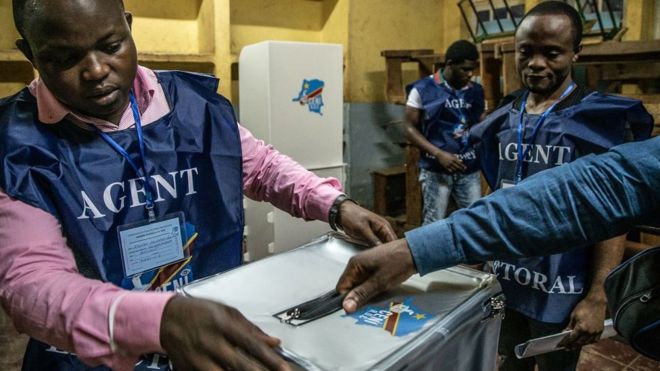 The recent election in DR Congo was widely condemned
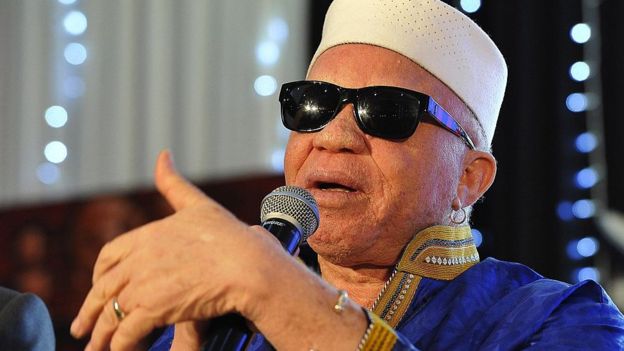 Music legend Salif Keita says democracy has failed in Africa
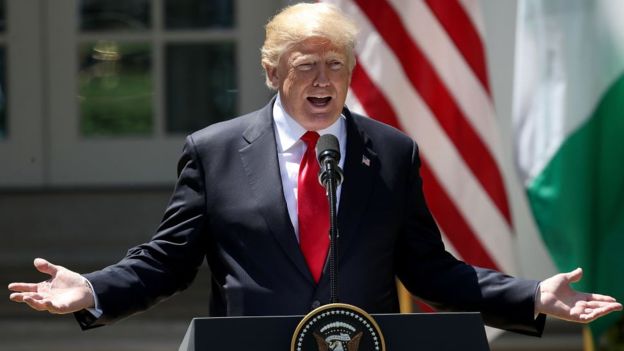 Donald Trump’s Africa policy does not include plans to champion democracy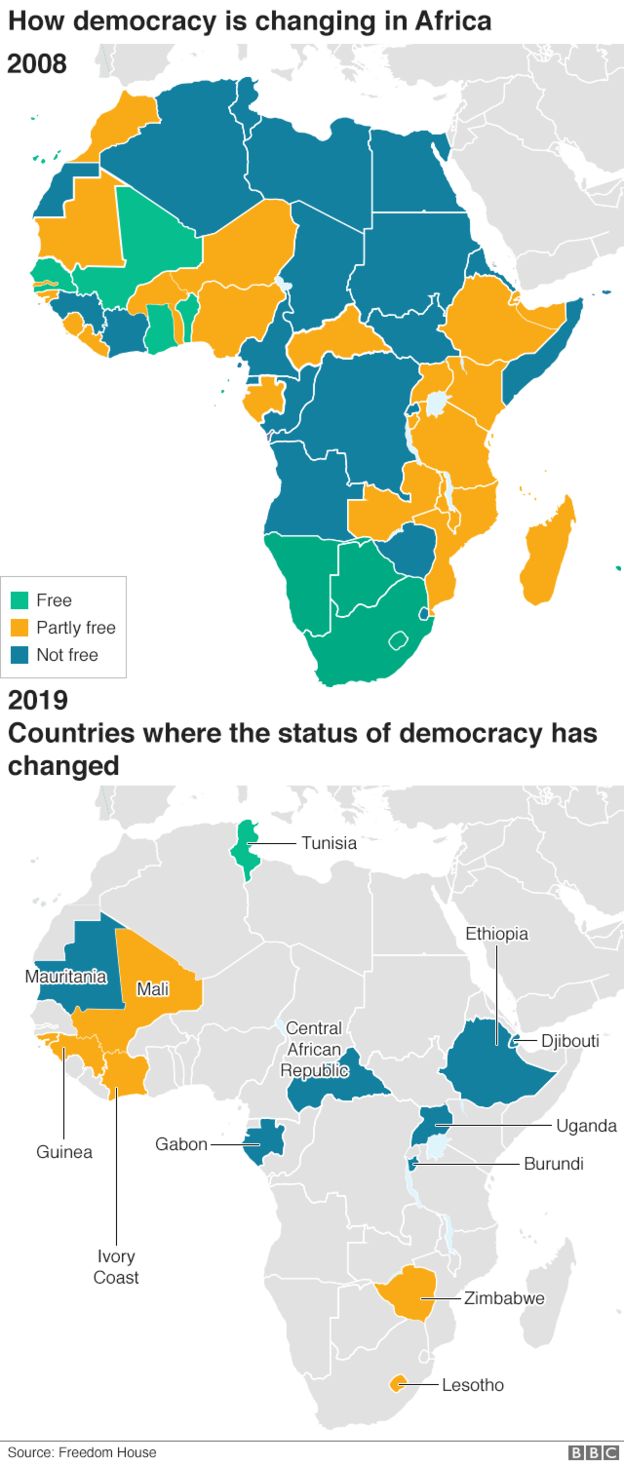

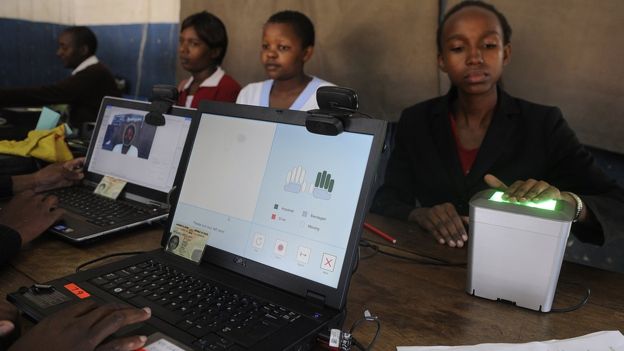 Several countries have been using technology in elections to make them credible
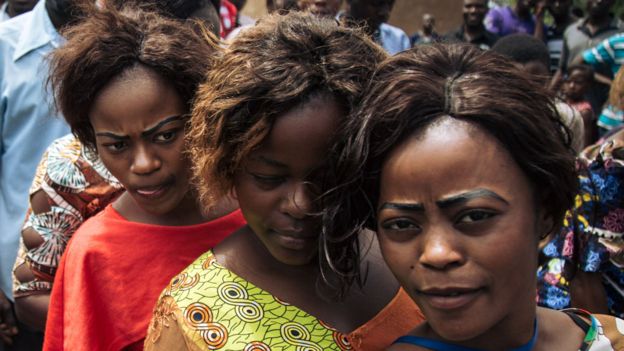 People across Africa are prepared to queue for hours in order to cast their votes
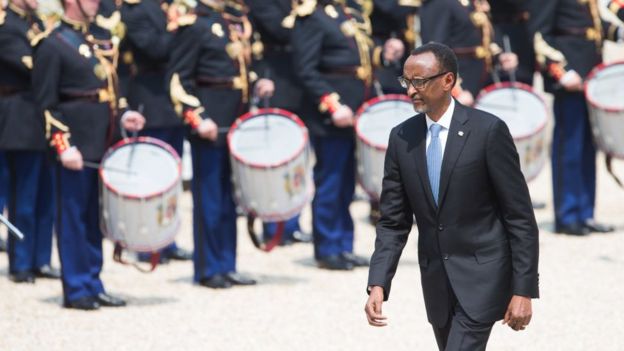 President Kagame has been hailed as an example of a leader who has managed to achieve economic development without being unencumbered by democracy