Zimbabwe’s President Mnangagwa invites opposition leaders for talks, here’s what was discussed

More than 20 politicians who contested Zimbabwe’s presidential election were invited by president Emmerson Mnangagwa for a meeting. Source: Zimbabwe’s President Mnangagwa invites opposition leaders for talks, here’s what was discussed – CNBC Africa HARARE (Reuters) – Zimbabwe’s President Emmerson Mnangagwa invited opposition leaders to a meeting on Wednesday to draw up terms for a […]

The post Zimbabwe’s President Mnangagwa invites opposition leaders for talks, here’s what was discussed appeared first on Zimbabwe Situation.

More than 20 politicians who contested Zimbabwe’s presidential election were invited by president Emmerson Mnangagwa for a meeting.

Source: Zimbabwe’s President Mnangagwa invites opposition leaders for talks, here’s what was discussed – CNBC Africa

HARARE (Reuters) – Zimbabwe’s President Emmerson Mnangagwa invited opposition leaders to a meeting on Wednesday to draw up terms for a national dialogue, they said, following a brutal crackdown on anti-government protests.

More than 20 politicians who contested July’s presidential election were invited, two of whom – Lovemore Madhuku and Noah Manyika – said they would attend. It would be the first meeting between Mnangagwa and opponents since he took power from Robert Mugabe in November 2017.

Manyika however said he believed conditions were not yet right for meaningful dialogue, which could only happen if hundreds of people detained during the crackdown were released and soldiers withdrawn from streets and checkpoints.

“It can only take place if, as the president promised upon his return from his overseas trip, the heads of those who have been responsible for brutalising citizens roll,” Manyika said.

On Tuesday, a nationwide strike by public sector teachers for better pay got off to a patchy start, as some stayed at home while others attended school but did not teach amid fears of further intimidation.

The president hiked fuel costs by 150 percent last month and immediately travelled abroad, triggering unrest that drew a violent response from security forces and eventually persuaded him to cut short his foreign tour.

On his return home, Mnangagwa promised action against brutality by police and troops and called for a national dialogue.

There was no immediate comment on Tuesday’s invitation from Mnangagwa or his spokesman.

Nelson Chamisa, who heads the main opposition Movement for Democratic Change party and who counts Manyika among his allies, could not be reached for comment.

The MDC believes Zimbabwe is reverting to the authoritarian rule that characterised the regime of long-time leader Mugabe, and says the election that confirmed Mnangagwa as president in July was rigged, an allegation the judiciary rejected.

‘REPORT ALL INTIMIDATION’

The southern African nation is mired in an economic crisis marked by soaring inflation and shortages of cash, fuel and medicines.

Many government workers are demanding wage rises and payments in dollars to compensate.

On Tuesday the striking Zimbabwe Teachers Association (ZIMTA), the biggest teaching union, said most of its members had stayed at home but that security agents had gone to some schools taking details of absent teachers.

The union accused authorities of spreading fake news to discourage teachers from going on strike after state media reported that the stoppage had been called off.

“Report all forms of intimidation, we are building a dossier of such,” ZIMTA said in a notice to members.

Cabinet ministers declined to answer questions on the strike at a media briefing in Harare.

In schools around the centre of the capital, most teachers appeared to have turned up for work, but some were not taking lessons, witnesses said.

In a classroom at a primary school in Harare’s Mbare township, a Reuters photographer saw one teacher eating from her lunch box in class while pupils sat quietly.

Zimbabwe has more than 100,000 public-sector teachers.

The post Zimbabwe’s President Mnangagwa invites opposition leaders for talks, here’s what was discussed appeared first on Zimbabwe Situation.
Zimbabwe Wetlands Construction Triggers Environmental Worries

Conservation groups warn the trend threatens the management of underground water and the availability of the resource in general Source: Zimbabwe Wetlands Construction Triggers Environmental Worries – VOA HARARE — In Zimbabwe, migration from rural to urban areas has created a demand for housing, leading to construction on wetlands, and concerns about the environment and water […]

The post Zimbabwe Wetlands Construction Triggers Environmental Worries appeared first on Zimbabwe Situation.
Conservation groups warn the trend threatens the management of underground water and the availability of the resource in general

Source: Zimbabwe Wetlands Construction Triggers Environmental Worries – VOA

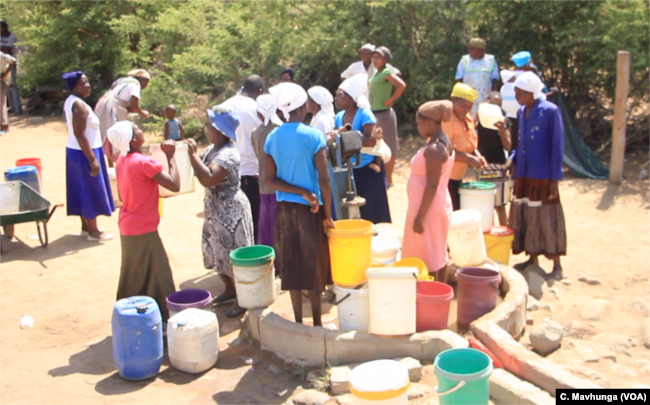
In Zimbabwe, migration from rural to urban areas has created a demand for housing, leading to construction on wetlands, and concerns about the environment and water supplies.

Conservation groups warn that the invasion of the country’s wetlands for infrastructure development and stream bank cultivation in urban areas threatens the management of underground water and the availability of the resource. They say the problem has been exacerbated by people moving from rural to urban areas.

Harare authorities say they will soon start water rationing because of low levels, thus exposing residents to water-borne diseases such as cholera, as some residents might turn to unsafe water sources.

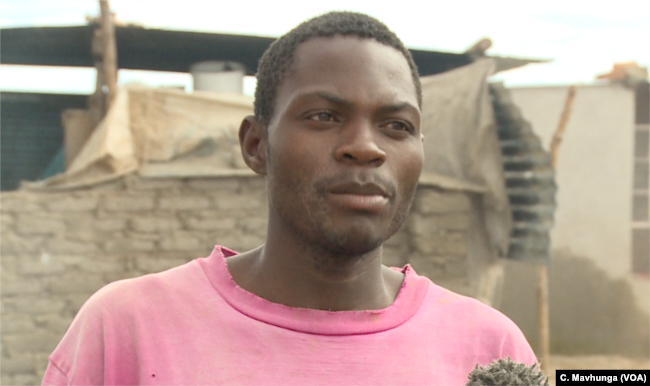
Those people include Zivai Muchichwe, a father of three. Muchichwe says he built his home on a wetland three years ago as Harare battled to contain the migration from the rural parts of the country. Now, he says part of the dwelling has cracked and collapsed.

Zivai Muchichwe built his home on a wetland three years ago as Harare battled to contain a migration from rural parts of Zimbabwe.

Muchichwe says he is waiting for authorities to tell him whether he will be there permanently as the structure needs to be reinforced. He says it was built hurriedly with cheap material and because of the location, the problem of water underground exists. “We thought we would be here for just a year,” he said.

Harare authorities say they will soon start water rationing because of low levels.

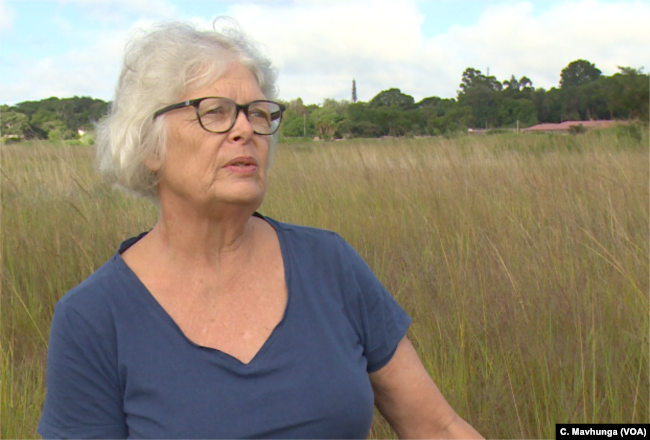
Dorothy Wakeling of the conservation group Harare Wetlands Trust says she was not surprised by the announcement. She says people are disturbing wetlands which are supposed to be gradually releasing water into the city’s water bodies.

Dorothy Wakeling of the conservation group Harare Wetlands Trust says people are disturbing wetlands which are supposed to be gradually releasing water into the city’s water bodies.

“If you don’t have this and you have monoculture (the cultivation of a single crop in a given area), all you have is run-off. And you have lost the opportunity to get water into the ground which is so laid out by nature. It’s not there by mistake. And we are discarding it for buildings when that is the way we get our water; we can’t make water come any other way,” Wakeling said.

The group says it hopes that President Emmerson Mnangagwa’s government does not allow construction on the Monavale wetland which it says holds water for most Harare water bodies.

Steady Kangata from Zimbabwe’s environmental agency says the agency is working to ensure any disturbance of wetlands and stream banks is minimal.

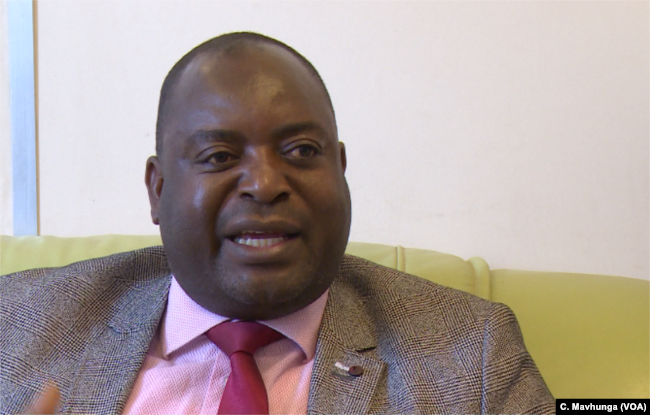
Steady Kangata from Zimbabwe's Environmental Management Agency says the government-appointed body is working to ensure any disturbance of wetlands and stream banks is minimal.
Steady Kangata from Zimbabwe’s Environmental Management Agency says the government-appointed body is working to ensure any disturbance of wetlands and stream banks is minimal.

“We must not be selfish when it comes to the environment. We are urging anyone who would want to do any form of construction to ascertain the nature and status of the piece of land they want to undertake their development…. The entire world…is about a green economy, the economy of the environment, where the environment is the pinnacle of any economy and we should mainstream environmental issues in anything we do,” Kangata said.

For now, Muchichwe’s family and neighbors remain uncertain as to whether they will have a place to stay. Given that the rainy season is not set to end until about late March, they might be sleeping on wet floors.

The post Zimbabwe Wetlands Construction Triggers Environmental Worries appeared first on Zimbabwe Situation.
Zimbabwe makes Venice Biennale selections amid political turmoil

Source: Zimbabwe makes Venice Biennale selections amid political turmoil | The Art Newspaper Cosmos Shiridzinomwa and Georgina Maxim are the first artists to be confirmed Dying Faculties by Cosmos Shiridzinomwa, one of the artists to represent Zimbabwe in Venice Photo: Tim cornwell Against a backdrop of rising economic and political turmoil, Zimbabwe has selected a group […]

The post Zimbabwe makes Venice Biennale selections amid political turmoil appeared first on Zimbabwe Situation.

Source: Zimbabwe makes Venice Biennale selections amid political turmoil | The Art Newspaper

Cosmos Shiridzinomwa and Georgina Maxim are the first artists to be confirmed

Dying Faculties by Cosmos Shiridzinomwa, one of the artists to represent Zimbabwe in Venice

Dying Faculties by Cosmos Shiridzinomwa, one of the artists to represent Zimbabwe in Venice Photo: Tim cornwell

Against a backdrop of rising economic and political turmoil, Zimbabwe has selected a group of artists to represent the country at this year’s Venice Biennale. Cosmos Shiridzinomwa and Georgina Maxim are the first to be confirmed.

In January, a dramatic increase in petrol prices announced by Zimbabwe’s new president Emmerson Mnangagwa saw widespread anti-government protests. A violent crackdown by authorities followed, with social media and internet servers shut down. The upheaval has already delayed plans for a new biennial in the country’s second city of Bulawayo.

Several of Shiridzinomwa’s works are currently on show at the Zeitz Museum of Contemporary African Art in Cape Town, in an exhibition of Zimbabwean art titled Five Bhobh: Painting at the End of an Era (until 31 March). In the show, his works include Dying Faculties (2006), depicting a man with his head in his hands in what is presumably an HIV/Aids ward, and Mugabe’s Closet (2008), where an open door shows a well-worn jacket hanging over a pile of books and a human skull peeking out from underneath. A museum label describes the work as “a metaphor for politically sensitive matters that in the past could not be expressed openly”.

His work has been 99% political in the past, Shiridzinomwa says, and he expects that to be reflected in Venice. “I hope to show new work because there is so much that has happened of late,” he says. “I have ideas that I will turn into paintings about the situation on the ground, especially the politics.” Of the current crisis he says: “It’s tough. What happened over the past few weeks, the protests and the looting, the burning down of shops, the destruction of property, the army and the police going into people’s houses and taking them, it’s a bit tense. They are trying to fight fire with fire, and it doesn’t work.”

The post Zimbabwe makes Venice Biennale selections amid political turmoil appeared first on Zimbabwe Situation.

Extremely happy Thokozani Khupe and Lovemore Madhuku had this to say after attending State House meeting

Political parties that fielded presidential candidates in the July 30, 2018 harmonised elections yesterday met at State House in Harare and committed themselves to the principle of dialogue and working together to resolve the challenges facing the coun…

Political parties that fielded presidential candidates in the July 30, 2018 harmonised elections yesterday met at State House in Harare and committed themselves to the principle of dialogue and working together to resolve the challenges facing the country. Out of the 23 parties that fielded presidential candidates in the internationally-observed harmonised elections, 21 were represented. […]

Parly seeks industry revival

Source: Parly seeks industry revival | Herald (Business) Africa Moyo Senior Business Reporter The Parliamentary Portfolio Committee on Industry and Commerce has begun visiting the country’s manufacturing sector to appreciate the challenges it contends with, so as to prod Government to intervene with matching solutions. This was said by the Portfolio Committee’s chairperson Mr Joshua […]

The post Parly seeks industry revival appeared first on Zimbabwe Situation.

Source: Parly seeks industry revival | Herald (Business)

Africa Moyo Senior Business Reporter
The Parliamentary Portfolio Committee on Industry and Commerce has begun visiting the country’s manufacturing sector to appreciate the challenges it contends with, so as to prod Government to intervene with matching solutions.

This was said by the Portfolio Committee’s chairperson Mr Joshua Sacco in an interview with The Herald Business in Harare yesterday after touring Dairibord Zimbabwe Limited (DZL)’s Rekayi Tangwena plant.

The initiative comes at a time when the Ministry of Industry and Commerce is also touring companies that were destroyed and/ or looted during the January 14 to 16 violent demonstration instigated by the MDC Alliance and its partners in the NGO and civic sectors, to establish the quantum of assistance required by the affected firms so that they can be capacitated.

Mr Sacco said the Portfolio Committee’s tours will start by focusing on the food industry, before being extended to other sectors.

Said Mr Sacco: “As the Committee on Industry and Commerce, we have resolved to visit industries in different sectors. So we have started with the food industry, we have done Dairibord today, just to understand the challenges and the direction which they are going and how Government can also come in to facilitate an environment which is conducive for them especially around issues of producing local products in Zimbabwe.

“We are very proud of Dairibord as a Zimbabwean company so I am happy to say at least we are happy with what we have seen and I think it’s now issues around the value chain, improving the supply of the raw materials, which is milk in this case. So the industry can definitely expand.”

DZL chief executive officer Anthony Mandiwanza, told the parliamentarians that the company, which has a market capitalisation of $62 million, is being hampered by a number of challenges principally the decline in national milk production.

Due to the shortage of milk, a key raw material for their business, DZL has mothballed operations at its Bulawayo, Gweru and Kadoma plants, while the Chitungwiza plant has moved to making maheu.

Milk production sharply declined from 260 million litres in 1999 to 39 million litres in 2009.

Said Mr Mandiwanza: “By the year 2008 into 2009, milk production had dropped from the peak of 260 million litres to 39 million litres.

“Thank goodness that we as Dairibord Zimbabwe had developed our footprint into the areas of food and beverages, so we survived.”

Worryingly, milk production declined at a time when the sector had been deregulated, and now boasts of over 15 players.

During the time of high production in the ‘90s, there were only two milk processors; Dairy Marketing Board (DMB) and Nestle Zimbabwe, with DMB consuming 90 percent of the milk.

Mr Mandiwanza said the diminishing milk production base comes against a backdrop of Government — previously a shareholder in DZL — having had invested significantly in infrastructure such as a brand new dairy in Bulawayo, a completely refurbished dairy plant in Gweru and a cheese making plant in Kadoma.

The new plant and equipment at the Harare plant was producing ice-cream, yoghurts; with the Chitungwiza plant having been designed for 300 000 litres of milk per day.

“We had massive excessive infrastructure against a diminishing milk supply base, to the extent that the national milk production had dropped to 39 million litre by 2009, and with many others having come on board.

“So, today as we are talking, there are only two major processors who have remained on two feet (and) the demand for milk as at last year is 120 million litres (per annum) and the supply side is 70 million litres, which means a deficit of 50 million litres.

“Now, when you have a deficit of 50 million litres, you ought to ask the question, ‘so what is happening between the demand and the supply?’” said Mr Mandiwanza.

He said the industry has been furiously importing powder and butter into the country at a cost of $7 million a month.

“This is a very important issue for your Committee . . . which then speaks about the competitiveness of that industry going forward.

“When you have a demand or supply gap that is being plugged by importation of powdered milk, it means the country is consuming foreign currency and yet you have got scarcity in foreign currency,” said Mr Mandiwanza.

The dairy sector is spending $7 million per month, which could be more given that some unregistered firms could be importing too, at a time the ability to export and earn in foreign currency has disappeared due to low milk production.

Mr Mandiwanza said foreign firms are sending their products to Zimbabwe due to the attractiveness of the US dollar, which when converted in other countries, fetches more.

The post Parly seeks industry revival appeared first on Zimbabwe Situation.