COMESA chairmanship a major boost for SMEs

Sikhulekelani Moyo Zimpapers Business Hub ZIMBABWE’S impending assumption of the Common Market for Eastern and Southern Africa chairmanship has been described as a major boost for small and medium enterprises. The Government and business leaders have since called for direct business-to-business platforms to unlock regional trade. Zimbabwe is set to officially take over the COMESA […]

The post COMESA chairmanship a major boost for SMEs appeared first on Zimbabwe Situation.

Sikhulekelani Moyo

Zimpapers Business Hub

ZIMBABWE’S impending assumption of the Common Market for Eastern and Southern Africa chairmanship has been described as a major boost for small and medium enterprises.

The Government and business leaders have since called for direct business-to-business platforms to unlock regional trade.

Zimbabwe is set to officially take over the COMESA chairmanship for the 2026-2027 term from Kenya during the 25th Heads of State and Government Summit in Mt Hampden next month.

COMESA has a market size of over 640 million people and a combined Gross Domestic Product (GDP) of about US$1,2 trillion.

Around US$383 billion in global imports and exports is traded within the bloc.

Leadership of the bloc can give Zimbabwean industries several potential benefits, including a direct platform to push local goods into broader regional markets.

The chairperson of the National SMEs Advisory Council, which falls under the Ministry of Women Affairs, Community, Small and Medium Enterprises Development, Mr Dumisani Ncube, said the country’s chairmanship puts Zimbabwe in a position to steer regional economic integration and address long-standing barriers facing local businesses.

“Now that we are the leadership of COMESA, and we are chairing as a country, we as SMEs are very happy to hear that,” said Mr Ncube.

“It will be steering the economy. We need to coordinate our policies across the 21 member states to address our trading population, infrastructure deficiencies, and market access.”

Mr Ncube said the COMESA chairmanship role would allow Zimbabwean SMEs to gain prominence through business forums and exhibitions, create partnerships with investors from other countries, and expand exports.

He projected that increased regional cooperation could help push COMESA’s combined GDP toward the $1 trillion mark.

He also linked the chairmanship to accelerating the implementation of free movement protocols and leveraging the African Continental Free Trade Area (AfCFTA).

A key focus, he said, will be reducing investment risk for SMEs.

“Most of our SMEs have been scammed when trying to get investors. Some investors say ‘put so much into my account so that I become your partner,’ and in the process people lose money,” he said.

“Now with these summits, they will be talking directly to the right investors, with the Government involved. That builds confidence.”

Mr Ncube added that hosting the upcoming COMESA rotational summit in Zimbabwe will help change perceptions about the country.

“Because of bad publicity, some people still view Zimbabwe negatively. But now that the summit is coming here, they will see first-hand what our reforms are about. That will encourage investors to come in knowing they are protected and that deals are credible,” he said.

He urged policymakers to use this moment to fast-track reforms that directly benefit SMEs.

Bulawayo Vendors and Traders Association executive director, Mr Michael Ndiweni, welcomed the chairmanship but said speeches alone would not be enough.

He called for structured business-to-business (B2B) interaction on the sidelines of the COMESA meetings.

“We need to facilitate business-to-business interaction or pitching sessions,” said Mr Ndiweni.

“If there are COMESA conferences, our Government can facilitate interaction between our micro, small and medium enterprises and companies from other member states.”

He proposed dedicated pitch sessions where entrepreneurs can market products, state what they are sourcing, and meet potential buyers and suppliers.

“Beyond the conferences and speeches, we need physical spaces where importers and exporters interact directly. They can exchange ideas and share information on import and export requirements,” he said.

“That is more meaningful — buyer meets seller, one-on-one.”

Mr Ndiweni said Zimbabwe should lead by creating those direct market linkages, turning policy discussions into tangible deals for local traders.

It is expected that the leadership role will provide the country with the leverage to address trade imbalances by promoting local value addition and removing regional trade barriers.

The leadership role aligns with national goals to accelerate domestic industrialization and job creation.

Local firms can also better integrate into regional manufacturing and supply networks.

Hosting the summit helps rebrand Zimbabwe as an active, open-for-business trading partner amid shifting global supply chains

Zimbabwe will make history next month when it officially assumes the chairmanship of COMESA, a position that will see President Mnangagwa take over the reins of one of Africa’s largest and most influential economic blocs.

The handover, slated for next month, will see President Mnangagwa succeed his Kenyan counterpart, President William Ruto, at a time when regional integration and economic self-sufficiency have become pressing priorities for the continent.

Source: COMESA chairmanship a major boost for SMEs – herald

The post COMESA chairmanship a major boost for SMEs appeared first on Zimbabwe Situation.

Zimbabwe Investment and Development Agency (ZIDA) highlights five key priorities to attract investment in Bulawayo

Judith Phiri, judith.phiri@sundaynews.co.zw THE Zimbabwe Investment and Development Agency (ZIDA) has highlighted five key priorities to attract investment into Bulawayo, including strategically positioning the city within the bounds of its competitive strengths. Speaking at the Bulawayo Investment Indaba on Thursday, ZIDA chief executive officer (CEO), Mr Tafadzwa Chinamo, said to attract investment at scale, Bulawayo […]

The post Zimbabwe Investment and Development Agency (ZIDA) highlights five key priorities to attract investment in Bulawayo appeared first on Zimbabwe Situation.
Judith Phiri, judith.phiri@sundaynews.co.zw

THE Zimbabwe Investment and Development Agency (ZIDA) has highlighted five key priorities to attract investment into Bulawayo, including strategically positioning the city within the bounds of its competitive strengths.

Speaking at the Bulawayo Investment Indaba on Thursday, ZIDA chief executive officer (CEO), Mr Tafadzwa Chinamo, said to attract investment at scale, Bulawayo should focus on at least five priority areas.

“These include identifying projects aligned to advantages, preparing projects assessed to bankable standards, packaging clear risk and returns profiles, marketing and promoting these to global investors and accelerating coordinated implementation.

“This practical roadmap for Bulawayo is a pathway from policy to projects, from projects to deals and from deals to transformation. Bulawayo’s future depends not on the opportunities it possesses, but on its ability to convert them,” he said.

“Prepare bankable projects, structure viable deals, mobilise the right partners and be one of Zimbabwe’s leading destinations for investment. The opportunity is before us. The time for preparation, partnership and execution is now.”

He said Bulawayo should position itself around existing industrial estates and factories, with scope for redevelopment and modernisation.


Mr Chinamo said the city had good logistics networks with sound rail, road and air connectivity into regional trade corridors, while there was skilled human capital of engineers, technicians and entrepreneurs from high and tertiary institutions such as the National University of Science and Technology (NUST), Zimbabwe School of Mines (ZSM) and Bulawayo Polytechnic.

“Bulawayo also has exhibition facilities; we have the Zimbabwe International Conference and

Exhibition Smart City (ZICES), an established Meetings, Incentives, Conferences and Exhibitions (MICE) base, with Matobo and the western tourism circuits nearby. There is potential for renewable energy for solar generation, industrial energy solutions and green industrial parks.”
Mr Chinamo said the city had an engineering heritage with deep manufacturing and engineering capability built over generations.


On project preparation, he said opportunities fail to attract investors if presented as ideas rather

than investment propositions, while every priority project should be supported by feasibility studies, market assessments, financial models, environmental compliance, risk mitigation plans, governance structures and revenue streams.
“Investors evaluate viability, risk, governance, returns and evidence. Bulawayo should establish a

structured project pipeline focused on eight sectors. These are manufacturing through industrial park redevelopment and factory modernisation and energy for solar-powered industrial facilities and industrial energy solutions.

“On mining beneficiation, the city can do mineral processing and related manufacturing, while it can develop logistics hubs, warehousing and dry ports. Municipal infrastructure should support industrial and urban growth,” he said.

He said tourism and MICE infrastructure expansion were critical and setting up technology and innovation hubs linked to local institutions was key.
Mr Chinamo said agro-processing would attract agricultural value-chain and food processing

investment.

“Success is measured not by opportunities identified, but by projects prepared. On structuring investment deals in Bulawayo, once projects are investment-ready, they must be structured into transactions that clearly define ownership, responsibilities, financing, risk allocation and expected returns.”

He said financing structures available were public-private partnerships (PPPs), joint ventures, private equity, venture capital and blended finance, as investment went to those who structure transactions efficiently and provide investor confidence.

Mr Chinamo said that, as ZIDA, their role was to structure projects to investment-ready standards, position Bulawayo’s opportunities to investors and support investors through establishment and implementation.

“We also engage Government institutions on approvals and requirements, connecting projects with the right investors and partners, as well as guiding sponsors and investors through to financial close.

“The obstacle is not capital; the challenge is bankable projects. Mobilising capital for growth is critical. Some of the sources of capital include pension funds, infrastructure funds, development finance institutions, commercial banks, diaspora investors and private equity,” he added.

He said capital, investors and opportunities existed, but the critical question is whether Bulawayo can present projects that satisfy investor requirements.

The two-day event held at the ZICES is ran under the theme: “Unlocking Strategic Investment Opportunities for Sustainable Industrial Transformation.”

Finance, Economic Development and Investment Promotion Minister Professor Mthuli Ncube graced the event as the Guest of Honour on Friday for the official opening.

Women Affairs, Community, Small and Medium Enterprises Development Minister Senator Monica Mutsvangwa was a key speaker. At the same time, Bulawayo Minister of State for Provincial Affairs and Devolution Judith Ncube was the host among other speakers.

The conference was convened as a national investment and economic development forum to foster strategic partnerships, promote investment, strengthen industrialisation and empower women as key drivers of inclusive and sustainable economic growth.

Source: Zimbabwe Investment and Development Agency (ZIDA) highlights five key priorities to attract investment in Bulawayo – herald

The post Zimbabwe Investment and Development Agency (ZIDA) highlights five key priorities to attract investment in Bulawayo appeared first on Zimbabwe Situation.

Treger credits Government support, innovation for survival

Sikhulekelani Moyo, sikhu.moyo@chronicle.co.zw ONE of Zimbabwe’s oldest manufacturing firms, Treger Products, says targeted Government policies and support from industry bodies have been critical in keeping its doors open and sustaining about 2 800 jobs across the country. The company’s marketing director Ms Sithokozile Ndlovu told delegates at the Bulawayo Investment Indaba on Thursday that without […]

The post Treger credits Government support, innovation for survival appeared first on Zimbabwe Situation.

Sikhulekelani Moyo, sikhu.moyo@chronicle.co.zw

ONE of Zimbabwe’s oldest manufacturing firms, Treger Products, says targeted Government policies and support from industry bodies have been critical in keeping its doors open and sustaining about 2 800 jobs across the country.

The company’s marketing director Ms Sithokozile Ndlovu told delegates at the Bulawayo Investment Indaba on Thursday that without intervention from different Government ministries and partners like Confederation of Zimbabwe Industries (CZI) and the National Competitiveness Commission, the company would not have survived the last two decades.

“Formulation of good strategies and help from different Government ministries, and policies crafted for survival of the manufacturing sectors, and support from other industrial bodies like CZI,

National Competitiveness Commission, the town councils, and the regulatory authorities have made us remain in business,” said Ms Ndlovu.

“I would like to take this opportunity to thank the Government officials that are in this room for a job well done, to keep us alive.”

Treger Products was established in 1911 and is headquartered in Bulawayo. Ms Ndlovu said the company now operates six divisions and produces more than 400 product lines.

The divisions include: a steel division for building materials and hardware; Kango Products for kitchen utensils; Treger Houses for kitchen furniture, appliances, office and school furniture;

Treger Plastics for home, agricultural, commercial and industrial plastic products; Treger Harare for steel roofing and wire products; and Zimbabwe Grain Bag for industrial packaging for agriculture, mining and commerce.

“Our products are a pillar for all economic and industrial sectors, and sustainability of all Zimbabwe lives,” said Ms Ndlovu.

“From the time we were born, as we grew up at school, when we got married, to build our own homes, as we work in different economic sectors, our products are an enabler for growth.”

Ms Ndlovu said the last 20 years brought three major hurdles, all of which the company addressed

with a mix of internal investment and stakeholder support.

To deal with high energy costs that limited output, Treger invested in automated press lines and more efficient machines that use less electricity.

Ms Ndlovu said shareholders provided lines of credit when bank funding was insufficient. The company also switched some operations to gas and is now rolling out solar to power manufacturing.

“We have state-of-the-art factories. . . These state-of-the-art factories have helped us to increase our production capacity, and also to lower some of our production costs, and also address issues of power usage,” she said.

With 90 percent of its steel needs imported, the company invested in Treger Plastics to set up an in-house recycling plant. The plant buys plastic waste from local communities and informal collectors, creating income opportunities while supplying raw material for pipes, sheeting and household products.

“We collect thousands of tons of plastic waste every year and turn it into high-quality water pipes . . . and also provide local farmers with long-lasting, affordable irrigation tools,” said Ms Ndlovu.

She added that Government support to grow local steel production to meet Treger’s demand for 10 000 tons a year would help the company move from 60 percent to full capacity.

As big wholesalers shrank, Treger set up its own trader outlets in Bulawayo in eNtumbane, Plumtree Road, the CBD and next to Rankini — and in Harare to ensure smaller traders could access stock.

“We don’t want to see the community or our customers failing to access our products. And with this move, we are now able to interact more with our end users,” she said.

With 2 800 employees, Ms Ndlovu said Treger remains committed to job creation and skills development through its in-house tool room that trains apprentices.

The company is also seeking partnerships with Government and investors to supply the health sector with locally manufactured equipment, and is calling on developers and hardware businesses to partner with it on infrastructure projects.

“Tregers is a big company. There is a very big benefit of partnering with established manufacturers.

We are experienced. We have invested. Everything is available at your doorstep,” she said.

“We welcome all investors and technology providers and trade partners to join us through business partnerships, export deals and technology agreements.”

The Bulawayo Investment Indaba 2026 ran under the theme: “Unlocking Strategic Investment Opportunities for Sustainable Industrial Transformation.”

Source: Treger credits Government support, innovation for survival – herald

The post Treger credits Government support, innovation for survival appeared first on Zimbabwe Situation.

Chief Murinye come again: Parents stranded and breathe fire as Riverton Academy pulls a US$1700 shocker!

MASVINGO — Parents at Riverton Academy Extension are facing another financial shock after the private school raised its termly fees to US$1,700, leaving some children at home and forcing other families to consider moving them to different schools. The …

MASVINGO — Parents at Riverton Academy Extension are facing another financial shock after the private school raised its termly fees to US$1,700, leaving some children at home and forcing other families to consider moving them to different schools. The increase, introduced at the start of the third term, has pushed the charge up by US$450 […]

The post Chief Murinye come again: Parents stranded and breathe fire as Riverton Academy pulls a US$1700 shocker! first appeared on My Zimbabwe News.

Drama as angry mother-in-law strips mukwasha’s small house naked and exposes her stonyie… Video goes viral

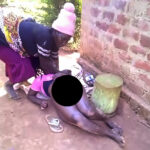
A family dispute over an alleged affair erupted into a public assault in Nyamukwarara Village under Chief Mutasa, where a woman allegedly stripped her son-in-law’s suspected lover and left her exposed in front of villagers. The confrontation, inv…

A family dispute over an alleged affair erupted into a public assault in Nyamukwarara Village under Chief Mutasa, where a woman allegedly stripped her son-in-law’s suspected lover and left her exposed in front of villagers. The confrontation, involving Mbuya Kamusara and Precious Mubari, was recorded on video and later circulated widely on social media. The […]

The post Drama as angry mother-in-law strips mukwasha’s small house naked and exposes her stonyie… Video goes viral first appeared on My Zimbabwe News.