Stream bank cultivation a cause for concern 

Source: Stream bank cultivation a cause for concern | The Herald April 3, 2019 Water bodies have social, economic and strategic values with various functions and benefits for the environment and human life that depends on the resources contained therein and the need for achieving sustainability and healthy aquatic ecosystems. River beds and banks have […]

The post Stream bank cultivation a cause for concern  appeared first on Zimbabwe Situation.

Source: Stream bank cultivation a cause for concern | The Herald April 3, 2019

Water bodies have social, economic and strategic values with various functions and benefits for the environment and human life that depends on the resources contained therein and the need for achieving sustainability and healthy aquatic ecosystems.

River beds and banks have high vulnerability to degradation from various land-based activities which can cause a decrease in environmental quality.  Stream bank cultivation is one of the leading land based activities causing degradation of the riverine ecosystems in Zimbabwe.

Stream Bank Cultivation is a serious environmental challenge affecting water bodies in the country. Zimbabwe is an agro-based economy and the agriculture sector has over the years been contributing significantly to employment creation and the Gross Domestic Product.

Most communities derive livelihoods from horticulture which has a lucrative local market. However, environmental sustainability when undertaking such activities needs to be emphasized so that water bodies are preserved from degradation and siltation.

All farming activities should be done at least 30 metres away from the highest flood level of any wetland and water body, be it a dam, lake, river, stream or weir.

Cultivating within 30metres from the highest flood level of the bank of a water body is Stream Bank Cultivation. This practice is not sustainable and it renders the environment inapt to provide its functions of life support to humans, wildlife and vegetation.

Stream bank cultivation in most parts of the country has been the major driver of siltation affecting streams, rivers and dams. This has been noted both in the rural and urban set up of the country driven by the search for moisture and alluvium;  a deposit of clay, silt, and sand left by flowing floodwater in a river valley or delta, typically producing fertile soil.

Water bodies are critical in supporting agricultural activities. Aquatic life such as fish as well as irrigated crops rely on water bodies and contribute to food security in the nation. Extra effort should therefore be put to ensure that the available water bodies are preserved.

The growing of crops and application of fertilizers within the river banks leads to the water pollution through enrichment from dissolved nutrients that stimulate the growth of aquatic plant life and death of animal life from lack of oxygen.

This will effectively disturb the natural ecosystem. Intensive agricultural activities often lead to increased loads of pollutants such as pesticides and fertilizers in rivers and streams.

Not only do these affect their ecological character, they also impact on human health and the quality of drinking water. There is need to employ conservation tillage and organic farming practices in order to reduce the pollution loads reaching rivers.

Stream bank cultivation has immediate and long term consequences. It results in soil erosion which in turn causes siltation of water bodies. Also, farm chemicals such as fertilisers, pesticides and herbicides can be washed into water bodies thus polluting the water.

In the long run, this practice causes water shortages. Silted water bodies can only hold water for short periods of time. For this reason Zimbabwe we are left with only a few perennial rivers. This affects water availability in areas where people’s livelihoods depend on water.

According to the Environmental management Act Chapter 20:27 as read with Statutory Instrument 7 on Environmental Impact Assessment and Ecosystems Protection Regulation, it is an offence to degrade rivers and banks through unsustainable practices such as stream bank cultivation. Any person who contravenes this statutory requirement shall be liable to a fine not exceeding level ten.

Given the important roles that water bodies play in our daily lives, it is therefore critical for all of us to take stock of our actions so that we do not contribute to their degradation. Let us desist from stream bank cultivation and ensure that rivers and streams are conserved and well protected.

Environmental Facts, Tips and Updates are published weekly by the Environmental Management Agency.

Send your feedback to; eep@ema.co.zw, like us on Facebook: Environmental Management Agency and twitter:@EMAeep or visit our website www.ema.co.zwAlternatively, call us on: Tel 086 77006244 and Toll-free 08080028; or use our Whatsapp platform 0779565707. We are ready to listen.

The post Stream bank cultivation a cause for concern  appeared first on Zimbabwe Situation.

Supa seeks acquittal on graft charges

Source: Supa seeks acquittal on graft charges | The Herald 03 APR, 2019 Supa Mandiwanzira   Fidelis Munyoro Chief Court Reporter Former Minister Supa Mandiwanzira, who is embroiled in a $218 million-consultancy scandal, is seeking acquittal on charges of corruption, arguing the indictment is defective. Mandiwanzira is one of the several high-profile figures to have […]

The post Supa seeks acquittal on graft charges appeared first on Zimbabwe Situation.
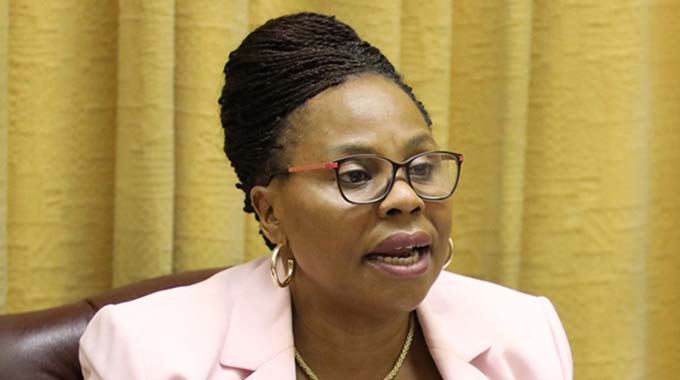
Source: Supa seeks acquittal on graft charges | The Herald 03 APR, 2019

Supa seeks acquittal on graft charges
Supa Mandiwanzira


Fidelis Munyoro Chief Court Reporter
Former Minister Supa Mandiwanzira, who is embroiled in a $218 million-consultancy scandal, is seeking acquittal on charges of corruption, arguing the indictment is defective.

Mandiwanzira is one of the several high-profile figures to have been charged in court for corruption in the Second Republic in which President Mnangagwa has vowed to fight graft and cronyism.

The former Information Communication Technology and Cyber Security Minister is contesting trial magistrate Mr Elijah Makomo’s ruling, dismissing his application for exception to charges of breaching procurement regulations.

The matter will be among the cases to be heard at the High Court before Justice Nicholas Mathonsi today.

Mandiwanzira, who is accused of corruptly engaging Megawatt for consultancy services rendered to NetOne Pvt Ltd, wants the court to quash the charges and uphold his application for exception on the grounds that the charges were out-of-place because the telecommunications company was not a procuring entity.

Mr Makomo ruled that the ex-minister has a case to answer for allegedly breaching the Procurement Act.

It was the lower court’s finding that Mandiwanzira, in his capacity as minister then, could not have acted on behalf of NetOne because it had its own directors and workers.

In his application for exception to the charges, Mandiwanzira, who is being represented by Advocate Thembinkosi Magwaliba averred that he acted in public interest and recovered US$30 million that Net-One had lost in the contract for network expansion and modernisation of equipment.

If convicted, Mandiwanzira, faces a minimum prison term of 20 years, fine, or both.

Mandiwanzira is facing charges of criminal abuse of office after he allegedly awarded Megawatt Energy, a South African-based company consultancy, work to audit the US$218 954 843.00 deal between Net-One and Huawei Technologies.

The post Supa seeks acquittal on graft charges appeared first on Zimbabwe Situation.
Cabinet okays assets disclosure . . . civil service to be depoliticised

Source: Cabinet okays assets disclosure . . . civil service to be depoliticised | The Herald 03 APR, 2019 Minister Mutsvangwa Herald Reporters In a first for public administration in the country, Cabinet has approved values and principles of a framework that will see public servants declare assets to ensure accountability. Additionally, a code of […]

The post Cabinet okays assets disclosure . . . civil service to be depoliticised appeared first on Zimbabwe Situation.

Source: Cabinet okays assets disclosure . . . civil service to be depoliticised | The Herald 03 APR, 2019

Cabinet okays assets disclosure . . . civil service to be depoliticised
Minister Mutsvangwa

Herald Reporters
In a first for public administration in the country, Cabinet has approved values and principles of a framework that will see public servants declare assets to ensure accountability.

Additionally, a code of conduct will be adopted in the civil service, while Government workers will have to observe political neutrality in terms of the Constitution.

These reforms are part of a raft of measures by President Mnangagwa’s administration, with the Transitional Stabilisation Programme (TSP) recognising that the civil service reform agenda  will ensure that operations of  ministries, and their departments and agencies are underpinned by a new culture blueprint that exhibits higher levels of professionalism, ethics, accountability and performance.

Under the TSP, reforms at public enterprises are set to ensure, inter alia, de-politicisation of Government and entities’ governance relationships.

And yesterday, Information, Publicity and Broadcasting Services Minister Monica Mutsvangwa, in her post-Cabinet briefing, announced that Cabinet had also approved principles for the Public Service Amendment Act which seeks, among other issues, to align conditions of service for civil service Commissioners to the Constitution.

The amendments also seek to change the name of the Public Service Commission to the Civil Service Commission; provide that staff of the Civil Service Commission will follow processes through the National Joint Negotiating Forum (NJNC) before engaging in collective job action; provide mechanisms for the implementation of collective bargaining rights and provide for the political neutrality of the civil service.

Meanwhile, Cabinet yesterday expressed concern over the tendency by some businesses to increase wantonly prices of commodities citing movements in the exchange rate.

The correct approach, Cabinet pointed out, was to predicate price increases on inflation trends.

Said Minister Mutsvangwa: “A lot of our industry suppliers of goods and services in the country are raising prices because of the exchange rate on the market which is not the right way to do it. The correct approach is to ground price increases on inflation trends not the exchange rate.”

This comes as Cabinet also approved principles for the Securities and Exchange Amendment Bill which seeks to address deficiencies and align the legislation with market developments and international best practice.

The proposed amendments seeks to assist investors in making decisions after being provided with full, accurate and timely disclosure of financial results, risk and other related information.

“The amendments are also aimed at ensuring fair and equitable treatment of holders of securities and that financial statements be in line with international accounting standards,” Minister Mutsvangwa said.

“(They are also aimed at) expanding the scope of regulation of capital markets to cover issuers of securities; eliminating regulatory arbitrage in the capital markets sector; introducing civil penalties for contravention of the Act to enhance the Securities and Exchange Commission SECZ) powers in markets; and providing for cooperation and sharing of information with both local and foreign regulators.”

The post Cabinet okays assets disclosure . . . civil service to be depoliticised appeared first on Zimbabwe Situation.

Alliance Media donates 30t maize-meal to cyclone victims 

Source: Alliance Media donates 30t maize-meal to cyclone victims | The Herald 03 APR, 2019 Local Government, Public Works and National Housing Deputy Minister Jennifer Mhlanga (second from right) receives a maize-meal donation from Alliance Media Zimbabwe regional sales and marketing manager Ms Agnes Chimani, while the Zimbabwe National Army’s Colonel Kenneth Chihumba and Air […]

The post Alliance Media donates 30t maize-meal to cyclone victims  appeared first on Zimbabwe Situation.

Source: Alliance Media donates 30t maize-meal to cyclone victims | The Herald 03 APR, 2019

Alliance Media donates 30t maize-meal to cyclone victims
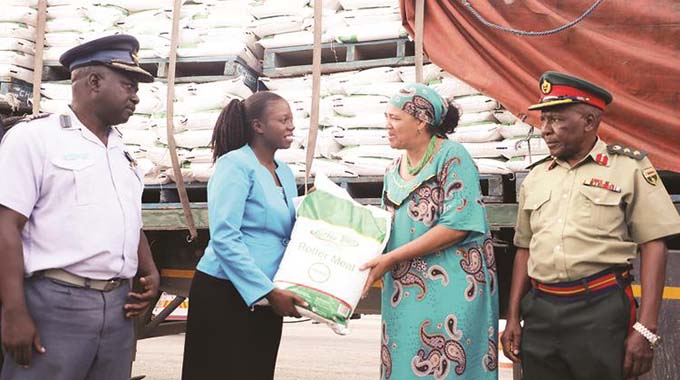
Local Government, Public Works and National Housing Deputy Minister Jennifer Mhlanga (second from right) receives a maize-meal donation from Alliance Media Zimbabwe regional sales and marketing manager Ms Agnes Chimani, while the Zimbabwe National Army’s Colonel Kenneth Chihumba and Air Force of Zimbabwe Group Captain Morris Mukarakate look on in Harare yesterday. — Picture by Justin Mutenda

Yeukai Karengezeka Herald Correspondent
Alliance Media Zimbabwe, a pan-African company which specialises in outdoor billboards yesterday donated 30 tonnes of maize-meal to Cyclone Idai survivors.

The donation was received by Deputy Minister of Local Government, Public Works and National Housing Jennifer Mhlanga at Manyame Air Base.

Alliance Media Zimbabwe regional sales and marketing manager Ms Agnes Chimani said the donation was part of their corporate social responsibility.

“As a corporate citizen we believe that it is our duty to respond when our fellow Zimbabweans have faced such a predicament.

“These people lost their food reserves and we have donated 30 tonnes of mealie meal,” said Ms Chimani.

Deputy Minister Mhlanga hailed the support by international, regional and the local community.

The post Alliance Media donates 30t maize-meal to cyclone victims  appeared first on Zimbabwe Situation.

Does the law fully protect women from GBV? 

Source: Does the law fully protect women from GBV? | The Herald April 3, 2019 Danai Chirawu In an article in the Zimbabwe Electronic Law Journal entitled “Deterrent Sentences of Domestic Violence,” Professor Feltoe explains that the primary objective of the Domestic Violence Act is to offer protection to women who are in danger. He […]

The post Does the law fully protect women from GBV?  appeared first on Zimbabwe Situation.

Source: Does the law fully protect women from GBV? | The Herald April 3, 2019

Danai Chirawu
In an article in the Zimbabwe Electronic Law Journal entitled “Deterrent Sentences of Domestic Violence,” Professor Feltoe explains that the primary objective of the Domestic Violence Act is to offer protection to women who are in danger. He extends this explanation by adding that women are mostly in danger of violence from their spouse and that the perpetuation of such violence may ultimately pose a threat to life.

A day at the various Magistrates Courts around the country will reveal the prevalence of reports of domestic violence within society as people trickle in throughout the day to apply either for a peace or a protection order.

Mass media has developed a pattern in the manner in which issues of gender based violence are recorded. In the midst of all the stories involving the economy or the political status quo of the day lies a report describing yet another threat to the sanctity of human life; more so, women’s lives.

Oftentimes, the stories recorded in the media present more aggravated circumstances which result in severe injury or death. The culture of domestic violence has been intricately weaved into the fabric of society that people are almost desensitised to what may be perceived as “less severe” acts of domestic violence.

It continues to be important for these stories to be reported and recorded and it is more important that there be efficient and sustainable remedies to fully protect society against leading a continuously volatile existence.

As it stands, anybody who is a victim of domestic violence and sexual violence has the right to approach the police station, particularly the specialised division called the victim friend unit or VFU. Aside from being given proper counselling in a safe secluded place, the duty of the police is to investigate and arrest the accused person. This remedy exists in the Domestic Violence Act and the Criminal Code.

It was reported in the Herald published on March 30, 2019, that a police officer, whose duty was to investigate sexual abuse at a local school, allegedly molested 21 young girls. Whereas it is the duty of this officer to ensure safety for these young girls, this duty bearer is found on the opposite side of the law, not only in abuse of his office but in contravention of these girls’ right to human dignity.

What that concludes is that while the law exists to cater for and protect women and girls from gender based violence, the bulk of the change must come from society itself. Women’s rights are human rights and it should be understood that women have the right to have safe access to justice.

In another case, a man is being accused of murder in aggravating circumstances after shooting his wife and her brother in the head whilst they were having breakfast with the children. This same man is reported to have been arrested for kidnapping in 2016. He had kidnapped a man whom he alleged to have been having extra marital affairs with his wife.

He was convicted and sentence to a fine of $150 or three months imprisonment. He is also said to have been reported for domestic violence at Highlands police station and the reports were both withdrawn. In addition, he was already facing another charge of attempted murder before proceeding to murder his wife and brother-in-law.

As a person with an active criminal record it was necessary not only for the court to hand down a more deterrent sentence aside from a fine so as to fully respond to the fact that he was not only a threat and a hazard to society; he was also posing an imminent threat to his wife and children’s lives. It must be understood therefore that the law does not exist in isolation. For justice to be seen to be done, special focus must be paid to the gravity of the situation especially where the crime threatens the sanctity of human life.

Additionally, withdrawal of cases involving domestic violence and sexual violence must be probed carefully. In the same article by Professor Feltoe; he states that there are various social factors which result in a withdrawal such as perceived economic dependence and cultural pressure on the wife to stay in the relationship.

The fact that the law exists to protect society from harm among many other reasons calls for due diligence on the part of the police, the courts and society as a whole to promote safety and condemn violence.

Another reported case relays a story involving a couple whose cycle of violence resulted in death. In the judgment handed down by Justice Mawadze, the Judge quotes the evidence of this couple’s daughter and concludes that the marriage was already violent, which is a possible explanation for why a seemingly minor misunderstanding resulted in tragic consequences. In this particular case, the couple had a misunderstanding regarding whether or not to kill a goat and their failure to use healthy communication mechanism amounted to the loss of life.

These cases simply reflect a portion of the many issues plaguing society with regards to domestic violence. They stand as a reminder of the depths of violence and inhumanity that currently exists within our system. They are also a call for action which can only be achieved if Zimbabweans as a whole work together to promote human rights.

The law with regards to gender based violence already exists, the Constitution currently has a substantive bill of rights with speaks to the promotion, protection and fulfilment of human rights and there are already structures which exist to cater to domestic violence such as the victim friendly unit and specialised courts. The gap herein lies in society’s obligation to promote the same.

It is members of society from all walks of life who continue to not only endorse but commit acts of gender based violence. These same members of society occupy positions of authority wherein they have the duty to ensure that justice prevails.

The continued function of gender based violence concludes therefore that for society to be completely safe and free from violence, it is its citizens who need to take the initiative to maintain a secure society.

For feedback questions and comments please feel free to email zwla@zwla.co.zw or to phone our hotline number on +263782 900 900/+263776 673 873 or our toll free on 08080131 and landline(s) +263242 708491/+2630242 706676

The post Does the law fully protect women from GBV?  appeared first on Zimbabwe Situation.