Winter wheat planting season gets underway 

Source: Winter wheat planting season gets underway | The Herald April 1, 2019 Ellen Chasokela and Rutendo Rori The early wheat planting for the National Wheat Contract (NWC) farming starts today and 13 000 hectares have been signed up for the crop. The target is to produce at least 150 000 tonnes of wheat worth […]

The post Winter wheat planting season gets underway  appeared first on Zimbabwe Situation.

Source: Winter wheat planting season gets underway | The Herald April 1, 2019

Winter wheat planting season gets underway

Ellen Chasokela and Rutendo Rori
The early wheat planting for the National Wheat Contract (NWC) farming starts today and 13 000 hectares have been signed up for the crop.

The target is to produce at least 150 000 tonnes of wheat worth US$80 million.

The NWC is a private sector response to Finance and Economic Development Minister Mthuli Ncube’s plea to the private sector to complement Government efforts in agriculture.

National Wheat Contract Farming Committee (NWCFC) deputy chairman, Mr Graeme Murdoch said they required US$15 million to secure all the inputs required to plant and harvest 90 000 tonnes of wheat.

“Zimbabwe needs at least 270 000 tonnes of local wheat annually and approximately 130 000 tonnes of specific grade imported wheat to produce suitable bakers’ flour,” he said.

“The El Nino affected 2018/2019 rainfall season has meant that the hectarage available for a winter programme has been reduced, particularly in the traditionally high producing areas of Mashonaland West and parts of Mashonaland Central.

“We need around US$15 million to secure all the inputs required to plant and harvest 90 000 tonnes of wheat.

“Depending on the final producer price at harvest, we believe that farmers will earn at least RTGS$108 million from wheat from this initiative.”

Mr Murdoch said three private companies were contracted to carry out the project.

“PHI Commodities, Northern Farming and Staywell are the contractors and they have contracted individual farmers to plough wheat,” he said.

“The three contractors have been an integral part of Government’s Command (Agriculture) programme for a few years and in an effort to ensure that as much wheat as possible is grown in 2019 they have committed to grow, between them, at least 15 000 hectares of winter wheat this season, to produce approximately 90 000 tonnes of wheat.

“Contractors have also secured the required fertiliser and crop chemicals for the planned hectarage, although we are looking to our parent ministry to assist in whatever way possible to ensure that we are able to secure the necessary foreign currency from the interbank market to settle our commitments to the input suppliers.

“We also need access to bulk diesel supplies to, in the first instance, allow the timely harvest of the summer crop, but to then see the wheat crop planted and tended through to harvest in October 2019.”

Mr Murdoch thanked stakeholders who have chipped in with assistance.

“Farmers have been concerned about the viability of wheat,” he said.

“Paper Hall Investment (PHI) has agreed a pre-planting model with our private sector contracting partners and with the final off takers and users of the wheat.

“Members of the Grain Millers Association have guaranteed an offtake of this wheat and the private sector grouping have been working with various Government agencies to ensure that the crop is planted at the optimum time and with all of the necessary inputs to produce a high yielding crop.”

The post Winter wheat planting season gets underway  appeared first on Zimbabwe Situation.

Airzim tenders for insurer 

Source: Airzim tenders for insurer | The Herald April 1, 2019 Air Zimbabwe Farirai Machivenyika Senior Reporter National carrier Air Zimbabwe is seeking reputable insurance companies to provide cover for its aeroplanes. The tender for the insurance cover was floated in yesterday’s Government Gazette under General Notice 476B of 2019. “Tenders are invited from competent […]

The post Airzim tenders for insurer  appeared first on Zimbabwe Situation.

Source: Airzim tenders for insurer | The Herald April 1, 2019

Airzim tenders for insurerAir Zimbabwe

Farirai Machivenyika Senior Reporter
National carrier Air Zimbabwe is seeking reputable insurance companies to provide cover for its aeroplanes.

The tender for the insurance cover was floated in yesterday’s Government Gazette under General Notice 476B of 2019.

“Tenders are invited from competent and reputable companies to provide insurance cover for Air Zimbabwe aeroplanes, subject to conditions set out in the tender document,” reads part of the notice.

According to the notice, bidders must be on the register of the Procurement Regulatory Authority of Zimbabwe, be a member of the Insurance and Pension Commission, and provide three trade references and company details that include its profile, certificate of registration, CR14 and VAT clearance.

Site visit meeting would be on April 9 while the deadline for submission of documents is April 29.

The national airline was rocked by a multi-million dollar insurance scandal in 2015 as a result of the irregular appointment of Navistar Insurance Brokers in 2009 to handle insurance of its planes.

The post Airzim tenders for insurer  appeared first on Zimbabwe Situation.

Zim military’s humane face

Source: Zim military’s humane face | Newsday (News) BY TAPIWA ZIVIRA/EVERSON MUSHAVA HIS camouflage uniform discharges a heavy stench of sweat, while his dusty face, dirty hands and dry mouth betray what he has been through lately. Yet he continues to toil in the sun, offloading packs of donated foodstuffs from an army truck for […]

The post Zim military’s humane face appeared first on Zimbabwe Situation.
Source: Zim military’s humane face | Newsday (News)

BY TAPIWA ZIVIRA/EVERSON MUSHAVA

HIS camouflage uniform discharges a heavy stench of sweat, while his dusty face, dirty hands and dry mouth betray what he has been through lately. Yet he continues to toil in the sun, offloading packs of donated foodstuffs from an army truck for distribution to cyclone-hit families.

This is Joshua (not his real name), one of the hundreds of soldiers deployed to Chimanimani, doing all the dirty work to help the cyclone-hit community recover, and today (Thursday), they are stationed at Charter Bridge, where they are part of the team that is ensuring aid brought to communities gathered at the damaged bridge, is taken across the river to vehicles waiting to ferry them to Ngangu township, one of the hardest-hit areas.

“So with the help of local people, we have to offload the items, carry them across to the trucks on the other side,” Joshua said.

The soldiers, working together with civilians, have created a human chain, handing each other packs of food items across the river, standing in the knee-level water.

Throughout the day, the soldiers, police and civilians continue to harmoniously get aid — mostly food items — across the river, and once in a while, they crack a joke and laugh, deserved relief in the midst of the depressing disaster.

This harmony, for many, is an unusual thing given the bad image the army had assumed over the past year when they were accused of instituting terror on citizens in a disproportionate response to anti-government protests triggered by the country’s harsh economic environment.

Since assuming power in November 2017, President Emmerson Mnangagwa has not hesitated to unleash the army on civilians, and on two occasions — in August last year and January this year — a total of 23 people died and hundreds were left with injuries after the army fired live ammunition on protesters.

A simple Google search of the Zimbabwe National Army brings images of soldiers shooting at and beating up civilians on the streets.

But down in Chimanimani, Joshua and hundreds of his colleagues deployed here portray a completely different picture.

Joshua does not look like a killer, neither does he wear a hideous black mask associated with those who pounced on protesters last year and this year. He is an angel of humanitarian work together with his team.

Instead, his eyes are soft, his uniform is clearly marked to show his brigade and rank, and when he speaks, it is with a strong commanding, but very humane voice.

From the day disaster struck Chimanimani two weeks ago, the soldiers deployed to the cyclone-ravaged area have worked round the clock, sometimes with limited resources.

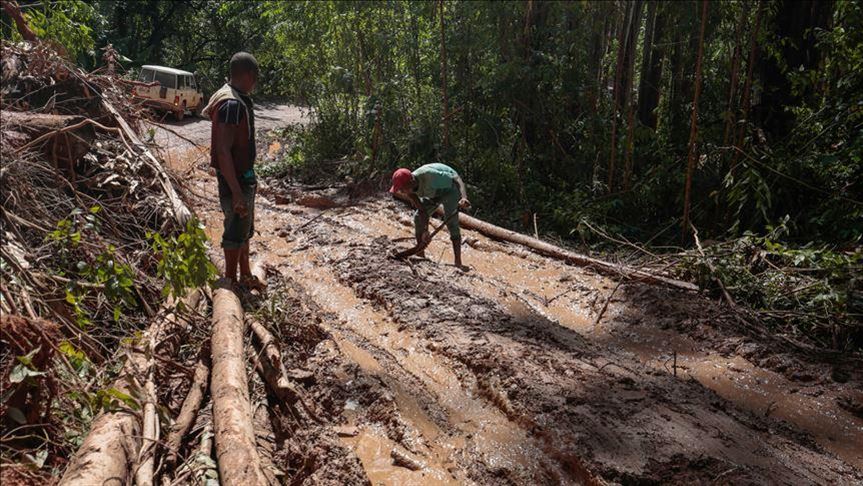
As photojournalist Anthony Zinyange recalls, after realising that all the roads leading to the most affected zones were inaccessible after roads and bridges had been destroyed, while the sky was still foggy, the men in uniform — made up of mostly junior officers — walked several kilometres into the heart of Chimanimani.

“They were full of energy and they eagerly wanted to get to Ngangu to rescue any survivors, and they jogged all the way, hoping to get there early enough to avert further loss of life, but they were deeply-troubled and dejected when they discovered that all they could do was recover corpses,” Zinyange said.

“The gravity of the matter, which had been seriously understated in the media, left them ripped apart, but they continued to do their best, assisting those that needed to be taken to safe zones.”

Even as efforts to clear the roads began, there were challenges.

“At some point, a grader failed to move a huge pile of mud that had slid onto the road, and we had to use shovels to clear the way. All we wanted was for the affected areas to be accessible” Joshua said.

As the day ends at Charter Bridge, Joshua and his colleagues get into one of the army trucks, ready to travel back to Skyline, one of the campsites established to co-ordinate relief efforts.

It is the end of yet another day of unwavering dedication to serve the nation under difficult circumstances, and another side of Zimbabwe’s army.

At Kopa, where an entire suburb was washed away by floods and over 300 people are still unaccounted for, soldiers have built a makeshift bridge and spend the whole day managing crowds and at times repairing it to make it continuously passable.

“I came alone, I got foodstuffs for their victims, but I am old and could not carry my load. A soldier came and helped me cross the makeshift bridge and carried my load straight to my home over there [about six kilometres]. My fellow villagers refused saying I should wait for my grandson to help me, but the soldiers did,” an elderly woman, Gogo Dhliwayo said.

Soldiers apart from maintaining order to ensure fair distribution of aid, also spend their day helping children cross the makeshift bridge, digging up for missing bodies and making roads passable.

“They are very good when doing humanitarian work, but when it comes to political issues, ummm, they are something else. I think the problem is the political leaders themselves who send them. Alone, they are humane and helpful, like a people’s real army,” one motorist remarked as he sped off at Skyline.

The post Zim military’s humane face appeared first on NewsDay Zimbabwe.

The post Zim military’s humane face appeared first on Zimbabwe Situation.

Collapsed toilets pose health hazard to cyclone victims 

Source: Collapsed toilets pose health hazard to cyclone victims – NewsDay Zimbabwe April 1, 2019 BY TAPIWA ZIVIRA CYCLONE Idai left a trail of destruction, loss of human and livestock life and washed away bridges in the Eastern Highlands, particularly Chimanimani and Chipinge, but Bikita had to contend with its own unique set of problems […]

The post Collapsed toilets pose health hazard to cyclone victims  appeared first on Zimbabwe Situation.

Source: Collapsed toilets pose health hazard to cyclone victims – NewsDay Zimbabwe April 1, 2019

BY TAPIWA ZIVIRA

CYCLONE Idai left a trail of destruction, loss of human and livestock life and washed away bridges in the Eastern Highlands, particularly Chimanimani and Chipinge, but Bikita had to contend with its own unique set of problems that have left villagers vulnerable to waterborne diseases.

Several pit latrines collapsed at schools, shopping centres and in villages, leaving most of the population around Chikuku and Mutsinzwa resorting to the bush system following the flooding caused by Cyclone Idai mid-last month.

Soon after the floods, some teachers were forced to use buckets as toilets and dispose excreta in bushes after the pit latrines collapsed due to the heavy rains that were accompanied by strong winds that also felled a number of houses. At Mutsinzwa Primary School, possibly the hardest-hit school, most toilets at the teachers’ cottages either collapsed or have huge cracks on their walls and floors.

Raw sewage was also flowing across the school near some classrooms from some of the flooded toilets, exposing the teachers and pupils to a health disaster.

At Chikuku business centre, some toilets suffered a similar fate, leaving villagers resorting to open defecation at the busy centre.

Areas around Mukore, Gangare, Chivaka, Chirorwe in Bikita East were also affected, triggering fears of cholera and typhoid outbreaks in the usually dry area.

The post Collapsed toilets pose health hazard to cyclone victims  appeared first on Zimbabwe Situation.

20,000 refugees in Zimbabwe affected by cyclone: UN

Destroyed infrastructure causes contamination of drinking water in storm-hit refugee camp: UNHCR official – Anadolu Agency Source: 20,000 refugees in Zimbabwe affected by cyclone: UN HARARE, Zimbabwe – At least 20,000 refugees in Zimbabwe were affected by the deadly Tropical Cyclone Idai, UN officials said on Sunday. Country representative for the UN High Commission for Refugees […]

The post 20,000 refugees in Zimbabwe affected by cyclone: UN appeared first on Zimbabwe Situation.

Destroyed infrastructure causes contamination of drinking water in storm-hit refugee camp: UNHCR official – Anadolu Agency

Source: 20,000 refugees in Zimbabwe affected by cyclone: UN

HARARE, Zimbabwe – At least 20,000 refugees in Zimbabwe were affected by the deadly Tropical Cyclone Idai, UN officials said on Sunday.

Country representative for the UN High Commission for Refugees (UNHCR) Robert Tibagwa spoke in the capital Harare, during the handover of 80 metric tons of goods donated to the Zimbabwean government.

“We have at least 20,000 refugees and asylum seekers at Tongogara Refugee camp near the Mozambique border who were affected, of which 5,300 were severely affected because 1,060 houses were damaged,” Tibagwa said.

Near the mutual border with Mozambique, Tongogara Refugee Camp is on the outskirts of the town of Chipinge, which was severely ravaged by the tropical depression, leaving a trail of destruction.

Asylum seekers and refugees from Mozambique, Rwanda, the Democratic Republic of Congo and Somalia are housed at Tongogara Camp.

Tibagwa added that water and sanitation infrastructure had been destroyed, with latrines being flooded and boreholes being filled, resulting in a contamination the drinking water supply.

It is estimated that 90,000 people were displaced in nine districts mainly in the eastern parts of the country, with more than 200 dead and some 300 missing and an overall 250,000 people affected.

The UNHCR is part of the humanitarian team working closely with Zimbabwe’s government to ensure people receive aid and protection from various risks and dangers.

The post 20,000 refugees in Zimbabwe affected by cyclone: UN appeared first on Zimbabwe Situation.