Source: Zim taking strides for recovery from Cyclone Idai disaster | The Herald March 30, 2019
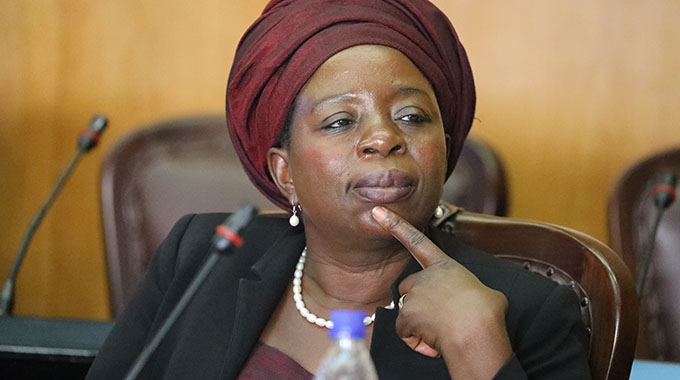
Dr Nzenza . . . “When we have a tragedy of this magnitude, psychosocial support should be part of our national disaster risk management plans. It should be part of our recovery interventions. This should build upon our traditional African support mechanisms” In the past and until recently, whenever major natural or man-made disasters strike, focus was practically limited to providing material support for disaster victims, including appeals for donations.
However, in recent years, a new element has been incorporated into the set of resources offered to disaster victims — immediate psychological care. This came after researchers noted that a significant number of disaster survivors develop intense psychological reactions immediately after these experiences. In this report, Sifelani Tsiko (ST), our Senior Writer speaks to the Minister of Public Service, Labour and Social Welfare, Dr Sekai Nzenza (SN), on the nature of psychosocial support that will be given to victims of Cyclone Idai, which killed 259 people, injured 200, displaced 16 000 households and affected more 250 000 in the eastern and central parts of Zimbabwe.ST: There is a growing trend now to make psychosocial support an integral part of any emergency response. In what way do you think it will help individuals and communities affected by Cyclone Idai to heal the psychological wounds and rebuild social structures after this recent natural disaster?
SN: In the past, we relied on our own African community structures to cope with grief. Grief was communal, it was not just one individual who felt the loss. It was rare, if at all, if you could have so many deaths at once in the past. A natural disaster such as this one is unprecedented, so this necessitates the use of different approaches to assist the bereaved with psychosocial support or grief counselling. They are different methods — there are specialist psychologists or medical psychiatrists, then we have the pastoral from the church side. Then we also have our own traditional methods.All this now falls within the social protection aspect. It is now much to do with looking at the basic needs of the individual.
You need food, shelter, water and sanitation access, and then mental health and well-being. We can stretch this to education, social justice and equality.You have the right to be treated equally and fairly. Psychosocial support is all about the mental and the spiritual well-being of a person.
It is an important approach in the recovery and the rebuilding of affected communities.ST: How is your ministry going to implement programmes on psychosocial support to the victims of the cyclone?
SN: We have social workers that are trained in counselling. Some of them specifically trained in child protection. We are also having a lot of NGOs supporting us. We want to specifically prioritise the immediate needs of survivors.
We have people who have survived this tragedy, but have lost their loved ones — parents, brothers, sisters, relatives and not only that, they have lost their livelihoods.My ministry is in the process of conducting a needs assessment of everyone who was affected by the cyclone and taking special attention on the most vulnerable. We are looking at women, children, the elderly and the disabled.
Even those who are ill are also considered vulnerable. We will identify them and then help them to access basic needs.
Most importantly, we want to put them in a safe place. When the cyclone swept homes, we ended up having 500 people seeking emergency shelter at Chimanimani Hotel. In such situations, the risk of abuse of women and young girls is very high, so we have to protect them.Social workers and volunteers are now working to protect them. We have children and people with no papers or identity documents now. They all need assistance. We have up to 3 500 children affected and some have lost parents. They all need support and to re-united with either their parents or relatives.
ST: How much will be required to ensure experts and other relevant people offer psychological support to the flood and storm victims?
SN: That I can’t tell you now. We have not yet completed the basic needs assessment. This will be on-going. This is a tragedy and the shock will last for some time. It will not go early.
We need to build structures, all systems and all programmes for the short-term, medium-term and the long-term.ST: Are you likely to elicit the support of major local and international NGOs in the extension of psychosocial support to the affected people?
SN: We have had overwhelming support from all donor countries and the UN family. Most international NGOs based in Zimbabwe have come out to support the victims of the cyclone.
They are supporting us in a big way. The private sector too, has helped us a lot — special mention goes to Schweppes, who supplied us with water and purification tablets, then Masawara Group gave us 500 bins full of basic foodstuffs, water, blankets and other items.
We also want to thank the Inscor Group, NetOne, Econet and many other private companies who are assisting our people in a big way. Individuals and church groupings have also poured in their support. This is making a big difference in the lives of the affected communities.ST: This is a new a disaster response strategy and what do you think needs to be done help people understand the importance psychosocial support in their recovery efforts?
SN: We no longer have the normal traditional family support structures and we now need to embrace other support systems that I have mentioned pertaining to psychosocial support and the mental well-being of affected people.
We also need to promote group therapy to help the victims to cope with this tragedy. We need to create a safe and conducive environment that they are able to talk about what has happened, talk and cry about it and share their experiences with others. They need to share their experiences and pray about it. This will enable them to release the burden.
Some people may feel guilt — why did I survive and we need to help them to gradually accept that this was a national disaster and they shouldn’t feel bad or guilty about it. We need to help them accept what has happened and they need to do it at their own pace.ST: What are some of the priority areas which you intend to focus on as a ministry?
SN: The main important thing now is to help people accept and come to terms with the tragedy. They need to be assisted to cope with the grief and then over time to move on and go on with their lives. We want them to lead better lives. And here, we need a whole Government approach, a stronger inter-ministerial coordination to support them. We need to bring in all the players.
Already, an inter-ministerial team appointed by the President and chaired by the Minister of Local Government, Public Works and National Housing Cde July Moyo and the team members include Agriculture, Water, Climate and Rural Resettlement Minister Perrance Shiri, Minister of Transport and Infrastructural Development Cde Joel Biggie Matiza, Health and Child Care Minister Dr Obadiah Moyo, myself and other key officials.ST: Are there any local psychiatrist that have offered to support your ministry in extending the services to affected people?
SN: So far I only have people from the churches that have offered to give psychosocial support. It’s a process and we would want to complete a needs assessment we are conducting with the help of international NGOs.ST: What is the estimated number of experts or volunteers that are required to offer psychosocial support in the affected parts of the country?
SN: I can’t tell you that now. We have more than 16 000 affected people in Chipinge and Chimanimani, but some parts in Chikomba District where I come from and Masvingo were also badly affected. Things will become clearer after we finish conducting the assessment needs survey.ST: When everything is said and done, what is your comment on the need to integrate psychosocial support into development activities in the country?
What must the country to do to expand such services and prepare for any future natural or man-made disasters?
SN: Psychosocial support is not new in our culture. It has been part and parcel of our culture since time immemorial. We now need to embrace new approaches to include psychologists and professional counselling service providers due to the fast-changing environment we find ourselves in. When we have a tragedy of this magnitude, psychosocial support should be part of our national disaster risk management plans.
It should be part of our recovery interventions. This should build upon our traditional African support mechanisms.ST: In the last few days there has been an outcry about the partisan distribution of relief aid in the affected districts. Critics accused the Government of favouring Zanu-PF supporters and sidelining people from the opposition. What is your comment on this?
SN: This is not true at all. Support is being extended to all affected people regardless of their creed or political affiliation. We are all Zimbabweans and everyone has a right to access humanitarian support in times like these. My ministry is putting a lot of emphasis or has developed systems to ensure that all the donations that have been given to us are managed in a transparent and accountable way. Donations must get to the intended beneficiaries. As a Government, we are doing our best to ensure relief reaches the intended beneficiaries. My ministry is very grateful for the support and generosity from the international community, donor partners, private companies, individuals, churches and many other institutions.
The spirit of giving has been overwhelming and it will go a long way in alleviating the physical and emotional pain caused by Cyclone Idai on our people.ST: Some critics say Zimbabwe has no adequate disaster risk response strategies and that the Zimbabwe National Army (ZNA) was lethargic in its response. What is your comment on this?
SN: Natural disasters affect all countries — rich and poor. Even rich countries struggle to cope with natural disasters. The Zimbabwe National Army was swift in its response and has done a great job in the rescue and recovery mission in the most affected districts in Chimanimani and Chipinge. We are grateful to the ZNA for their professionalism and ability to execute the search and rescue mission. Now they are working closely with their counterparts from South Africa — using sniffer dogs to recover bodies. It’s not an easy task and we should applaud our army for this great work. The recovery of bodies is not easy. It’s a sad and gruelling process. These soldiers have been on the job from day one and the recovery of bodies is part and parcel of extending the psychosocial support to the victims of the tropical storm.
Psychological support involves recovering the bodies and giving them a decent burial according to our culture and traditions.
We are not burying our people in mass graves, we are burying them properly in accordance with norms and culture of our people. We are giving people support to bury their loved ones. We are placing some of the vulnerable children in emergency foster care. This is to give them a safer place to stay and to secure protection for them.ST: How long is the needs assessment exercise going to take? Any timeline for this?
SN: This is quite urgent and we would want to reach out to everybody affected like yesterday. We can’t wait to complete this exercise. Some of the areas are difficult to access. They can only be reached by foot. We need to reach more areas to find out the needs of the affected people. I’m pleased to say we are getting there. We want to thank our donor partners and all well-wishers who are helping us in this exercise.
The post Zim taking strides for recovery from Cyclone Idai disaster appeared first on Zimbabwe Situation.