Government intensifies crackdown on CSOs 

The systematic crackdown of Civic society Organisations in Zimbabwe concerns the MDC. Yesterday the military government arrested Zenzele Ndebele the director of CITE at a meeting of Mr Mnangagwa and CSOs in Bulawayo. Source: Government intensifies crackdown on CSOs – The Zimbabwean They went on to raid CITE offices and ransacked the place without a search […]

The post Government intensifies crackdown on CSOs  appeared first on Zimbabwe Situation.

The systematic crackdown of Civic society Organisations in Zimbabwe concerns the MDC. Yesterday the military government arrested Zenzele Ndebele the director of CITE at a meeting of Mr Mnangagwa and CSOs in Bulawayo.

Source: Government intensifies crackdown on CSOs – The Zimbabwean


They went on to raid CITE offices and ransacked the place without a search warrant. The continuous closure of democratic space in Zimbabwe is retrogressive and inflicts Zimbabwe’s further isolation from the family of nations.Yet the re-engagement rhetoric is gobblingmillions of tax payer’s funds.

The own goals must stop.

Ndebele is being targeted for his role as a producer of a documentary on the 1982-1987 genocide known as Gukurahundi.

Recently, the military government attempted to close operations of COTRAD a CSO in Masvingo only to be overturned by the High Court.

We are also aware of curtailing CSO operations through the so-called PVO bill.

People must be allowed to enjoy their civil and political rights as enshrined in the Constitution.

MDC: Defining a New Course for Zimbabwe!

Jacob Mafume
MDC National Spokesperson

The post Government intensifies crackdown on CSOs  appeared first on Zimbabwe Situation.

MDC, Zanu PF cancel Byo, Shurugwi rallies

Source: MDC, Zanu PF cancel Byo, Shurugwi rallies | Newsday (News) BY BLESSED MHLANGA THE MDC has cancelled its “thank you” rally scheduled for tomorrow in Bulawayo in the wake of the devastating Cyclone Idai which has left hundreds dead in Manicaland and Masvingo provinces. Party leader Nelson Chamisa was billed to address supporters. This […]

The post MDC, Zanu PF cancel Byo, Shurugwi rallies appeared first on Zimbabwe Situation.

Source: MDC, Zanu PF cancel Byo, Shurugwi rallies | Newsday (News)

BY BLESSED MHLANGA

THE MDC has cancelled its “thank you” rally scheduled for tomorrow in Bulawayo in the wake of the devastating Cyclone Idai which has left hundreds dead in Manicaland and Masvingo provinces.

Party leader Nelson Chamisa was billed to address supporters.

This came as Zanu PF Midlands provincial spokesperson Cornelius Mpereri said the ruling party’s “thank you” rally, which was scheduled for tomorrow at Chachacha in Shurugwi, had been cancelled because President Emmerson Mnangagwa was focusing on Cyclone Idai-related issues.

In a statement, the MDC party said the rally could not proceed when the nation was in mourning and would now concentrate its efforts in mobilising aid for the victims.

“Be advised that Bulawayo ‘thank you’ rally has been postponed to a later date due to the national disaster witnessed in Manicaland. The party, which joins the nation in mourning, is as of now concentrating on mobilising aid from its members and well-wishers towards the victims,” MDC spokesperson Jacob Mafume said.

He said all the resources that the MDC was going to use for the Bulawayo rally would now be channelled towards victims of the cyclone.

“We have decided that all our urban councils, all our structures and legislators across the country focus on the national disaster which hit the Gaza district, that is Chimanimani and Chipinge,” he said.

“All the resources which we were otherwise going to use at the rally are now being directed to that area, because lives have been lost and there is no need for more to be lost.”

Chamisa was due to address his seventh “thank you” rally in the City of Kings over the weekend and also take the opportunity to meet party structures ahead of a watershed May elective congress.

Mafume said the rally was supposed to address internal issues in the party, particularly the congress, issues of national dialogue and national governance.

“The rally, which will happen in the future, was supposed to address issues of concern to our members and the nation at large. It was supposed to address the matter of congress, the clear failure by Zanu PF to run the economy and important issues around national dialogue,” he said.

The MDC has snubbed the national dialogue efforts by President Emmerson Mnangagwa and insisted that the talks be convened by an independent interlocutor on neutral ground.

Mnangagwa has also dug in his heels, saying he would continue his own talks initiative with minority opposition parties, which collectively failed to get 5% of the presidential vote in the last elections.

Combined, the presidential candidates, who are attending the talks, polled less than the number of spoilt ballots, which stood at 79 000, while Mnangagawa and Chamisa had each garnered more than two million votes.

The post MDC, Zanu PF cancel Byo, Shurugwi rallies appeared first on NewsDay Zimbabwe.

The post MDC, Zanu PF cancel Byo, Shurugwi rallies appeared first on Zimbabwe Situation.

Cyclone Idai disaster compounds problems for Zimbabwe

After the droughts, floods for hundreds of thousands of Zimbabweans now in need of urgent food aid. Source: The New Humanitarian | Cyclone Idai disaster compounds problems for Zimbabwe Hours after Cyclone Idai battered the coast of Mozambique last week, it made its way to Zimbabwe, bringing a wave of destruction with it. More than 139 […]

The post Cyclone Idai disaster compounds problems for Zimbabwe appeared first on Zimbabwe Situation.

After the droughts, floods for hundreds of thousands of Zimbabweans now in need of urgent food aid.

Source: The New Humanitarian | Cyclone Idai disaster compounds problems for Zimbabwe

Hours after Cyclone Idai battered the coast of Mozambique last week, it made its way to Zimbabwe, bringing a wave of destruction with it.

More than 139 people have been reported dead in Zimbabwe, but that toll could rise amid reports of nearly 200 missing persons and uncounted bodies swept away by the floods. Some areas – as in Mozambique – remain inaccessible, making it difficult to establish the exact number of people in need.

After a cabinet briefing on Tuesday, local government minister July Moyo told journalists that lessons from this and previous disasters must be learnt.

“A few weeks before Cyclone Idai happened, we already knew the areas that were going to be affected, but we didn’t know the intensity,” Moyo said, adding that provincial and district leaders had been warned in writing, but most people did not heed the call to move.

But locals, in turn, accused the government of failing to issue the necessary alerts that could have helped people prepare and move to higher ground.

Bishop Bakare from the United Mutare Residents and Ratepayers Trust told The New Humanitarian he believed the government could have made prior arrangements to evacuate people to a place of safety before the disaster struck.

Cyclones have hit Southern Africa before. Malawi, Mozambique, Zambia, and Zimbabwe all experienced floods in 2000 from Cyclone Eline.

The Zimbabwe Red Cross Society said flooding caused by Cyclone Idai continues to cause massive destruction, with more heavy rains reported since the initial 15 March hit.

“Crops and livestock have been destroyed, power supply and communication continue to be disrupted in affected areas,” the society said. “The hardest-hit areas remain inaccessible as heavy rains have damaged roads and main access bridges have been washed away.”

There is also concern over the increased risk of malaria, cholera, and other diarrhoeal diseases.

The cyclone has compounded an already dire situation in Zimbabwe and countries in the region, as the 2018/2019 farming season has already been marked by dry spells and drought.

Counting the cost

At the St. Charles Lwanga Secondary School in the southeastern district of Chimanimani, a boulder rolled into the dining hall and towards the dormitory, trapping 14-year-old Donnell Mashava and two of his classmates. Only Mashava made it out alive.

“The school head and other teachers had to use a hammer to crash the rock into pieces in a bid to rescue the trapped kids,” said Mashava’s mother, Helen Benza. She said her son’s body, legs, eyes, and face were still swollen and bruised from the crush.

Chimanimani is the Zimbabwean district worst hit by the cyclone, which also cut off the Mozambican city of Beira and brought intense flooding to parts of Malawi. Heavy rains and flash floods saw homes, livestock, and people swept away – bridges and roads destroyed.

According to the Zimbabwe Red Cross Society, more than 200 people have been injured, mainly in Chimanimani, while more than 900 homes have been destroyed and some 15,000 people are affected.

In Chipinge district, Rutendo Mushimo’s entire compound was washed away by the cyclone, while bridges and roads were completely ruined.

“Our school-going children used to use this road to school, but now the area is inaccessible,” said Mushimo. “Our clinics have been wiped out, leaving us with nowhere to seek healthcare.”

Cars destroyed by the cyclone.

Women who used to bring their goods to be sold in the area have been left unable to get to market with no source of livelihood. “Many of us are now homeless and our source of income have been greatly affected,” Mushimo said.

One Chipinge resident, Cephas Mushoni, said people were no longer safe there. “We are in desperate need of help,” Mushoni said. “The walls of our homes have fallen. There is nothing we can do as the fruits and vegetables we used to plant and sell were all swept away.”

Food crisis

The World Food Programme says 90 percent of Chimanimani has been significantly damaged. It also estimates that 200,000 Zimbabweans are in need of urgent food assistance for the next three months.

“This disaster compounds an already dire situation, as the hardest-hit areas were facing severe food insecurity and economic hardships prior to the cyclone,” Paolo Cernuschi, Zimbabwe country director at the International Rescue Committee, said in a statement.

“Whatever crops that were being grown despite the drought have now been destroyed in the floods, and these districts will need the help of the international community now more than ever.”

Zimbabwe’s agriculture minister Perence Shiri acknowledged it’s going to be a tough year for the country, but said in a statement that the government needs to prepare for such disasters and put measures in place to tackle the challenges posed by climate change.

Southern Africa is facing El Niño conditions for the second time in three years. People in the region are still grappling with the impacts of a strong drought episode in 2015/16, which already weakened their capacity to produce food.

The latest report from the Famine Early Warning Systems (FEWS) Network, a food security watchdog, highlights that most crops in Zimbabwe are water-stressed with some already completely written off because of the prolonged dryness this season and extremely high temperatures in arid areas in most parts of the country.

An invasion of Fall Armyworm has worsened the situation, affecting crops – mainly maize – in all districts, and about 2.4 million Zimbabweans are said to be in need of food aid due to drought.

The post Cyclone Idai disaster compounds problems for Zimbabwe appeared first on Zimbabwe Situation.

The Tragedy of Cyclone Idai and its Effects 

The Zimbabwe Human Rights NGO Forum (the Forum) commiserates with all those who were affected by the disastrous effects of Cyclone Idai in Mozambique, Madagascar, Zimbabwe, and Malawi. Source: The Tragedy of Cyclone Idai and its Effects – The Zimbabwean The tropical cyclone brought torrential rainfall on the eastern parts of Zimbabwe on 15 March […]

The post The Tragedy of Cyclone Idai and its Effects  appeared first on Zimbabwe Situation.

The Zimbabwe Human Rights NGO Forum (the Forum) commiserates with all those who were affected by the disastrous effects of Cyclone Idai in Mozambique, Madagascar, Zimbabwe, and Malawi.

Source: The Tragedy of Cyclone Idai and its Effects – The Zimbabwean


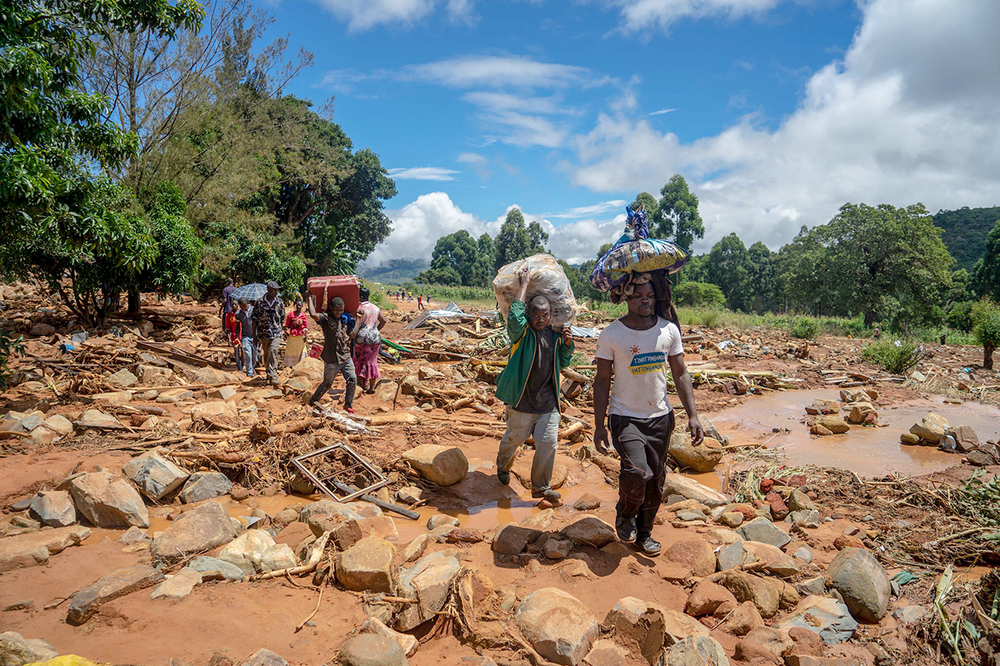
A man stands next to the wreckage a vehicles washed away on March 18, 2019 in Chimanimani, eastern Zimbabwe, after the area was hit by the cyclone Idai. – A cyclone that ripped across Mozambique and Zimbabwe has killed at least 162 people with scores more missing. Cyclone Idai tore into the centre of Mozambique on the night of March 14 before barreling on to neighbouring Zimbabwe, bringing flash floods and ferocious winds, and washing away roads and houses. (Photo by Zinyange AUNTONY / AFP)

The tropical cyclone brought torrential rainfall on the eastern parts of Zimbabwe on 15 March 2019. The most affected areas are Bikita, Chimanimani, Chipinge, Chiredzi, Gutu, Buhera and Zaka.  In Mozambique, an estimated 600 people lost their lives as result of the cyclone induced floods. Zimbabwe has recorded at least 102 deaths, over 200 injuries and 250 people either missing or stranded. In total, an estimated 350 000 people were affected in the four countries.

The Forum joins the families across the region in mourning the loss of life, destruction of property and the general vulnerabilities that societies find themselves in. The real magnitude of this tragedy is still to be established. The Forum applauds the solidarity of the people of Zimbabwe who have shown the very depths of care and compassion for each other, in the true spirit of ubuntu.

These tragic events leave us torn apart and decimated as a people. They test our resilience. We do pray that the generosity of the human family across the world will give consolation to the affected families.

Constitutional Obligation to Protect Life
In difficult times, we do, as we must, find time to reflect on anything that we could do better to prevent or mitigate the effects of a tragedy of this nature. The right to life is enshrined in section 48 of our Constitution, hence creating an obligation upon us to take steps to ensure that we prevent loss of life.  A number of mechanisms exist for us to make use of to ensure that never againas a society should we allow each other to be left vulnerable to anything that threatens our rights. Such measures include putting in place ‘early warning early response’ systems. These must be action-oriented, looking not only on warning the people of pending disaster, but taking swift steps to remove people from the line of danger.

Lessons from the Past
Zimbabwe has been victim of natural and human-made disasters before.  The Tokwe-Mukosi Disaster is 2014 which made over 1500 families homeless.  The Tsholotsho Floods in 2016 and 2017 which affected over 36 districts in Matebeleland North.  The Battlefields mine collapse in February 2019 in which over 20 people died. Reflecting on these disasters and our response mechanisms leaves a lot to be desired for a society that must value human life.

The Tokwe-Mukosi and other successive disasters exposed the country’s lack of preparedness to handle disaster and assist victims. A study by the Civil Protection Unit (CPU) revealed that close to 2 % of Zimbabwe’s rural homesteads accounting for close to 30 000 homesteads are in extreme to high flood hazard areas. Following these findings, the CPU  developed the National Flood Plain Management Framework which, because of non-availability of resources was not fully implemented. The CPU has time and again complained that very little funds are allocated for disaster management. In 2016, they received $200 000. In 2017, it was reported that the funds had been increased from $200 000 to $2 700 000. The funds where however never disbursed and CPU has had to depend on well-wishers. With this background, it is not surprising, but must never be tolerated, that the Civil Protection Unit was not prepared to deal with the devastating effects of Cyclone Idai.

Call to the Government of Zimbabwe
We salute the generosity of the global community and dare challenge our own government to take full responsibility for the protection of all rights in the constitution, especially the right to life which time and again has been violated through natural and human actions. While donor assistance is welcome, it can never be the main source of funding for such critical institutions as the CPU. We cannot, as a country, outsource our own existence.

Recommendations
Urgent help for affected families

  1. The government is encouraged to abide by the humanitarian principles of humanity, neutrality, impartiality and independence, that provide for humanitarian action.
  2. There is need to ensure non-partisan distribution of aid, and that there is greater transparency in the process.
  3. The government must speed up efforts at ensuring that all those who are still missing or endangered are rescued, and therefore protecting the right to life;
  4. Provide emergency access to healthcare for all those who are injured, in accordance with the constitutionally guaranteed right to access healthcare;
  5. Guarantee the provision of access to clean water and food for all those affected by the floods;
  6. Protect the right to shelter through the provision of emergency housing facilities for those who have lost their homes;
  7. Protect the right to education through rebuilding and repairing of damaged schools and facilities;
Revamp Civil Protection Mechanisms
  1. The Government of Zimbabwe must hasten the process of reforming the Civil Protection Act to make it aligned to the global trends and best practices.
  2. Adequate funding must be availed for the Civil Protection Unit to enable it to carry out its duties including the updating and full implementation of the National Flood Plain Management Framework
Full Investigation
  1. When the disaster is contained, the government must undertake a full inquiry into the magnitude of the tragedy and truthfully ascertain and publicise the exact number of people who lost their lives or were affected
  2. The Parliament of Zimbabwe, which represents the people of Zimbabwe, must demand a comprehensive report from the responsible members of the executive of all matter necessary to understand the nature of this tragedy, the measures taken before, during and after, and a clear plan of action to ensure care and compensation for victims and guaranteeing non-recurrence.
  3. The government must avail adequate compensation for the affected families and begin the process of rebuilding the areas ravaged by Cyclone Idai.

The post The Tragedy of Cyclone Idai and its Effects  appeared first on Zimbabwe Situation.

Sanctions affect response to natural disasters

Source: Sanctions affect response to natural disasters | The Herald March 22, 2019 THE RIVER BETWEEN . . . This picture collage shows massive destruction to roads and bridges in Chimanimani following Cyclone Idai which ravaged the area last week. This has resulted in serious delays for rescuers and the distribution of food, clothing and […]

The post Sanctions affect response to natural disasters appeared first on Zimbabwe Situation.

Source: Sanctions affect response to natural disasters | The Herald March 22, 2019

Sanctions affect response to natural disasters
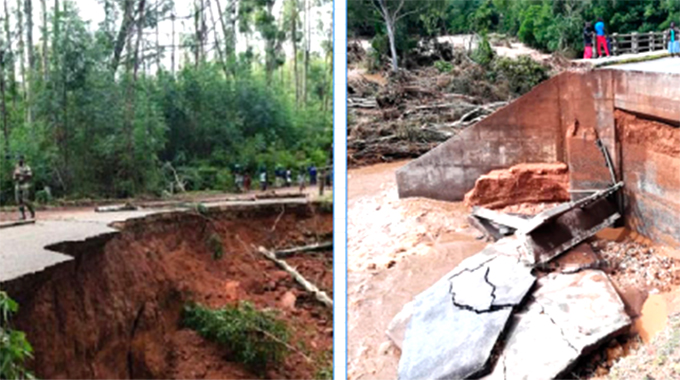
THE RIVER BETWEEN . . . This picture collage shows massive destruction to roads and bridges in Chimanimani following Cyclone Idai which ravaged the area last week. This has resulted in serious delays for rescuers and the distribution of food, clothing and essential medicines

July Moyo Correspondent
I rise to give a statement on the condition of Cyclone Idai which has affected people in Manicaland and many other provinces and to state what Government is undertaking in order to relieve the pressure that the people in Manicaland as well as in other provinces are having and to elicit Hon. Members of this august House to assist in this endeavour as you have implored them to do Hon. Speaker.

We have witnessed a very severe calamity caused by this cyclone and it has affected people, mostly in Manicaland, but more especially centred in Chimanimani and in particular, Chimanimani East Constituency which is the constituency headed by Hon. Joshua Sacco.

I want to say right from the beginning that if anybody did not value the membership and the tasks that Members of Parliament have, they need to see how we have benefited from the knowledge of the Hon. Member of Chimanimani East; his contact with his people in his constituency and the members that are resident in that constituency where it has become impossible to access through roads by air because of the weather.

The people who are in dire need of assistance — are in three centres; there is the Chimanimani Urban Centre which has a place called Ngangu. This is the most devastated area in Chimanimani East. Then there is Kopa which is near Rusitu near the Mozambican border; that area has been heavily affected by the cyclone.

Lastly, there is Chikukwa area and to give Members of Parliament an understanding of the difficulty that all of us, Government, cooperating partners, the private sector that is engaged with us and everybody who is helping us has been to reach those three epicentres from Mutare because the bridges have been taken and there is total blockade of reaching that area.

If you travel from Mutare going to Chimanimani, we have two main routes which are tarred — the first one is, when you get to Wengezi, you turn left and there is a bridge called Mhandarume that has been washed out and part of the bridge has been taken away. Then the next bridge is at Umvumvumvu that also has been washed out and it is impassible. You go to the next bridge which is Biriri that also is no longer there — it has been washed out.

You then get to Muusha, another bridge there has been taken out until you reach Skyline where there is a convergence of a road which comes from Chipinge and the one which is going through the bridges which I have mentioned. That place has a bridge at Skyline and near a mountain that has been washed out and it makes it more difficult because to pass through those two routes, one has to carve out a road in the mountain.

The next bridge is all the way to either Ngangu or Chimanimani Urban or to Chikwukwa, or to Kopa through Rusitu — all of them have been washed out. So, we then tried another route which goes from Wengezi to Tanganda and Birchenough Bridge to a place called Rutengeni on our way to Chipinge. That place is what you would call in Shona, as deketa (wetland). The actual tarred road is so risky that even a human being is too heavy to be on it and so many buses were rescued or taken out having sunk. When we tried dozers, some of the dozers were actually sinking. But, that is the place that we then concentrated on to make sure that we can open a pass way and the army core of engineers working with the engineers from the Ministry of Transport and Infrastructural Development and engineers from well-wishers who are either contractors or companies in the area were able to bring enough equipment so that there is a bypass. That bypass, they had to dig very deep in order to make sure that the water which was gushing out from the mountain is re-channelled.

So, we have been able to pass through that avenue to a place called Kopa which is on your way to Chipinge and you turn left and go to the Wattle Company.

As soon as you leave that Wattle Company or within that Wattle Company, there is another bridge which is still holding but our fear is that right now, this afternoon dozers were now starting to move from Rutengeni to aim at Skyline but that bridge is also very precarious. Even when travelling with normal cars, we had to go through it one-by-one for fear that it might give in.

So, the engineers are now seized with the issue of first going to fill it up so that it can hold the part that has remained that will give us access to Skyline. So, that is the difficulty that we are faced with.

Last night, we were informed and it has been confirmed by the Wattle Company people that just after the Wattle Company, there is another gravel road which we are testing or our people are testing right now to see whether we can take that route which can take us to Kopa and Rusitu and back to Ngangu and Chimanimani urban area.

The other route we are testing will take us from again 2km out of Chipinge and turn left with a view to go to Kopa.

We think that Kopa now is a more severely afflicted area because either by air or by road, we have not been able to get there. Communication since Friday was working and we were getting reports from every ward and from most of the villagers both here in Harare at our centre which is manned 24 hours since Friday and at our communication centre in Mutare. But, since two days ago, because electricity power lines from Chipangayi were disrupted, the 132Kv line which is at Chipangayi went out of order. Therefore, the line from Chipangayi to Chipinge, the 33Kv line was also not working, but I am glad to say that was restored by yesterday (March 19).

That having been restored, we are now left with the 11Kv lines that go to Chimanimani as well as to all the industries, companies, dairy industries, schools in the area, high schools, hospitals, clinics — all those have been disrupted because of that power line which is not working. Because of that, ZETDC is working very hard throughout the night to try to restore the power lines so that we can open up the clinics.

While I am saying this, all of us are now aware of the casualties which you have mentioned Mr Speaker. The number of deaths that you have mentioned, 98 and I cannot right now definitively say that is the total because the total is a moving figure. We started at 23, we moved to 31, immediately we moved to 42, we were at 64, sometime at 72, last night we were at 89, this morning we were talking about the 96 and we can confirm the 98 that we are talking about.

How is this coming about? We are fortunate that once the army reached skyline and there was no other mode of transport to cover the rest of the mileage to Chimanimani, Gangu or Chikukwa, the army decided to go on foot. A contingency of army engineers as well as private army soldiers were able to reach Gangu two days ago. What they found there obviously is horrific. We were able to bury, with their assistance, the 45 bodies that were in Chimanimani in schools or homes but obviously having no electricity, we had to use traditional methods of preserving, jecha and other methods. We have been able to bury the 45 at Gangu that were there.

The terrible one is what we are now witnessing at Copper. At some point we were told we were missing 147 people. Now we are hearing that some of the bodies of those who are missing are floating in the river and we are being told by villagers in Mozambique as well as Copper area, even at our command office today as I walked in after coming from Manicaland, people were calling to say more bodies are floating.

The army is on its way now and we believe they will be able to rescue those who are at Copper and Rusitu.

Rusitu itself has become a big pool because of the waters that are there and in the same area near Skyline, you know that there is St Charles Lwanga Secondary School which is run by the Roman Catholic Church. When the children were eating on Friday and the mudslides came, 50 of them were trapped in the dining room. Two of the children perished in there, plus a worker at that school. For two days, we could not rescue the children and take those who were deceased to a safe place. So you can imagine the children together with dead bodies for two days.

We were able to evacuate the bodies because the mortuary at Chipinge was now working. At the same time, yesterday the army was able to get all the 175 children out. It is an all-boys’ boarding school with the girls being day scholars. We were able to meet all the boys that survived the ordeal at Wattle Company and they were being assisted by their headmaster together with the school authorities from Chipinge. They had their first hot meal yesterday and are now in the hands of the Catholics in Mutare.

I thought I should start with this just to give you the extent of the damage that is there but I can say that Government has done all it can. Certainly, the army has braved the weather as it is raining, foggy and yesterday we were able to have the first flights of three helicopters. Two from air force and one private from Mars which was hired by the Zimbabwe Consolidated Diamond Company (ZCDC) which had 13 people marooned on a hill that they could not get out of for two days. They were rescued yesterday (March 19) but the company did not just rescue its own people. They ended up rescuing a number of the villagers who had been taken to safety. The company which hired Mars has put that Mars helicopter to our disposal and it is continuing to evacuate people.

We had hoped, having been told that the cyclone was disintegrating or in any case had moved towards Malawi that we could go in there by helicopter and be able to assist. Yes, yesterday the helicopter was able to uplift some of the people who are in dire need of medical treatment and we hope that today, that exercise can continue. The situation there requires us to move food, shelter, medicines and sanitary ware to the area, and all the things that are needed by people who have already been displaced but this is very difficult because of the circumstances that I have alluded to.

We have moved everything close to where we think once we open a place we can go to and food is stationed at Chipinge and some at Skyline.

We have said if need be, working with the army they will carry some of the food on foot in order to go and alleviate our people who are in dire need. So, we are continuing with this exercise and as we all know, after the President made his appeal yesterday (March 19), and now that he is on his way to Manicaland, we think we can speed up the rescue operation over there.

The Government has given $50 million and the Ministry of Finance has availed $50 million in order to kick-start the work that is going on.

From that $50 million, more than $30 million will be used to repair bridges because access to the area is the most fundamental issue that we are faced with.

The rest is spread to ministries of Health, Local Government because of the Civil Protection Unit, and the other ministries which also give relief including the Zimbabwe Electricity Transmission and Distribution Company because we now urgently need them to restore electricity in the area.

We think that Government is doing all it can but I must mention that private companies such as Greenfuels, Masimba Contractors and Breachman World Contractors and a lot of others have given us fuel, others clothes.

Our cooperating partners, UNICEF right from the beginning, we took truckloads of non-food items that we believe would give relief. All this work is in Mutare or Chipinge. Now, because it is difficult to get access to Mutambara Hospital which is the major hospital and it is difficult to have access to Chipinge Hospital, the only way we can do it is by airlifting people. That is the pressure that we are having.

We are quite confident that our people, Zimbabweans, including Members of Parliament, will take this and share the burden with the people who have been affected.

While I have spent more time on Chimanimani and Chipinge, we are not losing sight of the fact that the people of Buhera, Masvingo, Zaka, Gutu, Nyanga and Mutasa have all been affected and we are giving warnings to the people in Mutoko because the epicentre has moved to Malawi — they have been affected.

In Chikomba, they have been affected and the cyclone dumped a lot of rain in Mvuma and we think that those people will be affected.

So we call upon Hon. Members of Parliament again, our people sometime, we transmit through radio and television, I have listened to more radio than I have done in a long time.

They kept on telling people what to do and how to do it. It is quite amazing how much the radio stations were emphasising to our people but sometimes word of mouth is better than us listening to the radio or television. So we urge Members of Parliament to go all out to make sure that people move away from risky areas.

Before the cyclone, we had put messages out there to say, please those in mountainous areas, particularly Chimanimani and Chipinge, remember there was an earthquake not too long ago and that earthquake must have shaken and loosened the earth such that when this cyclone came, it was very easy for it to destroy.

All over the roads, you can see debris, stones and trees that have gone down and because the houses are under these big trees, people have been swept away. So, I cannot over emphasise Mr Speaker, to my colleagues, Members of Parliament, civil society and every Zimbabwean that we need to have a word of mouth to our people so that they take precautions when they are warned about these calamities.

The Management Committee covered the length and breadth of the affected areas. We had written communication and it was disseminated through the structures. Even some of the Hon. Members did the dissemination. All I am asking is that in future, once we hear about such warnings there are certain Members of Parliament that come from these areas, some from Mutare, Chipinge and various areas where houses were swept away.

As Members of Parliament, we should encourage our people to take heed of warnings, vacate low lying areas and move to high ground.

On the issue of helicopters, it is true; the Air force of Zimbabwe has helicopters. The other Hon. Member talked about sanctions – some of the helicopters do not have spare parts. You may not like it but the effects of sanctions are real and things have now reached to such an extent. As a country, we should go ahead and assist with the development of our country.

In terms of what efforts were made by the Government; it did not start now. It is true that we have experienced cyclones before; there was once an earthquake which shook a lot of places.

When I am talking about the army, I am saying before the army reached those places, nobody could move. There was no structure that could make those children to come out of that place. Therefore, the assistance of the army, which army we met when they brought the children was essential for that rescue operation.

That should be clear to anybody who is willing to go and check on the ground not to listen to hearsay or social media which might lie about those things.

We told all the people not only through radio, television or newspapers but through the structures that are in place and responsible for disaster management.

The structures go up to village heads. We have over 28 000 village heads. NGOs that are also operating in the area are also informed because they also constitute part of the civil protection organisation at provincial level. At district level, all the NGOs that are in there at the ministries and the traditional leadership structures including the chiefs and village heads are also informed.

That information is disseminated right to the grassroots. As Zimbabweans, we must know that when our people are informed including some Members of Parliament, they do not listen. They do not vacate these dangerous places. That is the earnest truth. We can cry about it but we have to go and mobilise our people so that they take action in future when there is need.

On helicopter assistance, we have a standing rule that is applied by our SADC forces or aid agencies. When there is such a disaster, they inform each other. That is why you will see assistance coming from South Africa, Tanzania or Zambia; we request in order to alleviate problems but if you see what is happening in Mozambique which was more devastated by us, they have already moved in and we are no exception. We do not shy away from asking for help because we also help Malawi, Zambia or Namibia when we are not faced with a calamity. Those working situations are in place and I am sure you will know that our Minister of Foreign Affairs has contacted his counterparts but even in South Africa, they have to prioritise on where to go. The South Africans also prioritise the destination after they have been informed. The entire SADC region has been alerted that we require assistance not only of material and other things but including transportation networks.

There are certain things that will come unprepared even if you are prepared. It is risk and calamity. It is risk management. There is no one who is able to eliminate all the risks alone such that people will not die. You cannot find people who are prepared on this planet or even in developed countries. That is why even in the most developed countries, you still hear that people die. Even in America, they have had calamities such as hurricanes over and over again but they still die.

We are not condoning anybody who does not prepare well. We are saying to our structures all the time – these structures at national or provincial level must be prepared.

Honourable July Moyo is the Minister of Local Government and National Housing. He delivered this abridged statement in the Parliament of Zimbabwe this week.
The post Sanctions affect response to natural disasters appeared first on Zimbabwe Situation.