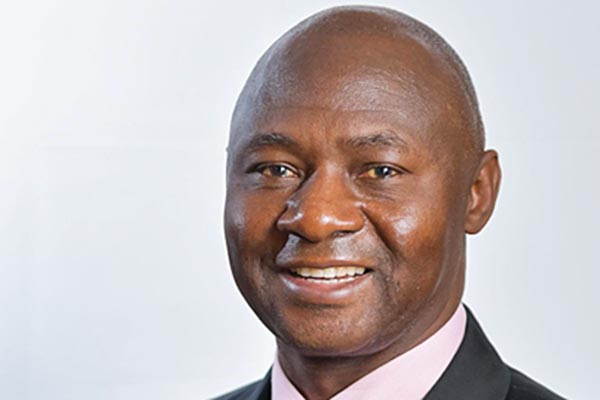
Source: Nyaradzo boss speaks on Tuku burial controversy – NewsDay Zimbabwe March 11, 2019 Nyaradzo group CEO Philip Mataranyika INTERVIEW: VANESSA GONYE ON March 1, Nyaradzo Funeral Assurance Company attained its 18th year in business, celebrating a milestone of quality and improved service to Zimbabwe and the region. NewsDay (ND) reporter Vanessa Gonye spoke to […]
ON March 1, Nyaradzo Funeral Assurance Company attained its 18th year in business, celebrating a milestone of quality and improved service to Zimbabwe and the region.
NewsDay (ND) reporter Vanessa Gonye spoke to Nyaradzo group chief executive officer, Philip Mataranyika (PM) to reflect on achievements as well as controversies surrounding his company; the latest being the Oliver Mtukudzi funeral, among other services he provided.
ND: Congratulations on turning 18. Please take us through the journey.
PM: Thank you. On March 1, 2001, with only 10 of us, we followed our dreams and opened our hearts and doors to the public as Nyaradzo Funeral Assurance Company. A few years later in 2003, Eureka Insurance Brokers was born.
Old Mutual, where I had worked for 15 years, were generous to provide us with office accommodation on the ninth and tenth floor of one of their prestigious properties in Harare. Eighteen years later, we have grown into a sizeable organisation with a staff complement of over 1 500 and more than 42 service centres and branches countrywide, many of which we built from the ground. We now have a regional presence in Randburg, South Africa and soon we will have a global presence in England.
ND: What inspired you to start the company?
PM: Growing up, I remember attending funerals and at almost every one, relatives would struggle with transport to and from the burial site, which was often in the rural areas. When I started working in the insurance industry, listening to clients repeating the same issues brought me to the realisation that lack of adequate transportation was a constant challenge faced by many of my fellow brothers and sisters, and so I decided to come up with a solution that would transform funerals.
ND: How did you come up with the name?
PM: Understanding and respecting our traditions as Africans led us to name the business Nyaradzo. We chose to not only to be different, but to be true to our identity and African-ness. Eighteen years later, our name is our biggest asset.
Despite some early criticism and discomfort, we stuck to our guns and continued with our name. With time the name Nyaradzo resonated with our clients as it means comfort and peace, as well as referring to the memorial service after a burial where family and friends gather to comfort each other and celebrate a life well lived.
ND: You are well known for your humility and kindness, is it because of your company’s traditional footing or it’s a personal trait?
PM: I can say it is something from within. I have also employed the trait in operating the business. I can easily take up assignments meant for any level of the business and still do it as if I were doing it for my employer.
We are a team – you can equate my character with the army where army generals lead from the front. Every position in the company is important; if the CEO can do the rest of the jobs, then it becomes clearer and easier to do. It is something that has helped us to extend quality services to our customers.
ND: You recently sparked controversy when you personally drove and offered services at the late music icon and national hero, Oliver Mtukudzi’s funeral, with some accusing you of wanting to steal the limelight. How can you explain your actions?
PM: It was Maiguru Daisy [the late Mtukudzi’s wife] and the Mtukudzi family that chose Willowvale service centre as the venue of his chapel service ahead of our Hebert Chitepo Avenue branch due to its location, a stone’s throw away from Highfield where he was born and bred.
Thirty-nine years after our independence, in his death, Mukoma Tuku becomes the first national hero to be laid to rest with full services provided by Nyaradzo Funeral Services. Given the many years of our friendship and brotherhood in which I was privileged to tap into his wisdom, inspiration and rare talent, I could not delegate the undertaking duties to our staff. For me personally, it was time to honour another of the unwritten contracts between brothers.
Tuku had a unique relationship with Nyaradzo, built on our firm foundation of friendship, brotherly love and mutual respect dating back to our days as boys dzeku Fiyo. I have done this countless times, though. Some notable funerals where I personally offered services include Tobias Musariri, Paul Chingoka and Charles Mungoshi, among others. Even to date, I still go to our 120 Herbert Chitepo branch and they give me overnight assignments in any part of the country.
ND: Following government’s call on citizens to consider cremation as the country is running out of burial space, do you have plans to establish crematoriums and policies to cater for that?
PM: We are currently working on our own cemetery and crematorium in Chishawasha. I believe it [cremation] is something that has to be embraced with time as space is quickly running out. Although there is a religious undertone that specified religions base on cremation, we have to take the route of countries like India, Japan, China and others.
I believe that Zimbabweans will embrace cremation with time, just like when we started; people were reluctant and were opting to stick to their beliefs at the expense of the funeral policies. Several years down the line, the number of policyholders is overwhelming, with time, they embraced the idea. This is the same with cremation, people may be reluctant at first, but with time they will embrace it.
On policies, when we have completed work on the crematorium, we will certainly introduce policies linked to cremation, but at the moment, we are offering the service per request to those who are comfortable with it.
ND: You are active in environmental issues; please give an insight into the Friends of the Environment initiative?
PM: Friends of the Environment is our attempt to try and reverse the effects of environmental degradation. Several nurseries have been enlisted around the country for this initiative where we have a target of planting 500 million trees by the year 2026 and we are currently at 25 million.
ND: Nyaradzo has several subsidiary companies and widened service offerings, how many are they and what are their roles in the broader image of the company?
PM: We have three subsidiary companies namely, Calundike Exports, Eureka and Nyaradzo, which is divided into two, that is, services, which also focuses on events among other things and assurance which deals with coffins and caskets.
The Nyaradzo brand continues to grow within and beyond our borders and more services are on the cards.
For those of our compatriots in the diaspora, Sahwira international plan (SIP) is what you need. With SIP, we provide your repatriation cover in the event of death. In addition, we provide you with two air tickets, a double cab vehicle and an apartment both of which are for seven days.
Through Calundike Exports, we manufacture high-quality coffins and caskets. We also manufacture customised office and household furniture.
To provide a one-stop shop events management solution, we are building an events management and lifestyle hub, which will be home to our equipment. Our resident team of specialist consultants will make it possible for our customers to design their dream events.
In the Sahwira Events and Lifestyle stable, we have houseboats on Lake Kariba for the comfort and leisure of our customers.
We are in the process of finalising our outdoor camping beds and tents package. Soon, our clients will be able to add these to their policies, enabling friends and relatives to experience comfortable sleeping arrangements at big family gatherings.
As a brand that is rooted in innovation, we have several other exciting projects that are in the pipeline. In good time, our clients will get to know what it is that is keeping us awake at night. They must, however, rest assured knowing that, Sahwira Mukuru always listens and will continue to work on products and services that best cater to their needs.
We have just come through a really tough wet season. Rainfall has generally been inadequate but many areas are severely drought affected and have only received a small proportion of normal precipitation. Source: Turning Agriculture around in Zimbabwe – The Zimbabwean Right now there is a large cyclone developing off the Mozambique coast which threatens […]
We have just come through a really tough wet season. Rainfall has generally been inadequate but many areas are severely drought affected and have only received a small proportion of normal precipitation.
Right now there is a large cyclone developing off the Mozambique coast which threatens to move south and inland up the Limpopo valley. If it does, we will get rain like the Tete Province of Mozambique has just experienced.
There a large low-pressure system sat over the lower Zambezi for several days and dumped up to 500 mls of rain on the area. As a result, the Cahora Bassa sluice gates are fully open and millions of tonnes of water are flooding the lower Zambezi basin. One extreme to another, just 50 kilometres away we have crops dying from drought. In fact, this season, if you are a satellite picture watcher, you would have seen time and time again that the rain circled Zimbabwe, almost as if we were jinxed.
South Africa has also had a lousy season and will have to import maize. That has far-reaching implications for the whole region as it raises market prices for all grains to import parity levels. Zambia seems to have had a very wet season as the intertropical convergence zone sat over our neighbour week after week, even today.
But if you have been involved with agriculture, as I have for over 60 years, there is nothing really exceptional about these conditions – I have seen worse, much worse. The big change is our ability as a nation to cope with these conditions.
When my forefathers came to this land in the late 19th Century, they came for gold and diamonds and when they found neither in any quantity, they turned their attention to farming. Conditions were tough and demanding but the soils were rich and the country was part of the British Empire with all the privileges and access to markets that this entailed. Our surplus beef went to Newmarket in London, we planted the largest Citrus Estates in the world and the British Government used the fruit concentrate to feed generations of British children and their mothers.
Then the Second World War and in its aftermath, the British settled their ex-servicemen in this country, giving them a land grant and many came from demobilised airmen fresh from battles over Europe. In many ways, they were the cream of British society – well educated and with access to money and know how. They settled down and made this country their home. In the process, we became the third largest producer of flue-cured tobacco in the world and the golden crop funded an agricultural system that was in many ways one of the most advanced in the world.
We regularly broke records for yields, bred new African crop and animal varieties and became a small, but potent agricultural powerhouse. In many fields we led the world – our ICA system and the Natural Resources Board were regarded as the leading conservation agency in Africa and even in the world of agriculture. We built a small but thriving industry that was self-contained and self-supporting. Our network of research stations produced technologies and varieties that kept us at the cutting edge.
Drought was a constant problem and to combat its effects we developed 10 000 farm dams and could irrigate 300 000 hectares of crops when needed. We built large dams on the major rivers and established irrigated Estates that produced sugar and citrus in large quantities. Our farm system supported 800 000 small scale farmers and 23 000 farmers on 200 or more hectares of land held freehold while the core was about 6 000 large scale commercial farms – some producing over a 100 000 tonnes of grain a year. These were medium to large farm companies employing 350 000 workers and generating half of our exports and nearly all our food. Our industries were largely dependent on the farmers, either as suppliers or as clients.
When Independence came, the whole farming community – no matter what side they had been on, breathed a sigh of relief, locked up their weapons and turned back to their farms. They were encouraged to return to normal by a Government that said the past was behind us and we would all be treated as citizens. More than any other community here, the farmers took this promise to heart and, tied to their farms by ownership and a deep commitment to the land they tilled, they put their hands to the Independence plough. No other sector made a bigger contribution to the early success of this country after decades of war and sanctions than agriculture – growing on average by 15 per cent per annum up to 1997.
Then things went to hell, infuriated by the support the commercial farming community as a whole had given the new political opposition, the MDC, the Government under the leadership of Robert Mugabe decided to dismantle the entire system. This decision was similar in many ways to the Soviet pogrom against the independent farmers in that country that refused collectivisation. The mistake was to think that if we changed the community that owned the land to a new community who would occupy the land, little would change. Ownership is not optional in agriculture – it’s the core value that energises and makes productive farming possible in tough forming countries like Zimbabwe.
In the next 5 years over 4 000 large scale, farms and 8 million hectares of productive farmland were taken over by force. Their owners and workers displaced. The State achieved its key objective which was to replace the independent farmers with people who would support the Party in elections and secure its hold on power. But the price paid was enormous – production collapsed and both the small scale and peasant sectors, as well as the large scale sector, saw a decline in output of over 70 per cent.
Banks and industry collapsed and overall economic output declined. The destruction of tenure over vast areas of land sent a negative signal to the world that risk capital could not be invested safely in Zimbabwe. Half to three-quarters of the population had to be fed by international agencies. Incomes fell to historically low levels, the State could no longer finance itself and all the social services needed. By 2008, Zimbabwe was a failed State.
There is no way we can go back on all that has been done to agriculture since 1997, but what we can do is give our new generation of farmers a chance to establish themselves and rebuild our farm system as a productive, competitive and self-sustaining system. It starts with tenure. We have to give all who use the land to make a living, secure marketable tenure over the land they use. It does not really matter if its freehold or a long lease, but both must be bankable and transferable in an open market for land so that the land again has value. Professor Rukuni told us how to do this 25 years ago, I see no reason to reinvent the wheel.
Believe me, once you have done this, the farmers themselves will transform the industry and make Zimbabwe once again the small but productive farming country it once was. It is also the only to equip our farmers to cope with seasons like this one. No amount of subsidy or State support can do this – it has to be the feet of farmers who own the land they work.
FINANCE and Economic Development Minister, Professor Mthuli Ncube, says the country’s financial situation is improving with the newly introduced RTGS dollar set to gain more value on the back of on-going fiscal reforms and control of money supply into …
FINANCE and Economic Development Minister, Professor Mthuli Ncube, says the country’s financial situation is improving with the newly introduced RTGS dollar set to gain more value on the back of on-going fiscal reforms and control of money supply into the market.
In an interview with United States’ National Public Radio (NPR) during his recent trip to Washington DC, Prof Ncube said Government’s
MADRID (Reuters) – Real Madrid have reappointed Zinedine Zidane as coach on a three-year deal following the sacking of Santiago Solari, the club said on Monday, after the European champions’ season collapsed inside a week. […]
MADRID (Reuters) – Real Madrid have reappointed Zinedine Zidane as coach on a three-year deal following the sacking of Santiago Solari, the club said on Monday, after the European champions’ season collapsed inside a week. [...]