LIVE BLOG: BRIG-GEN MUNEMO BURIAL

Source: LIVE BLOG: BRIG-GEN MUNEMO BURIAL | The Herald March 9, 2019 Official proceedings have come to an end here at the National Heroes Acre and we conclude our updates. Thank you for joining us. 1214: The body of national hero Brig-Gen Munemo is now being carried to its final resting place. 1208: President Mnangagwa has concluded […]

The post LIVE BLOG: BRIG-GEN MUNEMO BURIAL appeared first on Zimbabwe Situation.

Source: LIVE BLOG: BRIG-GEN MUNEMO BURIAL | The Herald March 9, 2019

LIVE BLOG: BRIG-GEN MUNEMO BURIAL

Official proceedings have come to an end here at the National Heroes Acre and we conclude our updates. Thank you for joining us.

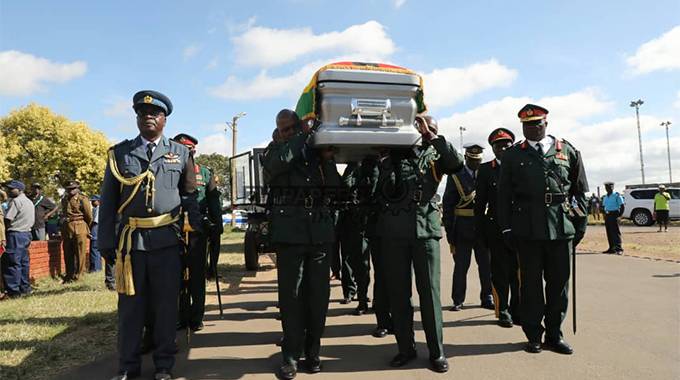
1214: The body of national hero Brig-Gen Munemo is now being carried to its final resting place.

1208: President Mnangagwa has concluded his address.

1207: The President says the engagement and re engagement will continue with those who open their doors to the country. He says Zimbabwe is a train on the move and those who want to board should do so and those that don’t want will be left behind.

1205: President Mnangagwa says the USA has renewed sanctions against the country even though the sanctions continue to violate the basic human rights of the people of Zimbabwe.

1204: “As we sing the the national anthem may it be a recognition of the sacrifices made by cadres like Cde Munemo. My doors remain open for dialogue for all people for whatever reason,”

1201: “I challenge researchers to research on issues that will enhance our country’s capabilities in economics, politics, tourism…the late Cde Munemo was one of the cadres who were instrumental in the establishment of the Chitepo School of Ideology,”

1157: “As we mourn and draw lessons from the late Cde Munemo, I challenge educators in the country to inculcate a new mindset in our learners…a mindset that’s patriotic,”

1154: “Cde Munemo received numerous awards during his military career..he as never swayed in his entire career,”

1152: “His teaching experience was of great value to the party…after his military training he was deployed in Gaza Province….at independence he was attested into the Zimbabwean army as a Lieutenant Colonel,”

1149: President Mnangagwa says the Munemo family’s loss is that of the country as well as the nation is poorer without him. He says it is that rich record which has earned him a place in the people heart and it is why he is being buried at the national shrine together with other revolutionaries that went before him.

1147: “The late Cde Revolution Tichatonga as he was known during the liberation struggle….was a man who served his country with loyalty and distinction,”

1144: The President starts with salutations.

1143: Minister Mathema has now invited President Mnangagwa to address the mourners.

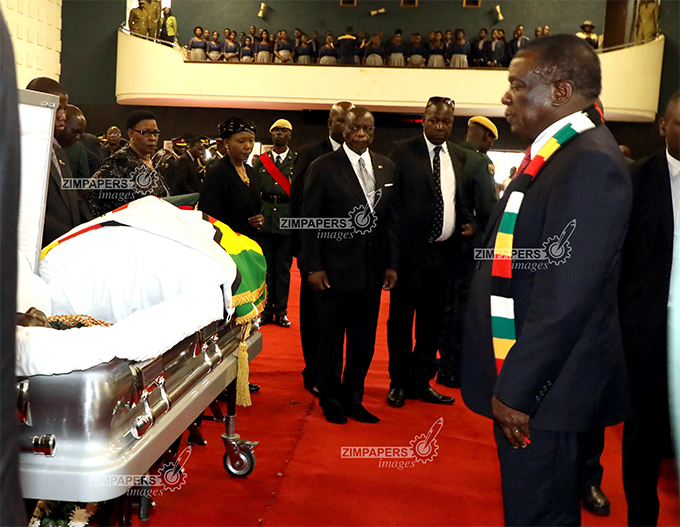
President Mnangagwa leads in the body viewing ceremony

1133: The family representative describes Brig-Gen Munemo as a strategic man who challenged family members to understand the history of the country.  Brig-Gen Munemo was critical to the creation of the Civil-Military Division in the Zimbabwe Defence Forces.

1130: Home Affairs and Cultural Heritage Minister Cain Mathema is the Master of Ceremony and he calls a family representative to address the mourners.

1120: Proceedings start with a sermon.

1101: President Mnangagwa has arrived at the national shrine. VPs Chiwenga and Mohadi are also present.

1100: The body of national hero Brig-Gen Munemo has arrived at the National Heroes Acre and is now being taken to the Tomb of the Unknown Soldier.

1001: President Mnangagwa has arrived at Stodart Hall. He is set to lead the body viewing rites soon.

President Mnangagwa arrives at Stodart Hall

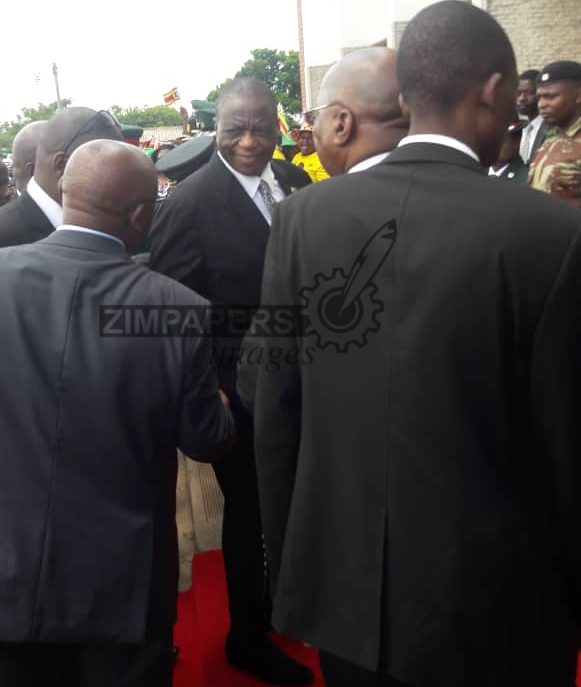
0947: Vice President Constantino Chiwenga has arrived.

VP Chiwenga arrives at Stodart Hall

0945: Service chiefs have arrived.

0902: The body of national hero Brig-Gen Munemo has arrived at Stodart Hall in Mbare accompanied by close family members.

0900: We will be giving you live updates of the burial of national hero Brigadier-General Emilio Munemo at the National Heroes’ Acre today. Brig-Gen Munemo died on Sunday after a short illness.

The post LIVE BLOG: BRIG-GEN MUNEMO BURIAL appeared first on Zimbabwe Situation.

ED’s think tank sets targets

Source: ED’s think tank sets targets | Newsday (News) BY OBEY MANAYITI MEMBERS of the Presidential Advisory Council (PAC) on Thursday pledged to work hard to improve the country’s current situation and expected results to start showing by month-end. President Emmerson Mnangagwa recently appointed a 26-member PAC drawn from diverse backgrounds of outstanding achievers in […]

The post ED’s think tank sets targets appeared first on Zimbabwe Situation.

Source: ED’s think tank sets targets | Newsday (News)

BY OBEY MANAYITI

MEMBERS of the Presidential Advisory Council (PAC) on Thursday pledged to work hard to improve the country’s current situation and expected results to start showing by month-end.

President Emmerson Mnangagwa recently appointed a 26-member PAC drawn from diverse backgrounds of outstanding achievers in their specialist areas.

Renowned Zimbabwean business executive and PAC facilitator, Joe Mutizwa, said they were keenly aware of the crisis of rising expectations gripping citizens as they await solutions that will bring a positive impact on their lives.

“Your Excellency, I can report that members of the PAC were keen to get to work. We have already commenced and organising ourselves even before inauguration into thematic groups taking guidance from the strategic pillars articulated in the Vision 2030 document,” he said.

“It is our intentions, Your Excellency, to do this before the end of March.”

Mutizwa said they would reach out to other stakeholders and avoid working in isolation so as to avoid the risk of being an “ivory tower” or “an intellectual debating club”.

He said the process of turning around the country’s fortunes would be a long and arduous journey that would require sacrifice from the top to bottom and urged politicians to put Zimbabwe’s interests first.

“We appeal to politicians to intensify their efforts for dialogue so that we all put the interests of Zimbabwe first rather than our own parochial interests. Your Excellency, this appeal is made having cognisant of the calamities that face our country in the form of economic hardships compounded by severe drought and the onslaught of international sanctions.”

Elisa Ravengai, representing the physically-challenged, said disability should not be treated as a charity issue, but people with disabilities should be seen as players to make sure that the country moves ahead inclusively.

“Persons with disability no longer want pity, but empowerment,” she said.

Ravengai also spoke on the need to align some disability policies to the Constitution.

Industrialist and Confederation of Zimbabwe Industries past president, Busisa Moyo, said there was need to change the operating atmosphere and look at how best to retool with relevant technology that increases productivity.

He said markets need to be linked to primary producers, improve the flow of information and create an environment for entrepreneurship to flourish.

Others spoke on agriculture, infrastructure improvement and the governance.

Agricultural expert Lindiwe Sibanda said: “We cannot restore Zimbabwe’s legacy without retaining our position as the breadbasket in the region. We have done it before, it can be done again. It is not going to be an easy task.”

The post ED’s think tank sets targets appeared first on NewsDay Zimbabwe.

The post ED’s think tank sets targets appeared first on Zimbabwe Situation.

Women demand equal representation 

Source: Women demand equal representation | The Herald March 9, 2019 Talent Chimutambgi and Wellington Dengu Women under the auspices of Zimbabwe Gender Commission has implored Government to come up with a master plan to ensure that they are included in key decision making positions in line with the international gender protocols. Speaking during a […]

The post Women demand equal representation  appeared first on Zimbabwe Situation.

Source: Women demand equal representation | The Herald March 9, 2019

Talent Chimutambgi and Wellington Dengu
Women under the auspices of Zimbabwe Gender Commission has implored Government to come up with a master plan to ensure that they are included in key decision making positions in line with the international gender protocols. Speaking during a breakfast meeting held in Harare to mark International Women’s Day, Gender Commissioner Mrs Tsungirirai Hungwe Chimbunde agitated for equal representation during the national dialogue which has been called on by President Mnangangwa.

“As calls for national dialogue and conflict resolution increase, there is need to balance the voices of those who will participate.
“If women remain few, their voices will not be heard in the analysis of key challenges, yet we know that women remain key targets of any forms of attacks,” she said.

She challenged women to take part in the politics of the day, insisting President Mnangagwa’s administration has ushered in democracy which women should take advantage of.

“They (women) have to show interest by joining political parties of their choice and this will increase their chances of being elected to key posts in Government since the new dispensation has ushered in democracy and freedom of expression,” she said.

This year’s global theme was “Balance for Better”, which underpins the work on gender equality as it advocates working towards a more balanced equitable society.

She said this year’s celebrations were unique as they gave all women space to reflect on the achievements on gender equality.
“This year’s International Women’s Day provides an opportunity for us to network and reflect on how to accelerate the achievements of gender equality and the realisation of women’s rights in Zimbabwe”.

She said Vision 2030 would not be a success without women participation.
“Women should equally be represented and participate in key national issues. The vision of middle income economy in 2030 may not be realised as long as gender imbalances remain.”

The post Women demand equal representation  appeared first on Zimbabwe Situation.

‘Role of education is to create industry’

Source: ‘Role of education is to create industry’ | The Herald March 9, 2019 Prof Murwira Tendai Manzvanzvike THE INTERVIEW Are State universities offering “useful” and/or “useless degree” programmes? This has been the topic trending after our sister paper The Sunday Mail on March 3 published a story, “Government to scrap useless degrees”. Zimpapers Group […]

The post ‘Role of education is to create industry’ appeared first on Zimbabwe Situation.

Source: ‘Role of education is to create industry’ | The Herald March 9, 2019

‘Role of education is to create industry’
Prof Murwira

Tendai Manzvanzvike THE INTERVIEW
Are State universities offering “useful” and/or “useless degree” programmes? This has been the topic trending after our sister paper The Sunday Mail on March 3 published a story, “Government to scrap useless degrees”. Zimpapers Group Foreign Editor Tendai Manzvanzvike (TM) caught up with Minister of Higher Education, Science and Technology Development Professor Amon Murwira (AM) to get an understanding of such a major policy shift.

TM: Professor Murwira, degree holders are asking: what is a “useless degree”?

AM: First of all, I never said “useless” degrees. It was your headline for purposes of selling the newspaper. There is no list for “useful” and another for “useless degrees”. It’s about the system  whether all your degrees are following what we call the National Qualification Framework.

But let me contextualise the whole issue. There is no investment which we can put in a person through education so that they become useless. We don’t want useless education.

What we’re talking about is that we are remodelling Zimbabwe’s higher and tertiary education system.

TM: What does it mean?

AM: I have always maintained that in the past we used to sit at an indaba.

The responsibility of an indaba was to teach people to do something. You could be taught to make a hoe or an axe.

After several indaba sessions, you would then emerge an expert. So, universities or schools are our modern day indabas.

Be that as it may be, they must be useful, just like our yesteryear indabas. Do you get it?

That was productive education. Come colonialism. You were being taught English?

TM: Yes!

AM: And you were taught to work in a factory produced by a university in Britain. The university was there doing its real work in the UK, saying, we think we can produce a steel plant, and then they bring ZISCO, for you.

While at university, your ambition was to work for Zisco, as if Zisco fell from the sky, but yet it came from another university.

The indabas that produced our industry here were in UK universities. The role of the University of Rhodesia then was to produce people that would work for that industry, but they didn’t necessarily have to think how a steel plant is designed. Do you get that?

TM: Yes, but did it have to take more than 30 years to have this reawakening?

AM: It doesn’t matter how long it takes, as long as you realise it.

Start it when you can start it. If today you make a solar lamp, and people say why didn’t you do it a long time ago since you always had the sunshine, it’s not a useful question?

The job of universities is to produce knowledge that results in goods and services. If you go to an indaba that does not produce anything tangible, that is a useless indaba.

The colonial period’s role was to produce a worker, who will always ask for a job from baas, who perfectly designed the job while in England. And then you think as though that industry fell from the sky. Who thought about it in the first place?

TM: If we were not part of the designing process, tell us what you are saying about “useless degrees”?

AM: We were never part of the grand plan. You know that when you design your system very well, you play around it, not knowing why, and not knowing who you are connected to.

Africa has had the tragedy of reading the wrong manual. Let me illustrate. I give you a Nokia phone, and a Samsung manual imprinted Nokia. You’ll live the rest of your life trying to solve a problem from that phone from a wrong manual.

The job of universities is to produce knowledge that results in goods and services, says Professor Murwira

There is too much superficiality in our people. We don’t want superficial people.

TM: What do you mean by that?

AM: We are modelling our education system, no longer this system where the thinkers are elsewhere, and we are trained to run the system, but not to think and design that system.

TM: You professors?

AM: All Zimbabweans and Africa, including you. We were taught how to run the system and not participate in its design. What it means is that when the then University of Rhodesia was set up, students would go and study for their degrees, and are then told that upon graduation, they should look for jobs from someone.

Is that person giving you a job also not born of woman, like you? So, why is it that it’s you who is looking for a job, while others are there to employ you? What kind of logic is that?

TM: But the reality is that despite what you’ve said, people are looking for jobs. Your comments?

AM: Yes! But then, we should ask ourselves what type of country we are? Where is the job coming from? Is it just falling from the sky so that you work?

We don’t want to discuss superficial things. Let’s go deep, and when we have gone deep and understood it, we will then solve the problem.

After we gained our Independence, all former colonised people in Africa, not just Zimbabwe, there comes a time when there’s a reawakening.

When we saw that all industries were dying, what was our language? We wanted to resuscitate them! I never heard anyone saying they wanted to start a new industry.

All they wanted was to resuscitate them because they are still in the mould of an industry designed by baas a long time ago. The design was that Africa provides the labour, and they’re the thought leaders.

TM: But that was still under colonialism.

AM: Do you know that Engineering syllabus at the University of Zimbabwe was that of 1974, and they only changed it in 2017, meaning that we were learning material from 1974, only changing it in 2017 because the feeling was  it cannot be tampered with. That’s the colonial mind-set. But did the world remain static?

I don’t just want to talk about the philosophy, I will also say, and therefore what do we do? Universities must necessarily give birth to our industries, and not vice versa. So, we must not be superficial because we might not come out of that bottomless pit.

The problem is in the design. The design of our education was: teach, research and community service, which they call consultancy. Goods and services cannot be produced by talkers. They must be produced by people who are designed to do so.

If your education is research, teaching and community service, when will you produce from your universities? This is the colonial design of a university.

TM: Critics will say you’re using colonialism as a scapegoat.

AM: That’s okay, but the truth is that they didn’t want you to do innovation and industrialisation. They would say we design the industry for you, learn to speak English and then you come and work.

Thus we produced people who are good speakers, but what does that mean?

But the issue is, how come some degrees cannot capacitate someone to be productive, while others are useful? What type of degrees are they, that when one finishes unenge wakangomira mustreet?

TM: Why is it like that?

AM: Because they were taught teaching, research and community service. Why then do you expect a hexagon to run like a wheel?

The education system that we have called 3.0 is what they were following, that is teaching a person to be ready to be told what to do by the boss.

This is a deep problem for us. Chakabaya chikatyokera. But at some point, you have to say no to the pain.

So, what we have done through the “Doctrine for Higher Education” is that we want to modernise and industrialise Zimbabwe.

How do you do that, when you don’t produce people who do? How do you produce goods and services because this is what industry does? This must come from our learned people. But everyone wants to work at Zisco, which has crumbled.

So, you are telling me that the whole of Zimbabwe gets educated in order to go and work for Zisco? Can it absorb you all?

Look at people at Glen View Area 8 and Siyaso in Mbare. Those people don’t ask for jobs from anyone. These are graduates from polytechnics, because their teaching says: our minds, our hands and our destiny.

The design of the university that was obtaining is 3.0, but now, we want a university with a 5.0 design, which says from an idea to a product.

You cannot continue to think, and think. You see a pothole, and people will describe it graphically. And their conclusion: Ah, zvakaoma vakomana. But the solution for a learned person should be, “How do we fill it up?”

So, what we did is that we did a national skills audit. Look at the results. Agriculture, which is the mainstay of our economy has an 88 percent deficit; 95 percent for health, etc.

We have a 95 percent literacy rate, but an average 38 percent skills level. Thus we cannot continue running an education system like this. This is why people speak such fluent English. On social media, they shout out, but not solution proffered. The language is “resuscitate”.

TM: They resort to that because there are no resources for them to be productive.

AM: Which resources? This (the brain) is the resource. If you see that your import bill is 90 percent let’s say, importing everything  being a country of buyers  it means that we are importing knowledge. Tiri kutenga njere because knowledge makes goods and services. So, if you have 90 percent imports, it means that you’re using 10 percent of your brain. We cannot continue with that kind of education system.

TM: But aren’t those skills and knowledge in the Diaspora?

AM: That’s a myth. Our education system was producing workers. They go and work for companies that are already arranged. They find everything in place, and then fit into whatever area.

TM: Because they are still coming from a 3.0 mould education system?

AM: Yes! If they come back home, they will still look for jobs. They cannot even set up their own.

But getting back to where we started, there no useless degree, but a degree becomes useless if it does not have skills.

Any degree can be useless; any degree can be useless. If you have an Engineering degree, but have never dealt with the tools of the trade, even a shovel, what does that mean? How do you call yourself an agricultural scientist when you never went into the field?

So, it’s not the name of the degree. It is how it is done that makes it useful or useless.

TM: Do you think that this context helps!

AM: You just wanted to sell your paper. It’s not a list of this one (degree) out; this one in. It’s about the way we do degrees: do they give skills; do they give knowledge, because skills and knowledge must be combined.

In the meantime, there is too much talk, without doing.

TM: Theorising too much?

AM: Yes. So, whether you have an Engineering degree, but never touched a car, no, it’s a label and not a level. It’s not the name of degree that matters. It is how degrees are done that makes them useful or useless.

You can have a degree in Shona, and then start writing novels like (Charles) Mungoshi.

This is what we call useful degree. Not for someone to say they studied literature, but they can’t even write a page. What kind of Literature degree is that?

This is the context.

But basically, the issue is that the prowess of our education is going to be seen by the reduction in the import bill; by a reduction in the number of people that are looking for jobs, and in actual fact, if Zimbabweans are very learned and they have got that kind of education that we call 5.0, we will have a labour deficit, and start to import labour.

Countries are importing labour because there is an abundance of knowledge over and above people that can work in your factories.

At the end of the day, everyone will have his/her own factory, and no one would want to work for another person, so we start importing labour. That’s how countries are designed.

Therefore, we are designing our education system so that it becomes what we call 5.0  from the mind to the good; from the mind to service.

Thus we are not blaming people with degrees, but we are designing the system so that even those who went through the 3.0 education system, can convert themselves to 5.0. The role of education is to create industry.
The post ‘Role of education is to create industry’ appeared first on Zimbabwe Situation.

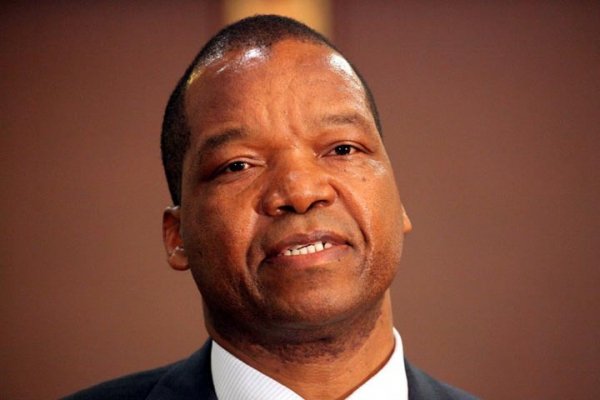
Mangudya grilled over RTGS$, US rate disparity 

Source: Mangudya grilled over RTGS$, US rate disparity – NewsDay Zimbabwe March 9, 2019 BY VENERANDA LANGA RESERVE Bank of Zimbabwe Governor John Mangudya was on Thursday grilled in Parliament over disparities between the official United States dollar rates of 1:2,5 and the parallel market rate of 1:3,6 resulting in price increases of goods and […]

The post Mangudya grilled over RTGS$, US rate disparity  appeared first on Zimbabwe Situation.

Source: Mangudya grilled over RTGS$, US rate disparity – NewsDay Zimbabwe March 9, 2019

BY VENERANDA LANGA

RESERVE Bank of Zimbabwe Governor John Mangudya was on Thursday grilled in Parliament over disparities between the official United States dollar rates of 1:2,5 and the parallel market rate of 1:3,6 resulting in price increases of goods and services.

Mangudya appeared before Parliament to speak about fuel challenges in the country when he was asked to explain the impact on the economy of the non-availability of foreign currency in the country and the introduction of the real time gross settlement dollars.

In his recent Monetary Policy statement, Mangudya pegged the US exchange rate at 1:2,5, moving away from his initial position that the bond notes and US dollar were at par at a 1:1 ratio.

Uzumba MP Simbaneuta Mudarikwa (Zanu PF) asked Mangudya to explain whether the price of fuel would increase, if the exchange rate was to float at, for example, a rate of 1:3.

Dangamvura Chikanga MP Prosper Mutseyami also demanded to know how Mangudya was going to manage the parallel foreign exchange rates that were always soaring.

“The exchange rate of 1:2,5 is the starting rate and is not a fixed rate, and we think that parallel rates exist throughout the world,” Mangudya said.

“However, street rates should not determine where prices should be and we will ensure we control that.”

He said there was no money in the country for big companies to be able to purchase foreign currency at the parallel market rate of 1:3,6.

Mangudya said in terms of fuel, the bulk of the orders should be done through the formal inter-bank rates.

“What has been happening in the past few weeks is that buyers of foreign currency (have) not (had) enough cash to purchase foreign currency. We are not convinced that there are companies or firms that can purchase foreign currency at a rate of 1: 3,6 because there is no money in the country.

“The people that can afford to buy from the parallel market are only small traders, or people that want to pay for DStv, otherwise people have no money to buy from the black market. Some of the fuel dealers are not able to purchase it at the prices we have today because there is no money and because of the balance at their banks,” he said.

The post Mangudya grilled over RTGS$, US rate disparity  appeared first on Zimbabwe Situation.