Advising the presidential advisers

Source: Advising the presidential advisers – The Zimbabwe Independent March 8, 2019 PRESIDENT Emmerson Mnangagwa yesterday held his inaugural meeting with the Presidential Advisory Council (Pac) recently appointed to assist in bringing in new ideas, policy proposals and solutions to Zimbabwe’s myriad of problems. Editor’s Memo, Dumisani Muleya Objectively speaking, the initiative is a breath […]

The post Advising the presidential advisers appeared first on Zimbabwe Situation.

Source: Advising the presidential advisers – The Zimbabwe Independent March 8, 2019

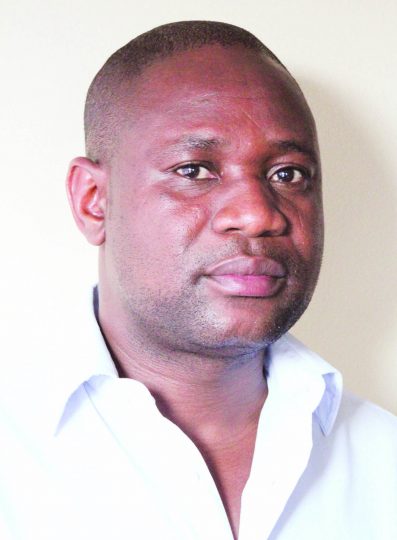
Dumisani-Muleya.jpg

PRESIDENT Emmerson Mnangagwa yesterday held his inaugural meeting with the Presidential Advisory Council (Pac) recently appointed to assist in bringing in new ideas, policy proposals and solutions to Zimbabwe’s myriad of problems.

Editor’s Memo, Dumisani Muleya

Objectively speaking, the initiative is a breath of fresh air. It shows Mnangagwa is willing to listen. Well, on paper at least.
Besides, it has distinguished people of great character, integrity and reputation. They are generally experts in their own fields. Each member should add to Pac’s diversity of experience as a collective body.

Yet the truth is that the team was not welcome by everybody. In a divided and polarised society like Zimbabwe, some say it is a good initiative. Others say it is nothing more than a manifestation of elite capture and co-option — the usual politics of authoritarian rule — hence the need for counter-hegemony narratives and strategies.

Nonetheless, Pac deserves a chance. Granted it must be scrutinised and criticised, but given a try. Its members seem ready to hit the ground running, though they ought to understand very well they have a mountain to climb. They can make a difference, but then again it won’t be easy. It’s like trying to climb Mount Everest.

However, after years of dreaming about it and seven weeks of mountaineering, New Zealander Edmund Hillary and Nepalese Tenzing Norgay reached the summit of Mount Everest, the earth’s highest mountain, at 11.30am on May 29, 1953. They were the first people to ever reach the peak — 8,848km — of Mount Everest.

Perhaps the Pac can also make its own piece of history.

For that to happen they need to have fresh ideas. They must also have a dream, policy alternatives and meaningful solutions.
Here is their biggest challenge: to be frank and upfront with Mnangagwa for him to abandon Mugabeism and embracing an alternative progressive democratic vision to rescue this troubled nation. This is fundamental.

For that to work they have to be independent-minded. They can’t afford to be captured and swallowed. They also can’t afford to embrace Zanu PF’s discredited politics of flattery, insults and delusions. That won’t work.

Given their credentials, exposure and experience, they must be able to avoid that.

But we also happen to know men and women of similar and even greater reputations and integrity who faltered and got co-opted. When proximity to power, money and fame get involved, people change. Incentives will obviously be dangled before them. That will be the truest test of character for them. They also need to realise they are swimming with the sharks. Or they are in the belly of the beast. There is no room for naivety and gullibility.

Aside from these attendant risks, there are great opportunities for them to contribute to national reconstruction, economic revival and democratic progress. They have huge networks and capacity. So they must have the courage of their convictions to speak truth to power in a bid to advise, reform and rebuild.

Given Zimbabwe’s restless political environment and economic instability, Pac must urgently help Mnangagwa to tackle a number of things, among them the following: restoration of constitutionalism after the 2017 military coup, democratic renewal; dialogue to resolve the current political stalemate arising from last year’s toxic elections; halt political repression, brutality and human rights abuses; stop impunity; resolve past atrocities; repeal dictatorial laws; embrace accountable leadership and good governance; uphold rule of law; property rights; and ensure political tolerance.

Pac must also help Mnangagwa to come up with a serious economic recovery plan and reforms. Finance minister Mthuli Ncube and his team are already doing some of that amid strong headwinds.

Further, they should also help genuinely combat corruption. Combined with leadership and policy failures, corruption is a cancer gnawing away at the fabric of this nation. Political will will be critical. Good advice falling on deaf ears has no utility and won’t make a difference.
The post Advising the presidential advisers appeared first on Zimbabwe Situation.

Zim’s turnaround hinges on tangible reforms — Analysts 

Source: Zim’s turnaround hinges on tangible reforms — Analysts – The Zimbabwe Independent by Nyasha Chingono ZIMBABWE’S diplomatic bid to build solidarity by reaching out to countries in Southern Africa as well as efforts to secure an elusive rescue package after similar moves were spurned by the international community, are insufficient to address the country’s […]

The post Zim’s turnaround hinges on tangible reforms — Analysts  appeared first on Zimbabwe Situation.

Source: Zim’s turnaround hinges on tangible reforms — Analysts – The Zimbabwe Independent

zim-police.jpg

by Nyasha Chingono

ZIMBABWE’S diplomatic bid to build solidarity by reaching out to countries in Southern Africa as well as efforts to secure an elusive rescue package after similar moves were spurned by the international community, are insufficient to address the country’s intractable economic crisis unless accompanied by sweeping reforms.

Harare is now looking within the region for an economic bailout after manoeuvres to secure funding from China hit a brick wall at a time the re-engagement with Western countries has hit turbulence because of the government’s poor human rights record and failure to implement reforms.

Western nations have influence over the major international financial institutions which the government is engaging over its debt clearance plan, first agreed in Lima, Peru.

Government is now seeking to raise US$2,3 billion to clear arrears to multilateral institutions for the country to secure fresh funding. Zimbabwe owes the World Bank US$1,2 billion and the African Development Bank US$600 million. In addition, Zimbabwe owes members of the Paris Club, Afreximbank and other institutions billions of dollars.

It also owes the European Investment Bank and other institutions like the German Development Bank. Official figures show Zimbabwe owes US$1,8 billion to the Paris Club and US$1,1 billion to non-Paris Club creditors.

Zimbabwe has squandered international goodwill in the aftermath of the November 2017 coup which toppled former president Robert Mugabe. According to human rights groups, 17 people were killed in January in a military-led state operation to crush riots over the government’s decision to increase the price of fuel by 150%.

The crackdown came after the fatal shooting of seven people on the streets of Harare on August 1 last year by the military.

Government’s heavy-handed approach drew the ire of the international community, including the British government, which had enthusiastically supported the November 2017 military coup and Harare’s subsequent re-engagement drive.

At a time there was a chorus of disapproval from the international community, Sadc stood in solidarity with Zimbabwe, choosing to turn a blind eye on human rights violations occurring in the country.

Certainly, Zimbabwe needs good neighbours and a shoulder to lean on during tough times, but brotherhood may fail to rescue the economy out of the mire, University of London professor of world politics Stephen Chan said.

Chan says that Zimbabwe’s economic crisis is in fact crippling Sadc.

“Sadc countries have no excess capacity with which to rescue Zimbabwe’s economy. Once they looked to Zimbabwe as a key pillar of Sadc, and the decline of Zimbabwe’s economy has in fact damaged the overall capacity of Sadc,” Chan said.

Last December, Zimbabwe took its begging bowl to South Africa but Africa’s second largest economy declined Harare a US$1,2 billion bailout package, citing lack of capacity to part with such an amount.

However, Finance minister Mthuli Ncube says government will continue to ask its neighbours for a financial bailout, but South African Finance minister Tito Mboweni has said the economy could only part with US$7 million to offset part of Zimbabwe’s World Bank arrears.

Chan argues that South Africa and other countries in the region have their own internal economic and social problems as such nothing was left for Zimbabwe.

Zimbabwe and Botswana held bi-national commission meetings last week where Harare sought financial injection from its neighbour. Desperate for an economic bailout package positive story, state media claimed that Botswana had extended a US$600 million credit facility to Zimbabwe, something the Gaborone government denied. It later emerged it was in fact a facility for the private sector.

Chan says that Botswana is still sceptical of lending Zimbabwe economic support owing to Harare’s credit status which was calssifies as “junk status” by S&P Dow Jones late last year.

The US this week renewed sanctions on Harare, highlighting the gulf in relations between Western countries and those in Sadc.

Midlands State University international relations lecturer Ronald Chipaike said Zimbabwe cannot expect much from its neighbours.

“Regional partners’ efforts must be applauded, but the problem is that their assistance is a drop in the ocean in view of challenges that Zimbabwe is facing. So Botswana and South Africa’s efforts are welcome, but these countries cannot give much since they are also facing a number of economic and social challenges of their own,” Chipaike said. “Dialogue and re-engagement are the only way government can become legitimate and approved international citizen again after years of isolation under Mugabe’s rule. Whether it is going to benefit economically from the re-engagement strategy depends on the response of critical partners in the West and the institutions which are owed by Zimbabwe.”

International Crisis Group senior consultant for Southern Africa, Piers Pigou, dismissed prospects of any meaningful economic assistance from the region, adding that Zimbabwe already owed South Africa in unrepatriated ticket sales revenue for South African Airways and other companies.

“No country in the region can afford this in terms of having that kind of money. Most importantly, Zimbabwe’s record and credit worthiness is not necessarily good, so it would be risky.

“We also don’t know how much Zimbabwe owes other countries in the region like South Africa in terms of paying them for services like electricity and other soft loans, and until we have that in terms of what kind of credit and how Zimbabwe has honoured those we will know what kind of movement in support Zimbabwe could get in regional financing, but it would be limited,” Pigou said.

Chan also said that Zimbabwe will not record much progress on the economic front in the absence of concrete political and economic reforms.

“Everyone is fed up with Zimbabwe’s failure to reform its political and economic institutions. It will take significant reforms before anyone comes forward in any serious fashion,” Chan said.

Analysts say that it could be suicidal for Mnangagwa to completely turn his back on the West like Mugabe.

Pigou added: “The ball is very much in (the Harare) government’s court.”

The post Zim’s turnaround hinges on tangible reforms — Analysts  appeared first on Zimbabwe Situation.

Latest on Itai Dzamara who was reportedly abducted by CIOs: EU turns heat on Mnangagwa

The European Union has called upon the government of Zimbabwe to reveal what happened to missing activist Itai Dzamara who was abducted by suspected members of the Central Intelligence Organisation on the 9th of March 2015 while having a haircut at a l…

The European Union has called upon the government of Zimbabwe to reveal what happened to missing activist Itai Dzamara who was abducted by suspected members of the Central Intelligence Organisation on the 9th of March 2015 while having a haircut at a local barber shop in Harare. In a statement on Friday, the EU called […]

Anjin set to resume mining in Chiadzwa 

Source: Anjin set to resume mining in Chiadzwa – The Zimbabwe Independent by Tinashe Kairiza ANJIN Investments will resume diamond extraction in July after being controversially barred from operating in the resource-rich Chiadzwa area in 2016, amid revelations the government has also issued licences to two new players, the Zimbabwe Independent has established. The miner, […]

The post Anjin set to resume mining in Chiadzwa  appeared first on Zimbabwe Situation.

Source: Anjin set to resume mining in Chiadzwa – The Zimbabwe Independent

Minister-Winston-Chitando-ZIMETRO-ZW.jpg

by Tinashe Kairiza

ANJIN Investments will resume diamond extraction in July after being controversially barred from operating in the resource-rich Chiadzwa area in 2016, amid revelations the government has also issued licences to two new players, the Zimbabwe Independent has established.

The miner, alongside Mbada Diamonds, Marange Resources, Diamond Mining Company, Kusena, Gye Nyame and DTZ Ozgeo, were booted out of Chiadzwa three years ago by government, on allegations of prejudicing the state millions in diamond revenue through understating earnings and not declaring dividends.

Subsequently, government merged all concessions, except those held by Anjin Investments, to pave way for the formation of the Zimbabwe Consolidated Diamond Company (ZCDC), the only company currently extracting gems in Chiadzwa.

Last year, the Independent exclusively revealed that government had bowed down to pressure from China to restore Anjin’s operating licence following President Emmerson Mnangagwa’s visit to the Asian economic powerhouse where Beijing expressed dismay over how Harare was treating Chinese investors.

Mines minister Winston Chitando told the Independent last week that Russia’s Alrosa, one of the world’s largest diamond mining firms and a new joint venture company owned by the Zimbabwe Consolidated Diamond Company (ZCDC) with a yet-to-be-named investment partner, were also issued licences and would start operating in Chiadzwa by next year.

Anjin Investments, whose shareholders are Anhui Foreign Economic Construction Company Ltd of China (Afecc) and Matt Bronze, an investment vehicle controlled by Zimbabwe’s military, had injected an estimated US$225 million capital outlay into the diamond mining venture before government’s order to halt operations. However, the miner has maintained presence in Chiadzwa, contesting the controversial termination of its licence which has since been restored by the High Court.

Alrosa made forays into Zimbabwe this year after Mnangagwa’s visit to Russia last month where he signed another platinum mining investment deal.

Chitando said the resumption of diamond mining operations by Anjin, after a three-year hiatus, follows a series of negotiations between the miner and government.

“Discussions are at a stage for both Alrosa and Anjin to resume diamond mining in the Chiadzwa area.

“In addition, there is a joint venture company owned by ZCDC, a company representing the Chiadzwa community and a technical or financial partner who will also be undertaking diamond mining in Chiadzwa. One of the companies will be operational by July this year. The other two in the first quarter of next year,” Chitando said, noting that “more details on this will be unveiled as they are firmed up”.

Sources close to the ongoing negotiations between Anjin and government told the Independent the miner would tentatively resume operations in July with Alrosa and the other community-based company set to commence diamond extraction early next year.

In 2018, Mnangagwa’s administration, in an attempt to appease voters ahead of the watershed elections, published a damning report which indicated that Chinese firms were top on the list of investors who were illicitly externalising foreign currency from Zimbabwe.

At the time of going to print, Anjin general manager Shingi Manyeruke had not responded to questions on when the mining company was going to resume operations.

During its two-year break from active operations, Anjin was looted and stripped of assets worth millions of dollars, prompting government to launch a probe into the matter.

As a result of the abrupt termination of mining operations Anjin has since laid off part of its workforce to rein in an unsustainable wage bill when the firm had ceased operations.

In Zimbabwe, Afecc’s investment portfolio includes the three-star Golden Peacock Villa hotel in Mutare, while it also has interest in the Long Cheng Plaza mall through Anjin.

After suspending operations, Anjin was directed to surrender its diamond stockpile which was auctioned by the Minerals Marketing Corporation of Zimbabwe (MMCZ). Subsequently, the miner received its share of earnings after government had deducted taxes.

ZCDC’s capacity to fully exploit the vast Chiadzwa diamond fields has come under the spotlight, prompting government to scout for new investors.

The post Anjin set to resume mining in Chiadzwa  appeared first on Zimbabwe Situation.

Trial of Byo juveniles over riots deferred again

Source: Trial of Byo juveniles over riots deferred again | Daily News BULAWAYO – The trial of five minors arrested together with a gang of looters during the January fuel price hike riots in Bulawayo’s Emakhandeni suburb failed to kick off again yesterday. The minors aged between six and 13 years appeared before Bulawayo regional magistrate Joseph […]

The post Trial of Byo juveniles over riots deferred again appeared first on Zimbabwe Situation.

Source: Trial of Byo juveniles over riots deferred again | Daily News

BULAWAYO – The trial of five minors arrested together with a gang of looters during the January fuel price hike riots in Bulawayo’s Emakhandeni suburb failed to kick off again yesterday.

The minors aged between six and 13 years appeared before Bulawayo regional magistrate Joseph Mabeza facing theft charges.
Caroline Matanga, representing the State, postponed the matter to March 16, highlighting that the probation officer’s report was still pending.

The defence submitted that the matter was taking too long to finalise and further made indications that it would apply for the matter to be placed off remand. It is the State’s case that on January 15 at around midday, the minors were part of a mob which went to Apollo Shopping Centre in Emakhandeni.

They allegedly participated in violent skirmishes with the law enforcers who were trying to maintain law and order during the violent protests. After outnumbering the police officers, the accused persons reportedly broke into the shops and looted groceries and 129 pool tokens.

The suspects were arrested after police received a tip off from members of the public leading to the recovery of some of the stolen items.

The post Trial of Byo juveniles over riots deferred again appeared first on Zimbabwe Situation.