Emcoz to host Monetary Policy indaba 

Source: Emcoz to host Monetary Policy indaba | The Herald March 8, 2019 Africa Moyo Senior Business Reporter THE Employers Confederation of Zimbabwe (Emcoz) is set to host an indaba that brings together Government, employers and market watchers, to discuss the market distortions that the 2019 Monetary Policy Statement sought to address. Emcoz acting president […]

The post Emcoz to host Monetary Policy indaba  appeared first on Zimbabwe Situation.

Source: Emcoz to host Monetary Policy indaba | The Herald March 8, 2019

Emcoz to host Monetary Policy indaba

Africa Moyo Senior Business Reporter
THE Employers Confederation of Zimbabwe (Emcoz) is set to host an indaba that brings together Government, employers and market watchers, to discuss the market distortions that the 2019 Monetary Policy Statement sought to address.

Emcoz acting president Dr Israel Murefu told The Herald Business yesterday that following the introduction of the interbank foreign currency exchange rate by the Reserve Bank of Zimbabwe (RBZ), employers expected the formal and informal rates to “converge”, but that has not happened in over a fortnight.

“The essence of the indaba is to share notes and exchange ideas on how to navigate the current economic environment where the monetary authorities are working on currency reforms and liberalising the exchange rate while some market players out there are dollarising by charging in forex or charging the equivalent but at parallel market rates that are significantly above the exchange rate,” said Dr Murefu.

“Our expectations would have been convergence between the official exchange rate of 2,5 RTGS dollar to the real US dollar. While parallel market rates have somewhat fallen there is not yet convergence between the official and parallel market exchange rates.

“This means that some market players are exploiting arbitrage opportunities arising from the different exchange rates . . . it is expected that deliberations will help unravel the MPS and its impact in greater detail and what needs to be done to improve the operating environment for businesses.”

Employers say local companies are operating in a “volatile, uncertain, complex and ambiguous environment”, and attempts to for survival have “not been easy”.

But Dr Murefu said businesses that cannot adapt will close, which unfortunately, has “serious negative ramifications on the economy as jobs will be lost and the number of former workers falling into poverty and penury increasing”.

“Clearly this is not desirable and therefore the conference is intended the share experiences and formulate possible policy strategies that it can suggest to the authorities for implementation so that the environment improves for both business and labour.

“Secondly, we want to share notes on how best to manage our businesses with a view to ensuring that they remain afloat and be able to sustain employment.

“The balancing of employer or employee interests is critical for business survival and retention of critical skills that are necessary to drive economic development and business sustainability,” said Dr Murefu.

The indaba, which is scheduled for Kariba from March 19 to 22, runs under the theme, “The leadership challenge in managing employee welfare”.

It is expected to draw from the experiences and knowledge of resource persons that are business leaders or renowned economists as well as human capital management practitioners, who will proffer various scenarios and possible solutions that participants may resolve to adopt in the form of recommendations that can then be shared by all stakeholders who should contribute towards the shaping of economic and labour policies for the country.

Presentations are expected from the Ministry of Labour, Public Service and Social Welfare, the Zimbabwe Revenue Authority (Zimra), the National Social Security Authority (NSSA), the Zimbabwe Energy Regulatory Authority (Zera), Reserve Bank of Zimbabwe (RBZ) and economic commentators including Dr Gift Mugano.

Dr Murefu said other issues to be deliberated on include taxation, the importance of innovation particularly as business goes digital in providing service to customers, investment and creation of employment opportunities, the energy conundrum especially fuel and power, the impending amendment to labour legislation, the Tripartite Negotiating Forum (TNF), ease of doing business and the decent works agenda.

The post Emcoz to host Monetary Policy indaba  appeared first on Zimbabwe Situation.

ZANU PF challenges Mugabe to open up on Chamisa funding

HARARE – ZANU PF party spokesperson Simon Khaya has challenged former President Robert Mugabe to comment on allegations that he is bankrolling MDC president Nelson Chamisa in his quest to retain the party presidency at […]

HARARE – ZANU PF party spokesperson Simon Khaya has challenged former President Robert Mugabe to comment on allegations that he is bankrolling MDC president Nelson Chamisa in his quest to retain the party presidency at [...]

‘Women remain financially excluded’

Source: ‘Women remain financially excluded’ | The Herald March 8, 2019 Ms Clara Mlambo Kudakwashe Mhundwa  and Enacy Mapakame Women have remained financially excluded with no access to loans due to lack of collateral. According to the Consultative Group to Assist the Poor (CGAP), only 9 percent of women have bank accounts in Middle East; […]

The post ‘Women remain financially excluded’ appeared first on Zimbabwe Situation.
Source: ‘Women remain financially excluded’ | The Herald March 8, 2019

‘Women remain financially excluded’Ms Clara Mlambo

Kudakwashe Mhundwa  and Enacy Mapakame
Women have remained financially excluded with no access to loans due to lack of collateral.

According to the Consultative Group to Assist the Poor (CGAP), only 9 percent of women have bank accounts in Middle East; 47 percent in Europe and Central Asia 47; 37 percent in South Asia; 49 percent in Latin America and Caribbean and 30 in Sub Sahara Africa.

The figures have remained low while growth has been also slow despite the proliferation of mobile money services to help bridge the financial literacy gap.

In all this, banks stand accused of providing too little financial support to women.

However, in Zimbabwe the Government is now trying to change all that through the newly formed Zimbabwe Women’s Microfinance Bank (ZWMB) that should provide loans to women with more relaxed conditions, a move seen as a key in sharpening entrepreneurial development among   women.

It will also help integrate women into mainstream banking activities, until now streamlined because of a lack of security or technical knowhow in business proposal design. Zimbabwe has also made strides towards gender equity and equality in education and politics although more still needs to be done.

British American Tobacco (BAT) managing director Clara Mlambo said Zimbabwe was still rooted in patriarchal values with certain key positions still regarded as a preserve for men. In business, for instance, only two Zimbabwe Stock Exchange-listed companies are headed by women.

“A simple statistic such as the number of companies listed on the stock exchange headed by women shows that we are not doing well at all as a country.

“At the lower management levels we are adequately represented, the challenge is at the senior and executive levels. The question then is  why are we unable to convert a sufficient number of already existing highly competent junior female managers into senior managers and executives,” queried Ms Mlambo.

“The private sector needs to walk the talk and ensure that it is playing its part in this corporate or institution gender balance journey  the will needs to be there.

“The road is still very long, and interventions will still be required until we have the right balance. In the short to medium term organisations and institutions in Zimbabwe may need to be encouraged through legislation/policies that require a certain quota of women in leadership,” she  said.

She, however, commended President Emmerson Mnangagwa for undertaking to address the gender imbalance through appointment of women in ministerial positions as well as Government departments.

Ms Mlambo also highlighted the need for mentorship programmes where women in top positions groom others into high corporate roles, inculcating in them leadership  qualities.

Said Ms Mlambo: “Having said that, we must also not ignore the importance that men play in the advancement of female leaders  particularly given that there are currently more male leaders than female leaders in most organisations.”

The post ‘Women remain financially excluded’ appeared first on Zimbabwe Situation.

Chalton Hwende Granted Bail

MDC MP for Kuwadzana East and deputy treasurer-general Chalton Hwende has been granted bail at the High Court. He was arrested on Tuesday morning aboard an Air Namibia plane that had just landed at the […]

MDC MP for Kuwadzana East and deputy treasurer-general Chalton Hwende has been granted bail at the High Court. He was arrested on Tuesday morning aboard an Air Namibia plane that had just landed at the [...]

Zim, AFDB debt clearance talks pace up

Source: Zim, AFDB debt clearance talks pace up | The Herald March 8, 2019 Professor Mthuli Ncube Africa Moyo Zimbabwe and the African Development Bank (AfDB) have increased pace of deliberations over debt clearance, a top AfDB official has said. AfDB executive director representing Southern Africa Group II Constituency, Heinrich Mihe Gaomab II, who visited […]

The post Zim, AFDB debt clearance talks pace up appeared first on Zimbabwe Situation.

Source: Zim, AFDB debt clearance talks pace up | The Herald March 8, 2019

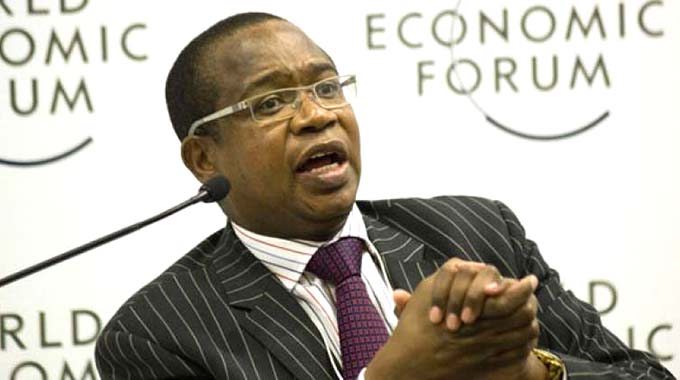
Zim, AFDB debt clearance talks pace upProfessor Mthuli Ncube

Africa Moyo
Zimbabwe and the African Development Bank (AfDB) have increased pace of deliberations over debt clearance, a top AfDB official has said.

AfDB executive director representing Southern Africa Group II Constituency, Heinrich Mihe Gaomab II, who visited Zimbabwe recently to assess the Bank’s projects in the energy and water sectors, said the two parties will further engage during the Spring Meetings next month.

The 2019 Spring Meetings of the World Bank Group and the International Monetary Fund (IMF) are slated for Washington, DC from April 12 to 14.

Finance and Economic Development Minister Professor Mthuli Ncube is expected to attend these crucial meetings.

Gaomab II said: “It’s (debt clearance) an agenda item that is foremost for the nation of Zimbabwe, it is also an agenda item that is in the minds of the bank.

“The debt clearance situation going forward is that we are still going to maintain engagements with Zimbabwe. There has been quite strong level of talks, high levels of talks among us and we are still going to meet at the Spring Meetings to discuss further.

“But the commitment is there, there is a strong sense of commitment by Zimbabwe.”

On its part, Government says it “knows about our arrears” to the AfDB.

Harare says “good progress” has been made over the debt issue.

AfDB is owed $605 million and Zimbabwe is considering a bridge finance whereby the AfDB, under the Arrears Clearance Window (Pillar II) of the Fragile States Facility or their Transition Stabilisation Facility, gives Harare a grant of about $500 million to settle the debt.

That would mean that the country’s net payment would be around $120 million.

A previous report compiled by the AfDB suggested that Zimbabwe was the “most likely” country to benefit from the Fragile States Facility (Pillar II) operations in the African Development Fund-12, compared to other countries in protracted arrears such as Somalia and Sudan.

Zimbabwe also owes the World Bank $1,2 billion, and under the pari-passu principle, the country cannot choose to pay creditor and ignore the other.

Minister Ncube recently said they are working on a strategy of paying all creditors at the same time, in line with the pari-passu principle.

In October 2016, Zimbabwe cleared its US$108 million arrears with the International Monetary Fund’s Poverty Reduction and Growth Trust.

The country had been in arrears since 2001.

Harare is making frantic efforts to see through the current arrears clearance plan, which was accepted by multilateral financial institutions in Bali, Indonesia, in October last year.

The post Zim, AFDB debt clearance talks pace up appeared first on Zimbabwe Situation.