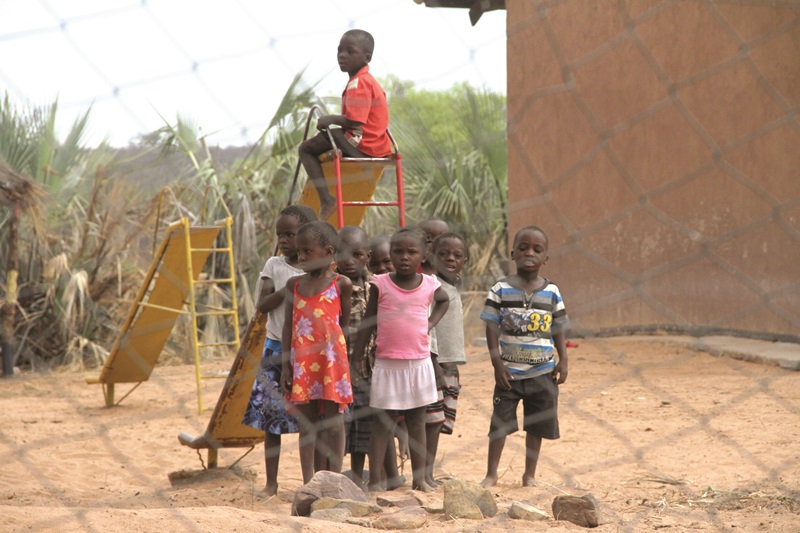
. . . as child support dwindles, Children in broken homes suffering, Shut out of society without birth certificates

Source: . . . as child support dwindles, Children in broken homes suffering, Shut out of society without birth certificates | Daily News CHILDREN in broken families are suffering badly from divorce or parental break-ups. The Daily News on Sunday can report a perfect storm of worsening economic conditions and poverty is putting a squeeze […]

The post . . . as child support dwindles, Children in broken homes suffering, Shut out of society without birth certificates appeared first on Zimbabwe Situation.

Source: . . . as child support dwindles, Children in broken homes suffering, Shut out of society without birth certificates | Daily News

CHILDREN in broken families are suffering badly from divorce or parental break-ups.

The Daily News on Sunday can report a perfect storm of worsening economic conditions and poverty is putting a squeeze on the source of income for poor single-mother families, many are once again flooding the courts seeking upward variations of their maintenance orders.

But magistrates are turning down most of the single mothers’ applications on the basis that even though the cost of living has gone up, salaries of the dads have remained unchanged.

And in most instances, mothers with limited earnings potential often have children with men who also have limited economic resources.

This sad state of affairs has had unintended consequences for economically vulnerable and otherwise fragile families, with many single moms having difficulty managing to the best advantage of their children.

Oblivious of the required fundamentals in seeking a maintenance increment, single mothers are flooding the courts but leaving disappointed.

Judiciary officers have the duty to weigh the economic well-being of the non-resident father and the demand for an upward variation of child support in the income packages of resident mothers.

In all instances, the single mother argues that the money which their former boyfriends or husbands were initially ordered to pay can no longer sustain the children in question.

Most of the women, who are barely making ends meet as single parents let alone afford legal representation, attribute their demands to rising inflation, high cost of living as evidenced by the price increases of food, stationery, school uniforms and clothes amongst others.

While one may be mistaken to think that their applications have merit and the courts have no other option but to rule in their favour, this is not the case.

Children rights activists who spoke to the Daily News on Sunday said dragging each other to court is a last resort because a child is the responsibility of both parents.

Justice for Children coordinator Chinga Govhati said parents who contribute monthly support for their children are in a dilemma as they are struggling in an environment where prices are constantly rising.

And the courts are taking particular attention to the economic impact of child support on payers and recipients.

This comes as the economy went into a tail spin after Finance minister Mthuli Ncube introduced a two percent tax on all electronic payments in October last year, sparking a sharp and relentless increase in prices of basic goods.

The consequences of the controversial tax were not only felt on the economy but also cascaded to household level.

Prices of basic goods and services skyrocketed as manufacturers transferred the high cost of production on consumer prices in an attempt to make a profit.

With the cost of living continuing to rise and concomitantly inflation soaring as evidenced by the latest figures from the Zimbabwe national Statistical Agency (Zimstat), single parents are emerging as the most affected.

According to Zimstat, year-on-year inflation for the month of January raced to 56,9 percent, the highest since hyperinflation 10 years ago.

Besides the skyrocketing prices of basis, some single mothers have retained counsel to argue their child support cases in court.

Govhati said lately, Justice for Children has been receiving as many as 10 custody cases per day from economically-strapped parents, particularly fathers who are convinced that having custody of their children will reduce the maintenance burden.

“The organisation has also seen an increase in the number of women approaching the organisation for help in seeking upward variation of existing maintenance orders.

“In the same vein, we have also seen mothers who are struggling to provide for themselves seeking economic relief through claiming maintenance for their children,” Govhati said.

In the face of a failing economy, Govhati said there is no way that the demand for child support can be met.

When prices are changing every day, this may prompt women to seek upward variation each time they visit the store, resulting in courts failing to cope with the high demand for legal services.

Zimbabwe National Council for the Welfare of Children director Reverend Taylor Nyanhete said men refuse to maintain their children due to their negative attitudes.

“Men are always difficult in contributing to maintenance because they tend to transfer the hurt associated with the broken relationship to the child, but that is not the right attitude,” Nyanhete said.

“Denying women upward variation on the basis that salaries have not changed is not a valid reason because there are other areas where people are getting income to supplement their salaries. Unfortunately, the courts tend to consider the pay slip when making such decisions.”

He said providing evidence proving the increased financial demand for the child’s necessities must be enough to sway the courts to rule in favour of the applicant.

Nyanhete said since the welfare of the child is at stake, parents can share custody of the children as a way of equally sharing responsibility, adding that when one has the custody of the children, they will appreciate that the cost of living has gone up and that the child support they are forking out is no longer adequate.

“However, a lot of mothers do not feel comfortable having the children raised by the fathers but this is another way of dealing the matter,” he said.

Nyanhete pledged to raise the issue with the chief magistrate when they convene for the quarterly victim friendly meeting scheduled for this month.

Parents who live in separate households also lose the economies of scale associated with shared housing and other resources, and therefore are at an economic disadvantage relative to two-parent households, regardless of their individual incomes.

In the face of dwindling child support and poverty, most of the children end up doing badly at school, suffering poor health, falling into crime and addiction.

The post . . . as child support dwindles, Children in broken homes suffering, Shut out of society without birth certificates appeared first on Zimbabwe Situation.

Zim-Bots relations hit new high

Source: Zim-Bots relations hit new high | Sunday Mail Africa Moyo Senior Business Reporter The signing of 1 billion pula credit facility between Zimbabwe and Botswana last week, which is aimed at capacitating the local private sector, has catapulted relations between the two neighbours to a higher level. Botswana President Dr Mokgweetsi Masisi, described the […]

The post Zim-Bots relations hit new high appeared first on Zimbabwe Situation.

Source: Zim-Bots relations hit new high | Sunday Mail

Africa Moyo
Senior Business Reporter

The signing of 1 billion pula credit facility between Zimbabwe and Botswana last week, which is aimed at capacitating the local private sector, has catapulted relations between the two neighbours to a higher level.

Botswana President Dr Mokgweetsi Masisi, described the inaugural Bi-National Commission (BNC) between his country and Zimbabwe as “the beginning of a long journey which is ahead of us”, and economic commentators in the country share his views.

From being sworn enemies in the last few years during the tenures of former Presidents Robert Mugabe and Seretse Khama Ian Khama, Zimbabwe and Botswana have signed potentially game-changing Memorandi of Understanding, which are expected to not only boost their respective economies, but also forge closer political ties.

For countries belonging to the same regional bloc, SADC, the bad relations were seen as “un-African and retrogressive”.

President Masisi said they initially wanted to extend a P600 million facility, but later decided to increase it to P1 billion so that the local private sector can access more and boost operations.

A communique on the BNC says the discussions between the two Presidents were designed to “further strengthen and deepen the bond of friendship and cooperation between Zimbabwe and Botswana”.

Six agreements and MoUs, including cooperation in the energy sector to ramp up the development and industrialisation efforts of the two countries, were “welcomed” by the leaders.

Other agreements and MoUs were on Geology, Mining, Metallurgy; Extradition Treaty; Diplomatic Consultations; Rules and Procedures Governing the meeting of the BNC; and Cooperation in the field of Science and Technology.

The MoUs on Geology, Mining, Metallurgy are seen as critical in boosting cooperation in the mining sector, particularly the diamond industry in which Gaborone has “considerable experience and expertise”, due to several years in the business.

Further, the two Presidents called for an increase in “volumes of trade and investments between their countries”.

In this regard, they called for a business forum to be convened on the sidelines of the Zimbabwe International Trade Fair (ZITF) set for April 23 to 27.

Last year, a high powered Botswana delegation that included the Botswana Investment and Trade Centre (BITC), participated in the ZITF, and had a cocktail organised by the Zimbabwe Investment Authority (ZIA) to cement ties.

BITC, is a Botswana investment and trade promotion agency of .

President Mnangagwa said he was pleased that the inaugural BNC session had “set the legal framework for broad cooperation in the agreed areas”.

“Through our collective efforts, may the conclusion of these agreements not be an end in itself, but the beginning of greater bilateral cooperation for the benefit of our people and future generations.

“History has shown us that where people and nations get used to working together, they grow to share the same vision and aspirations. I am confident that Zimbabwe and Botswana have set themselves along this path,” said President Mnangagwa.

On his part, President Masisi said the BNC was the beginning of a “strong and long journey”, and “more work still needs to be done”, to allow private sector businesspeople and private citizens to play a key role in further strengthening “our bilateral relations”.

“There is no doubt that our success in implementing the commitments we make today will go a long way in ensuring a conducive environment for our people and businesses to increase their interaction,” said President Masisi.

Industry speaks on ties

Industry and Commerce Minister Nqobizitha Mangaliso Ndlovu told The Sunday Mail Business that beyond the signing of the P1 billion credit facility, the “improving relations” were critical to promote economic growth in both countries.

The two countries were now discussing “possible trade issues”, with the hope of boosting trade volumes.

“We believe we can do much more than our current levels of trade,” said Minister Ndlovu, adding that there was a marked improvement in volumes last year “compared to the last four years or so.

“. . . when we were looking at it, 2018 was really quite good and we hope to specifically improve on our exports to Botswana markets,” said Minister Ndlovu.

Economic analyst Mr Persistence Gwanyanya believes the facility signed between the two countries is “more realistic”, adding that it was “good for Botswana to diversify its economy by considering investing offshore in countries such as Zimbabwe, which is one of the countries with significant investment opportunities in Africa”.

“Look here, we have more than 40 well sought-after minerals in the world and Botswana has only one, diamonds. This means there are significant business opportunities to grab in Zimbabwe, as the country tries to rebuild.

“You should also know that Botswana is rated as the best investment destination in Southern Africa and can easily attract international capital to invest all over the world.

“But what is important is to ensure that we improve our investment environment to also attract this capital from Botswana. We really need to work hard on this score especially through working on ease of doing business reforms.”

Confederation of Zimbabwe Industries (CZI) president Mr Sifelani Jabangwe also said it was important for Zimbabwe to strengthen relations with its neighbours as they were a huge potential market for local manufacturers.

“Look, Botswana wants to grow its economy and Zimbabwe wants more investments; and Botswana has a fairly high ranking for its banks in terms of attracting capital from abroad,” said Mr Jabangwe. So when Botswana diversifies into Zimbabwe, local businesses can also take advantage of some of these joint ventures that governments are forging, and supply some of their products into Botswana and grow their businesses.

“So we expect the Bi-National Commissions to help local entrepreneurs to penetrate that market.”

CZI has already signed an MoU with Business Botswana last year during President Mnangagwa’s State visit, in a bid to deepen relations with fellow private sector players.

Zimbabwe Exports to Botswana were US$29,08 Million during 2016, according to the United Nations COMTRADE database on international trade. This was a measly contribution to Botswana’s import bill of US$6,1 billion.

The trade statistics are now expected to jump going forward following the credit facility extended by Botswana, and a general improvement in relations.

The post Zim-Bots relations hit new high appeared first on Zimbabwe Situation.

SAZ sets power standards

Source: SAZ sets power standards | Sunday Mail (Business) Africa Moyo Senior Business Reporter The Standards Association of Zimbabwe (SAZ) is working towards selling excess power from its 194kW solar car park to the national power utility, ZESA. SAZ’s head office in the leafy suburb of Borrowdale, Harare, is now running 100 percent on renewable […]

The post SAZ sets power standards appeared first on Zimbabwe Situation.

Source: SAZ sets power standards | Sunday Mail (Business)

Africa Moyo
Senior Business Reporter

The Standards Association of Zimbabwe (SAZ) is working towards selling excess power from its 194kW solar car park to the national power utility, ZESA.

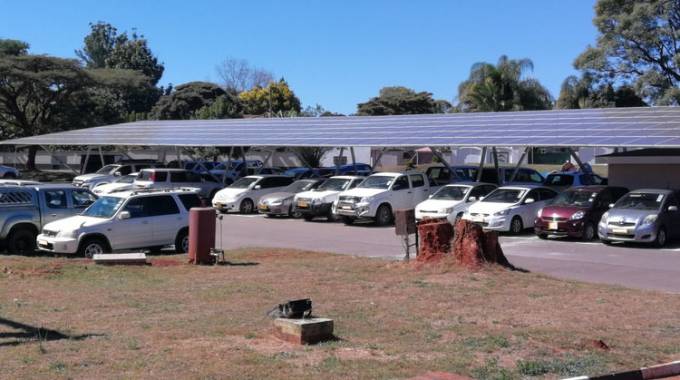
SAZ’s head office in the leafy suburb of Borrowdale, Harare, is now running 100 percent on renewable energy after a US$400 000 investment in solar energy.

The project is called a solar car park given that below the solar panels, vehicles can be parked, a move that maximises use of space at the same time generating energy.

SAZ executive director Dr Eve Gadzikwa told The Sunday Mail Business last week that since the launch of the solar car park on October 18 last year, the power has been stable and the organisation has cut its grid electricity bill. In fact, SAZ has excess power, which it is now considering to feed into the national grid.

“Since launching the project, we have been fully operational and I am happy to say that the power is quite stable and the whole idea is that we are now off the grid and we want to be using renewable energy,” said Dr Gadzikwa.

“Any excess energy that we have, we store it in some batteries and we can also sell some of the energy to the grid. We have not yet started (selling) but arrangements are in place because we are a licenced producer of energy.”

SAZ was licenced by the Zimbabwe Energy Regulatory Authority (ZERA) to produce solar power.

Dr Gadzikwa encouraged other companies to go “green” and save not only the environment, but also cut on their bills for grid electricity.

“We are also encouraging other companies to go green because we are national standards body so we are setting the standard for a renewable solar energy car park.

“The whole idea really is to promote a sustainable environment because when you look at the SDGs (Sustainable Development Goals) they talk about sustainability and we believe this is the way to go because God has given us 365 days of sun and, therefore, we should use the energy available to us,” she said.

Dr Gadzikwa wants the cost of solar equipment to come down so that renewable energy can be more accessible to ordinary citizens.

Presently solar equipment “is quite expensive”, making it difficult for people to join the green revolution.

“But in the long run, the return on investment would be very good.

“We have already reduced the amount of money that we used to spend on (grid) electricity. It has gone down. So we are encouraging other organisations to do like we did,” said Dr Gadzikwa.

Zimbabwe Energy Regulatory Authority (ZERA) acting CEO Eddington Mazambani told The Sunday Mail Business in emailed responses that; “The Ministry of Energy and Power Development is developing a national integrated energy resource plan and an independent power producer policy, which will guide Zimbabwe on the optimum energy mix over the years and also guide on the selection of power producers”.

“(The) renewable energy policy is due to be launched this year . . . (and) a power procurement framework is also under development which will bring about a competitive bidding for power generation as opposed to the current free-for-all-call-apply scenario,” said Mr Mazambani.

Meanwhile, SAZ has acquired a building in Southerton, Harare, which would be the Standards body’s new headquarters once renovations have been completed.

Dr Gadzikwa said the structure cost about US$1,1 million but the building still needs to be refurbished.

“. . . we are converting an existing building into an office that we can use, which is going to serve us and our needs. So there will be some costs to that. The estimates are around US$300 000. We should be able to renovate it and to put in place the correct partitioning, flooring, nice walls, which are consistent with a national standards body,” said Dr Gadzikwa.

The post SAZ sets power standards appeared first on Zimbabwe Situation.

Govt to liberalise fuel imports

Source: Govt to liberalise fuel imports | Sunday Mail (Top Stories) Lincoln Towindo Government is working on a new set of regulations that would allow holders of free funds to import fuel to augment current supplies. In 2015, Statutory Instrument (SI) 171 was amended to allow members of the public to import up to 2 […]

The post Govt to liberalise fuel imports appeared first on Zimbabwe Situation.

Source: Govt to liberalise fuel imports | Sunday Mail (Top Stories)

Lincoln Towindo

Government is working on a new set of regulations that would allow holders of free funds to import fuel to augment current supplies.

In 2015, Statutory Instrument (SI) 171 was amended to allow members of the public to import up to 2 000 litres of fuel per month for personal use.

However, the legal instrument was repealed two years later through SI 122 of 2017, which stipulated that only companies licensed in terms of Section 29 of the Petroleum Act were allowed to import fuel. The market is currently plagued by intermittent stock-outs, which are negatively affecting individual consumers and businesses.

Permanent secretary in the Ministry of Energy and Power Development Engineer Gloria Magombo said the new regulations will be made soon.

“This is something that is being considered and we should be making an announcement soon,” said Eng Magombo. We are still looking at the modalities; that is the process of how that (deregulating fuel importation) can be done.

“Obviously we already have licensed operators who we think will have to lead the process of procurement. We will be looking at allowing, for example, mining companies who have their own foreign currency and need fuel for their operations.

“I think it’s an issue Government wants to open up and see what are the opportunities for synergies with those who have free funds to be able to import for own consumption. We are looking at people who want to import for own consumption,” she said.

In particular, Section 29 of the Petroleum Act imposes a penalty of up to five years imprisonment for either procuring, producing or retailing fuel without a license.

It reads: “No person, other than a petroleum company licensed under this part, shall procure, sell or produce any petroleum product.

“Any person who contravenes subsection (1) shall be guilty of an offence and liable to a fine not exceeding level nine or to imprisonment for a period not exceeding five years or to both such fine and such imprisonment.”

Eng Magombo is, however, confident that the current fuel stock-outs will be addressed soon.

“The stock-outs are mainly a logistical issue. Like we have said before, internally we do have stocks. As of this week, more stocks have been released into the market and you will not be seeing queues soon, an intervention has been made.

“We have been going through a transitional period where the MPS (Monetary Policy Statement) has been announced and money for fuel is still being allocated by Government, so we have a logistical issue which we do not expect to persist. We expect to be cleared by the end of this week,” she said.

Confederation of Zimbabwe Industries (CZI) president Mr Sifelani Jabangwe said industry would welcome the move.

Government, he said, should eventually leave the procurement of petroleum products to private players.

Currently, the Reserve Bank of Zimbabwe (RBZ) provides private companies with foreign currency to import fuel.

“If they liberalise the procurement of fuel, they also have to look at the taxation side so that the landing price of fuel does not increase.

“Right now, the taxes for fuel are significantly higher compared to our regional counterparts, meaning when private players import, they bear the extra cost and the landing price will be high.

“For example, Government will have to reduce excise duty on fuel to ensure that the landing price of the product is cheaper,” said Mr Jabangwe.

The post Govt to liberalise fuel imports appeared first on Zimbabwe Situation.

Rare US admission on Zim regime-change bid

Source: Rare US admission on Zim regime-change bid | Sunday Mail (Local News) Senior Reporter In a rare unguarded moment, a former top United States Department of State official last week indicated that Washington planned to employ “aggressive diplomacy” towards Zimbabwe and also tie food aid to regime change in a bid to unseat the […]

The post Rare US admission on Zim regime-change bid appeared first on Zimbabwe Situation.

Source: Rare US admission on Zim regime-change bid | Sunday Mail (Local News)

Senior Reporter

In a rare unguarded moment, a former top United States Department of State official last week indicated that Washington planned to employ “aggressive diplomacy” towards Zimbabwe and also tie food aid to regime change in a bid to unseat the Zanu-PF Government following the 2008 elections.

In a revealing thread on micro-blogging site Twitter on Friday, Mrs Nicole Wilett-Jensen — a former employee of the US Senate Committee on Foreign Relations — indicated that the Barack Obama administration also weaponised food aid, especially at a time when the economy was struggling, to try and effect regime change.

Zimbabwe has been under US sanctions for the past two decades.

“Zim is an interesting comparison, but I’m stuck on the idea, as I have been throughout this, of the US bestowing recognition on an opposition leader in an African country after a flawed election, and building an international coalition behind him/her, as has been done with Venezuela. GOZ (Government of Zimbabwe) did indeed delay results for (a) harrowing month while immediately unleashing systemic, national campaign of violence on opposition, CSOs and lay citizens (200 dead, 20 000 displaced (between April-June), so much so that MDC boycotted run-off…” she claimed.

Mrs Willet-Jensen, however, conceded that private tallies from the Zimbabwe Electoral Support Network (ZESN) “had Morgan (Tsvangirai) shy of winning round one (49-41 percent)” of the 2008 elections.

She added: “Meanwhile, rare donor and NGO alignment and aggressive diplomacy ( through Ambassador Jim McGee) worked China/UN/SADC/AU hard: see SADC-PF election statement and then-SADC chair Levy Mwanawasa’s unprecedented “sinking Titanic” Mugabe critique interrupted only by his stroke during the AU Summit…

“Facing bad options and limited leverage as Levy-less SADC backed down, small part of US government did have brief and agonising debate during state of emergency on impossibly fraught step to halt and tie food aid to regime change amid economic collapse.

“But with IDPs (international development partners) literally at the embassy gate, we returned to status quo in end. As did Zimbabwe.”

Government sources who spoke to The Sunday Mail last night said authorities are aware of efforts by the US to push the Zanu-PF Government out of power through an illegal regime-change agenda.

The post Rare US admission on Zim regime-change bid appeared first on Zimbabwe Situation.