Zim’s prophets under spotlight

Source: Zim’s prophets under spotlight | Daily News HARARE – The shocking video of a popular South African pastor, Alph Lukau, ostensibly bringing a “dead” Zimbabwean man back to life during a church service in Johannesburg, has reignited intense debate about the country’s ubiquitous charismatic preachers and self-styled prophets, the Daily News can report. During the […]

The post Zim’s prophets under spotlight appeared first on Zimbabwe Situation.

Source: Zim's prophets under spotlight | Daily News

HARARE – The shocking video of a popular South African pastor, Alph Lukau, ostensibly bringing a “dead” Zimbabwean man back to life during a church service in Johannesburg, has reignited intense debate about the country’s ubiquitous charismatic preachers and self-styled prophets, the Daily News can report.

During the service — as recorded in the sickening video which has gone viral around the world on social media — the coffin of the supposedly dead man’s body is seen being removed from the hearse as hordes of Lukau’s adoring followers gather around it.

A woman who claims to be the “dead” man’s landlady then tells Lukau, of Alleluia Ministries, that the “deceased” got sick and started coughing on Friday last week, which prompted her and others to take him to the hospital.

“That is where he died in my hands,” the supposed landlady gushes — at which point Lukau begins to pray for the body, which was said to have come straight from the mortuary, and prompting the “dead man” to sit up in the coffin with his mouth and eyes wide open.

This dreadful story comes after another popular and self-proclaimed prophet, Shepherd Bushiri, was recently arrested by South African police on serious charges of fraud and contravening Pretoria’s Prevention of Organised Crime Act.

In addition, many of Bushiri’s congregants now claim that they handed over to him millions of rands after the “prophet” promised them huge and fast returns on their hard-earned money through a “commodity investment opportunity” that failed dismally.

Emails and other documents in the possession of South African weekly newspaper, the City Press, show that investors were promised a 50 percent return within 30 banking days of placing their investments of between R100 000 and R1 million with the preacher.

Needless to say, the congregants are yet to receive a cent from the church, a year after Bushiri’s promises of mega returns on their cash.

“We have called, sent emails and SMSed the numbers they provided during the investment, but no one is responding. I went to their offices in Sandton, but they referred me to the church.

“At the church, no one knows who is responsible for handling our issues. They just act as if nothing has happened and this makes me sick. I am still repaying the loan I took for the investment and the interest, and I know many people who are going through the same problem,” one congregant complained bitterly at the weekend.

Although Lukau and his Alleluia Ministries have since tried to walk back on the resurrection story on the back of the scathing criticism that they received, analysts and leaders of mainstream churches who spoke to the Daily News yesterday said Zimbabweans also needed to be more careful when dealing with self-proclaimed prophets and other like-minded charlatans who were making a lucrative business out of the gospel of Jesus Christ.

Lawyer and politician Obert Gutu said while the country’s Constitution allowed freedom of conscience among other freedoms, the proliferation of dubious churches led by so-called prophets called for a review of some enabling regulations.

“Section 60 of the Constitution guarantees freedom of conscience by stating that every person has the freedom to propagate and give expression to their thought, opinion, religion or belief — whether in public or in private, and whether alone or together with others.

“It would appear that this fundamental human right and liberty has been routinely abused by criminals masquerading as genuine pastors and prophets,” he said.

“The fact of the matter is that millions of unsuspecting and gullible people are being hoodwinked and swindled by these latter-day ‘prophets’ and crooks. Zimbabweans should be on the lookout for these crooks who masquerade as ‘prophets’ when in actual fact they are philanderers, murderers, pathological liars and in some cases, serial rapists.

“I strongly advocate for the regularisation of churches in tandem with the provisions of the supreme law of the land in order to protect innocent Zimbabweans from these marauding crooks and criminals,” Gutu added.

Zimbabwe Council of Churches secretary-general Kenneth Mtata said “there has been a rise in people given different titles in the past decade and who have redefined conventional Christians at a number of levels”.

“They claim to have special knowledge about God … because of the special insight allegedly given to them by God … and since they have some special knowledge, their followers must depend on them for decisions, be it in business, politics and family life.

“It is this group of people who have found a way of manipulating many people who are desperate … and have managed to tap into the African Traditional Religion where the understanding among Africans is that for someone to succeed there must be some supernatural influence from outside, and if someone is not succeeding it means that there is some negative supernatural forces that must be overcome,” Mtata said.

“So, there is an interesting syncretism that has developed in the last 15 or so years, and this kind of Christianity is the one we are seeing manifesting in different forms of chicanery and manipulation and the miracles that are purported to have been performed as we have seen. Regulating religion is very difficult especially if your Constitution allows the freedom of religion and worship, and so to put restrictions on religion will be against the Constitution.

“What could be put as a requirement is that all churches should affiliate to one of the mother bodies, so that there is mutual accountability. This is what I think could address the problem,” Mtata added.

Ilana van Wyk, a lecturer in Social Anthropology at Stellenbosch University in South Africa, said the prosperity gospel — as a religious movement — had exploded in popularity and prominence in Africa over the past two decades, despite stirring up controversy globally for more than 40 years.

“Today it’s the fastest growing religious movement in South Africa. While precise statistics are lacking, scholars agree that prosperity gospel followers rival, if not exceed, the numbers of so-called mainline churches,” she said.

Explaining the power and tenets of the prosperity gospel, Van Wyk said it typically viewed poverty and illness in terms of sins against God, specifically the withholding of tithes.

“It also ascribes such ‘bad luck’ to the work of demons engaged in a spiritual war against God’s kingdom. Converts typically renounce their past lives and their old churches. They embrace ‘spiritual technologies’ which include offerings in church, paying tithes, praying strongly and exorcising demons … that promise to secure miraculous health and wealth directly from God. They also follow preacher-prophets who they believe have special powers to fight against the ‘spirit of poverty’.

“Many believers are strengthened in this faith through the persistent testimonies of those who had been ‘blessed’ with jobs, houses, cars and healing in church. These testimonies are delivered from church pulpits and in person, and are endlessly repeated in church publications and on radio, television and the Internet,” Van Wyk said.

And contrary to false beliefs that such prophets and their churches attracted mostly poor people, Van Wyk’s research had showed that prosperity gospel preachers attracted people from all walks of life and a variety of educational backgrounds.

“These churches also count significant numbers of professionals, business people and increasingly politicians in their ranks. I often struggle to convince people that those who subscribe to this gospel are not simply credulous dupes,” she said.

The post Zim’s prophets under spotlight appeared first on Zimbabwe Situation.

‘We can’t supply you with dollars anymore,’ SA banks tell Zim 

Zimbabwe is in a catch 22 situation as South African banks are derisking from supplying the troubled southern African country with US dollar notes, an official with the central bank told miners Tuesday. Source: ‘We can’t supply you with dollars anymore,’ SA banks tell Zim | Fin24 Zimbabwe is in a Catch-22 situation as South […]

The post ‘We can’t supply you with dollars anymore,’ SA banks tell Zim  appeared first on Zimbabwe Situation.
Zimbabwe is in a catch 22 situation as South African banks are derisking from supplying the troubled southern African country with US dollar notes, an official with the central bank told miners Tuesday.

Source: ‘We can’t supply you with dollars anymore,’ SA banks tell Zim | Fin24

Zimbabwe is in a Catch-22 situation as South African banks are de-risking from supplying the troubled southern African country with US dollar notes, an official with the central bank told miners on Tuesday.

Speaking at a post 2019 Monetary Policy Statement review meeting with small-scale miners, Reserve Bank of Zimbabwe deputy director for Financial Markets William Manhimanzi said the central bank was struggling to pay miners in hard cash as it was failing to import notes via South Africa.

Zimbabwe pays its gold miners in cash, but has been failing to do so of late as the usual suppliers, South African banks, have been cutting ties amid fears of being fined by the United States’ Office of Foreign Assets Control (OFAC).

Zimbabwe is under United States sanctions and unless otherwise authorised or exempt, transactions involving the greenback are penalised if they involve an entity or individual listed on the Specially Designated Nationals List (a list of individuals and entities under US sanctions).

The nature of the regulations, however, makes it difficult for foreign banks to know whether they are dealing with Specially Designated Nationals or not, hence the decision by most South African banks to de-risk from dealing with Zimbabwean institutions.

“Ordinarily we import the cash from South Africa, and most of the banks, due to what we call de-risking issues, have now given us notice that they can no longer provide our own local banks with cash (US dollars), so we are in a Catch-22 situation,” said Manhimanzi.

He said the only South African bank that was still facilitating cash imports into Zimbabwe was First National Bank (FNB).

“The only bank that remained was FNB, and they gave notice in December 2018 that they would no longer be supplying our own local banks with cash.”

The move has not only affected banks, as money transfer agencies such as Western Union are failing to pay out remittances to beneficiaries due to their inability to bring in cash through their local banks.

The post ‘We can’t supply you with dollars anymore,’ SA banks tell Zim  appeared first on Zimbabwe Situation.

Mnangagwa mirrors Mugabe: Report

Source: Mnangagwa mirrors Mugabe: Report | Newsday (News) BY TATENDA CHITAGU ZIMBABWE’S new dispensation mirrors the previous regime as President Emmerson Mnangagwa – who won a disputed election last year – fails to walk the talk on democratic reforms, the latest annual Freedom in the World Report on political rights and civil liberties by international […]

The post Mnangagwa mirrors Mugabe: Report appeared first on Zimbabwe Situation.

Source: Mnangagwa mirrors Mugabe: Report | Newsday (News)

BY TATENDA CHITAGU

ZIMBABWE’S new dispensation mirrors the previous regime as President Emmerson Mnangagwa – who won a disputed election last year – fails to walk the talk on democratic reforms, the latest annual Freedom in the World Report on political rights and civil liberties by international non-governmental organisation (NGO) Freedom House has indicated.

The report, titled Democracy in Retreat, assessed the state of freedom in 195 countries and 14 territories in 2018. The NGO’s methodology is informed by the Universal
Declaration of Human Rights, and is holistically applied to all countries and territories, discounting the economic, geographic, ethnic or religious factors for each nation.

“Zimbabwe’s political system returned in some ways to its pre-coup status quo, as the ruling Zanu PF party won deeply flawed general elections following the military’s ouster of longtime President Robert Mugabe in 2017. Despite Mnangagwa’s pledges to respect political institutions and govern in the interest of all Zimbabweans, his new administration has shown few signs that it is committed to fostering genuine political competition, and it has continued to enforce laws that limit expression,” the report
read.

Despite that, Zimbabwe’s rankings improved from being “not free” to “partly free” due to the July 30 2018 elections that sanitised the November 2017 coup.

“Zimbabwe’s status improved from not free to partly free because the 2018 presidential election, though deeply flawed, granted a degree of legitimacy to the rule of President Emmerson Mnangagwa, who had taken power after the military forced his predecessor’s resignation in 2017,” it says.

However, another report from the Ibrahim Index of African Governance (IIAG) – a tool that measures and monitors governance performance in African countries – has listed Zimbabwe as one of Africa’s four most improved countries over the past 10 years.

According to the 2018 annual report, from 2008 to 2017, Zimbabwe posted significant improvements on: safety and the rule of law; increased growth domestic product growth; enjoyed more reliable supply of electricity and improved conditions for foreign investments.

According to Freedom in the World Report, last year, the percentage of countries rated not free was at 25,6%, while those that were partly free was at 30,3%. Those considered free were at 44,1%.

The report says “freedom is in the balance” worldwide because the gains in global freedom are being undone by recent dictatorships in countries, which have been put under the
spotlight.

“While past years saw gains in global freedom, in the last decade the share of not free countries rose to nearly 26%, and the share of free countries declined to 44%. Countries with net declines in aggregate score have outnumbered those with gains for the past 13 years.”

The decline in countries ranked free is also blamed on the election indicators in many countries, while in others presidents want to cling on to power by amending their constitutions even when their term limits have ended.

According to Freedom House, “leaders in 34 countries have tried to revise term limits — and have been successful 31 times — since the 13-year global decline began”. Topping the list is Africa, Latin America, and the former Soviet Union, according to the report.

The post Mnangagwa mirrors Mugabe: Report appeared first on NewsDay Zimbabwe.

The post Mnangagwa mirrors Mugabe: Report appeared first on Zimbabwe Situation.

MORE MONEY LAUNDERING CHARGES FOR GMB OFFICIALS

The prosecution seeks to add charges of money laundering against Grain Marketing Board (GMB) officials accused of defrauding the parastatal of over $1 million.

Basilio Sandamu (64), the non-executive vice chairman of GMB and also the director of Rom…

The prosecution seeks to add charges of money laundering against Grain Marketing Board (GMB) officials accused of defrauding the parastatal of over $1 million. Basilio Sandamu (64), the non-executive vice chairman of GMB and also the director of Romany Farm Pvt Ltd, and Taona Munzvandi (48), the chief executive officer of GMB Pension Fund, are jointly charged with Korbs Mutandiro (59), one of

Chonzi set to bounce back at Town House 

Source: Chonzi set to bounce back at Town House | The Herald February 27, 2019 Dr Prosper Chonzi Innocent Ruwende Senior Reporter Suspended Harare City Council Health Services director Dr Prosper Chonzi is set to bounce back at Town House after he was cleared by a tribunal tasked to investigate alleged defiance by city executives […]

The post Chonzi set to bounce back at Town House  appeared first on Zimbabwe Situation.

Source: Chonzi set to bounce back at Town House | The Herald February 27, 2019

Chonzi set to bounce back at Town House
Dr Prosper Chonzi

Innocent Ruwende Senior Reporter
Suspended Harare City Council Health Services director Dr Prosper Chonzi is set to bounce back at Town House after he was cleared by a tribunal tasked to investigate alleged defiance by city executives to cut salaries in line with a 2013 Government directive.

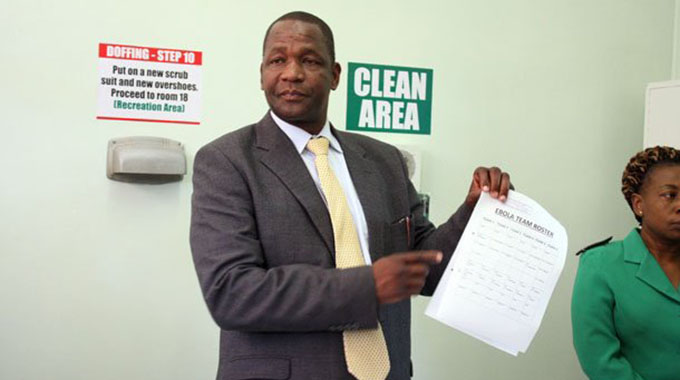
The public health specialist was temporarily engaged by Government to help with a cholera outbreak which broke out in September last year.

Recent minutes of the Human Resources and General Purposes Committee chaired by Councillor Jacob Mafume showed that the committee considered a confidential report by Rtd Major Matthew Marara, recommending that council notes the outcome of the disciplinary hearing in respect of Dr Chonzi and the decision to clear the senior council employee to resume work once council processes had been completed.

“The acting human capital director reported that our heads of department (Dr Cainos Chingombe and Mr Tendai Kwenda), including the then acting town clerk (Mrs Josephine Ncube) had been suspended from council service pending disciplinary hearings in view of the recommendations of a tribunal that investigated issues to do with executives’ salaries,” read the minutes.

“Two of the suspected executives had subsequently been recommended for dismissal from council service and the matter was currently before the Local Government Board. However, the disciplinary hearing absolved the director of Health Services of the charges levelled against him and, therefore, cleared him to resume duty.”

During discussion, the acting town lerk Mr Charles Kandemiri reported that council’s external lawyers had advised that the city’s chances of success on appeal against the verdict of the disciplinary committee were slim.

They further advised the city to consider the second option in the verdict of reinstating Dr Chonzi.

Following further discussion, the committee resolved to recommend that council notes the outcome of the disciplinary hearing in respect Dr Chonzi and that it clears him to resume work once council’s processes are completed.

An audit report sanctioned by the Ministry of Local Government, Public Works and National Housing noted that the city executives continued to earn between $12 000 and $21 000 from October 2014 to June 2015, as opposed to $10 450 for the highest earner as stipulated by the Government.

The report indicated that council was prejudiced of $550 000.

Government was yet to respond to Harare’s decision to fire the other two directors who were found guilty of maladministration and awarding themselves unapproved salaries.

The post Chonzi set to bounce back at Town House  appeared first on Zimbabwe Situation.