Zimbabwe drip-feeds dollars to tackle cash crunch 

Source: Zimbabwe drip-feeds dollars to tackle cash crunch | Reuters HARARE (Reuters) – Zimbabwe’s central bank drip-fed dollars on Monday to a handful of commercial banks to allocate to large businesses, part of currency reforms authorities hope will ease a cash crunch that has starved the economy of many basic goods. Zimbabwe ditched a discredited […]

The post Zimbabwe drip-feeds dollars to tackle cash crunch  appeared first on Zimbabwe Situation.

Source: Zimbabwe drip-feeds dollars to tackle cash crunch | Reuters

Zimbabweans queue outside a bank in Harare, Zimbabwe, February 25, 2019. REUTERS/Philimon Bulawayo

HARARE (Reuters) – Zimbabwe’s central bank drip-fed dollars on Monday to a handful of commercial banks to allocate to large businesses, part of currency reforms authorities hope will ease a cash crunch that has starved the economy of many basic goods.

Zimbabwe ditched a discredited 1:1 dollar peg for its dollar-surrogate bond notes and electronic dollars last week, merging them into a lower-value transitional currency called the RTGS dollar.

Economists welcomed the move but doubt it will prompt a swift turnaround in the southern African nation, which has grown used to currency turbulence since excessive money-printing under former leader Robert Mugabe triggered hyperinflation.

Ordinary Zimbabweans are not yet able to use the RTGS dollars in their bank accounts to buy dollars from banks, and the bond notes – which many businesses are reluctant to accept – are still in circulation.

“The devaluation was long overdue. The economy has been in limbo and the RTGS can now play a role in boosting competitiveness,” Anthony Mandiwanza, chief executive of Zimbabwean food and dairy firm Dairibord, told Reuters.

“What is critical is that the government lives within its means and narrows and eliminates the fiscal deficit.”

RTGS DOLLAR NOT WEAK ENOUGH?

The last time Zimbabwe had its own currency, a decade ago, Mugabe’s government turned on the printing presses to fund higher salaries for government workers and curry favour with the military – with disastrous economic results.

Mugabe’s successor Emmerson Mnangagwa has promised a break with the past, but many Zimbabweans are wary after his government ramped up borrowing in the lead-up to a national election last July and inflation rose to a 10-year high in January.

The central bank started selling U.S. dollars to banks at 2.5 RTGS dollars on Friday.

Mandiwanza said banks had told Dairibord the same day that it could submit requests for dollars at around 2.5 RTGS each and that it would receive an unspecified amount on Monday or Tuesday.

A dealer at a large bank in Harare whose firm operates on the interbank market said launching the RTGS at 3 to the dollar or higher would have been better to encourage U.S. dollar sellers.

“There are a lot of (dollar) buyers … but no sellers because the rate is not high enough. What we are basically doing is allocating foreign currency to corporates but no trading is taking place,” the dealer said.

‘MANAGED FLOAT’

Mnangagwa, who replaced Mugabe after an army coup in November 2017, hopes to steer the economy back to credibility and lure back foreign investors, who have also been deterred by violent security crackdowns on post-election protests last year and demonstrations last month against a steep fuel price hike.

The central bank has said it will let the RTGS dollar trade in a “managed float”.

But it has not explained how it would control the currency’s movements given it does not have significant foreign exchange reserves.

The currency dealer said the central bank was only selling dollars to banks that had lined up customers who had agreed to buy them.

“We have seen this before in the past and it went nowhere, the interbank system will ultimately become redundant if the Reserve Bank doesn’t allow the currency to freely trade,” the dealer said.

There are also indications that the central bank is not selling many dollars. Only around $5 million changed hands on Friday, a senior central bank official told The Standard newspaper in an article published at the weekend.

A Standard Chartered bank teller in Harare said her branch was not selling dollars to individuals yet, and downtown bank queues were no longer than normal.

On Monday, one U.S. dollar was being sold on the black market for four electronic dollars – those locked in individuals’ accounts for months due to the chronic cash shortages – compared to 4.2 on Friday, informal currency traders said.

“The big players are holding onto their money, that is what is holding rates at the moment,” one currency trader at Harare’s Eastgate shopping centre said.

The post Zimbabwe drip-feeds dollars to tackle cash crunch  appeared first on Zimbabwe Situation.

Zimbabwe struggles to convince doubters as it launches new currency

Source: Zimbabwe struggles to convince doubters as it launches new currency – Times Live Zimbabweans queue outside a branch of First Capital Bank in Harare, Zimbabwe, February 23, 2019.  Image: REUTERS/Philimon Bulawayo Zimbabwe’s government has a trust problem as it introduces a discounted currency in a bid to reverse chronic cash shortages that left people struggling […]

The post Zimbabwe struggles to convince doubters as it launches new currency appeared first on Zimbabwe Situation.
Source: Zimbabwe struggles to convince doubters as it launches new currency – Times Live

Zimbabweans queue outside a branch of First Capital Bank in Harare, Zimbabwe, February 23, 2019.

Zimbabweans queue outside a branch of First Capital Bank in Harare, Zimbabwe, February 23, 2019. 
Image: REUTERS/Philimon Bulawayo

Zimbabwe’s government has a trust problem as it introduces a discounted currency in a bid to reverse chronic cash shortages that left people struggling to get hold of basic goods.

Business people and economists welcomed last week’s decision to abandon an unrealistic dollar peg for the country’s surrogate bond notes and electronic dollars, which were merged into a new currency called the Real Time Gross Settlement (RTGS) dollar.

But they expressed doubts about whether the government has the fiscal and monetary discipline to stick to its commitment to lower the budget deficit and keep inflation in check.

“There is nothing to stop Zimbabwe printing money with this new currency,” said Jee-A van der Linde, an analyst at South Africa-based NKC African Economics. “The government has basically kicked the can down the road in recent years by trying to stimulate the economy through excessive spending.”

Zimbabwe’s currency woes have undermined President Emmerson Mnangagwa’s efforts to win back foreign investors who were sidelined under his ousted predecessor, Robert Mugabe.

The last time Zimbabwe had its own currency, a decade ago, Mugabe’s government was able to turn on the printing presses to fund higher salaries for government workers, curry favour with the military and pay political opponents – with disastrous economic consequences.

Residents of the capital, Harare, now wait outside banks for hours to withdraw a maximum of around $30 in surrogate money or collect remittances from relatives abroad. Snaking queues have become the norm at petrol stations because of a shortage of fuel.

Finance Minister Mthuli Ncube last week pledged to contain public spending and reiterated the importance of the independence of the central bank. Yet, investors and Zimbabweans remain concerned that, should Mnangagwa’s government come under political or military pressure, it may revert to the tricks of the past.

Some also fear that the Reserve Bank of Zimbabwe (RBZ), the country’s central bank, will be unwilling to loosen its grip over the currency as its governor, John Mangudya, is thought to oppose the move to abandon the dollar peg.

“It’s quite clear that the minister of finance wants a liberalised currency regime, whereas the governor of the Reserve Bank doesn’t,” said Eddie Cross, a Zimbabwean economist and former opposition lawmaker.

Whether Zimbabwean policymakers can convince their doubters, both in financial markets and on the streets, will be central to the success or failure of the new RTGS dollar.

If Zimbabweans begin to use banks instead of the black market to exchange any U.S. banknotes they have stashed under their mattresses, then the government could start to rebuild its foreign currency reserves by buying those dollars from banks.

That could give it the wherewithal to relaunch the Zimbabwean dollar when the economy has turned a corner.

Zimbabwe ditched its own currency for the U.S. dollar and other currencies in 2009, after hyperinflation reached 500 billion percent the previous year.

But as a chronic hard currency shortage worsened, it introduced a parallel system of bond notes and electronic dollars, nicknamed “zollars.” The substitute currencies were pegged at 1:1 to the U.S. dollar but traded at a discount on the black market.

MAKE OR BREAK

A key test for the RTGS dollar comes on Monday, when many Zimbabwean banks will buy and sell RTGS dollars on the interbank market for the first time. Some large firms will also be able to buy foreign currency from banks, but it is not clear how much or on what terms.

Many Zimbabweans are sceptical that the latest monetary intervention will reverse the crisis.

“The government has changed things over and over again,” said Godfrey Chinani, who is worried that customers will no longer be able to afford the car parts he sells from a cramped shop in downtown Harare.

He wishes Zimbabwe had switched to the rand instead, as he buys his goods mainly from South Africa.

“People get RTGS as salaries, but when you convert it to rand or U.S. dollars it is worth nothing,” he said. “It won’t work.”

The central bank sold U.S. dollars to a handful of banks at around 2.5 RTGS dollars on Friday, an effective devaluation of 60 percent. More than $5 million changed hands on the interbank market, a senior RBZ official told The Standard newspaper.

In the coming weeks, the new currency is expected to weaken towards 3.5 to the dollar, the level at which bond notes have been trading on the black market.

PRICE PRESSURES

Many Zimbabweans fear a return to the hyperinflation era that prevailed during part of Mugabe’s tenure if the RTGS dollar sinks much beyond that point. Inflation already hit a 10-year high of 57 percent in January, and some public servants say the currency devaluation means the government should raise their salaries by several times.

Authorities have pledged to control the currency’s slide as part of a “managed float,” but how they intend to do that remains a mystery.

The central bank said last week it had secured “sufficient lines of credit” to launch the RTGS. Analysts are scratching their heads as to where the money could have come from.

“People are bound to ask what backs this new currency,” said van der Linde. “It’s no wonder people are distrustful.”

Informal currency traders in downtown Harare said they were waiting to see how the new currency trades on Monday before they change their rates.

POLITICAL SOLUTION

Analysts say one way for Mnangagwa to build confidence in his economic reforms would be to try to mend a deep political rift with the country’s main opposition party, the Movement for Democratic Change (MDC).

Mnangagwa narrowly defeated MDC leader Nelson Chamisa in an election last year which the opposition says was rigged but which Mnangagwa says he won fairly. A violent security crackdown on post-election protests and on demonstrations last month against a major fuel hike have hardened international attitudes towards Mnangagwa’s government and deterred much-needed investment.

“An economic solution on its own, without being backed by a political solution, won’t take us to sustainable economic development,” said Eldred Masunungure, a politics professor at University of Zimbabwe.

“Mnangagwa has not yet built enough trust to relaunch the Zimbabwean dollar. But he is testing the waters.”

The post Zimbabwe struggles to convince doubters as it launches new currency appeared first on Zimbabwe Situation.

The Interview – ‘We are available for dialogue,’ Zimbabwe’s MDC opposition leader tells FRANCE 24

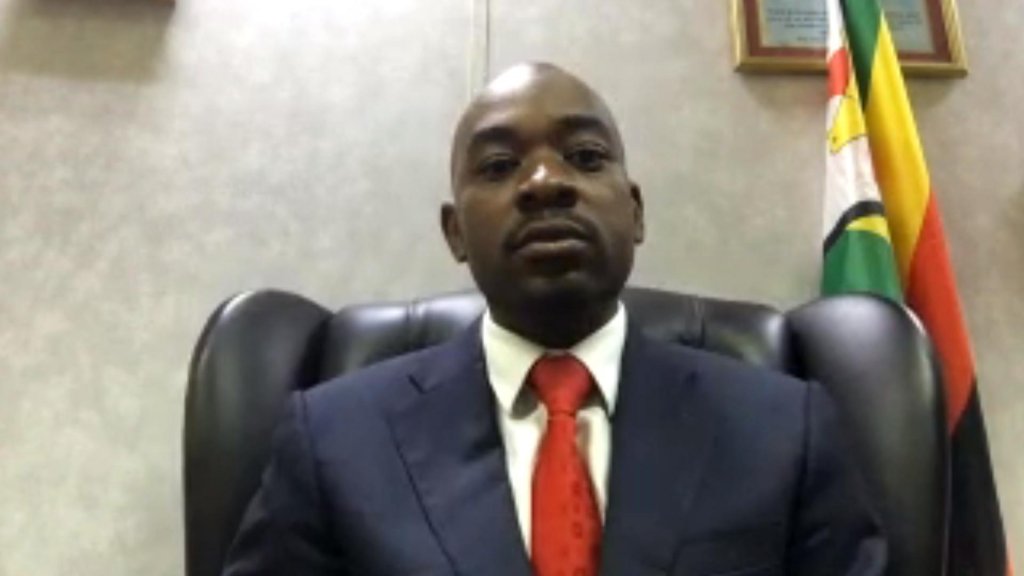
Following recent unrest in Zimbabwe, Nelson Chamisa, leader of the main opposition Movement for Democratic Change (MDC) party, spoke to FRANCE 24. He rejected claims by President Emmerson Mnangagwa that the MDC had attempted “regime change” with foreign backing by organising mass protests in January. Chamisa went on to say he was willing to take […]

The post The Interview – ‘We are available for dialogue,’ Zimbabwe’s MDC opposition leader tells FRANCE 24 appeared first on Zimbabwe Situation.

Following recent unrest in Zimbabwe, Nelson Chamisa, leader of the main opposition Movement for Democratic Change (MDC) party, spoke to FRANCE 24. He rejected claims by President Emmerson Mnangagwa that the MDC had attempted “regime change” with foreign backing by organising mass protests in January. Chamisa went on to say he was willing to take part in “a credible and genuine dialogue” with the president.

Source: The Interview – ‘We are available for dialogue,’ Zimbabwe’s MDC opposition leader tells FRANCE 24

Speaking to FRANCE 24’s Marc Perelman from the Zimbabwean capital Harare, Chamisa said the recent protests were ignited by fuel price hikes and led by trade unions, not by his party.

“We are not working with any foreign power,” he added.

Zimbabwe’s opposition leader accused the government of serious crimes in the ensuing crackdown on the protests – including alleged extrajudicial killings –and said that Mnangagwa should be held to account. “The constitution does not allow the taking away of life,” he told FRANCE 24.

Chamisa noted that even former president Robert Mugabe, who himself was accused of severe repression during his time in power, has strongly criticised Mnangagwa’s crackdown. The opposition leader called Mugabe’s remarks “confirmation” that the current president had “crossed the line”.

Chamisa said he was ready “anytime” for “a credible and genuine” dialogue with Mnangagwa but insisted that it should be done through international mediation, citing South Africa, the inter-governmental Southern African Development Community or the African Union as “ideal” go-betweens.

Finally, he dismissed reports that he had offered Mnangagwa a power-sharing agreement under which they would each lead the country for two years.

The post The Interview – ‘We are available for dialogue,’ Zimbabwe’s MDC opposition leader tells FRANCE 24 appeared first on Zimbabwe Situation.

Zimbabwe couple complicit in crimes against humanity for serving in Mugabe’s army lose bid to stay in Canada 

Source: Zimbabwe couple complicit in crimes against humanity for serving in Mugabe’s army lose bid to stay in Canada | National Post Richard Tapambwa served in the Zimbabwean National Army for about 20 years; his wife, Stensia Tapambwa, served for about 16 years Zimbabwean national Army details patrol the streets of Harare’s high density suburb […]

The post Zimbabwe couple complicit in crimes against humanity for serving in Mugabe’s army lose bid to stay in Canada  appeared first on Zimbabwe Situation.

Source: Zimbabwe couple complicit in crimes against humanity for serving in Mugabe’s army lose bid to stay in Canada | National Post

Richard Tapambwa served in the Zimbabwean National Army for about 20 years; his wife, Stensia Tapambwa, served for about 16 years

Zimbabwean national Army details patrol the streets of Harare’s high density suburb of Highfields January 21. A husband and wife from Zimbabwe who were found complicit in crimes against humanity for their years working together in the Zimbabwe National Army have lost their dogged appeals to avoid deportation from Canada.Postmedia Network

A husband and wife from Zimbabwe who were found complicit in crimes against humanity for their years working together in the Zimbabwe National Army have lost their legal appeals to avoid deportation from Canada.

Richard Tapambwa served in the Zimbabwean National Army for about 20 years; his wife, Stensia Tapambwa, served for about 16 years. Both were promoted to the rank of staff sergeant in the army’s data processing unit.

Their military service took place when the army was under the authority of former president Robert Mugabe, who faced condemnation for human rights abuses and crimes against humanity.

The couple told Canadian officials that after Richard Tapambwa expressed political views against Mugabe’s ruling party in March 2001, they left Zimbabwe and travelled to the United States, where they lived for more than 10 years without applying for refugee protection.

In 2011, they came to Canada and claimed political asylum.

The following year, their claim was denied because the Immigration and Refugee Board found serious reasons to consider they were complicit in crimes against humanity committed by the Zimbabwean army during their military service. The specific allegations against them are not detailed in recent court decisions.

Not willing to be quickly deported, the couple requested a Pre-Removal Risk Assessment, known as a PRRA, and also asked the minister of Citizenship and Immigration to lift the narrow restriction on PRRA requests that is applied to war criminals and those found complicit in crimes against humanity.

The international principle called non-refoulement means that refugee claimants typically cannot be returned to a place where their life or freedom would be threatened because of race, religion, nationality, membership in a particular social group, or political opinion. Under the United Nations’ refugee convention, however, non-refoulement does not apply to claimants who are excluded from refugee status for crimes against humanity.

Their request was denied and they were found not to face a personalized risk to their life or of cruel and unusual treatment or punishment if returned to Zimbabwe. Their subsequent appeals continued to delay deportation.

They appealed the decision on their PRAA, claiming it violated Canada’s Charter of Rights, arguing about interpretations and parsing the language in the law and the UN convention — including the verb tenses used.

One of the unusual arguments the Tapambwas made was that Richard Tapambwa faced an additional risk of being mistaken for his identical twin brother, if he is sent back to Zimbabwe. His brother, according to court files, was accepted as a refugee in Canada. He fled Zimbabwe after uncovering and threatening to expose a fraud involving his superiors in the Zimbabwean army.

Canadian officials confirmed he has a twin but found it “speculative in nature” that he might possibly become the victim of mistaken identity.

A fortuitous decision, however, threw them a lifeline.

Eight days after their request for a judicial review of the decision was dismissed by the Federal Court in 2013, the Supreme Court of Canada made a ruling in a case known as Ezokola v. Canada that changed how complicity is judged.

Rather than mere membership in an organization that is guilty of crimes against humanity, a refugee claimant must now be found to “voluntarily made a knowing and significant contribution to the crimes.”

The change replaced “complicity by association” with a new test of “complicity by contribution” and the Tapambwas wanted to have their case reconsidered under the new standard.

A PRRA officer had decided he had no jurisdiction to review an admissibility decision.

The Tapambwas appealed both decisions to the Federal Court of Appeal — the decision of the PRRA officer that he was prevented from reconsidering their inadmissibility and the refusal of reconsidering their case under the new Ezokola test.

“They contended that as they had been excluded on the basis of their complicity by association, the legal basis of the exclusion finding had evaporated,” said a Federal Court of Appeal decision last week.

They lost on both counts.

“The legislation says nothing that would give the PRRA officer authority to reverse a finding of inadmissibility or exclusion. To the contrary, Parliament has put that responsibility elsewhere,” Justice Donald J. Rennie wrote on behalf of a three-judge panel.

To give the officer deciding the PRRA the power to reconsider the whole case of a failed claimant would give that officer a power that is withheld even from the minister of immigration, Rennie wrote.

As for whether they should be able to start again and have their case reheard under the Ezokola test, this too was rejected.

“The exclusion finding was final. There was no further right of appeal, review or recourse under the (immigration act). All of these decisions took place prior to Ezokola,” Rennie wrote.

“The appellants’ exclusion was finally determined on the basis of the applicable law at that time.”

Their appeal was dismissed, leaving few options barring their removal. The Tapambwas lawyer could not be reached for comment on Sunday.

The post Zimbabwe couple complicit in crimes against humanity for serving in Mugabe’s army lose bid to stay in Canada  appeared first on Zimbabwe Situation.

MY FARM WAS NOT INVADED : WHITE CHIPINGE FARMER

THERE are no new farm invasions in Zimbabwe and a Chipinge
incident which went viral on social media recently was an exaggeration of a
misunderstanding between a commercial farmer and a new farmer.

The incident occurred on February 16 at Farfell Es…

THERE are no new farm invasions in Zimbabwe and a Chipinge incident which went viral on social media recently was an exaggeration of a misunderstanding between a commercial farmer and a new farmer. The incident occurred on February 16 at Farfell Estate in Chipinge where Mr Richard Le Vieux and Mr Remembrance Mbudzana had a misunderstanding over part of the land which had been allocated to the