Mugabe warns ED

Source: Mugabe warns ED | The Standard (Local News) BY XOLISANI NCUBE Former president Robert Mugabe yesterday warned his successor, Emmerson Mnangagwa, that power does not last forever as he strongly condemned the deployment of soldiers to quell the January 14 protests. Mnangagwa on February 16 boasted that he deployed the army to deal with […]

The post Mugabe warns ED appeared first on Zimbabwe Situation.

Source: Mugabe warns ED | The Standard (Local News)

BY XOLISANI NCUBE

Former president Robert Mugabe yesterday warned his successor, Emmerson Mnangagwa, that power does not last forever as he strongly condemned the deployment of soldiers to quell the January 14 protests.

Mnangagwa on February 16 boasted that he deployed the army to deal with violent protesters despite complaints by human rights groups that soldiers had allegedly killed at least 17 people and raped several women.

Mugabe, who was toppled by the army in 2017, took advantage of his 95th birthday celebrations held at his Harare mansion to launch a renewed attack on Mnangagwa, telling him that he was not God.

According to accounts by some of the invited guests, Mugabe’s speech was emotionally charged, which could be an indication that his relations with his protégé are strained once again.

Jealousy Mawarire, the spokesperson of the Mugabe-linked National Patriot Front, first posted about Mugabe’s outbursts on Twitter.

He quoted the former Zanu PF leader saying: “You are at the top, you want to glorify yourself.

“You are not God. Today you are at the top, tomorrow you will be at the bottom, know that.

“God has His own way of punishing rogues and cruel people.”

Mugabe then thundered: “I am telling you in your face. I don’t care what will happen to me.”

He said the army must stop killing people and return to the barracks.

“People should love their army, they should not fear the army,” he said.

Several people confirmed that Mugabe made the remarks, but were unable to give more details as the celebrations were still on by the time of going to print.

Mugabe fired Mnangagwa as his deputy in November 2017 before the army, led by then commander and now Vice-President Constantino Chiwenga, moved in to topple him a few days later.

Last year, Mugabe also used his private birthday celebrations to attack Mnangagwa and on the eve of the July 30 presidential elections told his supporters not to vote for the Zanu PF leader.

However, the two appeared to have mended their relations after the elections and Mugabe said he now accepted that Mnangagwa was the new leader.

Meanwhile, Mnangagwa yesterday condemned Zanu PF supporters that were terrorising people in Harare South and threatened to descend on them.

Officiating at the burial of former Cabinet minister Callistus Ndlovu at the National Heroes Acre in Harare, Mnangagwa said action should be taken against the culprits.
He cited Harare South where his nephew Tongai Mnangagwa is the MP.

“Let us desist from divisive politics. Such kind of politics has no place in the new Zimbabwe,” he said.

“We condemn in strongest terms actions by some hooligans with a hidden agenda who went about attacking people in Harare South while in Zanu PF regalia and destroyed people’s stores and merchandise, destabilisations of peace” .

“This is criminal, this will not be tolerated.”

Ndlovu’s burial resembled a military parade as it had more soldiers than the usual Zanu PF supporters.

Ndlovu (83), also a member of the Zanu PF central committee, collapsed and died a week ago in South Africa where he was being treated for pancreatic cancer. Ndlovu is survived by his wife Angeline, five children and seven grandchildren.

The post Mugabe warns ED appeared first on The Standard.

The post Mugabe warns ED appeared first on Zimbabwe Situation.
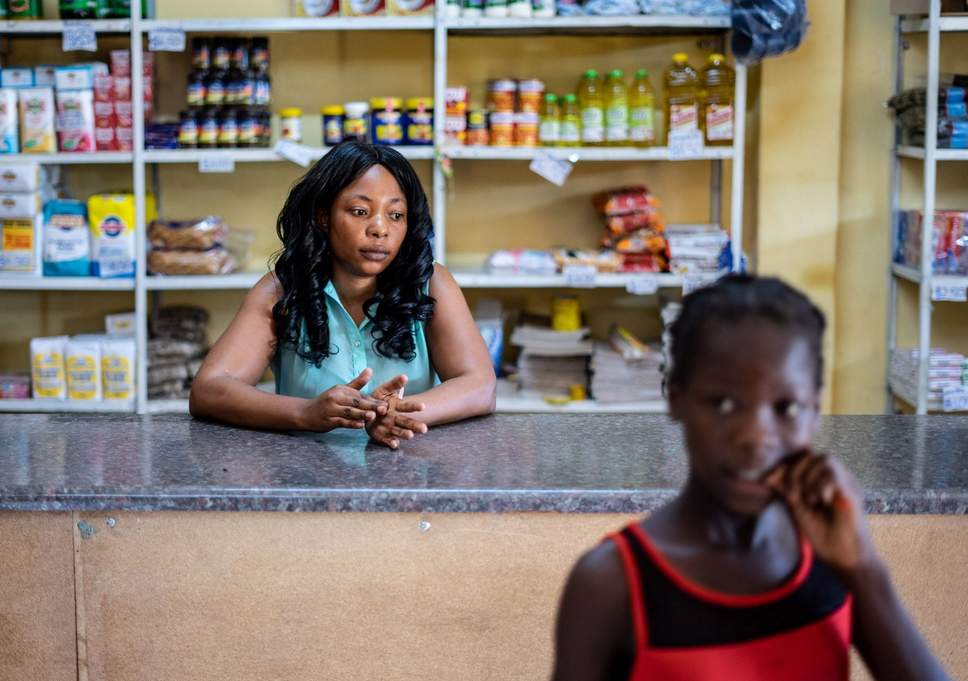
Dirty rags and drugs: Period poverty in Zimbabwe driving women to desperate measures

Source: Dirty rags and drugs: Period poverty in Zimbabwe driving women to desperate measures | The Independent Chiratidzo Chikona, 17, ties up dirty rags she finds on the floor to use as sanitary pads Towels and tampons are unaffordable to many in the country (File photo) ( AFP/Getty ) Period poverty is pushing women in Zimbabwe to desperate measures – and […]

The post Dirty rags and drugs: Period poverty in Zimbabwe driving women to desperate measures appeared first on Zimbabwe Situation.

Source: Dirty rags and drugs: Period poverty in Zimbabwe driving women to desperate measures | The Independent

Chiratidzo Chikona, 17, ties up dirty rags she finds on the floor to use as sanitary pads

Towels and tampons are unaffordable to many in the country (File photo)

Towels and tampons are unaffordable to many in the country (File photo) ( AFP/Getty )

Period poverty is pushing women in Zimbabwe to desperate measures – and the homeless are bearing the brunt of the crisis, according to campaigners.

Seventeen-year-old Chiratidzo Chikona has been sleeping rough in the capital Harare for five years. She has not used proper sanitary items since she started menstruating.

“Here in the streets, we survive on the food we pick from the bins or handouts from well-wishers and the little money we get from begging,” she says. “We use it to buy a decent meal from time to time.”

With pads a “rare luxury”, Chikona ties up dirty rags that she has found on the floor.

Homelessness is a prevalent issue in Harare, with some 5,000 children thought to be living on the streets, according to government figures. Young girls and women will sleep on the pavements in groups to try to avoid being attacked or raped.

Sanitary Aid Zimbabwe, an organisation working to end period poverty in the country, warns that the situation is critical, and that some homeless women have been driven to street drugs in the absence of painkillers.

In one such case, a 15-year-old girl sleeping rough in Harare Gardens park has become addicted to sniffing glue after being unable to get painkillers to help with her period pain.

“The teenager experiences painful stomach cramps and usually has no pain relievers – so to escape the period pain, she sniffs glue to intoxicate herself,” Theresa Nyava, SAZ executive director, tells The Independent.

Scores of girls and women gathered in Harare last year for the “Happy Flow Campaign” march demanding more affordable sanitary items – but women say that no change has been made since then – and with inflation on the rise in Zimbabwe, they are still being priced out.

The average cost of a packet of sanitary towels is around $5 (£3.87) but salaries are typically less than $400 a month.

Mhamha Manungo lives in the rural village of Domboshava and says she cannot afford to buy her two teenage girls sanitary products on the meagre income she earns selling maize.

“One bucket of maize is now only enough to buy a single packet of pads, which are now going for $5 … I cannot afford to sell four buckets of maize per month just to buy pads, otherwise the family will go hungry,” she tells The Independent.

“Periods are now a nightmare for me each month,” agreed a female security guard in the town of Chitungwiza, south of the capital, adding that her monthly salary of around £193 can barely sustain her.

“I just buy one packet… I no longer feel comfortable each time when I will be at work while on my period,” she says. She requested her name not be used, citing privacy concerns.

Cultural taboos – particularly strong in the rural areas of the country – also mean women often feel unable to talk about their periods with the male breadwinners in the family, SAZ’s Nyava warns.

“Girls feel they can’t ask for money to buy sanitary ware or pain relievers – they just silently suffer in solitude from the effects of period poverty,” she says.

Manungo is now teaching her daughters to make pads from scraps of old clothes they no longer wear.

“This is the only way for them to go to school when they are on their time of the month at the moment, as we don’t have other options,” she says.

The post Dirty rags and drugs: Period poverty in Zimbabwe driving women to desperate measures appeared first on Zimbabwe Situation.

LATEST: Ex Minister Mzembi sets up base in Jorburg, puts lavish Harare mansion on market (SEE PRICE)

Former Cabinet Minister Walter Mzembi has put his palatial Harare mansion on the market for a princely $2 million amid speculation the 55-year-old politician is finalising moves to flee the country to avoid possible imprisonment on corruption charges. …

Former Cabinet Minister Walter Mzembi has put his palatial Harare mansion on the market for a princely $2 million amid speculation the 55-year-old politician is finalising moves to flee the country to avoid possible imprisonment on corruption charges. One of the four real estate companies engaged to sell the house, Kennan Properties, last week confirmed […]

Outcry as Zimbabwe Plans to Export Baby Elephants to China

Plans by the government of Zimbabwe to export as many as 35 baby elephants to China has sparked an outcry among wildlife conservationists who say proper procedures haven’t been followed. Source: Outcry as Zimbabwe Plans to Export Baby Elephants to China – The Epoch Times An African elephant and her baby are pictured on Nov. 18, […]

The post Outcry as Zimbabwe Plans to Export Baby Elephants to China appeared first on Zimbabwe Situation.

Plans by the government of Zimbabwe to export as many as 35 baby elephants to China has sparked an outcry among wildlife conservationists who say proper procedures haven’t been followed.

Source: Outcry as Zimbabwe Plans to Export Baby Elephants to China – The Epoch Times

MUTARE, Zimbabwe—Plans by the government of Zimbabwe to export as many as 35 baby elephants to China has sparked an outcry among wildlife conservationists who say proper procedures haven’t been followed.

They also raise concerns about China’s significant role in the global trade in endangered species.

Investigations by wildlife protection activists reveal that the baby elephants, some as young as 2, were separated from their mothers and are being held in pens at Zimbabwe’s Hwange National Park while preparations are finalized to send them to China, where they will be put in zoos.

The export plan has been roundly condemned by local and international wildlife conservationists, who say the removal of young elephants from the herd is highly damaging—not only to the young elephants but to the entire herd.

According to Sharon Hoole, a Zimbabwe animal rights activist with the U.K.-based group Bring Back Our Rhinos, the Wildlife Act stipulates that certain criteria must be followed before wildlife can be sold, and the government hasn’t adhered to that.

“There’s supposed to be public stakeholder consultation, parliamentary consultation. … Even during the capture they have to meet a criteria where representatives of citizens, stakeholders, and animal welfare services have to be involved,” Hoole said in an interview.

“This capture and export of the baby elephants is illegal because these criteria haven’t been met, but they don’t care about that because they know no one will do anything. So we have to do something.”

baby elephants at a national park in zimbabwe
Baby elephants photographed recently in a pen at Hwange National Park in Zimbabwe. (Andrew Mambondiyani for The Epoch Times)

Wildlife expert Mike Hitschmann, who runs the Cecil Kop Nature Reserve, said a big concern is that China has one of the world’s worst track records when it comes to the illegal trade in endangered wildlife species.

According to the U.S.-based Wilson Center, experts say the Chinese demand for wildlife products is driving the global trade in endangered species. The experts said many wild animals, particularly tigers, bears, and rhinos, are farmed en masse in China and treated inhumanely. Tigers are bred for the production of luxury items like tiger bone wine and tiger skin rugs, and bears are “milked” for their bile for use in traditional Chinese medicine.

Hitschmann said China’s relationship with Africa is another part of the problem, it’s one of blatant neocolonialism, which flourishes in countries that have questionable governments and gives Beijing the upper hand.

“Zimbabwe is no exception and basically whatever the Chinese want or need they can now get it—whether it be our mineral resources or our natural resources in the form of wildlife,” he said.

“With the advent of the new government under President Emmerson Mnangagwa, there has been no improvement. In fact, it appears as if the situation is worsening.”

Hitschmann said that from the time the Chinese presence first started to increase in Zimbabwe, most of the country’s reptile species, such as tortoises and turtles, as well as rhinos, have been negatively affected. Now it’s elephants, and he’s worried about the populations dwindling.

Tinashe Farawo, spokesperson for the Zimbabwe Parks and Wildlife Management Authority, denied the government is capturing baby elephants for export to China.

“We are known for being leaders in wildlife conservation and we cannot capture baby elephants for export,” he said. “We can only capture sub-adults—that’s if we want to capture any elephant at all [for export]. We only capture young adult elephants which are no longer dependent on their mothers. But in this case, we are not doing that.”

Farawo said Zimbabwe had more 80,000 elephants, twice the country’s carrying capacity of 40,000.

“We last culled the elephants in 1987 and the numbers are growing, hence we are experiencing conflicts between humans and elephants. About five people have been killed by elephants this year,” he said.

two people at a nature reserve
Mike Hitschmann (L) in the field at Cecil Kop Nature Reserve, Mutare, Zimbabwe. (ZENWE Trust)

However, Hitschmann said claims of over population are false and are being used as a basis for opposing the worldwide ban on the ivory trade and to justify the removal of elephant calves from the wild for export to Chinese zoos and theme parks.

According to the Humane Society of the United States, this is the fourth time since 2012 that Zimbabwe has captured baby elephants for export to China—a total of 108 elephants—despite broad opposition.

Hitschmann said other issues for Zimbabwe’s elephants are poor management practices that have allowed for increasing human encroachment on protected areas such as national parks, and poor political decisions that have resulted in less available land overall for wild animals.

He believes effective wildlife management requires “out of the box” thinking, such as if one particular area has a high elephant population that threatens the biodiversity, then herds can be relocated together to areas where there are no elephants, including other countries in Africa.

“In this way, we do our bit to slow down their overall population crash, it keeps the elephants in Africa which is their environment, and it makes good business sense because we need tourists to come and visit elephants in Africa—not in China.”

The very fabric of America is under attack …

Our freedoms, our republic, and our constitutional rights have become contested terrain. The Epoch Times, a media committed to truthful, responsible journalism, is a rare bastion of hope and stability in these testing times.

While other media may twist the facts to serve political agendas, we deliver stories while upholding our responsibility to society.

We’ve reported truthfully on the current U.S. administration from the start. We reported on the real possibility of a Trump victory in 2016. We’ve led reporting on the Chinese communist threat since 2000; we have been exposing communist thought in our government, schools, universities, popular culture, and media; and we, like no other media, are rigorously investigating and exposing the unscrupulous agents working to subvert our society.

Stand with us in advancing a truly independent and truthful media—the way a free press was intended to be, as a cornerstone of the Republic. Your contribution allows us to continue piercing through the surface narratives of mainstream media, and provide you with a full picture.

The post Outcry as Zimbabwe Plans to Export Baby Elephants to China appeared first on Zimbabwe Situation.

ED must prioritise winning public trust to turn around the economy

Source: ED must prioritise winning public trust to turn around the economy – NewsDay Zimbabwe February 23, 2019 Editorial Comment THE monetary policy presented by the central bank governor, John Mangudya, remains very much the talk of the country, and rightly so because of the ramifications the policy wroughts to the economy and the public […]

The post ED must prioritise winning public trust to turn around the economy appeared first on Zimbabwe Situation.

Source: ED must prioritise winning public trust to turn around the economy – NewsDay Zimbabwe February 23, 2019

Editorial Comment

THE monetary policy presented by the central bank governor, John Mangudya, remains very much the talk of the country, and rightly so because of the ramifications the policy wroughts to the economy and the public in general. It is not a secret that the 1:1 peg for the United States dollar against the surrogate bond note currency was unsustainable, quantified by Finance minister Mthuli Ncube at a breakfast meeting yesterday at $2 billion per year.

That is a costly price to pay for policy failure and intransigence, and the decision to scrap the peg brings a welcome end to a failing monetary policy.

While the larger section of the business community lauded the move, which while expected would not have surprised anyone who has had dealings with successive Zanu PF governments, which have so far valued political expediency more than logic if it had not happened.

Question marks still remain if the move represents the best solution to the country’s deeper economic crisis.

It appears that, for the umpteenth time, Zimbabweans have to deal with a new currency; one called Real Time Gross Settlement dollars. Even in a movie script for the absurd, its difficult to craft something so gleefully ridiculous.

Every self-respecting business person is treating the move with caution, which is unlikely to tamper the demand for black market dollars and ease inflation, unless the official interbank rate, which comes into effect on Monday, rapidly catches up with the unofficial rate of exchange.

It needs no clairvoyant to explain that Zimbabweans have very little trust in the economic management abilities of the Zanu PF government and fears remain that the whole facade could trigger a return to the hyperinflation era.

It could work, but requires utmost discipline from government and for the central bank to keep the liquidity low to keep the exchange rate stable. Even then, President Emmerson Mnangagwa desperately needs to regain public trust, but in the 15 months of his rule since the army forced long-time strongman Robert Mugabe out in a coup in November 2017, he has shown no inclination and even capacity to work for that trust. Brutality by security forces in putting down public dissent has only widened the distance between the new leader and his subjects.

Government efforts must, therefore, include not just fiscal discipline, but convincing a sceptical public that it finally has a solution that has long eluded its predecessors, and that Zimbabweans can look forward without any trepidation and fear for the future.

The post ED must prioritise winning public trust to turn around the economy appeared first on Zimbabwe Situation.