Govt dissolves NAC board 

Source: Govt dissolves NAC board | The Herald March 9, 2019 Dr Moyo Paidamoyo Chipunza Senior Health Reporter Government has dissolved the National Aids Council (NAC) board with immediate effect, barely a year after its appointment. In a letter dated March 4, Health and Child Care Minister Dr Obadiah Moyo said the dissolution followed concerns […]

The post Govt dissolves NAC board  appeared first on Zimbabwe Situation.

Source: Govt dissolves NAC board | The Herald March 9, 2019

Govt dissolves NAC board
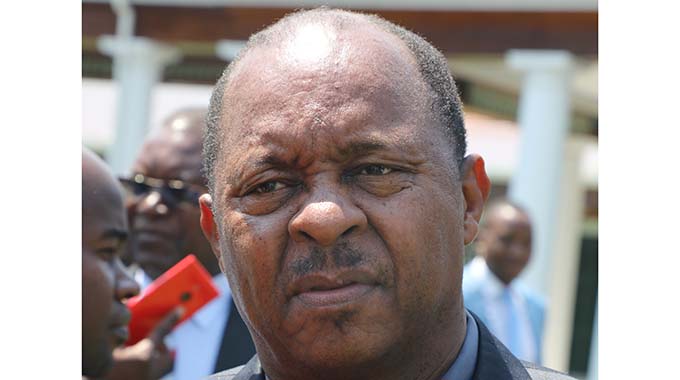
Dr Moyo

Paidamoyo Chipunza Senior Health Reporter
Government has dissolved the National Aids Council (NAC) board with immediate effect, barely a year after its appointment.
In a letter dated March 4, Health and Child Care Minister Dr Obadiah Moyo said the dissolution followed concerns by stakeholders on appointment of the board, which was deemed improper.

“Further to our meeting of the 30th of January 2019, where it was noted that the NAC board was improperly appointed, His Excellency the President of the Republic of Zimbabwe has concurred to the dissolution of the NAC board with immediate effect and ordered that a new board be put in place in line with the provisions of the law,” said Dr Moyo.

NAC acting board chairperson Mrs Virginia Samkange confirmed that the board had indeed been dissolved.
“Communication was received on Monday and besides the reason that the board was not properly appointed, no other reason was given,” she said.

Mrs Samkange was acting chairperson since December last year, a position she assumed following the resignation of Dr Everisto Marowa as chairperson.

Other board members were Dr Josiah Tayi, Mr Chagwiza Togarepi, Mrs Nyasha Sithole, Rev Tanyanyiwa Chinyerere, Mr Stanley Takaona, Mrs Tariro Chikumbirike and Mrs Naume Mazango.

Since last year, NAC has been in the spotlight, with some stakeholders calling for dissolution of the board as well as the secretariat to transform the way of doing things at the national coordinating body for HIV and Aids.

NAC CEO Dr Tapuwa Mugure left the organisation in December last year, shrouded with his own controversies.
Besides the former CEO’s own controversies, NAC as an institution stands accused of maladministration.

Former NAC board chair Dr Marowa, who was once accused of providing consultancy services to the institution, yesterday said the organisation might need an independent forensic audit.

Dr Marowa said this will provide the institution with a solid base on which the board and the new CEO would build on to realise value for the Aids Levy and other resources.

“There is need for bold action for reorganisation and restructuring of senior management so as to foster professionalism, high ethical standards and performance and results-driven way of doing business”.
The post Govt dissolves NAC board  appeared first on Zimbabwe Situation.

UN Fears Fall Armyworm Outbreak Threatens Zimbabwe’s Food Security – Zimbabwe 

English News and Press Release on Zimbabwe about Agriculture, Food and Nutrition, Drought and Insect Infestation; published on 07 Mar 2019 by VOA Source: UN Fears Fall Armyworm Outbreak Threatens Zimbabwe’s Food Security – Zimbabwe | ReliefWeb HARARE, ZIMBABWE — The United Nation’s Food and Agriculture Organization fears that an outbreak of fall armyworm in […]

The post UN Fears Fall Armyworm Outbreak Threatens Zimbabwe’s Food Security – Zimbabwe  appeared first on Zimbabwe Situation.
English News and Press Release on Zimbabwe about Agriculture, Food and Nutrition, Drought and Insect Infestation; published on 07 Mar 2019 by VOA

Source: UN Fears Fall Armyworm Outbreak Threatens Zimbabwe’s Food Security – Zimbabwe | ReliefWeb

HARARE, ZIMBABWE — The United Nation’s Food and Agriculture Organization fears that an outbreak of fall armyworm in Zimbabwe will affect food security in a country where more than 5 million are already in need of food assistance.

At Malvern Farm, about an hour drive northeast of Harare, Ntombizodwa Ncube is concerned by fall armyworms devouring the corn crop, despite efforts to contain the problem with chemicals for the third year running.

“The armyworm this year is bad. It’s really bad,” Ncube said. “As you can see, our plants have been ravaged by these worms. And we are using so many treatments, but it seems it’s not working. It’s really bad. Most of the crops, as you can see, have been damaged. It is really causing havoc.”

Peter Joseph Dzingami, a far manager in Goromonzi district, March 5, 2019, says that in the previous years farmers would control the fall armyworm. But this year, because there is not much rainfall, and the worms are hatching more than previous years and his harvest has been cut in half. Her co-manager, Peter Joseph Dzingami, is equally concerned.

“In the previous years, we would control it. But this year, no,” he said. “It is because there is not much rainfall, and the worms are hatching more than previous years. We were expecting 10 to 12 ton of harvest, but we now expect five to six ton (of corn). We have no idea where this worm is taking us to.”

Unesu Ushewokunze-Obatolu, the principal director in the Ministry of Agriculture, says the fall armyworm is one of many “transboundary outbreaks” Zimbabwe has been fighting over the past three years.

“The government’s approach to managing fall armyworm outbreaks has been to train extension officers and to raise awareness among farming stakeholders, to contain and manage HPAI and FAW (fall armyworm) outbreaks. Further, it sought to increase resilience and enhance productive capacity of smallholder farmers affected by the two scourges,” Ushewokunze-Obatolu said.

Judging from the two farmers’ testimonies, that program seems to have failed.

David Mufote, the FAO’s deputy representative in Zimbabwe, says fall armyworms are hard to eliminate.

“We cannot actually eradicate (it), because what it does is, when we are in winter, it hibernates in the soil or probably mostly in the soil. And when you put up your green crops, that is where it feeds on it, then reoccurs so it will never eradicate,” he said. “But our role is that we mitigate the damage in the most effective and cost effective way.”

The fall armyworm, which attacks mainly corn, was first discovered in Brazil. Experts suspect that it moved to Africa when the continent imported corn from the United States in response to increased drought.

FAO is urging farmers to use “green methods” to control it. But farmers like Ncube and Dzingami say they hope for a permanent solution as soon as possible to ensure their future harvests are not affected.

The post UN Fears Fall Armyworm Outbreak Threatens Zimbabwe’s Food Security – Zimbabwe  appeared first on Zimbabwe Situation.

Chikore case: Elusive witness worries investigator 

Source: Chikore case: Elusive witness worries investigator | The Herald March 9, 2019 Simba Chikore Geraldine Zaranyika Herald Reporter The trial of former president Robert Mugabe’s son-in-law Simba Chikore, who is accused of kidnapping his employee — Bertha Zakeyo — at Zimbabwe Airways offices, continued yesterday with the investigating officer, Mr Ben Justin, complaining that […]

The post Chikore case: Elusive witness worries investigator  appeared first on Zimbabwe Situation.

Source: Chikore case: Elusive witness worries investigator | The Herald March 9, 2019

Chikore case: Elusive witness worries investigator
Simba Chikore

Geraldine Zaranyika Herald Reporter
The trial of former president Robert Mugabe’s son-in-law Simba Chikore, who is accused of kidnapping his employee — Bertha Zakeyo — at Zimbabwe Airways offices, continued yesterday with the investigating officer, Mr Ben Justin, complaining that he was facing challenges in serving a witness with papers to come and testify.

Mr Justin told the court that he had served other witnesses in this matter except for Ms Phillipa Phillips, who is the fourth witness, whom he said was elusive.

“I served her for court on February 13 for trial, through her receptionist who informed me that Phillips was unable to attend court, and an issue of conflict was informed to me that Chikore was Phillips’ client,” he said.

He stated that he got instructions to subpoena Ms Phillips at her house, but to no avail as he failed to locate her.
He said he even called Ms Phillips and she said she was in South Africa on a business trip.

Prosecutor Mr Gwinyai Shumba called third witness, Alwyn Tichaona Tigere, who is a police officer who attended the scene. The court heard that Tigere and Constable Mpona received an instruction from their superiors to go to Zimbabwe Airways offices were there was suspected violence taking place.

On arrival, they met Nelson Zimunya, the head of security, who escorted them to Chikore’s office.
“Chikore told us that he had fired an employee called Bertha Zakeyo and wanted the police to provide security during the handover-takeover of company property.

“He advised us that there was a dispute between employer and employee because Zakeyo was refusing to hand over a cellphone which she specified that she was going to hand over to the police since it had vital information.’’

The pair later on we went to Zakeyo’s office. “She told us that she had been fired by Chikore and with immediate effect she was to hand over company property.
Zakeyo’s lawyer Ms Phillips came.

Later they decided to leave the premises and indicated that they were going through Highlands Police Station to file a case of unlawful detention.

The matter was postponed to March 27 after the State indicated that they wanted to engage their superiors on the way forward and also to secure the attendance of Phillips at the court.

The post Chikore case: Elusive witness worries investigator  appeared first on Zimbabwe Situation.

Fuel situation to improve: Mangudya

Source: Fuel situation to improve: Mangudya | The Herald March 9, 2019 Dr Mangudya Golden Sibanda Senior Business Reporter RESERVE Bank of Zimbabwe (RBZ) Governor Dr John Mangudya has given the nation assurance that the fuel situation should start improving before the end of this month. He said an improvement in the fuel situation was […]

The post Fuel situation to improve: Mangudya appeared first on Zimbabwe Situation.

Source: Fuel situation to improve: Mangudya | The Herald March 9, 2019

Fuel situation to improve: Mangudya
Dr Mangudya

Golden Sibanda Senior Business Reporter
RESERVE Bank of Zimbabwe (RBZ) Governor Dr John Mangudya has given the nation assurance that the fuel situation should start improving before the end of this month. He said an improvement in the fuel situation was anticipated on the back of widespread interventions the central bank and Government have put in place to increase imports.

Dr Mangudya said Zimbabwe had adequate hard currency to import fuel, pointing out that queues that continue to characterise most filling stations across the country reflected the time lag of bank processes and actual deliveries.

The central bank chief also indicated that in some instances, some of the fuel dealers did not have sufficient RTGS dollars to monetise their letters of credit used to finance fuel imports.

This comes as dealers now need more local currency following the liberalisation of the exchange rate to match any amount of foreign currency they may receive for fuel imports.

Previously, fuel importers would get allocations of the hard currency from the central bank at the rate of 1 to 1 between the US dollar against local forms of money (RTGS) and bond notes.

Most of the fuel is now imported into Zimbabwe using letters of credit (LCs) — financial instruments for securitising and financing bulk imports such as fuel. LCs are guaranteed by the African Export and Import Bank.

The governor said it was due to the time lag between establishing an LC, having the LC confirmed by an international bank, evaluated and confirmed by bank advisor of the foreign oil supplier and the time until confirmation by the supplier for release of fuel is received, which caused fuel gaps in supply and availability.

Dr Mangudya said the shortage of fuel in the country, after the introduction of the LC framework for importation of fuel, was no longer a result of foreign currency shortages in the country.

He said this when he appeared before the Parliamentary Portfolio Committee on Energy and Power, chaired by Uzumba Maramba Pfungwe Member of Parliament Cde Simbaneuta Mudarikwa.

Dr Mangudya said the RBZ had established a system enabling dealers to obtain letters of credit in order to import adequate amounts of fuel required by the domestic economy.

Asked what strategy the central bank had in place to bridge the supply gaps caused by the logistical issues that in between the approval and evaluation processes involving LCs, Dr Mangudya said the bank was making further supply interventions, but indicated that they were also persuading various suppliers to expedite their processes.

As such, the central bank chief said some of the fuel for which an amount of US$91 million worth of letters of credit — enough to import 150 million litres  – was made available through various schemes was only being delivered now.

“The bulk of the fuel that is being purchased now is through letters of credit (LC). A letter of credit is an instrument used by banks to securitise and to finance things like fuel and other commodities and give Zimbabwe a time span to pay.

“In the LC (principle), there are things called time lags. The day you establish an LC and the day you get the product, there are some time lags,” he said.

“So the difference between the payment of US$91,94 million (for instance), which was supposed to bring 150 million litres in that month and the day of delivery (is the time lag), (because) not all that fuel came in the same month of January.”

The central bank chief said the decision by Government to increase fuel prices in January had worked magic, with consumption dropping from average of 150 million per month to between 130 million and 120 million litres.

Dr Mangudya said the bank was now making allocations for fuel imports, given the price elasticity of fuel, on the basis of the anticipated amount of fuel needed in the economy.

The post Fuel situation to improve: Mangudya appeared first on Zimbabwe Situation.

ED sets up inter-ministerial political reform committee

Source: ED sets up inter-ministerial political reform committee | Daily News ED sets up inter-ministerial political reform committee President Emmerson Mnangagwa yesterday set up an inter-ministerial committee to lead political, electoral and legislative reforms in line with recommendations of the Motlanthe Commission of Inquiry into the August 1, 2018 post-election violence. Justice, Legal and Parliamentary […]

The post ED sets up inter-ministerial political reform committee appeared first on Zimbabwe Situation.

Source: ED sets up inter-ministerial political reform committee | Daily News

ED sets up inter-ministerial political reform committee President Emmerson Mnangagwa yesterday set up an inter-ministerial committee to lead political, electoral and legislative reforms in line with recommendations of the Motlanthe Commission of Inquiry into the August 1, 2018 post-election violence.

Justice, Legal and Parliamentary Affairs minister Ziyambi Ziyambi said the 8-member inter-ministerial committee has been charged with carrying out the reforms that would provide legal backing to the country’s economic and social opening.

Ziyambi said government was addressing concerns raised by the commission, chaired by former South African president Kgalema Motlanthe, in presentations handed to Mnangagwa after wrapping up public hearings. At least six people were killed in the deadly shootings, while a seventh person died in a stampede, shortly after the landmark elections in Zimbabwe.

The Motlanthe Commission’s summary recommendations included compensation for all victims of violence, and dependants of the deceased; enforcement of Code of Conduct for political parties and candidates; a stop to hate speech, electoral reforms, better law enforcement and national healing and reconciliation that must include a multi-party reconciliation initiative, including youths and with national and international mediation, to be established to address the root causes of the post-election violence.

Ziyambi told a news conference yesterday Mnangagwa had set up the “inter-ministerial special taskforce” to internalise the recommendations. “The special taskforce will be guided by the following terms of reference: to accelerate implementation of political, electoral and legislative reforms aimed at deepening the country’s democratic processes as well as the ease of doing business reforms; and to address the issues arising from the reports by the 2018 election observer missions as well as the findings of the Motlante Commission,” he told reporters.

He said the taskforce has him as chairperson, Foreign Affairs minister Sibusiso Moyo is the deputy chair. It also includes Information minister Monica Mutsvangwa, Finance minister Mthuli Ncube, Home Affairs minister Cain Mathema, Industry and Commerce minister Mangaliso Ndlovu, minister of State for Security in the President’s Office Owen Ncube and Attorney-General Prince Machaya.

“As we move to consolidate our democracy, we would want to thank all the local and foreign observers that gave their reports on the July 30, 2018 harmonised elections.  “Observers act as a form of quality assurance and their recommendations are taken seriously by government.

“We acknowledge and appreciate all positive feedback. Fair criticism and suggested areas of improvement are taken seriously because they can only make us a better democracy,” Ziyambi said.

The post ED sets up inter-ministerial political reform committee appeared first on Zimbabwe Situation.