DORTMUND, Germany (Reuters) – Tottenham Hotspur beat hosts Borussia Dortmund 1-0 on Tuesday thanks to a clinical Harry Kane finish, to stroll into the Champions League quarter-finals for only the second time in their history […]
DORTMUND, Germany (Reuters) – Tottenham Hotspur beat hosts Borussia Dortmund 1-0 on Tuesday thanks to a clinical Harry Kane finish, to stroll into the Champions League quarter-finals for only the second time in their history [...]
LONDON (Reuters) – FIFA confirmed on Tuesday that English Premier League club Chelsea have appealed against a transfer ban imposed after they were found guilty of breaching rules on overseas players under the age of […]
LONDON (Reuters) – FIFA confirmed on Tuesday that English Premier League club Chelsea have appealed against a transfer ban imposed after they were found guilty of breaching rules on overseas players under the age of [...]
Source: Zimbabwe allows mines, others to import own fuel as shortages bite | Reuters HARARE (Reuters) – Zimbabwe on Tuesday allowed mining companies and other businesses to import their own fuel following shortages that have gripped the economy in the last six months due to a severe dollar crunch, a cabinet minister said. Supplies of […]
FILE PHOTO: A woman walks past a “No Petrol” sign at a fuel station in Harare, Zimbabwe, October 9, 2018. REUTERS/Philimon Bulawayo/File Photo
HARARE (Reuters) – Zimbabwe on Tuesday allowed mining companies and other businesses to import their own fuel following shortages that have gripped the economy in the last six months due to a severe dollar crunch, a cabinet minister said.
Supplies of fuel in the southern African nation have been intermittent since September, which has seen motorists spending hours in queues at service stations.
President Emmerson Mnangagwa in January announced a 150 percent hike in the price of fuel, sparking violent protests in major towns, which were met by a brutal security crackdown.
“Cabinet has given a green light to large companies such as those in the mining sector, transport sector, commerce to use their funds to import fuel for their use,” Information Minister Monica Mutsvangwa told reporters after a weekly cabinet meeting.
The world’s top two platinum producers Anglo American Platinum and Impala Platinum Holdings are some of the big mining companies operating in Zimbabwe, which will be able to buy their own fuel.
Zimbabwe’s central bank provides between $80 and $100 million a month in scarce dollars to fuel companies to import the commodity. By allowing companies to buy their own fuel, the government expects to ease pressure on demand for dollars.
Long queues that resurfaced last week after a brief lull continued on Tuesday and Mutsvangwa said the government had been forced to take 8 million liters of diesel from the country’s strategic reserve to supply the market.
Despite previous promises by the central bank and energy minister to end the fuel shortages, Zimbabwean motorists have got used to queuing for hours for the scarce resource.
Source: Zimbabweans Go for Alternatives as Bread Becomes Unaffordable – VOA Bread is now expensive and beyond the reach of many in the poverty stricken Zimbabwe, March 4, 2019. HARARE — In Zimbabwe, the price of bread is forcing citizens to look for alternatives to go with the food that is also in short supply. President […]
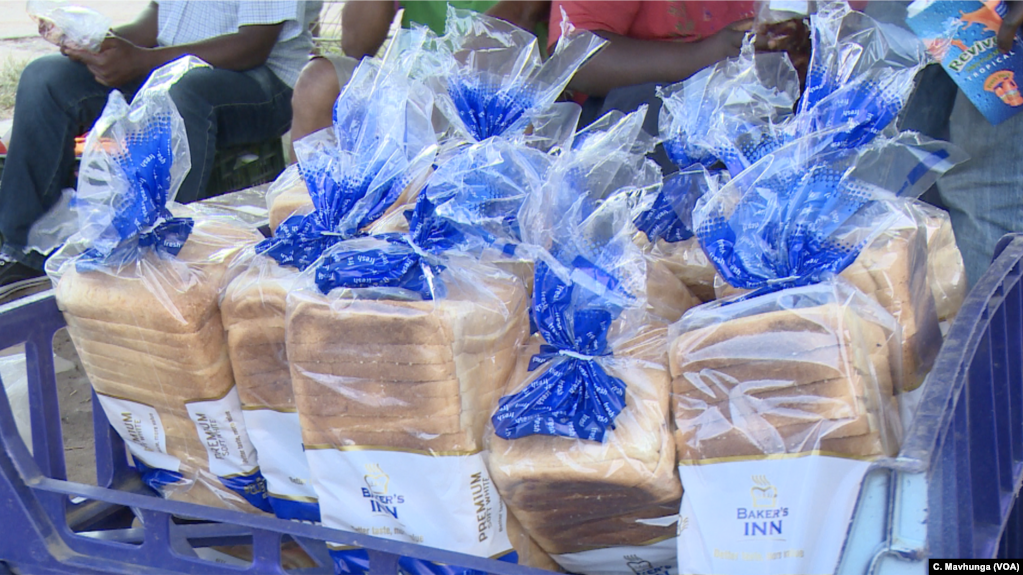
Bread is now expensive and beyond the reach of many in the poverty stricken Zimbabwe, March 4, 2019.
HARARE — In Zimbabwe, the price of bread is forcing citizens to look for alternatives to go with the food that is also in short supply. President Emmerson Mnangagwa’s government says it is working to ensure people can buy bread that is affordable.
Bread in Zimbabwe now costs $2 a loaf, or higher, making it beyond the reach of many in the poverty-stricken country.
That has not stopped Zimbabweans from enjoying their favorite morning drink — tea — without bread, as 63-year-old Gibson Nhema said.
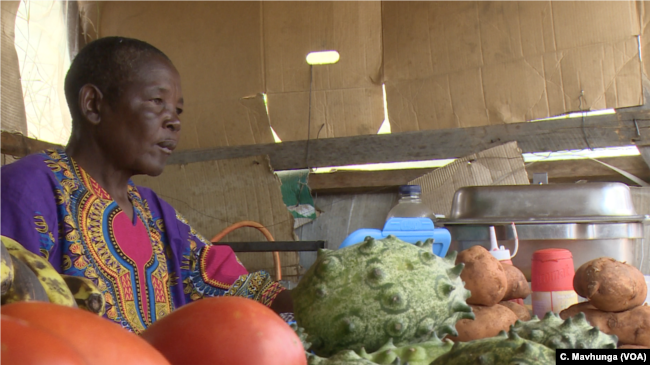
Gibson Nhema says sales of potatoes and other bread substitutes is booming.
“My friend, bread is now expensive. Now, sometimes we have our thick porridge, sweet potatoes, green mealies. If we can get it [bread] once a week, that will be it. But we no longer miss it, because it is now expensive. They [at home] make them have a color of bread so that I do not miss bread. If they [government] would push the price of bread and flour down, that would go well with our way of living. We have no cash. If it remains expensive, I will not be able to buy dinner if I buy bread. So, we go for potatoes and will have bread when I get money,” she said.
Nhema said sales of potatoes and other bread substitutes is booming.
Alwyn Mutero, who sells bread.
“People used to buy bread a lot. But these days, they are not buying bread. You can check the shelves. There used to be lots of bread, but these days, people no longer buy like they used to do, because prices are going high. We used to sell this bread for about a $1. Now, it costs about $2.50. So, people cannot afford it,” said Mutero.
Minister of Industries Mangaliso Ndlovu said he is aware of the problem facing Zimbabweans.
Minister of Industries Mangaliso Ndlovu says he is aware of the problem Zimbabweans are facing regarding expensive bread.
“We are currently engaging the baking sector, specifically looking at the issue of bread availability and the price of bread. We are worried that there is always demand for the importation of wheat. It is possible to have a bread that is 100 percent Zimbabwean. As a government, we are quite keen to see that bread is available at affordable prices to the generality of our people,” said Ndlovy.
Government’s price controls
Part of the problem is that because of government price controls, wheat millers and bakers lose money when they make their products. As a result they produce less to minimize their losses. This leads to a bread shortage and higher prices.
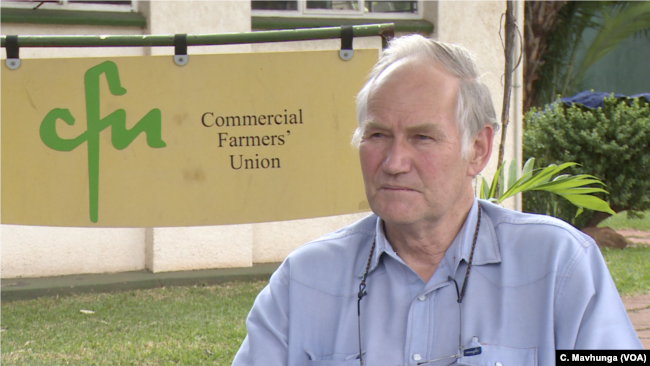
But Ben Gilpin from the Zimbabwe Commercial Farmers Union said wheat is a capital intensive, and President Emmerson Mnangagwa’s government must ensure that it is priced correctly to address Zimbabwe’s bread shortages and affordability.
He said among other things, farmers must have the knowledge and tools to revive the agriculture sector, which has struggled since 2000 when the government began to push white commercial farmers off their land and replace them with poorer, less experienced black farmers.
Ben Gilpin says wheat is a capital intensive and President Emmerson Mnangagwa’s government must ensure that it is priced correctly to address Zimbabwe’s bread shortages and affordability.
“Irrigation infrastructure and impact of land reform has had an impact on wheat production. It got down to a very low level at one point. It’s coming up, but for it to grow on a sustainable basis, the bottom line is [that] farmers need a decent price, and millers need to cover their costs, and contractors need to get their supplies at affordable prices,” said Gilpin.
While the government, farmers and businesses look for a solution, Zimbabweans like Gibson Nhema will have to keep thinking of alternatives — pumpkins, sweet potatoes, butternuts — to their daily bread, hoping that they, too, do not get affected by price controls that force shortages.
Source: Zimbabwe offers a way to test blockchain’s worth – Nasdaq.com LONDON (Reuters Breakingviews) – Zimbabwe makes a fascinating petri dish for Silicon Valley monetary evangelists. A blockchain-based currency theoretically offers an eye-catching way to neutralise Harare’s discredited central bank and habitually profligate government, whose recent 60 percent currency devaluation is unlikely to restore domestic […]
LONDON (Reuters Breakingviews) – Zimbabwe makes a fascinating petri dish for Silicon Valley monetary evangelists. A blockchain-based currency theoretically offers an eye-catching way to neutralise Harare’s discredited central bank and habitually profligate government, whose recent 60 percent currency devaluation is unlikely to restore domestic fortunes. But the sovereignty sacrifice implicit in so-called distributed ledgers is a double-edged sword.
In its purest form, blockchain technology, which underpins cryptocurrencies like bitcoin, removes the need for a central authority to validate currencies by standing behind them. New units can be “mined” by clever coders who get paid in the currency for their efforts, and the money supply can be subject to an upper limit. The public bookkeeping side of blockchain would also show if Harare was trying to fund budget deficits by issuing electronic IOUs of questionable value to domestic banks, as it has for the last five years. To Zimbabweans weary of having their savings wiped out by inflation, that is appealing.
As a piece of public policy there are obvious downsides. Bitcoin miners use a lot of electricity, and cryptocurrencies are volatile, making them hair-raising as a store of value and a medium of exchange. Bitcoin’s total issuance can also never top 21 million, making it potentially deflationary. All that said, Zimbabwe’s current currency is hardly reliable, and different forms of cryptocurrency can be tweaked to accommodate economic growth. Most promisingly of all, for the last decade Zimbabweans have been living in a dollarised economy, in which citizens use the U.S. currency with zero control over its price.
The real challenge for a home-grown blockchain variant – zitcoin, perhaps – would be who calls the shots on supply creation. It obviously couldn’t be the Zimbabwean central bank. But outsourcing the task even to an enlightened outsider like the International Monetary Fund would be controversial. It’s not often a near-failed state has a shot at being a new-age trailblazer – but there’s a reason why it doesn’t often happen.
– Zimbabwe’s central bank said on Feb. 22 it was devaluing its domestic currency by 60 percent against the U.S. dollar.
– Finance Minister Mthuli Ncube said on Feb. 25 the new currency would be backed by fiscal discipline, adding that the government would allow it to fluctuate but would manage excessive volatility.
– Before the devaluation, Zimbabwe’s de facto domestic currency, which had a nominal 1:1 value to the U.S. dollar, was trading at a discount of as much as 75 percent.
– Harare scrapped the Zimbabwe dollar in 2009 after hyperinflation that topped out at 500 billion percent. In its stead, it adopted the U.S. dollar and South African rand.