Zim almost ready to compensate white farmers

Source: Zim almost ready to compensate white farmers | Sunday Mail (Business) Business Reporter Zimbabwe has made significant progress in its efforts to compensate white former farmers with valuations having been carried out for nine of the 10 provinces. Government is of the view that dealing with the twin issues of farmer compensations and 99-year […]

The post Zim almost ready to compensate white farmers appeared first on Zimbabwe Situation.

Source: Zim almost ready to compensate white farmers | Sunday Mail (Business)

Business Reporter

Zimbabwe has made significant progress in its efforts to compensate white former farmers with valuations having been carried out for nine of the 10 provinces.

Government is of the view that dealing with the twin issues of farmer compensations and 99-year leases simultaneously is critical for the country to be able to securitise its land assets.

Finance and Economic Development Minister Mthuli Ncube told a breakfast meeting to review the 2019 Monetary Policy Statement that he was currently seized with the issue of compensating white former commercial farmers, describing the issue as “a bigger elephant in the room.”

“I must say that is an issue that I am currently seized with and I am very pleased to say that we as Government have made a lot of progress,” said Minister Ncube.

“First of all, the farmers themselves have made a lot of progress as they now have a figure of what they want to be compensated for improvements. And on our side as Government we have done valuations for nine provinces and we know the values of the improvements and we are using the same methodology. So we have covered nine provinces and what’s left is Mashonaland East, which we have run up to around 70 percent. We should be able to conclude the evaluations by end of March.

Section 295(1) of the Constitution stipulates that compensation for acquired agricultural land will be by done by the State.

And in the 2019 National Budget, Minister Ncube set aside US$53 million towards compensation for farmers displaced following the land reform programme.

He, however, admitted that Zimbabwe does not have the capacity to finance the compensation bill which runs into billions of dollars and the US$53 million was just to show commitment to this obligation. “In the agricultural sector we have created a dead asset in the form of land, and we need to turn it into a productive asset. It has two sources of value, there is intrinsic value of the asset itself and then there is the productive value in terms of what you plant.

“One of the issues that needs to be dealt with is the issue of 99-year leases, there are still some work to do to close that off. That needs to be sorted because without 99-year leases we can’t create enough cover in terms of property rights for banks to extend credit to farmers on the back of the 99-year leases,” said the Finance Minister.

All things being equal, the new 99-year leases should have the same tradeability as previous title deeds for commercial farms, which will allow them to be negotiable on the land market.

Although the Government has since announced significant improvements on the 99-year leases to enhance the security of tenure of the lease and making it bankable and transferable, their use appears to have been hindered by the lack of an effective land market, which will ensure that banks can easily trade the title deeds to recover loans in case of defaults.

The post Zim almost ready to compensate white farmers appeared first on Zimbabwe Situation.

A ‘RESURRECTED’ ZIMBABWEAN WHO ATTRACTED WORLD ATTENTION

Source: A ‘RESURRECTED’ ZIMBABWEAN WHO ATTRACTED WORLD ATTENTION | Sunday Mail (Top Stories) Levi Mukarati Deputy News Editor Did Pastor Alph Lukau calculate his move? If so, in that calculation, did he miscalculate? But it cannot be denied that he must be credited — wrongly or rightly — for ‘pulling a miracle’ Having gone through […]

The post A ‘RESURRECTED’ ZIMBABWEAN WHO ATTRACTED WORLD ATTENTION appeared first on Zimbabwe Situation.

Source: A ‘RESURRECTED’ ZIMBABWEAN WHO ATTRACTED WORLD ATTENTION | Sunday Mail (Top Stories)

Levi Mukarati
Deputy News Editor

Did Pastor Alph Lukau calculate his move?

If so, in that calculation, did he miscalculate?

But it cannot be denied that he must be credited — wrongly or rightly — for ‘pulling a miracle’

Having gone through the over three hour video of last Sunday’s service at Alleluia Ministries International, led by the South African based pastor Lukau, it gives an interesting insight.

One can be forgiven to suggest that the pastor primed ‘his subjects well’ until they were ready for the final coat.

As such, the church congregants, on that day, must be absolved for believing that “Elliot” rose from the dead.

Elliot aka Brighton Moyo is the man said to have died two weeks ago, like Jesus, on Friday and rose to life on Sunday.

And as he ‘came back to life’, thousands of church goers at AMI raised their hands high to praise the Lord, cheered, whistled, ululated, jumped up and down in excitement over the ‘rare’ miracle.

To them, Pastor Lukau, had brought Elliot back from the dead.

Clad in a royal blue slim fit suit, a matching blue tie and sky blue shirt, a pocket square that blended well with gold coloured finger ring, wrist bangle, Stefano Ricci Eagle Buckle belt and glittering golden microphone, Pastor Lukau was in no doubt dressed for the occasion.

He began the church service by telling the congregants, who had filled the main auditorium to the brim, that; “miracles will happen to you today”.

Others followed proceedings through giant screens in the overflow outside and in basement area of the church in Sandton, South Africa.

The followers appeared true participants and believers of the man of the cloth as they occasionally waved hands in the air and burst in shout of joy.

The pastor on the other hand did not disappoint.

He told the flock that Jesus was born in a miraculous way; He began preaching at age 12, He fasted for 40 days and 40 nights; fed thousands of people on two fish and five loaves and turned water into wine at a party.

All these were miracles, the pastor explained to wild cheers.

Pastor Lukau explained to his followers how Jesus had raised a girl from the dead and that on the fourth day Lazarus came back to life.

The man of cloth maintained his ‘miracle’ line, emphasising that it was a miracle Jesus walked on water.

Almost everything he said, triggered shouts of the name — Jesus — whilst others burst into small prayers.

Pastor Lukau maintained that he had a feeling; “God will allow you to do what He can do.

“When a miracle happens, you cannot accept it or embrace it with your own senses, but by faith, you can.”

After about 30 minutes of ministering, the church was asked to open their bibles and read aloud from Ephesians 3 verse 20.

“Now to Him who is able to do exceedingly abundantly above all that we ask or think, according to the power that works in us,” the congregants read in highly energetic tones.

In what seemed an appreciation to the high spirits from the followers, the pastor shouted; “something good is about to happen to somebody”, as he jumped up and down in front of the congregants.

He interpreted the verse and the book of Ephesians as a summary of faith in believers.

He talked of how his God is able to bring, “he who has been told he has no life, back to life. How He is able to take a broken man and fix him; how He is able to make the lame walk and open the eyes of the blind.”

All along, there was no dead man in sight, but was the pastor giving a hint?

Pastor Lukau added that God could  do things beyond the limit and he was about to do what cannot be contained by man.

“God is able to do exceedingly. Something is going to keep your mouth open; for it has happened here, God is able to do exceedingly.

“When you say exceedingly it means even the greatest man cannot contend it.

“…An exceeding miracle is about to hit your mind. God is in the exceedingly business,” he shouted amid continued cheers from the crowd which was occasionally spiced up with a keyboard and guitar punches from the praise and worship team.

At the same time, a male voice dramatically repeated, through a microphone, what the pastor was saying.

“Exceeding miracles,” said the pastor at one time, to which the other voice repeated; “exceeeeeding.”

The mood in the church appeared to have gone into high gear as people jumped up and down.Another voice of a woman also joined on the microphone with single bouts of words that seemed to urge and whip up the spirits among the congregants.

‘Noise for the Lord’ filled the main auditorium and outside to which Pastor Lukau pleasantly showed his appreciation by telling the followers that God is mighty.

He then began to sing.

‘God is about to, to do, exceedingly, exceedingly.

‘Above all, above all.

‘For He is able, He is able

‘Woooo.”

A group of men and women seated in the front rows and appeared important than the rest of the crowd got to their feet clapping in acknowledgement.

After about an hour into the service, the theme of the preaching suddenly changed from ‘miracles’ to that of ‘Gods power’.

The whole church was led by the pastor in shouts of ‘power’ amid musical instruments making emphasis in a repeat mode in the background.

The act went on for more than five minutes, probably for the congregants to feel the power. The pastor then began to pray for power asking for; “the power to work within everyone.”After about 10 minutes of deep prayer ,pastor Lukau, kneeling, announced that ‘the power’ had been released.

He asked the congregants to lift their prayer requests and photos of their loved ones who were sick at home.

It was apparent the tempo had reached its crescendo.

Some people could be seen on their knees with their heads to the ground.

Others slammed the floor with their hands while one women lied on her stomach on top of photographs with human images.

A man, looking up the ceiling, mesmerised and in deep smile seems to admire something only visible to himself

Another woman, holding an android cellphone shakes it rigorously as if to cast the ‘demons that come with technology’

“Demons are being tormented by your prayers and are leaving you and your loved ones right now,” declares the pastor through his gold coloured and glittering microphone.

At that, time a barefooted man walks slowly accompanied to the front of the auditorium, with another man following behind whilst raising a folded wheel chair in the air.

A miracle has just happened, the pastor acknowledges.

The man goes to kneel before Pastor Lukau to kiss his glittering shoes.

At the same time, another wheel chair comes to the front, then another and another, before clutches, more wheel chairs and clutches pile up in front, with only a few of the ‘former occupants’ coming to sight.

Some of the ‘former users’ of these aids take time to show-off walking, jumping, running and throwing punches in the air in front of pastor Lukau.

Interestingly, it is the men that get healed ‘first’ and women follow later.

In about 15 minutes there are over 30 wheelchairs and several clutches in the front.

Amid the miracles in the main auditorium and after almost two hours into the service, a white Mercedes Benz mini-van hearse registration number PBT 915 GP inscribed Kings and Queens reverses into the gate.

The woman who once appeared near the pastor and speaking after him, is seen directing the hearse.

A man, who is later identified as Elliot’s brother, emerges from the front seat of the vehicle as three other women are already standing at the back of the van wailing.

These women are later identified as Elliot’s wife, her mother and his land lady.

People in the main auditorium suddenly become distracted to the images as they appear on a big screen.

But the pastor asks them; “keep on praying, don’t be destructed.

“Reketa soto, reketata sakata soto, pray to God,” the pastor commands his flock as strong men continue bringing more empty wheel chairs to the front.

“I say again, my name is Alph Lukau. You are leaving here with a minimum seven outstanding miracles,” boasts the pastor as an elderly woman, who has just relinquished her wheel chair limps past him in a fast pace whilst being held on the arm by an usher as if they are running away.

Pastor Lukau then begins to lead in song;

‘We bless your name, oh mighty God

‘We bow our heads, before your name’

The song is suddenly interrupted by the voice of the female assistant outside as she shouts Pastor Alph’s name.

There is dead silence to which she continues: “Something is happening outside,” and this prompts a wave of noise and cheers from all the congregants.

The woman runs inside the church and speaks excitedly: “Pastor Alph I went outside, there is family, that is about to take a corpse to Zimbabwe. But they are saying, that is the wife that is crying; that is the mother, that something is happening man of God, something is happening.

“Something is happening, as the funeral parlour (hearse) drove past the church, the next door neighbour (land-lady) that came with them, said it seems like the fingers of this corpse were beginning to move. This is unbelievable, Jesus, Jesus, Jesus.”

There is increased screaming as the pastor bolts out with his security clearing the way.

Outside, Elliot’s brother opens the back of the hearse where the brown coffin is placed and pulls part of it out.

The coffin had been placed in the vehicle leg-side first, like is the tradition with the military.

Most Zimbabwean cultures place the head in the direction of movement.

As such when pastor Lukau gets to it, he opens the compartment concealing the head which appears not locked.

Without unscrewing the rest of the solid top, the pastor lifts it off, exposing the whole ‘body’ of Elliot who is dressed in a white suit, matching gloves and mouth wide open.

Pastor Lukau touches the chest of the ‘deceased’ and Elliot’s brother introduces himself.

The pastor then asks for the coffin to be taken out of the hearse and placed on a stand.

Elliot is evidently breathing, maybe putting true to the land-lady’s claim that she had seen his fingers move. But how she had seen them move in a solid closed coffin is a ‘miracle’.

Elliot’s land-lady gets to explain what had happened: “he got sick and started coughing a lot on Friday, then went to the hospital and the doctors said, because he has no papers (immigration documents), they cannot help him. Until we sent him to the surgery doctor that is where he died in my hands.”

The brother adds that the body had been taken to a mortuary after death.

The pastor seems to make inaudible talk to Elliot whilst touching his chest.

Pastor Lukau then says the man is breathing after which he asks for his name.

“Elliot, hello Elliot, Elliot,” the pastor tries to talk to the man in the coffin.

After a small prayer, pastor Lukau shouts, “rise up”, and Elliot rises like a ‘zombie’ and sits up in the coffin with his mouth wide open.

He is lifted out of the coffin with legs still stiff or in rigor mortis, but suddenly bends them to stand on the ground, followed by a laidback walk with mouth still open and looking in the sky.

The move or miracle has attracted memes worldwide since last Sunday.

From there the chap is ushered into the main auditorium looking around in ‘confusion’ as the choir sings ‘my God is awesome, he can move mountains’.

Indeed, He is an awesome God as Elliot tries to dance to his second life.

He is an awesome God as Elliot immediately earns himself a front row seat and food, while his coffin also finds a place amongst the empty wheelchairs.

Pastor Lukau then takes a seat on the stairs at the front stage, probably resting after the ‘unbelievable miracle’ as the praise and worship team takes over in song and dance.

The praises continue with  ‘more believers’ praying in tears for Ellliot had risen from the dead.

The post A ‘RESURRECTED’ ZIMBABWEAN WHO ATTRACTED WORLD ATTENTION appeared first on Zimbabwe Situation.
Gvt processes $5,6 billion investments in seven months

Source: Gvt processes $5,6 billion investments in seven months | Sunday Mail (Top Stories) Kuda Bwititi Chief Reporter The newly created One-Stop Investment Services Centre (OSISC) processed investment proposals worth $5,6 billion in the past seven months as the allure of the pro-business environment created by the new political administration continues to find takers. OSISC […]

The post Gvt processes $5,6 billion investments in seven months appeared first on Zimbabwe Situation.

Source: Gvt processes $5,6 billion investments in seven months | Sunday Mail (Top Stories)

Kuda Bwititi
Chief Reporter

The newly created One-Stop Investment Services Centre (OSISC) processed investment proposals worth $5,6 billion in the past seven months as the allure of the pro-business environment created by the new political administration continues to find takers.

OSISC is a forerunner to the Zimbabwe Investment and Development Agency (ZIDA), which will be born out of the ZIDA Bill.

Government intends to restructure and streamline the country’s investment laws in order to improve the business environment.

ZIDA will be similarly modelled as the Rwanda Development Board, which has demonstrably proved its effectiveness in satisfactorily processing investments in the East African country.

Interim chair of the ZIDA steering taskforce Dr Washington Mbizvo told a recent CEO Africa Roundtable in Victoria Falls that Government’s push to simplify investment processes is beginning to pay off.

“From 1 August 2018 when it started operating to 12 February 2019, OSISC has processed and recommended projects for approval. Based on the OSISC recommendations, His Excellency, the President, has to date approved 18 projects worth more than $5,6 billion.

“The projects are in various sectors of the economy, including manufacturing, energy, infrastructure development, finance, mining and agriculture,” said Dr Mbizvo.

The ZIDA Bill is now before Parliament.

Government plans to push for the expeditious enactment of the new law, which will be crafted to deal with overlapping legal instruments, bureaucratic red tape and high fees for permits and licences.

Dr Mbizvo added: “These are being addressed and streamlined through measures such as OSISC’s recommended reduction of the Environmental Management Agency fees. ZIA had not succeeded in surmounting these challenges because there were different pieces of legislation governing investments and these were administered by separate agencies. Furthermore, ZIA reported to a line ministry. However, with the coming of ZIDA, there will be one piece of legislation, the ZIDA Act, administered by one agency, ZIDA itself.”

The repeal of the Indigenisation and Economic Empowerment Act, he added, will ensure that domestic and foreign investors are treated equitably and fairly.

Investors now have the option of wholly owning their business ventures.

Further, the new legal framework will guarantee investor protection and the ease with which foreign businesses can repatriate their profits.

Through the envisaged new law, applications for investment licences will now be processed within five days.

Licensing arms of agencies such as the Zimbabwe Revenue Authority; Environment Management Agency; Reserve Bank of Zimbabwe; Companies Office; National Social Security Agency; Zimbabwe Energy Regulatory Authority; Zimbabwe Tourism Authority; State Enterprises Restructuring Agency and some Government departments will be integrated under ZIDA.

The proposed Bill also reserves 12 sectors – transportation, retail and wholesale trade; barbershops and beauty salons; employment agencies; valet services; bakeries; grain milling; tobacco grading; advertising agencies; artisanal mining; and local art marketing and distribution, among others – for locals.

The post Gvt processes $5,6 billion investments in seven months appeared first on Zimbabwe Situation.

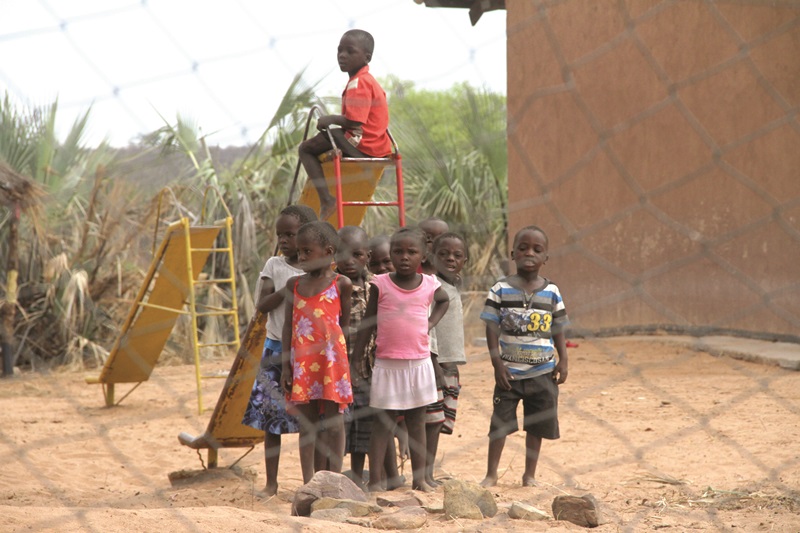
. . . as child support dwindles, Children in broken homes suffering, Shut out of society without birth certificates

Source: . . . as child support dwindles, Children in broken homes suffering, Shut out of society without birth certificates | Daily News CHILDREN in broken families are suffering badly from divorce or parental break-ups. The Daily News on Sunday can report a perfect storm of worsening economic conditions and poverty is putting a squeeze […]

The post . . . as child support dwindles, Children in broken homes suffering, Shut out of society without birth certificates appeared first on Zimbabwe Situation.

Source: . . . as child support dwindles, Children in broken homes suffering, Shut out of society without birth certificates | Daily News

CHILDREN in broken families are suffering badly from divorce or parental break-ups.

The Daily News on Sunday can report a perfect storm of worsening economic conditions and poverty is putting a squeeze on the source of income for poor single-mother families, many are once again flooding the courts seeking upward variations of their maintenance orders.

But magistrates are turning down most of the single mothers’ applications on the basis that even though the cost of living has gone up, salaries of the dads have remained unchanged.

And in most instances, mothers with limited earnings potential often have children with men who also have limited economic resources.

This sad state of affairs has had unintended consequences for economically vulnerable and otherwise fragile families, with many single moms having difficulty managing to the best advantage of their children.

Oblivious of the required fundamentals in seeking a maintenance increment, single mothers are flooding the courts but leaving disappointed.

Judiciary officers have the duty to weigh the economic well-being of the non-resident father and the demand for an upward variation of child support in the income packages of resident mothers.

In all instances, the single mother argues that the money which their former boyfriends or husbands were initially ordered to pay can no longer sustain the children in question.

Most of the women, who are barely making ends meet as single parents let alone afford legal representation, attribute their demands to rising inflation, high cost of living as evidenced by the price increases of food, stationery, school uniforms and clothes amongst others.

While one may be mistaken to think that their applications have merit and the courts have no other option but to rule in their favour, this is not the case.

Children rights activists who spoke to the Daily News on Sunday said dragging each other to court is a last resort because a child is the responsibility of both parents.

Justice for Children coordinator Chinga Govhati said parents who contribute monthly support for their children are in a dilemma as they are struggling in an environment where prices are constantly rising.

And the courts are taking particular attention to the economic impact of child support on payers and recipients.

This comes as the economy went into a tail spin after Finance minister Mthuli Ncube introduced a two percent tax on all electronic payments in October last year, sparking a sharp and relentless increase in prices of basic goods.

The consequences of the controversial tax were not only felt on the economy but also cascaded to household level.

Prices of basic goods and services skyrocketed as manufacturers transferred the high cost of production on consumer prices in an attempt to make a profit.

With the cost of living continuing to rise and concomitantly inflation soaring as evidenced by the latest figures from the Zimbabwe national Statistical Agency (Zimstat), single parents are emerging as the most affected.

According to Zimstat, year-on-year inflation for the month of January raced to 56,9 percent, the highest since hyperinflation 10 years ago.

Besides the skyrocketing prices of basis, some single mothers have retained counsel to argue their child support cases in court.

Govhati said lately, Justice for Children has been receiving as many as 10 custody cases per day from economically-strapped parents, particularly fathers who are convinced that having custody of their children will reduce the maintenance burden.

“The organisation has also seen an increase in the number of women approaching the organisation for help in seeking upward variation of existing maintenance orders.

“In the same vein, we have also seen mothers who are struggling to provide for themselves seeking economic relief through claiming maintenance for their children,” Govhati said.

In the face of a failing economy, Govhati said there is no way that the demand for child support can be met.

When prices are changing every day, this may prompt women to seek upward variation each time they visit the store, resulting in courts failing to cope with the high demand for legal services.

Zimbabwe National Council for the Welfare of Children director Reverend Taylor Nyanhete said men refuse to maintain their children due to their negative attitudes.

“Men are always difficult in contributing to maintenance because they tend to transfer the hurt associated with the broken relationship to the child, but that is not the right attitude,” Nyanhete said.

“Denying women upward variation on the basis that salaries have not changed is not a valid reason because there are other areas where people are getting income to supplement their salaries. Unfortunately, the courts tend to consider the pay slip when making such decisions.”

He said providing evidence proving the increased financial demand for the child’s necessities must be enough to sway the courts to rule in favour of the applicant.

Nyanhete said since the welfare of the child is at stake, parents can share custody of the children as a way of equally sharing responsibility, adding that when one has the custody of the children, they will appreciate that the cost of living has gone up and that the child support they are forking out is no longer adequate.

“However, a lot of mothers do not feel comfortable having the children raised by the fathers but this is another way of dealing the matter,” he said.

Nyanhete pledged to raise the issue with the chief magistrate when they convene for the quarterly victim friendly meeting scheduled for this month.

Parents who live in separate households also lose the economies of scale associated with shared housing and other resources, and therefore are at an economic disadvantage relative to two-parent households, regardless of their individual incomes.

In the face of dwindling child support and poverty, most of the children end up doing badly at school, suffering poor health, falling into crime and addiction.

The post . . . as child support dwindles, Children in broken homes suffering, Shut out of society without birth certificates appeared first on Zimbabwe Situation.

Zim-Bots relations hit new high

Source: Zim-Bots relations hit new high | Sunday Mail Africa Moyo Senior Business Reporter The signing of 1 billion pula credit facility between Zimbabwe and Botswana last week, which is aimed at capacitating the local private sector, has catapulted relations between the two neighbours to a higher level. Botswana President Dr Mokgweetsi Masisi, described the […]

The post Zim-Bots relations hit new high appeared first on Zimbabwe Situation.

Source: Zim-Bots relations hit new high | Sunday Mail

Africa Moyo
Senior Business Reporter

The signing of 1 billion pula credit facility between Zimbabwe and Botswana last week, which is aimed at capacitating the local private sector, has catapulted relations between the two neighbours to a higher level.

Botswana President Dr Mokgweetsi Masisi, described the inaugural Bi-National Commission (BNC) between his country and Zimbabwe as “the beginning of a long journey which is ahead of us”, and economic commentators in the country share his views.

From being sworn enemies in the last few years during the tenures of former Presidents Robert Mugabe and Seretse Khama Ian Khama, Zimbabwe and Botswana have signed potentially game-changing Memorandi of Understanding, which are expected to not only boost their respective economies, but also forge closer political ties.

For countries belonging to the same regional bloc, SADC, the bad relations were seen as “un-African and retrogressive”.

President Masisi said they initially wanted to extend a P600 million facility, but later decided to increase it to P1 billion so that the local private sector can access more and boost operations.

A communique on the BNC says the discussions between the two Presidents were designed to “further strengthen and deepen the bond of friendship and cooperation between Zimbabwe and Botswana”.

Six agreements and MoUs, including cooperation in the energy sector to ramp up the development and industrialisation efforts of the two countries, were “welcomed” by the leaders.

Other agreements and MoUs were on Geology, Mining, Metallurgy; Extradition Treaty; Diplomatic Consultations; Rules and Procedures Governing the meeting of the BNC; and Cooperation in the field of Science and Technology.

The MoUs on Geology, Mining, Metallurgy are seen as critical in boosting cooperation in the mining sector, particularly the diamond industry in which Gaborone has “considerable experience and expertise”, due to several years in the business.

Further, the two Presidents called for an increase in “volumes of trade and investments between their countries”.

In this regard, they called for a business forum to be convened on the sidelines of the Zimbabwe International Trade Fair (ZITF) set for April 23 to 27.

Last year, a high powered Botswana delegation that included the Botswana Investment and Trade Centre (BITC), participated in the ZITF, and had a cocktail organised by the Zimbabwe Investment Authority (ZIA) to cement ties.

BITC, is a Botswana investment and trade promotion agency of .

President Mnangagwa said he was pleased that the inaugural BNC session had “set the legal framework for broad cooperation in the agreed areas”.

“Through our collective efforts, may the conclusion of these agreements not be an end in itself, but the beginning of greater bilateral cooperation for the benefit of our people and future generations.

“History has shown us that where people and nations get used to working together, they grow to share the same vision and aspirations. I am confident that Zimbabwe and Botswana have set themselves along this path,” said President Mnangagwa.

On his part, President Masisi said the BNC was the beginning of a “strong and long journey”, and “more work still needs to be done”, to allow private sector businesspeople and private citizens to play a key role in further strengthening “our bilateral relations”.

“There is no doubt that our success in implementing the commitments we make today will go a long way in ensuring a conducive environment for our people and businesses to increase their interaction,” said President Masisi.

Industry speaks on ties

Industry and Commerce Minister Nqobizitha Mangaliso Ndlovu told The Sunday Mail Business that beyond the signing of the P1 billion credit facility, the “improving relations” were critical to promote economic growth in both countries.

The two countries were now discussing “possible trade issues”, with the hope of boosting trade volumes.

“We believe we can do much more than our current levels of trade,” said Minister Ndlovu, adding that there was a marked improvement in volumes last year “compared to the last four years or so.

“. . . when we were looking at it, 2018 was really quite good and we hope to specifically improve on our exports to Botswana markets,” said Minister Ndlovu.

Economic analyst Mr Persistence Gwanyanya believes the facility signed between the two countries is “more realistic”, adding that it was “good for Botswana to diversify its economy by considering investing offshore in countries such as Zimbabwe, which is one of the countries with significant investment opportunities in Africa”.

“Look here, we have more than 40 well sought-after minerals in the world and Botswana has only one, diamonds. This means there are significant business opportunities to grab in Zimbabwe, as the country tries to rebuild.

“You should also know that Botswana is rated as the best investment destination in Southern Africa and can easily attract international capital to invest all over the world.

“But what is important is to ensure that we improve our investment environment to also attract this capital from Botswana. We really need to work hard on this score especially through working on ease of doing business reforms.”

Confederation of Zimbabwe Industries (CZI) president Mr Sifelani Jabangwe also said it was important for Zimbabwe to strengthen relations with its neighbours as they were a huge potential market for local manufacturers.

“Look, Botswana wants to grow its economy and Zimbabwe wants more investments; and Botswana has a fairly high ranking for its banks in terms of attracting capital from abroad,” said Mr Jabangwe. So when Botswana diversifies into Zimbabwe, local businesses can also take advantage of some of these joint ventures that governments are forging, and supply some of their products into Botswana and grow their businesses.

“So we expect the Bi-National Commissions to help local entrepreneurs to penetrate that market.”

CZI has already signed an MoU with Business Botswana last year during President Mnangagwa’s State visit, in a bid to deepen relations with fellow private sector players.

Zimbabwe Exports to Botswana were US$29,08 Million during 2016, according to the United Nations COMTRADE database on international trade. This was a measly contribution to Botswana’s import bill of US$6,1 billion.

The trade statistics are now expected to jump going forward following the credit facility extended by Botswana, and a general improvement in relations.

The post Zim-Bots relations hit new high appeared first on Zimbabwe Situation.