Govt explains diesel shortages

Source: Govt explains diesel shortages | Daily News HARARE –  Government has apologised for the current shortages of diesel on the market which it said had been caused by a “logistical” glitch. This comes as most garages are struggling to raise money on time to pay for their stocks from fuel companies who traditionally have demanded […]

The post Govt explains diesel shortages appeared first on Zimbabwe Situation.

Source: Govt explains diesel shortages | Daily News

HARARE –  Government has apologised for the current shortages of diesel on the market which it said had been caused by a “logistical” glitch.

This comes as most garages are struggling to raise money on time to pay for their stocks from fuel companies who traditionally have demanded payment in advance.

The challenges to raise enough cash for payment to fuel companies has been necessitated by the recent increases in prices of both petrol and diesel which sources said explains queues at some of the garages, especially those in high density suburbs where motorists are struggling to fill their tanks.

Responding to the diesel shortages, government said it had “rectified” the problem which it said had been caused by purchasing more petrol stocks than diesel.

“Government apologises for the logistical glitch which resulted in fuel retailers ordering more petrol than diesel giving rise to diesel shortages.

“The situation has been attended to and normalcy in the fuel retail sector is expected to have been attained within the next few hours,” government said on Twitter.

Business urged government to act on the diesel “shortages” which it said was impacting negatively on transportation of goods.

“Consistent fuel supply is very key to economic progress and we need to ensure that there are minimal glitches on supply side because it might portray a negative image unnecessarily.

“The respective ministry should work closely with the Reserve Bank of Zimbabwe to ensure that at any given time there is adequate fuel supply.

“As private entities, we depend on availability that is guaranteed by government so we are hopeful that this is a temporary glitch that will not happen in the future,” said Confederation of Zimbabwe Retailers president Denford Mutashu.

Zimbabwe was last month thrown into a fresh and mega crisis when angry protesters flooded the streets of Harare, Bulawayo and several other towns across the country, demonstrating against sharp fuel price hikes.

The steep fuel price hikes were announced by President Emmerson Mnangagwa ahead of his trip to Eastern Europe.

Property worth millions of dollars was also destroyed and looted in the mayhem which ensued, after thousands of workers heeded the Zimbabwe Congress of Trade Unions (ZCTU’s) three-day strike call.

At the same time, security forces unleashed a brutal crackdown against the protesters, the opposition and civil society leaders — in a move which received wide condemnation in the country and around the world.

At least 20 people are now said to have died, while nearly 100 others have been treated for serious gunshot wounds, according to rights groups and medical doctors.

The post Govt explains diesel shortages appeared first on Zimbabwe Situation.

More parties pull out of ED talks

Source: More parties pull out of ED talks | Daily News HARARE – President Emmerson Mnangagwa’s plan to convene a national dialogue with small opposition parties has been dealt a body blow after at least four parties have disengaged citing a sincerity and trust deficit from the 76-year-old strongman. Mnangagwa had initially invited many of the […]

The post More parties pull out of ED talks appeared first on Zimbabwe Situation.

Source: More parties pull out of ED talks | Daily News

HARARE – President Emmerson Mnangagwa’s plan to convene a national dialogue with small opposition parties has been dealt a body blow after at least four parties have disengaged citing a sincerity and trust deficit from the 76-year-old strongman.

Mnangagwa had initially invited many of the country’s well-known opposition figures, including those who contested him in last year’s hotly-disputed presidential election.

But opposition leader Nelson Chamisa was the first to snub Mnangagwa’s initial talks-about-talks gathering at State House because he preferred the much-talked about national dialogue to be held under the guidance of an impartial, regional convener.

Notable opposition politicians who attended that initial indaba were Thokozani Khupe, Nkosana Moyo, Lovemore Madhuku, Daniel Shumba, Noah Manyika, Elton Mangoma, Ambrose Mutinhiri, Timothy Chiguvare and Bryn Mteki.

Joice Mujuru of the People Rainbow Coalition snubbed Mnangagwa’s meeting together with Zimbabwe Partnership for Prosperity president Blessing Kasiyamhuru.

Last week, Build Zimbabwe leader Manyika and Shumba of the United Democratic Alliance (UDA) opted out of the talks saying they refuse to “sanitise a conspiracy or be part of a betrayal of the people’s expectations.”

And this week another presidential candidate,  Chiguvare also opted out the talks.

This comes as under-fire Mnangagwa was touting the talks as breaking new ground in his response to the worsening crisis in Zimbabwe.

The leaders that have withdrawn claim that Mnangagwa is not sincere about an all-stakeholder dialogue, and are also demanding the inclusion of Chamisa.

In an interview with the Daily News, Shumba, a retired colonel, said: “Zimbabweans should be able to determine the category of those who are still on the table. However, we wish them well. The refusal to provide a legal framework for the negotiations renders the whole platform unconstitutional.”

The former Zanu PF Masvingo Central legislator said current efforts by Mnangagwa for dialogue are designed to hoodwink the nation into believing that there is seriousness on his part when that is not the case.

“The Constitution of Zimbabwe doesn’t provide for such a process. The absence of a willingness to legitimise the national dialogue renders it an adventure or circus. The UDA refuses to be blindfolded or used as an extension of Zanu PF,” he said.

“The nation shouldn’t expect any outcomes. The national dialogue fallacy is meant to clothe the fox in sheep’s clothes. The UDA won’t sanitise a conspiracy or be part of a betrayal of the people’s expectations. We’re not opportunists and won’t be part of a process that fortifies delinquencies at the people’s expense,” the businessman-cum-politician said.

Last week, Manyika also sent a letter to Mnangagwa indicating that he will not take part in the discussions because it was not inclusive.

“No meaningful dialogue can happen without a neutral and credible convener being agreed on to facilitate a broad and inclusive dialogue that will include trade unionists, political parties, activities, civic groups and all stakeholders to ensure that the views and interests of all Zimbabweans are represented.

“It is also my position that any dialogue that does not include the MDC Alliance and other critical stakeholders will not pass the credibility test locally and globally,” Manyika’s missive to the president said.

Kasiyamhuru said he did not attend the meeting because he was no longer in politics.

“I am not a politician,” said Kasiyamhuru curtly when the Daily News asked him why he was not attending the national dialogue meetings.

Respected University of Zimbabwe political science lecturer Eldred Masunungure said the dialogue was bound to fail because it did not include one of the key players, Chamisa.

“It is pretty obvious for anyone who follows local politics that anything that excludes the two titans, that is Mnangagwa and Chamisa is just kindergarten play. For any dialogue to take place, you need those two.

“Those are the two actors that really matter, the others are just spectators. Whatever happens, the two have to be combined.

“Now, they must come up with a third platform, probably a convener from the region. The key actors are two and any process that excludes those two is a charade. Even if those who have left were to remain, the outcome would have remained a nullity because Chamisa is not there,” Masunungure said.

Mangoma, who leads the Coalition for Democrats (Code), told the Daily News that the talks are genuine and will not be derailed because some players have decided to pull out.

“From a dialogue point of view, it’s so far so good. The people who are involved, I think they are going to determine the convener and also come with an agenda.

“The political group is just one among many. We shall make it broader and including other players, including the civil society and churches. I don’t believe that any person should hold the nation at ransom, the idea is to make it an inclusive dialogue,” Mangoma told this publication.

Asked if the participants in the ongoing dialogue are getting any payment from Mnangagwa, Mangoma said “not yet”.

“No one is being given money so far but in a framework that we have come up with, those who are travelling, there is need for out-of-pocket allowances, something for them, when they come to Harare,” Mangoma explained.

Frantic efforts to get a comment from Mnangagwa’s spokesperson George Charamba were futile.


The post More parties pull out of ED talks appeared first on Zimbabwe Situation.

GMB bosses challenge prosecution over $1m fraud

Source: GMB bosses challenge prosecution over $1m fraud | Daily News   HARARE – $1 million fraud charges have challenged a State decision to prosecute them arguing they should not be indicted in their individual capacities. Korbs Kobie Mutandiro, Basilio Sandamu and Taona Munzvandi made an application for exception to fraud charges on the basis […]

The post GMB bosses challenge prosecution over $1m fraud appeared first on Zimbabwe Situation.

Source: GMB bosses challenge prosecution over $1m fraud | Daily News


HARARE – $1 million fraud charges have challenged a State decision to prosecute them arguing they should not be indicted in their individual capacities.

Korbs Kobie Mutandiro, Basilio Sandamu and Taona Munzvandi made an application for exception to fraud charges on the basis the State grain utility they represented should have been charged.

They appeared before Harare regional magistrate Lucy Mungwari yesterday.

A ruling on their application will be passed this Thursday.

Prosecutor Michael Reza argued that the trio’s application was misplaced because it was the State’s prerogative to decide who to prosecute when seized with a matter.

He said according to section 362 (3) (v) of the Criminal Procedure and Evidence Act, a company’s representative could also be charged in their personal capacity.

“…the citation of a director or employee of a corporate body to represent that corporate body in any criminal proceedings instituted against it shall not exempt that director or employee from prosecution for that offence in personal capacity,” Reza said, quoting the Act.

Reza said Mutandiro and his accomplices had made similar applications before various other courts to no avail.

“The fiction of the separate corporate personality cannot be taken too far. There are occasions when the court is entitled to peer behind the façade of a fictitious separate legal person…some of these are if corporate personality is being used for fraud or illegal purpose,” Reza said.

According to the State, sometime in the late 90s, the government embarked on the Land Reform Programme which involved compulsory acquisition of land for re-distribution.

In terms of the Land Acquisition Act Chapter 20:10 and through an extraordinary Government Gazette general notice 591 of 2001, a notice was given to acquire Romany Farm under deed of transfer number 5421.

It was registered under Romany Farm (Pvt) Ltd measuring 197,37 hectares.

It was alleged that on April 30, 2013, Munzvandi, allegedly in connivance with Mutandiro and Sandamu, hatched a plan to defraud the GMB Fund.

The court heard that Munzvandi and Mutandiro entered into an agreement-of-sale of the said farm to GMB Pension Fund for $2,5 million knowing that the farm had been acquired by the State.

Acting on the misrepresentation, GMB Pension Fund transferred

$1 040 000 into Organs Resources (Pvt) Ltd’s Standard Chartered Bank corporate account where Mutandiro is the director and signatory to the bank account.

As a result, GMB Pension Fund was prejudiced $1 040 000 and nothing was recovered.

The post GMB bosses challenge prosecution over $1m fraud appeared first on Zimbabwe Situation.
Mutodi lashed over Mugabe comments

Source: Mutodi lashed over Mugabe comments | Daily News HARARE – Outspoken Information deputy minister Energy Mutodi has courted public anger over his attacks on former president Robert Mugabe who last week railed against a recent government crackdown against protesters. Mugabe warned President Emmerson Mnangagwa against using the military to contain protesters — in reference to […]

The post Mutodi lashed over Mugabe comments appeared first on Zimbabwe Situation.
Source: Mutodi lashed over Mugabe comments | Daily News

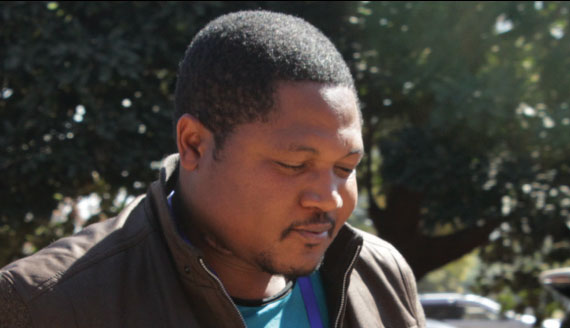
HARARE – Outspoken Information deputy minister Energy Mutodi has courted public anger over his attacks on former president Robert Mugabe who last week railed against a recent government crackdown against protesters.

Mugabe warned President Emmerson Mnangagwa against using the military to contain protesters — in reference to last month’s vicious crackdown by security forces on people who were demonstrating against sharp fuel price  hikes announced by the new Zanu PF leader.

Mutodi used micro-blogging site Twitter to call Mugabe to order.

“We have noted some words of repentance by former president Mugabe saying army must protect not kill.

“True that a few have lost lives in running battles with the police but that cannot compare with Gukurahundi or the 2008 violence when he was at the helm,” Mutodi said.

Mutodi’s comments did not go down well with the generality of Zimbabweans who said he was out of order.

“Saka sahwira uri kuti iwe imi muri nani nokuti makauraya vashoma? (So my friend you are saying you are better because you killed few people),” asked MDC secretary-general Douglas Mwonzora.

“Are you really going to act naive about who Mugabe’s henchman was? Are you that ignorant or do you think the people are stupid? Get a grip,” weighed in leader of opposition Build Zimbabwe, Noah Manyika.

Mnangagwa succeeded Mugabe as Zimbabwe’s second executive president following the fall of the long ruling nonagenarian who was dethroned from power in stunning fashion when the military staged a soft coup on November 15, 2017.

That military intervention was code-named Operation Restore Legacy, and saw Mugabe and his then influential wife being placed under house arrest.

The nonagenarian later resigned moments after Parliament had started damaging proceedings to impeach him.

Several Cabinet ministers linked to the G40 faction, which had coalesced around the erratic Grace, were also targeted in the military operation.

The annihilated G40 — with the visible help of Mugabe and Grace — was, before the military intervention, locked in a bitter war with Mnangagwa and his supporters for control of both Zanu PF and the country.

The post Mutodi lashed over Mugabe comments appeared first on Zimbabwe Situation.

Money changers feeling the pinch

Source: Money changers feeling the pinch | Daily News HARARE – Black market foreign currency traders have been hit hard by the new measures that were announced by the Reserve Bank of Zimbabwe (RBZ) last week, which have seen parallel rates beginning to stabilise. This comes as the government is, at the same time, ratcheting […]

The post Money changers feeling the pinch appeared first on Zimbabwe Situation.

Source: Money changers feeling the pinch | Daily News

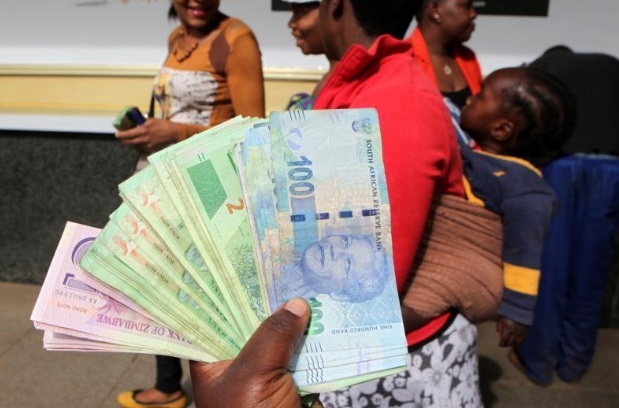
HARARE – Black market foreign currency traders have been hit hard by the new measures that were announced by the Reserve Bank of Zimbabwe (RBZ) last week, which have seen parallel rates beginning to stabilise.

This comes as the government is, at the same time, ratcheting up its blitz against illegal forex traders, leading to the traders — commonly known as Osiphatheleni in Bulawayo — suffering the double whammy of having to contend with both tumbling rates and the renewed government crackdown.

Yesterday, the local RTGS dollar was, on average, trading at between 3,4 and 3,6 to the American dollar on the parallel market in Harare and Bulawayo, depending on volumes — down from about four RTGS dollars at the end of last week.

“RBZ personnel, working together with the police, are patrolling the streets and searching suspected money changers. If they find you with more than $300, they demand an explanation and … also force you to go and deposit the money in a bank or you face arrest,” an aggrieved trader told the Daily News.

“The rates are unfortunately going down because of what (RBZ governor John) Mangudya did. For US$100 we will give you 340 bond or 360 RTGS depending on the numbers,” weighed in the trader’s counterpart — who said she was conducting her business underground.

Presenting his Monetary Policy Statement (MPS) in Harare last week, Mangudya said the new monetary policies that he effected would stabilise both exchange rates and the prices of goods and services.

He also revealed that the central bank had put in place measures to maintain stability in the market through the establishment of an inter-bank foreign exchange market with immediate effect — to formalise the trading of real time gross settlement (RTGS) balances and bond notes with hard currencies, on a willing-buyer willing-seller basis, through banks and bureaux de change.

“This is essential in order to bring sanity in the foreign currency market, whilst at the same time promoting exports, Diaspora remittances and investments for the good of our national economy,” he said.

“The use of RTGS dollars for domestic transactions will eliminate the existence of the multi-pricing system and charging of goods and services in foreign currency within the domestic economy.

“In this regard, prices should remain at their current levels and or to start to decline in sympathy with the stability in the exchange rate given that the current monetary balances have not been changed,” Mangudya added.

The interbank market became operational on Friday, with the RTGS dollar officially trading at 2,5 against the United States dollar.

Meanwhile, 24 illegal foreign currency traders appeared at the Harare Magistrates’ Courts yesterday on allegations of violating the foreign exchange laws — which now attract up to 10 years in prison.

Six of the alleged money changers were granted $150 bail each, with the rest being remanded in custody to today, for bail applications.

The post Money changers feeling the pinch appeared first on Zimbabwe Situation.