Court acquits doctor in ZACC obstruction case 

Source: Court acquits doctor in ZACC obstruction case -Newsday Zimbabwe CHINHOYI resident magistrate Nyasha Marufu has acquitted Makonde district medical officer Gift Masoja of defeating or obstructing the course of justice, ruling that prosecutors failed to prove their case beyond a reasonable doubt. The case stemmed from an incident on December 4 last year, when […]

The post Court acquits doctor in ZACC obstruction case  appeared first on Zimbabwe Situation.

Source: Court acquits doctor in ZACC obstruction case -Newsday Zimbabwe

CHINHOYI resident magistrate Nyasha Marufu has acquitted Makonde district medical officer Gift Masoja of defeating or obstructing the course of justice, ruling that prosecutors failed to prove their case beyond a reasonable doubt.

The case stemmed from an incident on December 4 last year, when investigators from the Zimbabwe Anti-Corruption Commission (ZACC), who were probing alleged bribery in the recruitment of student nurses at Chinhoyi Provincial Hospital, questioned Masoja as a person of interest.

According to the State, investigators demanded that Masoja surrender his mobile phone during the investigation. When he refused and walked away, ZACC pursued criminal charges, alleging he had obstructed the course of justice.

Delivering judgment last week, Marufu found that the prosecution had failed to establish the essential elements of the offence.

Masoja’s lawyer, Tungamirai Chamutsa, argued that his client was exercising his constitutional right to privacy because he had neither been arrested nor served with a valid search and seizure warrant when investigators demanded access to his phone.

“Shielded by his constitutional right to privacy, the medical chief was under absolutely no legal obligation to surrender his private data and communications simply because state agents demanded it,” Chamutsa submitted during the trial.

Masoja maintained throughout the proceedings that exercising his constitutional rights could not amount to a criminal offence.

In the ruling, Marufu said the State’s evidence, which relied heavily on testimony from a ZACC legal officer, was insufficient to prove that Masoja had the requisite criminal intent to defeat or obstruct the course of justice.

The magistrate subsequently acquitted him.

The post Court acquits doctor in ZACC obstruction case  appeared first on Zimbabwe Situation.

Govt debt to TelOne doubles to US$42m

Source: Govt debt to TelOne doubles to US$42m -Newsday Zimbabwe JUST a year after warning that unpaid government bills were choking its operations, State-owned telecommunications operator TelOne says outstanding government debt has more than doubled to nearly US$42 million, constraining its ability to invest in network expansion and modernisation. The arrears, which rose from US$19,2 […]

The post Govt debt to TelOne doubles to US$42m appeared first on Zimbabwe Situation.

Source: Govt debt to TelOne doubles to US$42m -Newsday Zimbabwe

JUST a year after warning that unpaid government bills were choking its operations, State-owned telecommunications operator TelOne says outstanding government debt has more than doubled to nearly US$42 million, constraining its ability to invest in network expansion and modernisation.

The arrears, which rose from US$19,2 million a year earlier, highlight the government’s growing reliance on delayed payments to State-owned enterprises, effectively forcing them to finance public operations while weakening their own liquidity and investment capacity.

According to TelOne’s 2025 annual report, the swelling receivables have limited the company’s ability to fund capital projects, maintain network infrastructure and expand using internally generated resources. Speaking at the company’s annual general meeting last Friday, chief executive officer Lawrence Nkala described the debt as a major operational constraint.

“We are better than the budget in terms of total operating cost by 2%… As the shareholder spoke to this, in these environments, we are affected in our operations by failure by the government to pay what is due,” he said.

“Currently, we do have close to US$42 million that we’re owed, ZiG1,2 billion, and it continues to increase. So, we want to be capacitated in that area.”

Nkala said TelOne required fresh capital injections rather than relying solely on borrowings.

“We would need not only debt financing, but we also want equity funding. There should be a deliberate attempt to invest rather than relying only on debt financing,” he said.

The disclosures reinforce broader concerns over the government’s increasing dependence on payment arrears to ease pressure on Treasury’s cash flows.

While this provides short-term fiscal relief, it transfers liquidity pressures to public enterprises, weakening their balance sheets and reducing their capacity to invest in strategic national infrastructure.

The debt burden comes despite growing demand for TelOne’s services.

Revenue increased 10% to ZiG2,6 billion during the year, driven mainly by a 60% increase in data usage as demand for broadband services continued to grow.

TelOne continues to grow as the preferred cheaper option for data services among internet service providers.

“Revenue for the period under review increased by 10% to ZiG2,6 billion, reflecting steady underlying growth compared to the prior year, anchored by continued network infrastructure investment,” TelOne said.

“Data usage during the period remained the primary growth driver, registering an increase of 60% compared to the same period last year.”

TelOne also reported strong growth from its strategic partnership with Starlink, generating US$3,7 million in revenue during 2025, up from US$215 000 in 2024.

“The business fully realised value out of its strategic partnership with Starlink a low-earth-orbit satellite service, recording revenue to the tune of US$3,7 million in 2025, up from US$215 000 in 2024,” TelOne said.

The company’s data centre business also continued to grow, providing another source of revenue diversification beyond traditional telecommunications services.

Representing Information Communication Technology, Postal and Courier Services minister Tatenda Mavetera, the ministry’s chief director Prince Sibanda acknowledged the debt challenge and said the government was working to address it.

“We recognise that debt remains a major constraint on the company’s ability to mobilise affordable capital and accelerate modernisation,” Sibanda said.

“Government appreciates the efforts being made to pursue sustainable solutions to this inherited burden.”

He urged the company’s board and management to continue strengthening corporate governance, financial management, accountability and operational efficiency.

The post Govt debt to TelOne doubles to US$42m appeared first on Zimbabwe Situation.

Fear grips migrants ahead of SA protests 

Source: Fear grips migrants ahead of SA protests -Newsday Zimbabwe FEAR is mounting among migrants in South Africa ahead of planned anti-foreigner protests, as rights groups and authorities warn of potential violence amid rising tensions linked to unemployment, inequality and renewed xenophobic sentiment. Calls for the protection of foreign nationals have intensified ahead of demonstrations […]

The post Fear grips migrants ahead of SA protests  appeared first on Zimbabwe Situation.

Source: Fear grips migrants ahead of SA protests -Newsday Zimbabwe

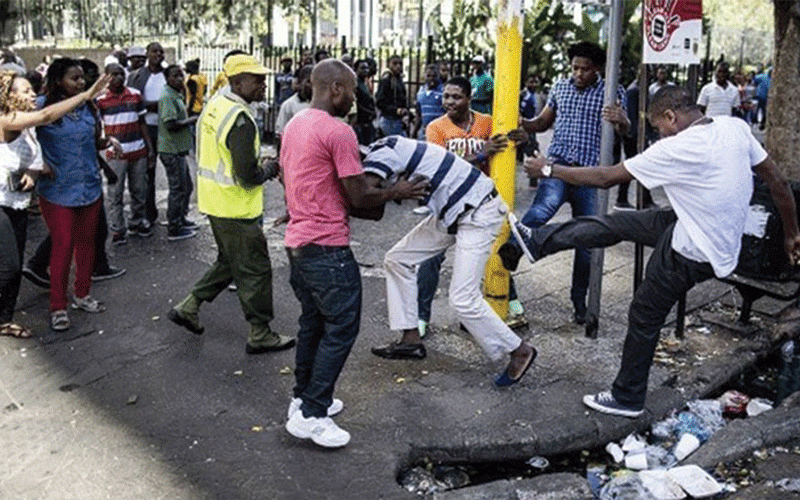
FEAR is mounting among migrants in South Africa ahead of planned anti-foreigner protests, as rights groups and authorities warn of potential violence amid rising tensions linked to unemployment, inequality and renewed xenophobic sentiment.

Calls for the protection of foreign nationals have intensified ahead of demonstrations expected tomorrow against undocumented migrants, with concerns growing over the potential for renewed violence and displacement.

South Africa has experienced periodic surges of anti-migrant protests and xenophobic unrest in recent years, often fuelled by high unemployment, economic hardship and pressure on public services. Vigilante groups have in some instances targeted undocumented foreigners, forcing thousands into shelters or prompting repatriation flights organised by their home countries, including Nigeria, Malawi, Zimbabwe and Ghana.

Protests, including marches organised by political parties such as the uMkhonto we Sizwe Party, have at times blamed undocumented migrants for job competition and strained services.

Tensions have previously escalated into deadly violence, with reports of foreign-owned businesses looted and property attacks in provinces including KwaZulu-Natal and the Western Cape.

Neighbouring countries, including Zimbabwe, have facilitated evacuation and repatriation for citizens who felt unsafe in recent periods.

In a joint statement, Southern African Doctors for Human Rights and Amnesty International expressed concern over reports of discrimination, attacks, intimidation, forced displacement and growing hostility toward foreign nationals in South Africa.

They said the violence was linked to long-standing socio-economic challenges, including unemployment, inequality, poverty and service delivery pressures, alongside concerns over migration governance.

“While these factors have contributed to rising tensions and the emergence of xenophobic sentiments, they do not justify violence, intimidation, discrimination or exclusion against any individual or group,” they said.

The organisations warned that increasing displacement of migrants, refugees and asylum seekers was creating protection and health risks for already vulnerable populations.

They said such conditions could disrupt access to essential healthcare, including services for people living with chronic illnesses such as HIV, tuberculosis, diabetes and hypertension.

The groups also warned of heightened risks of mental health challenges, gender-based violence, exploitation and inadequate access to water, sanitation and shelter in displacement settings.

 “Women, children, older persons, persons with disabilities and those requiring ongoing medical care are particularly in need of access to essential and specialist services during periods of displacement and instability,” the organisations said.

They urged South African authorities to ensure continued, non-discriminatory access to healthcare and protection services in line with constitutional and international obligations.

The organisations also said persistent inequality rooted in apartheid-era legacies continued to contribute to social tensions and scapegoating that can fuel violence.

South African authorities have not yet issued a detailed response to the planned protests, but security concerns remain heightened as communities brace for possible unrest.

The post Fear grips migrants ahead of SA protests  appeared first on Zimbabwe Situation.

Shabanie workers win big in landmark court ruling

Source: Shabanie workers win big in landmark court ruling -Newsday Zimbabwe THE Constitutional Court has upheld a High Court ruling declaring section 28(2) of the Reconstruction of State-Indebted Insolvent Companies Act unconstitutional, clearing the way for 27 former Shabani Mashava Mines (SMM) employees to recover terminal benefits withheld for nearly two decades. The applicants, led […]

The post Shabanie workers win big in landmark court ruling appeared first on Zimbabwe Situation.

Source: Shabanie workers win big in landmark court ruling -Newsday Zimbabwe

THE Constitutional Court has upheld a High Court ruling declaring section 28(2) of the Reconstruction of State-Indebted Insolvent Companies Act unconstitutional, clearing the way for 27 former Shabani Mashava Mines (SMM) employees to recover terminal benefits withheld for nearly two decades.

The applicants, led by Josephat Gwatida, took the Justice, Legal and Parliamentary Affairs minister and the Attorney General to the ConCourt seeking confirmation of a High Court order issued by Justice Sunsley Zisengwe on February 24 last year.

SMM was cited as the third respondent.

The case centred on the termination of the workers’ employment in October 2011, following SMM’s placement on reconstruction in 2004 due to severe financial distress.

While the company acknowledged its indebtedness to the workers for terminal benefits, the former employees found themselves trapped in a legal limbo when they sought to claim what was owed.

Under section 6(b) of the Reconstruction Act, they were required to obtain the administrator’s leave before instituting legal proceedings against SMM.

Their written request received no response.

Section 28(2) of the Act effectively suspended the protections of the Labour Act for employees of companies under reconstruction, leaving them without recourse to claim benefits or challenge their eviction from company-leased houses.

In their constitutional challenge, the workers argued that the section violated their rights to fair labour practices under section 65(1) and equality before the law under section 56(1) of the Constitution.

They contended that the provision unjustifiably shielded SMM from liability by imposing no time limit on the reconstruction process while allowing the company to evade statutory obligations indefinitely.

The High Court agreed, finding that the indefinite suspension of benefits was unfair, unreasonable, and unjustifiable.

The court drew a stark contrast with the Insolvency Act, which imposes clear timeframes for payment to former employees of insolvent companies, safeguards conspicuously absent from the Reconstruction Act.

The court also noted that no evidence showed withholding the benefits had improved SMM’s financial position.

When the matter came before the Constitutional Court, Chief Justice Elizabeth Gwaunza, sitting with Justices Paddington Garwe, Annie Gowora, Ben Hlatshwayo, Bharat Patel, Susan Mavangira and Nicholas Mathonsi, upheld the High Court’s reasoning.

“Section 86(2) requires not merely a legitimate purpose, but also a demonstrable proportionality between the means adopted and the rights limited.

“In this regard, the court a quo correctly held that the absence of temporal limits renders the limitation excessive and unjustifiable.

“An indefinite suspension of terminal benefits imposes a severe and open-ended burden on employees, who may be left without income or social security while reconstruction remains unresolved.

“Constitutional democracy does not permit the suspension of fundamental rights merely because efficiency or expediency is desirable,” the judges ruled.

The court suspended the order’s operation for 180 days to allow the responsible minister to regularise the matter.

The post Shabanie workers win big in landmark court ruling appeared first on Zimbabwe Situation.

Early action shields Zimbabwe from cholera

Source: Early action shields Zimbabwe from cholera -Newsday Zimbabwe ZIMBABWE’S investment in early health and water interventions helped avert major cholera and other waterborne disease outbreaks in vulnerable districts during the 2026 rainy season, demonstrating the effectiveness of anticipatory action in reducing disaster risks, a new report shows. The programme was launched after meteorological authorities […]

The post Early action shields Zimbabwe from cholera appeared first on Zimbabwe Situation.

Source: Early action shields Zimbabwe from cholera -Newsday Zimbabwe

ZIMBABWE’S investment in early health and water interventions helped avert major cholera and other waterborne disease outbreaks in vulnerable districts during the 2026 rainy season, demonstrating the effectiveness of anticipatory action in reducing disaster risks, a new report shows.

The programme was launched after meteorological authorities warned of an increased risk of disease outbreaks driven by La Niña-induced heavy rains, flooding and deteriorating water, sanitation and hygiene (WASH) conditions. Humanitarian agencies responded by implementing preventive measures before outbreaks could occur, shifting the focus from emergency response to early preparedness.

According to the Start Network report, Anticipation of Disease Outbreaks in Zimbabwe, the alert issued in January this year triggered a coordinated response involving humanitarian organisations, including Oxfam, Tearfund, HelpAge and Catholic Relief Services.

The organisations worked alongside local partners, including Community for Water Alliance, FACT Zimbabwe, the National Age Network of Zimbabwe and Caritas Masvingo.

The interventions targeted high-risk districts, including Bikita, Zaka and Chiredzi, where flooding and contaminated water posed heightened risks of cholera, malaria and acute diarrhoeal diseases.

The programme reached more than 77 000 people through a combination of clean water provision, disease prevention training, hygiene awareness campaigns and emergency preparedness initiatives.

Community boreholes were rehabilitated, inline chlorinators were installed, and water trucking was introduced to reduce dependence on contaminated water sources.

Households received WASH kits containing soap, buckets and water treatment chemicals, while women and girls were provided with dignity kits.

Communities also benefited from the introduction of the Sydney 905 bucket filtration system, designed to purify and safely store drinking water.

Health workers underwent advanced cholera management and infection prevention training, while village-level structures were strengthened to improve disease surveillance and rapid response.

“The training was a game-changer. We are no longer just a clinic waiting to be overwhelmed by a crisis. We are the community’s eyes and ears now, equipped to spot the warning signs and act fast,” said one health professional who participated in the programme.

The initiative also distributed US$10 000 worth of e-vouchers to 1 000 people, enabling households to purchase hygiene and disease prevention supplies such as mosquito repellents and handwashing soap from local vendors.

Community awareness campaigns were conducted through roadshows and radio programmes promoting hygiene practices and cholera prevention.

The report said the anticipatory interventions played a major role in interrupting disease transmission pathways and reducing exposure to contaminated water.

“Unlike in neighbouring districts, zero cholera cases were recorded and no major acute watery diarrhoea outbreaks were reported in the targeted districts, with fewer than 100 malaria cases witnessed in the project areas,” it said.

The programme has been hailed as an example of how early preparedness can save lives and reduce emergency response costs.

“This anticipatory action model is a blueprint for the future. It proved that investing a small amount upfront in preparedness, training, rehabilitation and community engagement can save millions in emergency response costs and, more importantly, save lives,” said one participant quoted in the report.

One of the project’s standout features was its emphasis on local leadership and community ownership.

Community for Water Alliance was given co-leadership status rather than serving merely as an implementing partner, allowing local actors to drive mobilisation, targeting and community engagement.

The programme also relied heavily on collaboration with the Health and Child Care ministry, district civil protection units, rural district councils and district water and sanitation committees.

A cascade training model enabled knowledge transfer from nurses to environmental health technicians and village health workers, strengthening grassroots preparedness and outbreak monitoring.

The report said pre-positioning of supplies and early deployment of interventions before the peak of the rainy season was critical to the programme’s success.

However, it also warned that short-term emergency interventions alone are insufficient to address Zimbabwe’s deeper WASH infrastructure challenges.


The post Early action shields Zimbabwe from cholera appeared first on Zimbabwe Situation.