Why are fuel prices not back to normal in Zimbabwe despite global oil prices reverting to pre-war levels?

Source: Why are fuel prices not back to normal in Zimbabwe despite global oil prices reverting to pre-war levels? When the wicked rule, the people groan. Tendai Ruben Mbofana The recent global energy market trends present a glaring paradox that the long-suffering people of Zimbabwe are forced to confront daily at the fuel pumps.  If […]

The post Why are fuel prices not back to normal in Zimbabwe despite global oil prices reverting to pre-war levels? appeared first on Zimbabwe Situation.
Source: Why are fuel prices not back to normal in Zimbabwe despite global oil prices reverting to pre-war levels?

When the wicked rule, the people groan.


Tendai Ruben Mbofana

The recent global energy market trends present a glaring paradox that the long-suffering people of Zimbabwe are forced to confront daily at the fuel pumps. 

If you value my social justice advocacy and writing, please consider a financial contribution to keep it going. Contact me on WhatsApp: +263 715 667 700 or Email: mbofana.tendairuben73@gmail.com

Following a dramatic monthly reduction in June 2026, international oil prices have effectively erased the geopolitical risk premium sparked by the recent U.S.-Iran conflict in the Middle East. 

As diplomatic breakthroughs reopen critical maritime chokepoints like the Strait of Hormuz and Persian Gulf exports recover to 75 percent of their pre-war averages, the global benchmarks have come crashing down. 

Brent crude and WTI have tumbled by roughly 20 percent this month alone, landing comfortably back into the pre-war territory of $72 and $69 a barrel respectively—matching the baselines seen before the outbreak of hostilities in February.

Yet, as the rest of the world experiences a tangible reprieve from inflationary pressures, the domestic pricing structure in Zimbabwe remains stubbornly frozen in a high-cost time capsule. 

The Zimbabwe Energy Regulatory Authority recently adjusted prices to nearly $1.98 per litre for E20 petrol and $1.99 for diesel. 

For the ordinary motorist, commuter, and manufacturer, this stubborn refusal of prices to drop feels like a calculated betrayal. 

Before the war began, petrol retailed at approximately $1.51 per litre. 

Today, despite international crude returning to the exact same baselines, Zimbabweans are paying a massive premium of nearly 50 cents more per litre. 

This discrepancy cannot be blamed on the war, nor can it be excused by external supply chain shocks. 

It is a direct consequence of predatory domestic fiscal policies and uncompetitive statutory mandates.

To understand why our fuel has not returned to normal, one must look at how the state weaponized a global crisis for domestic revenue collection. 

When the war in the Middle East broke out and international landing costs naturally surged, the government used the ensuing chaos as a shield to permanently restructure domestic fuel taxes. 

Under the cover of global inflation, the Treasury aggressively hiked levies and duties, adding over 33 cents of pure domestic tax burden per litre of petrol blend. 

Now that the international market has corrected itself and crude prices have plummeted, these opportunistic tax increases have not been repealed. 

Instead, they have been quietly institutionalized into the pricing formula. 

The raw, free-on-board landing cost of fuel has dropped significantly, but the state’s fixed take per litre remains bloated, effectively setting an artificial floor below which local prices are legally not allowed to fall.

This fiscal extraction is compounded by the counterproductive domestic blending mandates that govern our fuel sector. 

When the nation was under an E15 mandate, the promise was that local ethanol production would cushion consumers against international shocks. 

Instead, the recent escalation to an E20 mandate—forcing a 20 percent local ethanol blend—has backfired spectacularly on the consumer. 

The domestic production of absolute ethanol is treated as a protected monopoly, with pricing that remains completely insulated from global market realities. 

When global oil decrease, the 80 percent unleaded portion of our fuel gets cheaper, but the 20 percent local ethanol portion remains stubbornly and artificially inflated. 

By forcing oil companies to purchase a larger share of this uncompetitive domestic component, the government has ensured that any savings realized from falling international crude prices are heavily diluted before they ever reach the pump.

The absurdity of Zimbabwe’s current pricing regime becomes undeniable when contrasted with our regional neighbors. 

As a landlocked country, Zimbabwe often blames high costs on the logistics of the Beira-to-Feruka pipeline and shipping distances. 

However, our immediate neighbors—who navigate the exact same landlocked vulnerabilities and global supply chains—are currently passing the benefits of the international price collapse directly to their citizens. 

Petrol in Zambia is retailing around $1.54, Botswana sits at $1.53, and Mozambique is at $1.47. 

These countries are successfully returning to their pre-war economic realities because their governments have not chosen to bleed their productive sectors dry through extractive fuel taxation and extortionist blending.

The economic implications for Zimbabwe are devastating. 

High fuel prices act as a regressive tax on every single citizen, driving up the cost of basic commodities, manufacturing, and public transport in an already fragile economy. 

By keeping fuel prices artificially pegged near the $2.00 mark while the rest of the region enjoys a relief, the authorities are systematically dismantling local industrial competitiveness and fueling a domestic cost-of-living crisis. 

The current pricing structure proves that the extra 47 cents paid at the pump is no longer a reflection of geopolitical conflict or global scarcity. 

It is a domestic penalty imposed by a fiscal regime that refuses to let go of crisis-era windfall taxes, leaving Zimbabweans to pay war-time prices in a post-war market.

The post Why are fuel prices not back to normal in Zimbabwe despite global oil prices reverting to pre-war levels? appeared first on Zimbabwe Situation.

Why are fuel prices not back to normal in Zimbabwe despite global oil prices reverting to pre-war levels?

Source: Why are fuel prices not back to normal in Zimbabwe despite global oil prices reverting to pre-war levels? When the wicked rule, the people groan. Tendai Ruben Mbofana The recent global energy market trends present a glaring paradox that the long-suffering people of Zimbabwe are forced to confront daily at the fuel pumps.  If […]

The post Why are fuel prices not back to normal in Zimbabwe despite global oil prices reverting to pre-war levels? appeared first on Zimbabwe Situation.
Source: Why are fuel prices not back to normal in Zimbabwe despite global oil prices reverting to pre-war levels?

When the wicked rule, the people groan.


Tendai Ruben Mbofana

The recent global energy market trends present a glaring paradox that the long-suffering people of Zimbabwe are forced to confront daily at the fuel pumps. 

If you value my social justice advocacy and writing, please consider a financial contribution to keep it going. Contact me on WhatsApp: +263 715 667 700 or Email: mbofana.tendairuben73@gmail.com

Following a dramatic monthly reduction in June 2026, international oil prices have effectively erased the geopolitical risk premium sparked by the recent U.S.-Iran conflict in the Middle East. 

As diplomatic breakthroughs reopen critical maritime chokepoints like the Strait of Hormuz and Persian Gulf exports recover to 75 percent of their pre-war averages, the global benchmarks have come crashing down. 

Brent crude and WTI have tumbled by roughly 20 percent this month alone, landing comfortably back into the pre-war territory of $72 and $69 a barrel respectively—matching the baselines seen before the outbreak of hostilities in February.

Yet, as the rest of the world experiences a tangible reprieve from inflationary pressures, the domestic pricing structure in Zimbabwe remains stubbornly frozen in a high-cost time capsule. 

The Zimbabwe Energy Regulatory Authority recently adjusted prices to nearly $1.98 per litre for E20 petrol and $1.99 for diesel. 

For the ordinary motorist, commuter, and manufacturer, this stubborn refusal of prices to drop feels like a calculated betrayal. 

Before the war began, petrol retailed at approximately $1.51 per litre. 

Today, despite international crude returning to the exact same baselines, Zimbabweans are paying a massive premium of nearly 50 cents more per litre. 

This discrepancy cannot be blamed on the war, nor can it be excused by external supply chain shocks. 

It is a direct consequence of predatory domestic fiscal policies and uncompetitive statutory mandates.

To understand why our fuel has not returned to normal, one must look at how the state weaponized a global crisis for domestic revenue collection. 

When the war in the Middle East broke out and international landing costs naturally surged, the government used the ensuing chaos as a shield to permanently restructure domestic fuel taxes. 

Under the cover of global inflation, the Treasury aggressively hiked levies and duties, adding over 33 cents of pure domestic tax burden per litre of petrol blend. 

Now that the international market has corrected itself and crude prices have plummeted, these opportunistic tax increases have not been repealed. 

Instead, they have been quietly institutionalized into the pricing formula. 

The raw, free-on-board landing cost of fuel has dropped significantly, but the state’s fixed take per litre remains bloated, effectively setting an artificial floor below which local prices are legally not allowed to fall.

This fiscal extraction is compounded by the counterproductive domestic blending mandates that govern our fuel sector. 

When the nation was under an E15 mandate, the promise was that local ethanol production would cushion consumers against international shocks. 

Instead, the recent escalation to an E20 mandate—forcing a 20 percent local ethanol blend—has backfired spectacularly on the consumer. 

The domestic production of absolute ethanol is treated as a protected monopoly, with pricing that remains completely insulated from global market realities. 

When global oil decrease, the 80 percent unleaded portion of our fuel gets cheaper, but the 20 percent local ethanol portion remains stubbornly and artificially inflated. 

By forcing oil companies to purchase a larger share of this uncompetitive domestic component, the government has ensured that any savings realized from falling international crude prices are heavily diluted before they ever reach the pump.

The absurdity of Zimbabwe’s current pricing regime becomes undeniable when contrasted with our regional neighbors. 

As a landlocked country, Zimbabwe often blames high costs on the logistics of the Beira-to-Feruka pipeline and shipping distances. 

However, our immediate neighbors—who navigate the exact same landlocked vulnerabilities and global supply chains—are currently passing the benefits of the international price collapse directly to their citizens. 

Petrol in Zambia is retailing around $1.54, Botswana sits at $1.53, and Mozambique is at $1.47. 

These countries are successfully returning to their pre-war economic realities because their governments have not chosen to bleed their productive sectors dry through extractive fuel taxation and extortionist blending.

The economic implications for Zimbabwe are devastating. 

High fuel prices act as a regressive tax on every single citizen, driving up the cost of basic commodities, manufacturing, and public transport in an already fragile economy. 

By keeping fuel prices artificially pegged near the $2.00 mark while the rest of the region enjoys a relief, the authorities are systematically dismantling local industrial competitiveness and fueling a domestic cost-of-living crisis. 

The current pricing structure proves that the extra 47 cents paid at the pump is no longer a reflection of geopolitical conflict or global scarcity. 

It is a domestic penalty imposed by a fiscal regime that refuses to let go of crisis-era windfall taxes, leaving Zimbabweans to pay war-time prices in a post-war market.

The post Why are fuel prices not back to normal in Zimbabwe despite global oil prices reverting to pre-war levels? appeared first on Zimbabwe Situation.

Death a painful reality: President

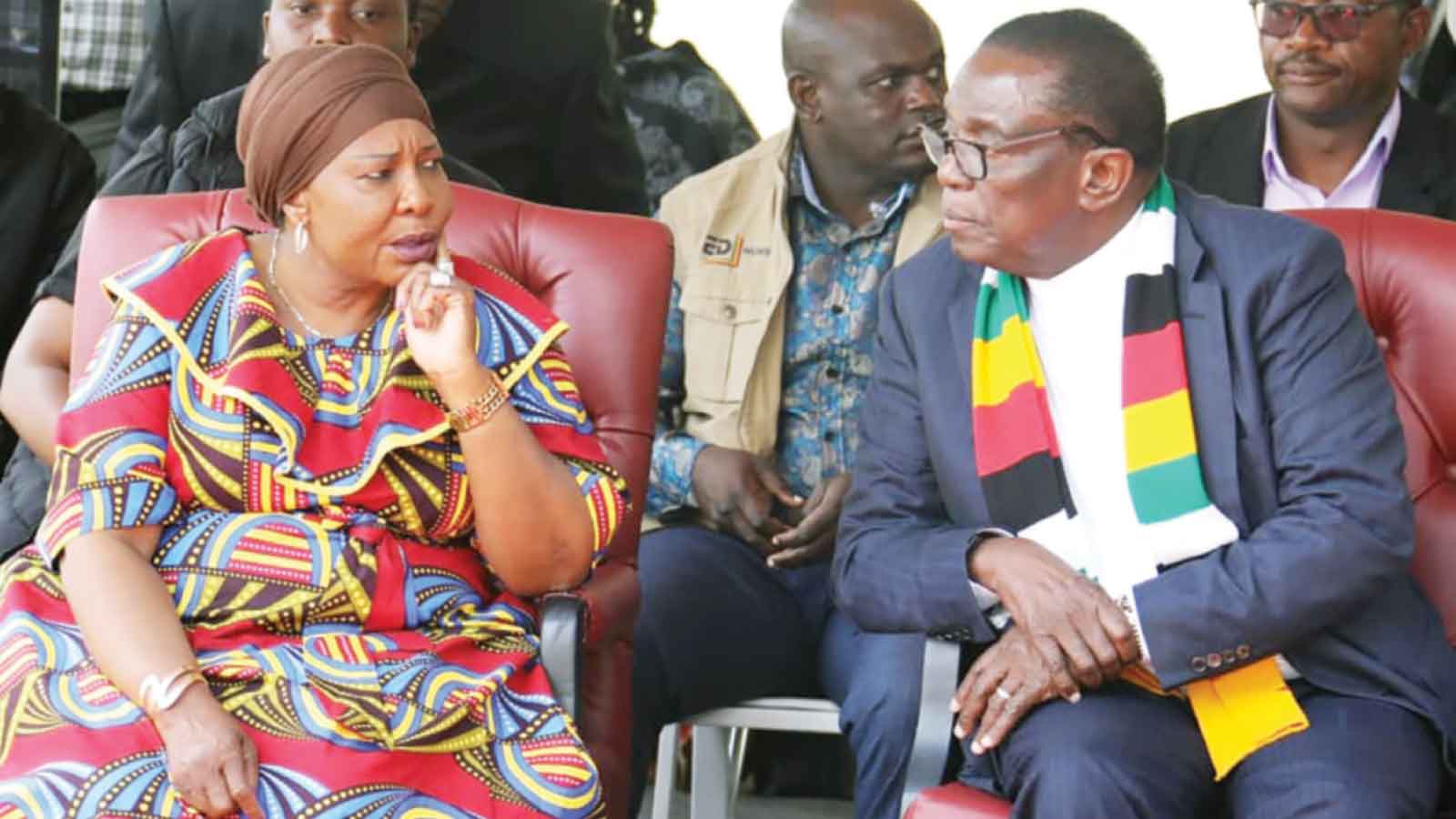
Source: Death a painful reality: President – herald President Mnangagwa and First Lady Dr Auxillia Mnangagwa chat at the burial of their niece, Shamiso, in Bikita, Masvingo Province, yesterday. – Pictures: Justin Mutenda Zvamaida Murwira in BIKITA PRESIDENT Mnangagwa has described the death of his niece, Shamiso, as a painful event they had to accept […]

The post Death a painful reality: President appeared first on Zimbabwe Situation.

Source: Death a painful reality: President – herald

Zvamaida Murwira in BIKITA

PRESIDENT Mnangagwa has described the death of his niece, Shamiso, as a painful event they had to accept as a family.

She was 41.

The young age at which death had claimed her life, the President said, was an indication that death was not determined by one’s age, but was part of God’s plan.

The President, who was accompanied by First Lady, Dr Auxillia Mnangagwa, said this yesterday, while addressing mourners gathered at the family homestead in Bikita District, Masvingo Province, for the burial of his niece.

Shamiso, whose grandmother is a sister to President Mnangagwa, died last Friday and was buried at the homestead yesterday.

“None in the Mnangagwa family ever expected such a sudden death. No. We did not. It was so sudden and shocking,” said President Mnangagwa.

“What remains is the memory. Death is very painful, but it has to be accepted. If you do not accept it, you will equally die out of the loss.”

He said death knew no age as it could strike, regardless of one’s age.

“Death knows no age. If it considered one’s age, my niece, Shamiso, would have said to God, why taking me first, younger as I am, ahead of my uncle, who is much older than me,” said President Mnangagwa.

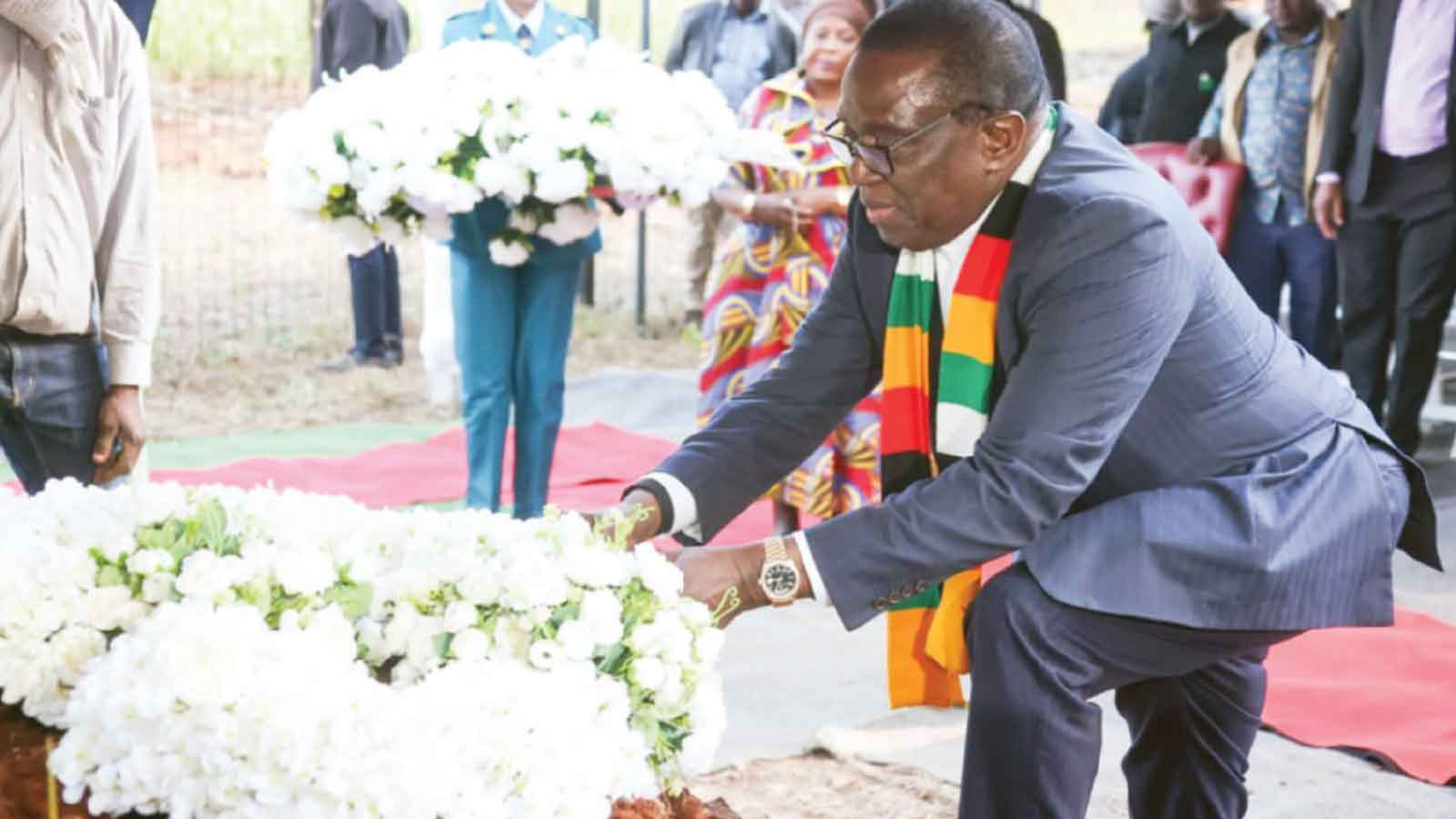
President Mnangagwa lays a wreath on the grave of his niece, Shamiso, in Bikita yesterday as the First Lady Dr Auxillia Mnangagwa and other relatives look on

He said death was part of God’s plan, where everyone’s day was fixed just as one’s birthday.

“Only the Lord above knew her date of birth and death. Only God knows the date of your death,” he said.

“Everyone has his or her date of death written on one’s forehead, but the date has been hidden from us, but it is there.”

President Mnangagwa said death was not determined by votes as in politics.

“For one to be President, Member of Parliament or a councillor, you have to be voted for. But not with death. Imagine if people were to vote for one’s death?” he said.

President Mnangagwa described Shamiso as soft, hardworking and talented.

“This lady whom we are gathered here for, has been taken so early, she was young and promising. She was still a flower in the family and country. We had high hopes for her,” said President Mnangagwa.

“She was very talented, soft, respectful and was not lazy. She had a good education, always jovial. We say God gave us and has taken and he does so at his will.”

The President commended the huge crowd that came to mourn with his family, saying it was a demonstration of love and unity.

Family members and relatives accompany a hearse carrying the body of Shamiso to the burial site

The First Lady, Dr Mnangagwa, said Shamiso’s passing had deeply saddened the family, adding that they would always cherish her life, the love she shared and the values she upheld as a member of the family.

“Shamiso was a gentle, kind and respectful woman. Whenever I visited this home, she was always the first to welcome me,” she said.

“The last time I came here, I was surprised that she did not come out to receive me. I assumed she had gone out, only to be told that she was unwell and suffering from pain in her legs.”

Dr Mnangagwa said while a mother is the first to nurture a child’s character and values, once a child is born, they ultimately become a child of the whole community.

The First Lady said it is, therefore, everyone’s responsibility to help raise children with good morals and upright character, who are respectful, humble and well-mannered.

Zanu PF National Chairman and Defence Minister Oppah Muchinguri-Kashiri commended President Mnangagwa for his great efforts in turning around the country’s economy. She said it was for that reason that a huge crowd came to commiserate with President Mnangagwa.

Several speakers, who include senior Government officials, relatives and friends, commended President Mnangagwa’s leadership and spoke well about Shamiso’s legacy.

They include Minister of National Security and Zanu PF Politburo member, Cde Lovemore Matuke, Masvingo Provincial Affairs and Devolution Minister, Cde Ezra Chadzamira, Zanu PF Provincial Chairperson for Masvingo province Cde Robson Mavhenyengwa, Shamiso’s uncle, Cde Tongai Mnangagwa among others.

Hundreds of people drawn from across the country thronged the Mnangagwa family homestead to pay their last respects.

They include Government Ministers, Zanu PF Politburo members, businesspersons, different church denominations, relatives and friends.

The post Death a painful reality: President appeared first on Zimbabwe Situation.

Death a painful reality: President

Source: Death a painful reality: President – herald President Mnangagwa and First Lady Dr Auxillia Mnangagwa chat at the burial of their niece, Shamiso, in Bikita, Masvingo Province, yesterday. – Pictures: Justin Mutenda Zvamaida Murwira in BIKITA PRESIDENT Mnangagwa has described the death of his niece, Shamiso, as a painful event they had to accept […]

The post Death a painful reality: President appeared first on Zimbabwe Situation.

Source: Death a painful reality: President – herald

Zvamaida Murwira in BIKITA

PRESIDENT Mnangagwa has described the death of his niece, Shamiso, as a painful event they had to accept as a family.

She was 41.

The young age at which death had claimed her life, the President said, was an indication that death was not determined by one’s age, but was part of God’s plan.

The President, who was accompanied by First Lady, Dr Auxillia Mnangagwa, said this yesterday, while addressing mourners gathered at the family homestead in Bikita District, Masvingo Province, for the burial of his niece.

Shamiso, whose grandmother is a sister to President Mnangagwa, died last Friday and was buried at the homestead yesterday.

“None in the Mnangagwa family ever expected such a sudden death. No. We did not. It was so sudden and shocking,” said President Mnangagwa.

“What remains is the memory. Death is very painful, but it has to be accepted. If you do not accept it, you will equally die out of the loss.”

He said death knew no age as it could strike, regardless of one’s age.

“Death knows no age. If it considered one’s age, my niece, Shamiso, would have said to God, why taking me first, younger as I am, ahead of my uncle, who is much older than me,” said President Mnangagwa.

President Mnangagwa lays a wreath on the grave of his niece, Shamiso, in Bikita yesterday as the First Lady Dr Auxillia Mnangagwa and other relatives look on

He said death was part of God’s plan, where everyone’s day was fixed just as one’s birthday.

“Only the Lord above knew her date of birth and death. Only God knows the date of your death,” he said.

“Everyone has his or her date of death written on one’s forehead, but the date has been hidden from us, but it is there.”

President Mnangagwa said death was not determined by votes as in politics.

“For one to be President, Member of Parliament or a councillor, you have to be voted for. But not with death. Imagine if people were to vote for one’s death?” he said.

President Mnangagwa described Shamiso as soft, hardworking and talented.

“This lady whom we are gathered here for, has been taken so early, she was young and promising. She was still a flower in the family and country. We had high hopes for her,” said President Mnangagwa.

“She was very talented, soft, respectful and was not lazy. She had a good education, always jovial. We say God gave us and has taken and he does so at his will.”

The President commended the huge crowd that came to mourn with his family, saying it was a demonstration of love and unity.

Family members and relatives accompany a hearse carrying the body of Shamiso to the burial site

The First Lady, Dr Mnangagwa, said Shamiso’s passing had deeply saddened the family, adding that they would always cherish her life, the love she shared and the values she upheld as a member of the family.

“Shamiso was a gentle, kind and respectful woman. Whenever I visited this home, she was always the first to welcome me,” she said.

“The last time I came here, I was surprised that she did not come out to receive me. I assumed she had gone out, only to be told that she was unwell and suffering from pain in her legs.”

Dr Mnangagwa said while a mother is the first to nurture a child’s character and values, once a child is born, they ultimately become a child of the whole community.

The First Lady said it is, therefore, everyone’s responsibility to help raise children with good morals and upright character, who are respectful, humble and well-mannered.

Zanu PF National Chairman and Defence Minister Oppah Muchinguri-Kashiri commended President Mnangagwa for his great efforts in turning around the country’s economy. She said it was for that reason that a huge crowd came to commiserate with President Mnangagwa.

Several speakers, who include senior Government officials, relatives and friends, commended President Mnangagwa’s leadership and spoke well about Shamiso’s legacy.

They include Minister of National Security and Zanu PF Politburo member, Cde Lovemore Matuke, Masvingo Provincial Affairs and Devolution Minister, Cde Ezra Chadzamira, Zanu PF Provincial Chairperson for Masvingo province Cde Robson Mavhenyengwa, Shamiso’s uncle, Cde Tongai Mnangagwa among others.

Hundreds of people drawn from across the country thronged the Mnangagwa family homestead to pay their last respects.

They include Government Ministers, Zanu PF Politburo members, businesspersons, different church denominations, relatives and friends.

The post Death a painful reality: President appeared first on Zimbabwe Situation.

Zimbabwe, China set for inaugural investment symposium

Source: Zimbabwe, China set for inaugural investment symposium – herald Minister July Moyo Herald Correspondent LOCAL and international business titans will converge in Harare on Thursday for the inaugural Zimbabwe-China Investment Symposium, a high-level indaba aimed at unlocking fresh economic frontiers and driving national industrialisation. The all-day event, running under the theme; “Strengthening Relations to […]

The post Zimbabwe, China set for inaugural investment symposium appeared first on Zimbabwe Situation.

Source: Zimbabwe, China set for inaugural investment symposium – herald

Herald Correspondent

LOCAL and international business titans will converge in Harare on Thursday for the inaugural Zimbabwe-China Investment Symposium, a high-level indaba aimed at unlocking fresh economic frontiers and driving national industrialisation.

The all-day event, running under the theme; “Strengthening Relations to Unlock Zimbabwe’s Potential”, is being jointly convened by Africapaciti Investment Group and the Chamber of Chinese Enterprises in Zimbabwe at the Golden Conifer Conference Centre.

This platform is designed to advance Zimbabwe’s National Development Strategy 2 (NDS2) and Vision 2030 targets by establishing new pathways for inclusive economic growth, technology transfer, policy alignment and infrastructure development.

Energy and Power Development Minister July Moyo will headline the symposium as the guest of honour, while Permanent Secretary for Presidential Affairs and Devolution in the Office of the President, Engineer Tafadzwa Muguti, will also address delegates, making a strong pitch for enhanced Chinese participation in provincial economies.

The diplomatic community and Chinese private sector will be represented at the highest level by Chinese Ambassador to Zimbabwe Zhou Ding, alongside the Chinese Chamber of Enterprises leadership, comprising chairperson Mr Benson Xu and secretary-general Mr William Wen.

Speaking ahead of the symposium, Africapaciti chief executive Mrs Tsungai Muguti revealed that the forum is intentionally structured to deliver tangible economic outcomes rather than just high-level dialogue.

“Zimbabwe possesses immense investment potential across a wide range of sectors, and this symposium provides an important platform for building strategic partnerships that will unlock shared prosperity,” Mrs Muguti said.

“Our vision is to create a platform where relationships are transformed into sustainable investments that drive inclusive economic growth, create jobs and stimulate industrial growth.”

Africapaciti Group’s Head of Investments and Advisory Services, Mr Andy Hodges, echoed these sentiments, noting that the high calibre of speakers and delegates shows the mutual commitment of both nations to enhance their economic frameworks.

“The Zimbabwe-China Investment Symposium is a milestone in boosting and further improving the already strong relationship and cooperation, both diplomatically but more importantly economically, between Zimbabwe and China,” he said.

“The calibre of speakers, panellists and delegates demonstrates the strong commitment from both nations to unlock Zimbabwe’s vast potential.

Through meaningful dialogue and strategic collaboration, we are building the frameworks that will support inclusive growth, industrialisation, investment and job creation for years to come.”

Key regulatory and investment promotion State entities—including the Reserve Bank of Zimbabwe (RBZ), the Financial Intelligence Unit (FIU), the Zimbabwe Revenue Authority (ZIMRA), the Department of Immigration, ZimTrade, and the Zimbabwe Investment and Development Agency (ZIDA) — are expected to attend, alongside Provincial Affairs and Devolution Ministers from all 10 provinces.

Organisers listed priority areas for discussion, including creating an attractive investment environment for Chinese investors; expanding agricultural exports under China’s zero-tariff trade policy; mining sector opportunities; tourism and hospitality investment; land management and rural industrialisation; financial inclusion, incentives and regulatory reforms; and technology transfer.

The symposium will conclude with the presentation of key resolutions and recommendations on enhancing, building and expanding Zimbabwe-China investment cooperation.

“Those interested in attending this free inaugural Zimbabwe-China Investment Symposium can register at zimchinasymposium.com,” Africapaciti Group public relations and marketing communications officer Ms Precious Mpanduki said.

The post Zimbabwe, China set for inaugural investment symposium appeared first on Zimbabwe Situation.