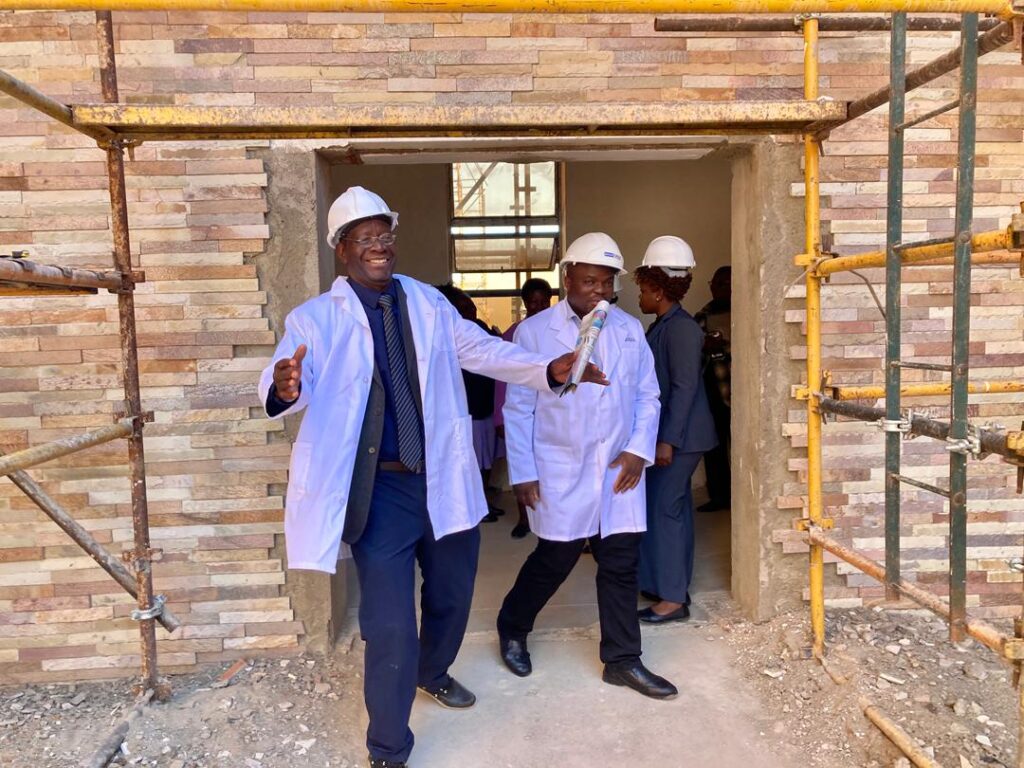
Mpilo Hospital renovations near completion 

Source: Mpilo Hospital renovations near completion — CITEZW Renovations at Mpilo Central Hospital in Bulawayo undertaken under the Presidential Hospital Rehabilitation, Upgrading and Modernisation Scheme are nearing completion, with hospital authorities claiming works on two major blocks are now estimated to be between 80 and 90 percent complete. The contractor responsible for the hospital rehabilitation […]

The post Mpilo Hospital renovations near completion  appeared first on Zimbabwe Situation.

Source: Mpilo Hospital renovations near completion — CITEZW

Renovations at Mpilo Central Hospital in Bulawayo undertaken under the Presidential Hospital Rehabilitation, Upgrading and Modernisation Scheme are nearing completion, with hospital authorities claiming works on two major blocks are now estimated to be between 80 and 90 percent complete.

The contractor responsible for the hospital rehabilitation works is Prevail Group of Companies, owned by Special Presidential Investment Advisor Dr Paul Tungwarara.

Bulawayo Minister of State for Provincial Affairs and Devolution, Judith Ncube, on Wednesday toured the institution alongside a delegation from the Joint Operations Command (JOC), the Department of Public Works and other government departments to assess progress on the project.

The tour was led by Mpilo Central Hospital, Acting Chief Medical Officer, Professor Solwayo Ngwenya and hospital management officials.

Renovations are currently focused on Blocks C and D, with hospital authorities indicating that the upgraded wards are expected to be completed by the end of the year.

Mpilo Acting Clinical Director, Dr Fanuel Mwedzi, said the completion of the two blocks would pave the way for the next phase of works.

“We are very excited with the exercise started by the President of Zimbabwe. As you can see, this is very beautiful work that started here. Works for Phase One are almost 80 to 90 percent complete,” said Dr Mwedzi.

“We started with Blocks C and D and renovations are very good. The works are almost done. We think by the end of the year these two blocks will almost be complete, then we will shift patients from Blocks A and B to C and D while renovations proceed to other blocks.”

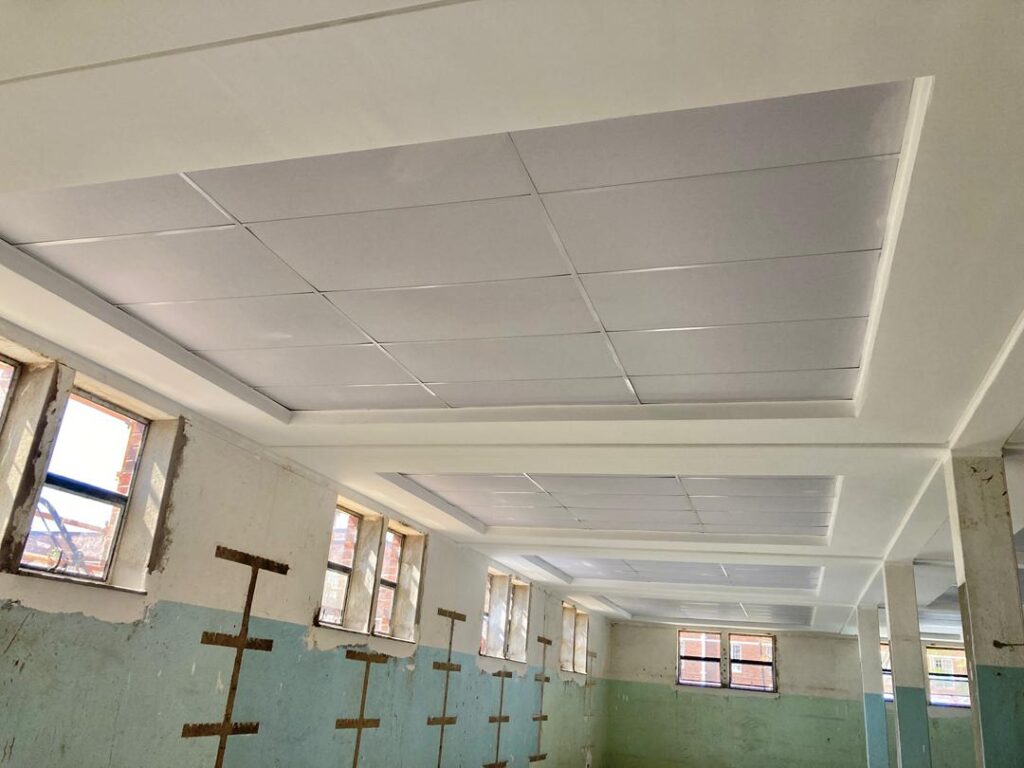
Speaking after touring the renovated wards, Minister Ncube said government officials wanted to appreciate progress made so far, describing Mpilo as one of the first public health institutions to benefit from the large-scale refurbishment programme.

“We wanted to appreciate what has been done here so far. If you look at these renovations, we really appreciate what the President is doing to our health institutions, Mpilo being one of those first institutions to benefit from such huge renovations,” she said.

“Every time when the President talks of Vision 2030, we would be wondering what exactly that is, but with these huge renovations done here, we are seeing light in the circumstances that we will be able to achieve or attain Vision 2030.”

Ncube said she had been briefed by Prof Ngwenya on improvements at the hospital, including increased availability of medicines.

“I was talking to the Acting CMO, Prof Ngwenya, who was telling me there is a lot of improvement in this hospital including medication. Prior to this direction, they would simply be writing what is expected to be provided by a patient but of late, the medication is readily available and the patient is supplied with what is needed,” she said.

She commended hospital management for efforts made to improve services, recounting a conversation she had with a member of the public who praised the hospital’s recent transformation.

“One day when I was driving out of this institution, one woman said to me, ‘There’s a lot of improvement. We are so grateful. Do you know Ngwenya?’ I then said, ‘No, I don’t know him.’ She said, ‘He’s the one in charge, it’s now better, it was bad here, there was negligence.’”

Ncube said public institutions required dedicated leadership and encouraged officials entrusted with public responsibilities to perform diligently.

“Whenever you have been assigned to do something, please put your heart into it and perform the best you can do so that people will certainly say, ‘Siyabonga umuntu onjengo Ngwenya basincedisile and we are so grateful.’”

The provincial minister added that she had engaged the contractor on the construction of a canteen and restaurant facility to provide medical personnel with a dignified space where they could have meals and take lunch breaks.

Prof Ngwenya welcomed the ministerial visit, saying the refurbishment programme would significantly improve patient care at a hospital that was built more than seven decades ago.

“We are very happy today to receive the Resident Minister to tour the President’s scheme of renovating, upgrading and modernising our hospitals, which is a very excellent idea,” he said.

“This hospital was built in 1953, so to upgrade and modernise it will benefit our patients to be cared for in an environment that matches modern times. We are very happy progress is going on very well. We hope to finish these blocks and then move to the other blocks.”

The Mpilo rehabilitation programme is a recent initiative of the government aimed at refurbishing and modernising public health institutions across the country.

The post Mpilo Hospital renovations near completion  appeared first on Zimbabwe Situation.

TIZ urges public participation in Whistleblower Bill hearings 

Source: TIZ urges public participation in Whistleblower Bill hearings — CITEZW Transparency International Zimbabwe (TIZ) has called on citizens and stakeholders to actively participate in upcoming parliamentary public hearings on the Whistle-Blowers and Witness Protection Bill, 2026, saying broad public engagement is essential to ensure effective protection for individuals who expose corruption and wrongdoing. The […]

The post TIZ urges public participation in Whistleblower Bill hearings  appeared first on Zimbabwe Situation.

Source: TIZ urges public participation in Whistleblower Bill hearings — CITEZW

Transparency International Zimbabwe (TIZ) has called on citizens and stakeholders to actively participate in upcoming parliamentary public hearings on the Whistle-Blowers and Witness Protection Bill, 2026, saying broad public engagement is essential to ensure effective protection for individuals who expose corruption and wrongdoing.

The call comes as Zimbabwe joins the global community in commemorating World Whistleblower Day, a day dedicated to recognising the courage of people who report corruption, fraud, abuse of office, misuse of public resources and other forms of misconduct in the public interest.

In a statement, TIZ welcomed the gazetting of the Whistle-Blowers and Witness Protection Bill, 2026 by the Government of Zimbabwe on 22 May 2026, describing it as a significant step towards strengthening integrity, transparency and accountability in both the public and private sectors.

“The Bill represents an important milestone towards strengthening integrity, transparency and accountability in Zimbabwe’s public and private sectors, while recognising the critical role whistleblowers play in exposing corruption and protecting public resources,” TIZ said.

The anti-corruption watchdog praised several provisions contained in the proposed law, including protection against reprisals and occupational detriment, confidentiality safeguards, protection for individuals making disclosures in good faith, and the application of the framework across both public and private institutions.

The Bill also provides protection for disclosures related to corruption, bribery, fraud, abuse of office, misuse of public resources and violations of the law.

TIZ further welcomed plans to establish a Whistleblower Protection Unit and a Whistleblower Protection Programme to safeguard individuals who face threats as a result of reporting wrongdoing.

“The establishment of a Whistleblower Protection Unit and Whistleblower Protection Programme is also a significant step towards safeguarding witnesses and persons facing threats as a result of reporting wrongdoing.” Said TIZ.

According to TIZ, these measures are in line with regional and international anti-corruption frameworks, including the African Union Convention on Preventing and Combating Corruption and the United Nations Convention against Corruption (UNCAC), which encourage states to put in place effective systems for protecting reporting persons.

However, the organisation said the Bill could be strengthened further before it is enacted into law.

“While the Bill is a welcome and necessary step, TI Z believes there are areas that require further strengthening. These include: Strengthening independence and oversight: Ensuring that the mechanisms responsible for receiving disclosures, protecting whistleblowers, and managing retaliation complaints operate with sufficient independence, credibility, and accountability • Comprehensive support for whistleblowers: Providing clear measures for financial legal, and psychosocial support for whistleblowers who experience employment, social, or other forms of harm after reporting wrongdoing.”

Other recommendations include ensuring timely investigation of disclosures, regular feedback to whistleblowers, stronger accountability for delays in investigations, and enhanced protection for public interest disclosures made to journalists and civil society organisations when official reporting channels are ineffective or compromised.

TIZ also urged lawmakers to adopt a gender-responsive approach to whistleblower protection, noting that women and vulnerable groups often face unique risks such as intimidation, harassment and sextortion.

The organisation further proposed the introduction of appropriate incentives to encourage the reporting of significant corruption cases and support the recovery of public resources, while maintaining safeguards against abuse.

“As Zimbabwe commemorates World Whistleblower Day, TIZ encourages citizens, civil society organisations, professional bodies, private sector actors and public institutions to actively participate in the parliamentary consultation process,” the organisation said.

“Effective whistleblower protection legislation requires broad stakeholder engagement to ensure that those who speak out in the public interest are genuinely protected.”

TIZ said it remains committed to supporting reforms that promote transparency, accountability and citizen participation, and pledged to continue engaging Parliament, Government and other stakeholders to ensure the final law provides meaningful protection for individuals who courageously report corruption and abuse.

The post TIZ urges public participation in Whistleblower Bill hearings  appeared first on Zimbabwe Situation.

Senator Moyo warns CAB3 risks democratic regression 

Source: Senator Moyo warns CAB3 risks democratic regression — CITEZW Matabeleland South Senator Solani Moyo has urged Zimbabwe’s Senate to reject Constitutional Amendment Bill No. 3 (CAB3), warning that the proposed reforms would weaken democratic safeguards, concentrate power in the Executive and erode citizens’ role in choosing their leaders. Speaking during debate on the Bill […]

The post Senator Moyo warns CAB3 risks democratic regression  appeared first on Zimbabwe Situation.

Source: Senator Moyo warns CAB3 risks democratic regression — CITEZW

Matabeleland South Senator Solani Moyo has urged Zimbabwe’s Senate to reject Constitutional Amendment Bill No. 3 (CAB3), warning that the proposed reforms would weaken democratic safeguards, concentrate power in the Executive and erode citizens’ role in choosing their leaders.

Speaking during debate on the Bill in the Senate on Tuesday, Moyo said the proposed amendments undermined key constitutional principles, including universal suffrage, separation of powers and accountability.

“Our Constitution is founded on a simple but powerful idea: all authority is derived from the people,” he told senators.

“That principle is not symbolic, it is binding. It is expressed through universal suffrage, regular elections, separation of powers and accountability of those in office. This Bill strikes at each of these principles.”

Moyo first challenged the process through which the amendments were being pursued, arguing that constitutional safeguards under Section 328 had not been properly followed.

“Before we even consider the substance, the process of amending the Constitution is already fatally flawed,” he said.

He argued that public consultations had been inadequate and, in some cases, marred by intimidation and violence.

Moyo also questioned whether the parliamentary majority backing the Bill genuinely reflected the will of the electorate, and raised concerns over attempts to avoid a referendum.

“A Constitution cannot be amended through an unconstitutional process,” he said.

A major point of contention is the proposal to extend the terms of elected officials from five years to seven.

Moyo said Parliament had no moral or constitutional authority to lengthen its own mandate without first returning to voters.

“What we as the Senate are being asked to do is to extend our own term,” he said.

“No elected body has the authority to extend its own mandate without returning to the people.”

He warned that such a move could set a dangerous precedent.

“That is how democracies die — not in a single moment but through incremental extensions of power without accountability.”

“The people elected us for five years, not seven. We have no mandate to change that.”

Moyo said lawmakers had not campaigned in the 2023 elections on a promise to remain in office beyond 2028.

“None of us told the people that if you vote for us, we will change the Constitution so that we remain in office until 2030,” he said.

The senator also accused the Bill of attempting to sidestep Section 328(7), which prevents incumbents from benefiting from constitutional amendments affecting term limits.

“Section 328(7) exists for one reason — to prevent those in power from changing the rules to benefit themselves,” he said.

“That is not constitutional amendment. That is constitutional defiance.”

Moyo strongly opposed Clause 3 of the Bill, which proposes removing direct presidential elections and transferring the power to elect the President to Parliament.

He said the change would weaken democratic participation and increase the risk of political manipulation.

“Clause 3 proposes to remove the people’s right to directly elect the President,” he said.

“It reduces millions of voters to a small group of politicians and opens the door to elite capture, patronage and corruption.”

“A President chosen by politicians is not the same as a President chosen by the people.”

He raised concerns that the proposed system could allow individuals unknown to the public — or even those rejected by voters — to become President through parliamentary processes.

Moyo also questioned why the Bill did not require a secret ballot for the election of a President by Parliament.

“Why is a secret ballot necessary for the election of the President of the Senate and the Speaker of the National Assembly, but not for the highest office of the land?” he asked.

Turning to the Senate’s composition, Moyo criticised proposals to increase the number of unelected senators appointed by President Emmerson Mnangagwa.

He warned that the change could tilt the balance of power in the Upper House.

“This is not reform,” he said. “It is manipulation of the democratic system.”

Moyo also rejected government arguments that more appointed senators would improve parliamentary oversight.

He said executive appointments to the legislature would weaken, rather than strengthen, accountability.

“How having persons appointed by the Executive to the Legislature will enhance the Legislature’s oversight role over the Executive is unclear,” he said.

“Clearly, it will have the opposite effect.”

The senator also objected to proposed changes affecting election management, including transferring control of the voters’ roll from the Zimbabwe Electoral Commission to the Registrar General and creating a new delimitation commission appointed by the President.

“If the Executive controls the process, the credibility of elections is destroyed,” he said.

Moyo further warned that judicial independence could be weakened by reforms giving the President broader powers to appoint judges.

He said the Bill would remove public participation in judicial appointments and reduce the role of the Judicial Service Commission.

“When one office controls appointments across the system, the risk is obvious: justice becomes vulnerable to political influence,” he said.

“The proposed amendment is a threat to judicial independence and will erode public confidence in the rule of law.”

Moyo said the various provisions in the Bill revealed a broader pattern of centralising power.

“Each of these changes is concerning on its own, but together they reveal a clear pattern,” he said.

“Power is being centralised, the people are being excluded, safeguards are being removed and accountability is being weakened.”

“This is not constitutional reform. It is a fundamental shift away from democracy.”

Urging senators to reject CAB3, Moyo said any constitutional reform should be transparent, lawful and grounded in public consent.

“This Bill violates the Constitution, undermines democracy and removes power from the people of Zimbabwe,” he said.

“The Constitution belongs to the people and we are merely its custodians. Let us not betray that trust.”

The post Senator Moyo warns CAB3 risks democratic regression  appeared first on Zimbabwe Situation.

Armed police raid Constitution Defenders Forum offices, official arrested 

‘We view this as an attempt to intimidate citizens and activists exercising their constitutional rights’ Source: Armed police raid Constitution Defenders Forum offices, official arrested – Zimbabwe News Now CDF activist Paul Gorekore HARARE — Armed police raided the offices of the Constitution Defenders Forum on Tuesday night and seized several items including T-shirts and […]

The post Armed police raid Constitution Defenders Forum offices, official arrested  appeared first on Zimbabwe Situation.

‘We view this as an attempt to intimidate citizens and activists exercising their constitutional rights’

Source: Armed police raid Constitution Defenders Forum offices, official arrested – Zimbabwe News Now

CDF activist Paul Gorekore

HARARE — Armed police raided the offices of the Constitution Defenders Forum on Tuesday night and seized several items including T-shirts and flyers, the organisation said.

The group, formed to resist attempts to amend the constitution and extend President Emmerson Mnangagwa’s term of office beyond constitutional limits, said its director of programmes for Harare, Paul Gorekore, had been arrested hours earlier after police raided his home in Mbare.

Just after 11PM, armed police in two pick-up trucks arrived at the CDF offices, housed in the same building as Biti Law Chambers — the law firm of the group’s leader Tendai Biti — and confronted a guard who fled.

They proceeded into the CDF office, which is on a floor above Biti’s legal firm, and began seizing items of interest. CDF said it would compile a full inventory of what was taken.

“We strongly condemn the arrest and detention of our Harare federation director of programmes following an unlawful entry and search at his house by the ZRP,” CDF said in a statement issued before the raid at its offices.

“We view this as an attempt to intimidate citizens and activists exercising their constitutional rights to freedom of expression, association, and peaceful civic participation.”

“We call upon the police to act strictly in accordance with the law, respect due process, and immediately release him without charge. Advocating against Constitutional Amendment Bill (No. 3) is not a crime. We remain vigilant and resolute in defending constitutionalism and the rights of all citizens.”

The National Assembly passed the Bill to extend presidential terms from five to seven years on June 18.

The constitutional amendments would allow Mnangagwa to remain in power until 2030.

Some 216 ​lawmakers voted in favour of the draft legislation, passing the 187 mark needed ​for a two-thirds majority.

The Bill is now being debated in the Senate where it is also expected to sail through as Mnangagwa’s governing Zanu PF party ​controls it through traditional leaders and other proxies who generally vote with the party.

Signs that ​Mnangagwa, 83, wanted to stay in power beyond the end of his second term in 2028 emerged about two years ago, when his supporters started chanting slogans at Zanu PF rallies that he needed more ​time to complete his agenda.

The party last year resolved to change the constitution to lengthen presidential ​terms and the plan received cabinet backing in February.

Critics say the bill is a ruse for Mnangagwa to ‌stay ⁠in power for longer, though its backers say it will strengthen accountability and foster political stability.

The Bill  has faced uncharacteristically vocal opposition from the public and some independence war veterans, who turned on ​their erstwhile ally, accusing him of a power grab.

The post Armed police raid Constitution Defenders Forum offices, official arrested  appeared first on Zimbabwe Situation.

Armed police raid Constitution Defenders Forum offices, official arrested 

‘We view this as an attempt to intimidate citizens and activists exercising their constitutional rights’ Source: Armed police raid Constitution Defenders Forum offices, official arrested – Zimbabwe News Now CDF activist Paul Gorekore HARARE — Armed police raided the offices of the Constitution Defenders Forum on Tuesday night and seized several items including T-shirts and […]

The post Armed police raid Constitution Defenders Forum offices, official arrested  appeared first on Zimbabwe Situation.

‘We view this as an attempt to intimidate citizens and activists exercising their constitutional rights’

Source: Armed police raid Constitution Defenders Forum offices, official arrested – Zimbabwe News Now

CDF activist Paul Gorekore

HARARE — Armed police raided the offices of the Constitution Defenders Forum on Tuesday night and seized several items including T-shirts and flyers, the organisation said.

The group, formed to resist attempts to amend the constitution and extend President Emmerson Mnangagwa’s term of office beyond constitutional limits, said its director of programmes for Harare, Paul Gorekore, had been arrested hours earlier after police raided his home in Mbare.

Just after 11PM, armed police in two pick-up trucks arrived at the CDF offices, housed in the same building as Biti Law Chambers — the law firm of the group’s leader Tendai Biti — and confronted a guard who fled.

They proceeded into the CDF office, which is on a floor above Biti’s legal firm, and began seizing items of interest. CDF said it would compile a full inventory of what was taken.

“We strongly condemn the arrest and detention of our Harare federation director of programmes following an unlawful entry and search at his house by the ZRP,” CDF said in a statement issued before the raid at its offices.

“We view this as an attempt to intimidate citizens and activists exercising their constitutional rights to freedom of expression, association, and peaceful civic participation.”

“We call upon the police to act strictly in accordance with the law, respect due process, and immediately release him without charge. Advocating against Constitutional Amendment Bill (No. 3) is not a crime. We remain vigilant and resolute in defending constitutionalism and the rights of all citizens.”

The National Assembly passed the Bill to extend presidential terms from five to seven years on June 18.

The constitutional amendments would allow Mnangagwa to remain in power until 2030.

Some 216 ​lawmakers voted in favour of the draft legislation, passing the 187 mark needed ​for a two-thirds majority.

The Bill is now being debated in the Senate where it is also expected to sail through as Mnangagwa’s governing Zanu PF party ​controls it through traditional leaders and other proxies who generally vote with the party.

Signs that ​Mnangagwa, 83, wanted to stay in power beyond the end of his second term in 2028 emerged about two years ago, when his supporters started chanting slogans at Zanu PF rallies that he needed more ​time to complete his agenda.

The party last year resolved to change the constitution to lengthen presidential ​terms and the plan received cabinet backing in February.

Critics say the bill is a ruse for Mnangagwa to ‌stay ⁠in power for longer, though its backers say it will strengthen accountability and foster political stability.

The Bill  has faced uncharacteristically vocal opposition from the public and some independence war veterans, who turned on ​their erstwhile ally, accusing him of a power grab.

The post Armed police raid Constitution Defenders Forum offices, official arrested  appeared first on Zimbabwe Situation.