How does one not envy British democracy while Zimbabwe suffers under the yoke of power greed?

Source: How does one not envy British democracy while Zimbabwe suffers under the yoke of power greed? Whenever we look across the oceans and point out the stark, undeniable contrast between how power is negotiated there and how it is hoarded here, the self-appointed gatekeepers of patriotism line up to accuse us of psychological submission.  […]

The post How does one not envy British democracy while Zimbabwe suffers under the yoke of power greed? appeared first on Zimbabwe Situation.

Source: How does one not envy British democracy while Zimbabwe suffers under the yoke of power greed?

Whenever we look across the oceans and point out the stark, undeniable contrast between how power is negotiated there and how it is hoarded here, the self-appointed gatekeepers of patriotism line up to accuse us of psychological submission.  If you value my social justice advocacy and writing, please consider a financial contribution to keep it

Tendai Ruben Mbofana

Whenever we look across the oceans and point out the stark, undeniable contrast between how power is negotiated there and how it is hoarded here, the self-appointed gatekeepers of patriotism line up to accuse us of psychological submission.

If you value my social justice advocacy and writing, please consider a financial contribution to keep it going. Contact me on WhatsApp: +263 715 667 700 or Email: mbofana.tendairuben73@gmail.com

They tell us we are blinded by colonial hangovers, that we are romanticizing nations that do not care about us.

But how can we watch the events unfolding right now in Britain and not feel a profound, aching envy?

Consider Keir Starmer.

Facing massive, unyielding pressure from his own party following structural shifts and local electoral realities, he stood at a podium outside 10 Downing Street and announced his resignation.

He did not want to leave; no politician actively desires to cut their own tenure short.

Yet, he is stepping down.

Look closely at what did not happen in the lead-up to this moment.

Starmer never tried to buy his survival by gifting top officials, military commanders, religious leaders, or loyal celebrities with fleets of luxury cars and envelopes of cash.

We did not witness a systematic, violent purge of those within the Labour Party who viewed him as an obstacle.

He did not manufacture a fake, hollow simulation of grassroots support by handing out fast-food boxes to ordinary citizens—citizens whose daily suffering was a direct consequence of his governance.

Crucially, there were no shadowy proxies sent to rewrite the party’s constitution or the country’s laws just to shield him from accountability or artificially extend his time in office.

Instead, we saw something that feels entirely alien to our own political landscape: a system where party members could openly criticize their leader and demand his exit without fear of disappearing, being beaten, or finding themselves financially ruined.

The contrast becomes even sharper when you look at the incoming transition.

Consider the image of Andy Burnham, newly elected to parliament and poised as a frontrunner for the leadership, traveling to London to be sworn in.

He did not arrive in a multi-car convoy of blacked-out, million-dollar SUVs paid for by an impoverished treasury.

He took the train.

Even in his car ride from Number 10 to Buckingham Palace, he was stuck in traffic just as everyone else, with no blue lights and no sirens.

He commuted to power using the exact same public infrastructure available to the citizens he seeks to govern.

He operated within a system that actually works—one that invests in reliable public transport, beautiful, functional roads, and a baseline of national order.

In a healthy society, comfort is not a premium reserved exclusively for those who pledge blind loyalty to the ruling elite.

We look at our own streets, where ordinary, hardworking people are forced to survive on the margins, selling secondhand clothes and vegetables on broken sidewalks just to buy bread.

Meanwhile, those aligned with the state apparatus live in obscene luxury, completely insulated from the collapse around them.

When we look at the United Kingdom right now, we are not admiring the history of the British Empire or pretending their system is flawless.

We are admiring a culture of functional accountability.

We are envying a political reality where leaders are forced to listen to the people, where institutions are stronger than individual egos, and where stepping down is viewed as a duty rather than a defeat.

If demanding that level of dignity, that level of infrastructure, and that level of respect from our own leaders is what they call self-hate, then so be it.

Let them call it whatever they want.

Until our leaders ride the same buses as the people, and our presidents can step down with the grace of an unpopular prime minister, we will keep looking.

We will keep envying, and we will keep demanding better.

The post How does one not envy British democracy while Zimbabwe suffers under the yoke of power greed? appeared first on Zimbabwe Situation.
Government mourns Ambassador Matemadanda

Source: Government mourns Ambassador Matemadanda – herald Ambassador Matemadanda Herald Reporter Zimbabwe’s Ambassador to Mozambique and Eswatini, Victor Matemadanda passed away yesterday. He was 66. Ambassador Matemadanda, was accredited to the two countries, where he had been spearheading efforts to strengthen bilateral relations and deepen cooperation. In a statement yesterday, Ministry of Foreign Affairs and […]

The post Government mourns Ambassador Matemadanda appeared first on Zimbabwe Situation.

Source: Government mourns Ambassador Matemadanda – herald

Herald Reporter

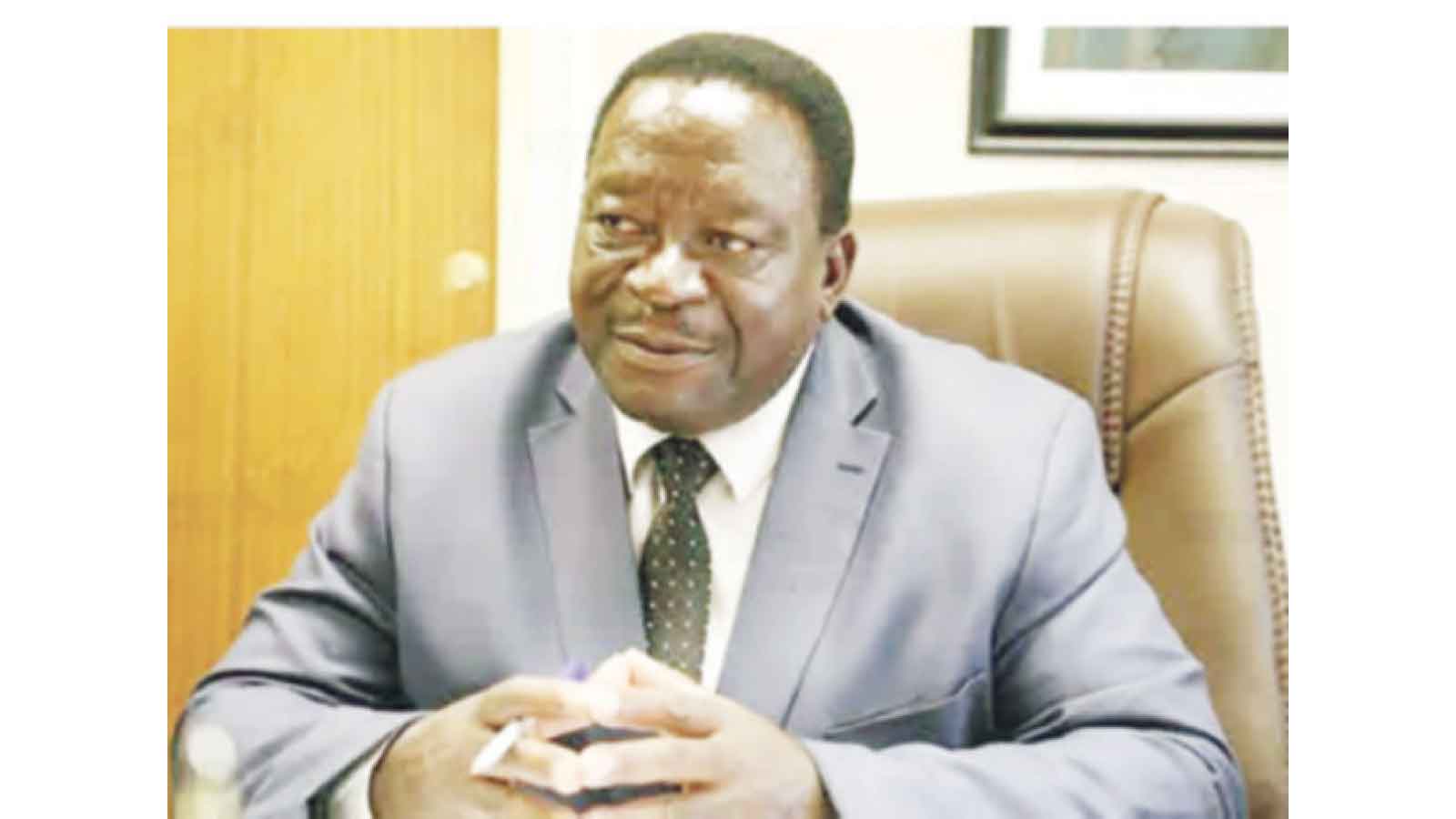
Zimbabwe’s Ambassador to Mozambique and Eswatini, Victor Matemadanda passed away yesterday.

He was 66.

Ambassador Matemadanda, was accredited to the two countries, where he had been spearheading efforts to strengthen bilateral relations and deepen cooperation.

In a statement yesterday, Ministry of Foreign Affairs and International Trade spokesperson Mrs Philisiwe Chidawanyika said: “The Ministry of Foreign Affairs and International Trade mourns the passing on of Ambassador Victor Matemadanda in the early hours of this morning, June 21, 2026.

“Ambassador Matemadanda was, at the time of his death, responsible for strengthening Zimbabwe’s relations with the Republic of Mozambique and the Kingdom of Eswatini.

“The Ministry is deeply saddened by his untimely death. We express our sincere condolences to the Chief Diplomat, His Excellency President Mnangagwa, the Matemadanda family and the entire nation of Zimbabwe on this loss,” she said.

As a veteran ZANU PF politician and former liberation war fighter, Ambassador Matemadanda was an influential, longtime political commissar in Zanu PF and played an active role in national politics and war veterans’ affairs before taking up his diplomatic assignments.

Born on March 3, 1960, he experienced the effects of colonial displacement at an early age after his family was relocated from their land to Gokwe before later going into exile in Zambia.

Inspired by his father’s participation in the liberation struggle, he joined the armed struggle as a teenager in the 1970s, undergoing military training before operating from Zambia and Mozambique.

In 1979, he was deployed to the Mutoko front as a Zanla combatant, contributing to the country’s fight for independence.

After independence, Ambassador Matemadanda became one of the country’s most influential war veteran leaders, serving as secretary-general.

In that role, he championed the welfare of former freedom fighters and helped shape the association’s leadership and policy direction.

His political career saw him rise to become the party’s National Political Commissar in 2017. He was elected Member of Parliament for Gokwe Central in 2018 before being appointed Deputy Minister of Defence and War Veterans Affairs, where he played a key role in matters relating to national security and the welfare of liberation war veterans.

In 2021, he was appointed Zimbabwe’s Ambassador to Mozambique with additional accreditation to Eswatini, a role in which he worked to strengthen diplomatic,

economic and historical ties with the two countries, particularly those rooted in the shared liberation struggle.

Away from politics and public office, Ambassador Matemadanda also pursued higher education, earning a degree from the University of South Africa (UNISA) before obtaining a Doctorate in Business Administration from the African Leadership Institute in 2022.

He is remembered for his steadfast commitment to preserving the legacy of the liberation struggle and for his continued service to the nation in both government and diplomacy until his death.

Funeral arrangements are yet to be announced.

The post Government mourns Ambassador Matemadanda appeared first on Zimbabwe Situation.
Govt flies blind on mining industry’s 700MW power demand

Source: Govt flies blind on mining industry’s 700MW power demand -Newsday Zimbabwe GOVERNMENT has admitted it lacks comprehensive data on the mining sector’s actual energy consumption despite the industry being Zimbabwe’s largest single electricity user, exposing a critical gap in national power planning at a time when electricity shortages continue to constrain economic growth. Zimbabwe’s […]

The post Govt flies blind on mining industry’s 700MW power demand appeared first on Zimbabwe Situation.

Source: Govt flies blind on mining industry’s 700MW power demand -Newsday Zimbabwe

GOVERNMENT has admitted it lacks comprehensive data on the mining sector’s actual energy consumption despite the industry being Zimbabwe’s largest single electricity user, exposing a critical gap in national power planning at a time when electricity shortages continue to constrain economic growth.

Zimbabwe’s mining industry consumes about 16% to 20% of the nation’s total electricity, while the sector accounts for nearly 45% of the country’s combined industrial and mining energy demand.

The admission highlights a growing challenge for policymakers as mining activity expands, driven by increased base-metal, coal and lithium processing.

Without accurate data on the sector’s total energy requirements, including electricity generated from captive power plants, authorities risk underestimating future demand and making inadequate investments in generation and transmission infrastructure.

The mining sector is being driven by increased base-metal, coal and lithium processing, while national power demand fluctuates between 1 000MW and 1 700MW.

With local generation capacity frequently falling short of demand, mining firms rely heavily on electricity imports or are required by government to establish alternative power sources, such as captive solar plants.

However, Energy and Power Development minister July Moyo said government does not have adequate statistics on the mining sector’s total energy requirements, including electricity and petroleum products, making it difficult to accurately plan for the country’s growing energy needs.

“I also want to urge that we lack the numbers, we lack the statistics from the mining sector more than any other sector, the statistics about the use of energy. This energy can be power,” he said while addressing delegates at the Chamber of Mines of Zimbabwe annual mining conference in Victoria Falls recently.

“This energy can be petroleum, which is turned into power because you cannot do your excavations. You cannot do your deep mining. You cannot transport without either petroleum products or power itself.”

Moyo said the absence of reliable statistics created a major gap in national energy planning at a time when mining remains the country’s biggest consumer of electricity.

“Now, in the mining sector, we consume the single largest energy, 600 to 700 megawatts. Our supply sectors, our demand sector, are still not met,” he said.

Mining accounts for between 600MW and 700MW of electricity demand, making it the country’s largest single power consumer. However, a significant portion of the sector’s energy use remains outside official government records because many companies generate their own electricity.

Zimbabwe has an installed electricity generation capacity of more than 3 000MW, but actual supply rarely exceeds 2 100MW owing to ageing infrastructure, periodic breakdowns at thermal power stations and other generation constraints.

Moyo acknowledged that government publishes weekly national power balance reports, but conceded that the figures do not present a complete picture of the country’s electricity landscape.

“We have installed capacity of over 3 000 megawatts in the country, but our supply at most can go to 2 100MW,” he said.

“Our power balance, which we give every week, has weaknesses which we are trying to correct. We are only keeping to ourselves what is being produced by Zesa and what is produced by others.”

He said the reports excluded significant volumes of electricity generated and consumed by mining companies operating captive power plants, leaving government without a full understanding of the sector’s actual energy demand.

“But there are a lot of other players, especially in the mining sector, who are not in our supply balance,” Moyo said.

The minister’s remarks come as mining companies increasingly invest in solar plants, diesel generators and other captive power projects to cushion operations against persistent electricity shortages and rising production costs.

He said government wanted to work more closely with mining companies through technical working groups to improve data collection and build a more comprehensive picture of the industry’s energy requirements.

“So we look forward to working together and maybe these working groups can provide information that can come to us about the challenges that we are having,” he said.

The post Govt flies blind on mining industry’s 700MW power demand appeared first on Zimbabwe Situation.

China-linked syndicates circle Zim’s digital economy 

Source: China-linked syndicates circle Zim’s digital economy –Newsday Zimbabwe ZIMBABWE has emerged as a potential new frontier for industrial-scale online fraud, human trafficking and money laundering, as China-linked cyber scam syndicates reportedly shift operations out of southeast Asia, raising concern over the country’s exposure to transnational organised crime in its billion-dollar digital economy. The warning […]

The post China-linked syndicates circle Zim’s digital economy  appeared first on Zimbabwe Situation.

Source: China-linked syndicates circle Zim’s digital economy –Newsday Zimbabwe

ZIMBABWE has emerged as a potential new frontier for industrial-scale online fraud, human trafficking and money laundering, as China-linked cyber scam syndicates reportedly shift operations out of southeast Asia, raising concern over the country’s exposure to transnational organised crime in its billion-dollar digital economy.

The warning comes as criminal networks relocate following intensified crackdowns in countries such as Cambodia, Myanmar and Laos.

A report by the Global Initiative Against Transnational Organised Crime (GI-TOC) says Africa is increasingly being targeted as a new operational hub for industrial-scale online fraud and forced labour linked to organised crime groups with Chinese connections.

The report warns that Zimbabwe’s growing digital economy, expanding gambling sector and weak cybercrime oversight could make it vulnerable to infiltration by transnational scam syndicates that have previously operated in southeast Asia, where thousands of Africans have allegedly been trafficked into forced criminal activity.

However, the Chinese embassy in Harare dismissed the report saying its government upholds an unwavering zero-tolerance policy against transnational cyber fraud, telecom fraud, money laundering and associated organised crimes.

“Such crimes gravely infringe upon personal safety, property rights and legitimate interests of people worldwide, and severely disrupt cross-border financial order and global social stability,” the embassy said.

“China has long carried out sustained and large-scale crackdowns on transnational fraud syndicates. We have enacted stringent laws to impose penalties on ringleaders, recruiters, accomplices and money-laundering facilitators of transnational scam rings.

“Regardless of perpetrators’ nationalities or whether their illegal acts are committed within or outside Chinese territory, China fully co-operates with judicial authorities worldwide to hold offenders criminally accountable to the fullest extent permitted by law. Combating transnational organised crimes including cross-border cyber fraud and human trafficking cannot be accomplished by any single country and calls for joint global efforts.”

Keep Reading

The embassy said, over the years, China had regular law enforcement communication channels and joint law enforcement mechanisms with dozens of countries across Asia, Africa, Europe and America.

“We have conducted multiple cross-border anti-fraud joint operations, yielding remarkable outcomes. A large number of major scam compounds have been dismantled, tens of thousands of fraud suspects of diverse nationalities have been repatriated and held accountable, illicit funds have been traced, frozen and recovered and large underground banking and money-laundering networks linked to cyber fraud have been dismantled.

“The Chinese government consistently requires Chinese citizens and enterprises operating overseas to strictly abide by local laws and regulations and conduct law-compliant business operations.

“We note that Zimbabwe permits licensed land-based casinos to operate in Harare and Victoria Falls. China is ready to deepen bilateral co-operation with Zimbabwe in tackling transnational organised crimes and to curb cross-border crimes with Zimbabwe.”

It further expressed confidence that Zimbabwean law enforcement authorities will bring criminals to justice, and lawfully safeguard legitimate basic human rights.

“Should Zimbabwean law enforcement authorities obtain conclusive evidence of illegal acts committed by Chinese nationals and share relevant case information via official diplomatic channels, China will provide full judicial assistance and take corresponding action in accordance with applicable domestic laws and bilateral treaties,” the embassy said.

However, the report also raises concern over Zimbabwe’s growing casino and gambling sector, combined with weaknesses in cybercrime monitoring and financial oversight systems.

This, it says, could expose the country to infiltration by syndicates involved in online fraud, forced criminality and money laundering.

GI-TOC notes that Zimbabwe has already featured in recruitment patterns linked to scam compounds in southeast Asia, where Africans are allegedly lured through fake job advertisements promising lucrative employment abroad.

Victims are often recruited via social media platforms such as Telegram, Facebook and WhatsApp, with offers for jobs in marketing, online customer support, cryptocurrency trading or “dating services”.

“In all of these locations, China-linked scam syndicates maintain an active presence on various Telegram channels, while associated money laundering and underground banking syndicates advertise jobs in several languages, using tactics similar to those employed in southeast Asia,” the report states.

It adds that some groups, including those linked to Madagascar, have attracted over 40 000 participants, while underground payment systems used to launder scam proceeds are operating in at least 10 jurisdictions.

The report further states that victims often have their passports confiscated upon arrival in countries such as Cambodia or Myanmar and are forced into cyber scam operations targeting people globally.

It estimates that between 10 000 and 15 000 Africans from at least 33 countries have been trafficked into scam compounds in southeast Asia, with Zimbabwe among them.

Researchers now fear that some of these networks may be attempting to establish bases directly within African countries, including Zimbabwe.

Of particular concern are reports that nearly 10 casinos linked to Chinese investors have been established in Harare over the past five years. Some facilities reportedly feature high perimeter walls and restricted access — features researchers say resemble setups previously seen in scam compounds in southeast Asia.

While no public evidence directly links Zimbabwean casinos to cyber scam activity, the report says weak regulation in gambling, cryptocurrency and underground financial systems could create conditions attractive to organised crime groups.

Zimbabwe’s growing use of digital financial platforms and cryptocurrency trading, combined with high youth unemployment, could further increase vulnerability to recruitment into online scam operations disguised as legitimate employment.

The GI-TOC report says criminal syndicates often target economically-vulnerable young people seeking jobs abroad.

Zimbabwe’s ongoing economic challenges and high levels of migration may, therefore, increase the risk of citizens being trafficked into forced criminal operations.

The report also warns that limited specialised capacity within law enforcement to detect sophisticated online fraud and money laundering networks may further compound the risk.

The findings come as African governments intensify efforts to coordinate responses to the growing threat. Earlier this year, the African Union’s Continental Operation Centre held discussions focused on combating human trafficking and cyber scam centres across Africa and southeast Asia.

The report warns that without swift action, African countries risk becoming the next global hub for industrial-scale scam centres as syndicates relocate from southeast Asia in search of weaker regulatory environments.

In Zimbabwe, experts say the challenge lies in balancing investment promotion and economic openness with stronger safeguards against organised crime infiltration into emerging sectors such as gambling, digital finance and online services.

In March, the Foreign Affairs and International Trade ministry warned Zimbabweans to exercise caution when accepting foreign job offers, citing cases of nationals being lured abroad under false pretences and subjected to exploitative conditions.

The post China-linked syndicates circle Zim’s digital economy  appeared first on Zimbabwe Situation.

War veterans mourn Matemadanda

Source: War veterans mourn Matemadanda -Newsday Zimbabwe Victor Matemadanda WAR veterans and Zanu PF are mourning the death of Zimbabwe’s ambassador to Mozambique and Eswatini, Victor Matemadanda, with colleagues remembering him as a fearless liberation war fighter and outspoken political figure. A former secretary-general of the Zimbabwe National Liberation War Veterans Association and ex-deputy minister, […]

The post War veterans mourn Matemadanda appeared first on Zimbabwe Situation.

Source: War veterans mourn Matemadanda -Newsday Zimbabwe

Victor Matemadanda

WAR veterans and Zanu PF are mourning the death of Zimbabwe’s ambassador to Mozambique and Eswatini, Victor Matemadanda, with colleagues remembering him as a fearless liberation war fighter and outspoken political figure.

A former secretary-general of the Zimbabwe National Liberation War Veterans Association and ex-deputy minister, Matemadanda died after being hospitalised, amid suspected poisoning claims following last week’s war veterans’ national assembly in Harare.

Zanu PF national spokesperson Christopher Mutsvangwa described Matemadanda as a fearless stalwart of Zimbabwe’s liberation struggle.

Mutsvangwa chronicled Matemadanda’s contribution to the liberation war, tracing his journey from the Zimbabwean exile community in Zambia to his role as a defender of what he termed the “Permanent Zimbabwe Revolution”.

Recalling his own experience in the pioneer Chitungwiza Company at Tembwe, Mutsvangwa revealed how a hunger crisis nearly claimed his life before a rescue mission organised by Matemadanda arrived.

“Word of the hunger plight stalking Tembwe reached the exile community in Zambia. Comrade Matemadanda, together with the late Comrade Kombayi, organised a food convoy from Zambia to Tembwe. I still vividly remember that life-saving convoy to this day, five decades later.”

He also reflected on Matemadanda’s role in the events leading to the removal of late former President Robert Mugabe in November 2017.

“Cde Matemadanda, as secretary-general of the Zimbabwe National Liberation War Veterans Association, was part of my leadership team when I was chairman. We flatly refused to allow the patriotic movement to slide into a family dynasty.”

He described the former Gokwe Central legislator as bold, courageous and outspoken in challenging what he termed Mugabe’s “perfidious assault on the Permanent Zimbabwe Revolution”.

“He would be imprisoned for his acts of open defiance against the wayward, ageing Mugabe. His exploits were not in vain. By November 2017, the people of Zimbabwe would demonstrate in open revolt,” Mutsvangwa said.

Meanwhile, ZNLWA national spokesperson Cornelius Muoni described Matemadanda as a brave and forthright leader who was never afraid to speak his mind out.

“He was a respectful person, but if one crossed his path, he would not keep quiet. Bravery was his diet,” he said.

The post War veterans mourn Matemadanda appeared first on Zimbabwe Situation.