CAB 3 debate begins in Senate

Source: CAB 3 debate begins in Senate – herald Justice, Legal and Parliamentary Affairs Minister Ziyambi Ziyambi made the second reading of Constitutional Amendment Bill No.3 in Senate this Tuesday afternoon. Farirai Machivenyika-Senior Reporter Justice, Legal and Parliamentary Affairs Minister Ziyambi Ziyambi made the second reading of Constitutional Amendment Bill No.3 in Senate this Tuesday […]

The post CAB 3 debate begins in Senate appeared first on Zimbabwe Situation.

Source: CAB 3 debate begins in Senate – herald

Farirai Machivenyika-Senior Reporter

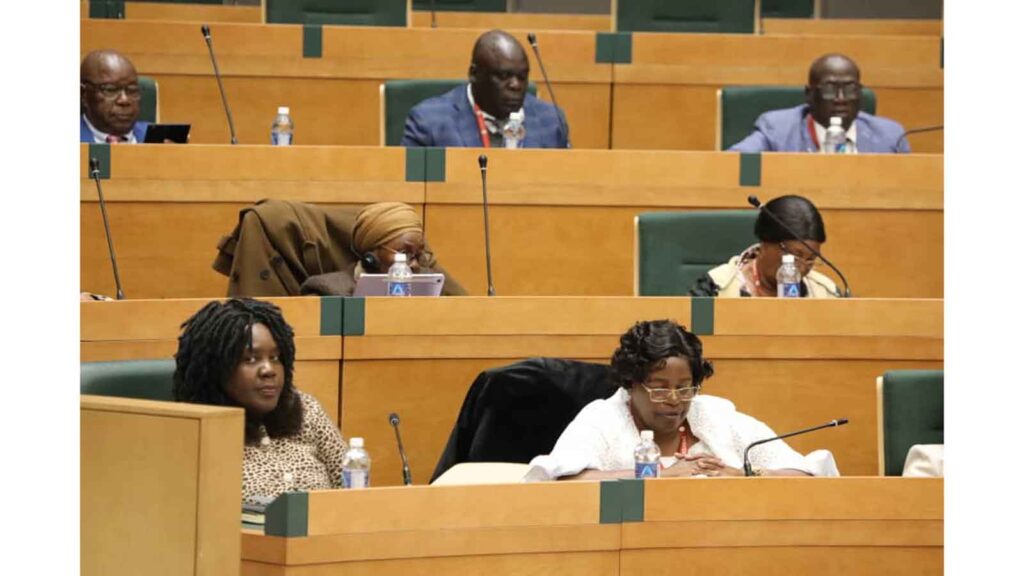
Justice, Legal and Parliamentary Affairs Minister Ziyambi Ziyambi made the second reading of Constitutional Amendment Bill No.3 in Senate this Tuesday afternoon, highlighting that the Bill only seeks to extend the electoral cycle, not term limits.

“Some state that this Bill hands the President a third term to extend his tenure. The Bill does not do that.

Senate President Mabel Chinomona

“Section 91(2) states that no one may hold the Office of the President for more than two terms, with their full term deemed to be three or more years. This stands in the Constitution, exactly as the people adopted it and this Bill does not touch it in any way,” he said.

The Minister also dismissed claims that members of the Senate and the National Assembly would have extended their terms by passing the Bill.

“The term length has never been a limit on any MP, and lengthening the duration grants no member a seat,” he said.

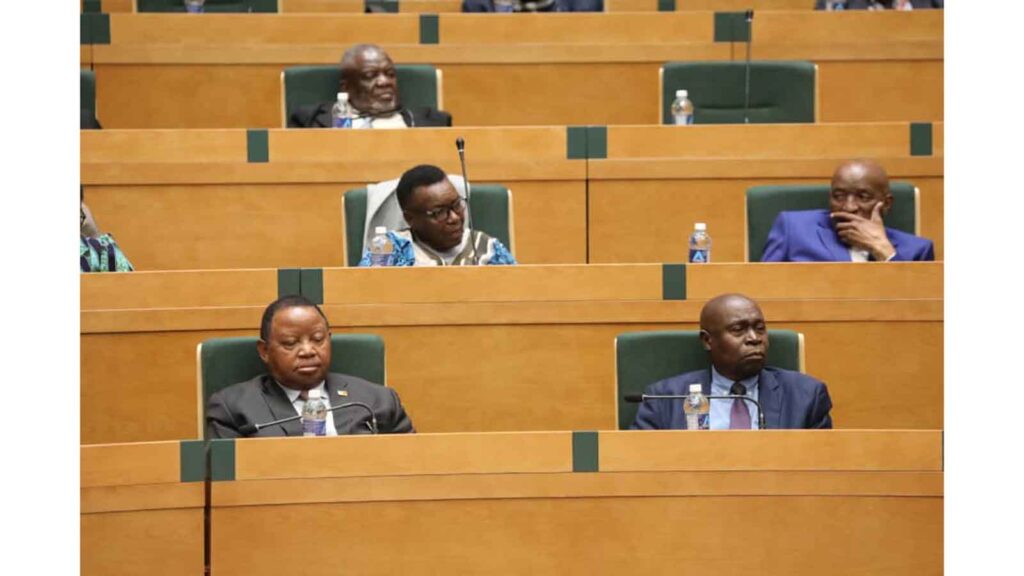
Members of the Senate.

Minister Ziyambi said the extension of the electoral cycle from five to seven years is meant to curb political toxicity which has been costly to the country through revenue loss.

The post CAB 3 debate begins in Senate appeared first on Zimbabwe Situation.

AI and Africa’s Knowledge Revolution: Why the Greatest Threat Is Not AI, But Our Failure to Understand It

THE Misunderstood Technology of Our Time: Few technologies in modern history have generated as much excitement, anxiety, misunderstanding and speculation as Artificial Intelligence. Across Zimbabwe, Southern Africa and much of the African continent, conversations about AI are often characterised by extremes. Some view it as a revolutionary force that will transform every aspect of human […]

The post AI and Africa’s Knowledge Revolution: Why the Greatest Threat Is Not AI, But Our Failure to Understand It appeared first on The Zimbabwe Mail.


THE Misunderstood Technology of Our Time: Few technologies in modern history have generated as much excitement, anxiety, misunderstanding and speculation as Artificial Intelligence. Across Zimbabwe, Southern Africa and much of the African continent, conversations about AI are often characterised by extremes. Some view it as a revolutionary force that will transform every aspect of human life, while others dismiss it as a threat to employment, creativity and intellectual authenticity.

By Brighton Musonza

Perhaps the most revealing misconception is the tendency to use the phrase “AI-generated” as a criticism in itself. Increasingly, whenever a well-written article, policy analysis, research paper or economic commentary appears, sections of society are quick to dismiss it simply because artificial intelligence may have assisted in its development. The assumption is that if AI contributed to the work, then the work somehow possesses less intellectual value.

This reaction reflects a deeper misunderstanding of what AI actually is and what role it plays in the modern knowledge economy.

Artificial intelligence is not replacing knowledge. It is changing how knowledge is organised, accessed, synthesised and applied. The challenge facing Africa is not whether AI should be adopted. The challenge is whether African societies will understand their true function quickly enough to remain competitive in an increasingly knowledge-driven world.

Human Progress Has Always Been Built on Accumulated Knowledge

One of the greatest myths surrounding AI is the belief that genuine intelligence requires the creation of entirely original ideas. History suggests otherwise.

Human civilisation advances through the accumulation, refinement and integration of existing knowledge. Scientific breakthroughs are rarely isolated acts of genius. They are usually the result of researchers building upon centuries of previous discoveries. Economic theories evolve through engagement with earlier schools of thought. Engineers improve existing technologies rather than inventing entirely new principles from nothing.

When Sir Isaac Newton remarked that he stood on the shoulders of giants, he was acknowledging a fundamental truth about intellectual progress: knowledge is cumulative.

Artificial intelligence operates within this same tradition. It does not magically create wisdom. Rather, it helps individuals navigate and synthesise vast quantities of information that would otherwise take years to process manually.

A policy analyst examining Zimbabwe’s monetary reforms, for example, may need to understand historical inflation episodes, central banking theory, exchange rate management, reserve accumulation practices, commodity economics and comparative international experiences. AI enables the researcher to bring together these diverse strands of knowledge more efficiently.

The intellectual work remains human. The acceleration of research becomes technological.

Why Africa Risks Misdiagnosing the AI Revolution

Many African discussions about AI focus primarily on whether machines will replace human labour. While this is an important consideration, it misses the larger transformation already taking place.

The real revolution is occurring in the production and consumption of knowledge.

Historically, access to high-quality information was heavily concentrated in advanced economies. Researchers at universities in London, New York, Singapore or Berlin enjoyed advantages that were unavailable to students, entrepreneurs and policymakers in many African countries.

Artificial intelligence is beginning to reduce those barriers.

A university student in Harare, Lusaka or Gaborone can now access analytical capabilities that previously required large research teams. A small business owner can obtain market intelligence once available only to multinational corporations. A journalist can examine multiple perspectives on complex issues within minutes rather than weeks.

The implications are profound.

For the first time in history, the ability to access sophisticated knowledge is becoming increasingly democratised.

Countries that embrace this shift stand to accelerate development. Those that resist it risk widening their existing knowledge gaps.

AI Is Already Embedded in the Global Economy

Much of the debate surrounding AI proceeds as if the technology remains a future possibility. In reality, AI is already deeply embedded within the global economy.

The world’s financial markets rely extensively on artificial intelligence for trading, risk modelling and fraud detection. Healthcare systems use machine learning to support diagnostics and treatment planning. Logistics companies employ AI to optimise supply chains. Manufacturers utilise predictive maintenance systems powered by artificial intelligence. Universities increasingly integrate AI-assisted research methodologies into academic work.

The most competitive economies are not debating whether to use AI. They are debating how to maximise its benefits.

In the United States, artificial intelligence is becoming central to productivity growth across multiple sectors. China has integrated AI into industrial policy, manufacturing and public administration. Singapore is positioning itself as a global AI innovation hub. The European Union is investing heavily in both AI development and regulatory frameworks.

Meanwhile, African nations often remain trapped in discussions about whether AI-generated work should be considered legitimate.

This reveals a dangerous divergence in priorities.

While advanced economies focus on leveraging AI to increase productivity and competitiveness, many African societies remain preoccupied with questioning its existence.

Zimbabwe’s Particular Challenge

Zimbabwe presents a fascinating case study in the opportunities and limitations of artificial intelligence.

The country possesses one of Africa’s most educated populations. Literacy rates remain among the highest on the continent, and Zimbabweans have historically demonstrated remarkable adaptability in the face of economic challenges.

Yet the country’s AI readiness is constrained by structural realities.

A significant proportion of economic activity remains informal. Data infrastructure remains underdeveloped in many sectors. Digital records are fragmented. Many institutions continue to rely on paper-based systems that limit machine-readable information.

Artificial intelligence thrives on structured data.

The more digitised an economy becomes, the more effectively AI can be deployed. Supermarkets, banks, telecommunications firms, insurance companies and modern logistics networks generate vast amounts of data that can be analysed and utilised by intelligent systems.

This is one reason why countries such as South Africa, Kenya and Rwanda have moved more aggressively into digital transformation initiatives. They recognise that AI is not simply a software application. It is the culmination of a broader digital ecosystem.

For Zimbabwe, the path toward meaningful AI adoption will require continued investments in digital infrastructure, data governance and institutional modernisation.

The New Competitive Advantage Is Information Processing

Throughout history, economic advantage has evolved.

The nineteenth century rewarded access to land and natural resources. The twentieth century rewarded industrial capacity and manufacturing. The twenty-first century increasingly rewards information and the ability to process it effectively.

Artificial intelligence sits at the centre of this transformation.

In today’s economy, the most valuable companies are often those capable of extracting insights from vast amounts of information. The rise of technology firms reflects a broader shift from resource-intensive production to knowledge-intensive production.

This presents both opportunities and risks for Africa.

The continent possesses abundant natural resources, but resource wealth alone no longer guarantees prosperity. Countries that fail to develop knowledge-processing capabilities risk remaining suppliers of raw materials while importing high-value intellectual products.

The future winners may not necessarily be those with the largest mineral deposits or agricultural output. They may be those with the greatest ability to convert information into economic value.

Why AI Does Not Replace Human Intelligence

One of the most persistent fears surrounding artificial intelligence is the belief that machines will eventually replace human thinking.

This concern misunderstands the distinction between information processing and judgement.

Artificial intelligence can identify patterns, summarise research, generate scenarios and organise information. However, it does not possess lived experience, ethical reasoning, political intuition or contextual understanding in the way human beings do.

A machine can provide data about economic policy. It cannot determine the political trade-offs associated with implementing that policy.

A machine can analyse election trends. It cannot fully comprehend the cultural and historical factors that shape voter behaviour.

A machine can summarise medical research. It cannot replace the empathy required in patient care.

The most effective use of AI therefore occurs when technology complements human expertise rather than attempting to substitute for it.

The future belongs not to machines, but to individuals who know how to work alongside machines.

Rethinking Intellectual Authenticity

Perhaps the most important cultural adjustment required in Africa concerns how we evaluate knowledge itself.

Ideas should be judged on their evidence, logic, coherence and explanatory power—not on whether AI assisted in their development.

If a researcher uses advanced statistical software to analyse data, we do not dismiss the findings because software was involved. If an economist uses spreadsheets to model fiscal outcomes, we do not question the validity of the analysis because technology assisted the process.

Artificial intelligence should be viewed through a similar lens.

The critical question is not whether AI was used. The critical question is whether the conclusions are accurate, well-supported and intellectually rigorous.

An argument remains weak if it is poorly reasoned, regardless of whether AI was involved. Equally, a compelling argument remains valuable if it is supported by evidence, even when AI contributed to the research process.

Africa’s Next Development Frontier

The global AI revolution is not merely a technological event. It is a developmental event.

It has the potential to reshape education, healthcare, agriculture, governance, entrepreneurship and scientific research. It could help African countries overcome longstanding information asymmetries and participate more effectively in the global knowledge economy.

Yet these benefits will not materialise automatically.

They will require investments in digital infrastructure, educational reform, data systems, research capacity and institutional readiness. They will also require a cultural shift away from fear and towards informed engagement.

The greatest danger facing Africa is not that artificial intelligence will replace human intelligence. The greater danger is that other regions will learn to use AI effectively while Africa remains trapped in debates about whether it should be used at all.

History rarely rewards societies that resist transformative technologies. From the printing press to the internet, technological revolutions have consistently favoured those who learn to harness them rather than those who dismiss them.

Artificial intelligence represents the next chapter in that historical process. It is not a substitute for human creativity, wisdom or critical thinking. It is a force multiplier for all three.

The countries, institutions and individuals that thrive in the coming decades will not be those who reject AI in defence of old ways of working. They will be those who understand that intelligence is most powerful when human insight and technological capability work together.

For Zimbabwe, for Southern Africa and for the continent as a whole, the question is no longer whether artificial intelligence will shape the future. It already is. The real question is whether Africa intends to be a participant in that future or merely an observer.

The post AI and Africa’s Knowledge Revolution: Why the Greatest Threat Is Not AI, But Our Failure to Understand It appeared first on The Zimbabwe Mail.
Global shares mostly slip amid caution about the war in Iran

TOKYO — Global shares mostly declined on Tuesday as recent enthusiasm cooled and markets faced uncertainty about efforts to end the war in Iran. France’s CAC 40 dipped 1.0% in early trading to 8,313.86, while the German DAX fell 1.6% to 24,746.63. Britain’s FTSE 100 declined 0.6% to 10,379.26. U.S. shares were set to drift […]

The post Global shares mostly slip amid caution about the war in Iran appeared first on The Zimbabwe Mail.
TOKYO — Global shares mostly declined on Tuesday as recent enthusiasm cooled and markets faced uncertainty about efforts to end the war in Iran.

France’s CAC 40 dipped 1.0% in early trading to 8,313.86, while the German DAX fell 1.6% to 24,746.63. Britain’s FTSE 100 declined 0.6% to 10,379.26. U.S. shares were set to drift lower with Dow futures down 0.7% at 51,774.00. S&P 500 futures fell 1.5% to 7,429.25.

Earlier in Asia, Japan’s benchmark Nikkei 225 lost 3.6% to finish at 69,788.38.

“We’ve had eight days of strong markets,” said Neil Newman, head of strategy at Astris Advisory Japan. “Now it has cooled off a bit.”

Australia’s S&P/ASX 200 was down 0.3% at 8,787.00. South Korea’s Kospi tumbled 10.0% decline to 8,203.84, dropping from previous record highs due to a sell-off in major technology issues. Signs of greater regulatory scrutiny in the country’s semiconductor sector also added to the hand-wringing.

Hong Kong’s Hang Seng slipped 1.8% to 23,336.28, while the Shanghai Composite shed 1.4% to 4,106.25.

In the oil market, prices fell following talks over the weekend between the United States and Iran on their war. U.S. Vice President JD Vance said they created a “good foundation for a successful final deal.”

Delegation staff members meet in the lobby on the first day of a quadrilateral meeting between the U.S., Iran, Pakistan, and Qatar at the Buergenstock Resort Lake Lucerne, near Stansstad, Switzerland, Sunday, June 21, 2026. (Nathan Howard/Pool Photo via AP)
The Strait of Hormuz’s future is unsettled even as more ships venture through
5 MIN READ
An end to the war could open the Strait of Hormuz for oil tankers and allow for the full resumption of deliveries from the Persian Gulf. Iran’s military said Saturday that it had closed the strait again, though U.S. Central Command has disputed that.

On Tuesday, benchmark U.S. crude fell 73 cents to $73.58 a barrel. Brent crude, the international standard, lost 43 cents to $77.47 a barrel.

In currency trading, the U.S. dollar edged down to 161.43 Japanese yen from 161.52 yen. The euro cost $1.1407, down from $1.1431.

Source: AP

The post Global shares mostly slip amid caution about the war in Iran appeared first on The Zimbabwe Mail.

Zimbabwe’s Foreign Currency Boom and the Reserve Accumulation Paradox: Why Rising Export Earnings Are Not Translating into National Wealth

THE latest foreign currency earnings data emerging from Zimbabwe presents what economists would describe as a classic macroeconomic paradox. By Brighton Musonza According to figures released by the Reserve Bank of Zimbabwe (RBZ), foreign currency receipts have expanded dramatically from approximately US$6.3 billion in 2018 to US$8.3 billion in the first five months of 2026 […]

The post Zimbabwe’s Foreign Currency Boom and the Reserve Accumulation Paradox: Why Rising Export Earnings Are Not Translating into National Wealth appeared first on The Zimbabwe Mail.

THE latest foreign currency earnings data emerging from Zimbabwe presents what economists would describe as a classic macroeconomic paradox.

By Brighton Musonza

According to figures released by the Reserve Bank of Zimbabwe (RBZ), foreign currency receipts have expanded dramatically from approximately US$6.3 billion in 2018 to US$8.3 billion in the first five months of 2026 alone, with annual receipts projected to reach nearly US$19.92 billion by year-end. On the surface, these numbers suggest an economy experiencing an unprecedented expansion in external earnings capacity.

Yet beneath these impressive figures lies a troubling reality. Despite a more than 215 percent increase in foreign currency generation over the period, Zimbabwe’s official reserve position remains relatively weak, with import cover savings hovering around US$1.5 billion and with much of it being gold. This raises a fundamental question that sits at the heart of monetary economics: how can an economy generate record levels of foreign exchange while simultaneously struggling to accumulate strategic reserves?

The answer lies not in the volume of foreign currency being generated, but in the institutional and structural mechanisms through which that foreign currency is retained, intermediated and transformed into national wealth.

The Difference Between Foreign Currency Earnings and Foreign Currency Ownership

One of the most common misconceptions in public economic discourse is the assumption that national foreign currency earnings automatically become national foreign currency reserves.

In reality, these are fundamentally different concepts.

Foreign currency earnings represent gross inflows generated by private companies, exporters, diaspora remittances, tourism operators and investors. Foreign exchange reserves, by contrast, are assets held and controlled by the central bank for purposes of monetary stability, exchange rate management, sovereign liquidity and external shock absorption.

A country may generate substantial export earnings while accumulating very little in reserves if most of those earnings remain in private hands or rapidly leave the domestic economy.

This distinction is particularly relevant in Zimbabwe, where a significant share of foreign exchange inflows originates from private mining companies, agricultural exporters, remittance channels and multinational corporations. The foreign currency may enter the economy, but unless it passes through domestic financial intermediation mechanisms and is retained within the local financial architecture, it contributes little to reserve accumulation.

The consequence is a situation where gross inflows continue to rise while net reserve formation remains stagnant.

The Structural Leakages Problem

From a central banking perspective, the key concern is not the generation of foreign exchange but the retention of foreign exchange.

Zimbabwe’s foreign exchange ecosystem exhibits characteristics that suggest substantial leakages at multiple levels of the economic system.

Export proceeds are often utilised immediately to finance imported inputs, settle external obligations, repay offshore loans, service foreign suppliers, remit dividends or accumulate assets outside the country. In some sectors, particularly those with significant foreign ownership structures, substantial portions of export revenues never meaningfully circulate through the domestic banking system.

This phenomenon is not unique to Zimbabwe.

Several resource-dependent economies have historically struggled with what economists refer to as the “retention gap” — the difference between foreign exchange generated and foreign exchange retained domestically.

Countries such as Nigeria, Angola and the Democratic Republic of Congo have experienced similar challenges, where substantial commodity exports generated large foreign currency inflows but failed to produce corresponding increases in reserve buffers, domestic investment or financial sector depth.

The problem is particularly acute when foreign currency circulates through informal or parallel channels. When exporters, investors and households prefer holding foreign assets outside the formal banking sector, the central bank’s ability to mobilise liquidity and build reserves becomes constrained.

Gold and the Enclave Economy Challenge

The composition of Zimbabwe’s foreign currency earnings deserves as much scrutiny as the magnitude of those earnings.

Much of the recent growth in external receipts has been driven by gold, platinum and other mineral exports. While these commodities provide valuable foreign exchange, they often generate weaker domestic multiplier effects than manufacturing or knowledge-intensive exports.

Development economists have long distinguished between extractive growth and transformative growth.

Extractive industries frequently function as enclaves within the broader economy. They generate substantial export revenues but maintain limited backwards and forward linkages with domestic production systems.

In Zimbabwe’s case, gold increasingly appears to exhibit characteristics of this phenomenon.

Foreign currency earned from gold exports often enters the domestic economy only briefly before exiting again through equipment imports, offshore settlements, foreign shareholder distributions and capital transfers. The result is that substantial export earnings do not necessarily create corresponding domestic wealth accumulation.

This challenge has been observed globally.

Countries such as Botswana successfully addressed this issue by ensuring that diamond revenues became integrated into long-term sovereign savings and domestic development programmes. Through prudent fiscal management and deliberate reserve accumulation strategies, Botswana transformed mineral wealth into financial wealth.

Similarly, Norway’s management of oil revenues through the Government Pension Fund Global remains one of the most cited examples of how resource wealth can be converted into sustainable national assets.

The lesson is clear: natural resource exports create opportunities for wealth creation, but they do not automatically create wealth.

Why Reserve Adequacy Matters

The importance of reserve accumulation extends beyond accounting considerations.

Foreign exchange reserves serve as a country’s financial insurance policy.

They provide confidence to investors, reassure international lenders, support exchange rate stability and protect economies against external shocks. Countries with stronger reserve positions are generally better able to withstand commodity price collapses, capital flight, geopolitical disruptions and global financial volatility.

The International Monetary Fund traditionally recommends reserve holdings equivalent to at least three months of import cover, although many emerging economies now target substantially higher levels.

Several African economies have accumulated significantly stronger reserve cushions despite generating lower foreign exchange earnings than Zimbabwe.

Algeria, Morocco and Botswana have historically maintained reserve positions that provide considerably greater protection against external volatility. Asian economies such as Singapore and South Korea have gone even further, treating reserve accumulation as a strategic pillar of national economic policy.

Zimbabwe’s challenge, therefore, is not simply achieving export growth but ensuring that export growth strengthens sovereign resilience.

The Financial Intermediation Deficit

At its core, the reserve accumulation challenge reflects a broader financial intermediation problem.

Economic development ultimately depends on a country’s ability to convert savings into investment and investment into productive growth.

When foreign currency bypasses domestic financial institutions, opportunities for capital formation diminish.

Strong financial systems act as channels through which export earnings become infrastructure investment, industrial development, technological upgrading and private sector expansion.

Countries that successfully transformed from commodity-dependent economies into diversified industrial economies achieved this transition not merely through exporting more but through mobilising domestic savings.

South Korea, Taiwan and later China all demonstrated how financial deepening can convert external earnings into productive national capital.

Zimbabwe’s financial sector continues to face the challenge of rebuilding long-term confidence after years of currency instability and policy uncertainty. Without deeper confidence in domestic financial institutions, foreign currency holders have strong incentives to retain assets outside formal channels, limiting the pool of capital available for domestic development.

Exchange Rate Stability and the Confidence Question

Another important dimension of the paradox relates to expectations.

In monetary economics, reserve accumulation is closely linked to confidence.

Economic agents make decisions about where to hold their assets based on perceptions of future stability.

If businesses anticipate exchange rate volatility, inflationary pressures or policy uncertainty, they naturally seek to hold foreign currency externally or maintain liquid foreign assets. This behaviour may be individually rational but collectively undermines reserve accumulation and financial system liquidity.

The result is a self-reinforcing cycle.

Weak reserves reduce confidence, lower confidence discourages retention of foreign currency, and reduced retention further weakens reserves.

Breaking this cycle requires credible monetary institutions, policy consistency and a financial environment capable of attracting long-term savings.

Beyond Export Growth: The Real Development Challenge

The current foreign currency earnings trajectory demonstrates that Zimbabwe possesses significant productive capacity and external earning potential.

The economy is clearly generating more foreign exchange than it did a decade ago. However, economic history repeatedly shows that export growth alone does not guarantee development.

Many countries have generated substantial export revenues without achieving broad-based prosperity. Others have successfully transformed export earnings into industrialisation, infrastructure development, financial deepening and rising living standards.

The difference lies in institutional quality, savings mobilisation and economic governance.

For Zimbabwe, the central policy challenge is no longer simply increasing foreign currency generation. The more difficult and consequential task is ensuring that foreign currency earnings become domestic capital, national savings and strategic reserves.

Until stronger mechanisms emerge to deepen financial intermediation, encourage domestic asset accumulation, strengthen reserve management and reduce external leakages, the economy will continue to face a paradoxical situation: rising foreign exchange earnings alongside persistent reserve vulnerability.

The true measure of economic success is not how much foreign currency enters an economy, but how much of that foreign currency remains available to finance its future. Zimbabwe’s next stage of economic reform must therefore move beyond foreign currency generation towards the more complex objective of foreign currency retention, savings mobilisation and long-term wealth creation. Only then can impressive export statistics translate into durable monetary stability, exchange rate resilience and sustainable national prosperity.

The post Zimbabwe’s Foreign Currency Boom and the Reserve Accumulation Paradox: Why Rising Export Earnings Are Not Translating into National Wealth appeared first on The Zimbabwe Mail.

Platinum exports projected to generate US$2bn in 2027

ZIMBABWE’S platinum industry is projected to generate US$2 billion in export earnings next year, underpinned by stronger metal prices, expanding operations and resilient global demand. The positive trajectory comes as the country’s platinum group metals (PGMs) industry rebounds from a period of depressed prices, with exports surging despite lower production and producers ramping up expansion […]

The post Platinum exports projected to generate US$2bn in 2027 appeared first on The Zimbabwe Mail.

ZIMBABWE’S platinum industry is projected to generate US$2 billion in export earnings next year, underpinned by stronger metal prices, expanding operations and resilient global demand.

The positive trajectory comes as the country’s platinum group metals (PGMs) industry rebounds from a period of depressed prices, with exports surging despite lower production and producers ramping up expansion projects across the mineral-rich Great Dyke.

In a presentation at the recently held Chamber of Mines of Zimbabwe (CoMZ) annual conference in Victoria Falls, made on his behalf by Mimosa Mining Company managing director Mr Fungai Makoni, who is also the chamber’s president, Platinum Producers Association chairman Mr Alex Mhembere said the outlook is encouraging.

“While the market dynamics continue to play out, we are encouraged by the short to medium-term prospects for the platinum industry, supported by structural supply deficits and resilient demand, albeit with long-term structural transitions.

“In the outlook for 2026, the Chamber of Mines estimates show that the PGMs output is expected to increase by an average of five percent with PGMs exports projected to reach US$2 billion.”

The strong export performance has reinforced expectations of further growth next year as global demand remains firm and mining companies continue investing in capacity expansion and beneficiation projects.

Despite operational headwinds that weighed on production last year, the local PGMs industry recorded a massive increase in export earnings.
Platinum output declined to 17 882 kilogrammes last year from 18 911kg in 2024, while palladium production fell to 14 620kg from 15 603kg.

Mr Mhembere, however, said the rising international prices more than compensated for the lower output.

“Despite output for key elements in the PGM basket decreasing during the period under review, PGMs exports increased to US$1,9 billion in 2025, from US$1,5 billion in 2024.

“This, in large part, reflected a strong recovery in prices for key elements of the PGM basket in 2025,” he said.

The platinum industry remains one of Zimbabwe’s most important economic pillars, accounting for more than 40 percent of mineral export earnings over the past five years and providing about 18 000 direct jobs.

PGMs are Zimbabwe’s second largest export earner after gold, which earned the country US$4,6 billion last year.

The sector has also emerged as a major contributor to national revenues, with producers paying an average of 20 percent of their earnings to Government through taxes and levies while supporting thousands of additional jobs through supplier networks and community development initiatives.

Zimbabwe hosts the world’s third-largest PGMs reserves, with an estimated 32 million ounces of platinum, palladium and rhodium resources contained within the Great Dyke, one of the globe’s richest geological formations.

Existing producers are undertaking expansion programmes while new projects are advancing towards production.

“With new entrants into the PGM space, including Karo, Great Dyke Investments and Bravura, which are at various stages of implementation — and with a supportive policy environment, the platinum sector is set for significant growth in the medium term,” said Mr Mhembere.

The industry is also accelerating beneficiation and value-addition initiatives in line with the Government’s vision of maximising returns from the country’s mineral wealth.

The local PGMs industry is anchored by three major producers —Zimplats, Unki and Mimosa.

Mr Mhembere said producers were expanding smelting capacity to ensure all platinum concentrates are processed locally, while additional investments are being made to strengthen downstream processing capabilities.

It is hoped that the projected rise in exports would boost foreign currency inflows, support economic growth and reinforce the mining sector’s position as a key driver of Zimbabwe’s industrialisation agenda.

In pursuit of value addition and beneficiation agenda, authorities have announced that PGM producers will be required to move up the value chain and further beneficiate PGM matte to residue and ultimately isolate the individual metals, including platinum, palladium and rhodium.
PGM matte to residue processing involves leaching the base metals from the sulfide matte using acid (like sulfuric acid) with oxygen, leaving behind a PGMs-rich solid residue that concentrates the precious metals for further refining, often through roasting and selective leaching to remove sulfur and other impurities before final precious metal recovery.

The policy thrust comes as Zimbabwe seeks to sharpen its focus on value addition and industrialisation as enunciated in the National Development Strategy 2 (NDS2) (2026-2030), Zimbabwe’s five-year economic blueprint to 2030.

According to the NDS2 policy document, the thrust will be underpinned by restrictions on exports of PGM concentrates, a move aimed at encouraging increased domestic beneficiation.

Finance, Economic Development and Investment Promotion Minister Professor Mthuli Ncube is on record as saying that during the NDS1 period (2021-2025), PGMs mining houses made notable progress in beneficiating output, resulting in the country now having adequate capacity to process PGMs from concentrates to matte. – Herald

The post Platinum exports projected to generate US$2bn in 2027 appeared first on The Zimbabwe Mail.