Zimra tightens screws on cross-border trade 

Source: Zimra tightens screws on cross-border trade -Newsday Zimbabwe THE Zimbabwe Revenue Authority (Zimra) has warned cross-border traders and bus operators against smuggling goods and making false customs declarations, saying such practices undermine efforts to curb the influx of illegal products, including drugs, into the country. The warning was issued during a tax compliance awareness […]

The post Zimra tightens screws on cross-border trade  appeared first on Zimbabwe Situation.

Source: Zimra tightens screws on cross-border trade -Newsday Zimbabwe

THE Zimbabwe Revenue Authority (Zimra) has warned cross-border traders and bus operators against smuggling goods and making false customs declarations, saying such practices undermine efforts to curb the influx of illegal products, including drugs, into the country.

The warning was issued during a tax compliance awareness meeting for micro, small and medium enterprises (MSMEs) held at the Small City Hall in Bulawayo recently. Authorities stressed the need for stricter adherence to customs regulations amid rising concern over smuggling and illicit trade through border posts and transport corridors.

The meeting, organised in collaboration with Zimra, brought together MSMEs, traders, transport operators and other business stakeholders to discuss tax compliance, business formalisation and regulatory requirements.

Speaking at the meeting, Zimra Bulawayo customs revenue officer Thembinkosi Ndlovu called on traders and transporters to comply with customs regulations and ensure that goods are declared under the names of their rightful owners.

He said customs officials frequently encounter goods being transported under names that do not belong to the actual owners, making it difficult to maintain accountability and increasing the risk of illegal activities.

“As traders and transporters, we want to stress that we normally come across products that are not in the bearers’ names,” Ndlovu said.

“The declarations are not in their names. We are asking that when you are declaring at customs, do so in the correct names.”

He also urged transport operators, particularly cross-border bus operators, to avoid transporting dangerous and prohibited goods.

Ndlovu said Zimbabwe continued to grapple with drug and substance abuse, with many illicit substances entering the country from across its borders.

“One of our objectives is to protect society. Recently, the government highlighted drug and substance abuse as a major challenge facing the country,” he said. “As Zimra, questions are often raised about how these drugs find their way into the country.”

Zimra recently intercepted approximately 365 kilogrammes of cannabis, a development that has reinforced the need for stricter enforcement measures at border posts and along transport routes.

Cross-border transport operators raised concern over what they described as repeated searches and inconsistencies in enforcement processes.

The post Zimra tightens screws on cross-border trade  appeared first on Zimbabwe Situation.

Harare banks on investors to plug infrastructure gaps 

Source: Harare banks on investors to plug infrastructure gaps -Newsday Zimbabwe HARARE mayor Jacob Mafume has said council is open to public-private partnerships, arguing that the era of relying solely on municipal rates and government transfers to finance city operations is over. Speaking at the Harare Investment Dialogue 2026, Mafume said the city was repositioning […]

The post Harare banks on investors to plug infrastructure gaps  appeared first on Zimbabwe Situation.

Source: Harare banks on investors to plug infrastructure gaps -Newsday Zimbabwe

HARARE mayor Jacob Mafume has said council is open to public-private partnerships, arguing that the era of relying solely on municipal rates and government transfers to finance city operations is over.

Speaking at the Harare Investment Dialogue 2026, Mafume said the city was repositioning itself as it sought alternative financing models to bridge widening infrastructure gaps driven by rapid urban growth and strained municipal budgets.

He said it was no longer business as usual, adding that council convened the indaba to begin building the city to what it is meant to be.

The meeting was also attended by HCC acting town clerk Warren Chiwawa and the chairperson of council business committee, Rufaro Matsika.

Financial institutions, development finance institutions and business leaders, including Old Mutual, ZB Bank, CBZ Bank, Masimba Holdings and OXPRO, attended, alongside City of Harare entities such as the Harare Municipal Medical Aid Society and City Parking.

The dialogue also drew strong government and investment agency representation.

“My principal message today is one of firm political commitment,” he said. “The leadership of this city — across all council structures — is united. We have reached a mature, non-partisan consensus that private sector investment is not a threat to municipal governance but is essential to urban renewal.”

Mafume said urban populations were growing rapidly, hence demands on infrastructure were outpacing municipal budgets.

To close that gap, he said Harare was moving from an administrative cost centre to an agile asset manager.

“Council is not selling assets but leveraging them through structured public-private partnerships using build-operate-transfer, build-own-operate-transfer and concession models,” Mafume said.

“For too long, many African municipalities have approached urban service delivery with outdated assumptions, relying mainly on traditional rate collection and central government transfers to sustain modern cities.

“The world has changed. Urban populations are growing rapidly, and the demands on infrastructure are outpacing the capacity of municipal budgets.”

The post Harare banks on investors to plug infrastructure gaps  appeared first on Zimbabwe Situation.
Zim blood supply steady but below target 

Source: Zim blood supply steady but below target -Newsday Zimbabwe THE National Blood Services of Zimbabwe says national blood stocks remain stable at four days’ cover, even as supply falls slightly short of the recommended five-day buffer. Zimbabwe requires a minimum reserve of 1 600 units of blood at any given time to guarantee adequate […]

The post Zim blood supply steady but below target  appeared first on Zimbabwe Situation.

Source: Zim blood supply steady but below target -Newsday Zimbabwe

THE National Blood Services of Zimbabwe says national blood stocks remain stable at four days’ cover, even as supply falls slightly short of the recommended five-day buffer.

Zimbabwe requires a minimum reserve of 1 600 units of blood at any given time to guarantee adequate national coverage.

NBSZ measures its targets in “days of cover,”aiming for at least a five-day supply of all blood and blood products nationwide.

Authorities, led by the Health and Child Care ministry, constantly run campaigns to sustain stocks.

Speaking during the World Blood Donor Day commemorations held at Zimbabwe Prison and Correctional Services Ntabazinduna Training School on Friday last week, NBSZ chief executive Lucy Marowa said the nation should not panic.

“As of now, we are looking at four days of blood stock supply across all blood groups,” she said.

“At four days of blood stock supply, we are not panicking at all, for today our target is 600 units. It helps to stabilise the blood banks.”

Marowa said more than 10 schools were invited to participate in a blood donation drive at the event, adding that blood stocks typically improve during the school calendar.

“We hope that in the next two weeks we will be having a seven-day blood stock supply, which will be an excess,” she said.

Marowa, however, revealed that Zimbabwe requires about 415 units of blood per day, split across different blood groups according to demand ratios.

She explained that when they say they are happy with five days of supply, they will be having about 2 000 units placed according to blood groups, such as O, A and B, respectively, as per their ratios.

Marowa said the 2025 statistics revealed that youths contributed 55% of blood stock supplies, while the other 45% was from adults.

She said NBSZ was targeting youths so that they took the initiative into adulthood.

She said the shift had changed from 70% to 55% due to education and awareness programmes targeting adults.

“The challenge we have had is that misinformation has led to superstitions that blood is used for ritual purposes,” she said.

Marowa, however, expressed concern that religious beliefs are clouding people’s judgement, adding that the organisation explained to people with the hope of demystifying the misconceptions.

“Some say it destroys sexual potency at home, while others believe that it kills one’s fertility,” she said.

The post Zim blood supply steady but below target  appeared first on Zimbabwe Situation.

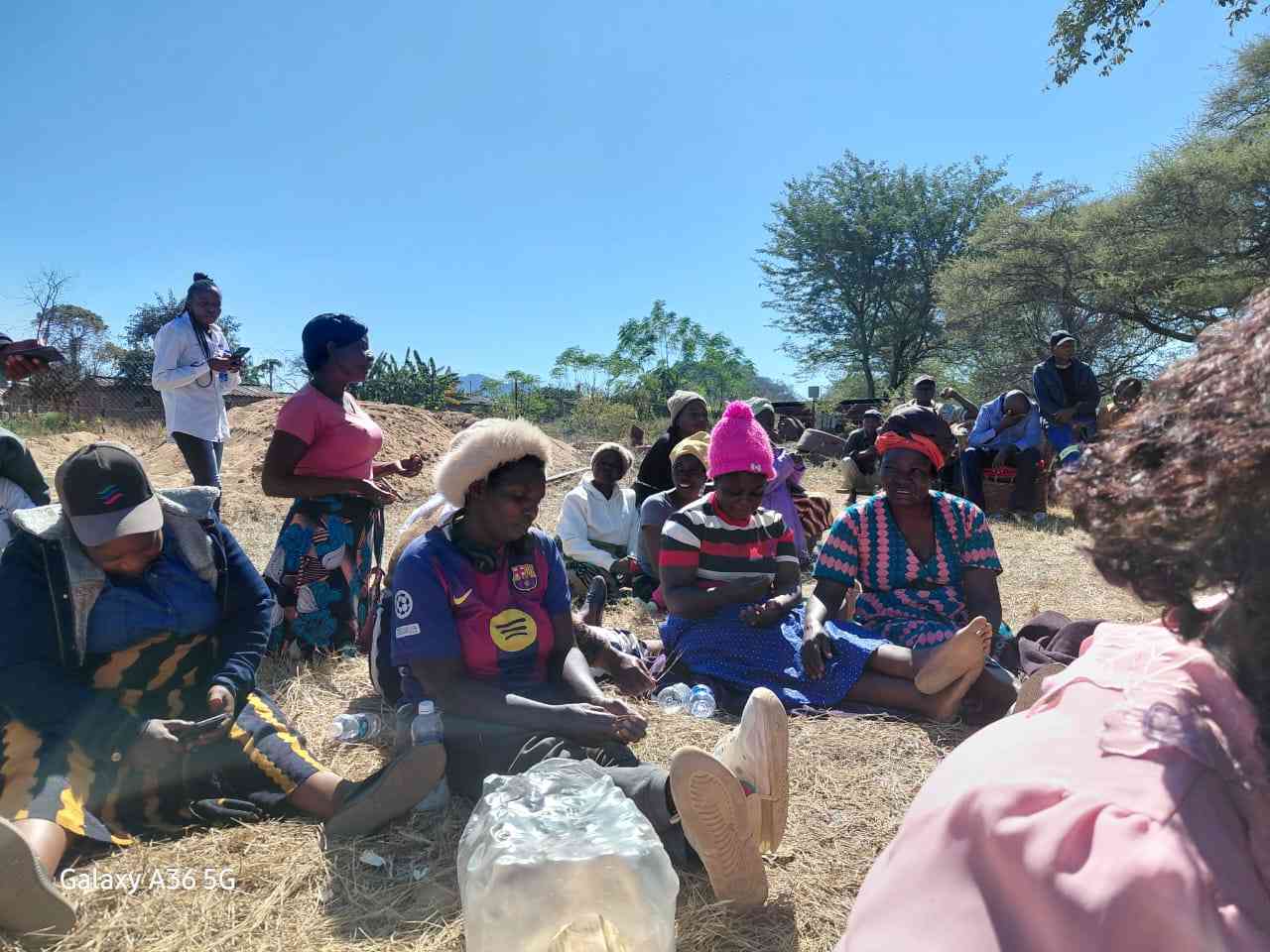
Zvishavane women hardest hit by mining disputes, displacement: report 

Source: Zvishavane women hardest hit by mining disputes, displacement: report -Newsday Zimbabwe BULAWAYO, Jun 15 (NewsDay Live) — Women in Zvishavane are bearing the brunt of mining-related land disputes, displacement and economic exclusion, according to a report by the Women’s Coalition of Zimbabwe (WCOZ), which is calling for urgent reforms to protect affected communities. The […]

The post Zvishavane women hardest hit by mining disputes, displacement: report  appeared first on Zimbabwe Situation.

Source: Zvishavane women hardest hit by mining disputes, displacement: report -Newsday Zimbabwe

BULAWAYO, Jun 15 (NewsDay Live) — Women in Zvishavane are bearing the brunt of mining-related land disputes, displacement and economic exclusion, according to a report by the Women’s Coalition of Zimbabwe (WCOZ), which is calling for urgent reforms to protect affected communities.

The report found that families relocated from fertile agricultural land to less productive areas have struggled to rebuild their livelihoods, with women suffering the most severe consequences because of their traditional reliance on farming.

“Families relocated from fertile agricultural land to more arid areas have struggled to rebuild their livelihoods, with women particularly affected as they lose the ability to farm,” the report said.

WCOZ said environmental degradation linked to mining operations has compounded women’s burdens, with deforestation and dwindling water sources forcing them to travel longer distances to collect firewood and water.

“Deforestation and water depletion linked to mining operations have made these tasks more difficult,” the report noted.

The findings also highlighted women’s limited participation in the extractive sector, with few holding mining claims despite mineral resources being extracted from land they previously used for agriculture.

“Very few women hold mining claims, limiting their ability to benefit from mineral resources found on land they previously used for farming,” the report said.

Nearly half of the women interviewed in artisanal mining communities reported that mining claims were inaccessible to them, effectively shutting them out of potential income opportunities.

The coalition urged the government to establish a transparent compensation mechanism that adequately reflects the value of lost land and livelihoods, while ensuring women have a meaningful voice in negotiations over mining and relocation processes.

Authorities should “introduce a clear compensation framework that reflects the real value of lost land and ensures women participate in negotiations,” WCOZ said.

The report underscores growing concerns over the gendered impacts of Zimbabwe’s mining expansion, with advocates warning that women risk further marginalisation unless policies explicitly address inequalities in land ownership, compensation and access to mineral resources.

The post Zvishavane women hardest hit by mining disputes, displacement: report  appeared first on Zimbabwe Situation.

Pay taxes, churches told

Source: Pay taxes, churches told -Newsday Zimbabwe KAROI, Jun. 15 (NewsDay Live) — Karoi Town Council has warned religious organisations operating commercial ventures that they will be required to pay rates and other applicable taxes, saying properties used for income-generating activities do not qualify for exemptions. In a public notice issued this week, the local […]

The post Pay taxes, churches told appeared first on Zimbabwe Situation.

Source: Pay taxes, churches told -Newsday Zimbabwe

KAROI, Jun. 15 (NewsDay Live) — Karoi Town Council has warned religious organisations operating commercial ventures that they will be required to pay rates and other applicable taxes, saying properties used for income-generating activities do not qualify for exemptions.

In a public notice issued this week, the local authority said premises owned by churches but used for businesses such as shops, bookshops and business centres would be subject to rates regardless of their religious affiliation.

“Properties utilized for income-generating or commercial purposes become rateable irrespective of their religious status,” council said in the notice issued under its motto, “Talumas Juayat Fortuna”.

The directive means churches running commercial projects on their premises could be assessed for rates and other charges in line with local authority regulations.

Council instructed affected institutions to regularise their records with its Revenue Section at the main offices.

“Churches must now regularize records with the Revenue Section at Main Offices or risk penalties,” the notice said.

The move comes as local authorities across Zimbabwe face mounting pressure to improve revenue collection amid growing service delivery demands.

The notice, tagged #KaroiKumba, concluded by urging compliance from affected organisations and stakeholders.

The post Pay taxes, churches told appeared first on Zimbabwe Situation.