Five political parties unite to oppose Zanu PF ‘2030 Agenda’ 

Source: Five political parties unite to oppose Zanu PF ‘2030 Agenda’ – CITEZW President Emmerson Mnangagwa Five political groups in Matabeleland have formed a united front against Zanu PF’s controversial “2030 Agenda,” warning that proposed constitutional amendments to extend President Emmerson Mnangagwa’s presidency amount to an assault on constitutionalism, democracy and regional justice. The five […]

The post Five political parties unite to oppose Zanu PF ‘2030 Agenda’  appeared first on Zimbabwe Situation.

Source: Five political parties unite to oppose Zanu PF ‘2030 Agenda’ – CITEZW

President Emmerson Mnangagwa

Five political groups in Matabeleland have formed a united front against Zanu PF’s controversial “2030 Agenda,” warning that proposed constitutional amendments to extend President Emmerson Mnangagwa’s presidency amount to an assault on constitutionalism, democracy and regional justice.

The five parties, which issued a joint statement on Wednesday, the Progressive Alliance of Mthwakazi Unions (PAMU), Assembly of Minorities (AM), Mthwakazi United Party (MUP), Freedom Alliance and the Mayibuye Peoples Party (MPP) denounced efforts by Zanu PF to extend Mnangagwa’s term beyond 2028, describing the move as illegal, politically motivated and symptomatic of Zimbabwe’s deepening governance crisis.

This move comes amid growing national debate over Zanu PF’s push to alter Zimbabwe’s Constitution to allow Mnangagwa to remain in office until 2030.

Last year, the ruling party resolved at its 22nd Annual National People’s Conference in Mutare to begin legal steps towards extending the president’s tenure, instructing the government to draft constitutional and legislative amendments to effect the change.

Although Zanu PF has framed the proposal as necessary to safeguard “stability” and align leadership with the national Vision 2030 development agenda, critics say it is a thinly veiled attempt to entrench executive power and undermine term limits enshrined in the Constitution.

The Matabeleland-based alliance argues that the 2030 agenda reflects a broader pattern in which constitutional provisions are selectively amended to serve elite political interests.

PAMU president, Cosmas Ncube, said the proposed amendment is both illegal and unconstitutional, as Zimbabwe’s Constitution explicitly bars an incumbent president from benefiting from changes to term limits.

“This proposal serves the narrow self-interests of a political faction rather than the democratic will of the people,” Ncube said, adding that extending Mnangagwa’s term would not resolve Zimbabwe’s political, economic or social crises.

Ncube called on citizens to engage in peaceful but active civic participation to defend constitutionalism, warning democratic erosion has become normalised in Zimbabwe.

The Assembly of Minorities took an even stronger stance, describing the manoeuvre as a “constitutional coup.”

AM leader, Chilumbo Mudenda, cited Sections 91, 95 and 328 of Zimbabwe’s Constitution, which outline presidential term limits and the non-retrospective application of constitutional amendments.

“Zanu PF’s attempt to circumvent these provisions is unlawful,” Mudenda said.

“Citizens do not need to wait for the courts to intervene. The Constitution already provides mechanisms for peaceful protest and assembly under Sections 58 and 59.”

Mudenda accused senior state officials including Acting Attorney General Virginia Mabiza, Speaker of Parliament Jacob Mudenda and Justice Minister Ziyambi Ziyambi of driving unconstitutional changes, declaring their actions amounted to a “declaration of war on the people.”

These political groupings also indicated that their opposition to the 2030 agenda is also rooted in longstanding grievances over political exclusion, underdevelopment and historical injustices in Matabeleland.

Mthwakazi United Party president Bernard Dube, said the 2030 agenda fails to address deep-rooted structural problems, particularly in marginalised regions.

“Without genuine democratic and electoral reforms, devolution of power, economic justice and accountability, these slogans remain symbolic rather than transformative,” Dube said.

The Freedom Alliance framed the debate in explicitly liberationist terms, arguing the agenda represents a continuation of domination rather than development.

“The so-called 2030 Agenda is not a national vision but a counter-liberation project designed to entrench permanent rule over Zimbabwean nations,” said Freedom Alliance leader, Presia Ngulube.

Ngulube highlighted Matebeleland’s history of political repression, economic exploitation and silencing, declaring the region’s struggle had entered a “new phase of national liberation.”

“Unity imposed by fear or hunger is not unity,” she said.

The Mayibuye Peoples Party echoed concerns that the 2030 agenda prioritises power consolidation over citizens’ welfare.

MPP president, Zanele Mguni said the proposal ignores widespread poverty, corruption and regional inequality.

“This agenda is superficial and politically driven. It does not speak to the lived realities of ordinary Zimbabweans,” she said.

Mguni said any credible national vision must restore respect for the Constitution, strengthen accountability mechanisms, provide equitable development and empower citizens to meaningfully participate in governance.

The joint statement underscores growing unease not only with the prospect of term extension but also with what critics see as the hollowing out of democratic institutions.

Zimbabwe has previously amended the Constitution to extend the tenure of Chief Justice Luke Malaba, a move widely criticised as setting a dangerous precedent.

Observers argued that same logic is now being applied to the presidency, to serve the whims of those in power.

Meanwhile, while the five movements differ ideologically and organisationally, analysts say their unity reflects mounting frustration in Matabeleland with centralised power and perceived political disregard.

“Whether the alliance will translate into coordinated political action remains to be seen, considering the challenges that are always seen in the opposition, where individual egos affect progress,” said analyst Mxolisi Ncube, when interviewed by CITE.

However, in its joint statement, the five Matabeleland groups say their unity is rooted in a shared commitment to defending constitutionalism and democratic governance.

“We reaffirm our unity in defending the Constitution, democratic governance and the genuine interests of all Zimbabweans,” the statement reads.

The post Five political parties unite to oppose Zanu PF ‘2030 Agenda’  appeared first on Zimbabwe Situation.
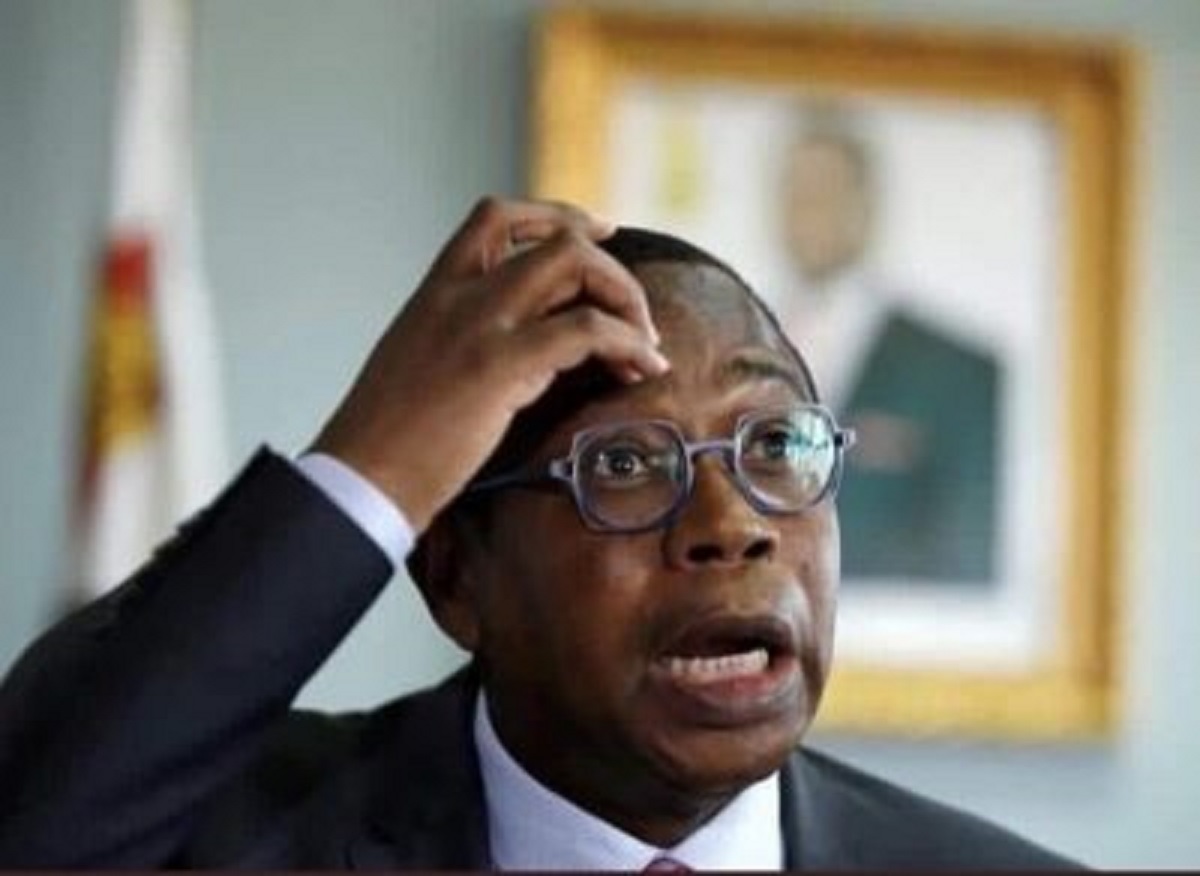
Mthuli Clears Civil Registry Department’s Coffers

Source: Mthuli Clears Civil Registry Department’s Coffers ⋆ Pindula News Chiredzi Central MP Blessing Ropafadzo Makumire (CCC) has said the Civil Registry Department in Chiredzi District cannot issue national IDs or birth certificates due to a severe shortage of supplies. In a Facebook post on Wednesday, Makumire said he contacted the Civil Registry Head Office […]

The post Mthuli Clears Civil Registry Department’s Coffers appeared first on Zimbabwe Situation.

Source: Mthuli Clears Civil Registry Department’s Coffers ⋆ Pindula News

Mthuli Clears Civil Registry Department’s Coffers
Chiredzi Central MP Blessing Ropafadzo Makumire (CCC) has said the Civil Registry Department in Chiredzi District cannot issue national IDs or birth certificates due to a severe shortage of supplies.

In a Facebook post on Wednesday, Makumire said he contacted the Civil Registry Head Office in Harare to find out why stationery shortages had stopped the issuance of these documents.

He was told that the Ministry of Home Affairs and Cultural Heritage, which oversees the Registrar-General’s Office, has no funds to buy basic items such as receipt books and printer toner.

This is because all revenue from passports, IDs, and related services is taken by the Treasury, leaving nothing for the departments to use. Said Makumire:

“This afternoon, I engaged the Civil Registry Department Head Office in Harare on the stationery shortages that have halted the issuance of national IDs and birth certificates in Chiredzi District.

“From the engagement, it’s now clear that the problem goes beyond the Registrar-General’s Office and the Ministry of Home Affairs.

“The ministry has no funds to buy basic supplies such as receipt books and printer toners because all revenue collected from passports, IDs, and related services is taken by the Treasury, with nothing retained by the departments.

“More than 55 districts across Zimbabwe are affected. This is no longer an administrative problem; it is now a national identity crisis, with thousands of citizens unable to access essential documents.

“This same problem is affecting other ministries such as Mines and Local Government. The Minister of Finance must be summoned urgently when Parliament opens.”

The post Mthuli Clears Civil Registry Department’s Coffers appeared first on Zimbabwe Situation.

Fury grows as Bulawayo dams fail to fill 

Source: Fury grows as Bulawayo dams fail to fill – CITEZW File Photo: Umzingwane Dam – intake tower. Despite a season of above-normal rainfall across much of the country, Bulawayo’s supply dams remain worryingly low, reinforcing long-standing concerns by residents and city leaders that ‘something fundamental is broken’ in the city’s water system. According to […]

The post Fury grows as Bulawayo dams fail to fill  appeared first on Zimbabwe Situation.

Source: Fury grows as Bulawayo dams fail to fill – CITEZW

File Photo: Umzingwane Dam – intake tower.

Despite a season of above-normal rainfall across much of the country, Bulawayo’s supply dams remain worryingly low, reinforcing long-standing concerns by residents and city leaders that ‘something fundamental is broken’ in the city’s water system.

According to the City of Bulawayo Dam Watch: Dam Level Statistics and Inflows Summary as at Monday, 19 January 2026, the city’s six operational dams are collectively 43.25 percent full, a marginal improvement from 33.97 percent recorded at the same time last year.

The cumulative increase in dam levels since the onset of the rainy season in October stands at 9.32 percent of total system capacity, a figure many residents say does not reflect the volume of rainfall received.

Individually, Mtshabezi Dam shows the strongest recovery at 95.01 percent full, up from 53.84 percent in January 2025, while Insiza Mayfair Dam stands at 46.98 percent, Lower Ncema at 39.03 percent, Upper Ncema at 34.58 percent, Umzingwane at 27.21 percent and Inyankuni remains critically low at 16.65 percent.

The city council said they received inflows into the City’s supply dams on 21 October 2025 following the onset of the rainy season.

“The cumulative increase in dam levels attributable to the rains stands at 9.32 percent of the total dam system capacity,” said the council.

While the figures indicate some improvement, residents argue the gains are disproportionately small when compared to dam levels in other parts of the country, where several reservoirs have reportedly spilled over.

“I see there is a slight improvement on all of them, particularly Mtshabezi which has gone above the 50 percent mark. However, it remains worrisome in comparison to national statistics for other dams. Kambe mhlonitshwa kubangelwa yini ukuthi amanzi amanengi kangaka alahleke and not flow into the dams?” said a resident in a community discussion forum, asking the Ward 2 councillor, Adrian Rendani Moyo.

Residents are increasingly questioning whether rainfall is  lost before reaching the reservoirs, with illegal mining emerging as a central concern.

Bulawayo Mayor David Coltart has repeatedly warned that illegal gold and lithium mining activities in catchment areas are devastating the city’s water security.

“I have been speaking out about this for two years, but it has fallen on deaf ears,” Coltart said recently.

“Our catchment areas have been utterly devastated by illegal gold and lithium miners. It needs the intervention of the Environmental Management Agency (EMA), the Zimbabwe Republic Police (ZRP) and possibly the military to stop this existential crisis.”

The mayor’s remarks echo sentiments expressed by the Ward 2 Councillor, who acknowledged that mining activities were undermining water inflows.

“The problem is the illegal mining activity within our catchment areas. This is something that we have been speaking about,” Moyo said.

“There is a team of people that is going to visit our dams very soon.”

That admission, however, did little to reassure residents, some of whom directly questioned the effectiveness of environmental regulators.

“So EMA has failed to rein in illegal miners in order to save Bulawayo?” one resident asked bluntly.
“Yes,” the councillor responded.

The exchange intensified calls for stronger intervention, including the involvement of civil society experts and controversially, the military.

“I allow some volunteers from civil society,” another resident said.

“You will be surprised by the amount of technical expertise that could contribute to a solution. I am sure there is provision in our Constitution, once such a situation occurs, to call in the last line of defence, which is the Zimbabwe National Army (ZNA).”

Residents argued the consequences of inaction are already visible, with Bulawayo residents enduring water supplies as infrequent as once a week.

“To not have a cholera outbreak is through God’s mercy,” one contributor warned.

Yet not all residents agree that illegal mining is the sole cause of the crisis.

Others argued that Bulawayo’s water problems pre-date the current mining boom and are rooted in decades of infrastructure neglect.

“Our dams can be full to capacity and still not be enough for Bulawayo,” one resident wrote. “These dams were built for the population at the time. The population has since grown by more than 60 percent yet we are still using the same dams.”

The resident pointed out that municipal records indicate that one new dam should be constructed every ten years, noting that no new dam has been built in over four decades, leaving the city short of at least four major reservoirs.

Councillor Moyo, however, said dam construction falls outside the city’s mandate, placing responsibility on the Zimbabwe National Water Authority (ZINWA).

“The City of Bulawayo does not have the authority to construct dams,” he said.

Residents countered that the council still has a duty to lobby for additional infrastructure when existing systems fail to meet demand.

The matter also drew the attention of Bulawayo North MP, Minenhle Gumede, who said Members of Parliament from the city have been pushing for structural reform in water governance.

“All Bulawayo Members of Parliament have been vocal about the water challenges facing our city,” Gumede said.

“We have consistently pushed for ZINWA to hand back its mandate to the council, as it has failed to adequately address these challenges, including the basic responsibility of constructing dams.”

The post Fury grows as Bulawayo dams fail to fill  appeared first on Zimbabwe Situation.

Why Zimbabwe’s decoder ban is undemocratic and out of step with the world

Source: Why Zimbabwe’s decoder ban is undemocratic and out of step with the world An excessive urge to control everything betrays fear and a deep lack of confidence. Tendai Ruben Mbofana The recent statement by the Broadcasting Authority of Zimbabwe (BAZ) threatening action against the distribution, sale, and use of so-called “illegal” decoders is not […]

The post Why Zimbabwe’s decoder ban is undemocratic and out of step with the world appeared first on Zimbabwe Situation.

Source: Why Zimbabwe’s decoder ban is undemocratic and out of step with the world

An excessive urge to control everything betrays fear and a deep lack of confidence.

Tendai Ruben Mbofana

The recent statement by the Broadcasting Authority of Zimbabwe (BAZ) threatening action against the distribution, sale, and use of so-called “illegal” decoders is not merely a regulatory notice; it is a revealing window into how far Zimbabwe’s broadcasting framework remains detached from democratic norms.

To directly receive articles from Tendai Ruben Mbofana, please join his WhatsApp Channel on: https://whatsapp.com/channel/0029VaqprWCIyPtRnKpkHe08

Cloaked in the language of legality, sustainability, and protection of the broadcasting industry, the announcement in fact exposes an outdated, restrictive, and deeply authoritarian approach to media regulation—one that criminalises consumer choice, suppresses competition, and ultimately undermines the very credibility of claims that Zimbabwe is opening up its democratic and media space.

At the heart of the BAZ position is the assertion that citizens may not lawfully access broadcasting services without state-approved licences, extending even to the devices they use in their own homes.

This logic effectively transforms ordinary viewers into potential offenders simply for choosing how and what to watch.

In any genuine democracy, this would be unthinkable.

Regulation is meant to govern broadcasters and commercial operators, not to police citizens’ living rooms.

By contrast, Zimbabwe’s model places the state as the ultimate gatekeeper of information, determining not only who may broadcast, but also what devices citizens may use to receive content—even when that content originates beyond Zimbabwe’s borders.

In democratic societies such as South Africa, the United Kingdom, the European Union, and the United States, broadcasting regulation is firmly anchored in consumer rights and freedom of information.

Regulators license broadcasters, not viewers.

Individuals are free to purchase and use any decoder, satellite dish, smart TV, or streaming device of their choosing.

The legality of content distribution is a matter between regulators, broadcasters, and copyright holders, not a criminal matter imposed on consumers.

This distinction is critical.

It reflects an understanding that access to information is a fundamental democratic right, not a privilege dispensed by the state.

South Africa offers a particularly relevant comparison.

Despite having its own public broadcaster and regulatory authority, no South African citizen is threatened with arrest or prosecution for owning a foreign decoder or accessing international satellite content.

Competition is allowed to exist, prices are disciplined by the market, and consumers ultimately decide what services survive.

The regulator intervenes only where broadcasters violate licensing or content rules—not where citizens exercise choice.

This is precisely how a regulator should function: as a neutral referee, not an enforcer of monopolies.

In the UK and across the EU, the principle of device neutrality is well established.

The state does not dictate what hardware citizens may use to access content.

Instead, the law focuses on copyright enforcement, targeting commercial-scale piracy and illegal resellers, not individual users.

The assumption is simple yet profound: citizens are rational adults capable of making their own choices.

Freedom of access is not seen as a threat to national security or public order, but as a cornerstone of democracy itself.

The United States goes even further in entrenching this freedom.

Hardware neutrality is sacrosanct.

Whether one accesses content via cable, satellite, IPTV, or online streaming is of no concern to the state.

Where piracy exists, enforcement targets organised, profit-driven infringement, not households.

The idea that a regulator would publicly warn citizens against purchasing certain decoders would be viewed as a gross overreach and an affront to civil liberties.

Against this backdrop, Zimbabwe’s approach appears not just restrictive, but fundamentally incompatible with democratic practice.

The insistence on controlling decoders betrays a deeper anxiety—not about piracy, but about control.

If the true concern were copyright protection, enforcement would focus on large-scale distributors and commercial resellers, not end users.

If the concern were the sustainability of the broadcasting industry, the solution would be competition, innovation, and affordability, not bans and threats.

Repression does not build sustainable industries; it merely drives consumers underground.

Indeed, the popularity of alternative decoders in Zimbabwe is itself an indictment of the system.

Citizens are not seeking illegal services out of malice, but out of necessity.

High subscription costs, limited content diversity, and perceived monopolistic practices have created a market failure.

In any democracy, such a failure would prompt regulatory reform.

In Zimbabwe, it instead provokes criminalisation.

Even more troubling is the broader implication for freedom of information.

Broadcasting is not just about entertainment; it is about access to ideas, perspectives, and narratives.

When the state restricts how citizens may access content, it inevitably shapes what they are exposed to.

This is why democratic societies are so cautious about media regulation.

They recognise that information control, however subtly framed, is antithetical to democratic citizenship.

If Zimbabwean authorities genuinely wish to be taken seriously when they speak of opening up the media and democratic space, they must confront this contradiction head-on.

One cannot proclaim reform while enforcing laws rooted in suspicion of citizens and fear of choice.

Democratic reform is not performative; it requires dismantling undemocratic laws, not repackaging them with friendlier language.

The BAZ announcement therefore deserves to be challenged—legally, intellectually, and morally.

It should be questioned on the grounds of fairness, proportionality, and democratic consistency.

Why does Zimbabwe regulate viewers when democratic states regulate broadcasters?

Why are citizens threatened instead of empowered?

Why is competition suppressed rather than encouraged?

These are not radical questions; they are standard democratic inquiries.

A modern, democratic broadcasting framework for Zimbabwe would liberalise access, respect consumer choice, and focus regulation where it belongs—on broadcasters and commercial operators.

It would encourage competition to lower prices and improve content, rather than using coercion to protect incumbents.

Above all, it would recognise that citizens are not enemies of the state, but rights-bearing individuals entitled to information and choice.

Until such reforms are undertaken, announcements like that of BAZ will continue to ring hollow.

They will not restore order or protect the industry.

They will simply reinforce the perception that Zimbabwe’s media laws remain anchored in an authoritarian past, out of step with democratic standards across the region and the world.

If democracy is truly the destination, then freedom of access—not fear of it—must be the starting point.

The post Why Zimbabwe’s decoder ban is undemocratic and out of step with the world appeared first on Zimbabwe Situation.

Opening of the 2026 Legal Year

Source: Opening of the 2026 Legal Year COURT WATCH 1/2026 Opening of the 2026 Legal Year Introduction Zimbabwe’s justice delivery system continues to operate under pressure from limited resources, uneven access and the demands for reform.  Courts have been decentralised to bring justice closer to communities yet staffing levels remain critically low, leaving magistrates and […]

The post Opening of the 2026 Legal Year appeared first on Zimbabwe Situation.

Source: Opening of the 2026 Legal Year

COURT WATCH 1/2026

Opening of the 2026 Legal Year

Introduction

Zimbabwe’s justice delivery system continues to operate under pressure from limited resources, uneven access and the demands for reform.  Courts have been decentralised to bring justice closer to communities yet staffing levels remain critically low, leaving magistrates and judges overstretched.  Case backlogs reflect the strain on a system expected to serve over 16 million citizens.

Against this backdrop, Chief Justice Luke Malaba officially opened the 2026 legal year on Monday 12 January.  This annual event provides the Judiciary with an opportunity to articulate its vision for the administration of justice and to engage with stakeholders as the new year commences.  In his address the Chief Justice acknowledged both the resilience of the judiciary and the urgent need for reform, highlighting technology, performance management and institutional renewal as key pathways to strengthening public confidence in the courts.  The address can be accessed on the Veritas website [link].

The Theme for 2026

The theme for the 2026 Legal Year is: “Using Performance Management and Technology to Ensure Quality, Inclusive and Sustainable Judicial Service.”  The Chief Justice described this theme as a “bridge” between the Judiciary’s constitutionally based vision and its daily operational priorities.  He said that judicial trust must be translated into demonstrable performance – presumably meaning that judicial officers must earn the public’s trust through performing their duties competently and ethically.  He added that modern tools must be used ethically to uphold the rule of law.

The 2026–2030 Strategic Plan

The conclusion of the 2025 legal year marked the end of the Judicial Service Commission’s (JSC) 2021–2025 Strategic Plan, which focused on decentralisation of courts and digitisation of processes through the Integrated Electronic Case Management System (IECMS).  During the opening ceremony, the Chief Justice launched a new Strategic Plan for the period 2026–2030. This new roadmap, according to the Chief Justice, prioritises quality of adjudication and court administration, expanded access to justice and digital transformation, strengthening customary and local justice, and the welfare, wellness and security of judicial officers and staff.

Performance Management and Accountability

The Chief said the major focus for 2026 is the integration of the Integrated Results-Based Management (IRBM) system, linking planning, budgeting, and evaluation to clearly defined results.  This follows a 2025 monitoring exercise that revealed systemic shortcomings, including unreliable statistical reporting and thousands of dormant cases.  Under Practice Direction No. 1 of 2025 [link], the Judiciary dismissed 6,524 dormant matters in the High Court that had been abandoned by litigants or legal practitioners.  The Chief Justice stressed that while judicial independence remains inviolable under Section 164 of the Constitution, judicial officers must also be held accountable for administrative efficiency, including the timeliness of judgments.

Technology and Artificial Intelligence (AI)

The Judiciary, according to the Chief Justice, is now in “overdrive” regarding technology, with all superior courts operating paperless.  The IECMS continues to expand, with Phase 4.3 set to operationalise the system in magistrates’ courts in Mashonaland East and Manicaland.  Its rollout, however, has not been without challenges.  Many litigants and legal practitioners initially struggled with access due to limited digital infrastructure, connectivity issues, and the cost of adapting to new systems.  Training gaps for both judicial officers and court users slowed adoption, while rural courts faced particular difficulties in implementing the technology.

The JSC has begun using artificial intelligence for recording and transcribing court proceedings, and policies are being developed to regulate its further use and guard against risks such as algorithmic bias.  To support these reforms, the JSC is appointing a Deputy Secretary – ICT, Innovation and Corporate Services.

Infrastructure and Staffing Challenges

The Chief Justice noted that Zimbabwe’s judiciary is operating with only 80 judges and 250 magistrates to serve a population of over 16 million.  He said this was “untenable,” warning that decentralisation of courts has not been matched by adequate deployment of judicial officers and support staff.  Despite these staff shortages, he said, case backlogs have been largely contained, though at great strain to existing personnel.  He pointed out that staffing levels must increase dramatically to keep pace with the growing court network.

Significant infrastructure progress in 2025 included the commissioning of the Mutawatawa courthouse in April, progress on the Kwekwe court complex which will house the sixth seat of the High Court, and construction at Gwanda, Cowdray Park and Mabvuku-Tafara.

Court Performance in 2025

The superior courts performed well, the Chief Justice said, and the overall backlog of cases was reduced by 20 per cent – starting 2025 with 12 514 cases and closing with 10 045. On the other hand, the magistrates courts backlog in civil cases increased sharply from 863 to 6 174 cases.  This was attributed to a surge in summonses from local authorities and poor supervision in certain regions.

Losses to the Judiciary

The Chief Justice noted the passing of several distinguished judicial officers in 2025. These included Justice Felicia Chatukuta of the Supreme Court, Justice Mavis Gibson, Zimbabwe’s first black female High Court Judge, Justice Herbert Mandeya, retired Senior Judge of the Administrative Court, and Justice Moses Chinhengo, former High Court Judge who continued to serve as a judge in Botswana, Lesotho and Namibia after he left the Bench in Zimbabwe.  One very distinguished former judge whose passing the Chief Justice did not mention was Justice George Smith, who passed away on the 21st December after long and valued service in the highest levels of Government and on the Bench.

Retirement of the Chief Justice

In May 2026 Chief Justice Malaba turns 75, the constitutional retirement age for judges.  His impending departure adds weight to his remarks, as the judiciary prepares for leadership transition at a politically sensitive time.

Veritas Comments

Access to justice remains a concern.  Without increased staffing, decentralisation risks becoming symbolic rather than substantive, leaving citizens in newly established courts facing delays and overstretched services.  Digitisation may increase efficiency, but it requires sustained investment in infrastructure, training, and public awareness.  With looming constitutional debates, the judiciary’s role in safeguarding constitutionalism will be closely scrutinised. Performance management and transparency are critical to restoring trust in the courts, especially amid political and economic uncertainty.

The Chief Justice’s last opening speech is both a warning and a roadmap. It is a warning because the judiciary cannot continue to function effectively with such severe staffing shortages.  It is a roadmap because digitisation and performance management provide a path toward sustainable justice delivery.  For Parliament and Government, the Chief Justice’s message is clear:  invest in human resources for the judiciary, align decentralisation with staffing, and support digital reforms with adequate funding.  Without these, constitutional promises of access to justice will remain aspirational.

Veritas makes every effort to ensure reliable information, but cannot take legal responsibility for information supplied.

The post Opening of the 2026 Legal Year appeared first on Zimbabwe Situation.