Willowvale road works near completion 

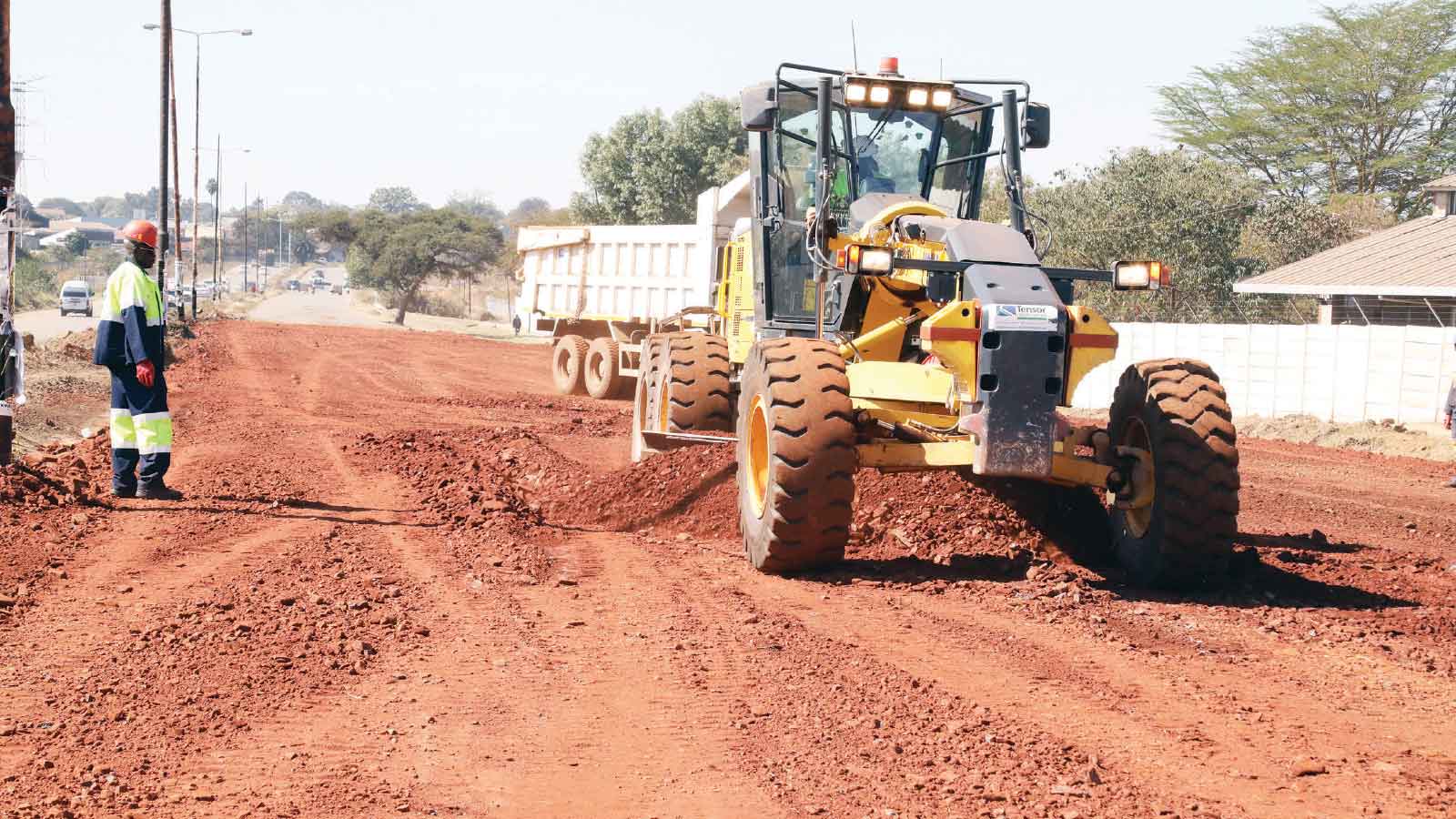
Source: Willowvale road works near completion – herald The rehabilitation of Willowvale Road from the Harare Drive traffic circle to Simon Mazorodze Road is nearing completion, with Tensor Systems workers busy at the site yesterday. – Picture: Memory Mangombe Freeman Razemba Senior Reporter THE construction of a traffic-controlled section and a road to manage congestion […]

The post Willowvale road works near completion  appeared first on Zimbabwe Situation.

Source: Willowvale road works near completion – herald
Freeman Razemba

Senior Reporter

THE construction of a traffic-controlled section and a road to manage congestion at the intersection of Willowvale Road and Harare Drive is underway.

The contractor is expecting to complete all works and fully open the Willowvale Road and Harare Drive Road intersection in four weeks.

This development comes after the Government completed the construction of a detour between Willowvale Road and Simon Mazorodze Road.

Transport and Infrastructural Development Minister Felix Mhona, engineers and Government officials recently toured roads in and around the city assessing progress.

The roads are part of the Trabablas Interchange, a Second Republic signature infrastructure project that is anticipated to enhance traffic flow and improve connectivity.

In an interview, Engineer Virginia Mawere, deputy director of Roads Construction in the ministry, said, “Following the assessment, the Government has started to attend to some of the roads, as some of them need to be constructed, while others need maintenance.”

She said works were on going on Harare Drive West Rd, with only a few kilometres left to open to traffic, while outstanding works remain on Simon Mazorodze Road to Harare Drive West.

The engineers noted that there was need for Harare council water pipes to be relocated.

“Once the waterline is relocated, works on the slip lane can be completed. Harare Drive and Willowvale Road intersection is now partially open to traffic to allow works on the approaches to the intersection and the slip lanes as well.

“The contractor is expecting to complete all works and fully open the Willowvale Road and  Harare Drive intersection and the remaining part of Harare Drive to traffic in four weeks time,” Eng Mawere said.

On Gleneagles and Highfield Road, she said they had identified and met service providers who are due to be relocated.

Some of them with pending requests are officials from ZEDTC, while Harare Water City Council has submitted their request for services relocation and protection.

Meanwhile, the contractor’s procurement team is working on the quotations to be submitted to the ministry together with the materials request list for approval.

Recently, a detour was constructed at the Msasa Interchange construction site.

This critical phase is aimed at facilitating the smooth diversion of traffic, while paving the way for accelerated works on the main interchange infrastructure.

Four more such structures are in the pipeline to ease congestion, reduce carnage and modernise the country’s infrastructure.

The interchanges will be at the Mabvuku junction, Harare Drive-Mutare Road; Harare Drive-Liberation Legacy Way; Nemakonde Way-Harare Drive; Sam Nujoma-Harare Drive; Westgate traffic circle; Kuwadzana traffic circle and Churchill/Liberation Legacy Way.

The post Willowvale road works near completion  appeared first on Zimbabwe Situation.

Ministry to trace, reintegrate school dropouts 

Source: Ministry to trace, reintegrate school dropouts – herald Mr Taungana Ndoro Sikhumbuzo Moyo Bulawayo Bureau GOVERNMENT has embarked on a programme to trace and reintegrate learners who have dropped out of school following revelations that nearly 40 000 pupils left the education system last year due to various challenges. According to the Ministry of […]

The post Ministry to trace, reintegrate school dropouts  appeared first on Zimbabwe Situation.
Source: Ministry to trace, reintegrate school dropouts – herald

Sikhumbuzo Moyo

Bulawayo Bureau

GOVERNMENT has embarked on a programme to trace and reintegrate learners who have dropped out of school following revelations that nearly 40 000 pupils left the education system last year due to various challenges.

According to the Ministry of Primary and Secondary Education’s Education Management Information Systems (EMIS) Report, a total of 39 736 learners dropped out of school in 2025, comprising 13 032 primary school pupils and 26 704 secondary school learners.

The report identified financial constraints, early marriages, teenage pregnancies and child labour as some of the major factors contributing to the high dropout rate.

At primary school level, 116 pupils dropped out due to marriage, while 102 left school because of pregnancy.

The report also noted that 138 learners with special needs discontinued their education, with the figures almost evenly distributed between boys and girls.

Responding to the findings, the ministry’s spokesperson, Mr Taungana Ndoro, said the Government was treating the issue with the seriousness it deserves, stressing that every learner who leaves school prematurely represents a loss that must be reversed.

“The ministry views the EMIS report with the seriousness it deserves and every learner who leaves school prematurely represents a loss that the ministry is determined to reverse,” said Mr Ndoro.

He said the ministry was implementing a multi-pronged strategy centred on an Early Warning System (EWS), robust re-entry policies and strong community partnerships.

Mr Ndoro said the Early Warning System, which is now embedded in the EMIS platform, identifies learners at risk of dropping out by monitoring chronic absenteeism, declining academic performance and vulnerability indicators such as orphan-hood and economic hardship.

“Once flagged, school-based response teams comprising teachers, guidance counsellors and School Development Committee members immediately conduct home visits to understand the barriers and work with families on support plans,” he said.

Mr Ndoro said Government interventions include the Basic Education Assistance Module (BEAM), which provides financial support to vulnerable learners, and the School Feeding Programme, which currently benefits more than 3,5 million learners across the country.

He said guidance and counselling services are also being strengthened to address psychosocial challenges including child marriages and gender-based violence. According to Mr Ndoro, policy measures such as the Re-Entry Policy under the Education Amendment Act of 2020 ensure that pregnant girls and young mothers can continue with their education and return to school after giving birth without facing discrimination.

The ministry is also expanding inclusive education through the provision of assistive devices, accessible infrastructure and specialised teacher training for Ministry to trace, reintegrate school dropouts learners with disabilities.

To improve access to education in remote communities, Government continues to roll out satellite schools to reduce long walking distances, which are often cited as a cause of school dropout.

For learners who have already left school, Mr Ndoro said the Government has shifted from passive approaches to active tracing and reintegration.

“The same Early Warning System generates a real-time list of learners who have been absent for extended periods. District and school authorities, working together with Social Welfare officers, community child-care workers and traditional leaders, conduct door-to-door tracing exercises,” he said.

Mr Ndoro said the initiative is being implemented through the National Case Management System in partnership with the Ministry of Public Service, Labour and Social Welfare.

Once traced, learners are offered flexible reintegration pathways, including accelerated learning programmes that enable them to rejoin school at age-appropriate levels.

Mr Ndoro said School Development Committees, village heads and other community structures have also been empowered to monitor school-age children and ensure that no child remains outside the education system.

“The message we are driving in every ward is: ‘No child out of school’,” he said.

The ministry has also highlighted several success stories demonstrating the effectiveness of the interventions.

One learner from Mashonaland Central, who dropped out in Form Two due to pregnancy, successfully returned to school under the Re-Entry Policy, passed five O-Level subjects and is now enrolled at a teachers’ training college.

Another learner from Manicaland who had left school in Grade Six to join artisanal mining operations was traced through a community initiative, re-enrolled through a bridging programme and is now in Form Two on a bursary.

In Matabeleland South, a learner with a physical disability who had stopped attending school after her classroom became inaccessible returned following the construction of a ramp and the provision of assistive devices. She later emerged as the top Mathematics student in her class.

Mr Ndoro said the ministry remains committed to strengthening the Early Warning System, expanding community tracing initiatives and creating conditions that make staying in school the most viable option for every Zimbabwean child.

The post Ministry to trace, reintegrate school dropouts  appeared first on Zimbabwe Situation.

Zim, E. Guinea trade ties target new heights

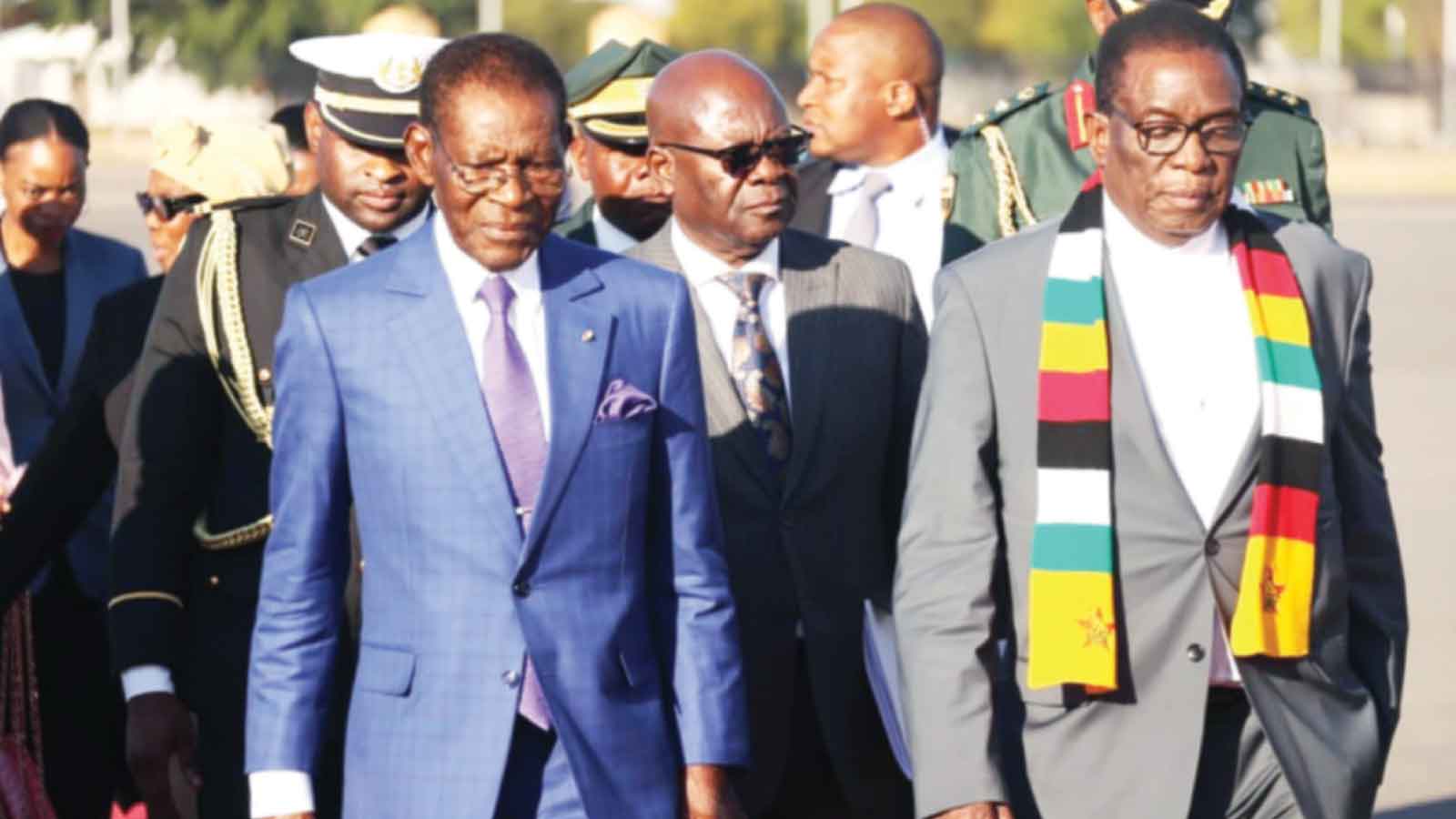
Source: Zim, E. Guinea trade ties target new heights – herald President Mnangagwa accompanies his Equatorial Guinea counterpart President Teodoro Obiang Nguema Mbasogo to board his plane at Robert Mugabe International Airport at the conclusion of his two-day State visit on Friday. — Picture: Believe Nyakudjara Wallace Ruzvidzo Herald Reporter EQUATORIAL Guinea President Teodoro Obiang […]

The post Zim, E. Guinea trade ties target new heights appeared first on Zimbabwe Situation.

Source: Zim, E. Guinea trade ties target new heights – herald

Wallace Ruzvidzo

Herald Reporter

EQUATORIAL Guinea President Teodoro Obiang Nguema Mbasogo’s two-day State visit was a “great success”, as relations between the two countries have reached new levels, Foreign Affairs and International Trade Minister Professor Amon Murwira has said.

The visit saw Harare and Ciudad de la Paz undertake their first Joint Commission of Cooperation, where the two countries signed four bilateral agreements.

Speaking to The Herald and ZBC shortly after the Equatorial Guinea President’s departure on Friday, Prof Murwira said the four agreements formed part of 12 deals being negotiated between Zimbabwe and Equatorial Guinea.

“You know, this was the first JCC, which is the Joint Commission of Cooperation.

“This was the first between Zimbabwe and Equatorial Guinea, so that’s an important point to note.

“It was a great success; they said it was a success; we say it is a success; therefore, success plus success is equal to success,” he said.

The agreements, Prof Murwira said, reached during the visit were designed to deepen relations across political, diplomatic, economic and social areas, noting that political and diplomatic engagement formed the “first layer” of the relationship and creates the environment for trade and investment cooperation.

He said the first agreement covered diplomatic and political relations, while additional instruments focused on economic and trade cooperation, education, science, technology, innovation and culture, as well as rules of procedure that define how the two countries will run and monitor their cooperation.

The signed Memorandums of Understanding cover Education, Economic and Trade Cooperation, Co-operation in the training of interpreters and translators, and Rules of Procedure of the Joint Commission for Cooperation (JCC).

“This is a structured relationship between Zimbabwe and Equatorial Guinea.

“His Excellency President Mnangagwa is pushing for structured relationships.

“Structured relationships are good in that you can monitor sector by sector what is going on,” said the Foreign Affairs Minister.

Prof Murwira said the agreements also fall under the broader work programme of deals being negotiated between Zimbabwe and Equatorial Guinea, including further discussions in areas such as immigration and other forms of economic interaction, and continued cooperation on tourism.

“So basically, in line with our economic diplomacy thrust, as well as our peace and security thrust, you can see these are being covered in our agreements, and the meeting went very well between their excellencies, and the agreements are just part of the 12 that we are negotiating.

“We are negotiating more again on immigration and other areas of economic interaction.

“We already have an MoU on tourism, whereby we are talking about shared destinations, shared marketing and so forth and so on,” he said.

The Foreign Affairs Minister said implementation will be tracked through a Mid-Term Review mechanism, through which the two sides will assess progress and determine how far cooperation is translating into practical outcomes for both countries.

“Their excellencies are asking about implementation; our monitoring mechanism is a mid-term review to see how far we have moved in terms of implementation, and their excellencies are then able to see whether we are moving, because we just don’t want to sign for signing’s sake, because, you know, international trade is very important, and international trade happens when we have established relations.

“I will always say international trade happens when there are two partners that trust each other, and we believe that this is important,” he  said.

Prof Murwira said Zimbabwe’s export receipts had grown under President Mnangagwa’s economic diplomacy thrust, citing an increase from about US$2 billion in 2017 to US$16 billion in 2025, and said his ministry expected trade figures to rise further as cooperation expands with Equatorial Guinea, which is petroleum-rich.

“We expect, as we relate to countries like Equatorial Guinea, which are petroleum-rich and so forth, we expect trade figures to grow even more between ourselves,” he said.

The post Zim, E. Guinea trade ties target new heights appeared first on Zimbabwe Situation.

Mnangagwa’s ally offers Toyota 300 series to silence rival faction

A public exchange on social media between Presidential Investment Advisor Paul Tungwarara and activist Rutendo Matinyarare has sparked debate over whether an offer of a luxury vehicle and promises of engagement may have effectively neutralised one of the government’s most vocal critics. The interaction unfolded after weeks of increasingly critical remarks by Matinyarare directed at […]

The post Mnangagwa’s ally offers Toyota 300 series to silence rival faction appeared first on The Zimbabwe Mail.

A public exchange on social media between Presidential Investment Advisor Paul Tungwarara and activist Rutendo Matinyarare has sparked debate over whether an offer of a luxury vehicle and promises of engagement may have effectively neutralised one of the government’s most vocal critics.

The interaction unfolded after weeks of increasingly critical remarks by Matinyarare directed at President Emmerson Mnangagwa and members of his administration over what he claims is unpaid work performed on behalf of Zimbabwe and the ruling establishment.

In a conciliatory message posted on social media, Tungwarara praised Matinyarare’s past work but expressed concern over his recent criticism of the President and his use of social media to air grievances.

“I have been following your work for a long time with admiration. However, I must say I am not happy with how things have turned out and your continuous direct and indirect attacks on the President,” Tungwarara wrote.

The Presidential advisor proposed a roundtable discussion to address Matinyarare’s concerns and urged him to de-escalate his criticism while dialogue takes place.

What immediately attracted public attention, however, was Tungwarara’s subsequent offer.

“As a first condition for our upcoming roundtable meeting, I want you to come and collect your Toyota 300 series. Let me know when you are in Harare so we can arrange for you to pick up your car,” he wrote.

The offer of a Toyota Land Cruiser 300 Series – a luxury vehicle often associated with political elites and senior government officials – quickly ignited debate online, with critics questioning whether the gesture amounted to an attempt to buy goodwill or silence a prominent critic.

Matinyarare’s response appeared noticeably softer in tone than his recent criticisms.

“I have long had the inclination that you are probably the wisest of the President’s advisors, but now I am convinced,” he wrote.

While maintaining that he and his organisation, Zimbabwe Anti-Sanctions Movement (ZASM), had been unfairly treated, Matinyarare welcomed the prospect of dialogue and framed the dispute primarily as a matter of unpaid compensation rather than political disagreement.

He argued that individuals who had undertaken assignments on behalf of Zimbabwe should be recognised and compensated for their efforts.

“People cannot work for the betterment of the nation and the President’s legacy on the mandate of his envoys and advisors, and then not receive recognition or compensation,” he wrote.

Matinyarare claimed that he had undertaken assignments ranging from lobbying against sanctions to combating anti-Zimbabwe sentiment in South Africa and helping repair diplomatic relations between Zimbabwe and Rwanda.

According to him, those efforts came at significant personal and professional cost.

“In executing my mandate, I put my life and business interests at risk, ending up as one of the most hated Zimbabweans in South Africa,” he wrote.

“My business was isolated by global corporations I worked with because I stood firm for the hated ‘Zimbabwe’.”

The activist described feeling abandoned after allegedly carrying out work requested by government-linked figures without receiving agreed remuneration.

“When it came time for me to get my agreed remuneration, all the princes, advisors and envoys ran into ivory towers, and I was left standing alone like an abandoned slave,” he said.

Despite the sharp criticism, Matinyarare ultimately agreed to engage in talks.

“Anyway, I acknowledge and accept that let us have a round table and resolve what is clearly an issue that can be resolved amicably if hearts and minds are focused on reconciliation, nation building, and unity,” he wrote.

The exchange has generated widespread discussion on social media, with some observers interpreting Tungwarara’s intervention as a successful effort to diffuse a potentially damaging public dispute involving a former ally of the administration.

Others have questioned whether the promise of a luxury vehicle and possible financial compensation creates the appearance that political criticism can be resolved through personal rewards rather than transparent engagement.

Neither Tungwarara nor Matinyarare has publicly clarified whether the Toyota 300 Series was intended as a gift, compensation for past work, or part of a broader settlement of the dispute.

What is clear, however, is that the interaction has shifted the conversation from Matinyarare’s criticism of the government to broader questions about patronage, political influence and the relationship between activists, advisers and the State.

As attention turns to the proposed roundtable meeting, observers will be watching closely to see whether the discussions produce a lasting reconciliation or merely a temporary pause in a dispute that has exposed tensions within circles that have traditionally supported President Mnangagwa.

Source – online

The post Mnangagwa’s ally offers Toyota 300 series to silence rival faction appeared first on The Zimbabwe Mail.

Australia Joins Western Allies in Raising Security Concerns Over South Africa

HARARE – Australia has become the latest country to caution its citizens travelling to South Africa, joining the United States and the United Kingdom in highlighting growing security risks linked to violent crime, civil unrest, and rising anti-immigration tensions. In an updated travel advisory, Australia’s Department of Foreign Affairs and Trade urged travellers to exercise […]

The post Australia Joins Western Allies in Raising Security Concerns Over South Africa appeared first on The Zimbabwe Mail.

HARARE – Australia has become the latest country to caution its citizens travelling to South Africa, joining the United States and the United Kingdom in highlighting growing security risks linked to violent crime, civil unrest, and rising anti-immigration tensions.

In an updated travel advisory, Australia’s Department of Foreign Affairs and Trade urged travellers to exercise a high degree of caution across South Africa, citing persistent threats from armed robberies, vehicle hijackings, assaults, scams, and other forms of violent crime that frequently target both residents and foreign visitors.

The advisory warned that tourists remain particularly vulnerable at airports, public transport hubs, major city centres, and popular tourist destinations, where incidents of theft and organised criminal activity have become increasingly common.

“Crime and violence are serious issues across South Africa, including murder, rape, assault, robbery and carjacking,” the Australian government noted, advising travellers to remain vigilant, especially after dark and in high-risk urban areas.

The warning comes amid heightened political and social tensions surrounding illegal immigration, with authorities bracing for a nationwide protest campaign scheduled for June 30. The demonstrations, organised by anti-illegal immigration movement March and March, are expected to involve road blockades, transport disruptions and public gatherings across several provinces.

Australian officials cautioned citizens that protests could escalate unexpectedly, leading to property damage, disruptions to essential services and isolated incidents of violence.

Western Governments Maintain Elevated Risk Assessments

Australia’s advisory mirrors long-standing warnings already maintained by Washington and London.

The United States continues to advise its citizens to exercise increased caution in South Africa due to crime, civil unrest, kidnapping and security concerns. American authorities have repeatedly highlighted risks associated with armed robberies, carjackings, violent assaults and demonstrations that can disrupt travel and commercial activities.

Similarly, the United Kingdom advises British nationals to remain alert due to high levels of violent crime, including muggings, armed attacks, theft and vehicle hijackings, particularly in major metropolitan areas.

British authorities have also urged travellers to avoid displaying valuables, remain vigilant around ATMs and exercise caution while driving.

Rising Xenophobia Raises Regional Concern

The latest advisory comes as concerns grow across the African continent over reports of increasing anti-foreigner sentiment and xenophobic incidents in parts of South Africa.

Several African governments, including those of Nigeria, Ghana, Malawi and Mozambique, have been closely monitoring developments while providing consular support and travel assistance to citizens who feel threatened or wish to leave affected communities.

Foreign nationals have increasingly reported cases of intimidation, harassment and threats amid renewed activism targeting undocumented migrants. The developments have revived memories of previous waves of xenophobic violence that resulted in deaths, displacement and diplomatic tensions between South Africa and several African countries.

South African President Cyril Ramaphosa has publicly condemned xenophobic attacks and insisted that immigration enforcement remains the responsibility of the state.

However, critics argue that authorities have not acted decisively enough to curb anti-migrant mobilisation, despite government commitments to strengthen immigration controls and prosecute individuals who incite violence.

Tourism and Investment Reputation Under Pressure

The growing number of travel advisories from major Western nations adds to mounting international scrutiny over public safety and social stability in Africa’s most industrialised economy.

As South Africa seeks to attract tourism, foreign investment and international business, analysts warn that persistent concerns over crime, public unrest and xenophobic tensions could undermine investor confidence and damage the country’s global reputation.

With the June 30 demonstrations approaching, authorities face increasing pressure to maintain order, protect foreign nationals and reassure both investors and visitors that South Africa remains a safe destination for business and tourism.

The post Australia Joins Western Allies in Raising Security Concerns Over South Africa appeared first on The Zimbabwe Mail.