CAB3 breaks Parliament debate records as vote looms

Source: CAB3 breaks Parliament debate records as vote looms – herald Minister Ziyambi Ziyambi Nyore Madzianike Senior Reporter THE number of Members of Parliament who have registered to contribute to the ongoing debate on the Constitutional Amendment (No. 3) Bill (CAB3) during Tuesday’s sitting is expected to influence the timeline of when legislators will proceed […]

The post CAB3 breaks Parliament debate records as vote looms appeared first on Zimbabwe Situation.

Source: CAB3 breaks Parliament debate records as vote looms – herald
Nyore Madzianike

Senior Reporter

THE number of Members of Parliament who have registered to contribute to the ongoing debate on the Constitutional Amendment (No. 3) Bill (CAB3) during Tuesday’s sitting is expected to influence the timeline of when legislators will proceed to finally vote for the proposed law, a Cabinet minister has said.

Parliament adjourned on Friday, with about 110 legislators having debated since the Bill reached the Second Reading stage.

Justice, Legal and Parliamentary Affairs Minister Ziyambi Ziyambi described CAB3, in an interview, as the most debated Bill in the recent history of Parliament.

He said he would decide on ending the Second Reading debate and proceed to the committee stage and later voting after Tuesday’s sitting.

Most of the legislators who debated, including those from the opposition, were in support of the proposed amendments.

They said the proposed piece of legislation, including extending the electoral cycle to seven years from five, would allow continuation of developmental projects and reduce costs of holding elections.

Minister Ziyambi said: “On Tuesday, we will allow those who want to debate, but once we feel that all the MPs willing to debate have debated, I will then give my responding speech, addressing issues that were raised by honourable members, and that will pave the way for us now to move to the committee stage of the Bill.”

Minister Ziyambi said progress to the next stage would depend on how the debate unfolds on Tuesday, adding that most MPs were repeating what had already been debated.

“It is dependent on how the debate goes on Tuesday,” he said. “As you can see, honourable MPs are now repeating what others have said and we now see a slowing down in the appetite to debate.

“So, hopefully, if all goes well, maybe on Tuesday we may have fewer MPs willing to debate and then we can proceed.

“But it is not in my hands, it is in the hands of those who want to debate.”

Minister Ziyambi said he will assess the number of legislators who registered to debate before deciding on the way forward.

He said if fewer legislators are willing to debate, then he will adjourn the debate and proceed to the committee stage.

Minister Ziyambi attributed the high level of participation to the extensive public consultations that were conducted before the Bill was taken to Parliament.

“We deliberately decided to have that direction because if you recall when we did public consultations, in the past we used to have one public consultation per province,” he said.

“This time around we increased the involvement. We had one public consultation per administrative district, which means we deployed a large number of our honourable members to participate in the public consultation.”

Minister Ziyambi said the 90-day consultations conducted by Parliament encouraged legislators to take a keen interest in debating the Bill.

He described the process as beneficial to both democracy and law-making.

“You can notice that the majority of our MPs, when they stand up to debate, they will emphasise that I am speaking on behalf of those that I represent and they will cite proceedings of the public consultation,” he said.

“We think it is healthy for constitutional democracy.

“It is healthy for the law-making process because it allows us to refine the legislation and come up with a Bill that has been scrutinised thoroughly by Members of Parliament.”

Following the Second Reading debate, the Bill will move on to the committee stage where MPs will then suggest amendments.

After the committee stage, voting will take place, before the Bill goes for the Third Reading.

The Bill will then be passed to the Senate, where it will go through a process similar to that at the National Assembly.

After the parliamentary processes, the Bill will be sent to the President for his assent and then gazetted.

The post CAB3 breaks Parliament debate records as vote looms appeared first on Zimbabwe Situation.
UN triumph: President Mbasogo salutes Zim’s peace credentials

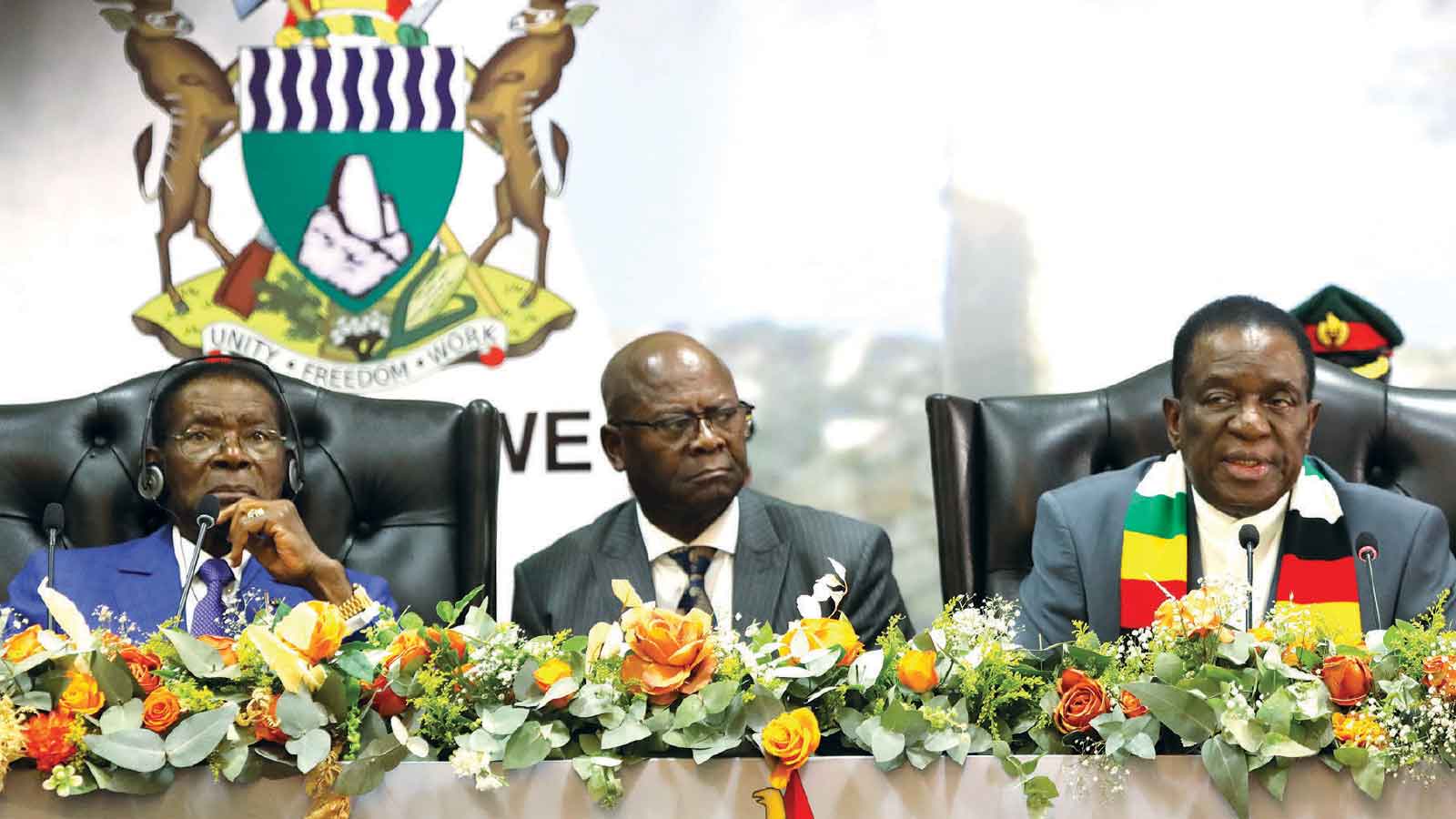
Source: UN triumph: President Mbasogo salutes Zim’s peace credentials – herald President Mnangagwa delivers his remarks while his Equatorial Guinea counterpart, President Teodoro Obiang Nguema Mbasogo (left), follows proceedings at the two countries’ Bi-National Commission signing ceremony at State House in Harare on Friday. — Picture: Memory Mangombe Wallace Ruzvidzo ZIMBABWE is a strong advocate […]

The post UN triumph: President Mbasogo salutes Zim’s peace credentials appeared first on Zimbabwe Situation.

Source: UN triumph: President Mbasogo salutes Zim’s peace credentials – herald

Wallace Ruzvidzo

ZIMBABWE is a strong advocate of global peace and its victory in securing non-permanent representation in the United Nations Security Council (UNSC) was well deserved, Equatorial Guinea President Teodoro Obiang Nguema Mbasogo said last week.

In a communiqué, Foreign Affairs and International Trade Minister Professor Amon Murwira revealed that President Mbasogo made these remarks as he congratulated Zimbabwe for winning the UNSC seat for the 2027-2028 term.

Prof Murwira delivered the communique on Friday at the conclusion of the Bi-National Commission co-chaired by President Mnangagwa and President Mbasogo, who was in the country on a State visit.

“The two Heads of State and Government expressed concern over current geopolitical developments and the rising tensions in various regions,” he said.

“They reaffirmed the importance of upholding international law and the principles enshrined in the UN Charter, including the peaceful settlement of disputes, respect for sovereignty and territorial integrity and non-interference in the internal affairs of the country.

“In this regard, they called for dialogue, diplomacy and multilateral cooperation to ensure the peaceful resolution of disputes and the promotion of international peace and security.

“The two Heads of State committed to collaborating on sustainable utilisation of wildlife resources and ensure that African perspectives are reflected in global conservation policies.”

The State visit was preceded by the inaugural session of the Joint Permanent Commission on Cooperation and was aimed at further strengthening excellent bilateral relations between the two countries, with particular emphasis on enhancing cooperation in political and diplomatic spheres, economic matters, trade and investment, tourism, energy, agriculture, education, research, immigration, defence and international services.

During the visit, the two Heads of State held official bilateral talks at State House in Harare.

The discussions were conducted in a cordial and constructive atmosphere, reflecting the excellent relations between the two countries.

“The two leaders reaffirmed the excellent bilateral ties between Zimbabwe and Equatorial Guinea and expressed their shared commitment to further deepen and strengthen this relationship, encourage common values and fund African solidarity for the mutual benefit of their peoples,” said Prof Murwira.

“The Heads of State exchanged views on regional, continental and international issues of mutual interest and concern. The two Heads of State expressed their shared concern over evolving geopolitical developments, noting their adverse impacts on economic stability, particularly in developing countries, and underscored the importance of coordinated responses in bilateral relations.”

The leaders underscored the importance of further strengthening and broadening areas of cooperation between the two nations.

In that regard, they welcomed the signing of bilateral agreements on economic and trade cooperation, the memorandum of understanding (MoU) on cooperation in the training of translators and interpreters, the rules of procedure of the Joint Commission for Cooperation and the MoU on cooperation in the field of education.

“The two Heads of State and Government undertook to ensure the expeditious implementation of the signing of the memorandum and the finalisation of laws that are still outstanding,” said Prof Murwira.

“The two Heads of State and Government reaffirmed their commitment to improve the movement of people and goods between the two countries.

“Zimbabwe expressed appreciation for the unwavering commitment of the government and the people of Equatorial Guinea for their principled stance regarding the removal of illegal economic sanctions which were imposed on Zimbabwe by Western countries.

“On the multilateral level, the Heads of State and Government welcomed conventional views on regional, continental and international issues. They further agreed to continue to harmonise their position. In that regard, they reiterated their call for the importance of reforming the international system, particularly the United Nations Security Council.”

Prof Murwira said President Mbasogo expressed gratitude to President Mnangagwa, his administration and the generality of Zimbabweans for their warm welcome and generous hospitality accorded to him and his delegation.

“His Excellency, President Mbasogo, extended a cordial invitation to his counterpart and dear brother, the President of the Republic of Zimbabwe, His Excellency, Dr Emmerson Mnangagwa, to undertake a State visit to the Republic of Equatorial Guinea,” he said.

“In turn, His Excellency, Dr Emmerson Mnangagwa, accepted the invitation with appreciation. The dates for the State visit will be agreed through a diplomatic channel.”

The post UN triumph: President Mbasogo salutes Zim’s peace credentials appeared first on Zimbabwe Situation.

Govt adopts risk-based classification for PVOs

Source: Govt adopts risk-based classification for PVOs – herald Minister Edgar Moyo Zvamaida Murwira Senior Reporter THE Government will classify private voluntary organisations (PVOs) using a risk-based approach where each entity will be categorised based on factors such as level of exposure to foreign funding from high-risk jurisdictions, conflict areas and cross-border cash movements. The […]

The post Govt adopts risk-based classification for PVOs appeared first on Zimbabwe Situation.

Source: Govt adopts risk-based classification for PVOs – herald

Zvamaida Murwira

Senior Reporter

THE Government will classify private voluntary organisations (PVOs) using a risk-based approach where each entity will be categorised based on factors such as level of exposure to foreign funding from high-risk jurisdictions, conflict areas and cross-border cash movements.

The classification of PVOs is part of the country’s compliance with the Financial Action Task Force (FATF), a global standard setter for anti-money laundering and combating the financing of terrorism.

FATF requires countries to criminalise terrorist financing, actively identify and assess terrorist threats, and apply strict financial controls across all relevant economic sectors to disrupt terrorist networks.

The decision to categorise PVOs was announced by Public Service, Labour and Social Welfare Minister Edgar Moyo in a Statutory Instrument published in the Government Gazette last week.

Categorisation of PVOs is also part of broader compliance with the PVO Act, which was signed into law in April 2025.

The law seeks to ensure the country complies with the recommendations of FATF to prevent the abuse of charities for the financing of criminal and terrorist activities. It will also streamline the administration, accountability and transparency of charity organisations.

The Private Voluntary Organisations (Risk-Based Supervision and Protection from Terrorist Financing Abuse) Regulations 2026 seek to implement a risk-based approach to the supervision of PVOs, in accordance with FATF.

PVOs will be classified as high risk, medium risk or low risk depending on their exposure to foreign funding and will be based on sectoral risk assessment.

“The purpose of these regulations is to implement a risk-based approach to the supervision of PVOs in accordance with FATF Recommendation 8, ensure that measures to prevent terrorist financing are proportionate to the risks identified and to protect the private voluntary sector from terrorist financing abuse without disrupting or discouraging legitimate charitable activities,” read the regulations.

The regulations provide for close cooperation between the Ministry of Public Service, Labour and Social Welfare and the Reserve Bank of Zimbabwe’s Financial Intelligence Unit (FIU).

“In carrying out the risk assessment referred to in section 22(3) of the Act, the Minister, in cooperation with the FIU and relevant stakeholders, shall conduct a periodic sectoral risk assessment of the PVO sector to identify the subset of organisations that fall within the FATF definition of a non-profit organisation and are likely to be at risk of terrorist financing abuse,” read the regulations.

Also, it stipulates that the assessment shall identify the nature of threats posed by terrorist entities to PVOs and their vulnerability.

“The Minister shall review the sectoral risk assessment at least once every five years or whenever there are significant changes in the risk landscape,” read the regulations. Categorising non-governmental organisations (NGOs) as high risk means they have significant exposure to foreign funding from high-risk jurisdictions or those operating in conflict zones.

The medium risk category is for organisations that have moderate exposure to domestic or foreign funding and standard operational risks, while low risk refers to community-based organisations with purely domestic funding and operations and limited financial turnover.

One of the objectives of the PVO Act is to ensure that civic organisations stick to their core business and not stray into partisan political activism.

The Government introduced the law after realising the proliferation of PVOs, some of which were deviating from their core mandates.

The post Govt adopts risk-based classification for PVOs appeared first on Zimbabwe Situation.

Zim eyes multi-million-dollar deals under AfCFTA

Source: Zim eyes multi-million-dollar deals under AfCFTA – herald Oliver Kazunga Senior Reporter ZIMBABWE is on the verge of formally unlocking preferential access to Africa’s vast continental market as it moves to finalise and gazette its African Continental Free Trade Area (AfCFTA) tariff offer. AfCFTA, which offers a market of more than 1,4 billion people […]

The post Zim eyes multi-million-dollar deals under AfCFTA appeared first on Zimbabwe Situation.

Source: Zim eyes multi-million-dollar deals under AfCFTA – herald

Oliver Kazunga

Senior Reporter

ZIMBABWE is on the verge of formally unlocking preferential access to Africa’s vast continental market as it moves to finalise and gazette its African Continental Free Trade Area (AfCFTA) tariff offer.

AfCFTA, which offers a market of more than 1,4 billion people and a gross domestic product of US$3,4 trillion, is one of the world’s largest single markets — and it connects 53 African union member states and eight regional economic communities.

The free-trade bloc came into force in January 2021, with Zimbabwe among the pioneer countries that ratified the historic deal. Under the AfCFTA agreement, countries are encouraged to specialise in sectors where they have a comparative advantage, with Zimbabwe identified as strong in agriculture, mining and related value-added industries.

Therefore, the tariff phase-down will see Zimbabwe gradually liberalising trade by eliminating tariffs on 97 percent of its products over phased periods ranging from five to 10 years, while permanently excluding three percent from tariff liberalisation.

Speaking at a breakfast meeting in Harare last week, Ministry of Foreign Affairs and International Trade principal administrative officer Mr Tafadzwa Mashingaidze said Zimbabwe was now at an advanced stage of implementing key obligations under the agreement.

“Zimbabwe is now working towards the gazetting of its tariff offer, a critical milestone that will determine the scope of goods eligible for preferential trade under the continental framework,” he said. Once gazetted, the country’s tariff schedule would effectively formalise Zimbabwe’s participation in the AfCFTA market system, enabling exporters to benefit from reduced trade barriers across African markets.

In addition, the tariff offer is expected to enable Zimbabwean exporters to access new markets across Africa, particularly in agriculture, mining value addition, manufacturing, pharmaceuticals, tourism and professional services.

Mr Mashingaidze said the AfCFTA agreement had already moved beyond negotiation into full implementation, with most trade rules now concluded.

“To date, 51 countries have signed the agreement establishing the AfCFTA, while 47 (Zimbabwe included) have ratified it, reflecting broad continental commitment to the trade integration agenda,” he said. Mr Mashingaidze further said the framework was now operational in most areas, with countries able to trade in a wide range of goods under agreed rules.

“And 93 percent of the votes of the regime have been agreed upon by the state parties,” he said. “This means that we can trade more than 5 000 products — there is now a single set of rules for trade in 93 percent of the products.”

He said the agreement had transitioned into an implementation phase, supported by key regulatory tools designed to facilitate trade across member states.

“The AfCFTA secretariat has developed important regulations for state parties to use in the implementation of the AfCFTA,” said Mr Mashingaidze.

“We have the tariff e-book, we have the rule of origin manual, and also we have the Pan-African trade settlement system,” said Mr Mashingaidze.

Speaking at the same occasion, Competition and Tariff Commission assistant director (tariffs) Ms Cecilia Mashava said it was significant for Zimbabwe to adopt a strategic approach to tariffs as the country moves to finalise its AfCFTA tariff offer.

“We need a clear tariff policy that will enable us to address our own problems . . . tariffs are a strategic point and we need to use them strategically for us to transform our industry,” she said.

“We really need an industry now to participate in AfCFTA and global markets.”  Confederation of Zimbabwe Industries trade and regulatory affairs officer Ms Chinyaradzo Phiri said tariffs and protective duties alone cannot guarantee the long-term survival and growth of Zimbabwe’s manufacturing sector.

She called for broader measures to improve industrial competitiveness before trade barriers are removed, adding that Zimbabwe’s manufacturing sector remains vulnerable despite existing tariff measures designed to shield local industries from foreign competition.

“Zimbabwe currently enjoys protection on selected products through duty measures, with approximately 1 156 tariff lines benefitting from safeguards against imports,” she said.

She added: “. . . protection is there; however, protection can never be permanent.”

Ms Phiri stressed that while tariffs provide temporary relief to local manufacturers, policymakers should ensure industries are equipped to compete effectively before opening markets further under regional and continental trade agreements.

“How can we just remove the protection without putting in place measures to ensure that industry can compete,” she said.

The post Zim eyes multi-million-dollar deals under AfCFTA appeared first on Zimbabwe Situation.

Major gains recorded in neurosurgical care 

Source: Major gains recorded in neurosurgical care – herald Rumbidzayi Zinyuke Senior Health Reporter ZIMBABWE has significantly strengthened its capacity to diagnose and treat brain tumours, with the number of neurosurgeons capable of performing complex brain surgeries increasing from just four specialists 15 years ago to about 30 today. The expansion of specialist skills, coupled […]

The post Major gains recorded in neurosurgical care  appeared first on Zimbabwe Situation.

Source: Major gains recorded in neurosurgical care – herald

Rumbidzayi Zinyuke

Senior Health Reporter

ZIMBABWE has significantly strengthened its capacity to diagnose and treat brain tumours, with the number of neurosurgeons capable of performing complex brain surgeries increasing from just four specialists 15 years ago to about 30 today.

The expansion of specialist skills, coupled with improved medical technology and the growth of treatment centres beyond Harare, is giving more patients access to life-saving neurosurgical care and improving treatment outcomes for those diagnosed with brain tumours and other neurological conditions.

Specialist neurosurgeon Dr Aaron Musara said Zimbabwe’s neurosurgical landscape had undergone a major transformation over the past decade and a half.

“We have witnessed significant progress in the care of brain tumours over the past 15 years. We have moved from having only four neurosurgeons performing these operations to about 30 specialists across the country,” he said.

Dr Musara said specialised brain surgery services, which were once largely confined to Parirenyatwa Group of Hospitals and Sally Mugabe Central Hospital, were now available in several parts of the country.

“We now have neurosurgeons performing operations in Gweru, Mutare, Chitungwiza and Masvingo,” he said. “In addition, several private hospitals in Harare are offering brain tumour surgery.

“There have also been major improvements in cancer care, with more oncologists available to provide chemotherapy and radiotherapy services.”

The country’s growing neurosurgical capacity is already changing lives. For 64-year-old Mr Langton Makumbe of Sanyati, persistent headaches that initially appeared harmless later developed into a serious neurological condition requiring urgent medical intervention.

Mr Makumbe said he began experiencing severe headaches several years ago before developing memory loss, dizziness and behavioural changes. “I was referred to Parirenyatwa where a CT (computed tomography) scan showed that I had a cyst in the brain. I was afraid of undergoing surgery and decided to return home. However, the headaches became more severe and I started experiencing memory loss and dizziness,” he said.

“Eventually, I was admitted and underwent surgery. I had a lot of fear because of misconceptions surrounding brain operations, but after speaking to the doctors I gained confidence. Now I feel much better.”

Following detailed investigations at Parirenyatwa Group of Hospitals, a team of neurosurgeons successfully removed the pressure-causing growth using advanced surgical navigation technology. Neurosurgeon Dr Nathaniel Zimani said the technology allowed surgeons to perform a safer and less invasive procedure.

“When Mr Makumbe came in, scans showed a growth in the middle of the brain. We explained that surgery was necessary to relieve the pressure,” said Dr Zimani.

“Using a navigation system, we were able to perform the operation through a small opening and safely decompress the affected area. That is why he experienced rapid relief after surgery.”

Dr Zimani warned that many patients continue to seek medical attention too late, reducing their chances of successful treatment.

“If he had delayed for a few more months, the condition had the potential to cause blindness or even sudden death. Many patients continue to present late when they are already very ill, which negatively affects treatment outcomes,” he said.

Brain tumours often present with symptoms such as persistent or worsening headaches, seizures, memory loss, confusion, visual disturbances and behavioural changes.

Specialists say many patients initially ignore or dismiss these warning signs, resulting in delayed diagnosis.

The post Major gains recorded in neurosurgical care  appeared first on Zimbabwe Situation.