Mobile clinic brings healthcare closer to Cowdray Park residents 

Source: Mobile clinic brings healthcare closer to Cowdray Park residents – The Southern Eye FOR years, access to healthcare has been a daily struggle for many residents of Cowdray Park, one of Bulawayo’s largest and fastest-growing suburbs. With consultation fees beyond the reach of many households and public health facilities stretched by a rapidly growing […]

The post Mobile clinic brings healthcare closer to Cowdray Park residents  appeared first on Zimbabwe Situation.

Source: Mobile clinic brings healthcare closer to Cowdray Park residents – The Southern Eye

FOR years, access to healthcare has been a daily struggle for many residents of Cowdray Park, one of Bulawayo’s largest and fastest-growing suburbs.

With consultation fees beyond the reach of many households and public health facilities stretched by a rapidly growing population, residents often had to travel long distances to seek medical attention.

That burden is beginning to ease through a mobile clinic operated by Zimbos Abantu Trust in partnership with the National Aids Council (NAC), which is providing free consultation, screening services and primary healthcare closer to where people live.

Each morning, scores of residents queue at the clinic for blood pressure checks, blood sugar tests, health advice and treatment for common ailments.

The initiative is offering a lifeline to vulnerable families who have long struggled to access affordable healthcare.

Bulawayo Progressive Residents Association ward 6 chairperson Bongani Siziba said the programme brought the much-needed relief to the community.

“This project is helping a lot because people were going as far as Emagetsini to access health services,” Siziba said during a media tour last week.

“Even at those clinics, people are paying consultation fees, but here consultation is free.”

For many families in Cowdray Park, where unemployment and informal trading remain widespread, even modest healthcare costs can result in difficult choices between medical care, food and transport.

Residents say the free services are helping to ease that burden.

“People are very interested in accessing these health services and in most cases I have seen many people coming here,” Siziba said.

“At times they even visit patients at home to check on their health conditions.”

The mobile clinic operates from a modest setup but attracts dozens of residents everyday, reflecting the growing demand for accessible healthcare in the suburb.

Founder and chief executive officer of Zimbos Abantu Trust, Tawanda Mushawedu, said the organisation focused on communities that were often left behind in healthcare delivery.

“Zimbos Abantu is focusing on the provision of primary healthcare to communities that are usually left behind,” Mushawedu said.

He noted that although Cowdray Park had a public health facility, the suburb’s population has outpaced available services.

“Officially, the population is about 78 000 people and they have access to just one public health facility,” he said.

Mushawedu said the organisation was complementing government efforts by taking healthcare to communities through mobile clinics.

The partnership with NAC also integrates screening and treatment for non-communicable diseases such as hypertension and diabetes into HIV healthcare programmes.

“There is a realisation that people living with HIV are more prone to non-communicable diseases such as hypertension, diabetes mellitus, asthma and some cancers,” he said.

Since the programme began in August last year, Mushawedu said it provided free medical consultation to about 8 900 patients and free blood sugar screening services to more than 5 000 people.

The impact has been significant for low-income households.

“They are saving about US$15 on medical consultation, which is a huge amount for our communities,” Mushawedu said.

However, residents said more still needed to be done.

Cowdray Park continues to expand rapidly and some households remain far from the clinic’s current location.

Siziba appealed for the programme to be extended to other parts of the suburb.

“Cowdray Park is very big and some people are failing to access this clinic because of distance,” he said.

“We appeal for the programme to be expanded to other wards.”

Despite those challenges, residents said the mobile clinic restored hope in a community where healthcare often felt out of reach.

The steady stream of people seeking treatment, screening and advice each day underscores both the scale of the healthcare gap and the difference accessible can make when services brought directly to underserved communities.

The post Mobile clinic brings healthcare closer to Cowdray Park residents  appeared first on Zimbabwe Situation.

Zim’s export receipts jump 48pc in 4 months 

Source: Zim’s export receipts jump 48pc in 4 months – herald Sikhulekelani Moyo Zimpapers Business Hub ZIMBABWE is reshaping its trade profile, with export earnings surging 48 percent in the first four months of 2026, driven by a sharp rise in value-added manufactured goods. This growth halved the national trade deficit. National trade promotion and […]

The post Zim’s export receipts jump 48pc in 4 months  appeared first on Zimbabwe Situation.

Source: Zim’s export receipts jump 48pc in 4 months – herald

Sikhulekelani Moyo

Zimpapers Business Hub

ZIMBABWE is reshaping its trade profile, with export earnings surging 48 percent in the first four months of 2026, driven by a sharp rise in value-added manufactured goods.

This growth halved the national trade deficit.

National trade promotion and development body ZimTrade said in a statement that cumulative exports for January–April 2026 reached US$3.57 billion, up from US$2.41 billion in the same period last year.

Consequently, the trade deficit narrowed from US$582 million in 2025 to US$295 million in 2026.

Central to this performance was a 34.4 percent jump in value-added products, which rose from US$149 million in 2025 to over US$200 million in 2026.

ZimTrade said the shift shows Zimbabwe moving away from raw commodity exports toward higher-margin manufactured goods that generate up to three times more profit.

“By focusing on value-added products, Zimbabwe can generate up to three times the profits compared to raw material exports, translating into higher income for the national economy and local enterprises,” ZimTrade stated.

Engineering steel products led the surge, shooting up 165.6 percent to US$77.9 million from US$29 million.

This growth is largely attributed to iron and steel bars, rods, and coils produced from expanded local capacity, including major projects like Dinson Iron and Steel.

Manufactured tobacco exports rose 33.5 percent to US$45.9 million, reflecting deep investment in the beneficiation of Zimbabwe’s “golden leaf.”

Building and construction materials edged up by four percent to US$9.5 million, driven by demand for unglazed ceramic tiles and mosaic cubes.

Additionally, sulfates such as alums and peroxydisulfate jumped to US$12.6 million in April 2026 from just US$357,000 a year earlier.

The post Zim’s export receipts jump 48pc in 4 months  appeared first on Zimbabwe Situation.

Unity key to improved service delivery- Gweru mayor 

Source: Unity key to improved service delivery- Gweru mayor – herald Diana Nherera Herald Reporter GWERU Mayor Councillor Martin Chivhoko has called on residents, businesses and community leaders to work together in improving service delivery and driving the city’s development, saying progress can only be achieved through collective effort. Speaking on the importance of civic […]

The post Unity key to improved service delivery- Gweru mayor  appeared first on Zimbabwe Situation.

Source: Unity key to improved service delivery- Gweru mayor – herald

Diana Nherera

Herald Reporter

GWERU Mayor Councillor Martin Chivhoko has called on residents, businesses and community leaders to work together in improving service delivery and driving the city’s development, saying progress can only be achieved through collective effort.

Speaking on the importance of civic responsibility, Cllr Chivhoko said service delivery was not solely the responsibility of the local authority but required active participation from all stakeholders.

“Progress stalls when we divide ourselves by suburb, politics or by complaint,” he said.

“But when we stand as one city with one vision, there is no challenge we cannot overcome. I call on all residents, businesses, and community leaders, let us unite.

“Let us put Gweru first. Let us speak well of our city, work for our city and defend our city. A united Gweru attracts investment, creates jobs and delivers services faster.”

He urged residents to put the city’s interests first and work together to create an environment that attracts investment, creates jobs and improves service delivery.

The mayor said residents should regard the city as the council’s property but consider themselves as custodians of the city’s infrastructure and services.

“Gweru is yours. The roads you drive on, the parks your children play in and the water you drink belong to you. If you truly own something, you protect it,” he said

Cllr Chivhoko said taking ownership meant reporting leaking water pipes, discouraging illegal dumping, paying municipal bills and safeguarding public infrastructure.

“When we take ownership, we stop waiting for someone else to fix things. We become part of the solution,” he said.

He also encouraged residents to provide constructive feedback while supporting efforts by council to improve services.

“Criticism is easy, but building is hard. As your mayor, I welcome constructive feedback, but I also ask for your support when we try new things,” he said.

“When we fix a road, celebrate it, when we buy new equipment, appreciate it and when we make mistakes, hold us accountable, but also give us room to improve.”

Cllr Chivhoko said the city was making progress and urged residents to remain actively involved in shaping its future.

“Every single one of you is on the team. Gweru is rising. I see it in your faces, in our cleaner streets and in the growing hope across our communities. But the journey is long and we need all hands on deck,” he said.

The post Unity key to improved service delivery- Gweru mayor  appeared first on Zimbabwe Situation.

Term limits are non-negotiable: even if Mnangagwa were the greatest leader to walk the earth, he must go in 2028

Source: Term limits are non-negotiable: even if Mnangagwa were the greatest leader to walk the earth, he must go in 2028 There are things in this world that are simply too sacrosanct to desecrate. Tendai Ruben Mbofana As the parliamentary debate on the Constitutional Amendment (No. 3) Bill rages on, we have been treated to […]

The post Term limits are non-negotiable: even if Mnangagwa were the greatest leader to walk the earth, he must go in 2028 appeared first on Zimbabwe Situation.

Source: Term limits are non-negotiable: even if Mnangagwa were the greatest leader to walk the earth, he must go in 2028

There are things in this world that are simply too sacrosanct to desecrate.

Tendai Ruben Mbofana

As the parliamentary debate on the Constitutional Amendment (No. 3) Bill rages on, we have been treated to some intriguing, if not amusing, arguments by legislators explaining why President Emmerson Mnangagwa “deserves” to remain in power beyond his two constitutional five-year terms ending in 2028.

If you value my social justice advocacy and writing, please consider a financial contribution to keep it going. Contact me on WhatsApp: +263 715 667 700 or Email: mbofana.tendairuben73@gmail.com

We are excitedly told of supposed infrastructure development—with road rehabilitation, the construction of the Trabablas Interchange, the expansion of the Robert Gabriel Mugabe International Airport, and the drilling of boreholes repeatedly cited as proof.

This development is framed as so outstanding that it justifies rewriting the supreme law of the land to keep the president in office until 2030.

But we need to strip away the noise and lay the brutal truth on the table.

To begin with, the claim that the president is doing phenomenal work is an unashamed fallacy.

The lived experience of ordinary Zimbabweans tells the real story, and it requires neither state propaganda nor compromised legislators to decode.

Millions of Zimbabweans are struggling to make ends meet, with over 80 percent living in general poverty and nearly half the population trapped in extreme poverty.

Let’s look past the raw percentages.

The internationally accepted benchmark for extreme poverty is living on less than $2.15 a day.

For a family of six, this means requiring at least $400 a month just to survive.

The simple question to ask is: how many Zimbabweans, regardless of their profession, actually take home $400 a month?

Millions fall short.

If we look at general poverty—the upper-middle-income poverty line benchmarked at $6.85 a day—a family of six requires $1,300 a month.

Again, how many of us take home that much?

This reality reveals everything we need to know about the presidency’s actual performance.

With the vast majority languishing in financial distress, what “phenomenal development” are these term-extension advocates talking about?

Extreme poverty in Zimbabwe has actually worsened since the so-called Second Republic took power in 2017, skyrocketing from 34.2 percent to 49 percent today.

The narrative of success is a sick joke.

What use is an expanded international airport to millions of impoverished citizens who can barely afford a loaf of bread?

How does a dazzling new traffic interchange—constructed at a highly inflated cost that enriched a few well-connected individuals—help a mother who cannot afford medication for her sick child?

It might make the kombi ride to Sally Mugabe Hospital faster, but that matters little when the hospital itself lacks essential medicines and lifesaving equipment.

Yet, all of this misses the fundamental point.

Even if the president had successfully turned every single Zimbabwean into a millionaire, he still would not deserve a term extension.

We must remember why constitutional term limits exist in the first place.

Heads of state are not forced to step down at the end of their constitutional limits because they failed.

The president is not being compelled to leave office in 2028 because he was a bad leader—though he certainly has been.

To use a football analogy, removing a leader for poor performance is akin to a tactical substitution.

That is the function of an election: it is the mechanism through which the electorate assesses competence, policy direction, and performance, and votes a bad leader out.

​A leader regarded as having failed in his role is normally pushed out of office through an election loss, when he is still eligible for another term.

To use a football analogy, this is the process of substituting the president.

In other words, elections are the mechanism through which a bad leader is forced to step down.

That is their primary function—to allow the people to assess leadership and make a decision based on performance, competence, and policy direction.

Constitutional term limits serve an entirely different, higher purpose.

They do not exist to grade a leader’s performance; they exist to safeguard democracy itself.

The primary principle behind term limits is preventing the dangerous accumulation of power.

History shows that long-serving leaders inevitably use their prolonged stay in office to consolidate authority, erode institutional independence, and weaken democratic checks and balances, transforming themselves into de facto autocrats.

Even when a leader starts out with benevolent intentions, the temptation of absolute power inevitably creates a system where democracy exists only in name, while real authority shrinks to a single individual and their inner circle.

Furthermore, term limits ensure healthy political turnover, fostering innovation and fresh leadership.

Allowing any individual to stay indefinitely stifles political growth, prevents new actors from emerging, and limits diversity in governance styles.

Term limits ensure that political spaces remain open, preventing citizens from being held hostage by a leader who uses state resources, patronage, and coercion to make themselves impossible to remove.

Term limits also protect a country from the personalization of power, where a nation’s destiny is falsely tied to one individual.

This is the exact myth Mnangagwa’s supporters are peddling—that Zimbabwe cannot function without him.

It is the same tired justification used by continental dictators like Uganda’s Yoweri Museveni, Cameroon’s Paul Biya, or global autocrats like Russia’s Vladimir Putin.

They remain in office for decades not because they are indispensable, but because they have methodically crushed opposition and crippled democratic institutions.

Therefore, whether a president is the greatest leader to walk the earth or the absolute worst, term limits remain blind to performance.

Even if Mnangagwa had been the finest president in African history, it would not justify extending his rule.

He would still have to step down in 2028.

That is why the world’s most revered leaders have faithfully adhered to these boundaries, irrespective of their immense popularity.

For instance, former U.S. President Bill Clinton presided over an era of immense economic prosperity and left office with a historic 66% approval rating—the highest of any departing modern president.

However, despite many of his supporters wishing he could run again, he abided by the U.S. Constitution and stepped down in 2001.

​Similarly, former Botswana President Festus Mogae maintained immense popularity for his exceptional governance, ultimately winning the prestigious Mo Ibrahim Prize for Achievement in African Leadership.

Yet, despite his deep public support, he strictly followed Botswana’s two-term legal limit and walked away from power in 2008 to preserve his country’s democratic integrity.

​Even when a leader is widely regarded as competent and visionary, the law remains the law.

It is what ensures a nation is ruled by a sustainable system rather than an individual.

Just as it would make no sense for the opposition to demand lowering the term limit to three years simply to get rid of Mnangagwa early, it makes no sense to extend it to reward him.

The Constitution cannot be tinkered with to either promote or demote a specific individual.

That is not the role of the supreme law.

If we allow this amendment to pass, we set a catastrophic precedent.

From that moment on, the Constitution will become a malleable document rewritten to suit the whims of whoever holds power.

If the “ED 2030” campaign succeeds, what happens when the next leader takes over in 2030 and declares a “Vision 2060”?

Do we amend the law again to grant them another three decades to see their vision through?

It is a logical absurdity.

The people of Zimbabwe must firmly resist and reject this manipulation of our sacrosanct supreme law for the selfish ambitions of one man.

If we succumb, we fail not just ourselves, but future generations who will inherit a country where the rule of law means nothing.

Those who love Mnangagwa and believe he has done a fantastic job have already had the opportunity to express their support at the ballot box in 2018 and 2023.

What more could they possibly demand?

The Constitution is a shield to protect the nation from the excesses of power, not a weapon of personal ambition.

If Mnangagwa truly cares about the legacy of Zimbabwe, he should be the very first person to defend constitutionalism, rather than entertaining sycophants pushing for an undemocratic extension.

He must choose the path of leaders who preserved democracy, not those who manipulated it to cling to power.

History will judge this moment.

The question is whether the people of Zimbabwe will stand firm in defense of their supreme law, or bow to the desires of a power-hungry elite.

The answer lies squarely with us.

The post Term limits are non-negotiable: even if Mnangagwa were the greatest leader to walk the earth, he must go in 2028 appeared first on Zimbabwe Situation.

AGS cargo forum draws major African aviation stakeholders to Harare

Source: AGS cargo forum draws major African aviation stakeholders to Harare – herald Herald Reporter ZIMBABWEAN ground handler Aviation Ground Services (AGS) hosted its inaugural Cargo Stakeholders Forum in Harare on Monday, bringing together key regional aviation and logistics players to discuss how to unlock the country’s air freight potential. Held at a city hotel […]

The post AGS cargo forum draws major African aviation stakeholders to Harare appeared first on Zimbabwe Situation.

Source: AGS cargo forum draws major African aviation stakeholders to Harare – herald

Herald Reporter

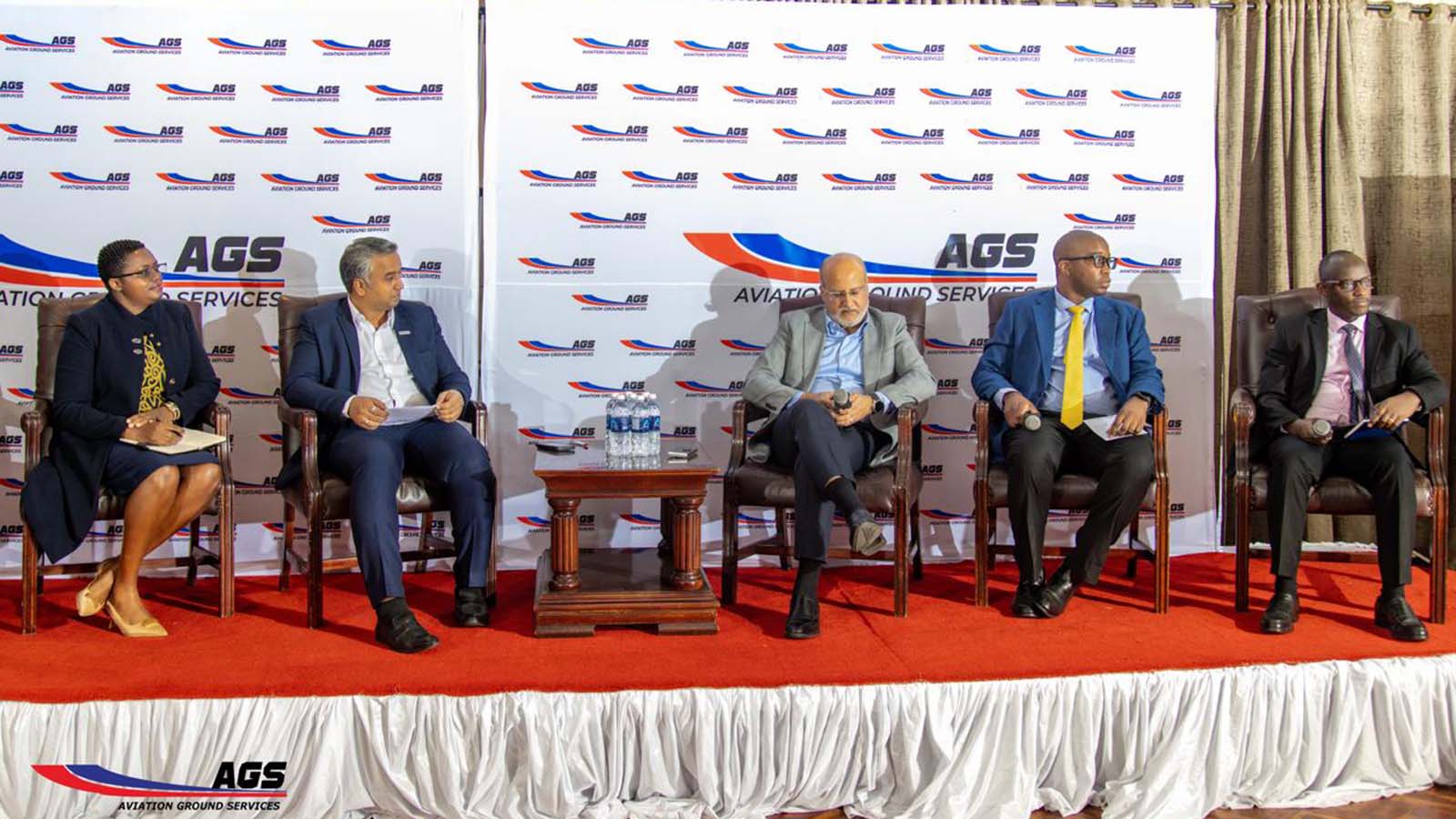
ZIMBABWEAN ground handler Aviation Ground Services (AGS) hosted its inaugural Cargo Stakeholders Forum in Harare on Monday, bringing together key regional aviation and logistics players to discuss how to unlock the country’s air freight potential.

Held at a city hotel under the theme, “Unlocking Zimbabwe’s Air Cargo Potential: Streamlining Trade, Driving Growth, and the Next Era of Zimbabwean Air Freight,” the forum reviewed the current state of Zimbabwe’s air cargo market and explored strategies to help the sector compete more effectively with regional leaders.

In remarks delivered on her behalf, the Permanent Secretary in the Ministry of Transport and Infrastructural Development, Engineer Joy Makumbe, said air cargo would play an important role in supporting economic growth and helping the country achieve its Vision 2030 targets under the National Development Strategy 2 (NDS2).

“The government has prioritised the development of airport infrastructure across the country. These modern facilities can connect Zimbabwe to regional and international markets through the efficient movement of air cargo,” Eng Makumbe said.
She added that the ministry was ready to work with AGS in supporting and reviewing policies aimed at growing Zimbabwe’s air cargo industry.

Dr Alexandra Stancu, IATA’s Head of Southern and East Africa, also presented on Zimbabwe’s potential in the air cargo sector, outlining immediate opportunities the country could pursue to accelerate growth.

During a panel discussion titled, “Monetising the Skies: Maximising Airline Capacity and Commercialising Air Freight Services,” Astral Aviation Chief Executive Officer Sanjiv Gadhia said Zimbabwe had promising export traffic but needed a more sustainable cargo proposition.

“We currently operate into Harare on an ad hoc basis for tobacco, flowers and blueberries. We need to develop a strong cargo product for Zimbabwe that is not reliant on belly cargo movement through Johannesburg,” Mr Gadhia said.

He also highlighted the imbalance in cargo flows into Zimbabwe and called for closer industry collaboration to ensure operators have viable loads in both directions.

The post AGS cargo forum draws major African aviation stakeholders to Harare appeared first on Zimbabwe Situation.